Standing dramatically on a bend of the Nile in southern Egypt, the Temple of Kom Ombo is unlike any other. It is a double temple, built with perfect symmetry to honour two different gods at once: Sobek, the crocodile god, and Horus the Elder, the falcon god of the sky. Everything is doubled, two entrances, two halls, two sanctuaries, side by side.
Famous for its riverside setting, its mummified crocodiles and a relief that appears to show ancient surgical instruments, Kom Ombo is one of the most intriguing and beautiful temples in Egypt, a place where medicine, myth and the mighty river all meet.
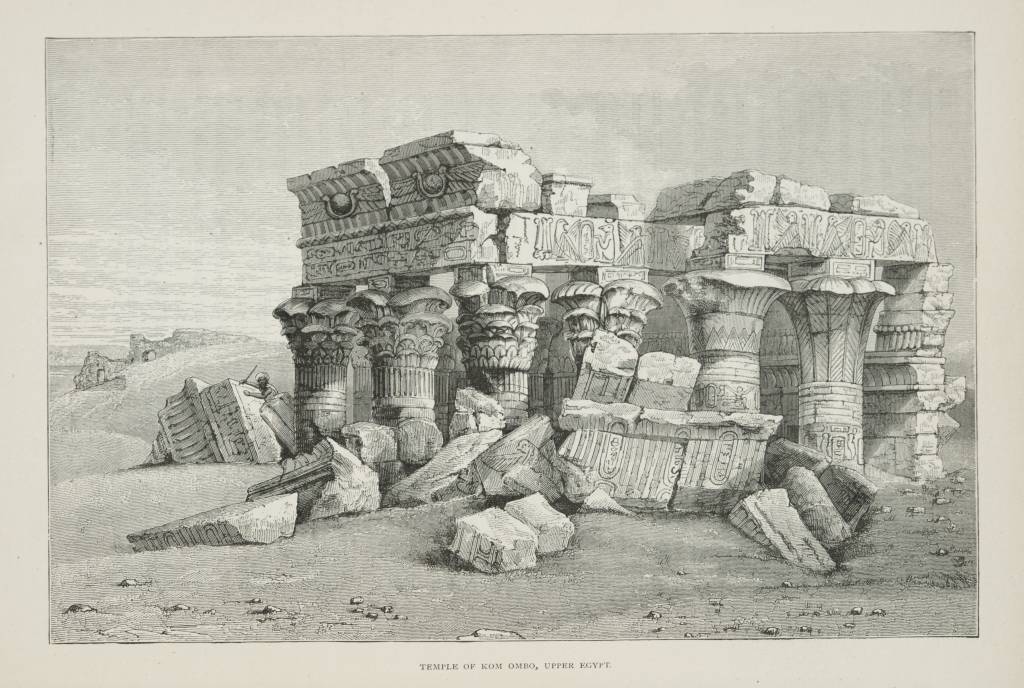
Table of Contents
- The Double Temple on the Nile
- Two Gods Under One Roof
- Perfect Symmetry in Stone
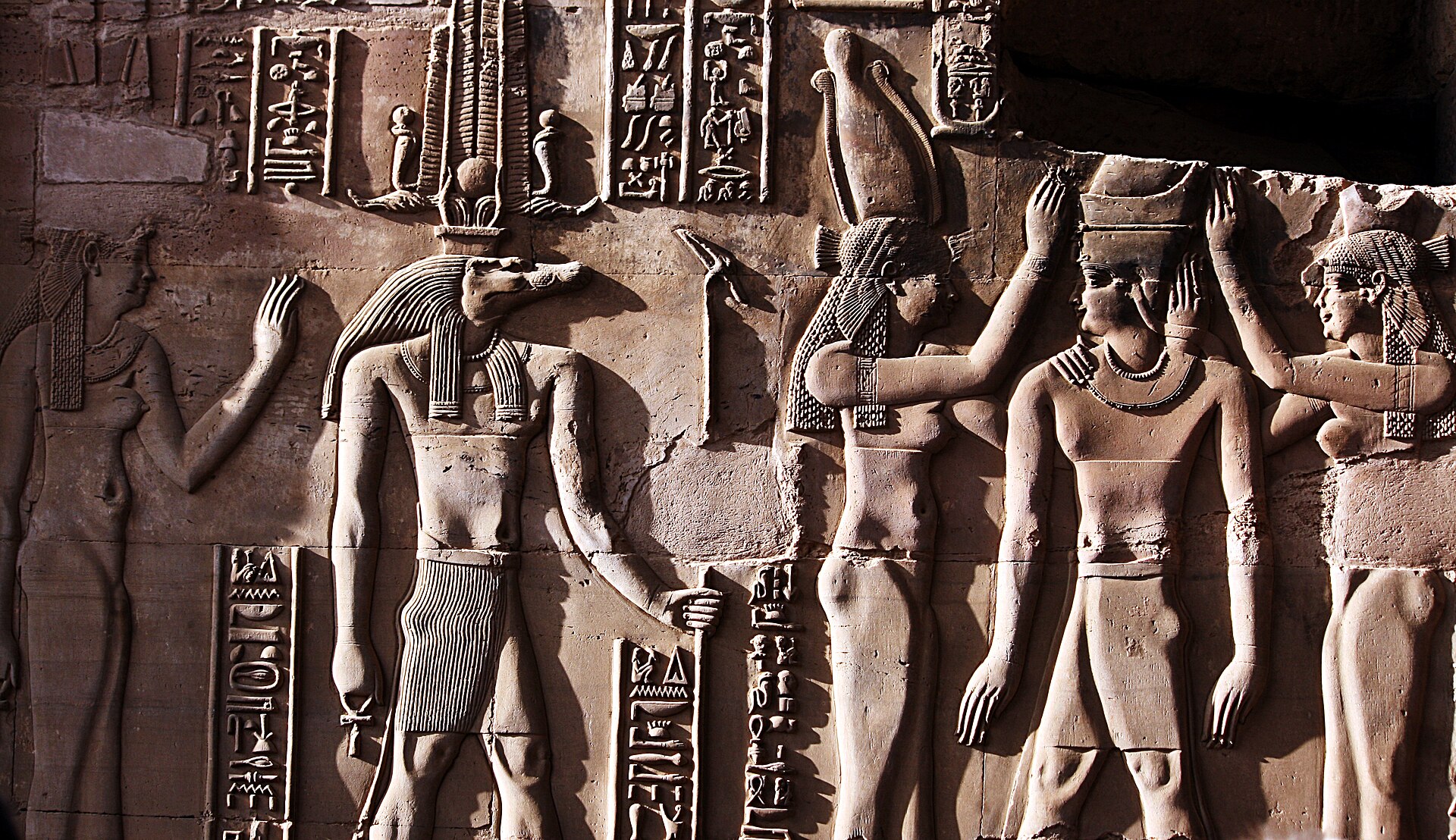
- Sobek the Crocodile God
- The Sacred Crocodiles and Their Mummies
- The Famous Medical Instruments Relief
- An Ancient Calendar in Stone
- Reliefs of Kings and Gods
- A Temple Threatened by the River
- Rediscovery and Protection
- Getting There
- Nearby Places
- Closing Thoughts
The Double Temple on the Nile
Kom Ombo sits on a low hill directly above the Nile, its columns reflected in the water. Its position made it a landmark for boats and gave it control over an important stretch of the river and its trade.
What sets it apart is its unusual plan. Rather than serving a single deity, the temple is split down the middle, with two parallel sets of rooms, a rare and striking design found almost nowhere else in Egypt.

Two Gods Under One Roof
The southern half of the temple was dedicated to Sobek, the crocodile god associated with the Nile, fertility and power. The northern half honoured Horus the Elder, a form of the falcon sky god linked with healing and kingship.
Each god had his own gateway, halls and sanctuary, mirrored exactly on either side of a central axis. The two cults coexisted here, sharing a single grand building in a spirit of balance.

Perfect Symmetry in Stone
The genius of Kom Ombo lies in its symmetry. The whole temple is a mirror image around its central line, so that every hall, doorway and column on one side has an exact twin on the other.
Built mainly under the Ptolemaic kings, with later Roman additions, the temple keeps the traditional Egyptian style. Its columns still carry traces of their original bright paint, hinting at how colourful it once was.

Sobek the Crocodile God
Sobek, worshipped in the southern half of the temple, was one of Egypt’s most ancient gods, embodying the power and danger of the Nile crocodile. He was both feared and revered as a source of strength and fertility.
In a land where crocodiles were a constant threat, honouring Sobek was a way of seeking protection and turning that danger to advantage. At Kom Ombo his cult reached its fullest expression.
The Sacred Crocodiles and Their Mummies
The crocodiles of Kom Ombo were regarded as living embodiments of Sobek. When they died they were mummified and buried with honour, just like people, as sacred creatures.
Many of these mummified crocodiles have been found near the temple, and a special museum beside it now displays a remarkable collection of them, from tiny hatchlings to great adults, a vivid testament to the animal cults of ancient Egypt.

The Famous Medical Instruments Relief
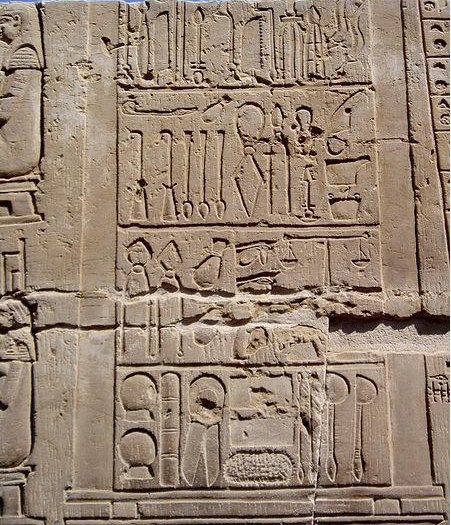
Kom Ombo is celebrated for a relief carved on one of its walls that appears to depict a set of surgical and medical instruments, including forceps, scalpels and other tools. It is one of the most discussed images in Egyptology.
The link with Horus the Elder as a god of healing may explain its presence. Whether or not the objects are exactly medical, the relief reflects the ancient Egyptians’ real and considerable knowledge of medicine.
An Ancient Calendar in Stone
Among the temple’s inscriptions is a carved calendar, listing festivals and religious observances through the year. Such calendars regulated the busy ritual life of the temple.
These texts, together with the temple’s other inscriptions, are valuable records of how the ancient Egyptians organised their sacred year and honoured their gods season by season.

Reliefs of Kings and Gods
Like other Egyptian temples, Kom Ombo is covered with reliefs showing the king making offerings to the gods and receiving their blessings in return. Both Sobek and Horus the Elder appear again and again.
These scenes express the fundamental bargain of Egyptian religion, in which the pharaoh cared for the gods and, in exchange, the gods sustained the order of the world and the prosperity of Egypt.

A Temple Threatened by the River
The very setting that makes Kom Ombo so beautiful has also endangered it. Its closeness to the Nile has meant that floods, erosion and earthquakes have damaged parts of the temple over the centuries.
Some of the front of the temple has been lost to the river, and conservation work is needed to protect what remains. The site is a reminder of how the Nile both created and threatens Egypt’s monuments.
Rediscovery and Protection
Buried in part by sand and debris, Kom Ombo was cleared and studied in the nineteenth century, revealing its unusual double plan and rich decoration. It has since become a favourite stop for travellers on the Nile.
Today the temple and its crocodile museum are protected as part of Egypt’s heritage, drawing visitors who come to see one of the most unusual and atmospheric of all the country’s temples.
Getting There
Kom Ombo lies on the east bank of the Nile in Aswan Governorate, about forty kilometres north of the city of Aswan, in southern Egypt. The temple stands right beside the river.
It is a standard stop on Nile cruises between Luxor and Aswan, with boats mooring almost at the temple steps. It can also be reached by road from Aswan or Edfu, and the adjacent crocodile museum is well worth a visit.
Coordinates: 24.4522, 32.9281 — open Kom Ombo in Google Maps.
Nearby Places
- Edfu — the great temple of Horus just downriver, usually visited together with Kom Ombo on the Nile.
- Dendera — another beautifully preserved late Egyptian temple, rich in colour and carving.
- Abu Simbel — the great temples of the far south, often reached from Aswan near Kom Ombo.
Closing Thoughts
Kom Ombo is one of Egypt’s most distinctive temples: a perfectly mirrored double sanctuary shared between the crocodile god Sobek and the falcon god Horus the Elder, standing in beauty above the Nile.
With its mummified crocodiles and its famous relief of medical instruments, it joins myth, medicine and the power of the river in a single unforgettable monument. Reflected in the water at sunset, Kom Ombo is among the most romantic of all Egypt’s ancient sites.
You May Like
Mafra, the Palace a King Built From a Vow


One thought on “Kom Ombo: The Mirror-Image Double Temple of the Crocodile God”