Deep in the far south of Egypt, close to the border with Sudan, four giant figures sit carved into a cliff of golden sandstone, each of them a portrait of the same man. This is Abu Simbel, the pair of rock-cut temples built by Ramesses II more than three thousand years ago to overawe anyone who approached Egypt from the south.
Abu Simbel is famous twice over: once as one of the boldest monuments of the ancient world, and again as the site of one of the most extraordinary rescue operations of the modern one, when the entire complex was sawn apart and lifted to safety above the rising waters of a new lake.
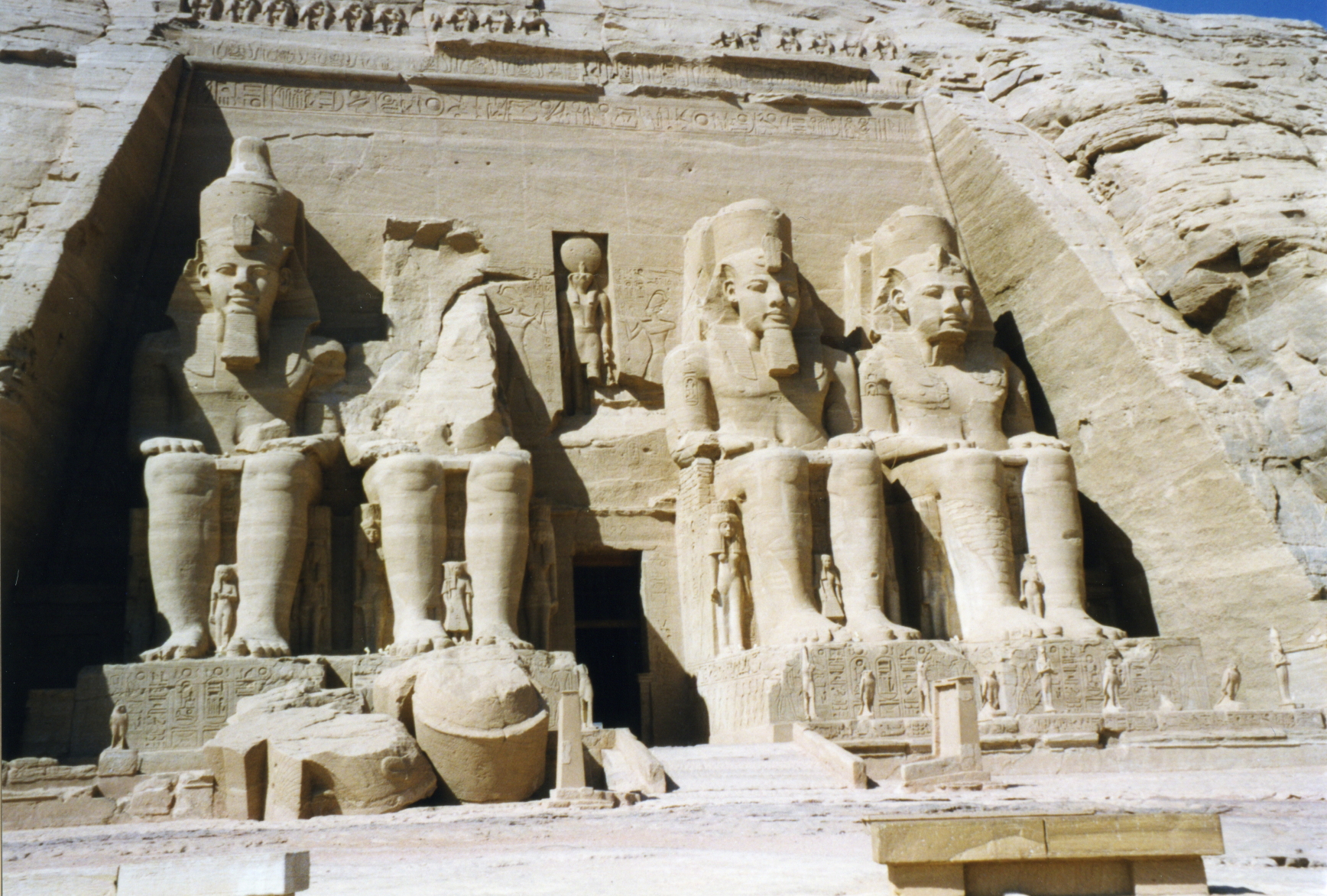
Table of Contents
- Two Temples Carved from a Nubian Cliff
- Ramesses the Great and the Temple of the Sun
- Inside the Great Temple: Osirid Pillars and the Battle of Kadesh
- The Solar Miracle at the Heart of the Mountain
- The Small Temple of Nefertari and Hathor
- A Monument of Power on Egypt’s Southern Frontier
- Forgotten by the Sand, Rediscovered by Explorers
- The Aswan Dam and the Rising Waters
- The Great Rescue: Cutting a Temple into Blocks
- Abu Simbel Today: A World Heritage Landmark
- Nearby Places
- Closing Thoughts
Two Temples Carved from a Nubian Cliff
Abu Simbel is not built but carved. Rather than raising blocks, the ancient engineers cut the temples directly into a natural cliff on the west bank of the Nile in Nubia, hollowing out halls, statues and sanctuaries from the living rock. There are two temples: a Great Temple for Ramesses II himself and a smaller one for his queen.
The location was deliberate. Nubia was Egypt’s gateway to the gold, ivory and trade routes of the African interior, and also a restless frontier. A monument on this scale, visible to anyone sailing upriver, announced in stone that this land belonged to Egypt and to its god-king.

Ramesses the Great and the Temple of the Sun
Ramesses II reigned for an astonishing sixty-six years around the thirteenth century BC and built more monuments than almost any other pharaoh. Abu Simbel was among his most ambitious projects, dedicated to the sun gods Ra-Horakhty and Amun-Ra, and, characteristically, to his own deified self.
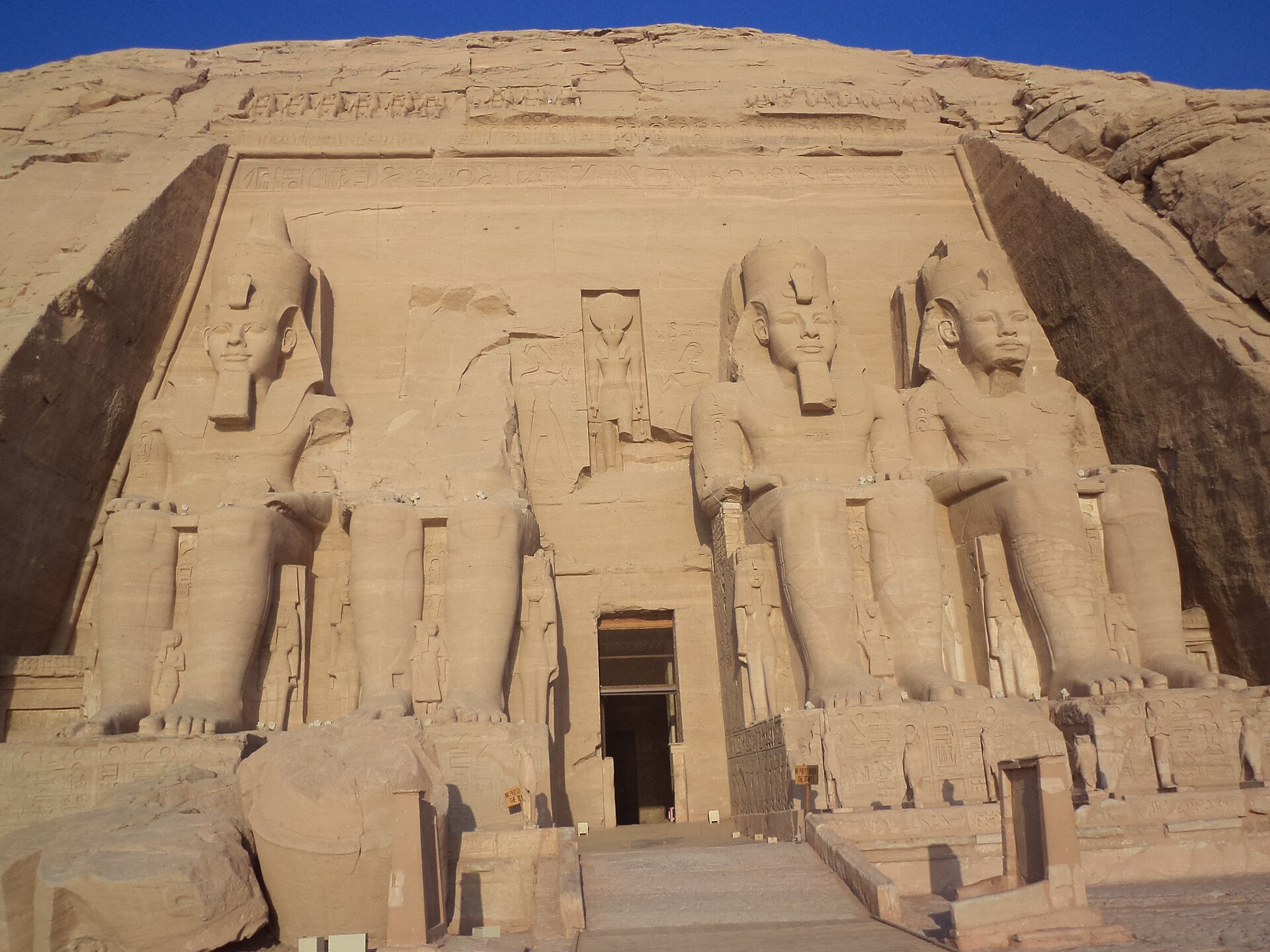
The four seated colossi that dominate the facade each stand about twenty metres tall. They show the pharaoh enthroned and serene, staring eternally toward the rising sun, with smaller figures of his family carved at his feet, dwarfed by his legs.
Inside the Great Temple: Osirid Pillars and the Battle of Kadesh
Beyond the facade the temple runs deep into the mountain. The first great hall is lined with tall pillars carved as standing statues of Ramesses in the pose of the god Osiris, leading the visitor gradually toward the holiest and darkest part of the temple.
The walls are covered with reliefs glorifying the king, above all his version of the Battle of Kadesh against the Hittites. In these scenes Ramesses charges in his chariot and single-handedly scatters his enemies, a piece of royal propaganda repeated across many of his temples.


The Solar Miracle at the Heart of the Mountain
At the very back of the Great Temple, some sixty metres inside the cliff, sits a small sanctuary with four statues of seated gods, one of them Ramesses himself. For most of the year this chamber lies in darkness.
But twice a year the rising sun shines straight down the temple axis and lights up three of the four figures, leaving only the god of the underworld in shadow. This alignment, thought to mark dates connected to the king, shows how precisely the ancient builders understood the movement of the sun.

The Small Temple of Nefertari and Hathor
A short distance from the Great Temple stands the Small Temple, dedicated to the goddess Hathor and to Ramesses’ favourite queen, Nefertari. Its facade carries six standing colossi, and remarkably the queen is shown the same height as the king, a rare honour in Egyptian art.
Inside, the reliefs celebrate Nefertari alongside her husband in scenes of worship and offering. Together the two temples turned this stretch of the Nubian frontier into a monument to the royal couple and the gods who protected their rule.

A Monument of Power on Egypt’s Southern Frontier
Abu Simbel was as much political statement as place of worship. Anyone travelling down the Nile into Egypt would first meet these colossal images of the pharaoh, an unmistakable warning of the power that lay ahead.
By fusing his own image with those of the great gods, Ramesses presented himself not merely as a king but as a divine being to be worshipped in his own lifetime. Few monuments express the ideology of Egyptian kingship so directly.
Forgotten by the Sand, Rediscovered by Explorers
After antiquity the temples were slowly buried by drifting desert sand until only the tops of the colossi showed above the dunes, and the site passed out of memory in the wider world.
In 1813 the Swiss traveller Johann Ludwig Burckhardt came upon the half-buried heads, and a few years later the showman-engineer Giovanni Belzoni dug his way into the Great Temple. Their reports brought Abu Simbel back to the attention of Europe and drew a stream of nineteenth-century travellers up the Nile.
The Aswan Dam and the Rising Waters
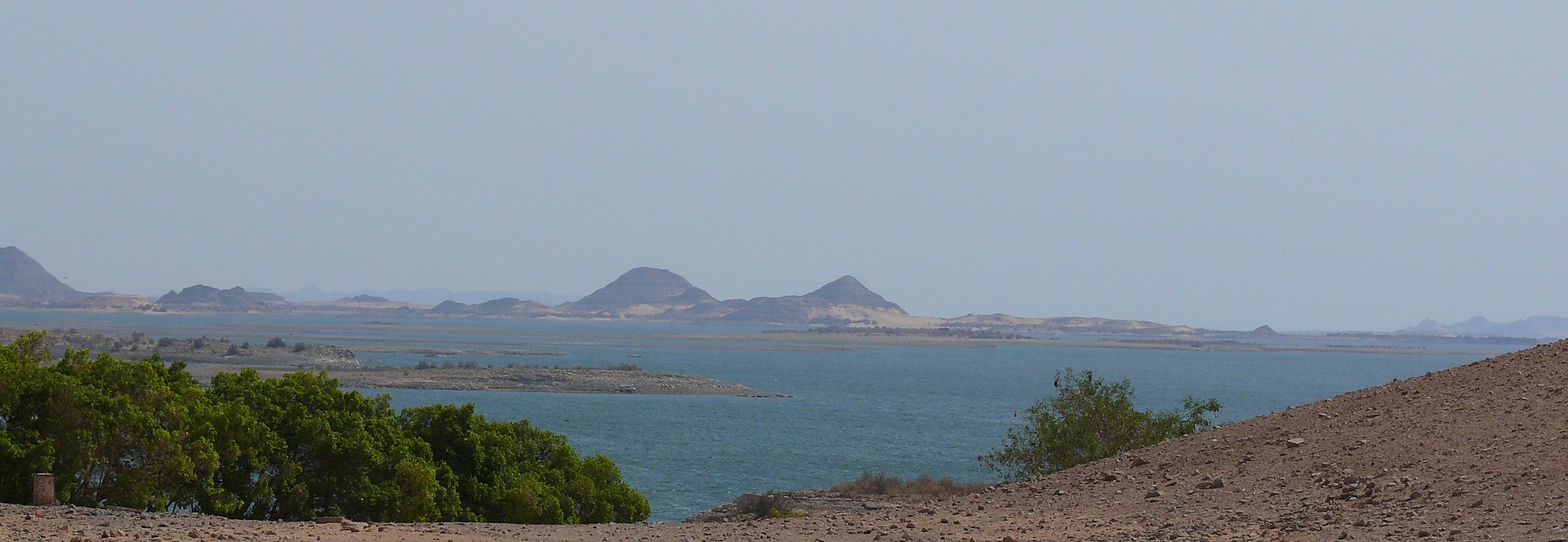
In the 1950s and 1960s Egypt built the Aswan High Dam to control the Nile and generate power. Behind it a vast reservoir, Lake Nasser, began to fill, and it threatened to drown dozens of ancient Nubian monuments, Abu Simbel among them.
The prospect of losing such a masterpiece to the water sparked an international outcry, and UNESCO launched an unprecedented appeal to save the temples of Nubia before the lake reached them.
The Great Rescue: Cutting a Temple into Blocks
Between 1964 and 1968 engineers and archaeologists carried out one of the boldest feats in the history of conservation. The temples were carefully sawn into more than a thousand huge blocks, lifted clear of the rising water, and reassembled on higher ground above the cliff.
An artificial dome of concrete was built to recreate the mountain into which the temples had originally been cut, and the pieces were fitted back together so precisely that the joints are almost invisible. The solar alignment was preserved almost perfectly at the new site.
Abu Simbel Today: A World Heritage Landmark
The Nubian monuments from Abu Simbel to Philae were inscribed on the UNESCO World Heritage List in 1979, and the rescue itself became a founding example of international cooperation to protect shared heritage.
Today visitors reach Abu Simbel by road or air across the desert, and crowds still gather twice a year to watch the sun creep into the sanctuary, just as it has since Ramesses ordered the temple cut into the cliff more than three millennia ago.
Nearby Places
- Thebes: The City of a Hundred Gates — the religious heart of the same New Kingdom that Ramesses II ruled from.
- The Nubian Pyramids of Sudan — the later kings of the very land that Abu Simbel was built to command.
- Kerma: The African Capital That Rivalled the Pharaohs — the Nubian civilisation Egypt struggled to control along this frontier.
- The Step Pyramid of Djoser — the ancient roots of the monumental tradition Ramesses inherited and magnified.
Closing Thoughts
Abu Simbel is a double marvel: an ancient king’s attempt to make himself eternal in stone, and a modern world’s determination not to let that attempt be lost beneath a lake.
Standing before the colossi today, it is worth remembering that they are not quite where Ramesses left them, but were lifted whole to save them. Few monuments carry so vividly both the ambition of the ancient world and the care of the modern one.
You May Like
Mafra, the Palace a King Built From a Vow


One thought on “Abu Simbel: The Cliff Temple Ramesses II Built to Guard Egypt, and the World Rescued From a Lake”