In a country where almost everything is built from grey granite or dark timber, there stands a castle the colour of warm terracotta. Häme Castle rises in glowing red brick from the shore of a Finnish lake, a great square medieval stronghold that looks as though it has wandered north from the Baltic cities and settled by the water. It is one of the oldest and most important castles in Finland, and one of the most unusual, and its long life has carried it through more transformations than almost any building you could name.
Over more than seven centuries this single fortress has been a crusader outpost, the ruling heart of a whole province, a royal artillery fort, a prison for a century and a half, and finally a beloved museum. To walk its brick vaults is to walk through the entire medieval and modern history of Finland, layer upon layer, all held within one remarkable set of red walls. In this article you will follow the whole of that journey, from the shadowy crusading origins of the castle to the crowds who explore it today. Come and meet the red castle of Häme.
What follows is not just an account of walls and dates but of the people who shaped this place and were shaped by it in turn, from the crusaders who first claimed the province to the officials who governed from its halls, the prisoners who counted out their years within its cells, and the restorers who gave it back to the nation. Each of them left something behind, and the castle you can visit today holds all of their stories at once. Few buildings anywhere offer so complete a window onto the making of a country.
In This Article
- The Red-Brick Castle by the Lake
- A Fortress Born of the Northern Crusades
- Birger Jarl and the Taming of Tavastia
- Why They Built in Brick
- The Shape of a Medieval Stronghold
- The Beating Heart of the Province
- The Vasa Kings and the Age of Bastions
- When Sweden Lost Finland
- A Century and a Half Behind Bars
- Rescue and a Long Restoration
- The Red Castle Becomes a Museum
- Walking Through Häme Castle Today
- Finding Häme Castle
- Castles Nearby
The Red-Brick Castle by the Lake
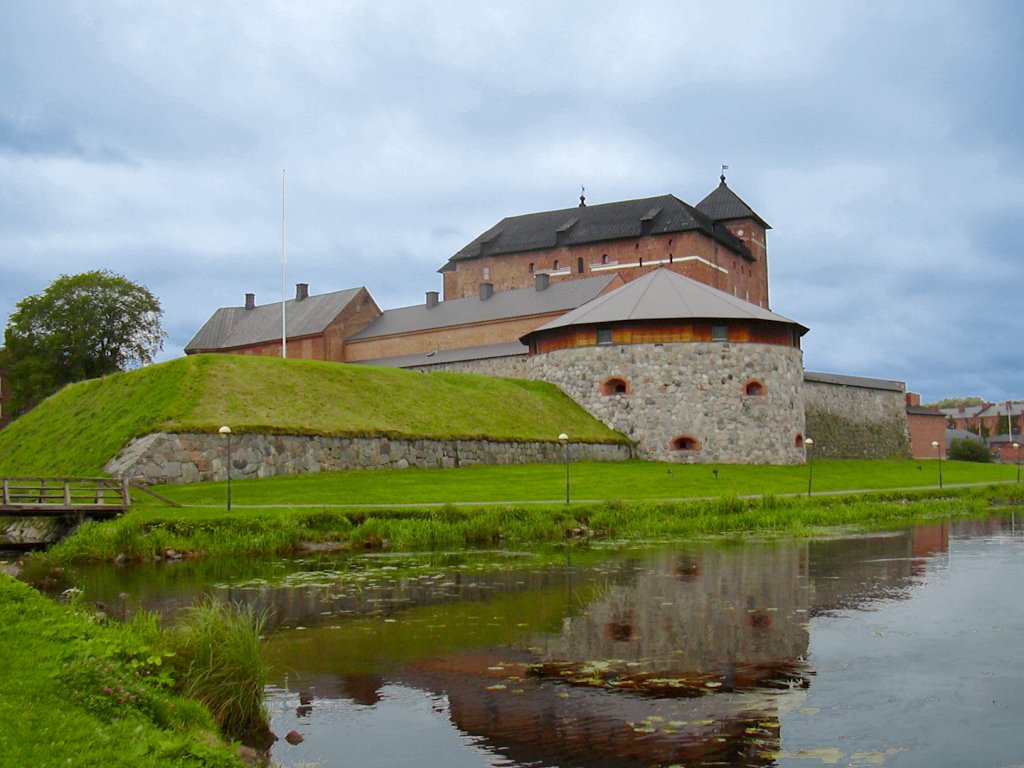
Most of the great castles of the north are built from grey granite, hard and cold and the colour of a winter sky. Häme Castle is different. It rises from the shore of a Finnish lake in warm, glowing red brick, a great square stronghold that looks less like a Nordic fortress and more like something you might expect to find guarding a town in northern Germany or the Baltic. That unusual colour is the first thing you notice, and it hints at just how singular this place is among Finland’s medieval buildings.
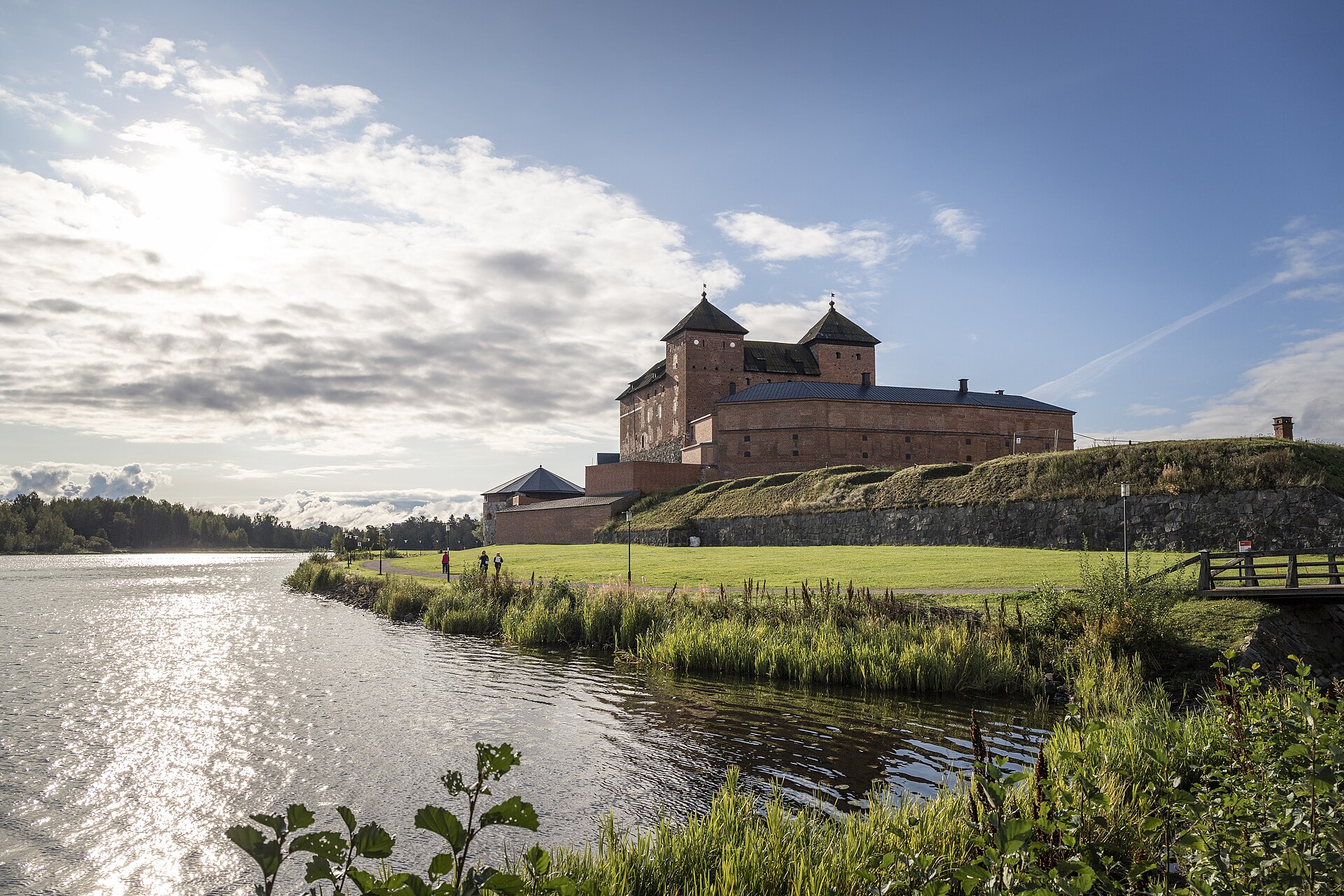
The castle stands in the town of Hämeenlinna, in the region of Kanta-Häme in the southern part of the country, on the low shore of Lake Vanajavesi. For more than seven hundred years it has watched over this stretch of water and the province around it, serving in turn as a crusader stronghold, a provincial power centre, a royal fortress, and, for a long and sombre stretch of its life, a prison. Today it is one of Finland’s most important historical monuments, and a visit here takes you deep into the medieval origins of the whole country. This is the story of the red castle of Häme.
There is something deeply appealing about the way the castle sits in its landscape. The flat, water-laced country of southern Häme has none of the drama of mountains, and so the great red block of the fortress becomes the strongest thing on the horizon, a made object standing out against the soft greens and greys of the lakeshore. In the low golden light of a Finnish summer evening the brick seems to glow from within, while under winter snow the red walls burn against the white in a way that is unforgettable. However you catch it, the castle rewards a long, slow look.

A Fortress Born of the Northern Crusades
To understand why Häme Castle exists at all, you have to go back to the thirteenth century and the long, complicated process by which the kingdom of Sweden extended its power across what is now Finland. This was the age of the so-called Northern Crusades, when Swedish kings and their nobles pushed east and north, mixing conquest, conversion, and colonisation as they went. The province of Tavastia, known in Finnish as Häme, lay in the interior lake country and was home to a people the Swedes were determined to bring under their control.
A permanent stone castle was the natural instrument of that control. It gave the newcomers a secure base from which to hold the surrounding land, collect taxes, and project power over the local population, and it stood as a blunt statement that this territory now belonged to the crown. Häme Castle was one of the key fortresses in this system, planted in the heart of the province to anchor Swedish authority. Its origins are wrapped in a certain amount of mystery, since the exact date of its founding is not recorded and has been argued over by historians for generations, but its purpose was never in doubt.
It is worth remembering how thinly settled and how vast this country was in the thirteenth century, a wilderness of forest and water where a single stone castle represented an extraordinary concentration of resources and will. To haul the materials, organise the labour, and defend the site long enough to build something on this scale was a major undertaking, and the very existence of Häme Castle is testimony to how seriously the Swedish crown took the task of holding the interior. This was not a casual outpost but a statement of permanent intent, meant to last for centuries, and it has.
Birger Jarl and the Taming of Tavastia
By long tradition, the founding of Häme Castle is linked to Birger Jarl, the powerful Swedish statesman who dominated the kingdom in the middle of the thirteenth century and who is often credited with launching a crusade into Tavastia around the 1230s and 1240s. In this telling, the castle was raised in the wake of that campaign to hold down the newly subdued province, and Birger Jarl’s name has become firmly attached to its origins in the popular imagination.
The truth, as so often with medieval history, is harder to pin down. The earliest solid documentary trace comes only in the very beginning of the fourteenth century, when a royal document of 1308 mentions a castle in the region, and the Novgorod Chronicle refers to a fortress here in 1311 in connection with raids from the east. Archaeologists and historians continue to debate whether the first stronghold on this spot was a simpler earth-and-timber affair later replaced by the great brick castle, or whether the stone building itself goes back further than the documents suggest. What is clear is that by the early 1300s Häme Castle was a fixed and important part of the eastern realm.
The uncertainty around the castle’s beginnings is itself a fascinating part of its story, and it reminds us how much of the medieval past survives only in fragments and guesses. Chronicles were written by distant hands with their own purposes, documents were lost, and the earth beneath the castle still guards secrets that only careful excavation can bring to light. Rather than diminishing the place, this haze of uncertainty adds to its atmosphere, and every visitor is free to imagine the crusaders, chieftains, and builders whose exact deeds have slipped beyond the reach of the written record.

Why They Built in Brick
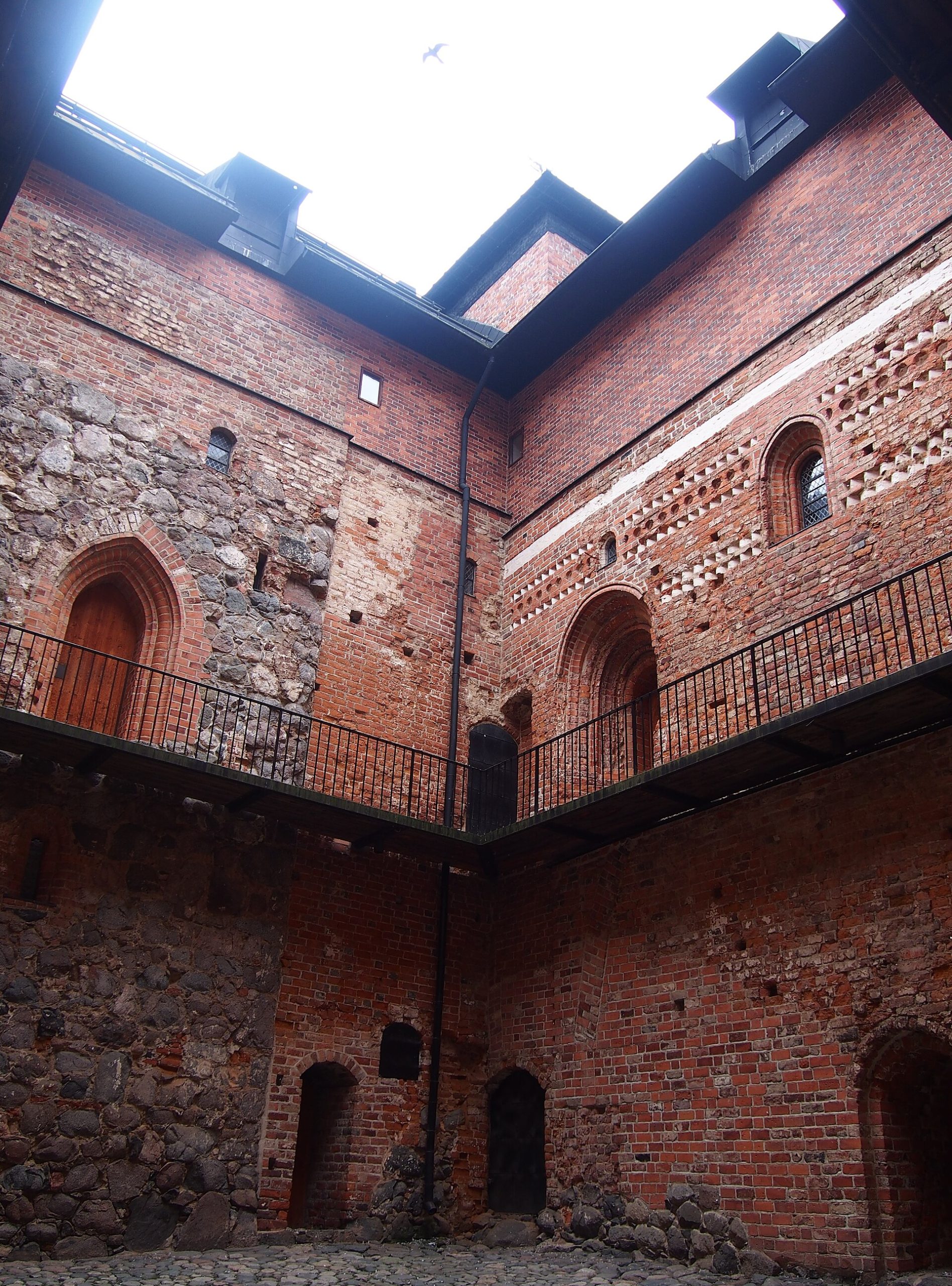
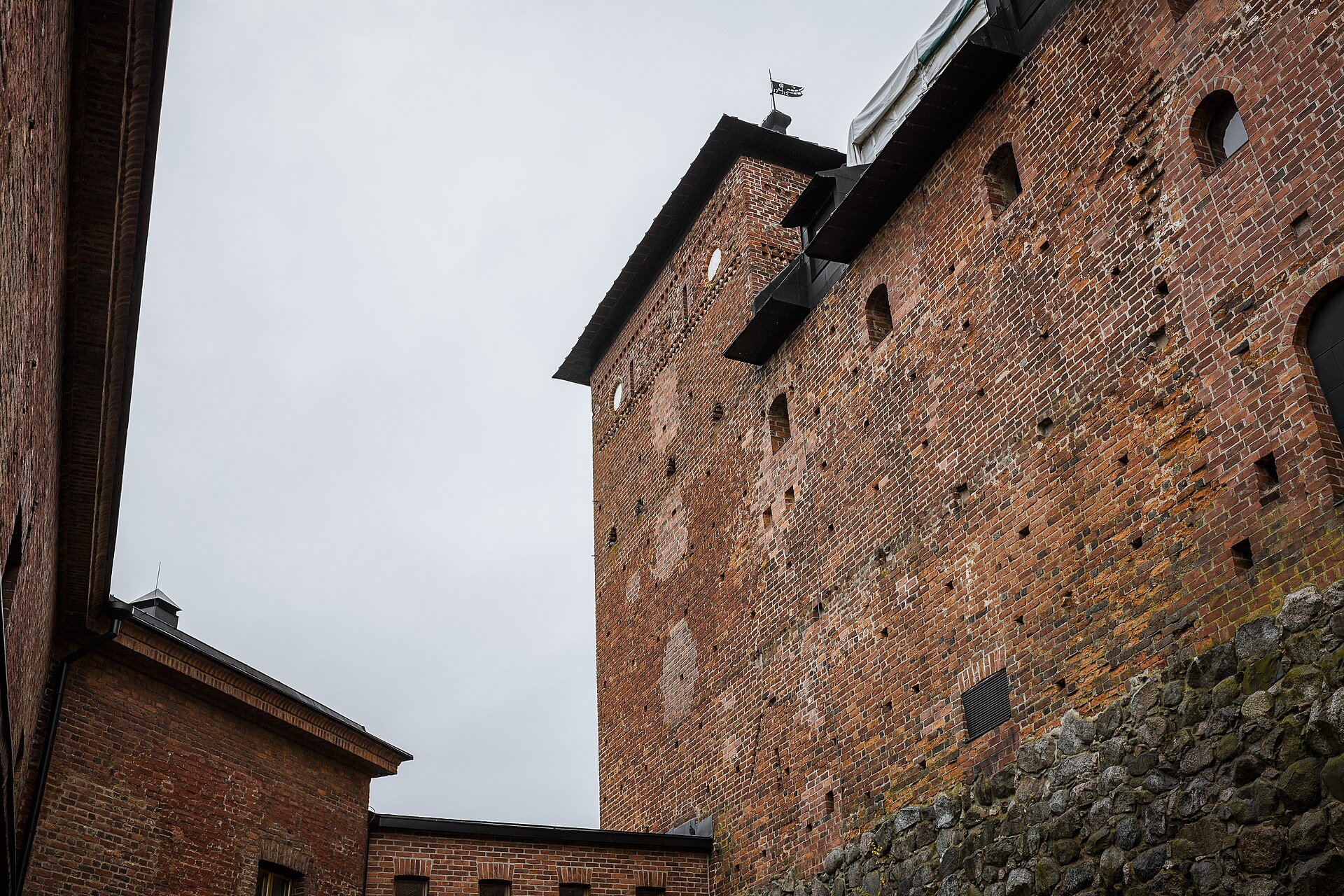
The most striking thing about Häme Castle, its red-brick walls, is also one of the most revealing. Brick was an expensive and prestigious building material in the medieval north, associated with the great cities and cathedrals of the Baltic and with the architecture of the German lands. To build a castle in brick this far into the Finnish interior was a deliberate and costly choice, and it tells us something about the ambitions of those who raised it.
The lower parts of the castle were built up from masoned granite, the local stone that forms the bones of so much of Finland, but above that base the builders switched to brick, laying up the great walls and towers in the warm red material that gives the castle its character. This combination of a solid stone footing and a brick superstructure was practical as well as impressive, and it links Häme Castle to a wider family of brick fortresses and churches around the Baltic Sea. In a land of grey granite, the red castle stood out as a mark of wealth, power, and connection to the wider world of northern Europe.
The choice of brick also speaks of the people who moved through this world, the craftsmen and masons who carried their knowledge across the Baltic and put it to work on the Finnish frontier. Building in brick required skilled hands that knew how to fire and lay the material properly, and the presence of such expertise here shows that Häme was tied into a network of trade, travel, and shared technique that stretched right around the northern seas. The red walls are, in a sense, a record of connection, proof that even this remote corner of Europe was part of a larger medieval conversation.

The Shape of a Medieval Stronghold
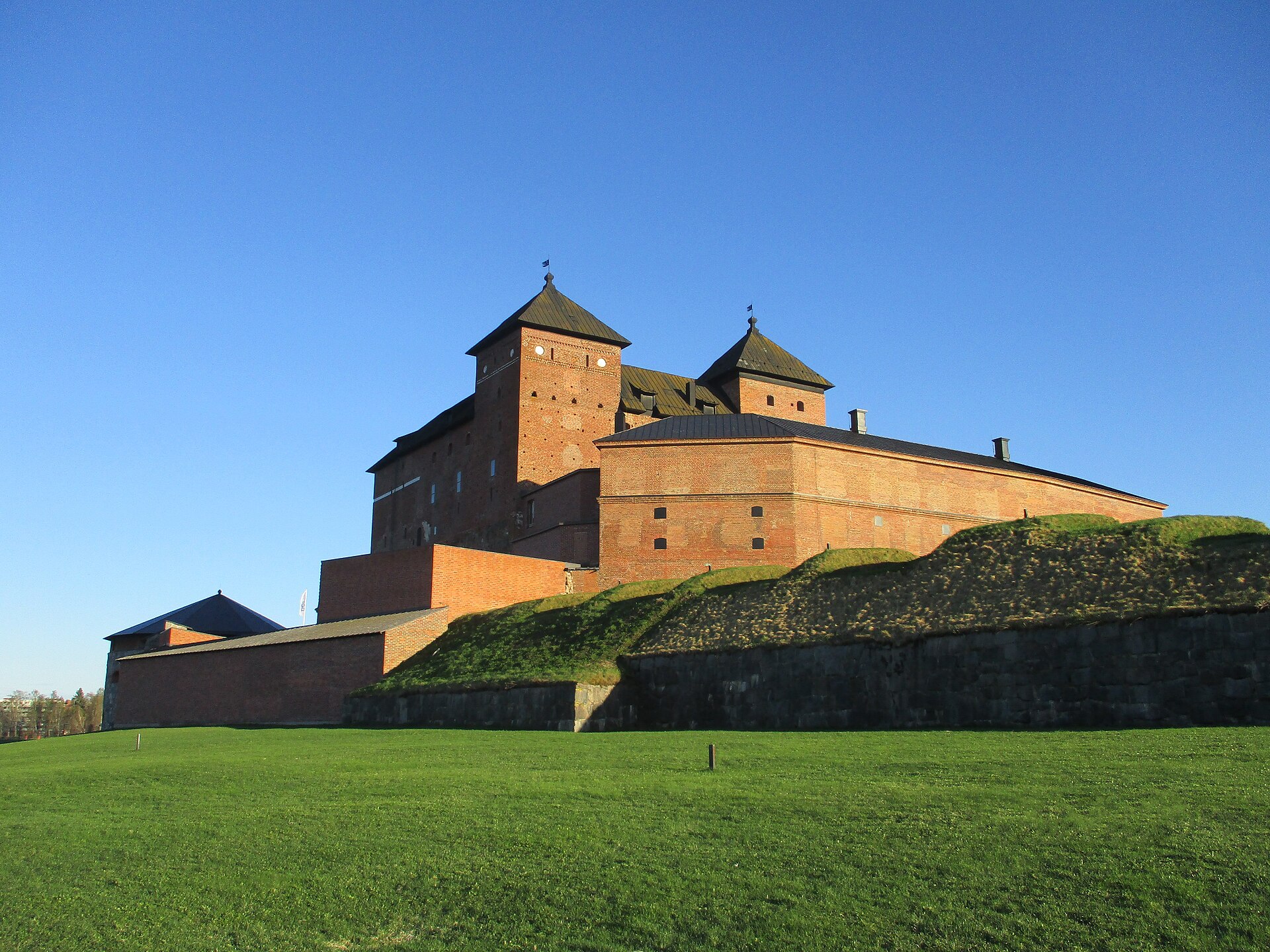
In its classic medieval form, Häme Castle was a compact and formidable thing. At its core stood a central keep, surrounded by curtain walls that enclosed the inner spaces, and the whole was protected by a moat that cut it off from easy approach. The design was square and businesslike, built to be defended and to overawe, with strong walls presenting a solid face to anyone who came against it.
The castle was once crowned with five turrets rising from its walls, though the passage of centuries has left only two of them still clearly visible today. Those towers would have given the fortress a bristling, many-pointed silhouette against the sky, and made it a landmark for miles across the flat lake country. Inside the walls were the halls and chambers where the castle’s lords lived and worked, along with storerooms, a chapel, and all the practical spaces a self-sufficient stronghold required. It was designed to hold out against a siege, to house a garrison and an administration, and to remind everyone who saw it exactly where power in the province lay.
The loss of three of the original five turrets over the centuries is a quiet reminder of how much even the sturdiest buildings change with time. Walls are raised and lowered, towers rise and fall, roofs come and go, and the castle you see today is the sum of countless such alterations. Historians and restorers have spent a great deal of effort trying to understand how the fortress looked at different points in its life, reading the clues left in the brickwork and the foundations, and part of the pleasure of a visit is learning to see those layers of change written into the fabric around you.
The Beating Heart of the Province
For much of the medieval and early modern period, Häme Castle was far more than a military installation. It was the administrative heart of the entire province of Tavastia, the seat from which royal officials governed the region, gathered its taxes, and dispensed the king’s justice. The castle’s authority reached out across the surrounding countryside, and the rhythm of provincial life was set within its walls.
That central role shaped the growth of the whole area. A community developed in the shadow of the fortress to serve it and to trade under its protection, and in time this settlement would become the town of Hämeenlinna, whose very name means the castle of Häme, echoing the Swedish name Tavastehus. The town gained formal city rights in the seventeenth century, but its roots reached back to the castle that had drawn people to this shore in the first place. For the ordinary folk of the province, the great red fortress was the fixed point around which their world turned, the place where power lived and decisions were made.
The bond between castle and community ran deep in both directions. The fortress needed the surrounding countryside to feed and supply it, and the countryside in turn looked to the castle for protection, justice, and a market for its goods. Over the generations this relationship wove the great red building into the everyday life of the province in a way that went far beyond mere military control. When you visit Hämeenlinna today and see how the modern town still gathers around its ancient castle, you are seeing the living continuation of a partnership that is more than seven centuries old.
It is striking, too, how the name itself has carried this history down the centuries. To say Hämeenlinna is quite literally to name the castle of Häme, so that every mention of the town is also a small tribute to the fortress at its heart. Language has a way of preserving these deep connections long after their origins are forgotten, and here the bond between the stronghold and the community it created is written into the very word people use for the place every single day.
The Vasa Kings and the Age of Bastions
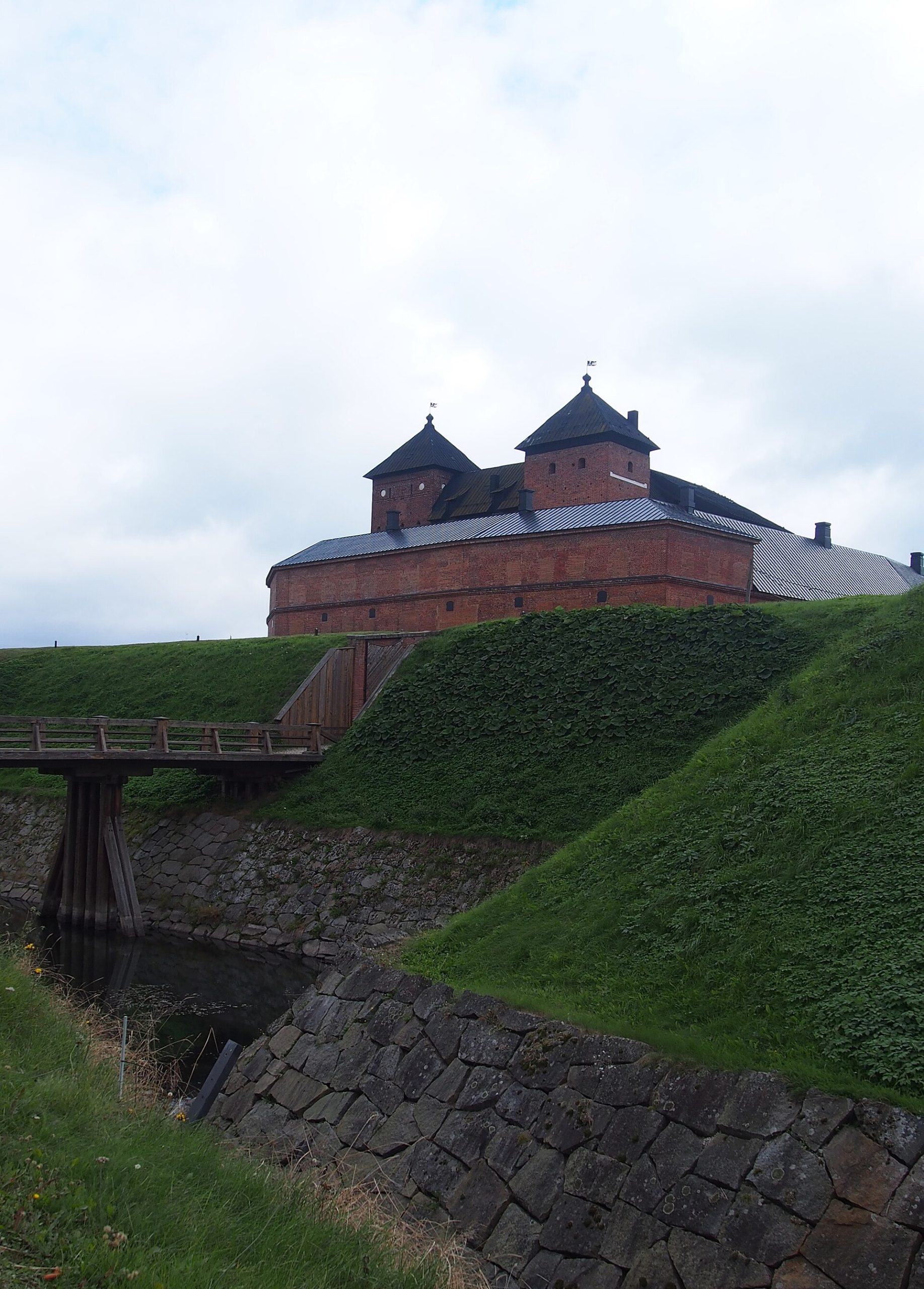
As the medieval world gave way to the age of gunpowder, Häme Castle had to change with the times. The tall brick walls that had been so formidable against ladders and arrows were vulnerable to cannon, and the rulers of Sweden, especially during the energetic reign of the Vasa dynasty in the sixteenth century, set about modernising their fortresses to meet the new threat. Around the old medieval core, new outer fortifications began to take shape, designed to mount artillery and to absorb the punishment that guns could deliver.
Over the following generations these outer works grew into a ring of bastions and ramparts surrounding the original castle, transforming Häme from a purely medieval stronghold into a more modern fortress of the kind found across early modern Europe. The result is a place where you can read several ages of military architecture at once, the tall red keep of the Middle Ages sitting within the lower, thicker earthworks of the gunpowder era. This layering is part of what makes the castle so fascinating, a single site that records the long evolution of how strongholds were built and defended.
These changes were expensive and disruptive, and they show how a castle had to keep evolving simply to remain relevant. A fortress that failed to modernise would quickly become useless, an easy target for the latest guns, and so each generation of rulers invested in bringing their strongholds up to date. The bastions of Häme were part of a Europe-wide transformation in military architecture, as the tall, vertical castles of the Middle Ages gave way to the low, angular, artillery-resistant forts of the early modern age. To see both styles fused in one place is to watch that great shift happen before your eyes.
When Sweden Lost Finland
For all its long history as a Swedish fortress, Häme Castle’s role as a stronghold came to an end with a single, decisive war. In 1808 and 1809 Sweden and Russia fought the conflict known as the Finnish War, and the outcome changed the map of the north forever. Sweden was defeated, and the whole of Finland was ceded to Russia, becoming an autonomous Grand Duchy under the Russian tsar. Overnight, the border that fortresses like Häme had been built to guard simply vanished.
With Finland now entirely inside the Russian empire, there was no longer any frontier here to defend, and a castle in the middle of peaceful territory had lost its reason for being as a military installation. The great red fortress that had stood for centuries as a symbol of Swedish power in the interior found itself suddenly obsolete. But unlike many old castles that were left to crumble once their military use had passed, Häme was about to be given a new and very different purpose, one that would fill its ancient halls for the better part of the next century and a half.
The peaceful transfer of Finland to Russia was, for the old fortresses, a quieter kind of ending than a siege, but an ending all the same. There was no dramatic last stand at Häme, no breach in the walls or storming of the gates, simply the slow realisation that the world had changed and the castle’s original purpose had evaporated. It is a reminder that the fate of great buildings is often decided far away, at the negotiating tables where empires redraw their borders, and that a fortress can be made obsolete by a treaty as surely as by an army.

A Century and a Half Behind Bars
The new purpose was a prison. From 1809 onward, Häme Castle was pressed into service as a place of confinement, and for roughly the next hundred and fifty years, all the way until the middle of the twentieth century, its walls held prisoners rather than soldiers. The medieval chambers that had once housed the lords of the province were converted into cells, and the fortress that had defended the region now confined those the state wished to keep locked away.
It was a grim chapter, and it left its mark on the building. The needs of a prison were very different from those of a castle, and over the long decades of incarceration the fabric of the old fortress was altered, subdivided, and worn down to suit its harsh new role. Much of the medieval character of the interior was lost or hidden behind the additions of the prison era. Yet in a strange way this long imprisonment may also have saved the castle, for it kept the building in continuous use and under a roof through a period when many abandoned fortresses across Europe were quietly falling into ruin. Häme endured, even if it endured as a jail.
Life inside the castle during its prison years is a sobering thing to contemplate as you walk the same corridors today. The thick walls that had once sheltered a garrison now confined men and sometimes women through long Finnish winters, and the atmosphere of those years still seems to cling faintly to the older parts of the building. Yet this difficult chapter is an honest part of the castle’s history, and the museum does not hide it. Understanding the fortress as a prison as well as a stronghold gives a fuller, more human picture of everything these walls have witnessed.

Rescue and a Long Restoration
By the middle of the twentieth century, attitudes had changed, and people began to see Häme Castle not as a useful prison but as a priceless piece of national heritage that deserved to be recovered. The prison was finally closed, and in the 1950s an ambitious and painstaking programme of restoration began, one that would stretch across several decades before it was complete. The work was a huge undertaking, aiming to strip away the alterations of the prison years and to bring back something of the castle’s original medieval form.
Restorers and archaeologists worked to uncover the old structures, to repair the brick and stone, and to make the building whole again as a monument rather than a place of confinement. The restoration ran on through the following decades, and by the time it was finished it had transformed the battered old prison back into a castle that visitors could explore and understand. It was careful, respectful work, and it gave Finland back one of the most important survivals from its medieval past, ready to begin yet another chapter in its very long life.
The decision to restore the castle rather than simply preserve it as a ruin was a significant one, and it reflected a growing confidence in Finland about the value of its own deep history. Restoration on this scale is always a careful balance between recovering the past and respecting the changes that time has brought, and the work at Häme was guided by a real determination to get that balance right. The result is a building that feels genuinely old and genuinely whole at the same time, a place where the medieval fabric has been given room to speak again after long years of being hidden away.

The Red Castle Becomes a Museum
Today Häme Castle has found perhaps its happiest role of all, as a museum and cultural centre open to everyone. It is looked after by Finland’s national antiquities authority and forms part of the country’s museum system, and its halls now welcome visitors rather than housing prisoners or soldiers. Exhibitions inside the castle tell the story of its long history and of the province around it, and the building itself has become one of the most visited historical sites in southern Finland.
The castle is also a lively venue for events, from guided tours and school visits to concerts and celebrations, and the area around it has grown into a whole district of museums and attractions. Watching a film about the castle’s history or joining a tour through its brick chambers, you get a vivid sense of just how much this one building has seen. From crusader outpost to provincial capital, from royal fortress to prison to museum, few places carry so many layers of the past within a single set of walls.
The transformation from prison to museum completed one of the most remarkable second acts of any building in the country. Where once the castle had been a place people were sent against their will, it is now a place they travel to gladly, bringing their children to marvel at the brick vaults and to imagine the long-ago lives lived within them. That reversal, from confinement to celebration, feels like a fitting reward for a building that has given so much and endured so much, and it ensures that the red castle will go on being cherished for generations to come.
Walking Through Häme Castle Today
Visiting Häme Castle now is a rich and rewarding experience. You approach across the old defences and step into a world of red-brick vaults and stone-floored halls, where the thick walls keep the air cool even on a warm summer day. Guided tours lead you through the medieval interior, pointing out the traces of its many different eras, and there is a real pleasure in tracing the castle’s story room by room, from its crusading origins to its long imprisonment and its careful rescue.
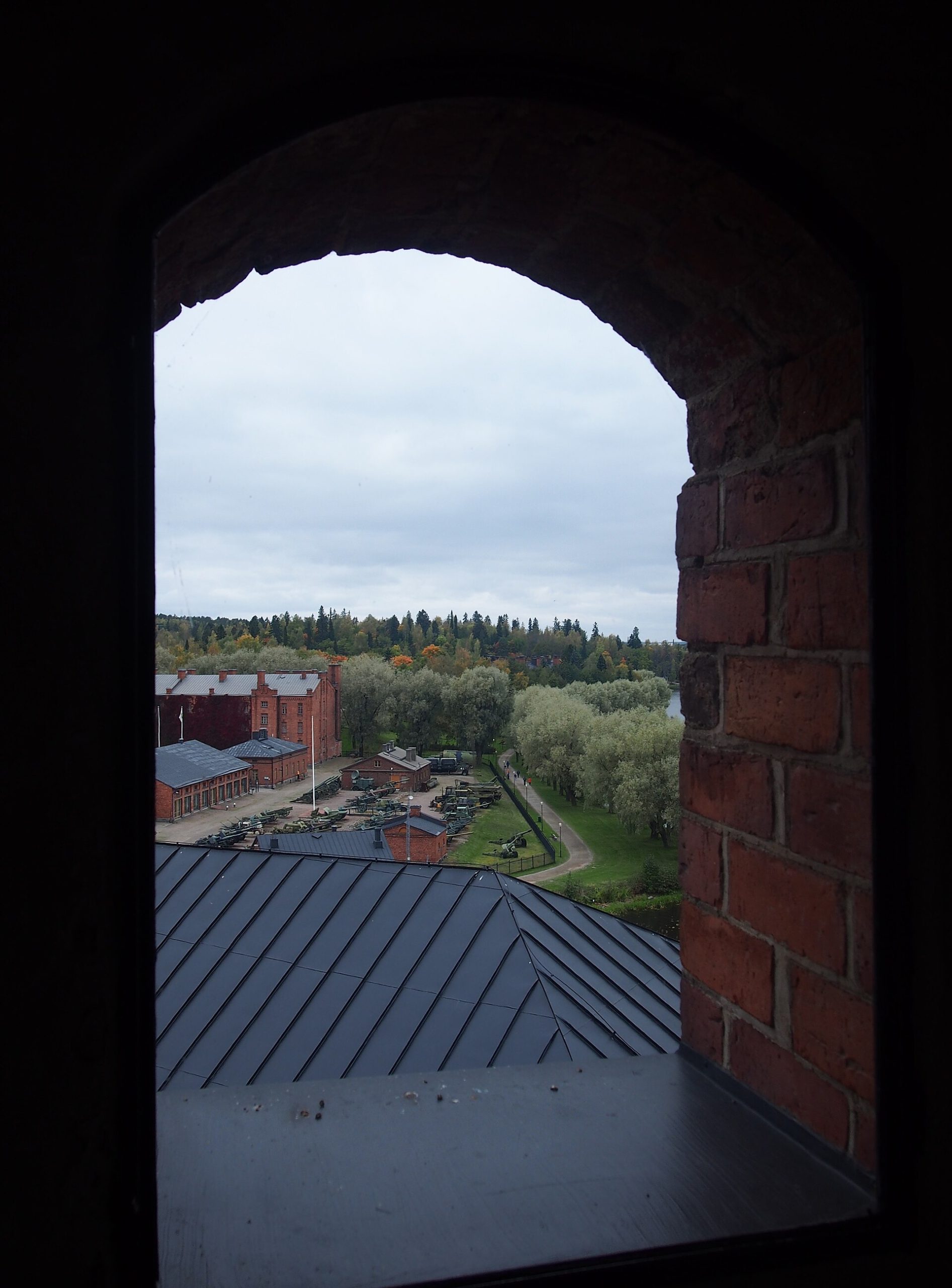
Outside the keep, you can walk the surrounding bastions and earthworks and look out over Lake Vanajavesi, the same water that has washed this shore since the castle was young. The whole site sits within a green and pleasant setting on the edge of the town, and it is easy to spend a good part of a day here, moving between the castle and the cluster of museums that have grown up nearby. Whether you come for the deep history, the unusual architecture, or simply the atmosphere of a genuine medieval stronghold, Häme Castle repays the visit many times over.
Take the time, if you can, to simply stand still somewhere in the castle and let the age of the place settle around you. Feel the cool of the brick, listen to your footsteps echo in a vaulted chamber, and look out through a deep-set window at the lake beyond. These quiet moments are where the history stops being a set of dates and becomes something you can almost touch, a direct line back to the crusaders and craftsmen who first raised these walls. Häme Castle rewards the hurried visitor, but it gives its best to those who slow down.
Families with children will find the castle especially welcoming, for there is something about a real medieval fortress, with its towers and vaults and thick defensive walls, that fires the imagination in a way no textbook ever could. Watching a child gaze up at the great red walls and begin to picture the knights and prisoners who once lived within them is one of the quiet joys of a visit here, and a reminder that the best history is the kind you can walk straight into.
Finding Häme Castle
Häme Castle is very easy to reach, which makes it one of the most accessible medieval fortresses in the whole of Finland. It stands in the town of Hämeenlinna, roughly a hundred kilometres north of Helsinki, and the town sits directly on the main railway line between the capital and Tampere, so you can get there comfortably by train in about an hour from Helsinki. From the station it is a short and pleasant walk to the castle on the lakeshore.
That easy access makes Häme Castle a natural day trip from Helsinki, and it pairs beautifully with the other historical sights of Hämeenlinna, including the birthplace of the composer Jean Sibelius, who was born in the town. Whether you are building a wider tour of Finland’s castles or simply looking for a rewarding excursion from the capital, the red fortress of Häme is a superb choice. Here are the exact coordinates so you can find your way to the castle by the lake.
Combining the castle with the wider attractions of Hämeenlinna makes for an especially satisfying day, and the town has a gentle, welcoming character that suits a leisurely visit. The lakeside setting, the cluster of nearby museums, and the easy rail connection all work together to make this one of the most rewarding heritage destinations in the country. Whether you are a serious lover of castles or simply curious to see one of Finland’s oldest buildings, the red fortress of Häme is well worth the short journey north from the capital.

Castles Nearby
If Häme Castle has drawn you into the world of Finland’s medieval fortresses, two more Finnish strongholds make the perfect next stop.
- Turku Castle, on the southwestern coast, is Finland’s other great medieval castle and a natural companion to Häme.
- Olavinlinna, rising from a strait in the eastern lakes, completes the trio of Finland’s finest surviving fortresses.
Seven Centuries in Red Brick
There are older castles in Europe and there are grander ones, but there are very few that have lived so many different lives as Häme Castle. It was raised to hold down a newly conquered province, grew into the capital of a whole region, was rebuilt to face the cannon of a new age, and then, when its fighting days were done, spent a century and a half as a prison before being lovingly restored and reborn as a museum. Through every one of those changes the great red walls endured, absorbing each new era into their fabric.
That is what makes a visit here so moving and so rewarding. You are not looking at a single frozen moment of the past but at the whole long sweep of Finnish history, written in stone and brick and layered one age upon another. Stand in the courtyard of the red castle, run your hand over walls that crusaders, kings, prisoners, and restorers have all touched in turn, and you feel the sheer depth of time that this one building holds. Häme Castle is a survivor in the fullest sense, a place that has been many things and has come through them all as itself.
If your travels ever take you to southern Finland, set aside a day for the red castle of Häme. Ride the train up from Helsinki, walk down to the lakeshore, and step inside those glowing brick walls to feel seven centuries of history close around you. It is a place that asks only a little of your time and gives a very great deal in return, and once you have stood in its ancient courtyard you will understand why the Finns hold it so dear. The castle has waited a long time for you, and it is very much worth the trip.
You May Like
The Moscow Kremlin: The Great Red Fortress at the Heart of Russia