High above the harbour of Oslo, on a rocky headland where the city meets the sea, stands a great grey fortress that has guarded the Norwegian capital for more than seven hundred years. Akershus is at once a medieval castle, a Renaissance royal residence, a working military stronghold, and a place of deep national memory, and few sites anywhere carry so much of a nation’s history within a single set of walls. It is the stone guardian of Oslo, and it has stood watch through some of the most dramatic moments in Norway’s long story.
From the medieval king who raised it around 1300, to the sieges it turned back, to the Renaissance monarch who rebuilt it, to the dark years of wartime occupation and the museums that keep those memories alive, Akershus has been at the centre of Norwegian life for centuries. To visit is to walk through the whole sweep of that history, from royal halls and echoing dungeons to ramparts with sweeping views over the fjord. In this article you will follow the full story of the fortress on the harbour. Come and meet Akershus, the stronghold that guards Oslo.
What sets Akershus apart from so many other historic castles is that it has never really stopped being important. It began as the shield of a medieval capital and it remains, today, a working fortress at the heart of a modern one, still used for ceremony and state occasions, still guarding the same commanding ground above the sea. That unbroken thread of use, running from the thirteenth century to the present day, is rare and precious, and it gives the whole place an atmosphere that a mere ruin could never possess.

In This Article
- The Stronghold That Guards Oslo
- A Castle Raised by a Medieval King
- The Siege That Made a Legend
- Christian IV and the Renaissance Rebuilding
- A Royal Residence and a Royal Resting Place
- Dark Years Under Occupation
- The Fortress and the Growing City
- Walking the Ramparts Today
- Inside the Castle Halls
- The Museums Within the Walls
- A Living Ceremonial Fortress
- The Fortress at the Heart of the Harbour
- Finding Akershus Fortress
- Castles Nearby
The Stronghold That Guards Oslo
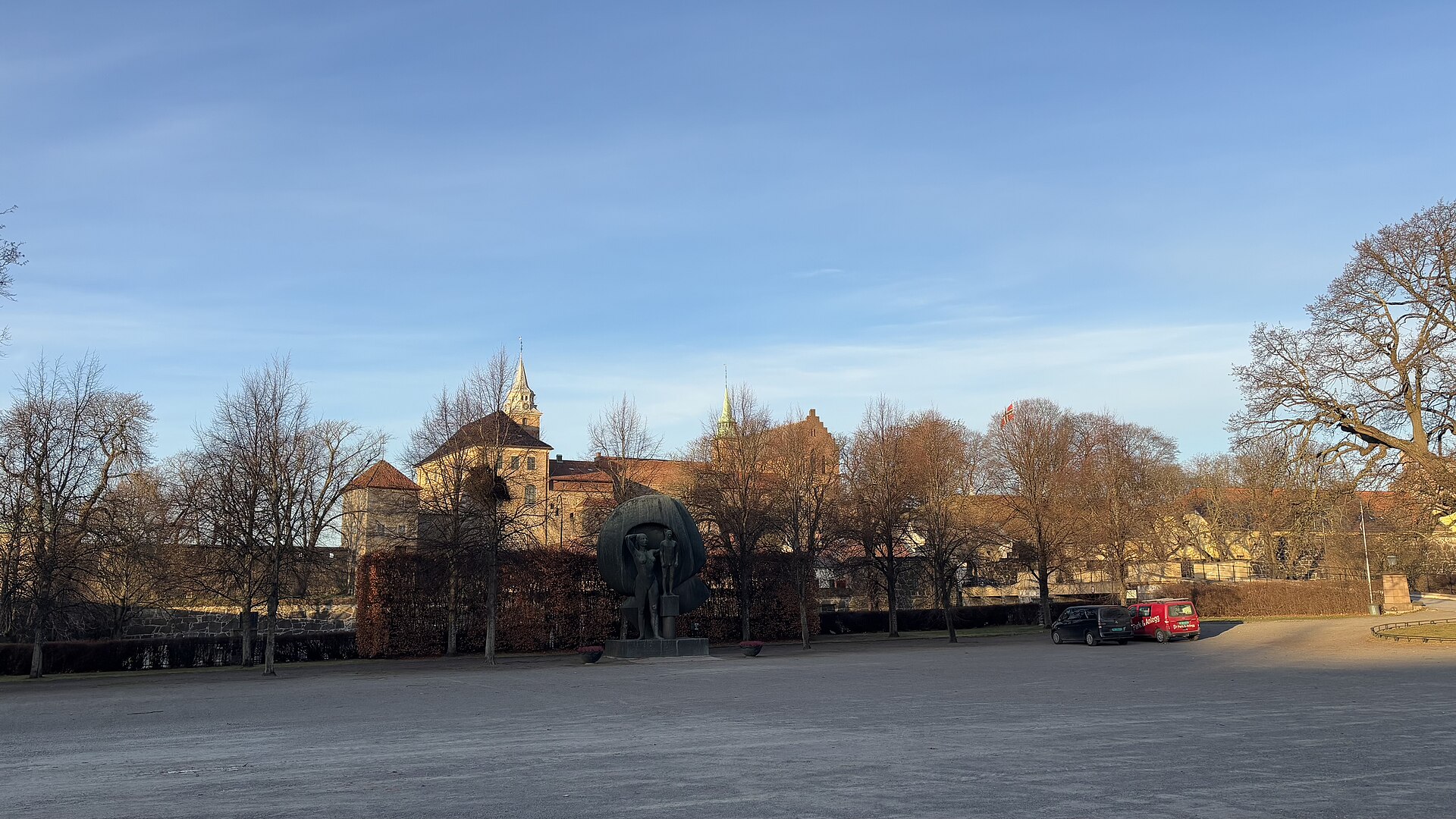
Stand on the waterfront of Oslo and look up, and you will see a great grey fortress crowning the headland above the harbour, its walls and towers rising over the modern city like a message from another age. This is Akershus, the castle and fortress that has guarded the Norwegian capital for more than seven hundred years, and it is one of the most important historic sites in the whole country. It is a place where medieval kings held court, where enemy armies were turned away again and again, and where some of the darkest and most dramatic moments of Norway’s twentieth century played out.
What makes Akershus so compelling is the sheer sweep of history it contains. This is not a single castle frozen at one moment but a living stronghold that has been rebuilt, expanded, besieged, occupied, and reinvented across the centuries, all while keeping its watch over the same stretch of water. Today it is at once a medieval castle, a Renaissance royal residence, a working military area, a royal burial place, and a set of museums, and you can walk through all of those layers in a single visit. This is the story of the fortress on the fjord, the stone guardian of Oslo.
There is a particular thrill in seeing a genuine medieval fortress still holding its ground in the middle of a busy modern capital. So many old castles survive only as ruins on distant hilltops, far from the life of the present day, but Akershus sits right at the centre of things, its ancient walls rising directly above the harbour where the city still works and plays. That closeness collapses the distance between past and present, and it lets you feel the long history of Oslo not as something remote and finished but as something you can reach out and touch.

A Castle Raised by a Medieval King
Akershus owes its existence to a medieval Norwegian king with a clear strategic eye. Around the end of the thirteenth century and the beginning of the fourteenth, King Haakon V Magnusson ordered a fortress built on the rocky headland guarding the approach to Oslo, then a growing town at the head of the fjord. Haakon was determined to strengthen his kingdom’s defences, and he made Oslo his capital, so the new castle was intended both to protect the town from seaborne attack and to serve as a royal residence and seat of power.
The site was superbly chosen. Perched on a promontory above the water, the fortress commanded the harbour and the sea lanes, and its position on high ground made it difficult to assault. From the very beginning Akershus was a serious piece of military architecture, and it quickly proved its worth. Over the medieval centuries it would face repeated attacks, and its strength became the stuff of national pride. The castle was the shield of the capital, and behind that shield the kingdom of Norway could feel a little safer against the many dangers that threatened it from land and sea.
Haakon V was one of the more capable Norwegian kings of the Middle Ages, and his decision to fortify Oslo reflected a wider effort to secure and strengthen his realm at a time of shifting power in the north. By moving his capital here and raising a great castle to defend it, he set the future course of the city for centuries to come. In a very real sense the story of Oslo as a capital begins with the founding of Akershus, and the two have been bound together ever since, the fortress and the city growing up side by side on the shore of the fjord.
The Siege That Made a Legend
Akershus soon earned a reputation as a fortress that could not be taken by force, and it built that reputation the hard way, by surviving siege after siege. Perhaps the most famous of these came in the early fourteenth century, when a Swedish duke laid siege to the castle and failed to break it, one of several occasions on which hostile armies dashed themselves against the walls in vain. Time and again attackers came, and time and again the fortress held, its defenders turning back everything thrown at them.
This record of successful defence became a point of enormous national significance. In an age when so much of Norway’s fate was decided by larger neighbours, Akershus stood as proof that the kingdom could hold its ground, a place that never fell to an enemy assault throughout the medieval and early modern periods. That unbroken record gave the fortress an almost symbolic power, and it is remembered to this day as a stronghold that never surrendered to a besieging force. The walls you see now carry that long history of defiance within them, every stone a witness to armies that came and went while the castle remained.
It is worth pausing on just how unusual an unbroken defensive record like this really is. Across the long and violent history of Europe, most great fortresses fell to an enemy at some point, whether by storm, starvation, or treachery. That Akershus turned back attack after attack across the medieval and early modern centuries speaks both to the strength of its position and to the determination of those who held it. For Norwegians it became a source of quiet pride, a stone symbol that their capital could stand firm no matter what came against it.
Stories of these sieges became part of the folklore of the fortress, retold across generations as examples of Norwegian resilience. Whether or not every detail survived intact in the telling, the essential truth was real enough, and it lodged deep in the national imagination. Akershus came to stand for the idea that Norway, however small and however pressed by powerful neighbours, could hold its own ground and defend what was its own. That symbolic power still clings to the walls today and is part of what visitors sense as they walk them.
Christian IV and the Renaissance Rebuilding
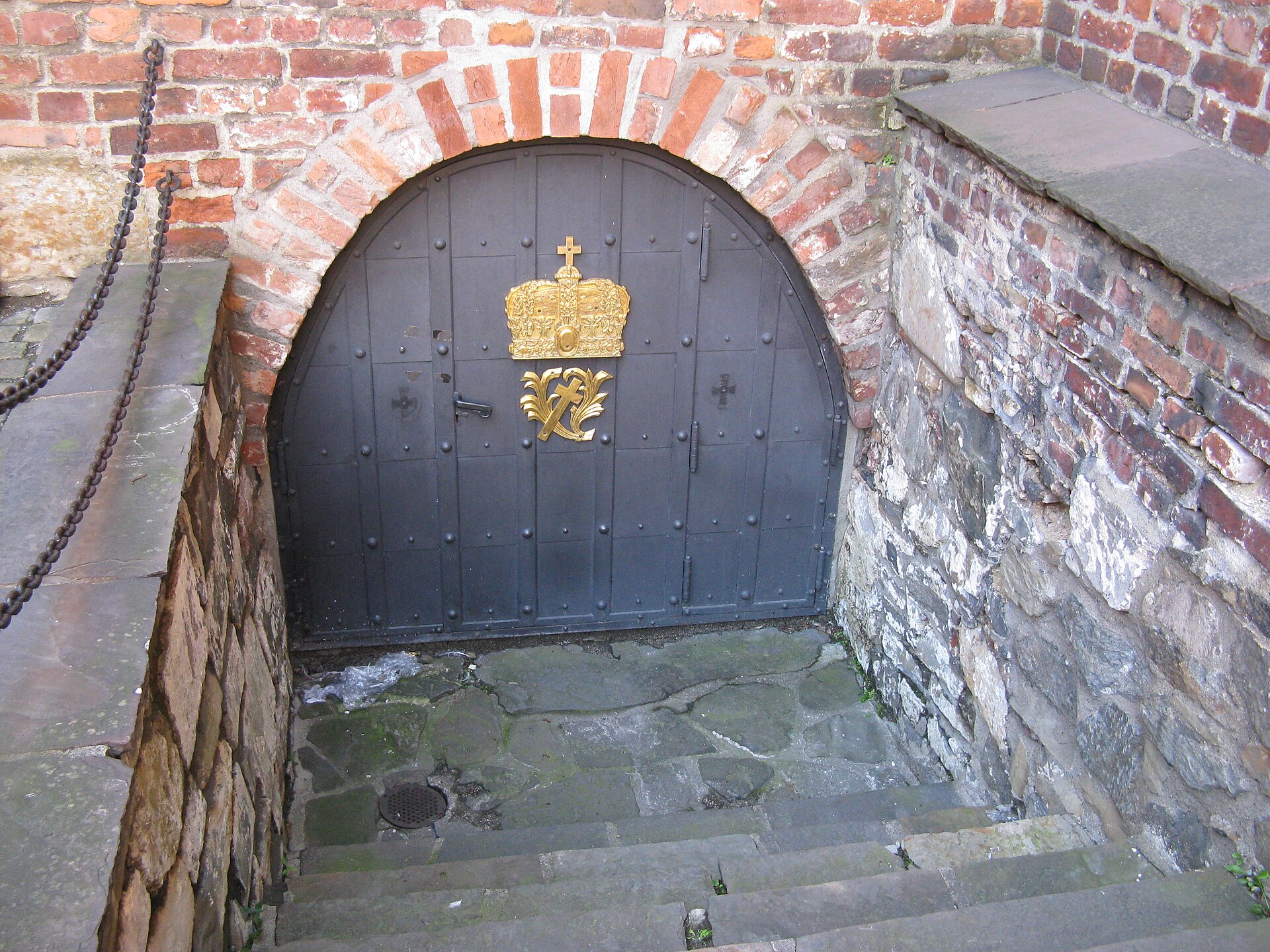
The Akershus we see today owes much of its appearance to one man, King Christian IV, the energetic Danish-Norwegian monarch who ruled in the early seventeenth century and who left his mark all across his kingdoms. Christian was a passionate builder, and he took the old medieval fortress of Akershus and had it transformed into a grand Renaissance castle and royal residence, remodelling the interiors and the outer works in the fashionable style of his age. Under his direction the stern medieval stronghold gained the more palatial character it still partly wears.
Christian’s involvement with Oslo went even further. After a great fire destroyed much of the medieval town in 1624, the king had the city rebuilt on a new site closer to the fortress, laying it out afresh and naming it Christiania after himself, a name the city would carry for centuries before returning to Oslo. Akershus stood at the heart of this reborn capital, both its protector and its royal showpiece. The blending of medieval fortress and Renaissance palace that resulted is one of the great pleasures of a visit, a place where the hard logic of defence meets the elegance of a royal court.
Christian IV’s transformation of Akershus was part of a much larger vision he had for his northern kingdoms, and few rulers left so visible a legacy on the landscape of Norway and Denmark. In reshaping the fortress he was not simply modernising its defences but making a statement about royal power and taste, turning a grim medieval stronghold into a residence fit for a Renaissance king. The result is a building of real character, where you can trace the meeting of two very different architectural worlds, and it remains one of the finest examples of that royal ambition anywhere in the north.
A Royal Residence and a Royal Resting Place
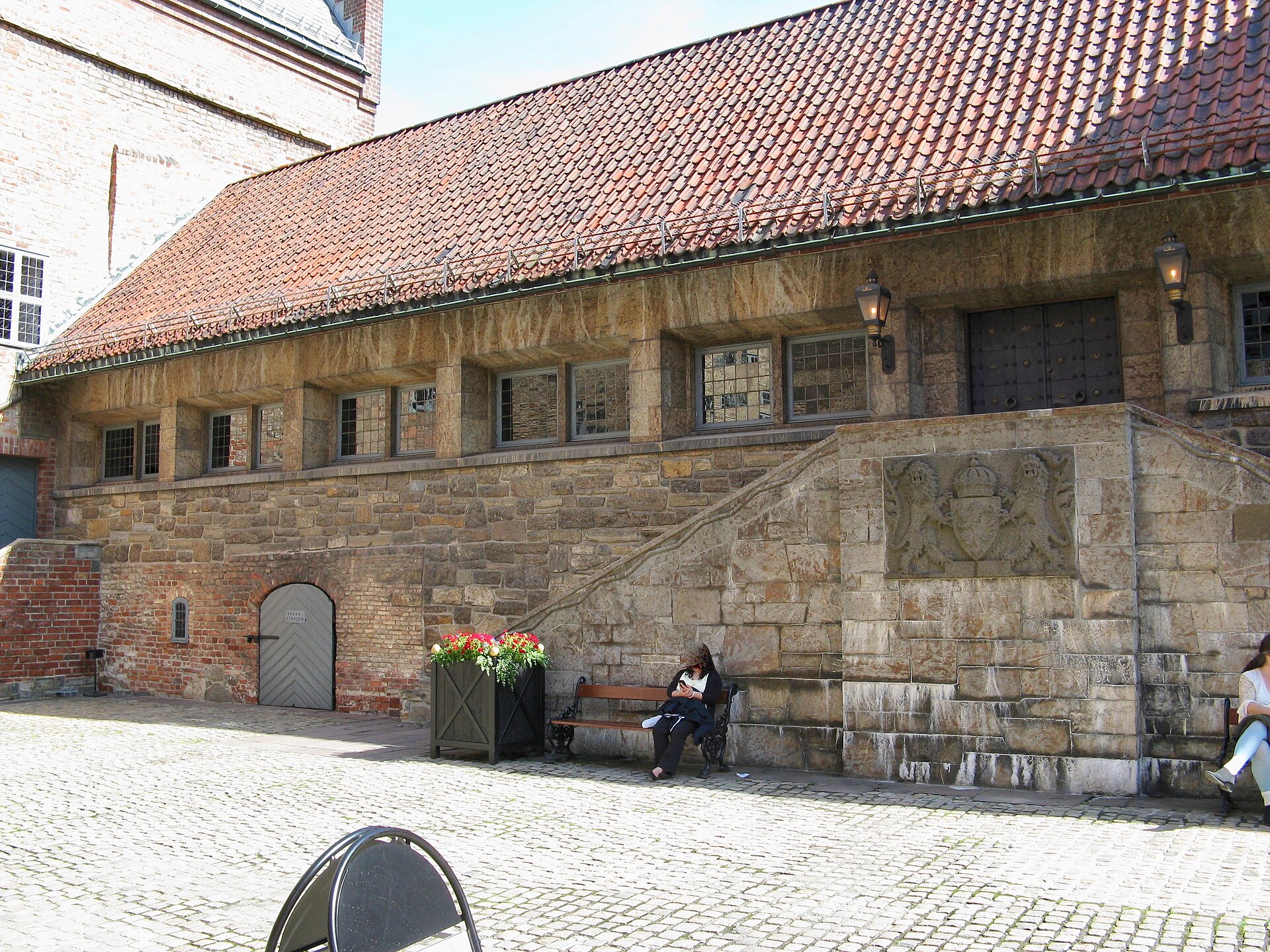
Through the centuries Akershus served as a royal residence and a centre of state, a place where kings held court, received guests, and conducted the business of the realm. Its halls were designed to impress as much as its walls were designed to defend, and the castle played host to the ceremony and pageantry of royal life. Even as its military importance evolved, it remained a symbol of the crown’s presence in Norway, a fixed royal point in the life of the nation.
That royal connection endures in the most solemn way of all, for Akershus is the resting place of Norwegian royalty. The castle contains the Royal Mausoleum, where members of the royal house are laid to rest, including the modern kings who led Norway through the twentieth century. To stand in that quiet chapel is to feel the deep bond between the fortress and the monarchy it has served for so long. The same walls that once turned back armies now keep watch over the tombs of kings, a fitting role for a place so bound up with the identity of the nation.
The presence of the Royal Mausoleum gives Akershus a solemn dignity that sets it apart from a purely military site. Here the long line of Norwegian royal history reaches into the present, connecting the medieval kings who first raised the fortress with the modern monarchs who led the nation through the trials of the twentieth century. It is a powerful reminder that Akershus has never been only about war and defence, but has always also been a place of the crown, woven deeply into the ceremonial and emotional life of the Norwegian state across many centuries.
The dual identity of Akershus as both a fortress and a royal seat is unusual, and it is one of the keys to understanding the place. Many castles were one or the other, either grim strongholds built purely for war or elegant palaces built purely for show, but Akershus managed to be both at once, and to move between those roles as the centuries demanded. That flexibility is a large part of why it has survived and stayed relevant for so long, always finding a new purpose to serve as the needs of the crown and the nation changed around it.
Dark Years Under Occupation
The twentieth century brought Akershus into some of the darkest chapters of Norwegian history. When Nazi Germany invaded and occupied Norway in 1940, the occupiers took control of the ancient fortress, and it became a place of imprisonment and death. Members of the Norwegian resistance were held within its walls, and a number of them were executed there, giving the old castle a grim new significance as a site of wartime suffering and sacrifice.
After the war ended and Norway was liberated, Akershus was the setting for a final act of that terrible period. It was here that several of those convicted of the gravest wartime treason were executed, including the most notorious collaborator of all, whose very name became a byword for betrayal. These events bound the fortress forever to the memory of the occupation and the resistance, and they are why Akershus is today home to a museum dedicated to the Norwegian resistance, ensuring that the courage and the losses of those years are never forgotten by later generations.
The wartime history of Akershus lends the whole fortress a weight that visitors feel even when they cannot quite name it. To walk grounds where such courage and such suffering unfolded is a sobering experience, and it transforms the site from a picturesque monument into a place of genuine remembrance. Modern Norway has chosen not to hide this difficult past but to honour it, and that honesty is part of what makes Akershus so meaningful. The fortress carries the memory of the nation’s darkest years and holds it up so that later generations will not forget.
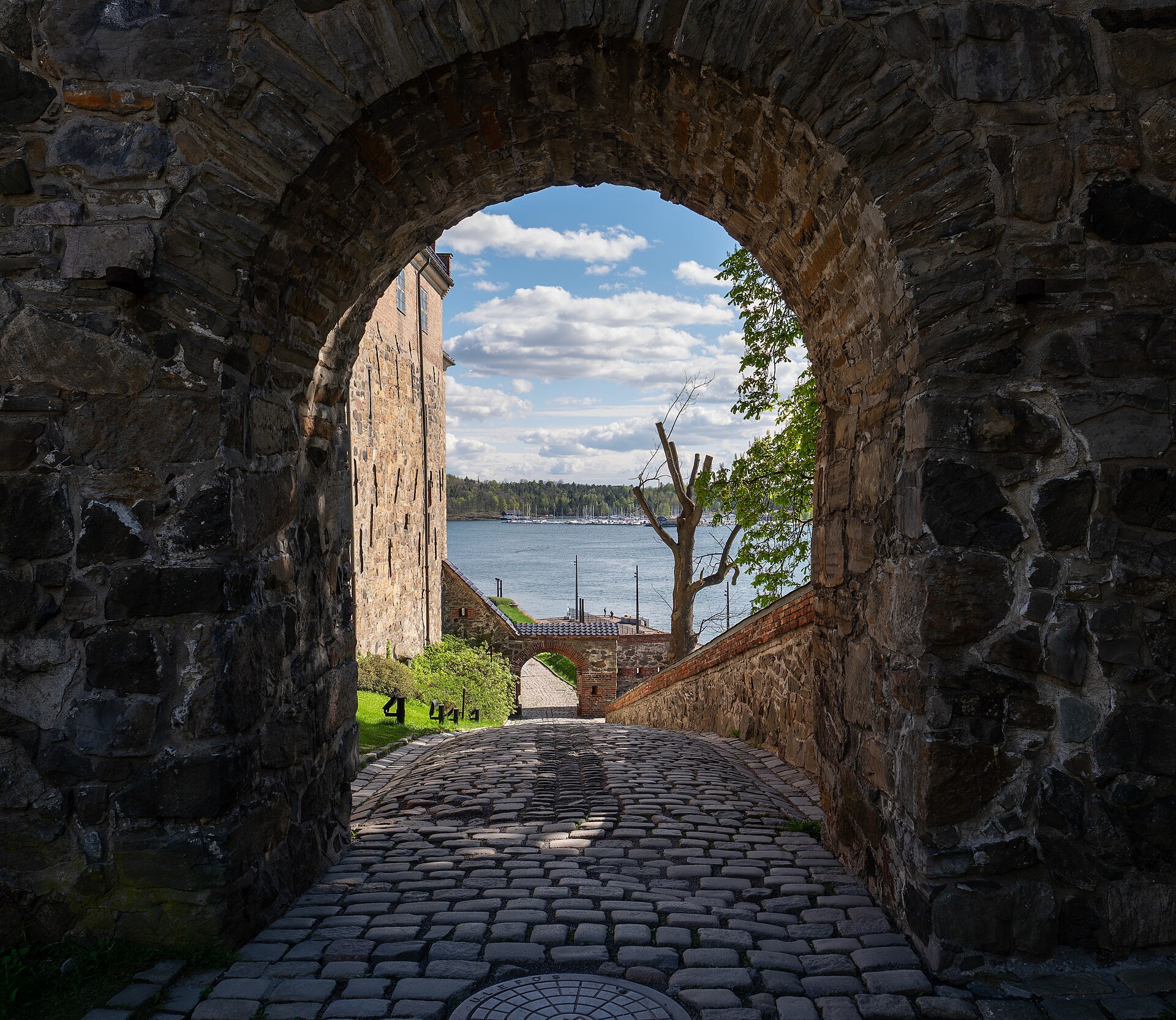
The Fortress and the Growing City
As Christiania and then Oslo grew from a modest town into a modern capital, Akershus remained its historic anchor, the old stone heart around which the changing city gathered. While the streets below filled with new buildings and the harbour bustled with trade and shipping, the fortress kept its ancient outline on the headland, a link to the deep past amid all the change. It became one of the defining images of the city, instantly recognisable and heavy with meaning.
The fortress also kept a living military role far longer than many old castles. Its ramparts and buildings continued to serve the armed forces, and even today parts of the complex remain in official military and governmental use, so that Akershus is not simply a museum piece but a working part of the nation’s life. This continuity is part of what gives the place its special atmosphere. You are not walking through an abandoned relic but through a fortress that has never really stopped doing its job, adapting from one age to the next while always guarding the same commanding ground above the water.
The way the fortress and the city have grown together over the centuries is one of the most fascinating aspects of Akershus. Neither has ever been separate from the other, and the changing fortunes of Oslo can be read in the way the buildings and the harbour have developed around the old walls. Through fires, rebuildings, wars, and centuries of peace, the fortress has remained the constant, the fixed point that gives the ever-changing city its sense of continuity with the deep past. It is, in a sense, the memory of Oslo made visible.

Walking the Ramparts Today
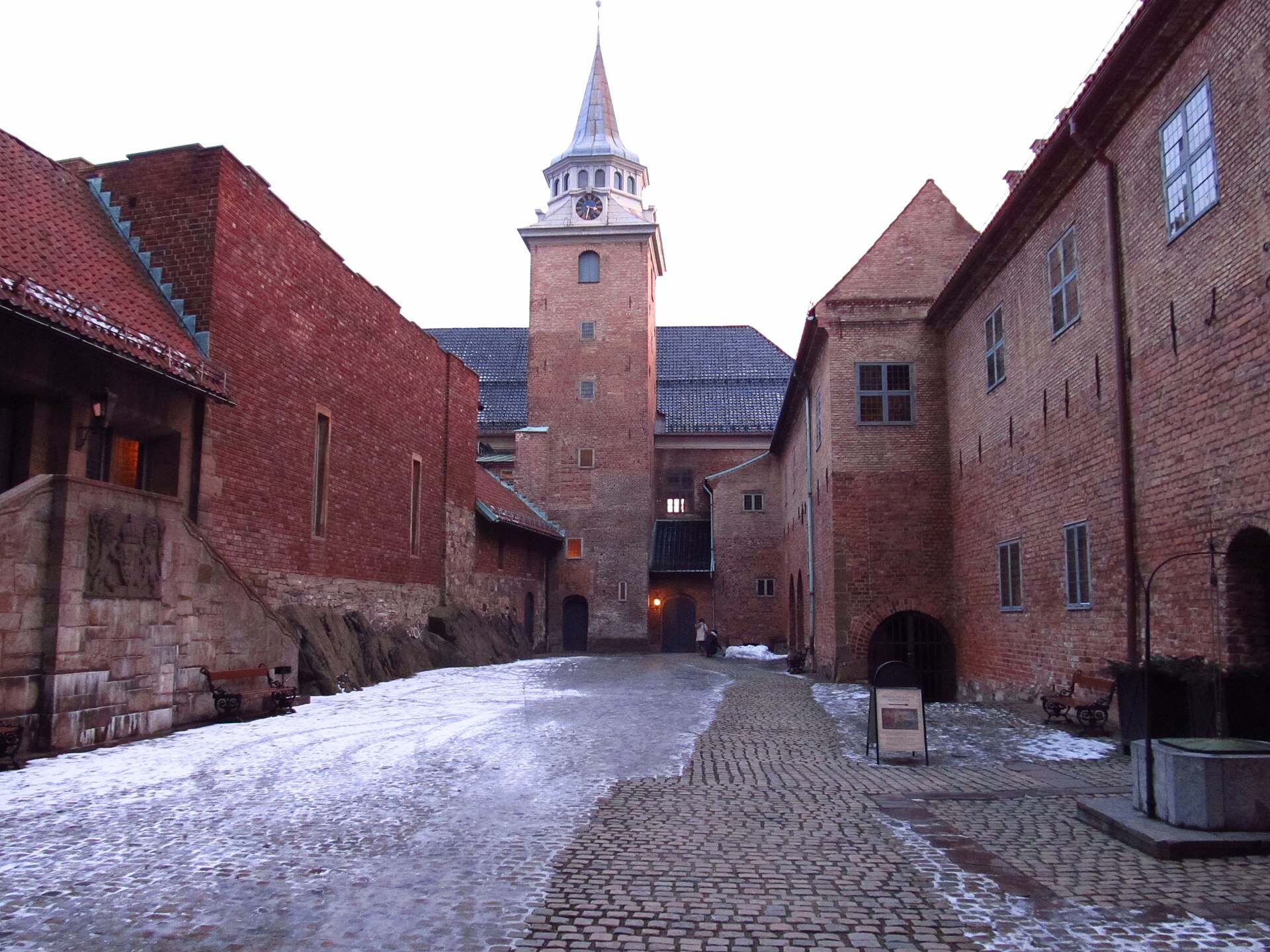
One of the great joys of Akershus is how open and welcoming it is to visitors. The fortress grounds are freely accessible, and you can wander the ramparts, cross the old courtyards, and follow the walls as they trace the edge of the headland, all the while enjoying some of the finest views in Oslo. From the battlements you look out over the harbour and the fjord on one side and across the rooftops of the modern city on the other, a panorama that ties together the whole long story of the place.
The grounds have a wonderfully layered character, with medieval stonework, Renaissance additions, later military buildings, and green open spaces all sitting side by side. It is the kind of place where you can happily spend hours simply strolling and absorbing the atmosphere, watching the light change over the water and imagining the centuries of soldiers, kings, and prisoners who have passed this way. Whether you come for the history or just for the views and the sea air, the ramparts of Akershus offer one of the most rewarding walks in the Norwegian capital.
The generosity of the open grounds is one of the nicest surprises for first-time visitors. Rather than being hidden behind ticket barriers, the ramparts and courtyards of Akershus are simply there to be enjoyed, part of the everyday life of the city. Locals come here to walk, to picnic, and to watch the boats on the fjord, and that easy, unforced use of such a historic space gives it a warm and welcoming feel. The fortress belongs to the people of Oslo in a very real way, and visitors are made to feel a part of that shared inheritance.

Inside the Castle Halls
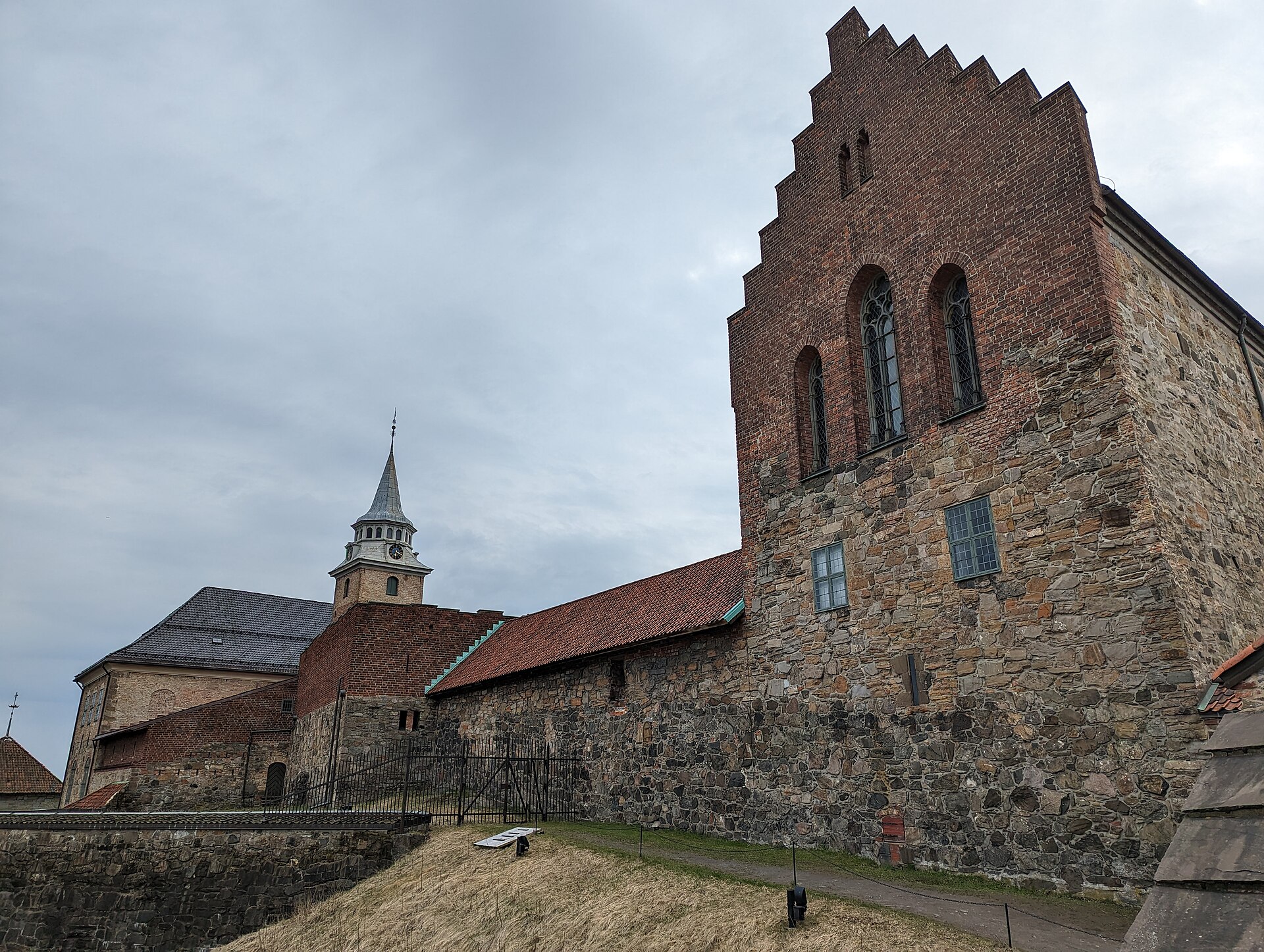
Beyond the ramparts, the castle itself can be explored, and stepping inside takes you into a different world again. The interior preserves grand halls once used for royal ceremony, along with a chapel, vaulted cellars, and echoing stone chambers that carry the weight of centuries. Moving through these spaces, you pass from the hard practicality of a medieval fortress into the more refined atmosphere of a Renaissance residence, seeing how the building served both war and court across its long life.
The castle rooms tell their own stories, from the dungeons where prisoners were once held to the elegant halls where kings entertained. Guided tours help bring these spaces to life, explaining the layers of history built into the fabric and pointing out the details that a casual visitor might miss. The mixture of grandeur and grimness, of royal splendour and medieval severity, is exactly what makes the interior so memorable. Few castles let you feel so directly the full range of what such a building could be, and the halls of Akershus reward slow, curious exploration.
The contrast between the different parts of the interior is one of the things that stays with you after a visit. To pass from a dank medieval cellar to a bright Renaissance hall in the space of a few steps is to feel the whole evolution of the building compressed into a single journey. Each room has been shaped by the changing needs and tastes of the centuries, and learning to read those changes is a real pleasure. The castle rewards curiosity, and the more you look, the more of its long and layered story you begin to see.
The Museums Within the Walls
Akershus is not only a monument but a place of learning, home to important museums that deepen the whole experience of a visit. Within the fortress grounds you will find the museum devoted to the Norwegian armed forces, tracing the long military history of the nation, and the moving museum of the Norwegian resistance, which tells the story of the occupation years and the brave men and women who fought back against it. Together these collections turn a visit into a rich encounter with Norway’s past.
The resistance museum in particular gives the fortress much of its emotional depth. Set on the very ground where resistance members were held and executed, it is a place of remembrance as much as of information, and it lends a quiet gravity to the whole site. Visiting the museums alongside the castle and ramparts, you come away with a far fuller understanding of what Akershus has meant to Norway, not just as a stronghold of stone but as a stage on which the nation’s greatest struggles and sacrifices have been played out.
Museums like these do vital work in keeping the meaning of a place alive. Without them, the fortress might be admired only for its walls and its views, its deeper significance slipping quietly out of memory. Instead, the collections within Akershus ensure that visitors leave understanding not just what the fortress looked like but what it meant, and what was endured and achieved within its walls. That combination of stone and story, of monument and memory, is what turns a good visit into a truly unforgettable one.
A Living Ceremonial Fortress
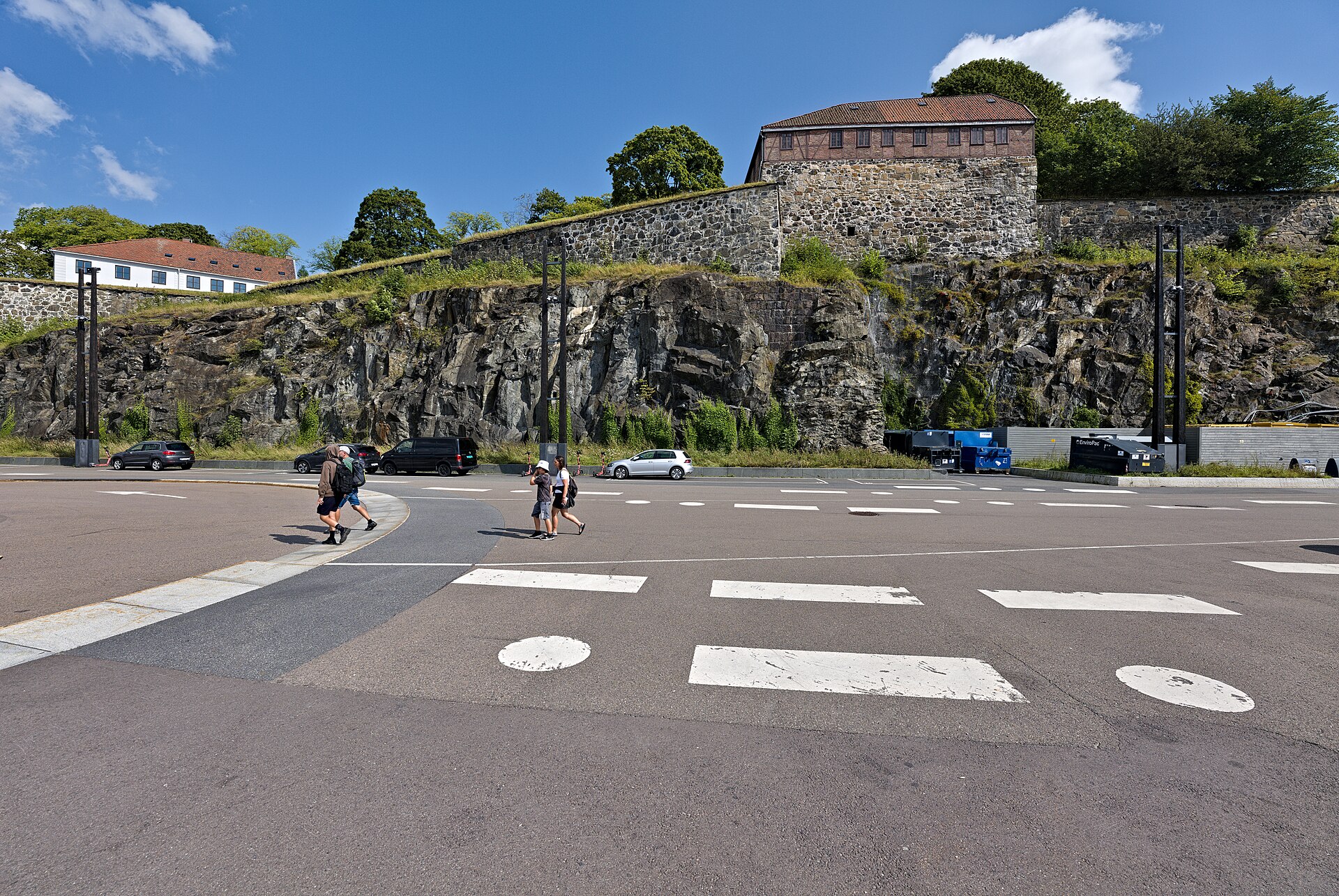
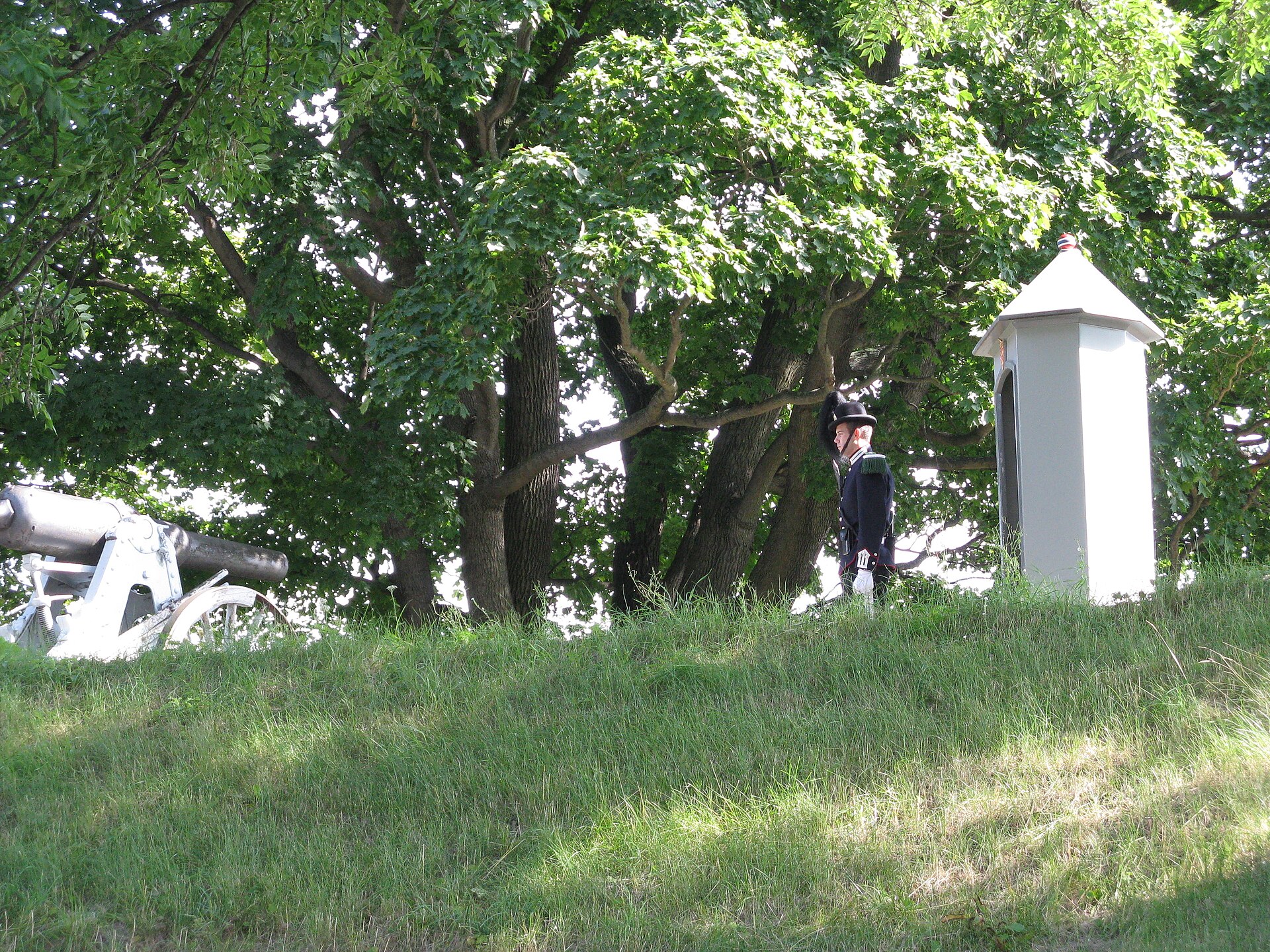
Unlike many historic castles that have become purely tourist attractions, Akershus remains a living, working fortress with real ceremonial and official functions. Uniformed guards keep watch over the grounds, and the fortress is used for state occasions, official receptions, and military ceremonies, so that its ancient role as a seat of authority continues in a modern form. On any given day you may come across the changing of the guard or the trappings of an official event, reminders that this is no mere relic.
This continuing life gives Akershus a vitality that sets it apart. The fortress has always been at the centre of Norwegian public life, and it still is, serving the state and the crown as it has for centuries. When the government wishes to mark an important occasion or receive a distinguished guest, the historic setting of Akershus lends the moment a sense of continuity and depth. To visit is to see a piece of medieval Norway that has never stopped being useful, a fortress that carries its long history lightly and wears it with pride.
There is something genuinely stirring about seeing a fortress this old still fulfilling its ancient functions. When guards stand watch and ceremonies unfold within walls that were raised seven centuries ago, the past and present seem to fold into one another, and you feel the unbroken thread of continuity that runs through Norwegian history. Akershus has never been mothballed or set aside as a mere exhibit, and that living quality gives it an authenticity that no purely preserved monument can match. It remains, in the fullest sense, a working piece of the nation.
The Fortress at the Heart of the Harbour
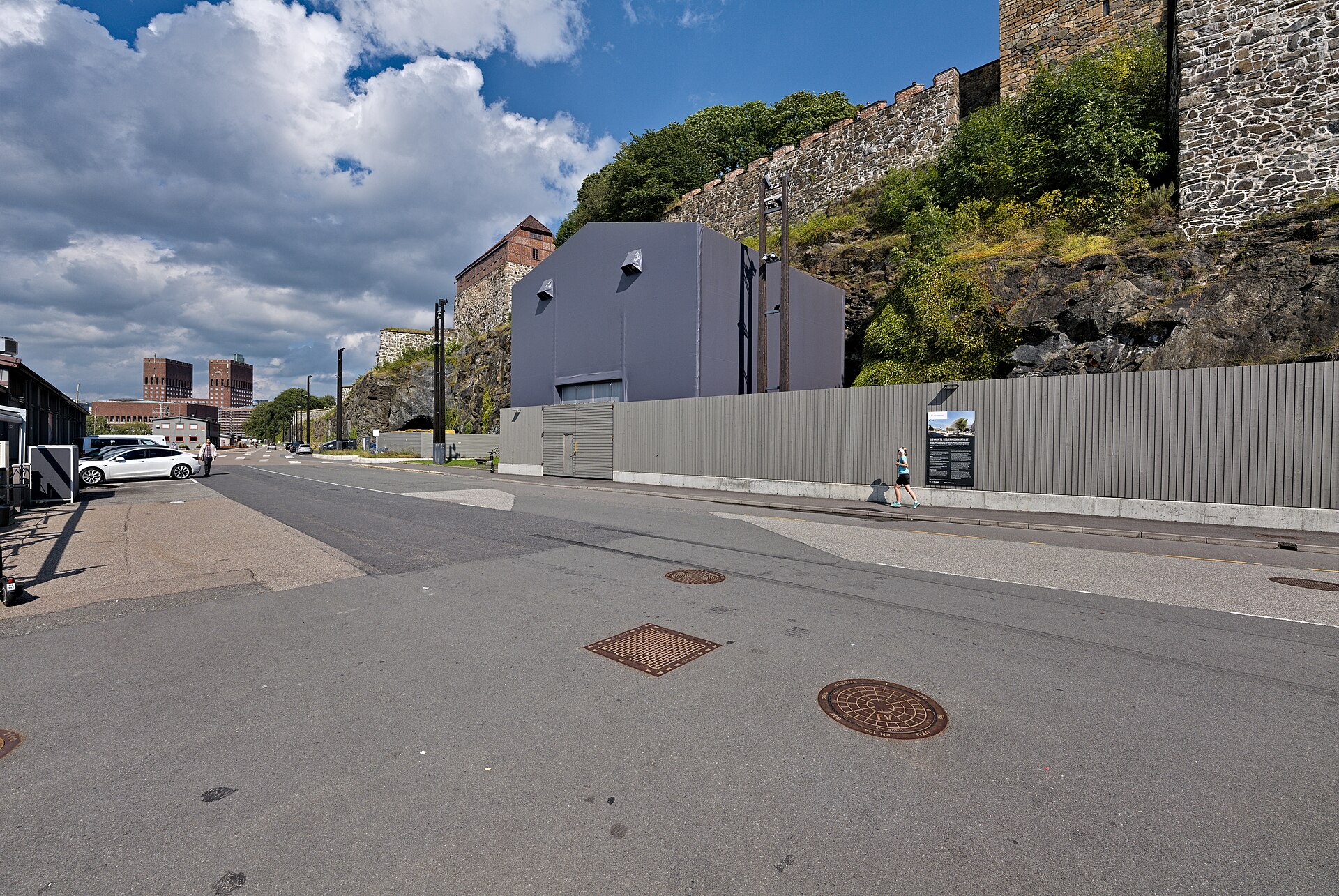
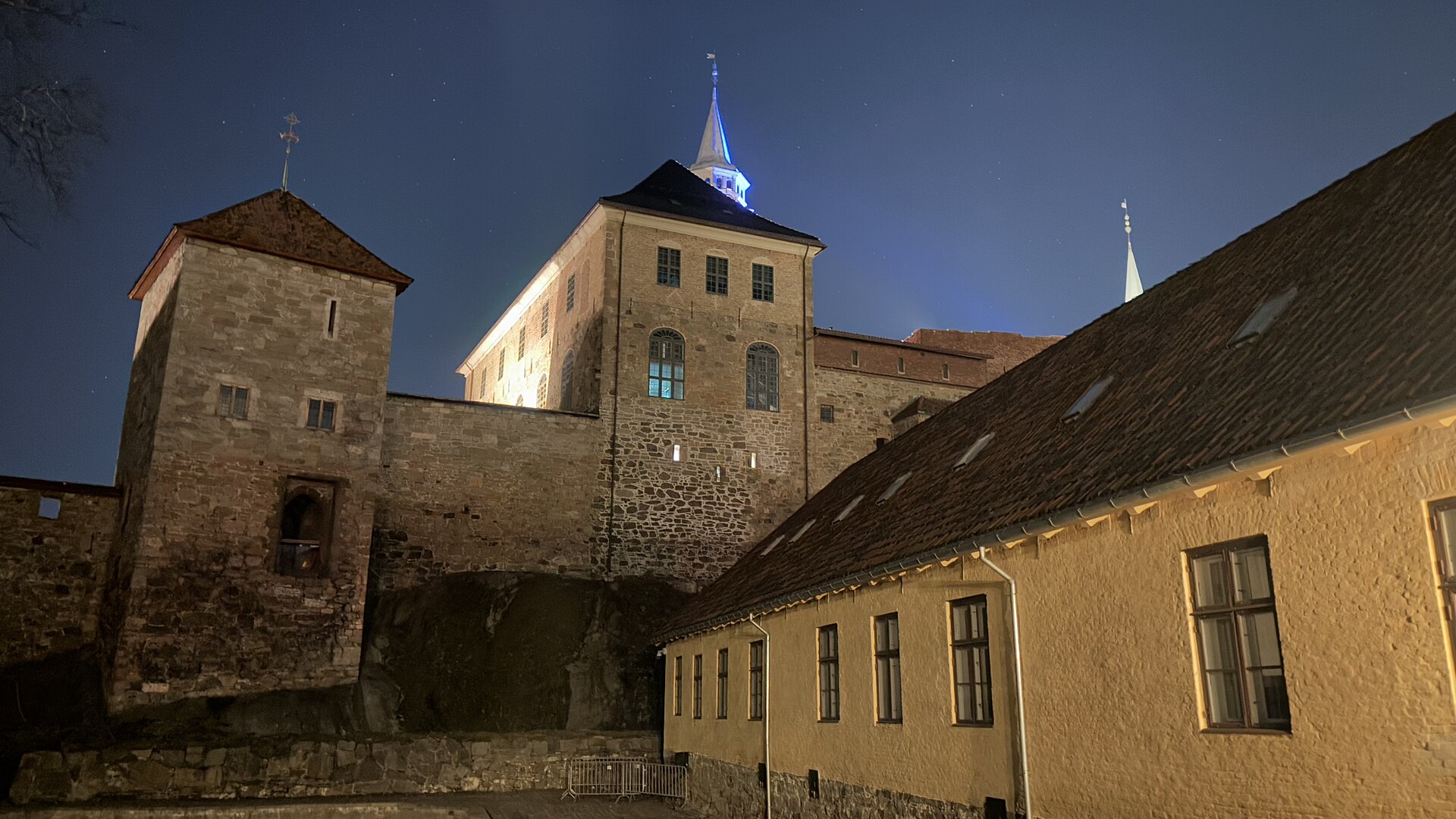
Few sights capture the character of Oslo as completely as Akershus rising above the harbour, and the fortress is at its most magical in the changing light of the northern day. In the long golden evenings of summer the old walls glow warm against the sky, while on winter nights the floodlit ramparts stand out dramatically over the dark water. Seen from a boat on the fjord, from the busy waterfront below, or from the ramparts themselves, the fortress is endlessly photogenic and endlessly evocative.
The setting could hardly be more striking. The castle sits right at the point where the city meets the sea, so that its history is bound up with the water that has always been Oslo’s lifeline. Ferries and pleasure boats pass beneath its walls, and the modern developments of the waterfront gather around its feet, yet the fortress dominates them all, a fixed and ancient presence amid the movement of the harbour. It is this combination of deep history and living cityscape that makes Akershus so special, a medieval stronghold still standing proudly at the heart of a modern capital.
Photographers and painters have long been drawn to Akershus for exactly this reason, and it is easy to see why. The interplay of ancient stone, open water, and northern light gives the fortress an ever-changing beauty that rewards repeated visits at different times of day and different seasons of the year. Whether wrapped in summer greenery, dusted with winter snow, or silhouetted against a dramatic sky, the old stronghold never looks quite the same twice, and each new view seems to reveal another facet of its long and storied character.
It is a view worth seeking out at more than one time of day if you can manage it. The fortress that looks stern and grey under a flat midday sky becomes something altogether warmer and more romantic as the light lengthens toward evening, and different again when the floodlights come on after dark. Locals know this well, and you will often find people lingering on the ramparts or the waterfront simply to watch the fortress change with the passing hours, a free and endlessly renewed spectacle at the heart of their city.
Finding Akershus Fortress
Akershus Fortress could hardly be easier to reach, sitting right in the centre of Oslo on the eastern side of the main harbour, only a short walk from the city hall, the waterfront, and the central station. You can simply stroll down to the harbour and up onto the headland, and admission to the grounds is free, so the fortress is one of the most accessible and rewarding sights in the whole city. Whether you have a full day or just an hour, it is well worth the short walk.
The fortress makes a natural centrepiece for a day exploring the Norwegian capital, and it pairs wonderfully with the museums, the waterfront, and the many other attractions clustered around the harbour. Come for the history, stay for the views, and give yourself time to wander the ramparts and explore the castle and its museums. Here are the exact coordinates so you can find your way to the great fortress on the fjord.
Combining the fortress with the other attractions of central Oslo makes for a wonderfully full day, and the compact, walkable heart of the city means everything is close at hand. From the ramparts you can easily continue on to the waterfront museums, the shops and cafes of the centre, or a cruise out onto the fjord. Few capital cities offer so much history and beauty within such an easy stroll, and Akershus, standing proudly at the centre of it all, is the perfect place to begin or end an exploration of Oslo.
Castles Nearby
If Akershus has sparked your interest in the great fortresses of Scandinavia, two more Nordic strongholds make a natural next stop.
- Kronborg Castle in Denmark, the Renaissance fortress of Hamlet, guards another vital northern waterway.
- Gripsholm Castle in Sweden shares the same world of royal history and lakeside defence.
The Guardian of Oslo
There are grander palaces in Europe and older ruins, but there are very few fortresses that have lived so completely at the heart of a nation’s story as Akershus. For more than seven centuries it has stood above the same stretch of water, serving as castle, palace, prison, and place of remembrance, never once falling to an enemy in war and never once losing its central place in the life of Norway. To walk its ramparts is to walk through the whole history of the country, layer upon layer, all held within one commanding stronghold above the sea.
That is what makes a visit here so moving. You are not just admiring an old castle but standing on the ground where kings ruled, where armies were turned away, where a nation suffered and resisted and endured. Look out from the walls over the harbour and the city, and you feel the long continuity of the place, the way it has watched over Oslo through every age and still keeps its watch today. Akershus is more than a fortress. It is the memory of Norway made solid in stone, the faithful guardian of a capital and a people.
If your travels take you to Oslo, make time to climb the headland to Akershus. Walk the ramparts, step into the castle halls, visit the museums, and stand for a while looking out over the harbour where the city meets the fjord. It costs nothing to enter the grounds, and it gives you a direct encounter with seven centuries of Norwegian history. The old fortress has kept its watch over the capital for a very long time, and it is more than ready to share its stories with anyone willing to make the short climb up from the water.
You May Like

Mafra, the Palace a King Built From a Vow


One thought on “Akershus Fortress: The Medieval Stronghold Guarding Oslo”