Most visitors drive straight past it on the way to Stonehenge, not realizing that the unassuming English village of Avebury sits inside a prehistoric monument roughly sixteen times larger than its famous neighbor, a bank-and-ditch enclosure so wide that houses, a pub, and a parish church now sit comfortably inside its ring of ancient stones.
Table of Contents
- A henge you can live inside
- Building the bank, ditch, and circles
- Why Avebury never became as famous as Stonehenge
- The stones that villagers buried and broke
- Alexander Keiller and the twentieth-century rescue
- A stone avenue leading out across the land
- Europe’s largest prehistoric mound, right next door
- What Silbury Hill might have been for
- A monument with no agreed-upon purpose
- Feasting, gathering, and seasonal ceremony
- Living inside a monument today
- West Kennet Long Barrow and the ancestors on the hill
- Windmill Hill: an even older gathering place
- Where did the sarsen stones actually come from?
- Ley lines, dowsing, and modern mythology around the stones
- William Stukeley’s drawings: our only record of what was lost
- Reading Avebury as part of a much larger ritual landscape
- The Sanctuary and the lost second avenue
- Does Avebury align with the sun or moon?
- The Alexander Keiller Museum and what it preserves
- Counting the labor: how many people did this take?
- Avebury among Europe’s other great henge monuments
- Avebury and Stonehenge: two very different monuments
- Pottery, feasting, and the people who gathered here
- Nearby in Britain’s ancient story
- Closing thoughts
A henge you can live inside
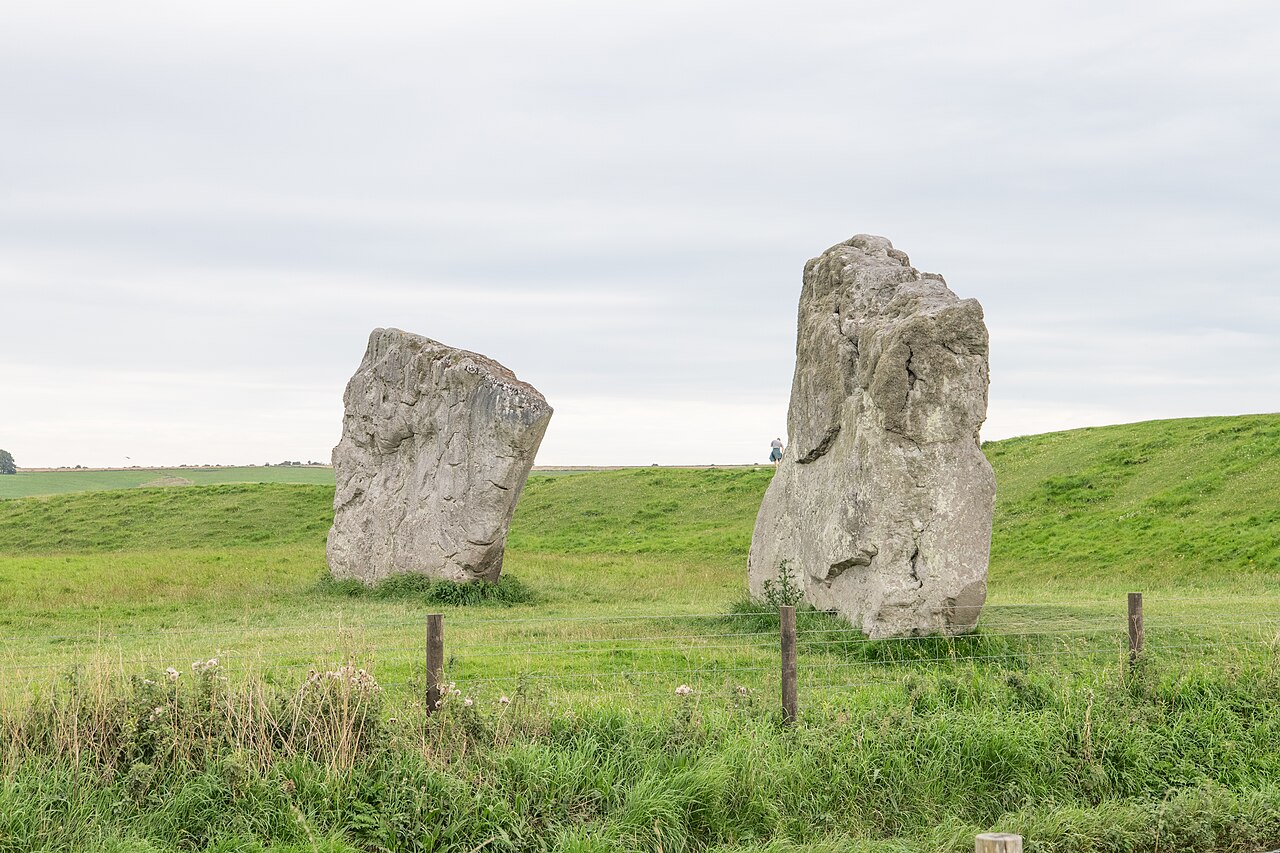
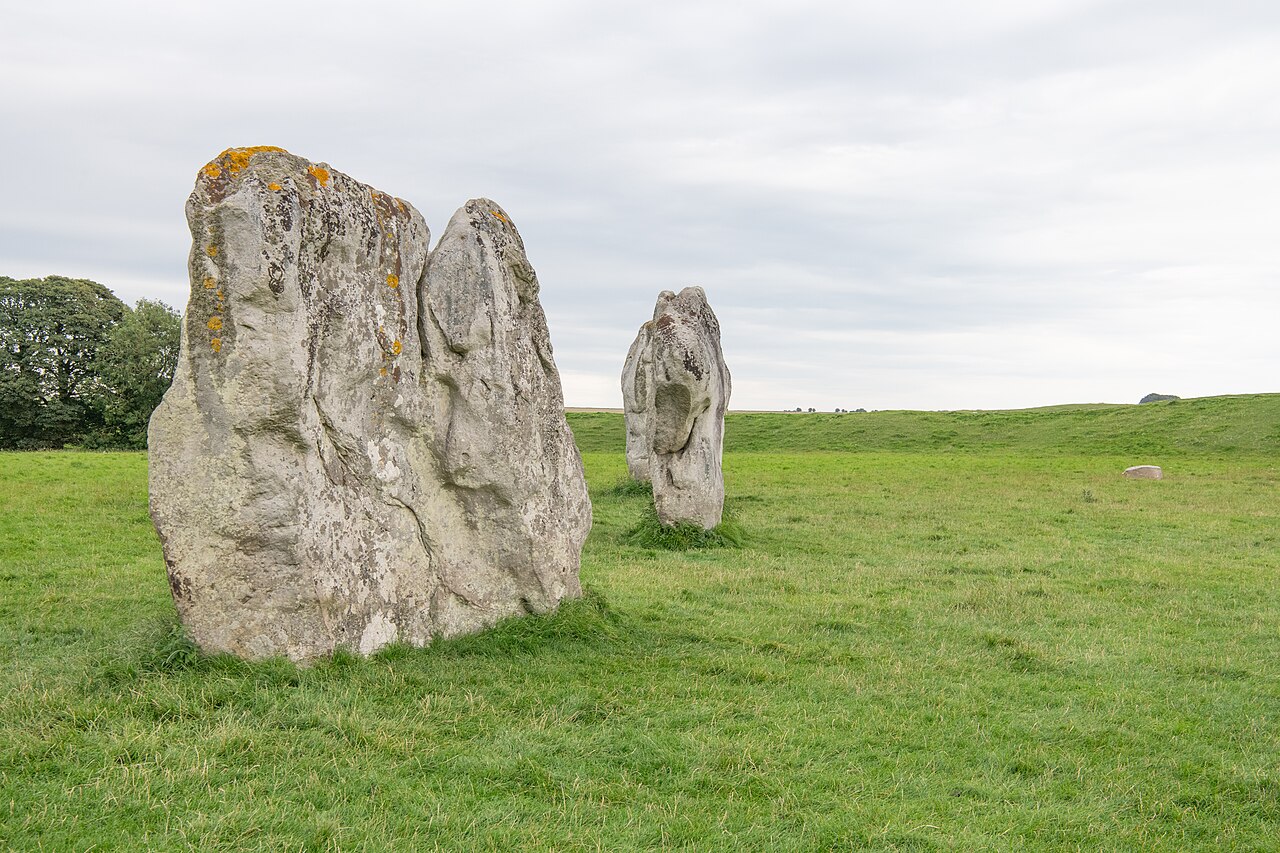
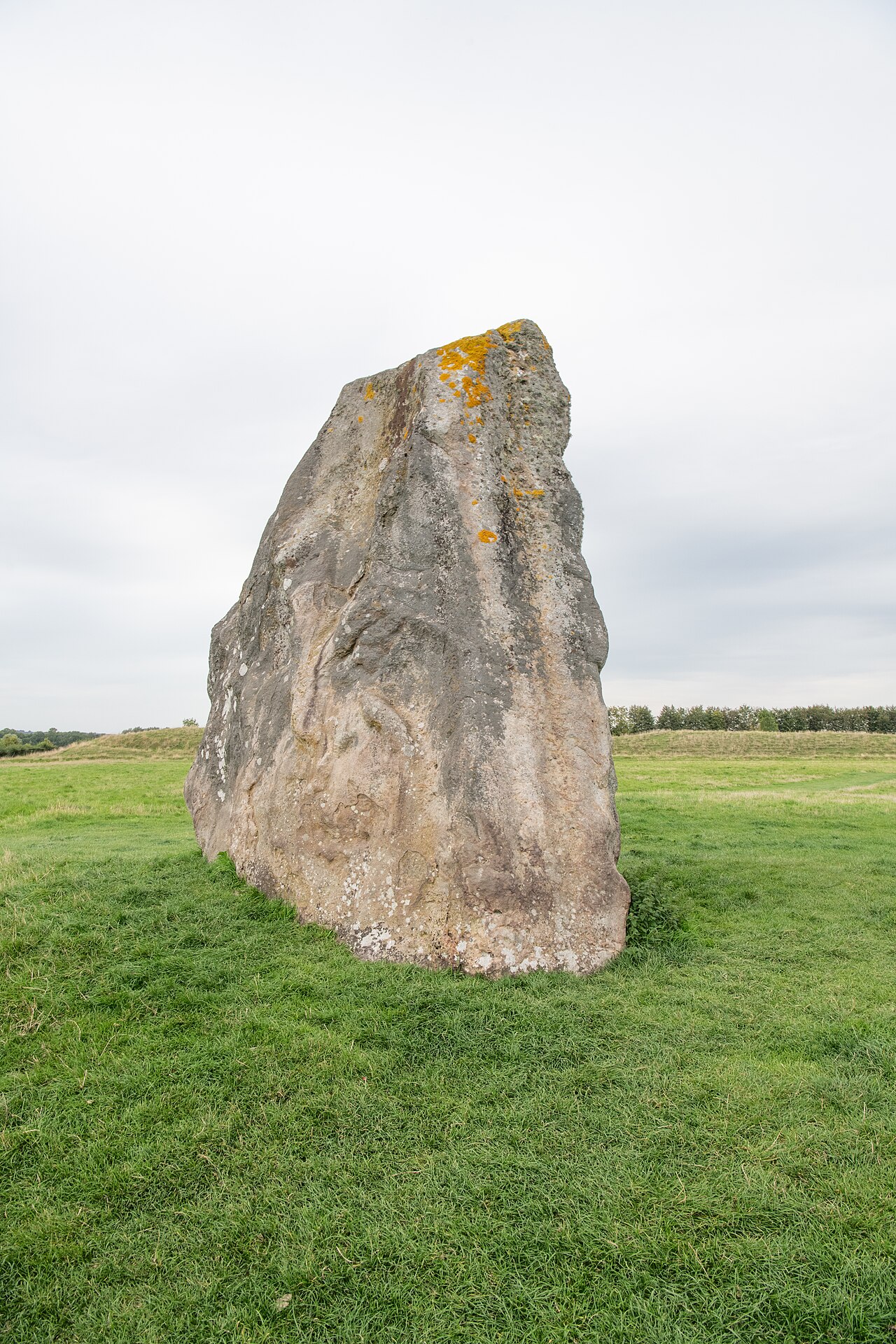
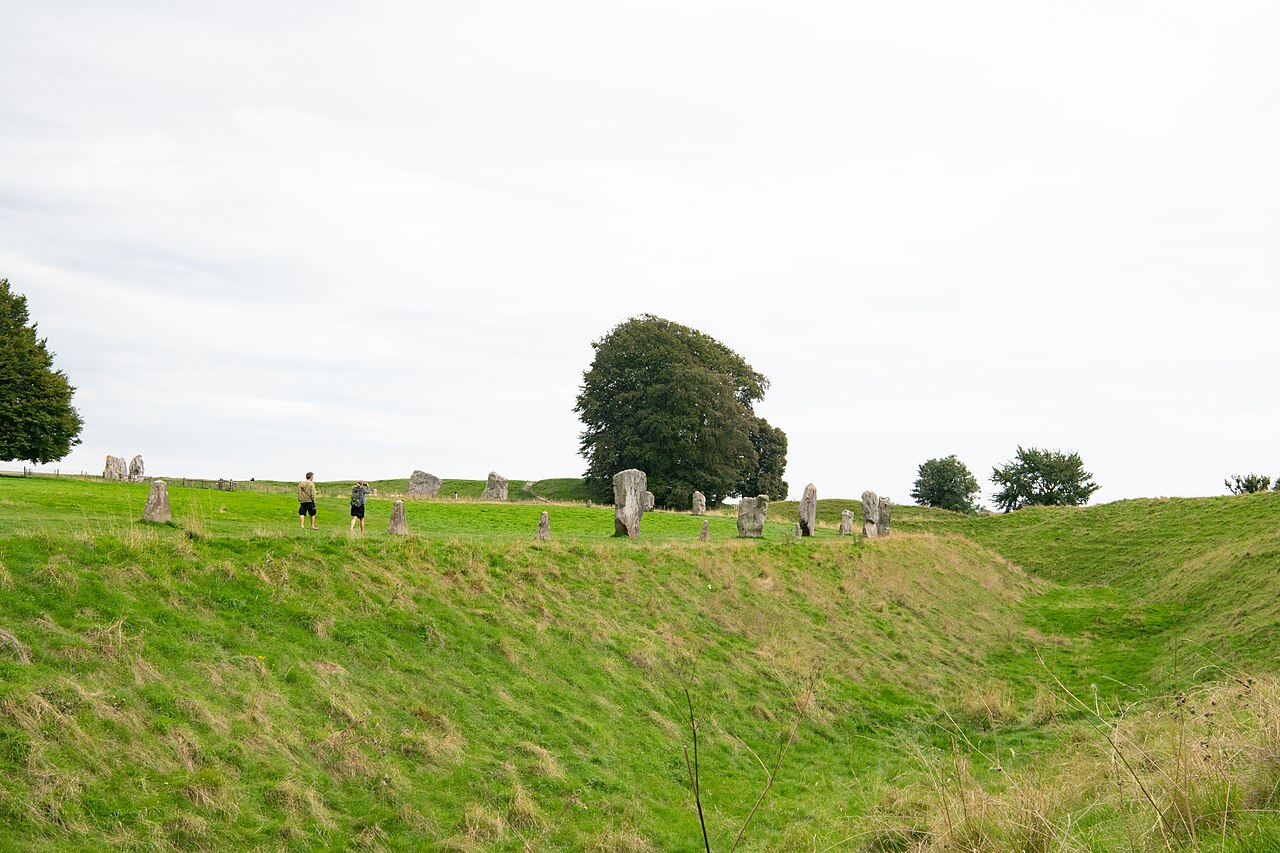
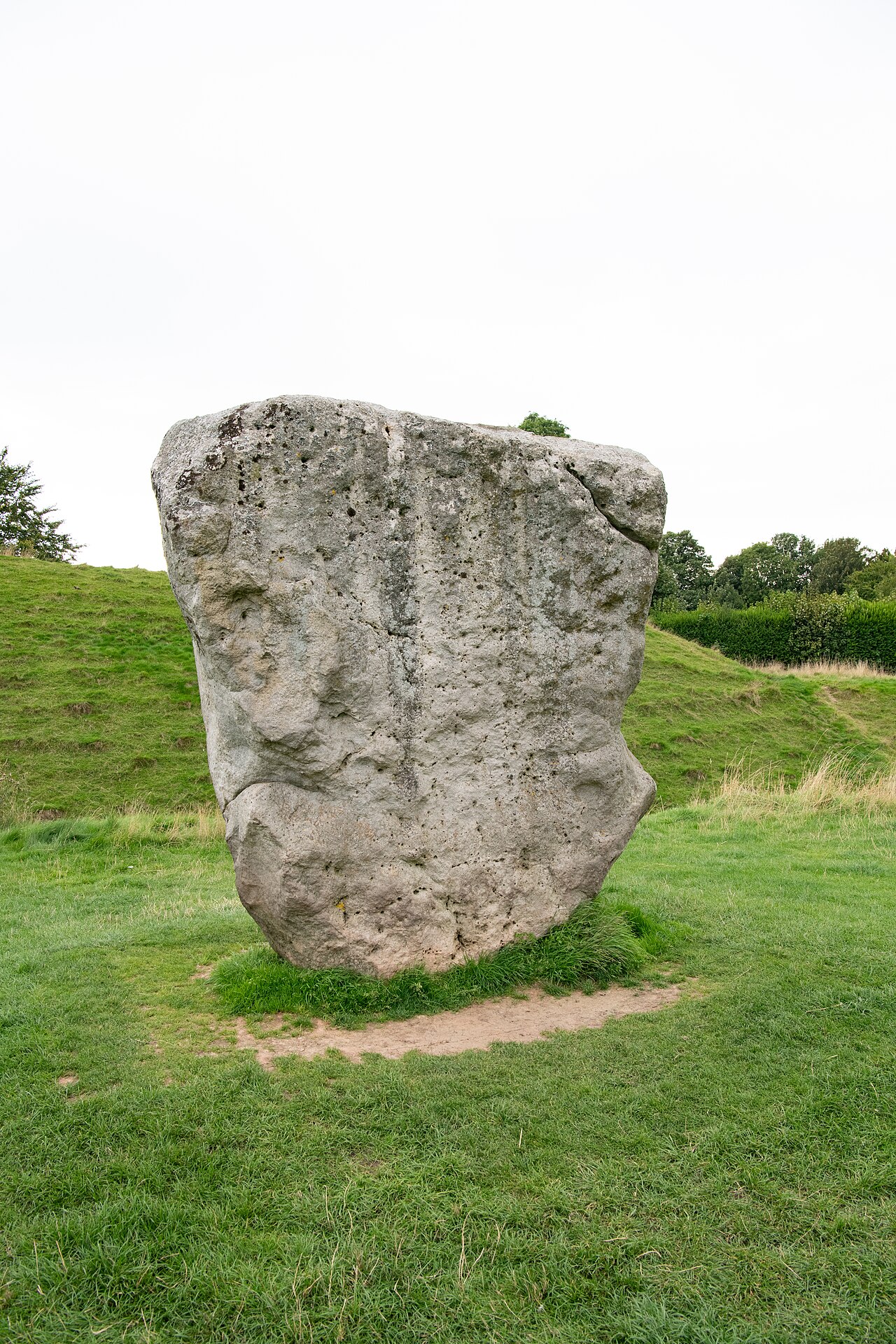
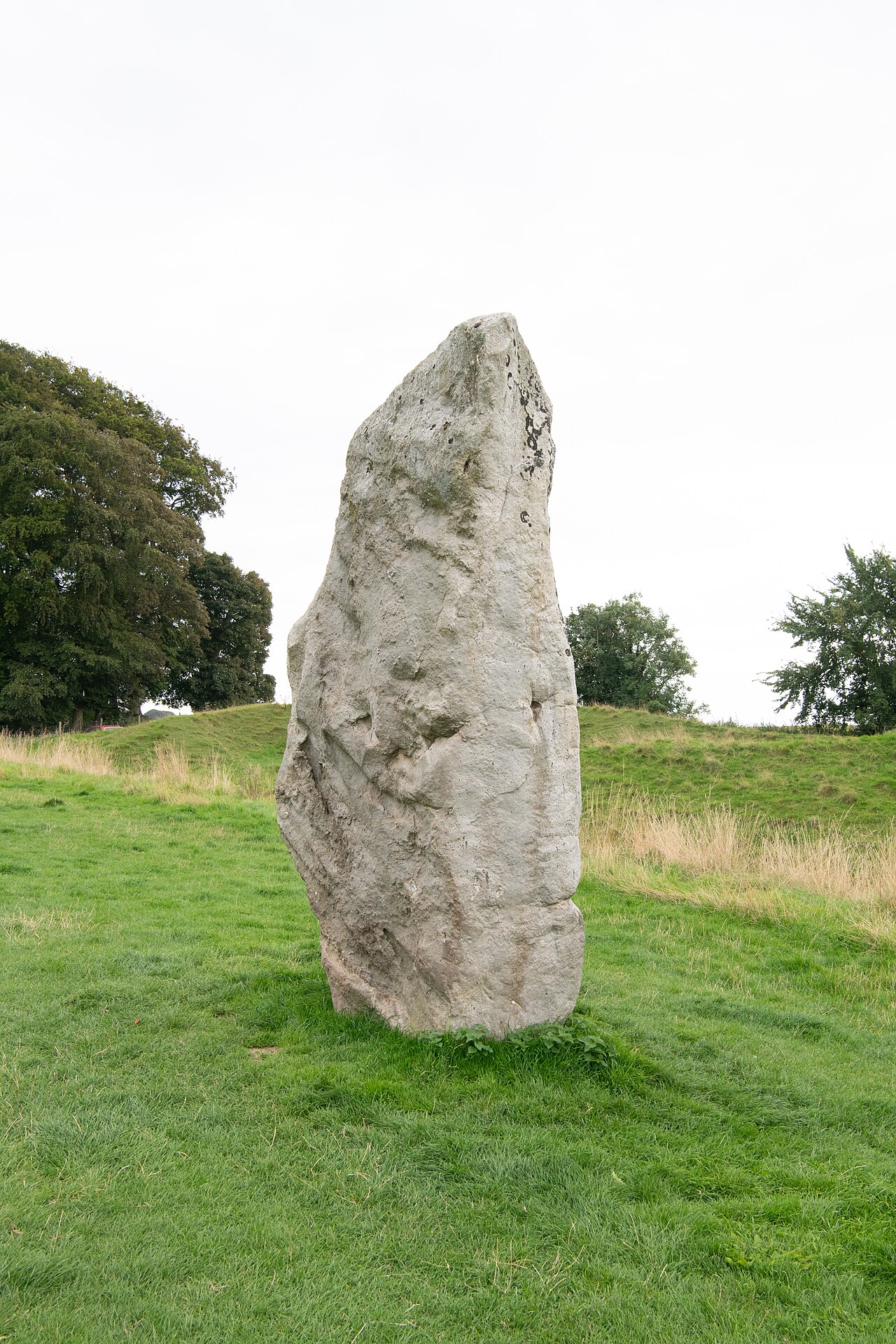
Avebury’s earthwork forms a circle over four hundred meters across, enclosing not one but three stone circles, the largest of which was once ringed by nearly a hundred sarsen stones, some weighing over forty tons, dragged from the surrounding Wiltshire downs around 2600 BCE.
The sheer footprint of the monument means that, unlike Stonehenge, visitors do not view Avebury from a roped-off distance; instead, roads, footpaths, and village buildings run directly through and alongside the ancient bank and stones, creating an unusually intimate, lived-in relationship between modern residents and a five-thousand-year-old monument.
Building the bank, ditch, and circles
The outer bank and ditch alone represent an enormous labor investment, with the ditch originally cut up to nine meters deep into chalk bedrock using antler picks and ox shoulder-blade shovels, producing chalk rubble that was piled into the surrounding bank still visible today.
Construction phases at Avebury appear to have unfolded over centuries rather than as a single planned project, with the earthwork, the outer circle, and the two smaller inner circles likely added or modified across different generations of builders working from a shared but evolving tradition.
Why Avebury never became as famous as Stonehenge
Part of the answer is visual: Stonehenge’s tightly packed lintel-topped trilithons photograph as a single dramatic silhouette, while Avebury’s scattered, more weathered stones spread across a much wider area and a living village, making it a harder monument to capture in one glance, even though it is by most measures the more ambitious construction.
Avebury also lacks Stonehenge’s dramatic isolated silhouette on an open plain, since its stones are interspersed with modern buildings, gardens, and roads, a juxtaposition some visitors find charming and others find diminishes the monument’s sense of ancient grandeur.
The stones that villagers buried and broke
Long after its builders were gone, medieval and early modern residents grew uneasy with the pagan-looking stones and began toppling and burying them, and later still, some were broken up for building material, a practice that only stopped after the wealthy antiquarian Alexander Keiller bought much of the site in the 1930s and financed its careful restoration.
One particularly grim discovery during Keiller’s restoration work involved a stone that had toppled onto and crushed a medieval man, apparently a barber-surgeon based on tools found with his remains, during the very act of burying the stone in the fourteenth century, freezing a moment of accidental death directly into the monument’s later history.
Alexander Keiller and the twentieth-century rescue
Keiller, heir to a Scottish marmalade fortune, became obsessed with Avebury’s preservation after visiting the site and finding it neglected and encroached upon by modern development, eventually purchasing large portions of the land himself and funding systematic excavation and stone re-erection through the 1930s.
Concrete markers were placed at Avebury to indicate where stones are known to have once stood but have since been lost or destroyed, a subtle but important feature that lets visitors today understand the monument’s original full scale even where physical stones no longer remain.
A stone avenue leading out across the land
A double row of standing stones known as West Kennet Avenue once stretched for nearly two and a half kilometers from Avebury’s southern entrance toward another ceremonial site, suggesting the monument was not an isolated circle but part of a processional route across a wider ritual landscape.
Excavation along the avenue’s route has revealed alternating pillar and lozenge-shaped stones, a deliberate pairing some researchers interpret as symbolically representing male and female forms, though as with much Neolithic symbolism, this interpretation remains speculative rather than confirmed.
Europe’s Largest Prehistoric Mound, Right Next Door
Just south of the henge rises Silbury Hill, a colossal man-made chalk mound over thirty meters tall, built in stages around the same period as Avebury’s stones, whose exact purpose still eludes archaeologists despite extensive tunneling and excavation over the centuries.
Silbury Hill required an estimated four million working hours to construct, built up in a series of chalk and turf layers over multiple phases, making it comparable in raw labor investment to some of the era’s largest Egyptian and Near Eastern monuments, despite containing no known burial chamber or artifact deposit commensurate with that effort.
What Silbury Hill might have been for
Various excavations, including a nineteenth-century vertical shaft dug straight down from the summit and a 1960s tunnel driven in from the side, found no burial, no treasure, and no clear evidence of the mound’s intended function, leaving archaeologists to propose theories ranging from a calendar marker to a purely symbolic act of communal labor.
The absence of any conventional “reason” for the mound’s existence has, if anything, deepened its mystery rather than resolving it, and modern conservation policy now firmly prohibits further invasive excavation, meaning Silbury Hill’s true purpose may never be definitively known.
A monument with no agreed-upon purpose
Unlike Stonehenge’s fairly well-supported solstice alignments, Avebury’s own astronomical or ceremonial function remains genuinely unclear, and most current interpretations lean toward a gathering place for seasonal ritual and feasting rather than a single-purpose observatory or tomb.
Some researchers have proposed that Avebury functioned as a regional meeting point analogous to nearby Durrington Walls, drawing dispersed communities together periodically for large-scale communal events rather than serving any single religious or astronomical function exclusively.
Feasting, gathering, and seasonal ceremony
Animal bone deposits found in the henge ditch, including large quantities of pig remains showing signs consistent with midwinter slaughter, echo similar feasting evidence found at other major Neolithic ceremonial sites across southern Britain, suggesting Avebury hosted large seasonal gatherings involving substantial communal food consumption.
The scale of feasting implied by these bone deposits suggests visitors traveled from well beyond the immediate local area, turning Avebury into a periodic hub drawing people, and likely livestock, from a wide surrounding region for shared ceremonial occasions.
Living inside a monument today
The modern village of Avebury, with its parish church, manor house, and pub, sits entirely within the henge’s boundary, making it one of the few places in the world where a functioning contemporary community exists inside a Neolithic monument rather than beside or separate from it.
This arrangement occasionally creates friction between heritage preservation goals and the practical needs of residents and local infrastructure, a tension National Trust management of the site continues to navigate through careful, ongoing consultation with the local community.
West Kennet Long Barrow and the ancestors on the hill
A short walk south of Silbury Hill, a long grassy mound conceals one of Britain’s most impressive Neolithic chambered tombs, West Kennet Long Barrow, built centuries before Avebury’s great henge and still in ceremonial use, on and off, for well over a thousand years afterward. Excavation of its stone burial chambers revealed the remains of at least forty-six individuals, men, women, and children, some articulated and clearly placed with care, others represented only by disarticulated bones that had been deliberately rearranged, sorted, or even removed entirely long after initial burial, suggesting a relationship with ancestral remains that involved ongoing physical interaction rather than a single sealed burial event.
Radiocarbon dates show the tomb was finally closed around 2000 BCE, blocked with a dense deposit of rubble and broken pottery mixed with soil, at almost exactly the same period that Avebury’s stone circles reached their final completed form, hinting that whatever ceremonial cycle bound the wider landscape together, involving the barrow, the henge, and the avenues, may have been drawing toward a symbolic conclusion at that time.
Windmill Hill: an even older gathering place
Long before anyone dug Avebury’s ditch, an earlier generation of Neolithic farmers were already gathering periodically on a hilltop just northwest of the later henge, at a site called Windmill Hill, constructing three concentric rings of ditches and banks known as a causewayed enclosure. Excavations there recovered enormous quantities of broken pottery, animal bone, and worked flint, deposited in a pattern suggesting seasonal feasting and exchange rather than permanent settlement, likely tied to the herding calendar as communities gathered livestock, exchanged goods, and perhaps arranged marriages at a time of year when dispersed farming groups could most easily travel and meet.
Windmill Hill’s causewayed ditches, deliberately interrupted by regular gaps rather than dug as continuous defensive earthworks, mark it as fundamentally different in purpose from a fort, and its use predates Avebury’s main henge by close to a thousand years, establishing this stretch of Wiltshire chalkland as a significant ceremonial landscape centuries before the monument that would eventually make the area famous.
Where did the sarsen stones actually come from?
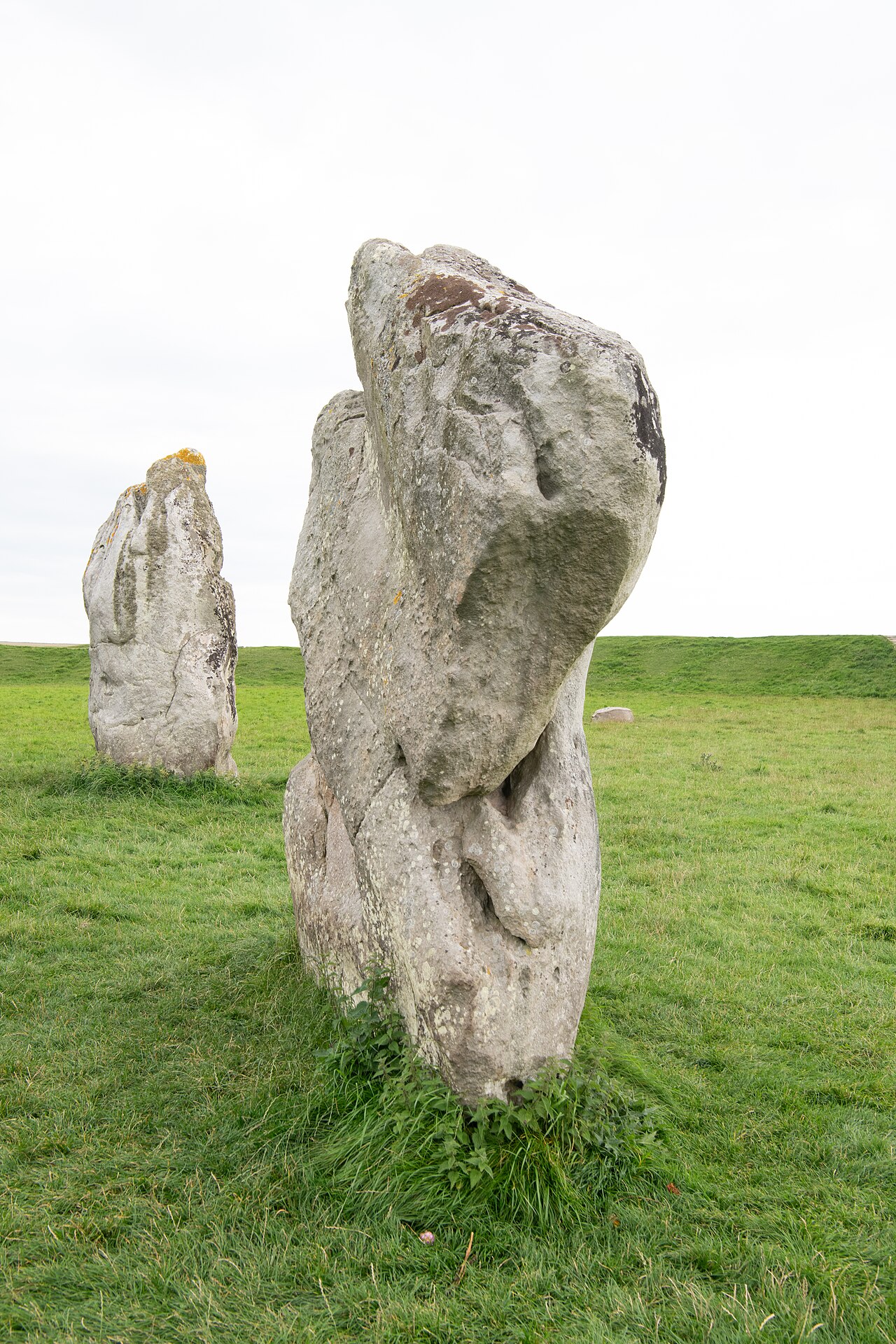
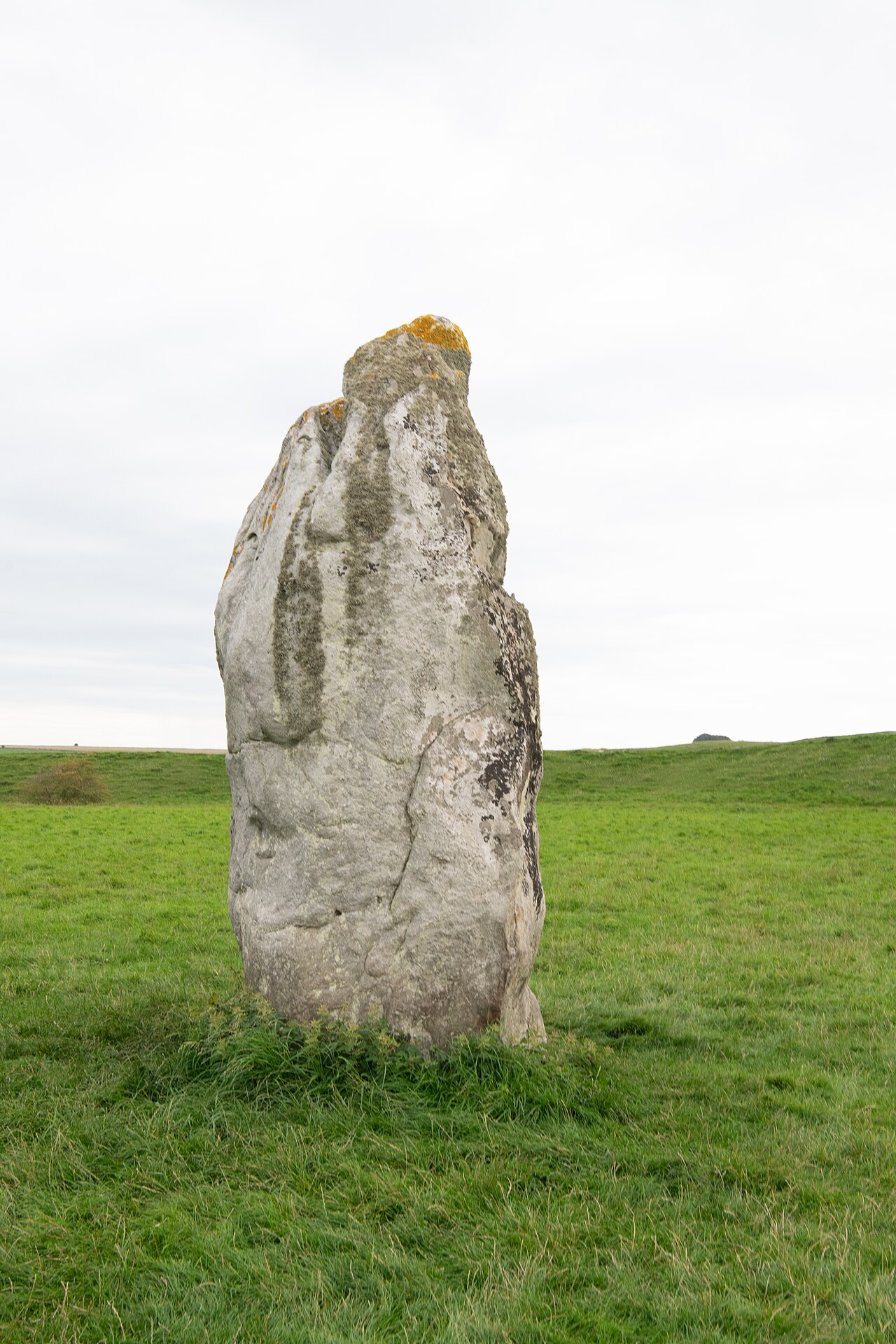
The sandstone blocks used throughout Avebury, known as sarsens, were not quarried in the modern sense but gathered as naturally occurring boulders scattered across the surrounding chalk downland, remnants of a once-continuous layer of hard sandstone that eroded and fractured over millions of years, leaving isolated blocks strewn across the landscape in formations early antiquarians nicknamed “grey wethers” for their resemblance, from a distance, to a flock of sheep. Builders selected stones based on size and shape rather than transporting uniform blocks from a single quarry, which explains the striking irregularity of Avebury’s stones compared to the more uniformly dressed blocks at Stonehenge.
Moving even a modestly sized sarsen, some weighing well over ten tons, from its natural resting place to the henge required timber sledges, rollers, and ropes, along with a workforce large enough to haul the stone across open ground, often for a mile or more, an enormous undertaking that had to be repeated close to a hundred times to complete the outer and inner circles combined.
Ley lines, dowsing, and modern mythology around the stones
Avebury’s atmospheric stones have long attracted alternative interpretations well outside mainstream archaeology, including claims about ley lines, supposed alignments of ancient sites believed by some to mark unseen channels of earth energy, a concept popularized in the twentieth century by amateur enthusiasts rather than derived from any archaeological evidence. Dowsers and various spiritual practitioners have also claimed to detect energy patterns among the stones, and the village has become a modern pilgrimage site for druidic and pagan groups who gather there for solstice and equinox celebrations.
Archaeologists generally regard these interpretations as modern additions layered onto the monument rather than continuations of any documented prehistoric belief, though they note the irony that Avebury, precisely because so much of its original meaning was never recorded in writing, has become an open canvas onto which each generation, from Puritan stone-breakers to New Age spiritualists, has projected its own concerns.
William Stukeley’s drawings: our only record of what was lost
Much of what is known about Avebury’s original full extent comes from the eighteenth-century antiquarian William Stukeley, who visited repeatedly in the 1720s while villagers were actively breaking up standing stones for building material, and who made detailed drawings and measurements of stones that would be destroyed within his own lifetime. Stukeley’s field notebooks, later published as part of a broader survey of British antiquities, remain the single most important documentary source for reconstructing the monument’s original stone positions, despite his own eccentric theories linking Avebury to druidic serpent worship that most modern scholars do not take literally.
Without Stukeley’s drawings, twentieth-century restorers including Alexander Keiller would have had far less evidence to guide the re-erection of fallen stones and the placement of the concrete markers that today indicate the approximate former positions of stones destroyed before archaeological recording became standard practice.
Reading Avebury as part of a much larger ritual landscape
Modern archaeologists increasingly resist treating Avebury as a single isolated monument and instead describe it as the anchor point of an entire ceremonial landscape assembled over roughly a thousand years, including Windmill Hill, West Kennet Long Barrow, the Sanctuary, Silbury Hill, and two stone avenues connecting different parts of the complex. Under this interpretation, a visitor in the Late Neolithic period might have processed along the West Kennet Avenue from the Sanctuary toward the henge itself, moving through a landscape whose meaning depended on sequence and movement between monuments rather than any single fixed structure.
This landscape-scale perspective has been reinforced by geophysical surveys and excavation projects since the 1990s, which have identified additional buried features, timber structures, and pits filled with deliberately placed offerings scattered across the wider area, suggesting the density of ceremonial activity around Avebury was considerably greater than what survives as visible standing stones today.
The Sanctuary and the lost second avenue
Roughly a mile and a half from Avebury’s henge, a modern arrangement of concrete posts marks the former location of the Sanctuary, a complex sequence of timber and stone circles largely destroyed by an eighteenth-century farmer, the same period during which much of Avebury’s own stones were being broken up for building material. Excavated in the 1930s by Maud Cunnington, one of British archaeology’s most significant early female excavators, the Sanctuary revealed evidence of successive timber buildings, later replaced by concentric stone rings, connected to Avebury by the West Kennet Avenue’s line of paired standing stones.
A second avenue, called the Beckhampton Avenue, running west from Avebury’s henge, was long doubted by some archaeologists due to a lack of visible surface stones, until fieldwork in the early 2000s confirmed buried stone sockets along the predicted route, vindicating Stukeley’s original eighteenth-century observations and adding further weight to the idea that Avebury’s builders conceived of the surrounding landscape as a single interconnected ceremonial route rather than a scatter of unrelated monuments.
Does Avebury align with the sun or moon?
Unlike Stonehenge, whose solstice alignment is precise enough to attract tens of thousands of visitors every midsummer, Avebury’s much larger and less symmetrical layout has not produced anything close to a consensus astronomical alignment among researchers. Some studies have proposed loose associations between certain stone positions and solstice sunrise or sunset points, or between the avenues and significant lunar standstill events that occur on an eighteen-year cycle, but Avebury’s scale and irregular stone spacing make identifying deliberate astronomical targeting far more difficult than at more compact and symmetrical monuments.
Many archaeologists now suspect that if celestial observation played a role in Avebury’s design at all, it was likely secondary to more immediate concerns: marking the passage of the farming year, coordinating seasonal gatherings, and reinforcing a shared sense of communal identity and ancestral connection to place, purposes that would not necessarily require the kind of precise architectural astronomy sometimes over-enthusiastically attributed to prehistoric monuments in popular writing.
The Alexander Keiller Museum and what it preserves
Much of what was recovered during Alexander Keiller’s excavations in the 1930s, including pottery, flint tools, and animal bone from the ditch fills, is now housed in the Alexander Keiller Museum, located within the henge itself in buildings that once served as a working barn and stables for the manor estate that used to occupy part of the monument. The museum’s collection allows visitors to see the material evidence behind the standing stones, connecting the visible monument to the less visible but equally important record of what was buried, eaten, and left behind by the people who built and used it.
The National Trust, which now manages the site together with English Heritage protections, has worked to balance public access, since a public road and an entire living village sit within the henge’s boundary, against the conservation needs of a monument that remains an active archaeological site, with new research projects continuing to refine understanding of Avebury’s construction sequence well into the twenty-first century.
Counting the labor: how many people did this take?
Archaeologists estimating the effort required to dig Avebury’s massive ditch, originally around ten meters deep and cut through solid chalk bedrock using little more than deer antler picks and ox shoulder-blade shovels, have suggested it may have required several hundred thousand hours of labor when combined with the construction of the bank and the erection of nearly a hundred sarsen stones. Spread across a working population of a few hundred people from surrounding farming communities, this points to a project lasting years, likely undertaken in seasonal phases between the demands of planting and harvest, rather than a single continuous building campaign.
This kind of sustained, coordinated effort implies more than simple willingness; it suggests some mechanism, whether religious authority, kinship obligation, or a rotating system of communal service, capable of mobilizing labor from a dispersed population across multiple growing seasons, evidence of social organization considerably more complex than the small egalitarian farming bands sometimes imagined for Neolithic Britain.
Avebury among Europe’s other great henge monuments
Avebury’s scale sets it apart from the several hundred other henge monuments recorded across the British Isles, but it belongs to a broader European tradition of large ceremonial earthworks built by Late Neolithic farming communities, comparable in ambition, if not in specific form, to the great causewayed enclosures of continental Europe and the Grooved Ware ceremonial sites found from Orkney to southern England. What distinguishes the Avebury complex, including its associated avenues, satellite henge, and nearby Silbury Hill, is the sheer density of monumental effort concentrated in a single valley, unmatched anywhere else in the Grooved Ware cultural sphere that connected Neolithic Britain’s ceremonial centers during the third millennium BCE.
Avebury and Stonehenge: two very different monuments
Avebury and Stonehenge, the two most celebrated prehistoric monuments in Britain, lie only a short distance apart in the chalk downland of Wiltshire, yet they express strikingly different architectural sensibilities. Stonehenge is compact, precisely engineered, and dominated by carefully shaped and lintelled sarsen uprights arranged with obvious geometric intent, a monument that draws the eye inward to its central setting. Avebury, by contrast, is vast, sprawling, and composed of massive but largely unshaped natural boulders, a henge so enormous that an entire village now sits within it, inviting visitors to walk among and around its stones rather than gaze upon them from without.
These contrasts reflect different priorities and perhaps different purposes among their builders, even though both belong to the same broad tradition of Late Neolithic ceremonial construction. Where Stonehenge seems designed as a focused stage for ritual observed from a distance, Avebury feels more like an inhabited sacred landscape to be moved through and experienced from within, a difference that continues to shape how each monument is understood and how visitors respond to them today.
Pottery, feasting, and the people who gathered here
The material recovered from Avebury and its surrounding monuments, particularly the distinctive Grooved Ware pottery associated with Late Neolithic ceremonial sites across Britain, along with abundant animal bone, points to large gatherings involving feasting and communal consumption. The bones of cattle and pigs found in ceremonial contexts suggest that people brought livestock to the monument, perhaps from considerable distances, to be slaughtered and eaten at seasonal gatherings, events that would have combined religious observance with the social business of a dispersed population coming together.
These gatherings likely served multiple functions at once, reinforcing shared beliefs, cementing social and kinship ties, arranging marriages and alliances, and exchanging goods and information among communities that otherwise lived scattered across the landscape. The great henge, in this light, was not merely a monument but a magnet, a place whose very construction and continued use drew people together and helped forge and maintain the social bonds that held Neolithic society together across the wider region.
Nearby in Britain’s Ancient Story
Avebury belongs to the same island tradition of megalithic monument-building already told through its more famous neighbors.
- Stonehenge: How and Why This Ancient Stone Circle Was Really Built
- Skara Brae: The 5,000-Year-Old Village Known as the Scottish Pompeii
- Callanish: Scotland’s 5,000-Year-Old Stone Circle at the Edge of the Sea
Closing thoughts
Stonehenge gets the postcards, but Avebury is the one monument on the island large enough to build a village inside of and never quite fill it up.
You May Like

Mafra, the Palace a King Built From a Vow


One thought on “Sixteen Times Bigger Than Stonehenge and Hiding in Plain Sight: The Story of Avebury”