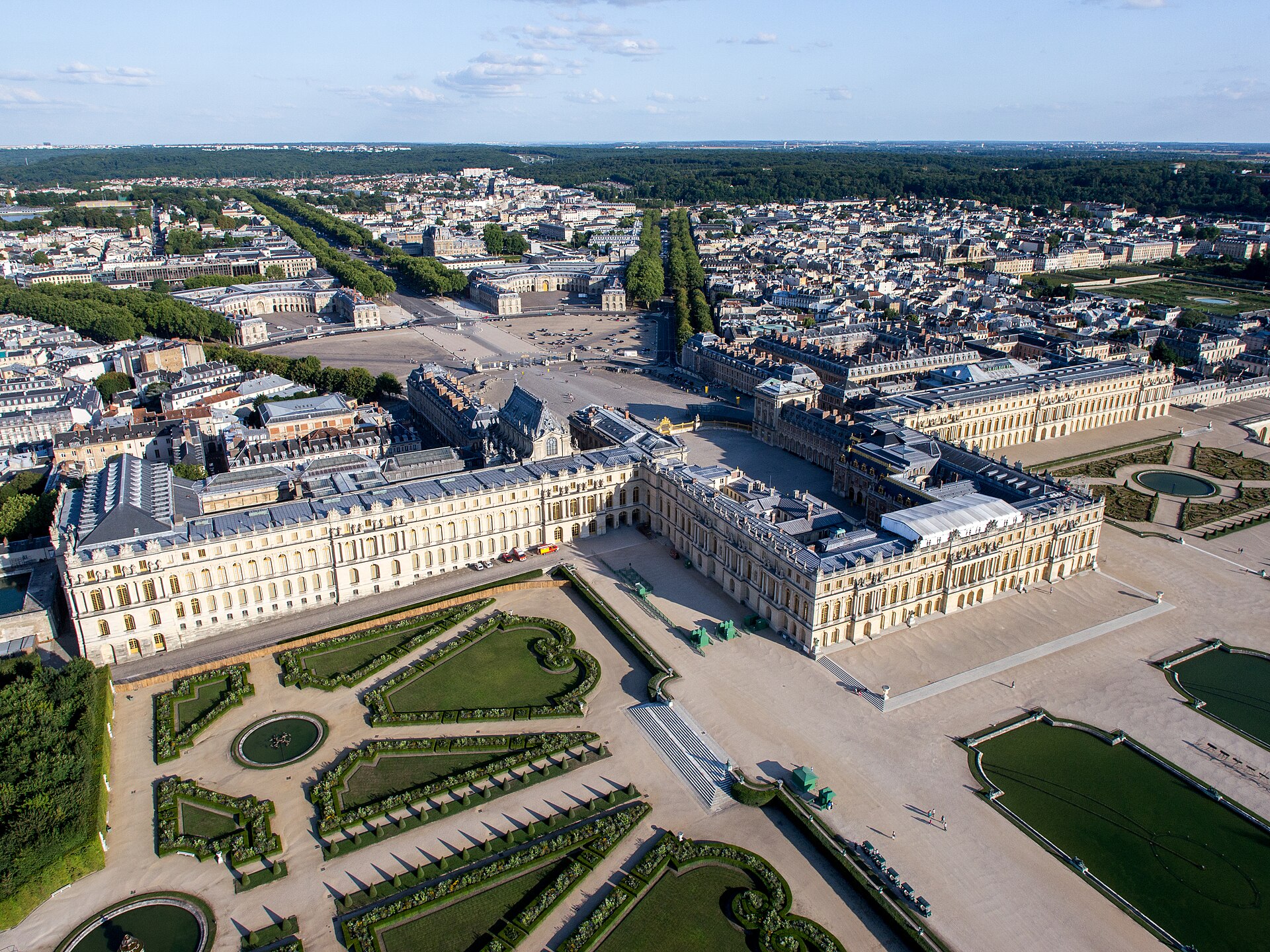
Some buildings are simply large. A few are so ambitious, so total in their vision, that they reshape the very idea of what a building can be. The Palace of Versailles belongs to that second, rarer category. Rising from what was once marshy hunting country a short distance from Paris, it became the largest and most influential royal residence in Europe, a place designed not merely to house a king but to embody the whole idea of royal power itself.
When you stand before its endless golden facade, or walk the mirrored length of its most famous gallery, you are looking at the physical expression of an idea, that a single monarch could be the sun around which an entire nation turned. Versailles was the stage on which the kings of France performed their majesty, a theatre of absolute power so dazzling that rulers across Europe scrambled to imitate it. From Vienna to St Petersburg, palaces rose in its image.
Yet Versailles is far more than a monument to vanished kings. It is a place where the grandeur of the old regime and the storm of revolution meet, where a queen played at country life while resentment gathered beyond the gates, and where, in the twentieth century, the map of the modern world was redrawn in a single mirrored room. Few buildings have witnessed so much, or carried such weight of meaning into the present day.
In the pages ahead you will trace the whole extraordinary story of Versailles, from the modest hunting lodge that started it all, through the genius of the architects and gardeners who built a wonder, to the court that lived and schemed within its walls, and on to the revolution that emptied it and the museum it became. This is the palace that set the standard for all others, and it rewards every moment you spend with it.
In This Article
- From a Hunting Lodge in the Marshes
- The Vision of the Sun King
- The Artists Who Built a Wonder
- The Hall of Mirrors
- The Gardens That Tamed Nature
- The Court Comes to Versailles
- The Apartments and the Ritual of Majesty
- Retreats Within the Kingdom of Show
- The Price of Magnificence
- The Revolution at the Gates
- Where the Modern World Was Shaped
- A Palace Preserved for All
- Walking Through Versailles Today
From a Hunting Lodge in the Marshes
The most astonishing thing about Versailles is how modestly it began. Before the vast palace, before the gardens and the fountains and the crowds of courtiers, there was only a small brick and stone hunting lodge, built for a king who liked to escape the pressures of the capital and ride out after game in the wooded country to the west of Paris. It was a private retreat, not a seat of government, and nothing about it suggested the wonder to come.

The land itself was unpromising, low-lying and marshy, better suited to birds and deer than to a great building. Yet it had one quality that mattered enormously to a king who wished to be alone with his thoughts and his hunt, it was quiet, removed from the intrigues and the mobs of Paris. That sense of separation, of a world apart, would remain central to what Versailles became even as it grew beyond all recognition.
The modest lodge might have remained a footnote, a pleasant royal hideaway soon forgotten. Instead it caught the imagination of a young king who would transform it into something the world had never seen. The bones of that original building were not swept away but wrapped and enlarged, so that at the heart of the immense palace there survived the memory of the small retreat from which it all grew.
This humble origin is worth holding onto as you contemplate the scale of what followed. Versailles was not planned from the start as the greatest palace in Europe; it grew, stage by stage, from a hunting lodge into a wonder, driven by the will of a monarch determined to build something that would proclaim his glory to the ages. The marsh became a mirror for a king’s ambition.
The Vision of the Sun King
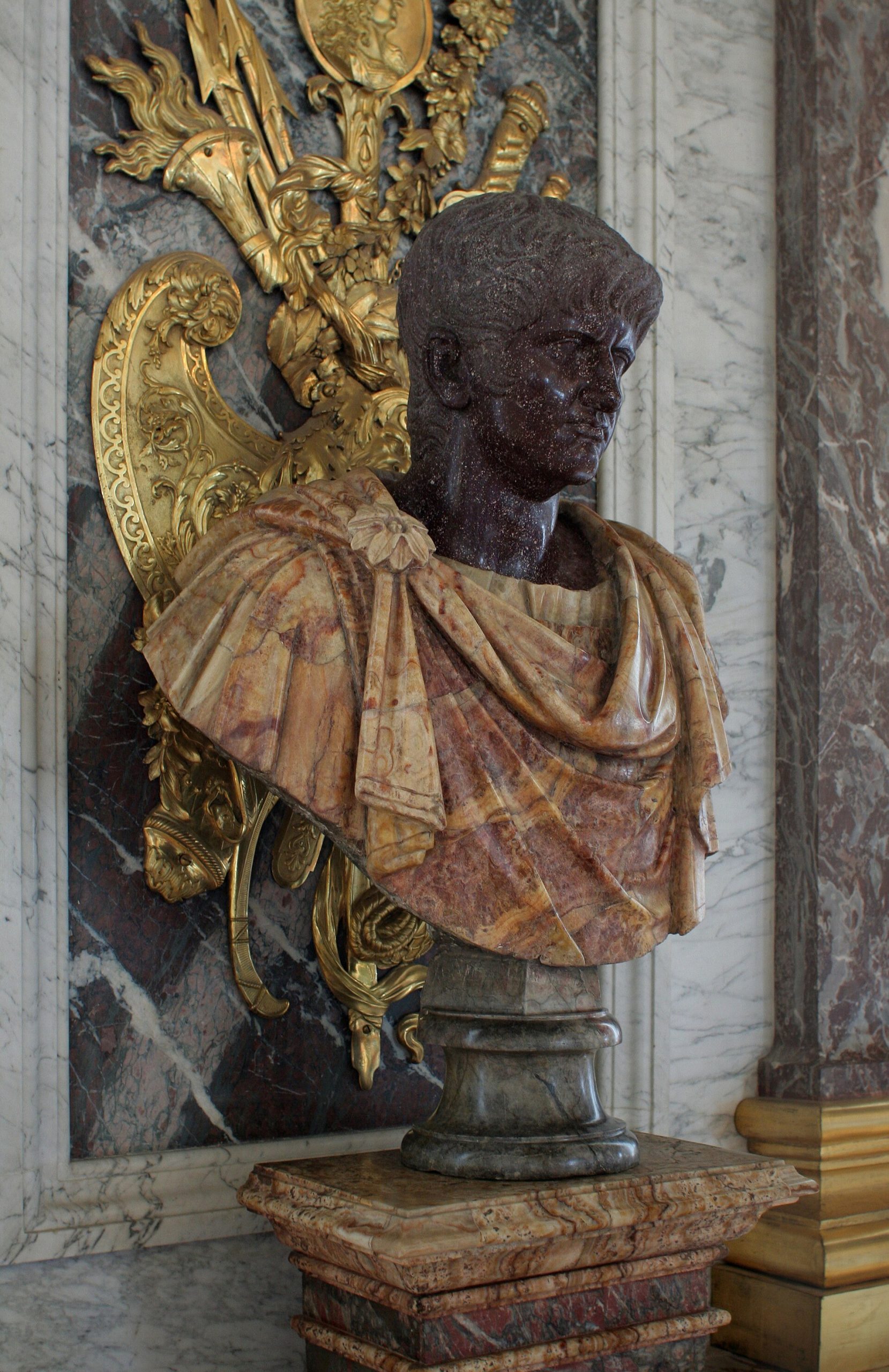
The man who transformed Versailles was Louis XIV, the monarch who took the sun as his personal emblem and ruled France for longer than almost any king in European history. His reign was built on the idea of absolute royal authority, the belief that the king embodied the state itself, and he needed a setting worthy of that towering conception of kingship. Versailles was to be that setting.
Louis had reasons both grand and practical for pouring his energy into a palace far from the capital. Paris, with its restless crowds and its memory of aristocratic rebellion, felt dangerous and confining to a king who wished to rule without challenge. By building a magnificent new seat of power in the countryside, he could draw the nobility out of the city and into an environment entirely of his own making, where every element served to magnify his authority.
The choice to make Versailles the centre of the kingdom was therefore a political act as much as an architectural one. Here the king could gather the great families of France around him, dazzle them with splendour, and bind them to his court, keeping them close where he could watch them and far from the provincial power bases from which trouble might come. The palace was a tool of control disguised as a paradise.
Above all, Versailles was to be a statement, visible to all of Europe, of the might and glory of the French crown. Everything about it, its scale, its richness, its endless vistas, was calculated to overwhelm and to impress, to make visitors feel the presence of a power beyond their own. In building Versailles, the Sun King was not merely housing himself; he was projecting an image of majesty designed to outshine every rival on the continent.
It is hard to overstate how radical this concentration of the kingdom at a single point really was. In an age when power had traditionally been dispersed among great regional lords, the decision to gather the whole apparatus of the state and the cream of the nobility into one enormous palace was a bold and deliberate reordering of the nation around the person of the king. Versailles was absolutism made visible in stone.
The Artists Who Built a Wonder
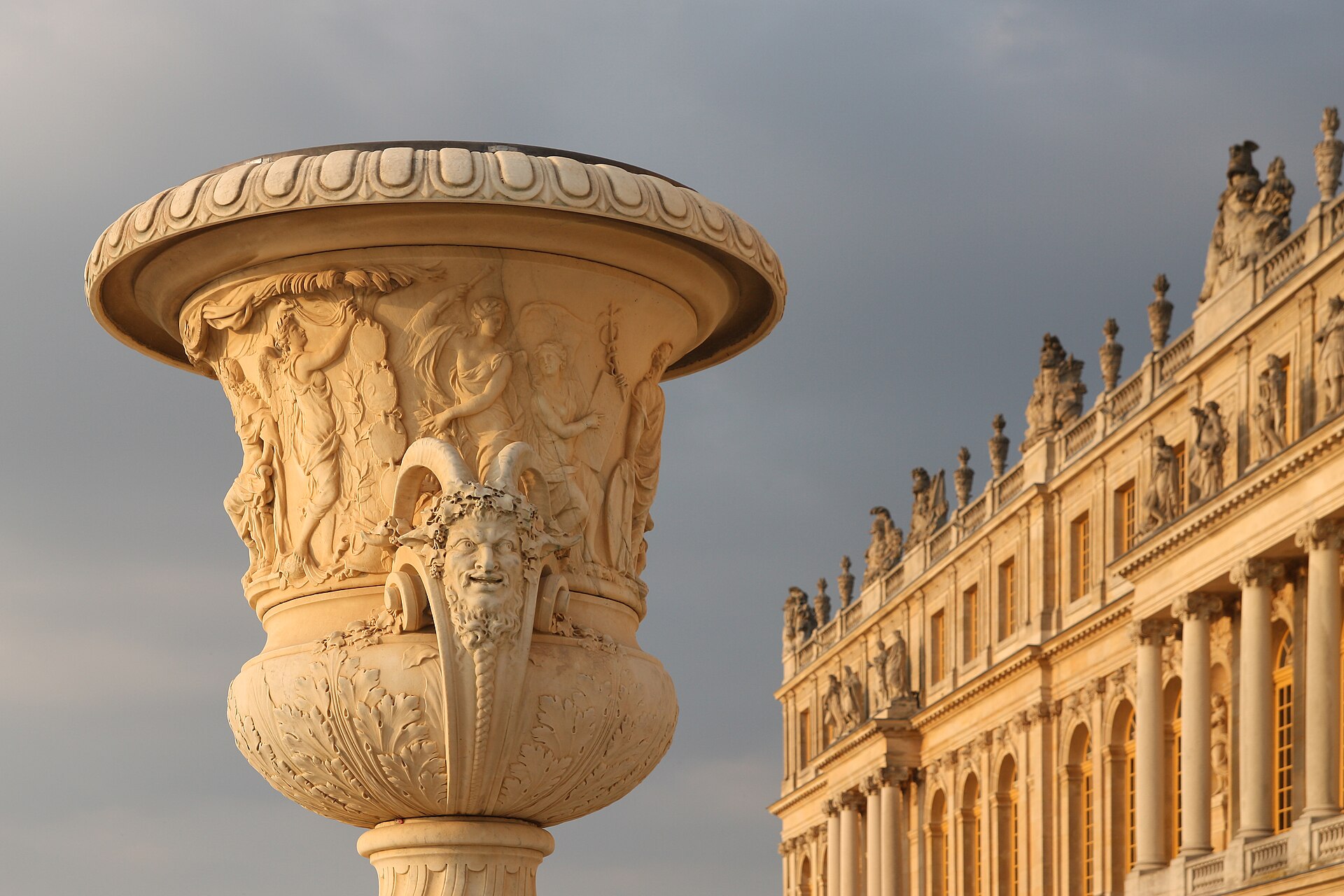
No single person could have created Versailles, and the palace as we know it was the work of a remarkable team of artists and craftsmen working under the king’s demanding eye. Successive architects shaped and reshaped the building, enlarging the modest lodge into a sprawling palace, wrapping the old structure in new wings and facades until it achieved the immense scale that still astonishes visitors today.

The architects who led this great enterprise gave Versailles its characteristic style, a restrained yet monumental classicism, all long horizontal lines, ordered windows, and stately proportions. The building grew outward in stages, each phase adding new grandeur, until the garden facade stretched to an almost incredible length, a golden cliff of stone and glass facing the great expanse of the park.
Working alongside the architects was a master painter and decorator who orchestrated the interiors, marshalling armies of artists, sculptors, and gilders to fill the great rooms with painted ceilings, marble, and gold. The result was a total work of art in which architecture and decoration fused into a single overwhelming impression of splendour, every surface pressed into the service of the king’s glory.
This collaboration of many hands under one guiding will is part of what makes Versailles so coherent despite its vast size. It was not a jumble of additions but a sustained artistic project, pursued over decades, in which the finest talents of the age were bent toward a single purpose. The palace stands as a monument not only to a king but to the extraordinary creative resources he was able to command.
The decades-long nature of the project also meant that Versailles evolved with the taste of its age, later phases refining and enriching what earlier ones had begun. This gives the palace a subtle depth, the record of a sustained conversation between king and artists carried on across a lifetime, all held together by the consistent grandeur of the guiding vision.
The Hall of Mirrors
If Versailles has a single heart, it is the Hall of Mirrors, the great gallery that runs along the garden front and remains one of the most famous rooms in the world. Here a long line of tall windows looks out over the park, and facing them, along the opposite wall, an answering line of mirrors catches the light and the view, doubling the space and flooding it with brilliance in a way that dazzled everyone who entered.
In an age when mirrors of any size were rare and hugely expensive, to line an entire gallery with them was a statement of almost unimaginable wealth and technical daring. The room was designed to impress ambassadors and visitors with the sheer resources of the French crown, and it succeeded completely, its shimmering length becoming a byword for luxury and a model that other courts could only envy.
The gallery was more than a showpiece; it was a working part of the court’s ceremonial life, a place where the king passed in procession and where great events unfolded beneath its painted ceiling celebrating his reign. To walk its length, surrounded by light and reflection with the gardens stretching away outside, was to be caught up in the theatre of royal power at its most magnificent.
The Hall of Mirrors would go on to witness moments of world-historical importance far beyond the age of the kings who built it, its fame ensuring that when history sought a stage of sufficient grandeur, it returned again and again to this room. But even setting aside those later dramas, the gallery stands on its own as one of the supreme achievements of interior design, a space that still takes the breath away.
The technical achievement behind the gallery deserves a moment’s wonder in its own right. Producing large, flawless mirrors was among the most difficult crafts of the age, jealously guarded by those who had mastered it, and to assemble hundreds of them into a single luminous wall was a feat that announced France’s determination to lead Europe not only in arms and politics but in art and industry as well.
The Gardens That Tamed Nature
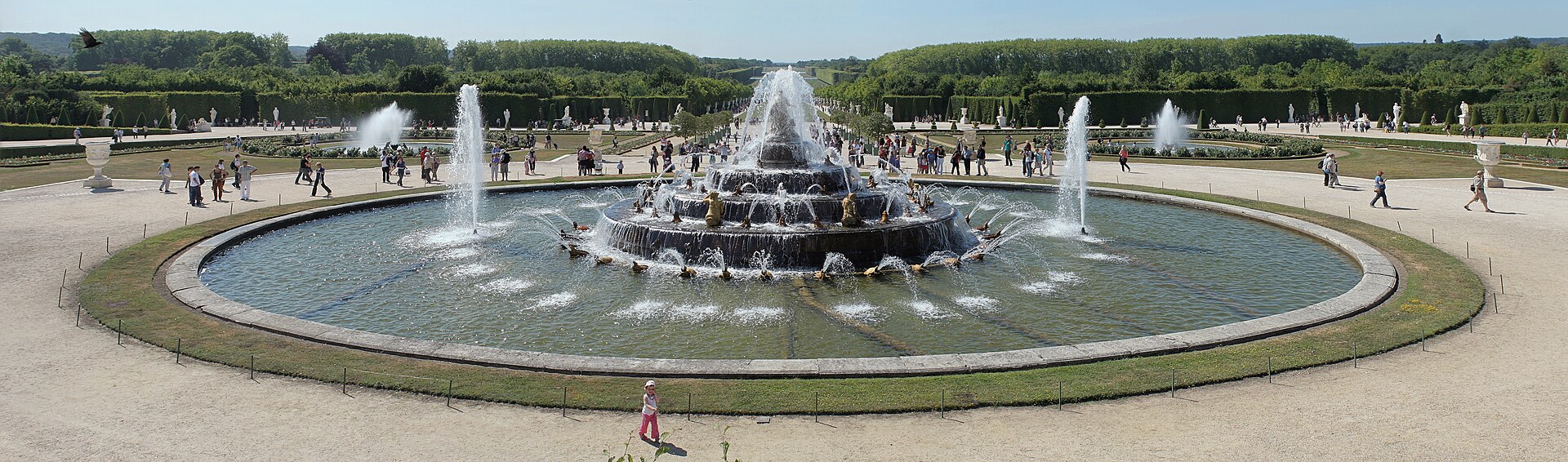
Versailles is not only a palace but a landscape, and its gardens are every bit as much a work of art as the building they surround. Laid out by a master gardener of genius, they transformed the marshy ground into a vast composition of avenues, parterres, groves, and waterworks, imposing a rigorous geometric order on nature across an enormous expanse. The gardens were, in their way, as ambitious as the palace itself.

The design was based on the principles of the formal French garden, in which nature is shaped into perfect symmetry and long perspectives draw the eye toward distant horizons. Straight avenues radiate from the palace, ornamental pools mirror the sky, and clipped hedges enclose secret groves adorned with sculpture. Everything is ordered, balanced, and controlled, a green expression of the same absolute will that raised the palace.
Water was the great challenge and the great glory of the gardens. Bringing enough water to feed the fountains of Versailles, on ground that had little of its own, required immense engineering effort, and the fountains that resulted were among the wonders of the age. When they played, sending jets and cascades into the air across the park, they proclaimed the king’s power to command even the elements.
To walk the gardens is to understand Versailles as a total environment, in which palace and park were conceived as a single unified whole. The great central axis draws the eye from the heart of the building out across the parterres and down the long canal toward the setting sun, a deliberate alignment that tied the Sun King to the heavens themselves. The gardens are not a backdrop to the palace but an essential part of its meaning.
Maintaining this vast green composition demanded constant labour, an endless task of clipping, planting, and tending that continues to this day. The gardens were never a finished thing but a living work of art, requiring the sustained effort of countless hands to keep nature bent to the designer’s will. In their disciplined beauty they express, as fully as the palace itself, the ambition to master and order the world.
The Court Comes to Versailles
In time the king made Versailles the official seat of his court and government, and the palace filled with an extraordinary population of nobles, officials, servants, and hangers-on. Thousands of people lived and worked within its walls and its surrounding town, all revolving around the person of the king in a great daily ritual of attendance and display. Versailles became a city in itself, wholly devoted to the monarch.
Life at court was governed by an elaborate code of etiquette that regulated every action and reserved the greatest honours for those closest to the king. To hand the monarch his shirt as he dressed, to be present at his rising or his going to bed, to be granted a particular seat or a particular word, these were the prizes for which the nobility competed endlessly. Etiquette was a system of control, binding the great families in a golden web of ceremony.
By drawing the nobility to Versailles and absorbing them in the rituals of the court, the king kept them dependent and distracted, their energies channelled into the pursuit of prestige rather than political power. The palace thus performed exactly the function its builder intended, neutralising the threat of an over-mighty aristocracy by turning proud lords into courtiers competing for the favour of their sovereign.
The daily life of this court was a spectacle of splendour and intrigue, a world of beautiful clothes and sharp ambitions, of alliances and rivalries played out beneath the painted ceilings. It was glamorous and suffocating in equal measure, a gilded existence lived entirely in the shadow of the king, and it set the tone for court life across Europe for generations to come.
For those caught up in it, this life could be both intoxicating and cruel. A word of royal favour could raise a family’s fortunes; a moment of disfavour could ruin them. The court rewarded charm, cunning, and constant attendance, and it punished absence and misjudgement, creating a hothouse of ambition in which the stakes, though played out in matters of ceremony, were felt as keenly as any battle.
The Apartments and the Ritual of Majesty
The interior of Versailles was arranged to serve the great ritual of monarchy, with grand apartments for the king and queen that were as much stages as living quarters. These sequences of magnificent rooms, each more splendid than the last, led visitors ever closer to the presence of the sovereign, their rising grandeur mirroring the ascent toward the sacred person of the king.

The royal day was itself a kind of theatre, its central moments, the king’s ceremonial rising in the morning and his going to bed at night, performed before privileged spectators in the state bedchamber. These rituals turned the most ordinary human acts into affairs of state, occasions on which the whole hierarchy of the court was displayed and reaffirmed. To witness them was a mark of favour; to take part was a coveted honour.
The apartments were decorated to reinforce the image of the king as a figure of almost divine authority, their ceilings crowded with gods and allegories celebrating his virtues and victories. Marble, gilt bronze, and rich fabrics filled the rooms, and everything was arranged to impress upon the visitor the extraordinary status of the man at the centre of it all. The decoration was propaganda of the most beautiful kind.
Understanding the apartments as instruments of ceremony is key to understanding Versailles. These were not private homes in any modern sense but public spaces in which the monarchy performed itself, day after day, before an audience of courtiers. The whole vast building was, in effect, a machine for the production of royal majesty, and its rooms were the settings in which that majesty was displayed.
Retreats Within the Kingdom of Show
For all its splendour, life amid the relentless ceremony of the great palace could be exhausting, and the kings of Versailles created smaller, more private retreats within the vast estate where they could escape the pressures of the court. Set apart in the park, these lesser palaces offered a more intimate scale and a measure of relief from the endless performance of the main building.

The grandest of these retreats was a low, elegant palace of pink marble set among gardens, built as a place where the king could withdraw with a chosen few. Later a smaller and more refined pavilion was added, a jewel of graceful architecture that became especially associated with a queen who longed for privacy and simplicity amid the suffocating formality of the court.
It was here, in the grounds of these retreats, that a famous queen created her celebrated model village, a picturesque hamlet where she and her companions could play at the simple life of the countryside, tending gardens and admiring rustic cottages. This fantasy of pastoral innocence, indulged in the shadow of the greatest palace in Europe, would later become a symbol of a monarchy dangerously out of touch with the sufferings of its people.
These retreats reveal a human dimension to Versailles often lost amid its grandeur, the longing of its royal inhabitants for privacy, simplicity, and escape from the very magnificence they had created. They remind us that the palace was not only a machine of state but a home to real people, who could feel trapped by the golden ceremony that surrounded them and who sought, in these quieter corners, a little ordinary happiness.
The contrast between these intimate retreats and the overwhelming main palace tells us something important about the psychology of absolute power. Even the mightiest monarchs, surrounded by every possible luxury, could feel imprisoned by the roles they were required to play, and the retreats stand as evidence that the golden cage of Versailles weighed on those within it as well as dazzling those without.
The Price of Magnificence
The magnificence of Versailles came at an enormous cost, both in money and in labour, and the palace stands as a monument to the vast resources that an absolute monarchy could command and consume. Building and maintaining such a place, with its endless rooms, its gardens, its fountains, and its army of servants, devoured a significant portion of the kingdom’s wealth over many years.

This expenditure was not, in the eyes of the king who ordered it, mere extravagance but a necessary investment in the prestige of the crown. Splendour was a form of power, and a magnificent palace impressed rivals, awed subjects, and proclaimed the greatness of France. The king believed, with some justice, that the glory of Versailles served the glory of the state, and that the two were inseparable.
Yet the cost of such magnificence, sustained over generations, contributed to the mounting financial strains that would eventually help to bring down the monarchy. The resources poured into the court and its pleasures stood in ever sharper contrast to the hardships of ordinary people, and the perception of a royal establishment consuming the wealth of the nation while its subjects struggled became a dangerous source of resentment.
Versailles thus embodies a central tension of absolute monarchy, that the very splendour meant to secure the throne could also undermine it. The palace was at once the greatest advertisement for royal power and, in its extravagance, a symbol of the gulf between the crown and the people. Its beauty and its cost are two sides of the same coin, and both are essential to its story.
Historians still debate how far the expense of Versailles truly weakened the French state, but there is no doubt that in the popular imagination the palace came to stand for royal extravagance at the expense of the people. Whatever the precise economics, the symbolism proved politically deadly, and the glittering palace became, fairly or not, an emblem of everything that the coming revolution would sweep away.
The Revolution at the Gates
The world of Versailles, so seemingly permanent in its grandeur, came to an abrupt end with the French Revolution. As discontent boiled over across France, the palace that symbolised royal privilege became a focus of popular anger, and the isolation that had once protected the monarchy now left it dangerously exposed to the fury of a people demanding change.

In one of the great dramatic episodes of the Revolution, a crowd, many of them women driven by hunger and anger over the price of bread, marched from Paris out to Versailles and confronted the royal family. The result was that the king and queen were compelled to leave the palace and return to the capital, effectively as prisoners of the Revolution. The court that had reigned in splendour was swept away almost overnight.
With the departure of the royal family, the great age of Versailles as a living seat of monarchy came to a close. The palace fell silent, its treasures scattered and its rooms emptied, its purpose gone. The machine of majesty had stopped, and the building that had been the beating heart of the French monarchy for over a century stood abandoned by the world it had been built to serve.
The Revolution’s confrontation with Versailles was rich in symbolism, the ordinary people of France reclaiming, however briefly, the palace that had embodied everything they were rising against. The image of the crowd at the gates of the great palace captures the moment when the old order gave way, and it ensured that Versailles would be remembered not only as a wonder of art but as a stage on which the fate of a monarchy was decided.
The fall of Versailles carried a lesson that would echo through the following centuries, that no display of splendour, however overwhelming, could indefinitely hold back the demands of a people pushed too far. The palace built to make royal power seem eternal became, in the end, a stage for its collapse, and the very grandeur that had awed the nobility could not save the monarchy when the ordinary people rose.
Where the Modern World Was Shaped
Emptied of its kings, Versailles did not fade into irrelevance but went on to play a remarkable role in later history, above all as a stage for great affairs of state. Its grandeur made it the natural setting for moments meant to carry the weight of history, and the palace was drawn again and again into the making of the modern world long after the monarchy that built it had vanished.
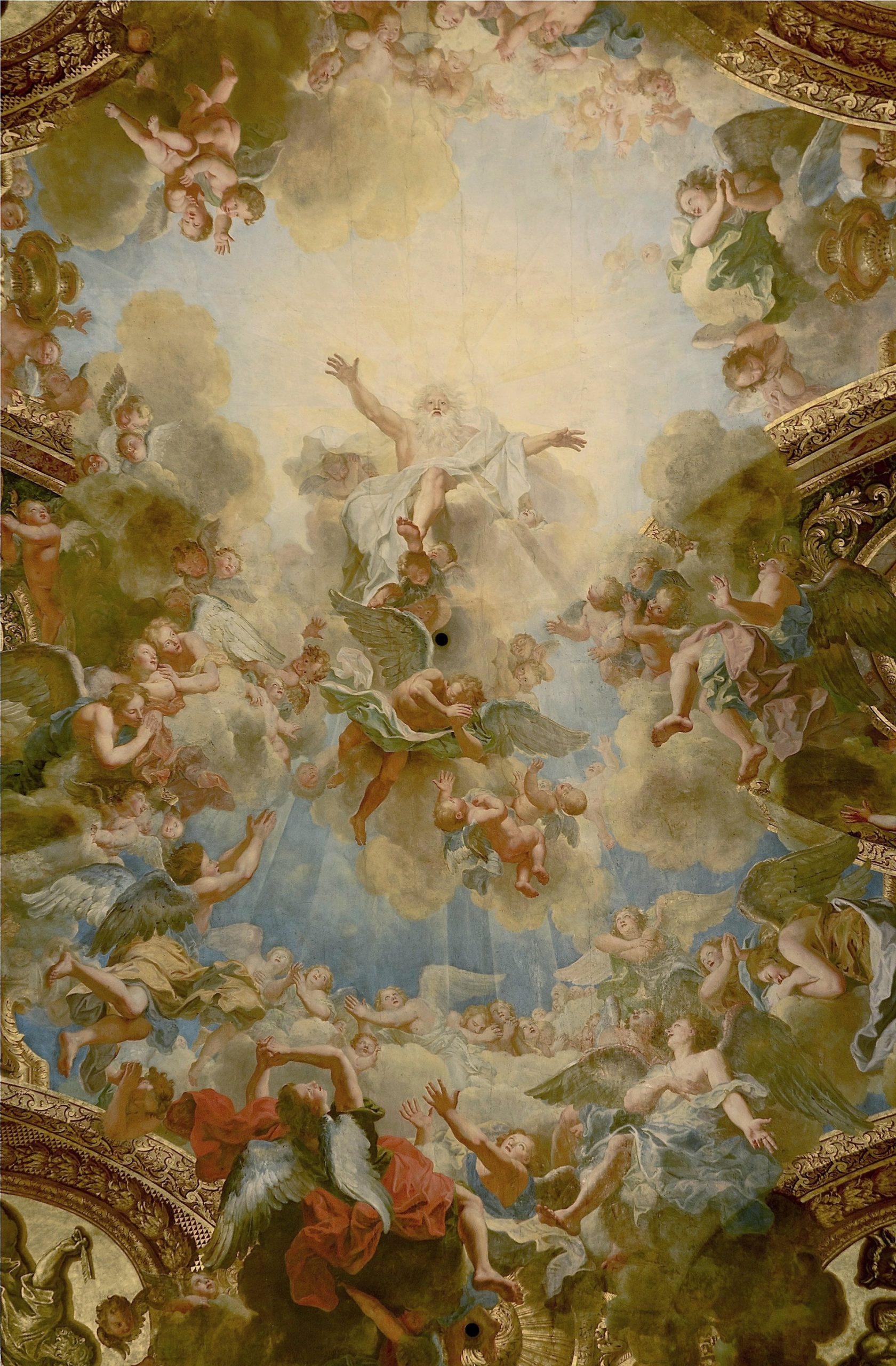
It was in the Hall of Mirrors, that supreme symbol of French royal glory, that the German Empire was proclaimed in the aftermath of a war that humiliated France, a deliberate choice meant to underline the victors’ triumph in the very heart of their enemy’s pride. That the room could be used in this way showed how potent a symbol Versailles remained, its splendour lending gravity to whoever commanded it.
Decades later, in the same gallery, the treaty that formally ended the First World War was signed, giving its name, the Treaty of Versailles, to one of the most consequential and contested agreements in modern history. Once again the mirrored hall served as the stage on which the fate of nations was decided, its association with power and majesty making it the fitting setting for an event that would shape the century to come.
These later dramas added new layers to the meaning of Versailles, binding it not only to the age of kings but to the history of modern Europe and the wider world. The palace built to glorify one monarch became a place where empires rose and fell and where the map of the world was redrawn, its rooms echoing with events far beyond anything its creators could have imagined.
A Palace Preserved for All
In the nineteenth century, Versailles was given a new purpose that saved it from decay and neglect. Rather than being abandoned or demolished, the palace was transformed into a museum dedicated to the history of France, its rooms filled with paintings and sculpture celebrating the nation’s past. This decision preserved the great building and opened it, in time, to the public who had once been excluded from its splendours.

Today Versailles is one of the most visited and admired historic sites in the world, drawing enormous numbers of visitors each year from every corner of the globe. Its restoration and upkeep are a major undertaking, as generations of curators and craftsmen work to conserve its fragile decoration, restore its gardens and fountains, and recover something of the appearance it had in its age of glory.
The palace is recognised as a site of outstanding universal value, its importance to the heritage of humanity formally acknowledged. This status reflects not only the beauty and ambition of the building and its gardens but also the immense influence Versailles has exerted on architecture, art, and the very idea of the palace across the world. It is a touchstone against which other great buildings are measured.
The ongoing work of preservation ensures that Versailles will continue to astonish future generations as it has astonished visitors for centuries. To care for such a place is to keep alive not just a building but a whole chapter of human history, and the millions who walk its halls and gardens each year are the inheritors of a wonder that its creators intended to endure for the ages.
The transformation of a symbol of royal privilege into a museum open to all also carried its own quiet significance. A place once reserved for the king and his court became the shared inheritance of the nation and, indeed, of the world, its treasures now belonging to everyone who cares to walk its halls. In this democratic afterlife, Versailles found a new and enduring purpose.
Walking Through Versailles Today
To visit Versailles is to step into one of the supreme achievements of European art and architecture, and it rewards both the casual visitor and the devoted student of history. The scale of the place is such that a single day can only scratch the surface, and it is worth planning carefully to make the most of the palace, the gardens, and the retreats scattered across the vast estate.

Inside the palace, the great sequence of state apartments leads toward the Hall of Mirrors, and to stand in that shimmering gallery, with the light pouring in and the gardens stretching away beyond the windows, is to experience the heart of Versailles at its most magnificent. The painted ceilings, the marble, and the gilding of the royal apartments give a vivid sense of the world of the court and the ceremony that ruled it.
Beyond the palace lie the gardens, and no visit is complete without time spent among their avenues, parterres, and fountains, following the great central axis out toward the long canal. Further afield stand the quieter retreats, where a different and more intimate side of royal life can be glimpsed, away from the overwhelming grandeur of the main building.
View the exact location on Google Maps
However you choose to explore it, Versailles leaves an impression that lasts a lifetime. It is the palace that defined what a palace could be, the model that rulers across the world sought to imitate, and a place where the grandeur of kings, the drama of revolution, and the making of the modern world all come together. To walk its halls and gardens is to walk through the very heart of European history, and there is no finer place to begin a journey through the great palaces of the world.
Palaces Nearby
If Versailles has drawn you into the world of France’s royal palaces, two more great residences are well worth exploring:
You May Like

The Hofburg: The Imperial Palace at the Heart of Habsburg Vienna


3 thoughts on “The Palace of Versailles: How a Hunting Lodge Became the Model for Every Palace”