Perched on a mountain ridge above the Apurimac River canyon, at an elevation higher than Machu Picchu and reachable only by a grueling multi-day trek, sits an Inca site that archaeologists often describe as Machu Picchu’s sister city. Choquequirao receives a small fraction of the visitors, yet many researchers consider it comparably significant, and in one important respect it is even more remarkable: an estimated two-thirds of the site remains unexcavated, still buried beneath centuries of jungle growth.
For a site this large and this historically important to remain so incompletely explored is unusual anywhere in the world, let alone at an Inca complex located within Peru’s most heavily studied archaeological region. Choquequirao offers a rare glimpse of what a major ruin looks like before decades of careful excavation and restoration transform it into a polished tourist destination.
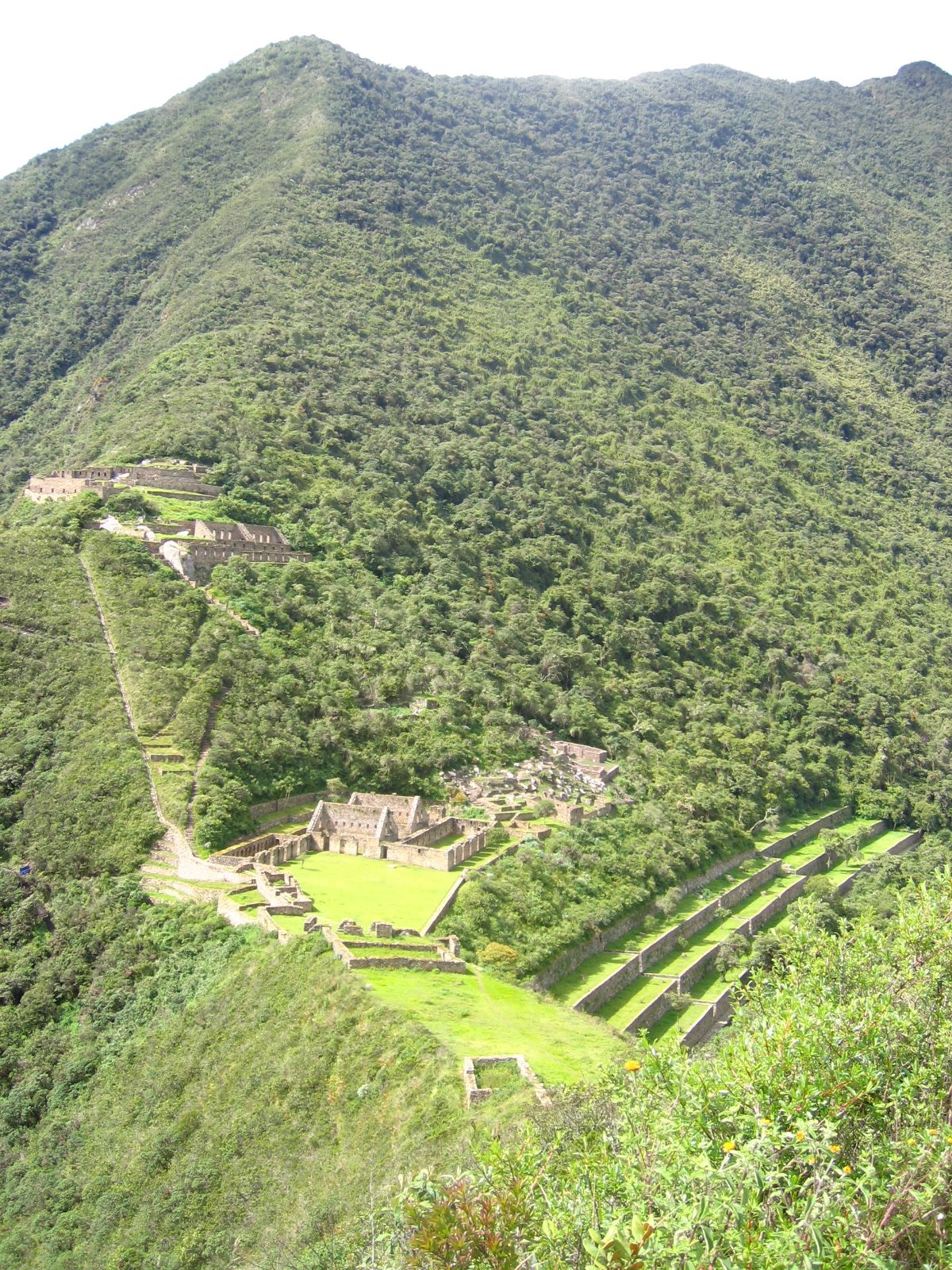
Table of Contents
- Machu Picchu’s Sister City, Still Mostly Unexcavated
- A Two-Day Hike to Reach the Ruins
- The White Llamas Built Into the Mountainside
- Temples, Terraces, and a Priest’s House
- Quechua Voices in a Site Still Being Uncovered
- Religion, Water, and Mountain Worship
- Choquequirao’s Role in the Last Days of the Inca
- Rediscovery From Hiram Bingham to Today
- Why Only a Third of the Site Has Been Excavated
- The Cable Car Debate Dividing Peru
- Nearby Places
Machu Picchu’s Sister City, Still Mostly Unexcavated
Choquequirao, meaning ‘cradle of gold’ in Quechua, sits at roughly 3,050 meters above sea level in the Vilcabamba mountain range of the Cusco region, built by the Inca sometime during the 15th century, likely under Pachacuti or one of his immediate successors, as part of the same broad wave of imperial expansion and monumental construction that also produced Machu Picchu and Ollantaytambo.
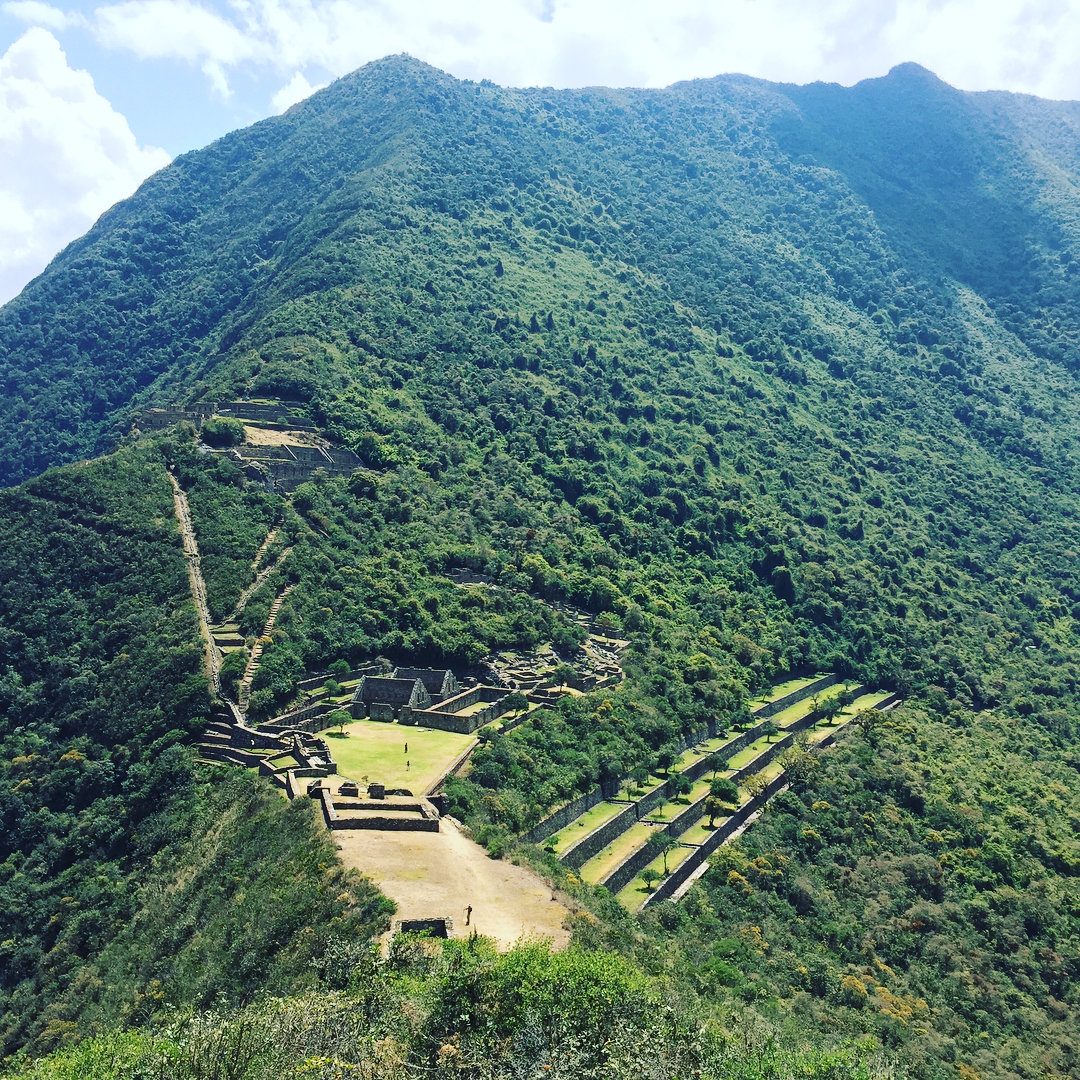
The site spans multiple terraced hillside sectors connected by stone stairways, covering a footprint comparable to or larger than Machu Picchu, though its far more remote and difficult-to-access location has left the vast majority of its structures still covered by dense cloud forest vegetation, undisturbed by anything beyond limited archaeological survey.
Unlike Machu Picchu, which draws well over a million visitors annually, Choquequirao receives only a few thousand visitors each year, almost entirely limited to travelers willing to undertake a demanding multi-day trek on foot or mule, a stark contrast that has left the site far closer to how it likely appeared when Hiram Bingham and other early 20th-century explorers first documented similarly remote Inca ruins.
The site’s construction reflects the same period of intense Inca imperial expansion that produced dozens of major royal estates, administrative centers, and religious complexes across the empire during the mid to late 15th century, a building boom that transformed the Cusco region’s mountainous landscape within just a few generations.
Choquequirao’s elevation, higher than Machu Picchu’s roughly 2,430 meters, places it within a distinct ecological zone where cloud forest vegetation grows especially dense, contributing both to the site’s dramatic scenic setting and to the practical difficulty of clearing and maintaining excavated areas against constant regrowth.
A Two-Day Hike to Reach the Ruins
Reaching Choquequirao typically requires a demanding two-day trek from the small town of Cachora, descending roughly 1,500 meters into the Apurimac canyon before climbing back up an even steeper ascent on the opposite side, a round trip that most visitors complete over four to five days total including time to actually explore the ruins.
This physical barrier has been, paradoxically, one of the primary reasons Choquequirao has remained so much less developed than Machu Picchu. The absence of road access or a rail connection has limited both tourism infrastructure and the pace of archaeological investigation, since transporting equipment, supplies, and personnel to the site remains logistically difficult even for professional research teams.
Local guides from Cachora and surrounding communities have played a central role in supporting trekking tourism to the site for decades, providing mules, food, and navigation support along a route that, prior to organized tourism, was used primarily by local farmers and herders moving between highland and lowland areas.
The trek’s difficulty has, somewhat counterintuitively, become part of its appeal for a certain segment of travelers, who describe the physical challenge and relative solitude of the route as a meaningful contrast to the far more crowded, infrastructure-heavy experience of visiting Machu Picchu today.
Basic campsites along the route provide the only accommodation available to trekkers, meaning visits to Choquequirao require considerably more planning, physical preparation, and self-sufficiency than a typical day trip to most other major Peruvian archaeological sites.
Peru’s government has periodically discussed alternative, less disruptive ways to improve access to the site short of a full cable car system, including improved trail maintenance and additional campsite infrastructure, though none of these smaller-scale proposals have yet fundamentally changed the demanding nature of the journey.
The White Llamas Built Into the Mountainside
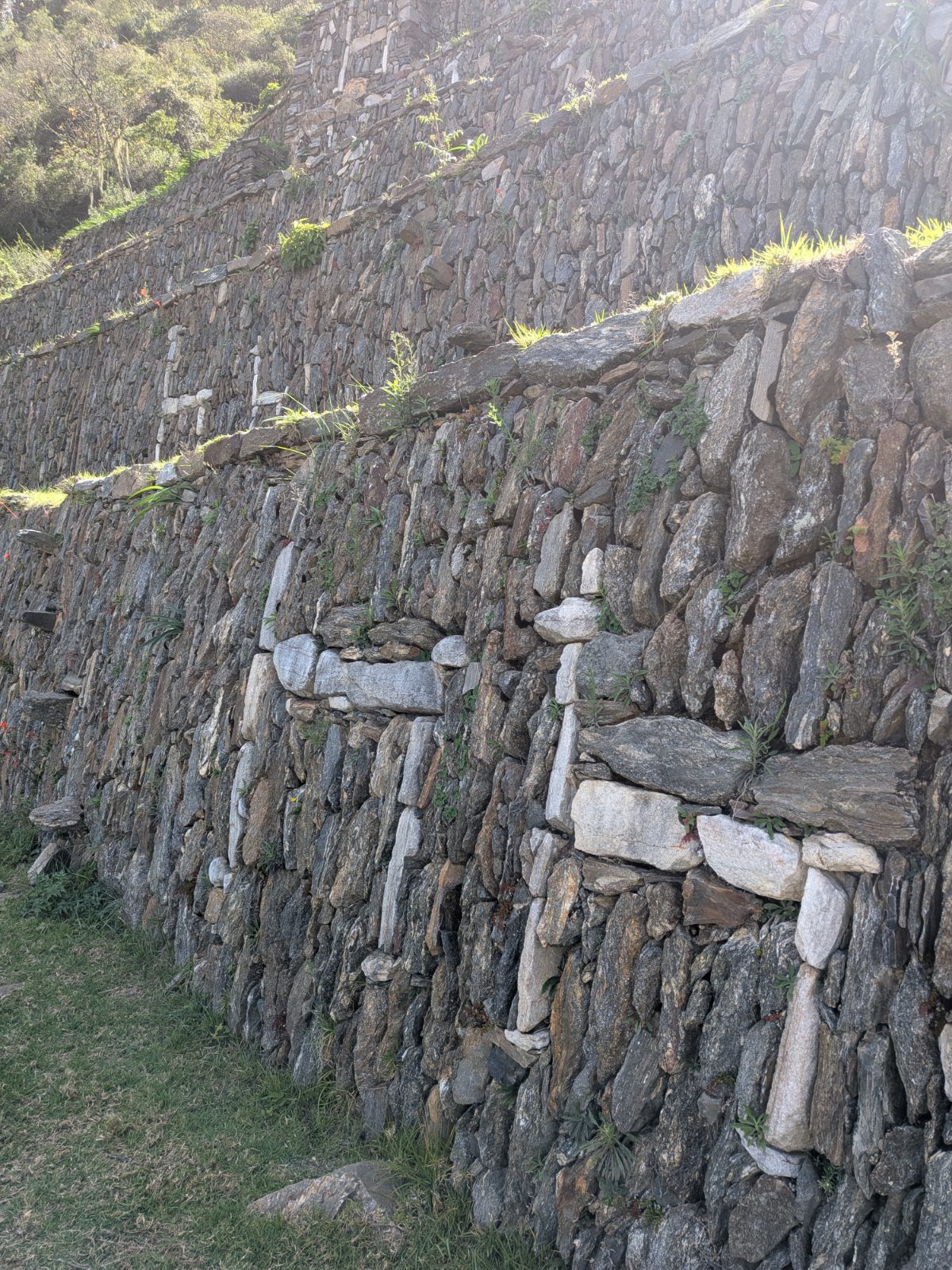
Among Choquequirao’s most distinctive features are a series of agricultural terraces decorated with large white stones inlaid directly into the retaining walls, arranged to form the unmistakable silhouettes of llamas. At least 23 individual llama figures have been identified across these terraces, discovered relatively recently, with the first widely publicized clearing and documentation occurring in the late 1990s and early 2000s.
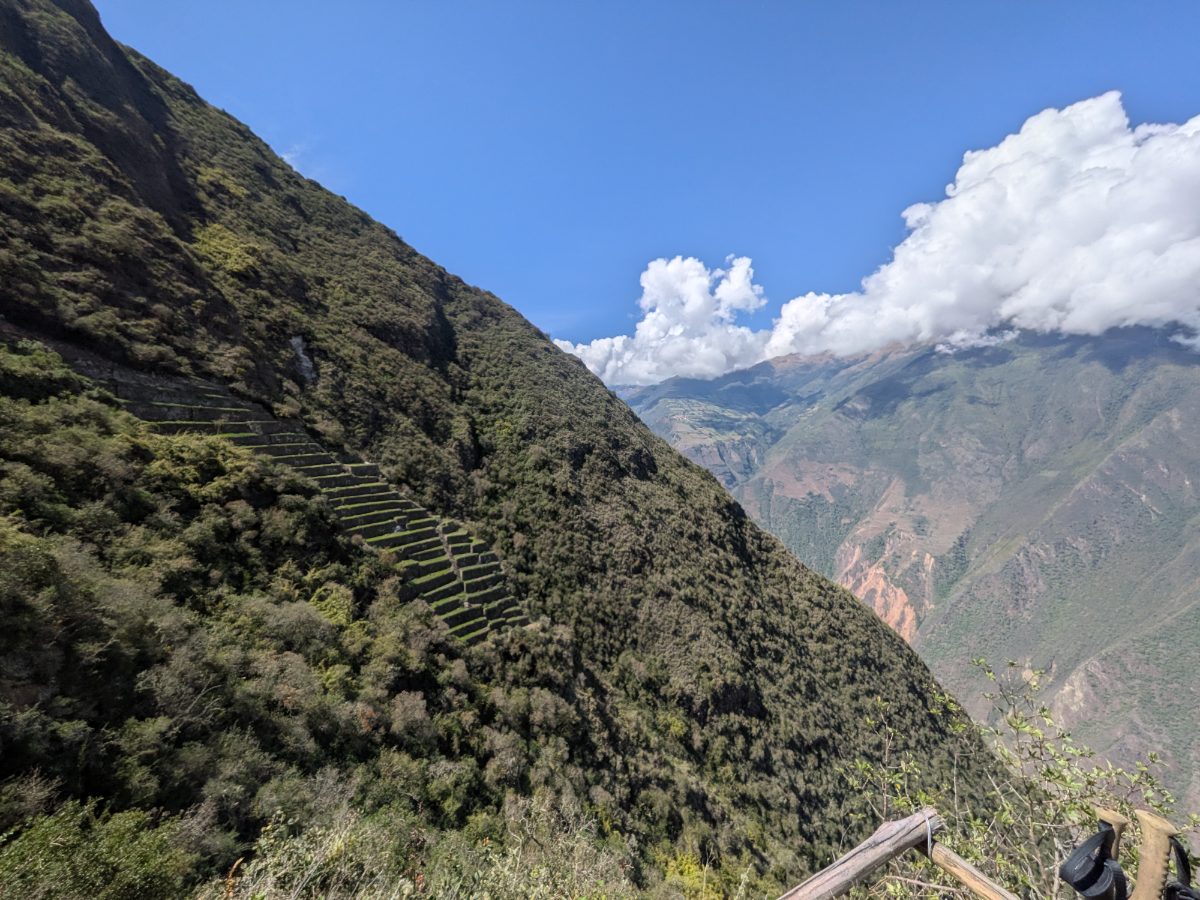
The llama terraces likely combined practical agricultural function with religious symbolism, since llamas held major economic and ceremonial importance throughout the Inca empire, serving as pack animals, a source of wool and meat, and frequent sacrificial offerings in state religious ceremonies. Decorating working terraces with their image may have been intended to invoke agricultural fertility and abundance.
Because these terraces sit on a steep, difficult-to-access slope somewhat separated from the site’s main structures, they went unnoticed by many earlier visitors and were only fully documented after Peru’s National Institute of Culture began more systematic clearing and survey work in the area, a reminder of how much Choquequirao likely still has left to reveal.
The largest of the llama figures span more than ten meters in length, requiring careful selection and placement of individual white stones against the darker terrace retaining walls, a technique demanding both artistic vision and precise construction planning by the original Inca builders.
Similar zoomorphic imagery embedded directly into architecture appears at a handful of other Inca sites, though the sheer number and concentration of llama figures at Choquequirao remains unusual, making the terraces one of the most visually distinctive discoveries at any Inca archaeological site in recent decades.
Temples, Terraces, and a Priest’s House
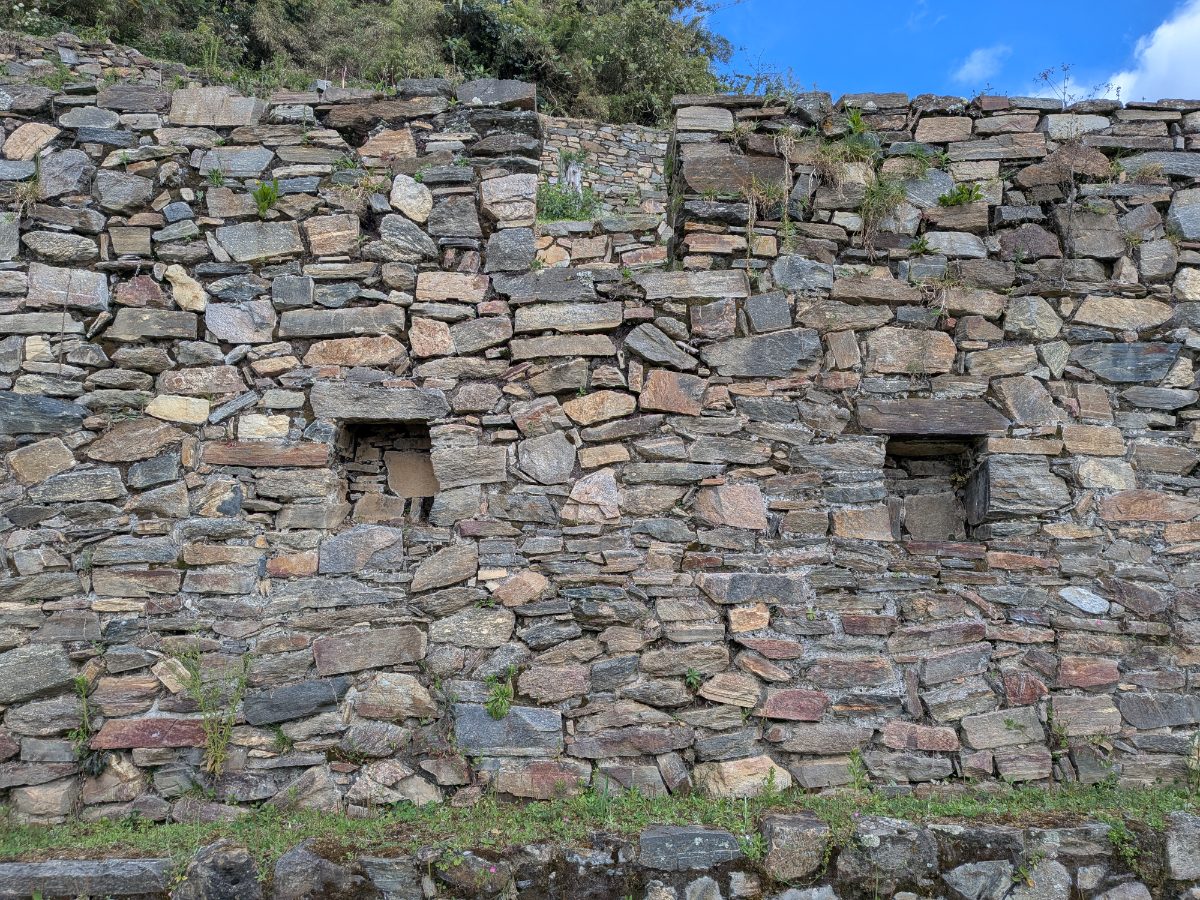
Choquequirao’s excavated sectors include a main plaza likely used for public ceremonies, a series of residential and storage structures, and a building identified by archaeologists as the House of the Priest, based on its layout and the ritual objects recovered during excavation, suggesting the site served religious as well as administrative functions.

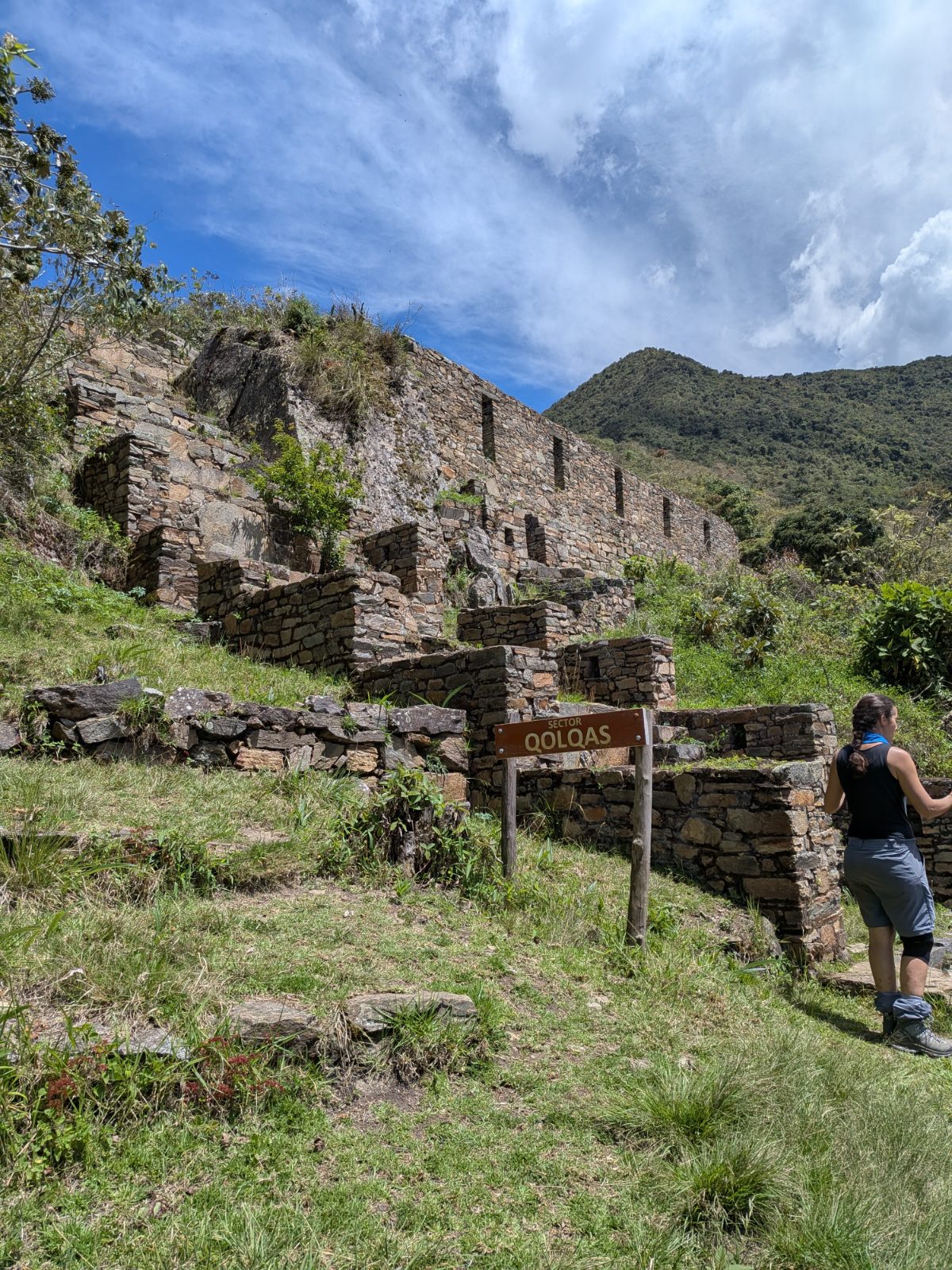
Qolqa storehouses similar to those found along the road network at Ingapirca and other Inca administrative centers were built at Choquequirao to store agricultural surplus, indicating the site functioned as a genuine regional hub rather than existing purely as a ceremonial retreat isolated from the empire’s broader economic system.
Water management features, including channels and fountains fed by natural springs on the mountainside, closely parallel the sophisticated hydraulic engineering seen at Machu Picchu, reflecting a shared Inca architectural approach to siting major complexes near reliable water sources regardless of how remote or difficult the surrounding terrain happened to be.
Excavated ceramics and small ritual objects recovered from the site’s residential and religious structures suggest a level of craftsmanship and trade connectivity consistent with other major Inca administrative centers, indicating Choquequirao maintained active links to the broader imperial economy despite its physically isolated location.
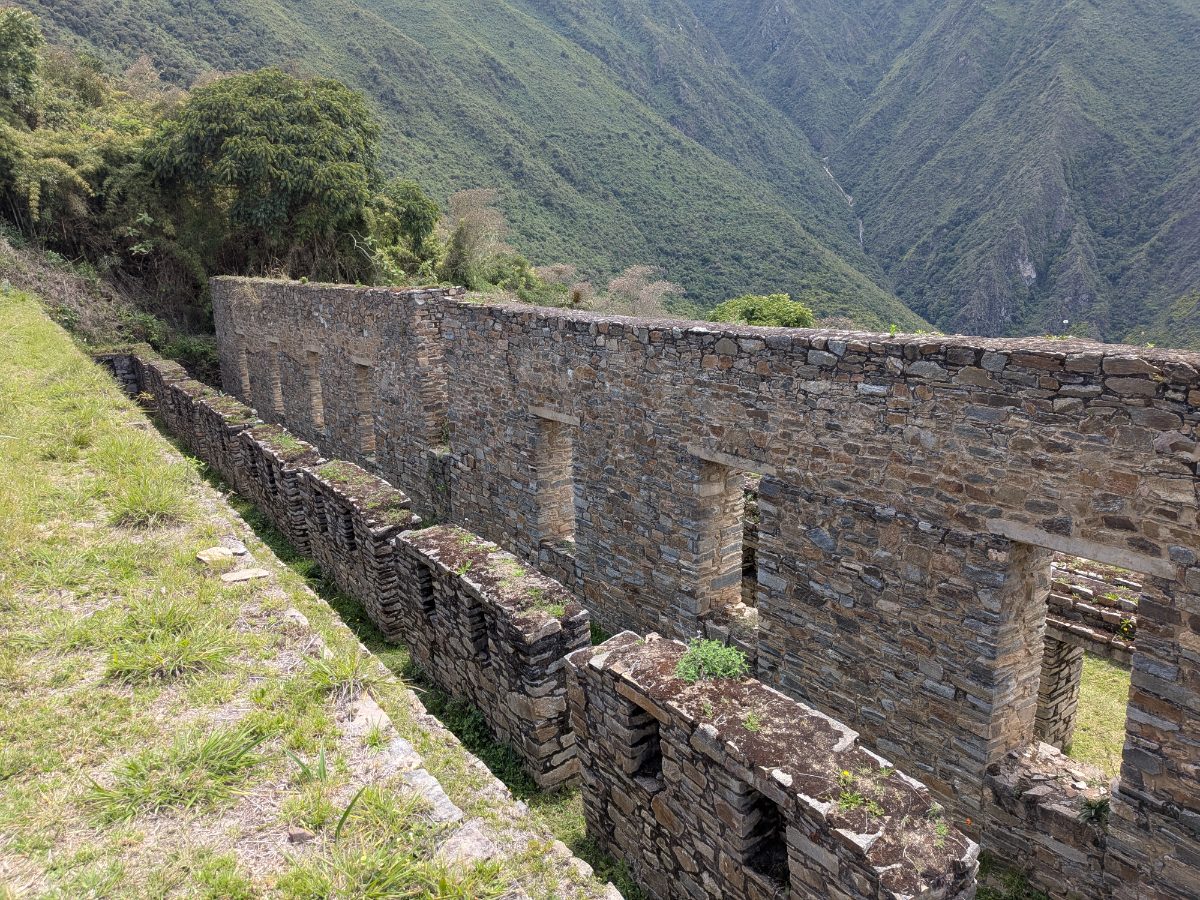
Some structures at the site remain only partially cleared of vegetation, with archaeologists working carefully to stabilize walls and remove overgrowth without causing further structural damage to features that, in some cases, had not been disturbed since the site’s original abandonment centuries earlier.
Archaeologists continue to debate the precise function of several structures within the excavated sectors, with some buildings showing evidence of multiple uses over time, possibly reflecting changes in the site’s role across the roughly century or so it likely remained in active use before the Spanish conquest disrupted Inca imperial administration.
Quechua Voices in a Site Still Being Uncovered
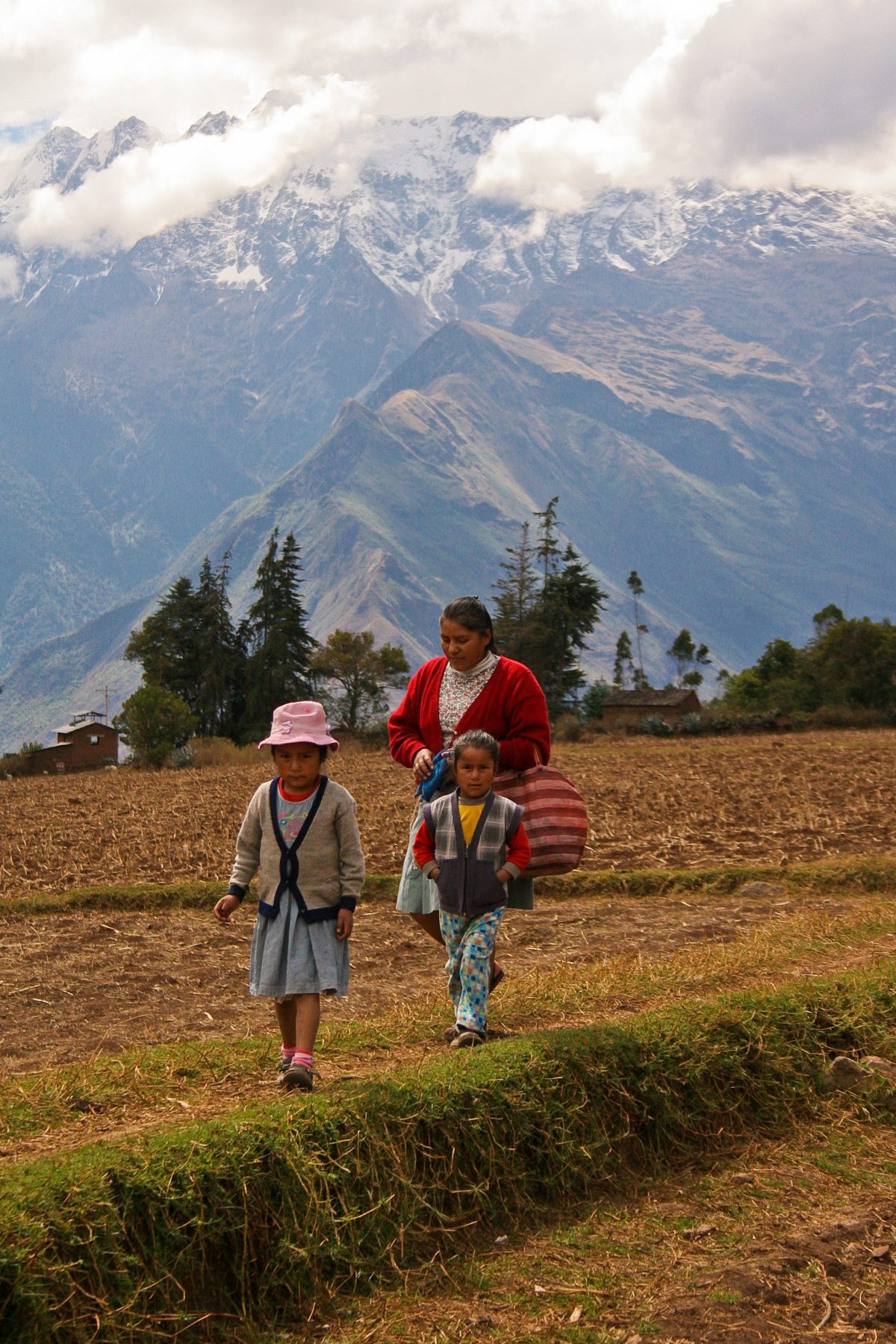
Quechua remains the dominant language spoken by communities living in the valleys and highland areas surrounding Choquequirao today, including many of the guides and mule handlers who support the trekking route from Cachora, continuing an unbroken linguistic connection to the Inca state that originally built the site.
Much of what is understood about Choquequirao’s original name, function, and religious significance comes from this same living linguistic and cultural continuity, since Quechua place names and oral traditions in the surrounding region have helped researchers interpret archaeological findings that would otherwise lack any documentary context.
This stands in useful contrast to sites like Teotihuacan or the Nazca Lines, where no living language survives to help contextualize the archaeological record, underscoring once again how differently the historical record has treated various ancient American cultures depending on whether their descendant communities and languages endured into the present day.
Local communities in Cachora and nearby settlements have also played an important role in identifying and preserving oral histories connected to the surrounding landscape, information archaeologists have periodically incorporated into their broader interpretation of the site’s original purpose and its relationship to the wider Vilcabamba region.
Efforts to train local Quechua-speaking residents as certified guides have expanded in recent years, both to improve the quality of information available to trekkers and to ensure that economic benefits from tourism to the site flow more directly to the communities whose land and history are most closely tied to Choquequirao’s legacy.
Religion, Water, and Mountain Worship
Like most major Inca sites, Choquequirao’s location was almost certainly chosen with deliberate religious significance, positioned to have visual sightlines toward nearby snow-capped peaks, including the sacred mountain Salkantay, which held major spiritual importance in Inca cosmology as a powerful apu, or mountain spirit, believed to influence weather, water, and agricultural fortune.
Andean mountain worship, a tradition considerably older than the Inca empire itself, treated high peaks as living entities capable of protecting or punishing the communities living in their shadow, a belief system that continues in modified form among many contemporary Quechua-speaking communities in the region surrounding Choquequirao today.
The site’s terraces, storehouses, and residential structures suggest Choquequirao supported a permanent population dedicated to both practical administration and ongoing religious observance, likely including specialized religious staff similar in function, though probably smaller in scale, to those documented at Pachacamac and other major Inca religious centers.
The visual relationship between Choquequirao and surrounding sacred peaks echoes a broader Inca architectural principle also visible at Machu Picchu, where structures were deliberately oriented to frame specific mountains considered spiritually significant, integrating the built environment directly into the surrounding sacred landscape rather than treating architecture and geography as separate concerns.
Choquequirao’s Role in the Last Days of the Inca
Choquequirao’s location within the Vilcabamba region places it close to the area where Manco Inca Yupanqui retreated after his failed 1536 siege of Cusco, establishing a rump Inca state that continued to resist Spanish rule for nearly four decades until the last independent Inca ruler, Tupac Amaru, was captured in 1572.
Some historians believe Choquequirao may have served a supporting logistical or ceremonial role during this final chapter of independent Inca rule, given its proximity to Vilcabamba, though direct documentary evidence connecting the site specifically to the resistance-era Inca state remains limited compared to better-documented locations such as Vitcos and Espiritu Pampa.
Whatever its precise role, Choquequirao’s remote, defensible position atop a steep mountain ridge would have offered natural strategic advantages during a period when the Inca state’s remaining leadership placed a premium on locations difficult for Spanish forces to reach and besiege.
The broader Vilcabamba region’s association with Inca resistance has made it a focus of sustained historical and archaeological interest well beyond Choquequirao itself, with researchers continuing to study how the rump Inca state organized itself militarily, economically, and religiously during its final decades of independence.
Rediscovery From Hiram Bingham to Today
Spanish colonial officials appear to have known of Choquequirao’s existence at least in general terms, though the site never became a target of the same large-scale colonial-era looting that affected more accessible Inca centers like Cusco and Qorikancha, likely owing to its remote and difficult location.
Hiram Bingham, the American explorer credited with bringing international attention to Machu Picchu, also visited Choquequirao during his early 20th-century expeditions through the region, documenting the site as part of his broader survey of Inca ruins in the Vilcabamba area, though it received far less attention in his subsequent publications than Machu Picchu did.
Peru’s government began more systematic archaeological investigation and partial restoration of Choquequirao in the 1990s, work that has continued gradually in the decades since, steadily uncovering additional structures, including the llama terraces, while still leaving the majority of the site’s estimated full extent unexplored.
Later 20th-century expeditions, including work supported by Peru’s cultural heritage authorities, gradually expanded the documented extent of the site well beyond what Bingham and his contemporaries had recorded, reflecting the slow, ongoing nature of archaeological work at a location that continues to resist rapid large-scale investigation.
Why Only a Third of the Site Has Been Excavated
Archaeologists estimate that only around 30 to 40 percent of Choquequirao’s total structures have been cleared, mapped, and studied, with the remainder still covered by the dense cloud forest vegetation that has grown over the site during the roughly 450 years since it was likely last permanently occupied.
This slow pace of excavation reflects both the site’s remote location, which limits how much equipment, funding, and personnel can be practically deployed there, and a deliberate conservation philosophy favoring careful, incremental clearing over rapid excavation that might damage fragile structures or fail to properly document findings before disturbing them.
Peruvian archaeologists have suggested that further excavation could reveal additional sectors comparable in significance to the llama terraces, meaning the site’s full historical and architectural importance may not be fully understood for many years, or even decades, to come.
Funding constraints have also shaped the pace of work at Choquequirao, since large-scale excavation and conservation projects require sustained financial investment that has, at various points, competed with restoration priorities at more heavily visited and revenue-generating sites elsewhere in the Cusco region.
The Cable Car Debate Dividing Peru
For years, Peruvian officials have periodically proposed building a cable car system connecting the Apurimac canyon floor to Choquequirao, a project intended to dramatically reduce travel time to the site from several days on foot to just a few hours, potentially transforming it into a mass tourism destination comparable to Machu Picchu.
Supporters argue the cable car could bring desperately needed economic development to the historically underserved communities of the Apurimac region while making one of Peru’s most significant archaeological sites accessible to visitors unable to complete a physically demanding multi-day trek.
Critics, including many archaeologists and conservationists, worry that a sudden surge in visitor numbers could overwhelm a site that has not yet completed even basic excavation and documentation, potentially repeating some of the overtourism and preservation strain issues that have challenged Machu Picchu in recent decades, this time at a site far less prepared to manage the pressure.
As of the most recent public discussions, no final decision on the cable car project had been implemented, with the debate continuing to involve regional government officials, national heritage authorities, tourism industry representatives, and archaeologists advocating for a more cautious, excavation-first approach before any major infrastructure investment moves forward.
Nearby Places
Choquequirao sits within the same Vilcabamba mountain network that connects several of the Inca empire’s most significant late-era sites.
- Machu Picchu, the better-known royal estate often compared directly to Choquequirao’s scale and design
- Cusco, the imperial capital from which Inca rulers likely commissioned Choquequirao’s construction
- Kuelap, the Chachapoya fortress the Inca struggled to fully subdue in a different corner of the empire
Closing Thoughts
Choquequirao offers something increasingly rare among the great Inca sites: a genuine sense of a place still being discovered rather than fully explained. With most of its terraces and structures still waiting beneath the forest canopy, it stands as a reminder that even in a region as thoroughly studied as the Peruvian Andes, entire chapters of Inca history remain literally buried, waiting for the slow, careful work of archaeology to bring them back into view.
You May Like
Hohensalzburg Fortress: The Great White Stronghold That Never Fell


