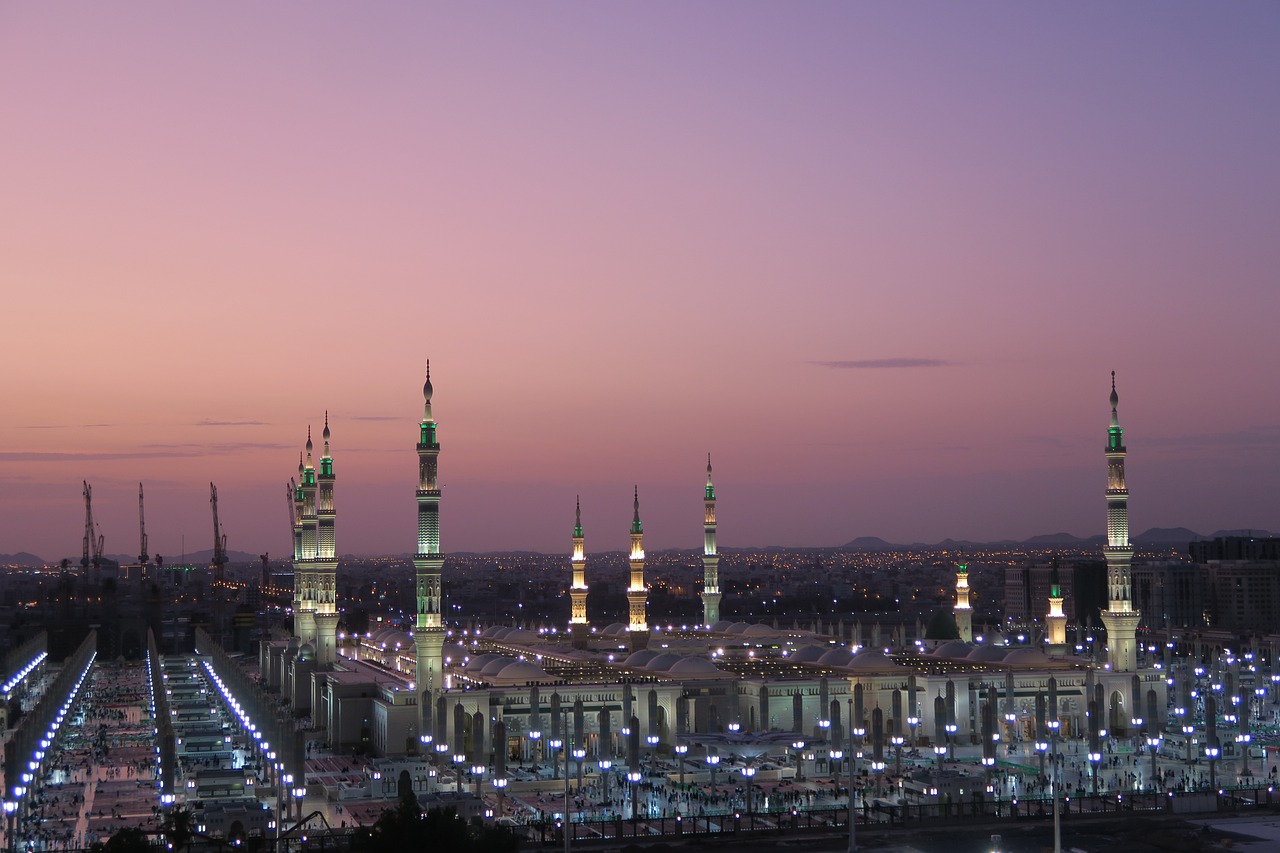
If Mecca is the city toward which Muslims pray, Medina is the city where the early Muslim community took shape. Lying a few hundred kilometres to the north, it is regarded as the second holiest city in Islam, and at its centre stands one of the most beloved buildings in the faith: the Prophet’s Mosque, known in Arabic as Masjid an-Nabawi. For pilgrims completing the Hajj or Umrah, a visit to Medina is a cherished, though not obligatory, addition to their journey.
The Mosque the Prophet Built
The Prophet’s Mosque was founded in the year of the migration from Mecca, traditionally dated to 622, and was established by Muhammad himself shortly after he arrived in the city. What began as a simple structure of palm trunks and mud has been rebuilt and expanded across the centuries into one of the largest mosques in the world, capable of holding immense crowds. Its most recognisable feature is the green dome that rises above the southeastern corner, beneath which lies the tomb of the Prophet, making the mosque uniquely significant in Islam.
The Rawdah and the Visit
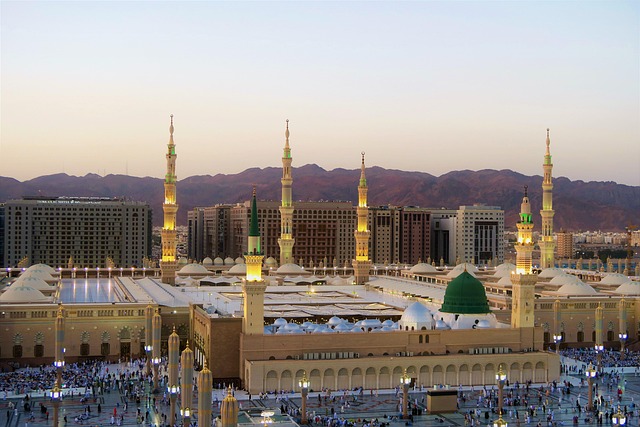
Within the mosque is an area known as the Rawdah, a space between the Prophet’s tomb and his former pulpit that holds special reverence for visitors. Pilgrims gather here to pray, often waiting patiently for the chance to spend a few moments in this revered spot. The practice of visiting the tomb and the mosque is referred to as ziyarah, and while it is not a required part of pilgrimage, countless Muslims regard it as one of the most emotionally powerful experiences of their travels.
A Place of Calm Devotion
Compared with the intensity of the rites in Mecca, the atmosphere in Medina is often described as gentler and more contemplative. The vast marble courtyards, shaded by enormous retractable umbrellas during the day, fill with worshippers who come simply to pray, reflect, and feel close to the early history of their faith. The city’s old name, Yathrib, gave way after the migration to the Radiant City, and that sense of light and serenity is something many visitors say they feel the moment they arrive.


