Switzerland is one of the strangest success stories in Europe, a country that by all the usual rules should not work at all and yet works better than almost anywhere else. It has no single language, no single religion, no natural unity of geography, and no founding people in the ordinary sense. It is a small, mountainous, landlocked nation wedged between far larger neighbors, made up of communities that speak German, French, Italian, and a fourth ancient tongue, and that were for centuries divided by faith and feud. By every conventional measure of what makes a nation, the Swiss should never have become one. And yet they did, and they built one of the most stable, prosperous, and admired countries on earth.
The Swiss are not a people defined by blood or language but by a shared idea, a stubborn, centuries-old determination to govern themselves, locally and from the bottom up, and to stand apart from the wars and ambitions of the great powers around them. Out of a defensive alliance of mountain valleys grew a unique political culture built on direct democracy, decentralization, neutrality, and an almost religious respect for local autonomy. To understand the Swiss is to understand how a nation can be held together not by sameness but by a common way of doing things, and how a people surrounded by giants made a virtue of minding their own business.
In This Article
- A nation carved by the mountains
- An oath among the valleys
- The birth of neutrality
- Many languages, one country
- The modern federal state
- Government by the people, literally
- Neutrality tested by world war
- From poverty to prosperity
- The Swiss character
- A haven for the world
- Mountains, milk, and a love of nature
- The Swiss today
- What the Swiss story tells us

A nation carved by the mountains
Switzerland is, above all, a country of mountains. The great chain of the Alps sweeps across its south and centre, throwing up some of the most famous peaks in the world, while the Jura mountains run along the northwest and a band of hills and lakes, the densely populated Plateau, lies between. For most of history these mountains shaped life completely. They divided the land into countless valleys, each somewhat isolated, each developing its own dialect, customs, and fierce sense of independence. They made farming hard and travel harder, and they bred a tough, self-reliant people accustomed to relying on their neighbors and distrusting outside authority.
But the mountains gave as well as took. They were a natural fortress, easy to defend and hard to conquer, which helped the Swiss preserve their freedom against more powerful enemies. They controlled the great Alpine passes through which trade and armies moved between northern Europe and Italy, giving the Swiss a strategic value out of all proportion to their size. And in the modern age the same mountains that once meant isolation and hardship became a source of enormous wealth, drawing tourists from around the world and giving Switzerland its image of pristine peaks, clean air, and breathtaking beauty. The whole of Swiss history, in a sense, is a long conversation between a people and their mountains.

An oath among the valleys
The origins of Switzerland lie not in a king or a conquest but in an alliance. According to the cherished national story, in the year 1291 representatives of three mountain communities, the forest cantons around the Lake of Lucerne, swore an oath of mutual defence against outside domination, in particular against the encroaching power of the Habsburg dynasty. This founding pact, real in substance even where wrapped in later legend, became the seed from which Switzerland grew. The famous tale of William Tell, the marksman forced to shoot an apple from his son’s head by a tyrannical foreign official, belongs to this world, a legend expressing the Swiss determination to resist outside oppression.
Over the following centuries more communities joined the alliance, and the loose confederation of cantons expanded and won a series of stunning military victories against far larger feudal armies, establishing a reputation for the fighting prowess of free mountain men. The Swiss did not set out to build a unified state; they built a defensive partnership of self-governing communities, each jealously guarding its own rights, bound together only by the shared determination to keep their freedom. This origin as a voluntary league rather than a kingdom shaped everything that Switzerland would become, and the principle that power flows up from the local community rather than down from a central throne remains the bedrock of Swiss political life to this day.

The birth of neutrality
For a time the Swiss were a formidable military power, their mercenaries the most sought-after soldiers in Europe and their armies feared across the continent. But a crushing defeat in the early sixteenth century, when Swiss forces were beaten by the French and their allies in northern Italy, taught a lasting lesson. The Swiss concluded that a small confederation of valleys had no business pursuing great-power ambitions abroad, and they turned decisively toward a policy that would define them ever after, neutrality, the refusal to take sides in the wars of others.
This neutrality was not cowardice but hard-headed wisdom. A country divided among different languages and faiths, surrounded by powerful and quarrelsome neighbors, could only hold together and survive by staying out of foreign conflicts that would otherwise tear it apart from within. The Swiss continued to serve as mercenaries in foreign armies for centuries, a major export of a poor mountain land, but the confederation itself stood aside from Europe’s wars. Neutrality became the cornerstone of Swiss foreign policy and a central part of Swiss identity, formally recognized by the great powers in the early nineteenth century and maintained, with remarkable success, through the catastrophes of the twentieth.

Many languages, one country
Perhaps the most extraordinary thing about Switzerland is that it has no national language, or rather that it has four. The majority of Swiss speak German, in a distinctive set of dialects quite different from the standard German of Germany. In the west, toward France, French is spoken; in the south, toward Italy, Italian; and in a few alpine valleys of the southeast survives Romansh, an ancient language descended directly from the Latin of the Romans, spoken now by only a small minority but cherished as a unique national treasure. There is no single Swiss language that all citizens share, and Swiss children typically learn at least one of the other national languages in school.
That a country can hold together across such linguistic divisions, without one group dominating the others, is one of the marvels of Swiss political genius. The secret lies in decentralization and respect for difference. Because so much power rests with the cantons and local communities, each linguistic region governs much of its own affairs, and no group feels that another is imposing on it. The Swiss identity is therefore not based on a shared mother tongue but on shared institutions and a shared political culture, the conviction that whatever language one speaks, one belongs to the same free, self-governing confederation. It is a model that much of the rest of the divided world has studied with envy.
The modern federal state
For most of its history Switzerland remained a loose confederation, and the path to a true modern state was not smooth. The cantons were divided not only by language but by religion, between Catholics and Protestants since the Reformation, and these divisions erupted as late as the nineteenth century into a brief civil war between Catholic and Protestant cantons. But the war was short and remarkably restrained, and out of it came, in 1848, a new federal constitution that transformed the loose league into the modern Swiss federal state, with a national government but one carefully limited so as to preserve the powers of the cantons.
This federal structure, refined over the following decades, is the framework within which modern Switzerland has flourished. Power is deliberately divided and balanced, between the federal government, the twenty-six cantons, and thousands of local communes, each with real authority over its own affairs. The national executive is a council of several members who share power and take turns as a largely ceremonial president, an arrangement designed to prevent any single leader from dominating. The whole system is built on the assumption that power is dangerous and should be split up, shared, and kept as close to the people as possible. It is government engineered for a people who fundamentally distrust being ruled.

Government by the people, literally
Switzerland practices democracy more directly than almost any other country on earth. The Swiss do not simply elect representatives and leave them to govern; they vote, several times a year, directly on a huge range of laws and issues, from constitutional changes to local taxes. Through the instruments of the referendum and the popular initiative, ordinary citizens can challenge laws passed by parliament and can propose changes to the constitution themselves, gathering signatures to force a national vote. Major decisions, and many minor ones, are settled not by politicians but by the whole people at the ballot box.
In some small cantons this direct democracy survives in its most ancient form, the open-air assembly where citizens gather in a public square to vote by show of hands, a practice that descends directly from the medieval valley communities. This deep tradition of direct democracy shapes the entire Swiss character. It produces a politics of compromise and consensus rather than dramatic swings, since any government knows its decisions can be overturned by the voters. It makes the Swiss cautious, deliberate, and proud of their say in their own affairs. And it gives them a sense of ownership over their country that few other peoples possess, the conviction that Switzerland belongs, quite literally, to its citizens, who decide its course directly with their own votes.

Neutrality tested by world war
The Swiss commitment to neutrality faced its supreme test in the twentieth century, as two world wars engulfed the continent around them. In both conflicts Switzerland remained neutral and avoided invasion, a remarkable achievement for a small country surrounded, during the Second World War, almost entirely by the Axis powers. The Swiss mobilized their army, fortified their mountains, and made clear that any invader would pay a heavy price, while their banks and industries continued to do business with all sides. Switzerland survived as an island of peace in a continent of slaughter.
Yet the wartime record is not without shadow, and modern Switzerland has had to confront it honestly. The country’s relationship with Nazi Germany was uncomfortably close in places, its banks handling looted gold, its borders too often closed to Jewish refugees fleeing for their lives, a policy that condemned many to death. The comfortable story of plucky neutral Switzerland standing nobly apart has been complicated by a more honest reckoning with the compromises and failures of those years. Neutrality kept Switzerland safe and intact, but it also meant standing aside while horrors unfolded next door, and the moral weight of that choice is part of the country’s history too.

From poverty to prosperity
It is easy to forget that Switzerland was, for most of its history, a poor country. Its mountains made farming difficult, and for centuries one of its main exports was its own young men, who left to serve as mercenaries in foreign armies because there was not enough work or food at home. The transformation of this poor alpine land into one of the richest countries in the world is one of the great economic stories of modern times, achieved not through natural resources, of which Switzerland has few, but through skill, organization, and a genius for adding value.
The Swiss became masters of high-quality, high-value industries. Their watchmaking, born in the workshops of the Jura, became a byword for precision and craftsmanship the world over. Their banks, built on a reputation for stability, discretion, and reliability, made Switzerland one of the great financial centres of the planet. Their pharmaceutical and chemical companies grew into global giants, their engineering and precision manufacturing into world leaders, and their chocolate and cheese into icons of quality. Combined with tourism drawn by the spectacular landscape, these industries made the Swiss extraordinarily prosperous. The lesson of Switzerland is that a small country with no resources can become wealthy beyond measure through education, precision, trust, and the relentless pursuit of quality.

The Swiss character
Certain qualities are associated with the Swiss the world over, and many of them are rooted in real features of the culture. There is the famous precision and reliability, the sense that in Switzerland the trains run exactly on time, the agreements are honoured, and things simply work. There is the cleanliness and order, the spotless streets and the careful maintenance of everything from mountain trails to public buildings. There is a deep respect for rules and a strong sense of civic duty, a willingness to do one’s part for the common good that makes the whole intricate system of direct democracy and decentralization function.
Beneath these lies a certain reserve and privacy, a temperament that values discretion, modesty, and minding one’s own business, qualities that fit naturally with a culture of neutrality. The Swiss are sometimes caricatured as dull or excessively cautious, but the reality is a people who have made stability, security, and quiet competence into a high art. There is also a fierce attachment to local roots and traditions, to one’s particular canton and commune and dialect, and a deep love of the mountains and the outdoors. The Swiss work hard, save carefully, govern themselves directly, and guard their independence jealously, and the result is a society that prizes order and freedom in equal measure. In their respect for many languages under one roof they share something with their multilingual imperial neighbors, the Austrians, though the Swiss turned that diversity into a republic of equals rather than an empire.
A haven for the world
The Swiss combination of neutrality, stability, and central location made the country a natural home for international cooperation. Geneva in particular became one of the great capitals of global diplomacy and humanitarianism, home to a vast array of international organizations and the birthplace of the Red Cross, founded by a Swiss citizen moved by the horrors of a nineteenth-century battlefield. The Geneva Conventions, which set the laws of war and the protection of the wounded and prisoners, bear the name of the Swiss city where they were forged. For a small neutral country, Switzerland came to play a role in the affairs of the world far larger than its size, precisely because it stood outside the rivalries of the great powers and could be trusted as a meeting ground.
This humanitarian and diplomatic tradition is a source of deep Swiss pride and an important part of the national self-image. The country that refused to take sides in war made itself indispensable as a place where enemies could meet, where the rules of conflict could be negotiated, and where the victims of war could find some protection. Switzerland’s neutrality, born as a strategy for survival, thus matured into a genuine contribution to the world, a standing offer of neutral ground in a quarrelsome continent. It is one of the ways a small people learned to matter without an empire or an army of conquest.
Mountains, milk, and a love of nature
For all its banks and watches and laboratories, Switzerland remains at heart a country in love with its mountains. The alpine landscape is not just an economic asset but a source of identity and meaning, woven into Swiss life through hiking and skiing, through the seasonal movement of cattle up to the high pastures and back, through the traditions of alpine farming that still shape rural culture. The image of the chalet on the green meadow beneath snowy peaks, the cowbells, the cheese made in mountain dairies, the yodel echoing across a valley, these are not merely tourist clichés but expressions of a real and cherished way of life.
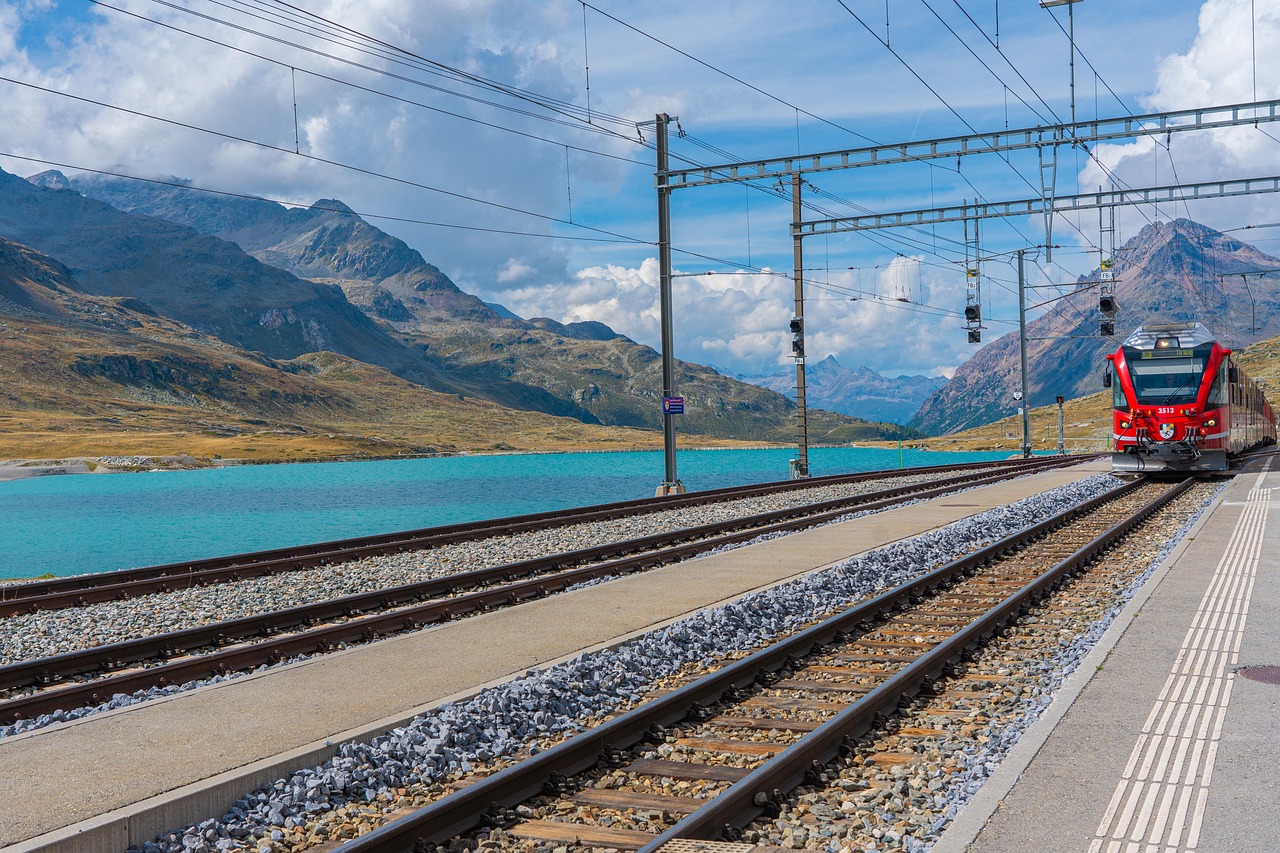
The Swiss have also become world leaders in caring for their environment and managing their mountains with extraordinary skill. Their famous railways climb to impossible heights and run with legendary punctuality, knitting even remote alpine valleys into the life of the nation. Their commitment to public transport, conservation, and clean energy reflects both practical necessity and a genuine reverence for the natural world that shaped them. To travel through Switzerland is to see a landscape that is at once wild and beautifully tended, a country that has managed, better than almost any other, to remain prosperous and modern without spoiling the mountains that are its soul.
The Swiss today
Modern Switzerland is consistently ranked among the very best countries in the world to live, by almost every measure of wealth, health, education, stability, and quality of life. Its people enjoy some of the highest incomes on earth, excellent public services, beautiful surroundings, and a political system that gives them an unusually direct say in their own governance. The country has chosen to remain outside the European Union, preferring to guard its independence and its distinctive way of doing things while maintaining close ties to its neighbors, a characteristically Swiss balance of cooperation and self-reliance.
Switzerland faces the challenges of any wealthy modern society, including debates over immigration in a country where a large share of the population is foreign-born, over its relationship with Europe, and over how to maintain its traditions in a changing world. There are tensions, too, between its linguistic and regional communities, though these are managed with the usual Swiss skill for compromise. But the overall picture remains one of remarkable success, a small, diverse, mountainous country that has stayed free, prosperous, and at peace while much larger nations stumbled, and that continues to offer the world a model of how difference can be governed without division.
What the Swiss story tells us
The story of the Swiss is, in the end, a refutation of the idea that a nation must be built on a single language, a single faith, or a single people. Switzerland is held together by none of those things. It is held together by a shared commitment to a way of governing, local, direct, decentralized, neutral, and by the conviction, born among the medieval mountain valleys and carried down the centuries, that free people can bind themselves together by choice and mutual respect rather than by conquest or kinship. It is one of the most successful political experiments in human history, and it grew from the least promising of soils.
What the Swiss teach is that diversity need not mean division, that smallness need not mean weakness, and that a people can become rich and influential not by dominating others but by perfecting the arts of cooperation, precision, and self-government. They took a fortress of mountains that should have isolated them and a Babel of languages that should have split them, and they made of these a single, thriving, fiercely independent nation. To stand in a Swiss valley, where the trains run on time, the meadows are immaculate, the citizens vote directly on their own laws, and four languages live in peace beneath the same snow-capped peaks, is to witness one of the quiet wonders of the modern world.
You May Like
The Zaza, a Mountain People of Eastern Anatolia