Few peoples have left so large a mark on the modern world as the English. From a relatively small island off the northwestern coast of Europe, the English language spread to become the closest thing humanity has to a global tongue; English institutions, from parliamentary government to the common law, shaped the political systems of nations across every continent; and at its height the empire built by the English-led British state governed a quarter of the planet. The story of the English is therefore not only the story of a single people but, to an unusual degree, the story of how one nation came to influence the entire globe — for better and for worse, in ways that demand to be told with honesty about both the achievements and the costs.
Yet the English are also a people with deep and tangled roots, the product of waves of invasion and settlement, of conquest and assimilation, who forged a distinctive identity on the larger part of the island of Great Britain. To understand them is to trace a history reaching from prehistoric monument-builders through Romans, Anglo-Saxons, Vikings, and Normans to the global power and cultural reach of the modern age.
In This Article
- Who the English Are
- Origins: A People Made of Many Peoples
- Traces of the Deep Past
- The Making of England
- How They Lived and What They Built
- The English Language and Its Global Triumph
- Legend, Literature, and the English Imagination
- Empire, Power, and a Reckoning
- Notable English Figures
- The English in the World Today
Who the English Are
The English are a people native to England, the largest and most populous of the nations that make up the United Kingdom, occupying the central and southern part of the island of Great Britain. They number around fifty million or more and speak English, a Germanic language of the Indo-European family that has become the most widely used language in the world. The name England derives from the Angles, one of the Germanic peoples who settled the island in the early medieval period, and means, in effect, the land of the Angles.
The English have long been distinguished from the other peoples of the British Isles — the Welsh, the Scots, and the Irish — by language, history, and identity, even as all have been bound together within the British state. England itself contains strong regional identities and historic divisions, between north and south, between great cities and rural shires, and among regions with their own dialects, traditions, and senses of themselves. Yet the English have also possessed, for many centuries, an unusually strong sense of national identity, forged early by the relatively precocious unification of England under a single crown and reinforced by the island geography that set them somewhat apart from the European mainland. That combination of a clear national identity and a maritime, outward-looking position would prove enormously consequential.
Origins: A People Made of Many Peoples
The English are, more than most nations, a people made from the blending of many peoples, and their origins lie in successive waves of settlement and conquest. The story as generally told by historians begins with the Celtic Britons who inhabited the island when the Romans arrived, and who lived under Roman rule for centuries while Britain formed part of the empire. When Roman power collapsed in the early fifth century, Germanic peoples from the coasts of what are now Germany, Denmark, and the Netherlands — the Angles, Saxons, and Jutes of tradition — migrated to and settled in the eastern and southern parts of the island, gradually establishing their language and culture across what became England.
The precise nature of this Anglo-Saxon settlement has long been debated by scholars, who weigh how far it involved large-scale migration and displacement of the existing Britons and how far it was a matter of a smaller elite imposing its language and culture; genetic and archaeological research continues to refine the picture, and modern scholarship tends to favor a complex mixture of migration and assimilation rather than wholesale replacement. The Britons who were not absorbed were pushed westward into Wales and the southwest, where their Welsh descendants preserved the older Brittonic heritage. Later came further waves: Scandinavian Vikings who raided, settled, and ruled much of eastern and northern England, leaving a deep mark on language and law; and finally the Normans, themselves descended from Vikings settled in France, whose conquest in 1066 transformed the English ruling class, language, and society. Out of all these layers — British, Roman, Anglo-Saxon, Scandinavian, and Norman — the English people and their language were forged.
Traces of the Deep Past
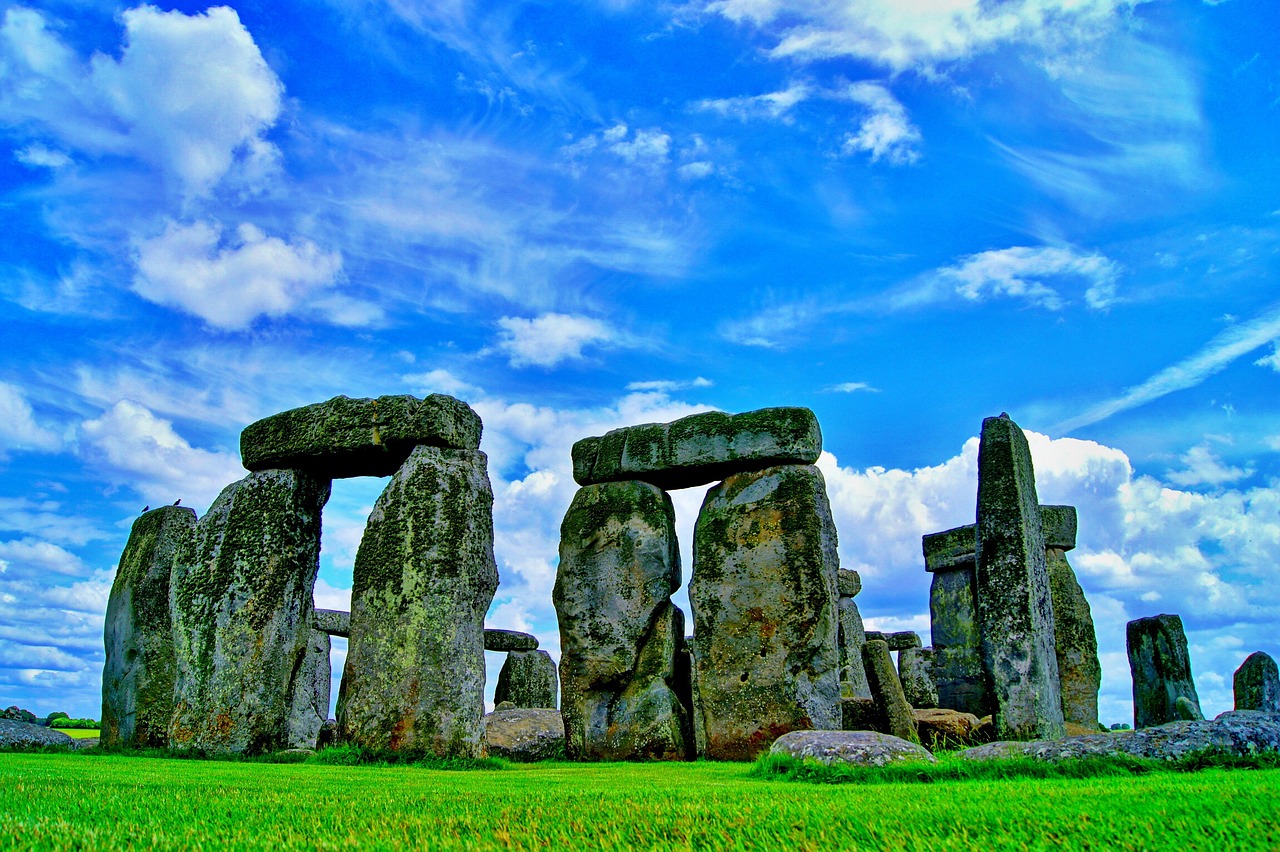
The land of England is extraordinarily rich in the monuments of its prehistoric and ancient inhabitants, peoples who lived there long before the English existed as such. The most famous of all is Stonehenge, the great stone circle on Salisbury Plain whose construction, spanning many centuries in the Neolithic and Bronze Ages, remains one of the most studied and debated achievements of prehistoric Europe; its precise purpose is still uncertain, though most archaeologists associate it with ritual, astronomy, and the dead. Across England stand countless other prehistoric monuments — burial mounds, stone circles, hill figures cut into chalk, and ancient hillforts — testifying to thousands of years of human activity.
The Romans, too, left a deep imprint during their centuries of rule, in the roads that still underlie modern routes, the towns they founded, the great wall built across the north to mark the edge of the empire, and the baths and villas whose remains survive. As with all such ancient remains, scholars are careful to distinguish the prehistoric and Roman-era inhabitants from the later English, who emerged from the post-Roman settlement. Yet these monuments form the deep backdrop of English history and have powerfully shaped the English sense of living in an ancient and storied landscape, one layered with the works of many vanished peoples.
The Making of England
England was, by the standards of medieval Europe, an early and unusually unified state. The Anglo-Saxon kingdoms that emerged after the migration period — with names like Wessex, Mercia, and Northumbria — competed and warred until, under the pressure of the Viking invasions, the kings of Wessex gradually forged a single kingdom of England in the tenth century. This relatively early unification gave the English a head start in developing the institutions of a centralized state, including an effective system of administration, taxation, and law that the Norman conquerors would inherit and build upon.
The Norman Conquest of 1066 was a turning point of immense significance. A French-speaking Norman aristocracy replaced the Anglo-Saxon elite, the structure of landholding and lordship was transformed, and the English language was driven from the courts and halls of power for generations, surviving as the tongue of the common people while French and Latin dominated above. Over the following centuries, these languages and peoples gradually fused, and the English language re-emerged transformed, enriched with an enormous vocabulary of French and Latin origin layered over its Germanic core. The medieval centuries saw the slow development of distinctively English institutions — above all Parliament, which grew from a council of nobles into a body that would, over many centuries and through great struggles, limit the power of the crown and lay foundations for representative government, and the common law, a distinctive legal tradition built on precedent that would spread across the English-speaking world.
How They Lived and What They Built
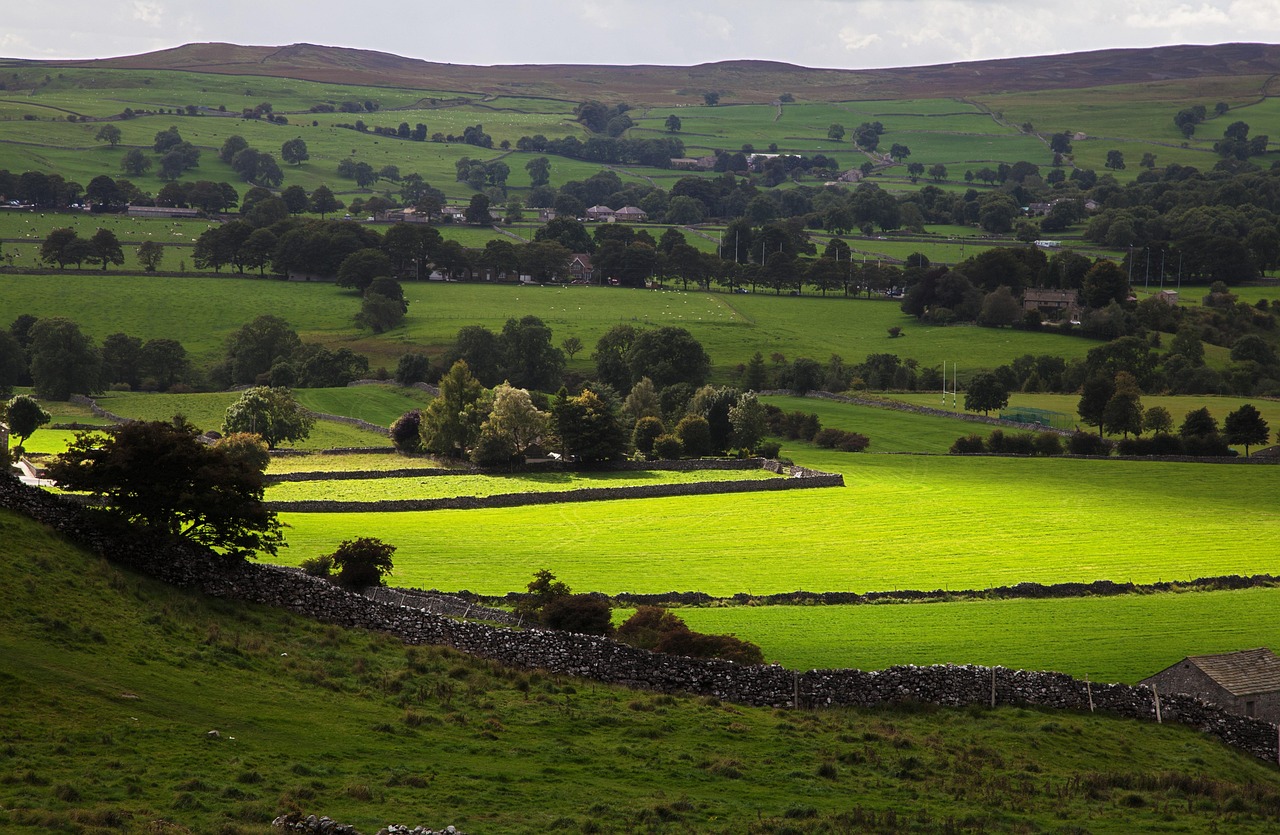
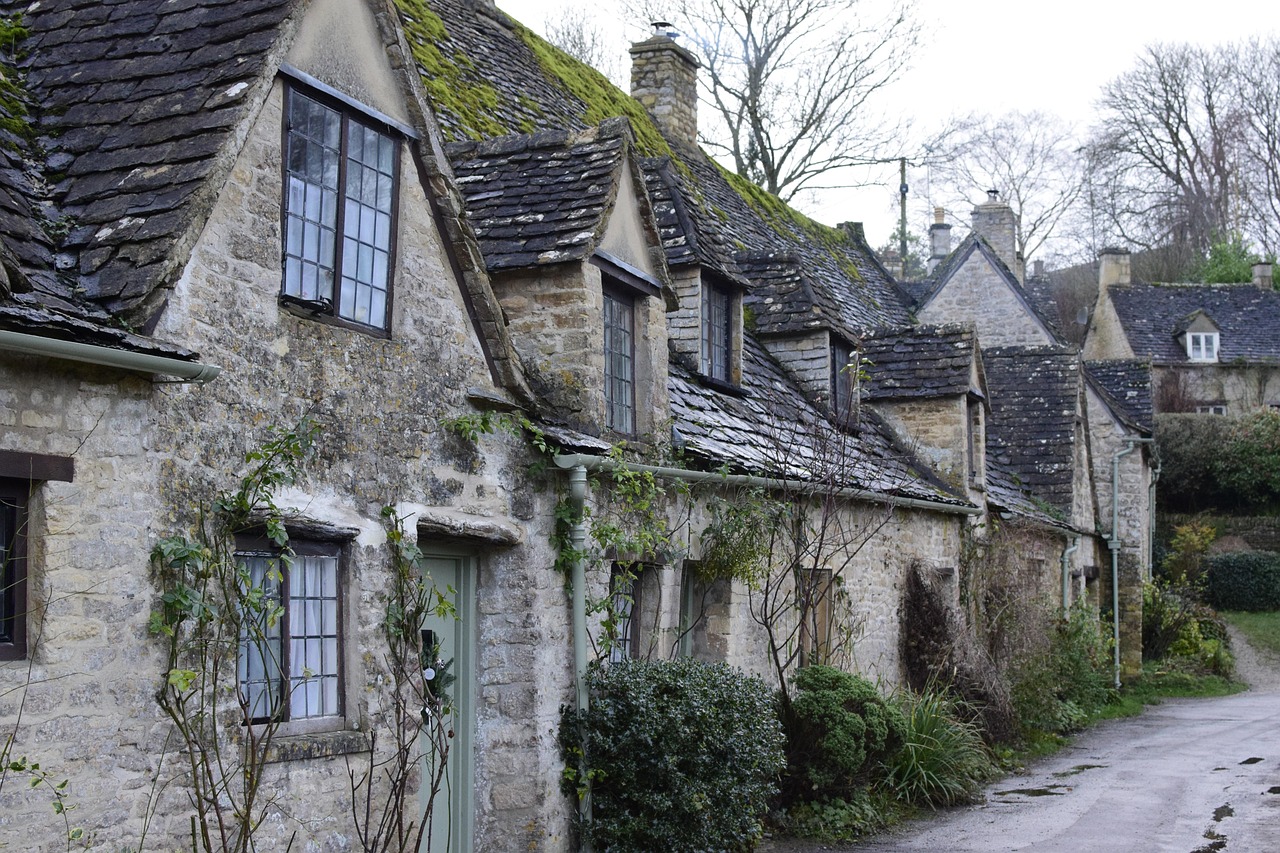
For most of their history the English were a rural people, their lives shaped by the land, the seasons, and the parish. The English countryside was worked under a manorial system in the medieval period and later transformed by the enclosure of common lands, the rise of large estates, and the agricultural improvements that helped make possible the population growth of the modern era. The village, with its church, its green, its inn, and its surrounding fields and hedgerows, was the basic unit of English rural life and remains a powerful image of the nation, even though England became one of the first societies in the world to be predominantly urban and industrial.
That industrial transformation was itself one of the most consequential things the English ever did. Beginning in the eighteenth century, England pioneered the Industrial Revolution, harnessing coal, steam, and machinery to mechanize textile production and then industry more broadly, drawing vast numbers of people from the countryside into rapidly growing cities and creating the first modern industrial working class. This brought immense wealth and power but also harsh conditions, child labor, and squalor in the new manufacturing towns, prompting reform movements, the rise of trade unions, and bitter debates about the human cost of progress. Alongside agriculture and industry, the English developed a powerful maritime and commercial culture, building the trade, banking, and naval power that underpinned their global reach. From the medieval wool trade that first enriched the nation to the financial power of the City of London, commerce has been central to English life, and the English reputation for pragmatism, compromise, and a certain understated practicality grew out of this long mercantile and seafaring history.
The English Language and Its Global Triumph
The English language is, in many ways, the most consequential thing the English have given the world. A West Germanic language closely related to Frisian, Dutch, and German, English was profoundly reshaped by the Scandinavian and Norman French influences of the medieval period, which simplified its grammar and vastly expanded its vocabulary, leaving it with an unusually large and layered lexicon drawn from Germanic, French, Latin, and ultimately countless other sources. This hybrid quality has given English a flexibility and richness that writers have exploited to magnificent effect.
From its origins as the speech of a few Germanic settlers on one island, English has become the dominant global language of our age — the leading language of international business, science, diplomacy, aviation, the internet, and popular culture, spoken as a first or second language by perhaps a quarter or more of humanity. This extraordinary spread was driven first by the British Empire, which carried English across the globe, and then by the rise of the United States as a superpower, ensuring that the language continued to dominate long after the empire faded. The literary heritage of English is among the richest of any language, crowned by the work of William Shakespeare, whose plays and poetry stand among the supreme achievements of world literature, and extending through an immense tradition of poetry, drama, and the novel. The global role of English is a mixed inheritance, bound up with the history of empire, but its reach is undeniable, and it remains perhaps the single greatest vector of English influence on the modern world.
Legend, Literature, and the English Imagination
English tradition is woven through with legend, myth, and a literary imagination of extraordinary depth, retold here only in outline and in my own words. At the heart of the islands legendary heritage stands King Arthur, the once and future king of medieval romance, a figure whose roots lie partly in the older Brittonic traditions of the defeated Britons but who became central to the literature and self-image of England and beyond, surrounded by his knights, his round table, and the quest for the Holy Grail. The greenwood outlaw who robbed the rich to give to the poor became another enduring figure of English legend, embodying a folk ideal of justice against oppression.
Above all, the English produced one of the greatest literary traditions in human history. From the medieval poetry of Chaucer through the incomparable drama and verse of Shakespeare, the religious epic of Milton, the novels that the English did so much to develop as an art form, and the poetry of the Romantics and beyond, English literature has shaped the imagination of the world. English folklore, with its village customs, seasonal festivals, ghost stories, and the deep attachment to a particular kind of green and ordered countryside, has its own quiet power, and the English landscape — of hedgerows, church spires, and rolling fields — occupies a central place in the national imagination, celebrated by poets and painters as the very image of home. As always, these traditions exist in many versions and are sketched here only in the broadest strokes.
Empire, Power, and a Reckoning
No honest account of the English can avoid the central, complex fact of the British Empire. Building on early maritime exploration and trade, the English and then the British state assembled, over several centuries, the largest empire in history, governing at its height around a quarter of the worlds population and land. This empire spread the English language, English law, and English institutions across the globe, and it generated immense wealth that fueled the Industrial Revolution — itself largely an English achievement, which transformed first England and then the world through mechanization, the factory system, and new sources of power, making England the workshop of the world in the nineteenth century.
Yet the empire was also built on conquest, coercion, and exploitation, and its history includes grave wrongs that must be acknowledged without evasion: the central role of British merchants and the British state in the transatlantic slave trade before its eventual abolition, the famines, dispossessions, and violence that accompanied colonial rule in many lands, and the lasting damage done to the societies that were colonized. The legacy of empire remains deeply contested, and modern Britain continues to debate how to remember it honestly. A truthful telling holds together the genuine achievements — the spread of certain institutions and ideas, the eventual leadership in abolishing the slave trade, the scientific and industrial advances — with a clear recognition of the suffering and injustice that imperial power inflicted. To celebrate the one while ignoring the other would be to falsify history.
Notable English Figures
The English have produced an astonishing number of figures who shaped the modern world. In literature, William Shakespeare stands as perhaps the most celebrated writer in any language, and the English literary tradition includes a host of other major figures across the centuries. In science, Isaac Newton, with his laws of motion and gravitation, ranks among the greatest scientists in history, and Charles Darwin transformed our understanding of life itself with his theory of evolution by natural selection. In other fields, the English contribution runs from the political thought that influenced constitutions worldwide to pioneering work in computing, exploration, and countless other domains. As always in this series, where I am uncertain of the precise details of an individual life or achievement, I have chosen to describe their significance in general terms rather than risk inaccuracy.
The English in the World Today
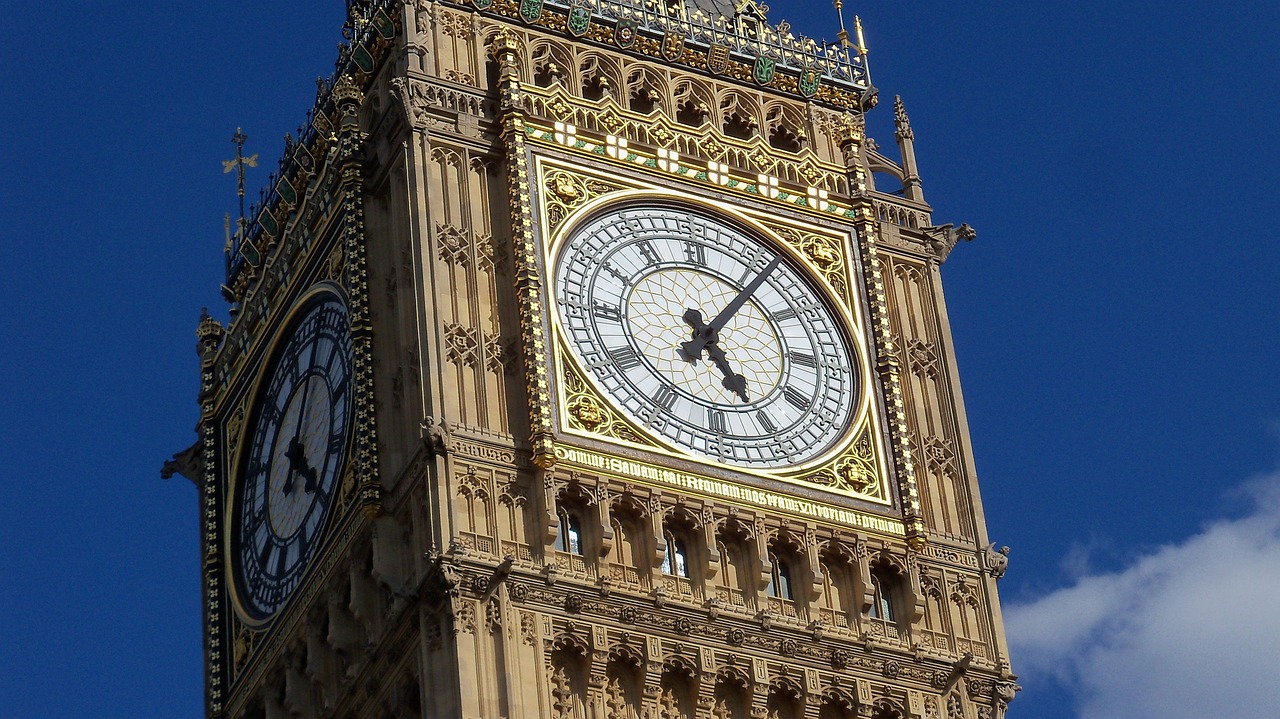
Today England is the largest and most populous part of the United Kingdom, a wealthy and influential nation whose capital, London, is one of the worlds great global cities, a center of finance, culture, and diversity. The English remain a people of considerable global influence through their language, culture, and institutions, even as the empire has long since given way to a commonwealth of independent nations and as Britains role in the world has been recast. England today is a highly diverse, multicultural society, especially in its great cities, shaped by generations of immigration from the former empire and beyond, which has transformed English society, cuisine, and culture and given rise to ongoing debates about national identity of the kind familiar across the wealthy democracies.
Modern English identity is, in some ways, in a period of reflection and redefinition. Questions about Englishness as distinct from Britishness, about the legacy of empire, about the relationship of England to the other nations of the United Kingdom and to Europe, and about what binds together so diverse a population are all live and sometimes contentious. Yet the English remain a people with an extraordinarily rich heritage, a global cultural reach out of all proportion to their numbers, and institutions and traditions that have shaped much of the modern world. England joined with the other nations of the island through the union of the crowns and later the parliamentary union that created Great Britain and then the United Kingdom, a state in which England, as the largest partner, has loomed large, sometimes to the resentment of its neighbors. The relationship between England and the smaller nations of the union, and the rise of movements for self-government and independence among them, remains one of the defining questions of British political life. The English share their island and their history with the other British and Irish peoples, including the Welsh, with whom their story has been intertwined for fifteen centuries.
The story of the English is, in the end, the story of a people made from many peoples, who forged an early and enduring nation on a northern island and went on to shape the modern world to a degree few could have imagined — through their language, their institutions, their literature, their science, and their empire. It is a history of genuine and lasting achievement and of serious wrong, of global influence won at great cost to others, and it demands to be remembered in full, with neither triumphalism nor a refusal to acknowledge what was admirable. The English gave the world Shakespeare and Newton and Darwin, parliamentary government and the global language of the age; they also built an empire whose injustices still echo. To know them is to hold all of this together at once.
You May Like

The Zaza, a Mountain People of Eastern Anatolia