On the western edge of the island of Great Britain, beyond a border that has shifted with the tides of war and politics for fifteen centuries, lives a people who speak one of the oldest living languages in Europe. The Welsh, who call themselves the Cymry and their country Cymru, are a Celtic nation whose roots reach back to the ancient Britons — the people who inhabited most of Britain before the coming of the Anglo-Saxons. In a sense, the Welsh are the keepers of an older Britain, the inheritors of a culture and a tongue that once stretched across the whole island and that survived, in its western redoubt, when it vanished almost everywhere else.
Their story is one of a proud people pushed westward into a mountainous land, conquered but never culturally erased, who held onto their language and identity through centuries of English domination and who have, in recent generations, won back a measure of self-government and a renewed confidence in who they are.
In This Article
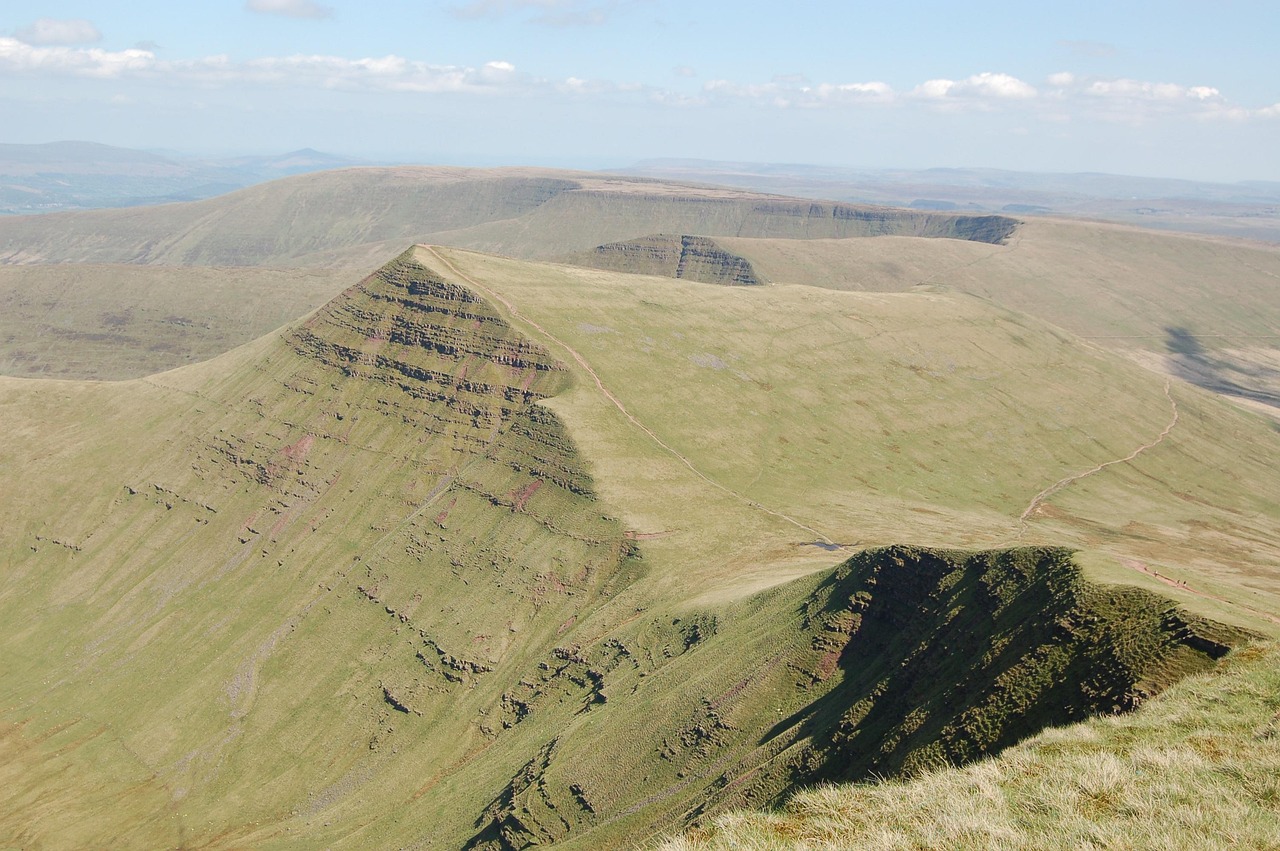
Who the Welsh Are
The Welsh are a Celtic people native to Wales, a country forming the western part of the island of Great Britain and today one of the constituent nations of the United Kingdom. They call themselves the Cymry, a name thought to derive from an old Brittonic word meaning fellow-countrymen or compatriots — a telling self-description for a people who came to define themselves against the newcomers who took the rest of the island. The English name Welsh comes from a Germanic word the Anglo-Saxons applied to the Romanized Britons, meaning something like foreigners or, more pointedly, those who were not us, an irony given that the Welsh were the older inhabitants.
The Welsh are one of the Celtic nations, sharing ancestral and linguistic kinship with the other Celtic-speaking peoples of the British Isles and Brittany, among them the Irish, the Scottish Gaels, the Cornish, the Bretons, and the people of the Isle of Man. Within this Celtic family, the Welsh belong specifically to the Brittonic branch, alongside the Cornish and the Bretons, distinct from the Gaelic branch of the Irish and Scots. Their identity is bound up above all with their language, their landscape of mountains and valleys, and a rich tradition of poetry, song, and learning that they have cultivated with unusual devotion across the centuries.
Heirs of the Ancient Britons
The deep origins of the Welsh lie with the Celtic-speaking Britons who inhabited most of the island of Great Britain in the centuries before and during Roman rule. According to most historians, these ancient Britons shared a common Brittonic language and culture across what is now England, Wales, and southern Scotland, and they lived under Roman rule for centuries when Britain was a province of the empire. When Roman authority collapsed in the early fifth century and Germanic peoples — the Anglo-Saxons — began to settle and dominate the eastern and central parts of the island, the Britons were gradually pushed back, killed, or assimilated across much of the lowlands.
It was in the mountainous west, in what became Wales, as well as in Cornwall and across the sea in Brittany, that the Britons and their language survived and endured. The Welsh are therefore not newcomers but the descendants of that older British population, carrying forward the Brittonic heritage into the present. This continuity is the heart of the Welsh sense of themselves: they are, in their own understanding and in much of the historical record, the surviving remnant of the original Britons, holding the western fastness while a new people took the rest of the island and gave it the name England, the land of the Angles.

Traces from Prehistory and Antiquity
Wales is exceptionally rich in ancient monuments, the legacy of the many peoples who inhabited the land across the millennia before recorded history. Across the country stand the burial chambers and standing stones of the Neolithic and Bronze Ages, megalithic tombs and stone circles raised by communities thousands of years ago whose relationship to the later Welsh is one of deep time and shared landscape rather than direct identity. The Welsh hills also bear the marks of ancient hillforts from the Iron Age, the strongholds of the Celtic Britons in the centuries before and during the Roman period.
The Roman presence, too, left its imprint, in roads, forts, and the remains of towns, for Wales lay within the Roman province of Britain and its peoples were drawn, to varying degrees, into the Roman world. As elsewhere in this series, scholars are careful to distinguish the makers of the most ancient monuments from the historically defined Welsh, since identities form and change across such vast spans of time. Yet the unbroken thread of habitation, and the survival of the Brittonic language spoken by the Iron Age Britons into the Welsh of today, give the Welsh an unusually direct claim to an ancient inheritance written across their own landscape.
How They Lived and What They Achieved
For much of their history the Welsh were a predominantly rural, pastoral people, raising sheep and cattle in a land whose mountains and high moors favored grazing over arable farming, and the image of sheep on the green Welsh hills remains iconic to this day. Welsh society in the medieval period was organized under native laws, a sophisticated legal tradition attributed in memory to an early lawgiver-king and notable for its relatively humane and detailed provisions, which governed land, family, and justice among the Welsh kingdoms.
Above all, the Welsh cultivated an extraordinary tradition of poetry, music, and learning. The bards held an honored place in Welsh society, custodians of a demanding poetic craft governed by intricate rules of meter and sound, and the praise and memory of the people were carried in their verse. This literary devotion gave rise to the eisteddfod, a competitive festival of poetry and music with medieval roots that survives and flourishes today as a central institution of Welsh cultural life, where the crowning and chairing of bards remains a high honor. The Welsh reputation as a nation of singers, and especially of male voice choirs that arose in the industrial communities of later centuries, reflects this deep musical heritage. In the modern era, Wales also became a powerhouse of heavy industry, its coal and iron fueling the British industrial economy and reshaping its society, even as that industry would later decline and leave its own difficult legacy.

Conquest, Rebellion, and Union
The history of the Welsh is marked by a long struggle to maintain independence against more powerful neighbors. After the Anglo-Saxon settlement confined the Britons to the west, the Welsh organized themselves into a patchwork of kingdoms that fought among themselves and against the English to their east, sometimes uniting under strong rulers who came close to forging a single Welsh realm. A great earthwork, traditionally associated with an Anglo-Saxon king and running roughly along the border, came to mark the rough division between the Welsh and the English.
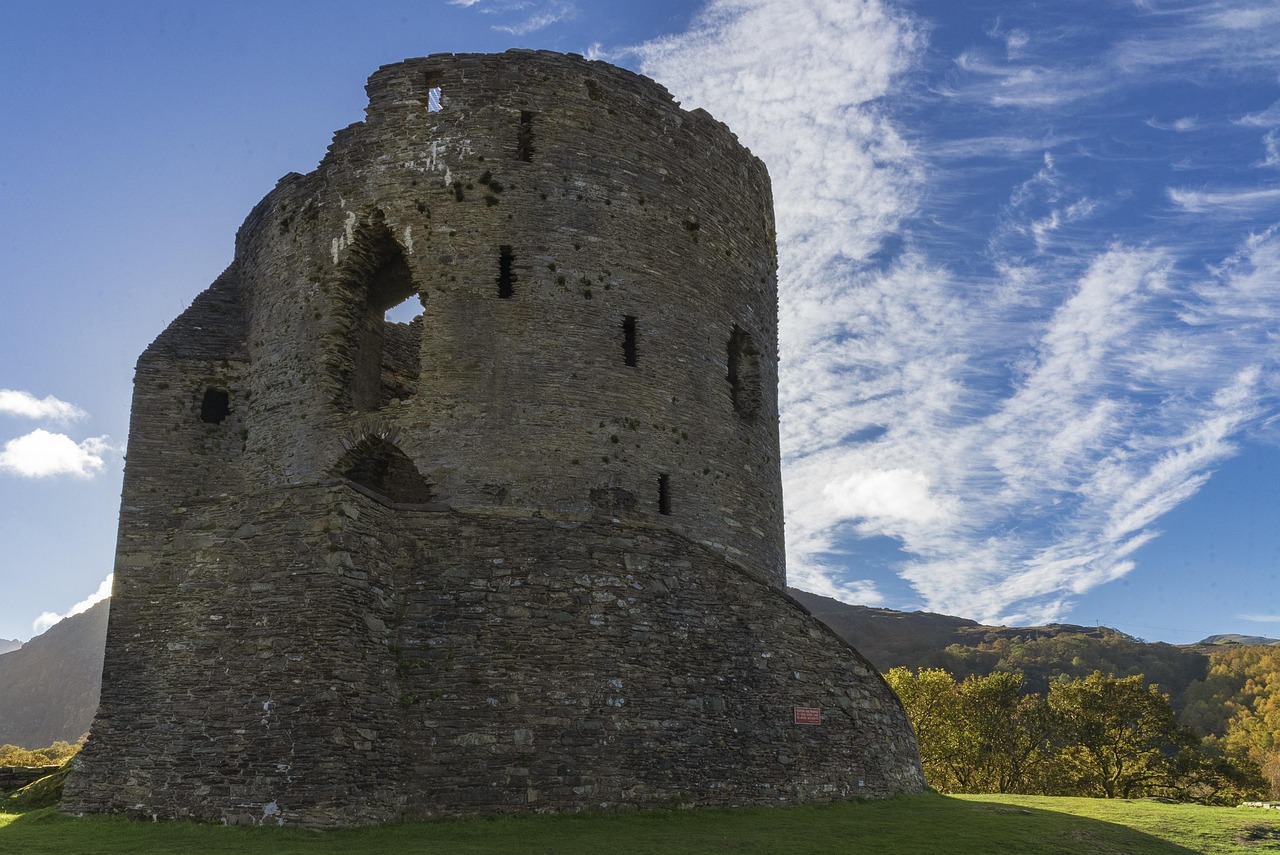
The decisive blow to Welsh independence came in the late thirteenth century, when the English crown, after long warfare, conquered the last of the independent Welsh principalities and brought Wales under English control, building a ring of mighty castles to hold the country down — many of which still stand as both monuments and reminders. The most famous later rebellion came in the early fifteenth century, when a Welsh leader rose against English rule, was proclaimed Prince of Wales, held parliaments, and for a time controlled much of the country before the revolt was finally suppressed; he is remembered as a national hero who has never been definitively shown to have been captured. In the sixteenth century, acts of the English parliament formally incorporated Wales into the kingdom of England, extending English law and administration and, crucially, beginning a long period in which the Welsh language was excluded from official life — a pressure that would shape the language struggles of later centuries.
The Welsh Language and Its Revival
The Welsh language, Cymraeg, belongs to the Brittonic branch of the Celtic languages, descended directly from the tongue of the ancient Britons, which makes it one of the oldest living languages in Europe and a direct link to the island pre-English past. It is closely related to Cornish and Breton and more distantly to the Gaelic languages, and it possesses a rich literary tradition stretching back well over a thousand years, including some of the earliest surviving literature in any European vernacular north of the classical world.
For centuries after the union with England, the Welsh language faced steady pressure and decline. Its exclusion from official and legal life, the spread of English, industrialization that brought English-speaking migration, and an infamous nineteenth-century episode in which the use of Welsh in schools was actively discouraged and even punished all drove the language toward crisis, and the proportion of Welsh speakers fell sharply over the generations. Yet the Welsh mounted one of the most determined and successful language revivals in Europe. The language gained official status and legal protection, Welsh-medium education expanded dramatically, a Welsh-language television channel was established, bilingual signage became standard, and a national goal of greatly increasing the number of speakers was set. While English remains dominant and the long-term future is not guaranteed, Welsh is today a living, official, and increasingly confident language — one of the genuine success stories of minority-language survival.
Legends, Saints, and the Mabinogion
Welsh tradition holds one of the great treasuries of medieval European storytelling, retold here only in outline and in my own words. The collection of medieval Welsh tales often known as the Mabinogion preserves a world of magic, transformation, otherworldly journeys, and heroic deeds, drawing on far older oral traditions; its stories of kings, enchanters, and the boundary between the human and the supernatural have fascinated readers and inspired writers for generations. Wales also lies at the heart of the legend of King Arthur, and much of the earliest Arthurian material has Welsh roots, with the figure of Arthur and his court appearing in early Welsh tradition long before the romances that later spread across Europe.
Welsh tradition is also marked by its early Christianity and its many saints, who in the centuries after Rome gave Wales the epithet of a land of saints and whose names dot the map in countless place names beginning with the element meaning church or enclosure. Out of respect for the sacred and literary depth of these traditions, and the many versions in which the tales survive, they are sketched here only in the broadest strokes; in Welsh culture they remain a living source of pride, identity, and artistic inspiration, woven into the national imagination.
Notable Welsh Figures
For a small nation, Wales has produced a remarkable number of distinguished figures across many fields. In politics, David Lloyd George rose to become Prime Minister of the United Kingdom and a towering figure of the early twentieth century, while Aneurin Bevan, son of a Welsh mining community, was the principal architect of Britains National Health Service. In the arts, the poet Dylan Thomas achieved worldwide fame for his lyrical and inventive verse and prose, and Wales has given the world celebrated actors such as Richard Burton and Anthony Hopkins, and singers including Tom Jones. The Welsh tradition of song and performance has carried many of its people to international prominence. As always in this series, where I am not confident of the precise details of an individual life or achievement, I have chosen to describe their significance in general terms rather than risk inaccuracy.

The Welsh in the World Today
Today the people of Wales number around three million, of whom a substantial minority — commonly estimated at somewhere under a third, with the exact figure varying by measure and survey — speak the Welsh language, the speakers concentrated especially in the north and west. After centuries within a centralized British state, Wales gained its own devolved government and legislature in the late twentieth century, giving the Welsh a measure of self-government over many of their own affairs for the first time in centuries, and Welsh national identity has grown notably more confident and assertive in recent decades.
Modern Welsh life blends full participation in British and global society with a deliberate cultivation of a distinct national identity. The language is official and increasingly visible, the eisteddfod and the choral tradition flourish, Welsh sport — above all rugby — serves as a powerful focus of national feeling, and a lively cultural scene in literature, music, film, and television carries Welsh identity into the present. Challenges remain, including the economic legacy of deindustrialization in the former coal and steel communities and the ongoing effort to secure the future of the language. But the Welsh, heirs of the ancient Britons, enter the future as a people who have held onto their identity against long odds and who increasingly shape their own destiny. They share their Celtic heritage and their experience of cultural survival with kindred nations across the Celtic world, from Ireland and Scotland to Brittany.

The story of the Welsh is, in the end, the story of an older Britain that refused to disappear. Pushed to the western mountains by the tide of Anglo-Saxon settlement, conquered by a powerful English crown, and pressed for centuries to abandon their language, the Welsh nonetheless kept their tongue, their poetry, their song, and their sense of themselves as the Cymry, the original people of the land. In their endurance, and in their modern revival, they stand as living proof that a language and an identity, however besieged, can survive and flourish when a people refuse to let them die.
\n
More Peoples of the World
\n
This article is part of our Peoples of the World series, exploring fascinating and overlooked cultures around the globe. Explore the other peoples in the collection:
\n
- The Sami
- The Basque
- The Ainu
- The Maori
- The Amazigh (Berbers)
- The Sorbs
- The Sakha (Yakuts)
- The Tuvan
- The Mari
\n
You May Like
The Zaza, a Mountain People of Eastern Anatolia


4 thoughts on “Why the Welsh Still Speak the Language of the Ancient Britons”