In the heart of modern Germany, a country usually imagined as thoroughly Germanic in language and history, there lives a Slavic people who have held onto their identity for more than a thousand years. They are the Sorbs, also historically called the Wends, and their homeland of Lusatia straddles the eastern German states of Saxony and Brandenburg, not far from the borders with Poland and the Czech Republic. Speaking a Slavic language amid a sea of German, celebrating customs found nowhere else, and numbering only in the tens of thousands, the Sorbs are the smallest of the Slavic nations and one of the most remarkable surviving minorities in Europe — a living island of Slavic culture that the tides of German history never quite washed away.
Their story is one of extraordinary persistence: a small people who lost their independence early, were ruled by others for over a millennium, faced repeated attempts at assimilation and even outright destruction, and yet emerged into the present day still speaking their own tongue and dyeing their own Easter eggs. To tell it well is to honor both their endurance and the very real fragility of their situation today.
In This Article
Who the Sorbs Are
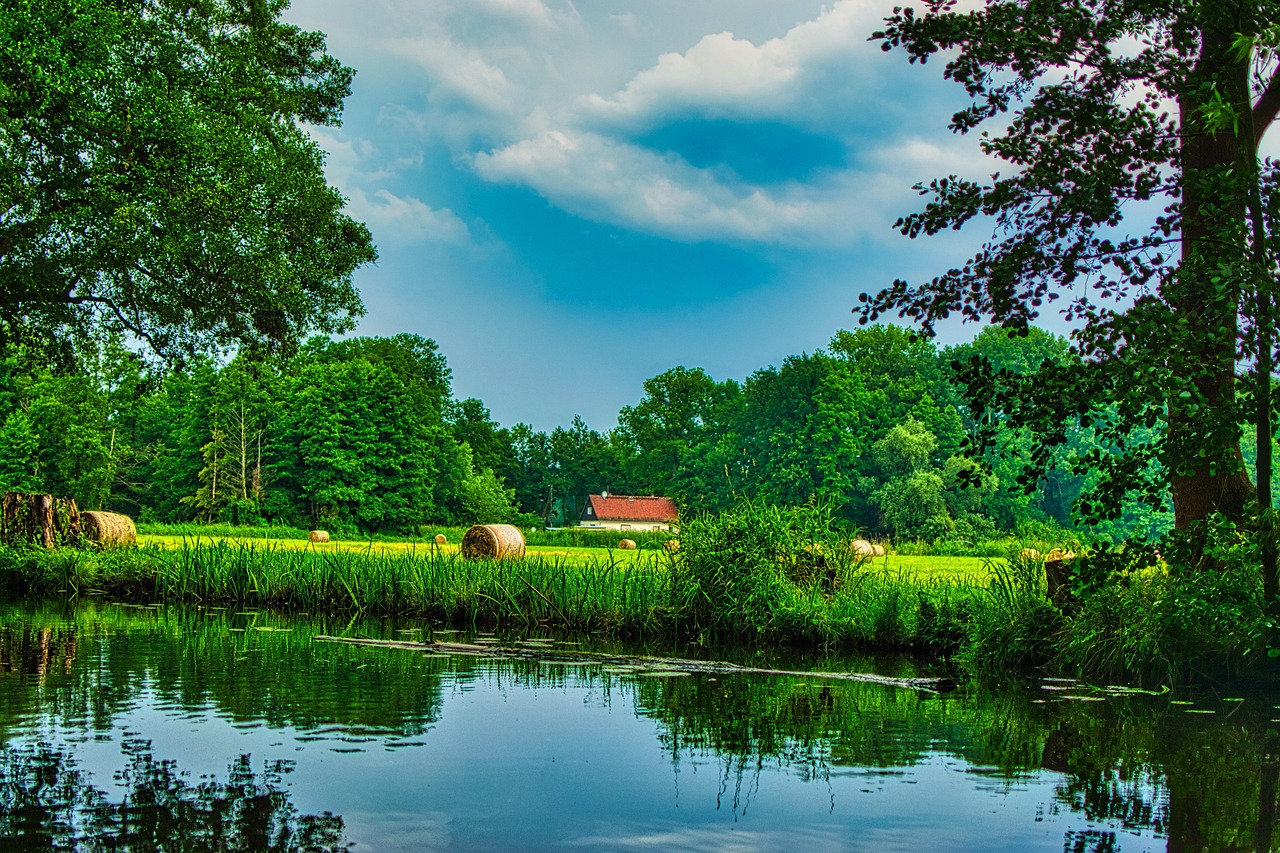
The Sorbs are a West Slavic people indigenous to Lusatia, a historical region in eastern Germany. They are the only Slavic people whose entire homeland lies within Germany, and they form one of the countrys four officially recognized national minorities. The older name Wends was long applied to them by German speakers and was used more broadly for various Slavic peoples along the historic frontier; today Sorbs is generally preferred, though Wends survives in some contexts and among some emigrant communities.
Crucially, the Sorbs are divided into two closely related but distinct groups, each with its own language. The Upper Sorbs live in the more southerly part of Lusatia around the town of Bautzen in Saxony, and their tradition is historically more Catholic; the Lower Sorbs live to the north around Cottbus in Brandenburg, in the watery landscape of the Spreewald, and are historically more Protestant. The two communities speak Upper Sorbian and Lower Sorbian respectively, languages similar enough to reveal a common origin but different enough that they are counted as separate tongues. This internal division, shaped by geography and the religious split of the Reformation, runs through much of Sorbian history and culture.
How Far Back Their Story Reaches
The Sorbs trace their presence in Lusatia to the great westward migrations of Slavic peoples in the early medieval period. According to most historians, Slavic tribes moved into the lands between the Elbe and the Oder rivers in the centuries following the upheavals that accompanied the end of the western Roman world, settling territories that had been left sparsely populated. The ancestors of the Sorbs were among these Slavic settlers, part of a once far larger band of Slavic peoples — sometimes collectively called the Polabian Slavs — who inhabited much of what is now eastern Germany before the medieval German expansion eastward.
Over the following centuries, that broader Slavic population was gradually conquered, settled over, and assimilated by German-speaking states pushing eastward in the movement historians call the Ostsiedlung, the medieval German settlement of the east. Most of the western Slavic peoples of these lands eventually disappeared as distinct groups, absorbed into the German-speaking majority. The Sorbs of Lusatia are the great exception: the last surviving remnant of that once-extensive Slavic world, the only ones who managed to keep their language and identity through a thousand years of German rule. This makes them, in a real sense, living witnesses to a vanished Slavic Germany.
Traces of the Early Slavic World
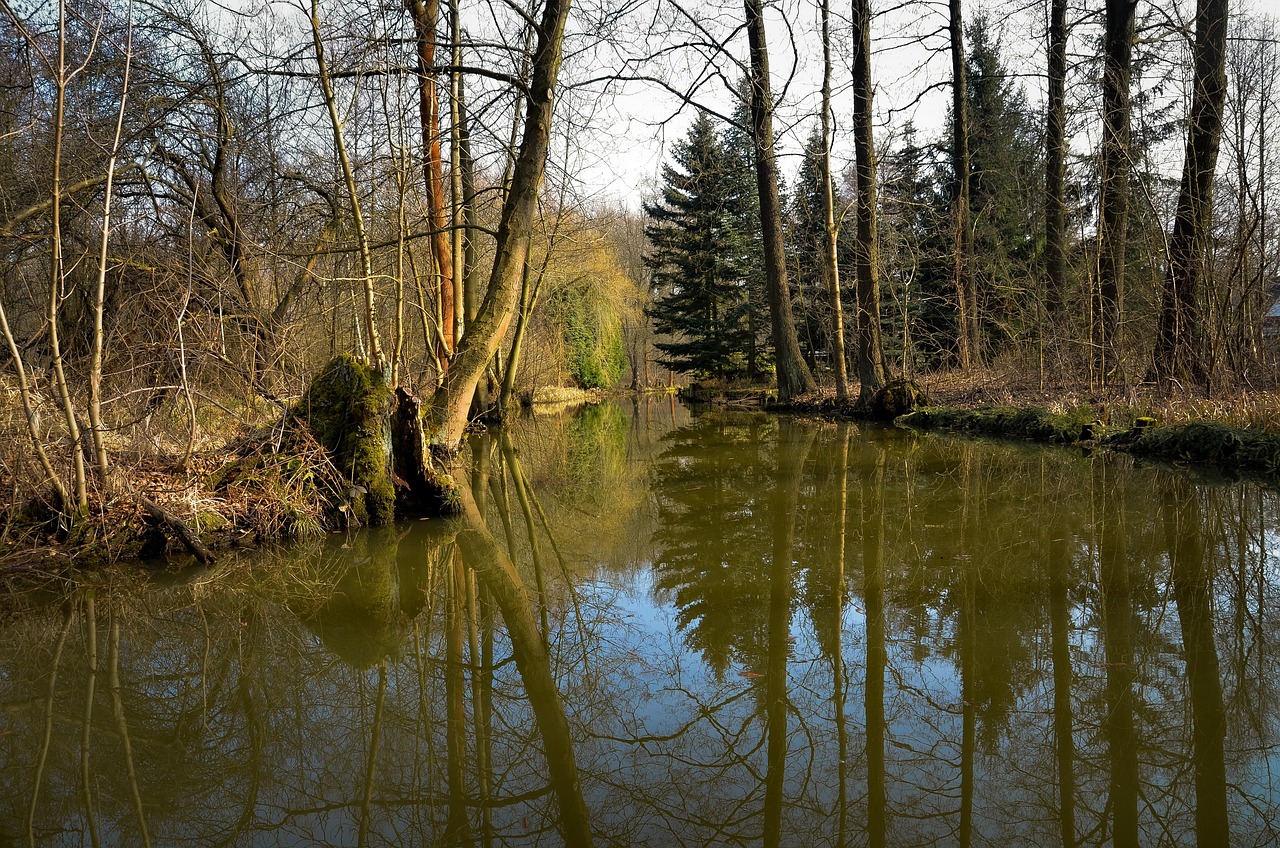
The early medieval Slavic presence in the region has left its marks for archaeologists and historians to read. Across Lusatia and the broader lands of the former Polabian Slavs, excavations have uncovered the remains of fortified settlements, ramparts, and the foundations of dwellings from the early Slavic period, evidence of organized communities who farmed, herded, fished, and traded along the rivers and through the forests and marshes. The very names of countless towns, villages, and rivers across eastern Germany are Slavic in origin, a linguistic fossil record of how far the Slavic settlement once extended, even in regions where no Slavic speaker has lived for centuries.
Scholars approach this evidence with the usual care, distinguishing the broad early Slavic culture from the later, more sharply defined Sorbian identity that crystallized under centuries of contact and conflict with German neighbors. But the continuity of settlement in Lusatia, combined with the survival of the language, ties the present-day Sorbs to those early medieval Slavic communities in a way that few European minorities can match. The watery landscape of the Spreewald in particular, with its maze of canals and small islands, helped shelter Sorbian communities and their traditions, its very geography contributing to the survival of a distinct way of life.
How They Lived and What They Made
For most of their history the Sorbs were a rural people, farmers and fishers tied closely to the land and water of Lusatia. In the Spreewald, where rivers branch into countless channels, communities developed a distinctive way of life adapted to the water, traveling and working by flat-bottomed boat and building their settlements among the waterways, a landscape and lifestyle that survive in part to this day and now draw visitors from across Germany. Elsewhere in Lusatia, Sorbian villages followed the rhythms of the agricultural year, and much of the rich folk culture for which the Sorbs are known grew out of that farming life.
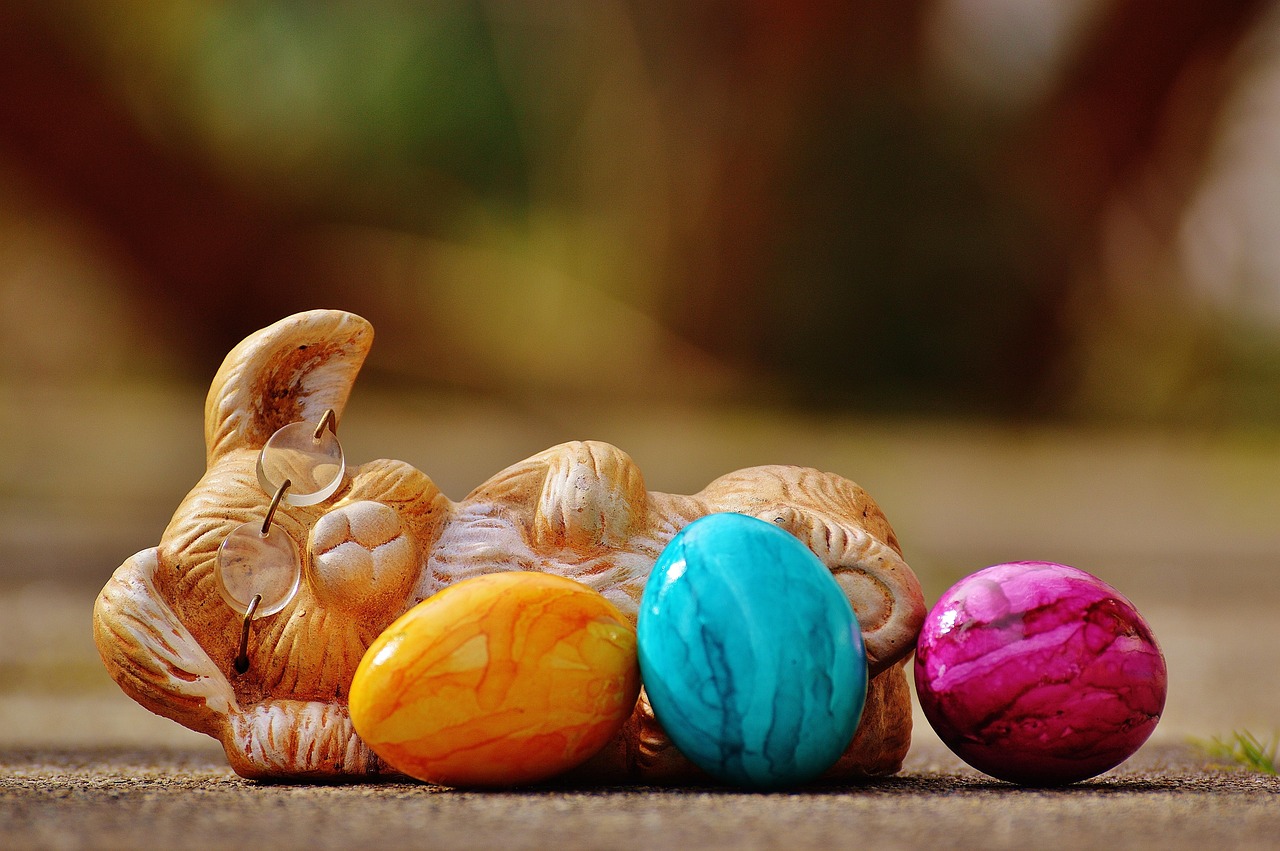
Sorbian folk culture is unusually vivid and well preserved for so small a people. Their traditional costumes, particularly the elaborate womens dress with its distinctive headscarves and ornamentation, vary from district to district and remain a powerful symbol of identity worn at festivals and ceremonies. Above all, the Sorbs are famous for their decorated Easter eggs, produced through painstaking techniques of wax-resist and scratch decoration that yield intricate geometric and symbolic patterns; this art has become almost emblematic of Sorbian culture and is practiced and admired far beyond Lusatia. A calendar full of customs marks the turning year — among them springtime rituals, the dramatic Easter horseback processions of the Catholic Upper Sorbs, and various seasonal celebrations involving costume, song, and communal gathering — each rooted in the fusion of old Slavic tradition with the Christian calendar.
A Thousand Years Under Other Rulers
Unlike many peoples in this series, the Sorbs did not fight great wars of their own across the centuries, for the simple and poignant reason that they lost their political independence very early and never regained it. By the high medieval period the Sorbian lands had been brought under German and later Bohemian, Saxon, and Prussian control, and from then on the Sorbs lived continuously as a subject people within larger states, never possessing a kingdom or country of their own. Their history is therefore not one of battlefield glory but of cultural survival under foreign rule — a quieter and in some ways harder kind of endurance.
That survival was repeatedly threatened. Over the centuries, German authorities and landowners pursued policies that ranged from neglect to active suppression of the Sorbian language and identity, and the long, slow pressure of assimilation steadily shrank the Sorbian-speaking area. The most extreme danger came in the twentieth century. Under the Nazi regime, Sorbian organizations were banned, the language was suppressed, and the very existence of the Sorbs as a distinct people was denied, with plans that, according to historians, envisioned their forced dispersal and complete assimilation or removal — an existential threat the people narrowly survived. After the Second World War, the Sorbs gained formal cultural protections in communist East Germany, yet faced a new threat as vast open-pit lignite coal mining in Lusatia destroyed dozens of villages, displacing communities and erasing centuries-old Sorbian settlements from the map in the name of energy production.
The Sorbian Languages and Their Fragile Future
Upper Sorbian and Lower Sorbian belong to the West Slavic branch of the Slavic language family, making them relatives of Polish, Czech, and Slovak rather than of the German that surrounds them on every side. They are the westernmost surviving Slavic languages, a linguistic outpost left behind when the broader Slavic settlement of eastern Germany was assimilated. The two Sorbian languages differ noticeably from one another, with Upper Sorbian being the more robust of the two and Lower Sorbian, spoken in the north around Cottbus, being in a considerably more precarious state with far fewer fluent speakers.
Both languages are classified as endangered, and the threat is real rather than theoretical, given how small the speaking population is and how complete the surrounding German-language environment remains. Yet the Sorbs have built impressive institutions to defend their tongue. There are Sorbian-language schools and a notable immersion program designed to pass the language to a new generation of children, alongside Sorbian newspapers, radio and television broadcasting, a publishing house, a theater, and academic institutions devoted to the study of Sorbian language and culture. Whether these efforts can secure the long-term future of the languages, especially Lower Sorbian, remains genuinely uncertain, but they represent one of the more determined minority-language revival efforts in Europe relative to the size of the community.
Customs, Spirits, and Story
Sorbian folklore, retold here only in outline and in my own words, preserves a world of seasonal ritual and a cast of legendary beings that blend old Slavic belief with the Christian framework adopted long ago. Among the best-known figures of Sorbian and wider Lusatian legend is a water spirit associated with the rivers and ponds of the region, a being who could be dangerous to the unwary, reflecting the close and sometimes perilous relationship of the people with their watery environment. Folk tales tell of household spirits, of mysterious lights over the marshes, and of the consequences of breaking custom or showing disrespect, carrying the moral lessons typical of such traditions.
Much of Sorbian tradition centers on the calendar of seasonal customs that mark the passage of the year, many tied to the agricultural cycle and the Christian festivals layered over older observances. Springtime in particular is rich with ritual, from the famous decorated eggs to processions, the symbolic driving out of winter, and celebrations welcoming the return of life to the land. These customs are not museum pieces but living practices, kept up in Sorbian communities and increasingly cherished as a core expression of an identity under pressure. As always with such traditions, practices vary between Upper and Lower Lusatia and between villages, and they are sketched here only in general terms.
Notable Sorbs
Despite their small numbers, the Sorbs have produced figures of note, particularly in the fields of language, literature, and the church, which were the natural arenas in which a small subject people could leave its mark. Sorbian writers and poets worked to create and sustain a literature in their own language, an act of cultural defiance and preservation in itself, and Sorbian scholars and clergy played crucial roles in codifying the languages, translating religious texts, and documenting the traditions of their people. The development of a written Sorbian literature, including the translation of the Bible into Sorbian, was a milestone that helped anchor the language and identity through difficult centuries. In keeping with the careful approach of this series, where I cannot be confident of the precise biographical details or achievements of a particular individual, I have chosen to describe their contributions in general terms rather than risk attaching inaccurate specifics to real people.

The Sorbs in the World Today
Today the Sorbs are usually estimated to number around sixty thousand people, give or take, though as always with minorities defined partly by self-identification and language use, precise figures are difficult and the number of active speakers is smaller than the number who identify as Sorbs. They remain concentrated in their historic Lusatian homeland across Saxony and Brandenburg, where bilingual signs, Sorbian schools, and cultural institutions mark the landscape, and where the community enjoys formal recognition and protection as a national minority within Germany.
Modern Sorbian life blends full participation in German society with the deliberate maintenance of a distinct identity. Most Sorbs are bilingual, living and working in German while keeping their own language and customs alive at home, in church, in school, and at the festivals that punctuate the year. The community sustains a remarkable cultural infrastructure for its size, and there is genuine pride and energy behind the effort to pass Sorbian language and tradition to the young. At the same time, the challenges are real and pressing: assimilation, the continuing decline of the smaller Lower Sorbian language, the historic damage done by coal mining to Sorbian villages, and the simple demographic arithmetic of a very small community surrounded by a large majority. The Sorbs stand as a test case for whether Europes tiniest indigenous minorities can endure into the future.
The story of the Sorbs is, in the end, a quiet epic of survival. They are the last of a Slavic world that once stretched across much of what is now eastern Germany, a people who never had a state of their own and yet held onto their language, their dress, their decorated eggs, and their sense of themselves through a thousand years of foreign rule, through the genocidal designs of the twentieth century, and through the bulldozers of the coal age. Small, resilient, and still very much alive, the Sorbs remind us that Europe is a mosaic far more intricate than its national borders suggest, and that even the smallest pieces of that mosaic are worth cherishing and protecting.
\n
More Peoples of the World
\n
This article is part of our Peoples of the World series, exploring fascinating and overlooked cultures around the globe. Explore the other peoples in the collection:
\n
- The Sami
- The Basque
- The Ainu
- The Maori
- The Amazigh (Berbers)
- The Sakha (Yakuts)
- The Welsh
- The Tuvan
- The Mari
\n
You May Like
The Zaza, a Mountain People of Eastern Anatolia


2 thoughts on “A Slavic People Still Living in the Heart of Germany, the Sorbs”