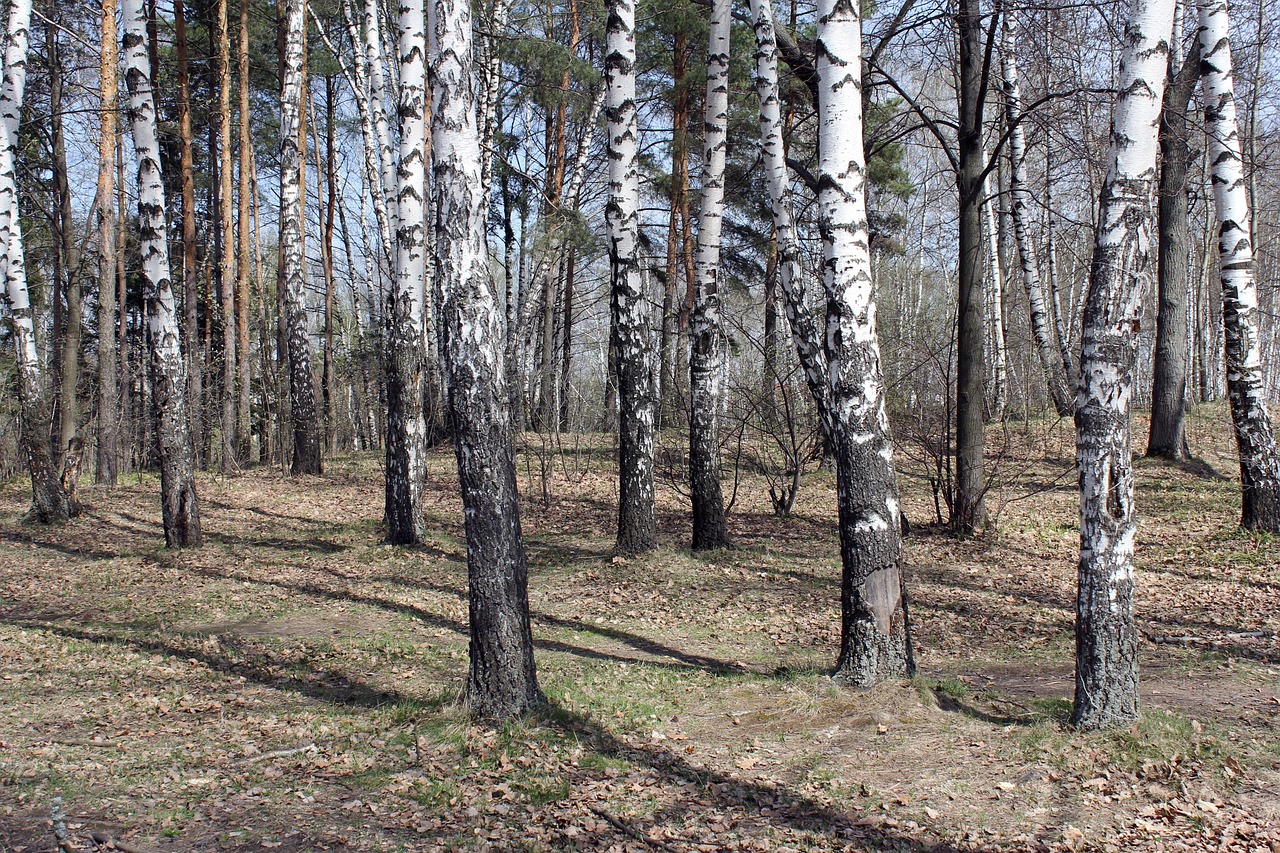
Along the middle course of the great Volga river, in the forests and meadows of the region that lies between European Russia and the Ural mountains, lives a people who have kept alive something almost unique in modern Europe: an ancient, indigenous, nature-centered religion that was never fully replaced by Christianity. They are the Mari, a Finno-Ugric people of the Volga region, and they are sometimes described as the last pagans of Europe — a phrase that oversimplifies a complex reality but captures the remarkable survival of their old faith of sacred groves and forest gods into the twenty-first century. Speaking a language related to Finnish and Estonian, worshipping in stands of holy trees, and maintaining a distinct identity within the vast expanse of Russia, the Mari are among the most fascinating and least-known peoples of the European continent.
Their story is one of an old forest people who lived between great powers, who were absorbed into the Russian state centuries ago, and who have held onto their language and, extraordinarily, their indigenous religion through everything that history threw at them.
In This Article
Who the Mari Are
The Mari are a Finno-Ugric people indigenous to the middle Volga region of European Russia, where they form the titular nation of the Mari El Republic, a federal subject of the Russian Federation. They were historically known to outsiders as the Cheremis, an older name found in much of the literature, while Mari is their own name for themselves, meaning roughly the people or man in their language. They belong to the broader family of Volga peoples, living near and among other indigenous nations of the region as well as Russians and Tatars.
The Mari are traditionally divided into subgroups associated with different parts of their territory and with somewhat different dialects and customs, the principal division being between the Meadow Mari, who live on the low-lying left bank of the Volga, and the Hill Mari, who inhabit the higher right bank, along with other groups further east. These divisions are reflected in their language, which exists in distinct varieties. What unites the Mari is their Finno-Ugric heritage, their long attachment to the forests and rivers of the Volga region, and above all their remarkable tradition of indigenous religion, which more than anything else has come to define them in the eyes of the wider world.
An Ancient Volga People
The Mari are among the old indigenous peoples of the Volga region, and their roots there reach deep into the past. According to most historians and linguists, the ancestors of the Mari were part of the broad Finno-Ugric population that inhabited the forests of northeastern Europe in ancient times, peoples whose languages descend from a common ancestral tongue and who spread across a wide region from the Baltic to the Urals and beyond. The Mari emerged as a distinct people in the Volga region over many centuries, in a process scholars reconstruct from linguistic and archaeological evidence rather than from any single recorded moment.
The middle Volga was, for much of history, a meeting place and a borderland, where Finno-Ugric forest peoples encountered the movements of Turkic and Slavic populations and the rise of powerful states. The Mari lived through the era of the medieval Volga states, came under the influence of the powerful Turkic khanates that dominated the region, and were drawn into the orbit of the great powers that contested control of the Volga trade route, one of the most important commercial arteries of medieval Eurasia. Through all these changes, the Mari persisted as a distinct people in their forest homeland, neither vanishing nor fully merging into the larger populations around them.

Traces of the Forest Past
The deep history of the Mari and their Finno-Ugric ancestors is studied through archaeology and through the evidence of language, since these were peoples whose traditions were oral rather than written for most of their history. Across the Volga region, excavations have revealed the settlements, burial sites, and material culture of the ancient inhabitants, showing communities sustained by hunting, fishing, gathering, beekeeping, and farming in the rich environment of the forest and river valleys. The artifacts of these cultures — tools, ornaments, and the goods of trade — reflect both the local way of life and the connections that linked the Volga peoples to wider networks of exchange across Eurasia.
As with the other peoples in this series, scholars are careful to distinguish the broad ancient Finno-Ugric population from the historically defined Mari, who took shape gradually over the centuries. Yet the continuity of habitation in the Volga forests, and the survival of the Mari language as a living descendant of the ancient Finno-Ugric speech of the region, connect the present-day Mari to a very long history in their homeland. The forests themselves, which sheltered the Mari and their old religion, are central to that history, for it was in the sacred groves among the trees that the Mari preserved a spiritual tradition reaching back into prehistory.
How They Lived and What They Made
The Mari were traditionally a rural people of the forest and the field, combining farming with the older forest pursuits of hunting, fishing, gathering, and the beekeeping for which the region was long renowned, its forests yielding honey and wax that were prized goods of trade. They cultivated grain and kept livestock, living in villages of wooden houses amid the meadows and woods of the Volga country, and following the agricultural rhythms of the seasons that also structured their religious calendar.
Mari folk culture is rich in textile arts, music, and ritual. Mari women were known for their elaborate traditional dress, richly embroidered and adorned with distinctive headgear and ornaments that varied between the subgroups and marked identity and status, and Mari embroidery carried symbolic patterns passed down through generations. Music and song accompanied the festivals and rituals of the year, and traditional instruments lent their voices to celebration and ceremony. But the most distinctive feature of Mari culture, the thing that sets them apart from almost every other people in Europe, is their sacred relationship with nature and the institution at its heart: the holy grove, a stand of trees treated as a temple, where the community gathered to pray and to make offerings to the gods of their indigenous faith. These groves, scattered across the Mari lands, are the living heart of a religious tradition unlike anything else surviving on the continent.

Between Empires and Under Russian Rule
The history of the Mari, like that of the other Volga peoples, was shaped by their position between greater powers. For long periods the Mari lived under the influence or domination of the Turkic states that controlled the middle Volga, paying tribute and being drawn into the politics of the region. The decisive change came with the expansion of the Russian state, which in the sixteenth century conquered the powerful khanate that had dominated the middle Volga and brought the Mari and their neighbors under Russian rule.
According to most historians, the Mari did not submit quietly; the decades following the Russian conquest of the region saw a series of fierce and prolonged revolts, sometimes called the Cheremis wars, in which the Mari and other Volga peoples resisted the imposition of Russian control with great determination before being subdued. In the centuries that followed, the Mari were subject to pressures including taxation, the encroachment of Russian settlement, and campaigns of Christianization that sought to convert them to Russian Orthodoxy. Crucially, however, this Christianization was never complete: many Mari either resisted conversion or blended it with their old religion, and a significant number maintained their indigenous faith, sometimes in secret, sometimes openly. This incomplete conversion is the reason the old Mari religion survived into modern times when so many other European pagan traditions vanished centuries ago. Under the Soviet era the Mari experienced both the suppression of religion and the development of education and a written literature in their own language, a mixed legacy that continues to shape them today.
The Mari Language and Its Relatives
The Mari language belongs to the Finno-Ugric branch of the Uralic language family, which makes it a relative — though a distant one — of Finnish, Estonian, and Hungarian, and a closer kin of the other Finno-Ugric languages of Russia. This places the Mari in the same great linguistic family as the Sami of the European Arctic, a reminder of how widely the Uralic-speaking peoples are spread across the north of Europe and Asia, from Scandinavia to Siberia. The Mari language exists in distinct varieties, principally the Meadow Mari and Hill Mari forms, which differ enough that they are sometimes treated as separate literary languages, each with its own written standard.
The Mari language holds official status within the Mari El Republic alongside Russian and is used in education, publishing, and media, and it is spoken by a substantial portion of the Mari population, which gives it a stronger position than many of the smaller indigenous languages of Russia. Nonetheless, like all such languages it faces the steady pressure of Russian, which dominates higher education, administration, and the wider opportunities of life, and the proportion of Mari who speak their ancestral language has declined over the generations. The language is a vital marker of Mari identity, bound up with their songs, their rituals, and their sense of themselves as a distinct people, and its maintenance is a central concern for those committed to the Mari future.

The Religion of the Sacred Groves
The traditional religion of the Mari, retold here only in outline and in my own words, is what makes them genuinely unique in the European context. It is an indigenous, polytheistic, nature-centered faith in which the divine is encountered above all in the natural world, and its central institution is the sacred grove, a protected stand of trees regarded as holy ground where the community gathers for prayer and sacrifice. The Mari recognize a range of gods and spirits associated with the sky, the earth, the forces of nature, and the various aspects of life, presided over in many accounts by a great supreme deity of the heavens, and they make offerings — traditionally including food and animals — in the groves under the guidance of their own priests.
This tradition is remarkable not as a reconstruction or revival but as a substantially continuous survival, maintained by Mari communities through the centuries of Christianization and the Soviet period, even if practiced quietly in the hardest times. In the post-Soviet era the old religion has been able to operate more openly, large communal prayer gatherings have been held, and the faith has gained recognition as an important part of Mari heritage and identity. Many Mari today combine elements of this indigenous religion with Orthodox Christianity in a blended practice, while others adhere primarily to one or the other. Out of respect for the living and sacred nature of this tradition, and the variation among communities, it is described here only in general terms, but its survival is one of the genuinely extraordinary facts of European cultural history.
Notable Mari
The Mari have produced figures of note especially in the cultural and intellectual life of their republic, where the development of a written language in the modern era gave rise to a national literature, and where poets, writers, and scholars worked to record the language, the folklore, and the traditions of their people and to give voice to the Mari experience. Composers and performers have drawn on the rich Mari musical heritage, and scholars have devoted themselves to documenting the language and the unique religious tradition of the sacred groves. The creation of a Mari literature and the preservation of the old faith both required individuals of dedication and sometimes courage, particularly under regimes hostile to minority cultures and to religion. As always in this series, where I am not confident of the precise details of an individual life or work, I have chosen to describe such contributions in general terms rather than risk inaccuracy by naming specifics.

The Mari in the World Today
Today the Mari number somewhere in the region of half a million people, making them one of the more numerous of the indigenous peoples of the Volga region and of Russia, though as always with such communities the number who actively speak the language and practice the traditions is smaller than the total who identify as Mari. The largest share lives in the Mari El Republic, with significant Mari communities scattered more widely across the Volga region and beyond, including groups further east toward the Urals who have often been noted for their especially strong maintenance of the traditional religion.
Modern Mari life combines full participation in Russian society with the maintenance of a distinct identity rooted in language, folk culture, and the remarkable survival of the indigenous faith. The language remains official within the republic and is taught and used, the rich traditions of dress, embroidery, music, and festival are kept alive, and the religion of the sacred groves continues to be practiced and has gained new visibility and recognition. The Mari face the familiar challenges of indigenous peoples within a large state — the dominance of the majority language and culture, economic pressures, and the task of passing their heritage to the young — but they do so as a people who have achieved something almost no other European nation can claim: the survival of an ancient indigenous religion, practiced in living groves of holy trees, into the present day. Their Finno-Ugric heritage links them to a far-flung family of peoples across the north, a reminder of the deep and often hidden diversity of Europe and Russia alike.

The story of the Mari is, in the end, the story of a forest people who would not let go of their gods. Living between empires, conquered and pressed to convert, ruled for centuries by others, the Mari nonetheless carried their language, their songs, their embroidered cloth, and above all their sacred groves through the long centuries into the modern world. In an age when the old indigenous faiths of Europe are known mostly from books and ruins, the Mari still gather among the trees to pray as their ancestors did, a living link to a spiritual world almost everywhere else long vanished — and a powerful reminder that the human heritage of this continent is older, stranger, and more various than we usually imagine.
\n
More Peoples of the World
\n
This article is part of our Peoples of the World series, exploring fascinating and overlooked cultures around the globe. Explore the other peoples in the collection:
\n
- The Sami
- The Basque
- The Ainu
- The Maori
- The Amazigh (Berbers)
- The Sorbs
- The Sakha (Yakuts)
- The Welsh
- The Tuvan
\n
You May Like
The Zaza, a Mountain People of Eastern Anatolia


One thought on “Among the Last to Worship in Sacred Groves, the Mari of Russia”