High in the eastern Caucasus, where bare rock rises into cloud and villages cling to slopes like nests of stone, live the Avars. They are the largest of the many peoples of Dagestan, a mountain republic in southern Russia whose name means the land of mountains. For centuries they built their homes from the same grey stone as the cliffs around them, herded sheep across dizzying pastures, and defended their freedom against every empire that reached for the Caucasus.
Persians, Arabs, Mongols, and Russians in turn found the mountains easy to enter but almost impossible to hold, for every gorge could hide a fighter and every village was a fortress. The Avars turned their harsh geography into their greatest defense.
To know the Avars is to know a people shaped entirely by altitude. The mountains gave them their fortress villages, their fierce independence, their patchwork of dialects, and a code of honor as hard and clear as the air they breathe. They are Sunni Muslims whose faith runs deep, heirs to warriors and scholars, weavers and metalsmiths, shepherds and poets.
This article is part of our Folks series on the peoples of Russia, and it follows the story of the Avars from their ancient beginnings to the present day. We will look at their origins, the meaning of their name, their language, their mountain homeland, their old way of life, their villages and society, their faith, their traditions and code of honor, their crafts, their food, their festivals, their long entanglement with the Russian state, and who the Avars are today.
- The Origins of the Avars
- What Their Name Means
- The Avar Language
- A Homeland of Stone and Cloud
- The Old Way of Life
- Village and Society
- Faith in the Mountains
- Traditions, Honor, and the Spoken Word
- Crafts of the Highlands
- The Food of the Mountains
- Festivals and the Turning Year
- Under the Russian State
- The Avars Today
The Origins of the Avars
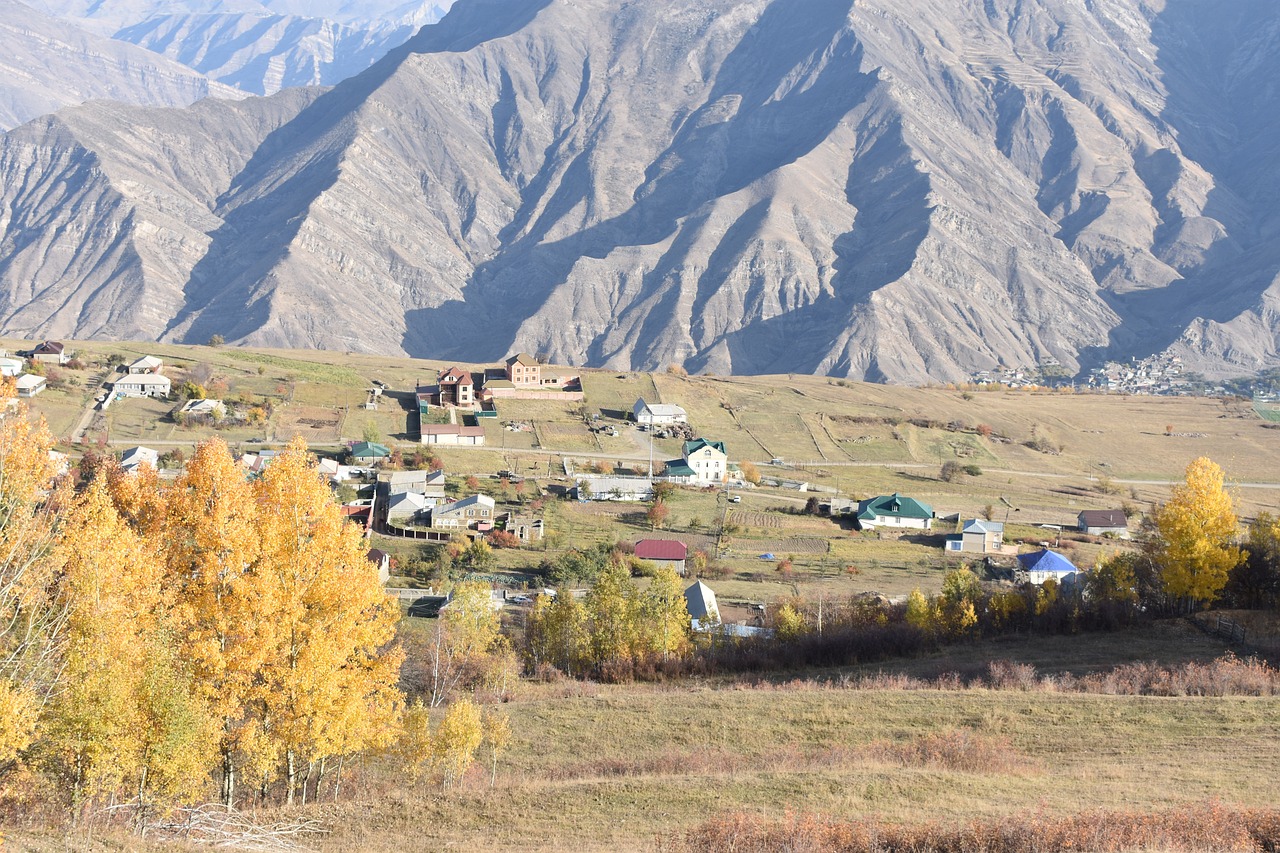
The Avars are among the oldest inhabitants of the eastern Caucasus, a region that has sheltered small mountain peoples for thousands of years. Their ancestors were part of the ancient Caucasian population that lived in these highlands long before the great migrations of the steppe reached the region. Unlike Turkic or Slavic peoples who arrived from elsewhere, the Avars belong to the mountains themselves, descendants of communities that have farmed and herded these slopes since prehistory.
Genetic and archaeological evidence alike points to a deep continuity in these mountains, a population that stayed in place while empires rose and fell on the plains below. The Avars are, in a real sense, the mountains made human.
In the early medieval period the Avar lands lay at the heart of a mountain state that Arab and Persian writers knew as Sarir, a Christian kingdom before Islam spread through the Caucasus. Sarir controlled the high passes and the fertile valleys, and its rulers were powerful enough to be named in the chronicles of distant empires. From this kingdom the later Avar identity slowly took shape.
There is an old confusion, still repeated today, between these Caucasian Avars and the nomadic Avars who swept into Europe in the sixth century and founded a khaganate on the Hungarian plain. Most scholars now treat the two as separate peoples who happen to share a name, the European Avars having vanished into history while the Caucasian Avars remained rooted in their mountains.
What is certain is that the Avars were never a single migrating tribe but a cluster of closely related mountain communities, each in its own valley, who over centuries grew into one people. Their unity came not from conquest but from a shared language family, a shared faith, and the shared experience of survival in one of the most rugged landscapes on earth.
What Their Name Means
The Avars call themselves Maarulal, a word usually understood to mean highlanders or people of the mountains. It is a name that says everything about how they see themselves, for their identity is inseparable from altitude. To be an Avar is to belong to the high country, to the world above the tree line where the air is thin and the horizons are made of rock.
This is why the Avars measure a person not by land or gold but by conduct, by how they keep their word and treat a guest. In a country where survival depended on trust between neighbors, character was the only wealth that truly counted.
The name Avar, by which they are known to outsiders and in Russian, has a less certain origin. Some link it to the ancient rulers of Sarir, others to a title of respect, and others still to the old confusion with the steppe Avars. Whatever its source, it became the standard name in official use and in the wider world.
Within the Avar world there are many local names as well, for each large valley and each cluster of villages once had its own identity. Neighboring peoples of Dagestan, who speak related but distinct languages, are sometimes grouped with the Avars in official counts, which has swelled the Avar numbers and blurred the edges of who exactly is an Avar.
This layering of names, one for the self, one for the outsider, and many for the local community, is typical of Dagestan, a place so fractured by mountains that dozens of peoples and languages crowd into a single small republic. The Avars sit at the center of this mosaic, the largest tile in a pattern of astonishing variety.
The Avar Language
The Avar language belongs to the Nakh-Daghestanian family, a group of tongues found almost nowhere but the northeastern Caucasus. These languages are famous among linguists for their difficulty, with dense clusters of consonants and grammatical systems of remarkable complexity. Avar has a rich set of sounds that fall strangely on outside ears, and a grammar that marks relationships in ways most European languages never do.
Avar is not one uniform speech but a spread of dialects, so varied that speakers from distant valleys once struggled to understand one another. Out of this variety a common form arose, based on the speech used across the mountains for trade and gathering, and this shared Avar became a language of wider communication for many smaller peoples of the region who used it alongside their own tongues.
For centuries Avar was written in the Arabic script, carried by Islam and used by scholars, poets, and religious teachers. In the twentieth century the writing system was changed twice, first to a Latin alphabet and then to Cyrillic, the script still used today. Through all these changes the language survived as the everyday speech of the mountains.
Avar remains very much alive, spoken in homes, taught in schools in Dagestan, and used in newspapers, books, and broadcasts. Yet like all the languages of Russia it lives under the shadow of Russian, which dominates higher education and public life, and its future depends on each new generation choosing to keep speaking the tongue of the highlanders.
Efforts to keep Avar strong include local publishing, radio, and cultural societies, but the pull of Russian in work and study is powerful. The language will live as long as the mountains keep sending their children back home to hear it spoken.
A Homeland of Stone and Cloud
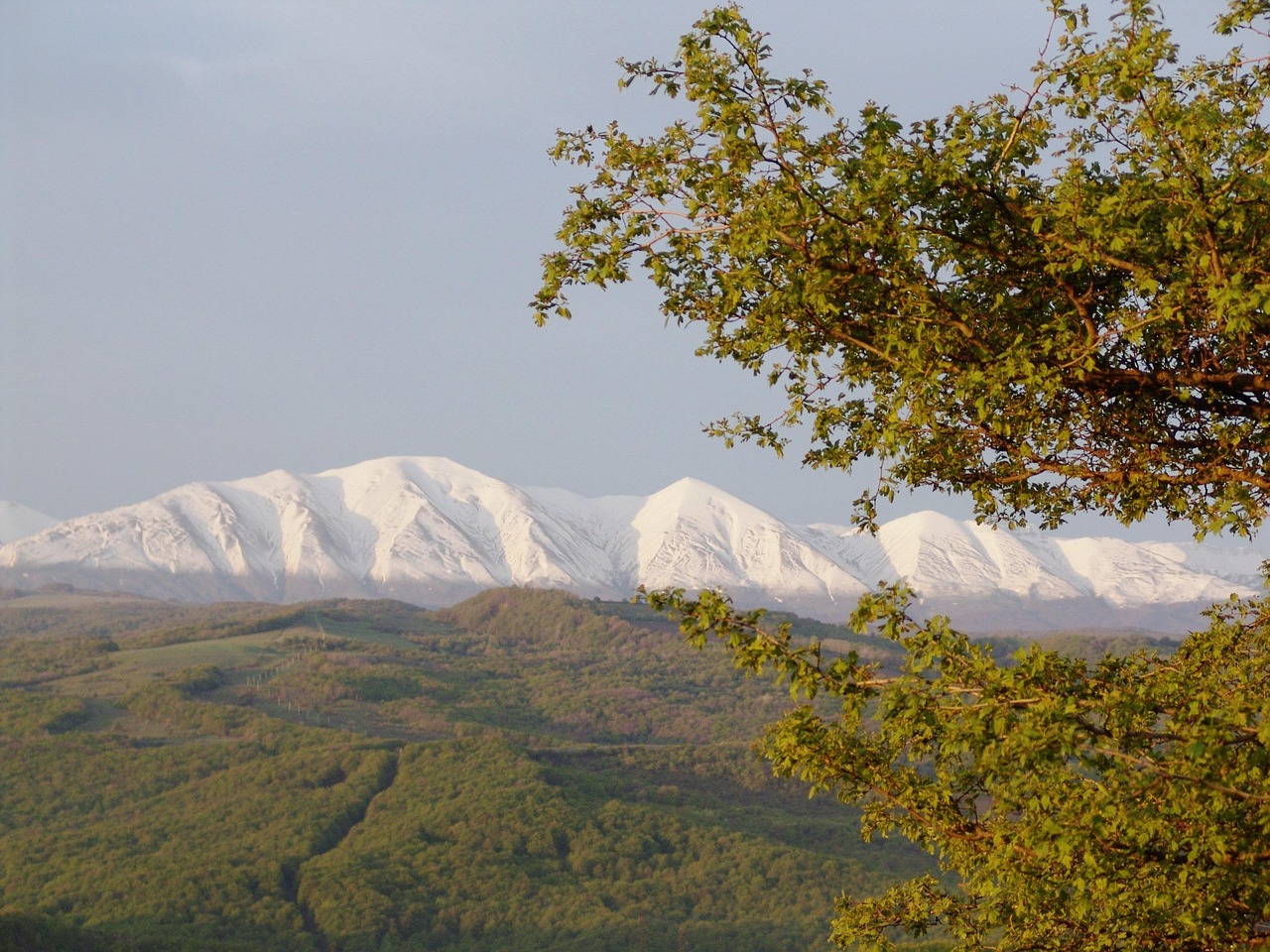
The Avar homeland is the mountainous interior of Dagestan, a tangle of ridges, gorges, and high plateaus in the eastern Caucasus, close to the Caspian Sea. This is some of the most dramatic terrain in all of Russia, where rivers have cut canyons of dizzying depth and villages perch on ledges that seem impossible to reach. Winter locks the high country in snow, and summer brings brief green to the pastures.
Because the mountains divide the land into isolated pockets, each valley developed almost as its own small world, with its own dialect, customs, and loyalties. Travel between villages could mean a hard day’s climb, and this isolation preserved a diversity found nowhere else. The landscape itself made the Avars a people of many communities rather than one crowd.
The high villages, or auls, were built for defense and for the cold, their stone houses stacked so closely that the roof of one was the yard of another. Terraced fields clung to the slopes below, and flocks moved up to the summer pastures and down again with the turning of the seasons. Every scrap of usable land was shaped by generations of patient labor.
Below the mountains lies the coastal plain along the Caspian, warmer and more open, and in modern times many Avars have moved down from the heights to the lowland towns. Yet the mountains remain the spiritual heart of the people, the place their songs and stories return to, the country that made them who they are.
Even Avars born in distant cities speak of the ancestral village as home, returning for weddings, funerals, and holidays. The aul on its rock remains the true address of the soul, however far a life may wander from it.
The Old Way of Life
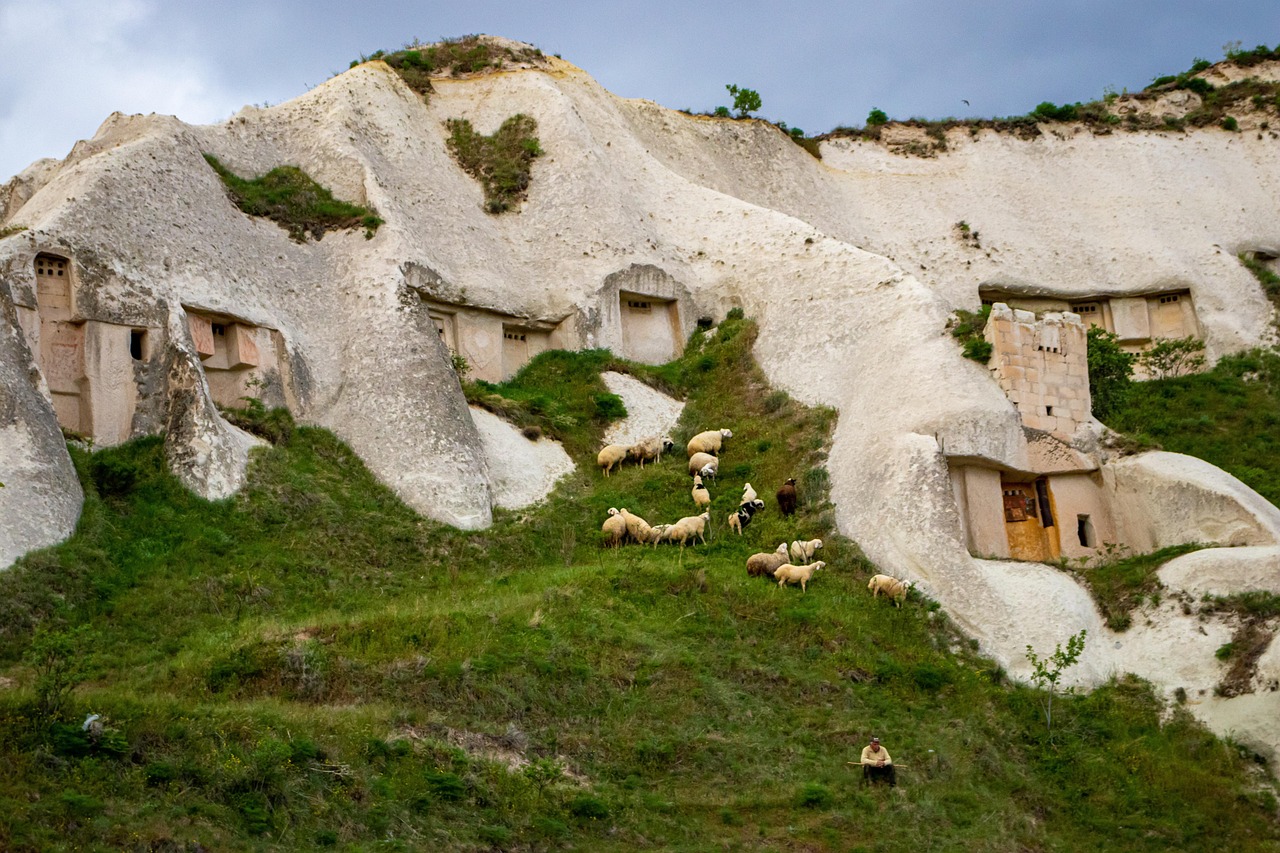
For most of their history the Avars lived by herding and mountain farming, a way of life dictated entirely by the steep and stony land. Sheep were the foundation of the economy, driven up to the high pastures in summer and down to sheltered valleys in winter in a rhythm of seasonal movement that shaped the whole year. Wool, meat, milk, and cheese came from the flocks, and a family’s wealth was often counted in sheep.
On the terraced fields the Avars grew barley, wheat, and other hardy crops able to survive the short mountain summer. Building and maintaining these terraces was endless work, holding back the soil with stone walls against the pull of the slope. Fruit and nuts grew in the warmer lower valleys, and every household kept a garden wrung from difficult ground.
The men of many villages also traveled far to earn a living, for the mountains alone could not feed everyone. Some went as seasonal laborers, others as traders carrying the crafts of their village to distant markets, and skilled metalworkers and masons were known and welcomed across the whole Caucasus and beyond.
Life was hard and simple, governed by the seasons and by the need to store enough through the long winter. Yet within these limits the Avars built a rich culture, and the very difficulty of the land bred the endurance, self-reliance, and pride that outsiders always remarked upon in the mountain people.
Village and Society
Avar society was built around the village community, a tight and self-governing world in which every family had its place. Each aul managed its own affairs, its pastures and fields shared and regulated by custom, its disputes settled by councils of elders and by long-established law. This local self-rule made the Avars a people used to governing themselves without kings above them.
Kinship ran deep, with families bound into larger clans that owed one another support, protection, and loyalty. The clan stood behind the individual in times of trouble, and an offense against one member touched all. This solidarity gave people security in a harsh world, but it also fed feuds that could pass from one generation to the next.
Society was ordered by clear roles and by respect for age and standing. Elders held authority, guests were honored above almost all else, and a person’s reputation, their name and honor, was a treasure to be guarded. Hospitality was close to sacred, and a traveler given shelter came under the protection of the whole household.
Above the villages there were sometimes larger unions and, in places, ruling houses descended from the old kingdom, but real life was lived at the level of the community. The strength of the Avars lay in these small, fierce, self-reliant villages, each a little republic of stone clinging to its mountain.
Faith in the Mountains
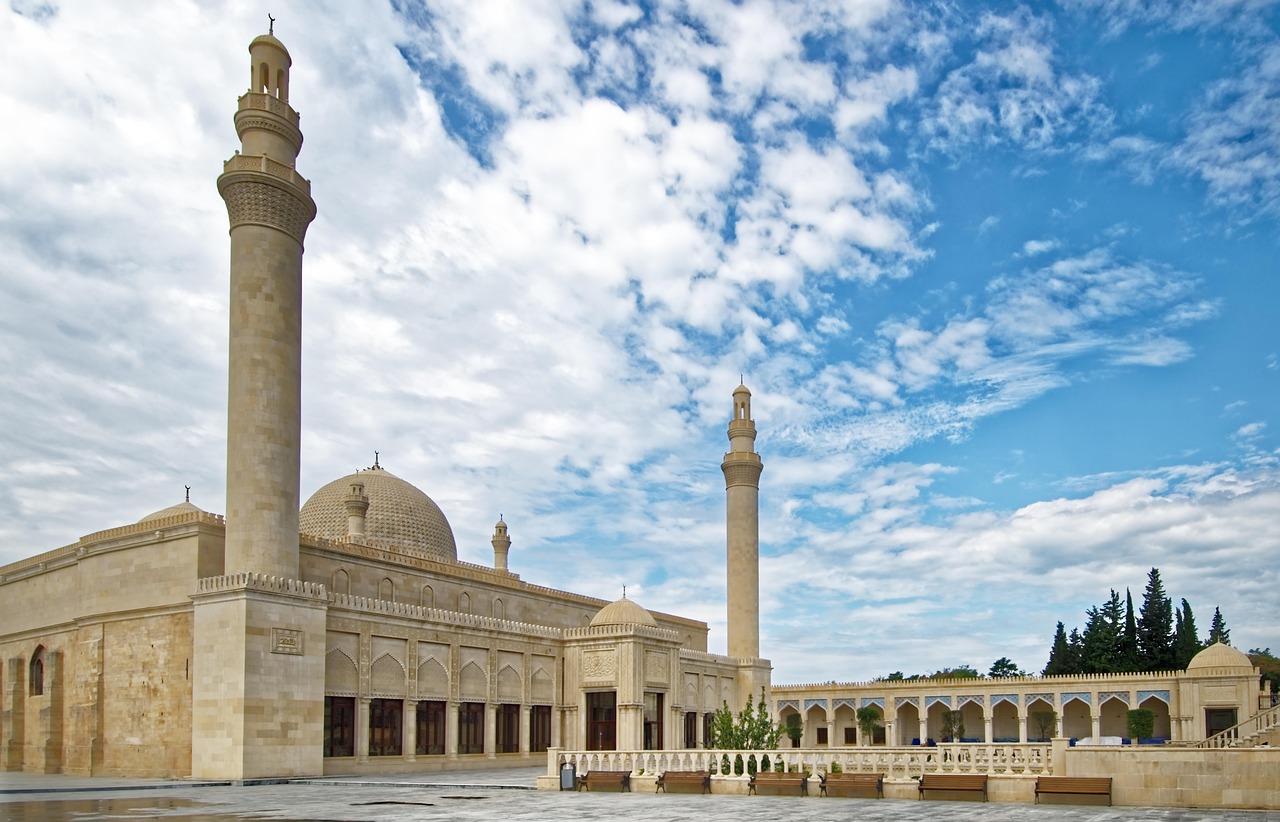
The Avars are Sunni Muslims, and Islam is woven through every part of their life and identity. The faith reached the eastern Caucasus over many centuries, spreading gradually from the coast into the mountains until it became the unquestioned religion of the highlands. By the time the Avars entered the modern age, Islam had been their faith for generations beyond counting.
Their Islam has long carried a strong current of Sufism, the mystical tradition of brotherhoods, spiritual teachers, and devotion. Sufi orders spread through Dagestan and gave the faith much of its emotional depth and its power to unite people. Religious scholars and teachers held great respect, and the mountain villages produced learned men whose reputation reached across the Muslim world.
Faith and resistance became bound together in Avar history, for it was under the banner of Islam that the mountain peoples united against outside conquest. Religion gave the scattered villages a common cause and a common leadership, turning a mosaic of communities into a force that could stand against an empire.
The mosque and the religious teacher were often the only institutions that reached across valley boundaries, giving the scattered villages a shared voice. Faith did what geography had always prevented, binding the mountain into one.
Through the long decades of Soviet rule, when religion was suppressed and mosques closed, the Avars kept their faith alive quietly in homes and hearts. When the pressure lifted, Islam returned openly and strongly, and today mosques stand again in the villages and towns, and the faith remains central to what it means to be an Avar.
Traditions, Honor, and the Spoken Word
At the center of Avar tradition stands a code of honor and conduct, an unwritten law of how a person must behave. It demanded courage, generosity, respect for elders, protection of guests, and above all the guarding of one’s good name. To lose honor was worse than to lose wealth, and this code governed relations between people as firmly as any written law.
Hospitality was the crown of this code. A guest, even a stranger or an enemy, was to be received, fed, and protected, and to harm a guest was among the deepest of shames. Travelers passing through the mountains could count on shelter, and the honor of the host lay in how well he treated those who came to his door.
The spoken word held enormous power. The Avars are a people of poets and orators, and their history and feeling live in songs, laments, and verses passed from mouth to mouth. The mountains produced beloved poets whose lines are known and quoted, and whose work carried the voice of the highlands to the wider world.
Life’s great moments, birth, marriage, and death, were marked by rituals rich with music, feasting, and gathering. Weddings brought whole villages together with dancing and the lezginka, the fast and fiery dance of the Caucasus, while mourning followed its own solemn and ancient forms. Through all of these the community renewed its bonds.
Crafts of the Highlands
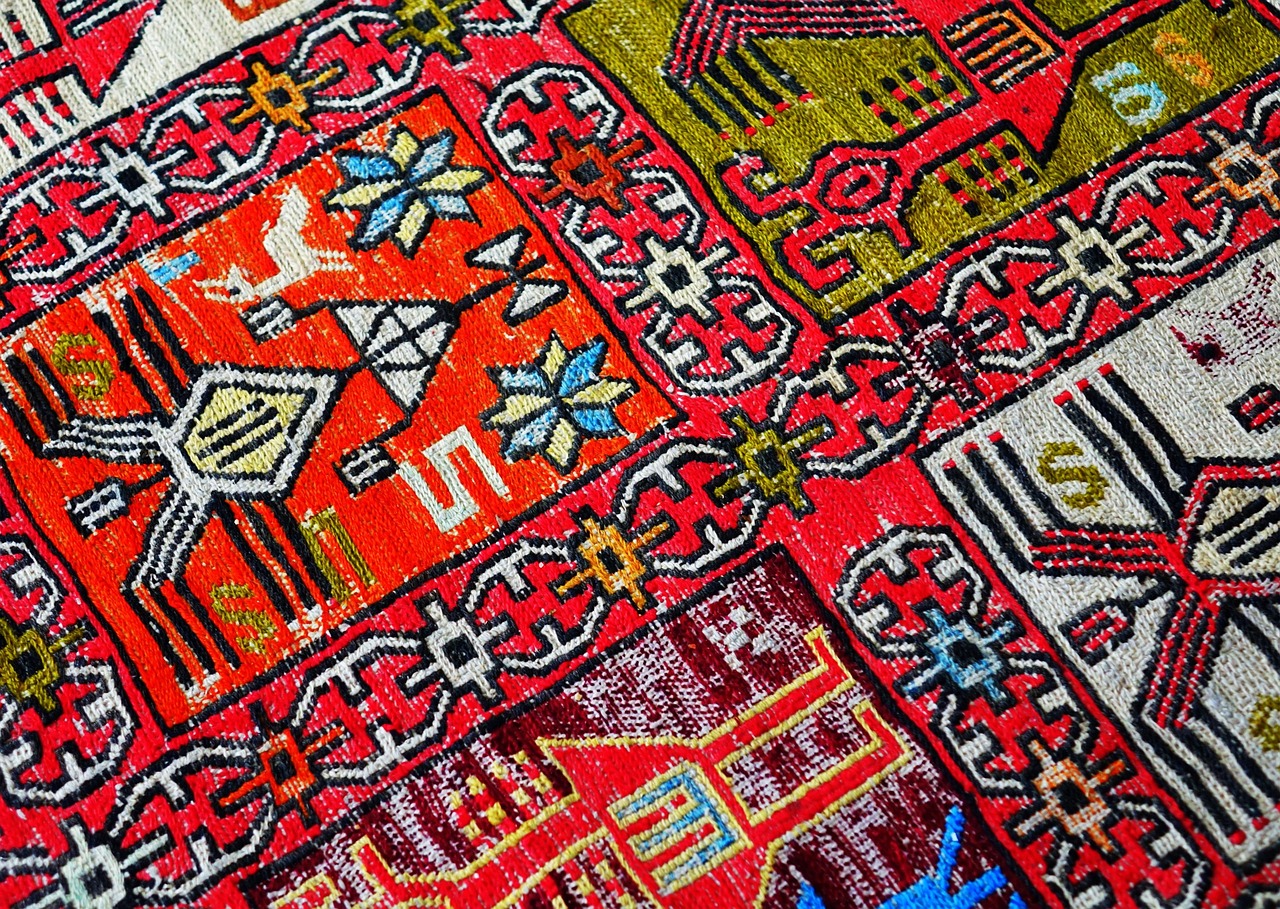
The Avars and their neighbors are famous throughout the Caucasus for their crafts, skills passed down through whole villages that specialized in a single art. In some auls nearly every household worked the same trade, and the name of the village became a byword for the quality of its work across the region and beyond.
Metalwork stands among the greatest of these arts. Certain villages became renowned for silver, for engraved and inlaid weapons, jewelry, and vessels of astonishing delicacy, their craftsmen prized far outside the mountains. The decorated daggers and ornaments of Dagestan became known across the Caucasus as marks of both wealth and taste.
Woodwork, too, reached great heights, with some villages producing carved and inlaid objects covered in intricate patterns of silver wire set into dark wood. Alongside these came weaving, the making of carpets and woolen goods from the abundant wool of the flocks, and the working of stone by the masons who built the fortress villages themselves.
These crafts were more than trade. They were the pride and signature of a community, arts refined over centuries until they reached a level admired everywhere. Even today the metalwork and woodwork of Dagestan are treasured, and the old village workshops keep alive skills that stretch back through the whole history of the mountains.
Museums and collectors now prize old Dagestani silver and carved wood, and a new generation of craftsmen has begun to revive the finest of the old techniques. What was once daily trade has become treasured art.
The Food of the Mountains

Avar food is the honest, hearty cooking of a herding people, built on meat, dairy, and grain. Lamb and mutton from the flocks are the heart of the table, and grilled skewered meat, shashlik, is beloved across the whole Caucasus, cooked over open fire and served at every gathering and celebration.
The signature dish of the Avars is khinkal, which despite its name is quite unlike the dumplings of other regions. Avar khinkal is pieces of boiled dough served alongside boiled meat, broth, and a sharp garlic sauce, a simple and filling meal that stands at the center of home cooking. It is the dish that says home to any Avar far from the mountains.
Dairy is everywhere, for the flocks give milk turned into cheese, butter, and sour products that keep through the winter. Filled breads and pastries, stuffed with cheese, herbs, meat, or wild greens gathered from the slopes, are made in every household, and thin flatbreads accompany nearly every meal.
Honey from mountain hives, dried fruits, and preserves added sweetness to the table, and strong tea rounded off every gathering. Simple ingredients, handled with care, produced a cuisine of surprising richness and comfort.
The food reflects the land, made from what the mountains and flocks provide, cooked simply but generously, and always meant for sharing. A meal is an act of hospitality as much as nourishment, and the abundance of a table is a matter of a family’s honor, so that even in a hard country guests are fed as richly as the household can manage.
Festivals and the Turning Year
The Avar year is marked above all by the festivals of Islam, which shape the calendar and bring the community together. The two great feasts, the celebration at the end of the fasting month and the feast of sacrifice, are the high points of the year, times of prayer, feasting, new clothes, visiting, and charity to those in need.
Alongside the religious calendar there survive older festivals tied to the seasons and the work of the land. The coming of spring is welcomed with celebrations of renewal, when the long winter loosens its grip and the flocks can climb again to the pastures. These festivals blend ancient custom with the rhythms of a farming and herding life.
The first ploughing and the start of the farming season were once marked with special rites, gatherings that asked for a good harvest and celebrated the return of warmth. Such customs, older than Islam itself, lived on within the mountain communities, folded into the yearly round of work and worship.
Weddings remain among the greatest of all celebrations, drawing whole villages into days of feasting, music, and the whirling lezginka. In these gatherings, religious feast and family celebration alike, the Avars renew the bonds of community and honor that hold their scattered mountain world together.
In these celebrations the young learn the old songs and dances, the elders are honored, and the ties between families are renewed. A festival is not only a joy but a lesson, teaching each generation who the Avars are.
Under the Russian State
The meeting of the Avars with the Russian state was long, bloody, and defining. As the Russian Empire pushed into the Caucasus in the eighteenth and nineteenth centuries, the mountain peoples resisted fiercely, and the Avar highlands became the heart of a struggle that lasted for decades. The Caucasian War was one of the longest and hardest campaigns the empire ever fought.
The soul of that resistance was Imam Shamil, an Avar and one of the most famous figures in the history of the Caucasus. Uniting the mountain peoples under the banner of Islam, he led a movement that held off the empire for nearly thirty years, ruling a mountain state and becoming a legend of courage and defiance whose name is still spoken with pride.
Shamil’s long defiance made him famous far beyond the Caucasus, admired even by those who fought him, and his memory became a symbol of the mountain peoples’ refusal to be broken. To this day his name carries a weight that no conqueror could erase.
In the end the empire’s overwhelming force prevailed, Shamil was captured, and the mountains were brought under Russian rule. The conquest left deep scars, and it fixed forever the image of the Avars as a people who would fight to the last for their freedom. That memory of resistance became part of who they are.
Under the Soviet Union the Avars became the largest people of the Dagestan republic, their language written and taught, their region developed and drawn into the modern state. Yet the same era brought the suppression of religion and heavy control from above. The Avars endured it as they had endured every empire, keeping their faith and identity alive through decades of pressure.
Collective farms replaced the old herding rounds, roads and schools reached villages that had never known them, and many Avars rose to prominence in the wider Soviet world. Yet beneath the new order the mountain ways endured, waiting.
The Avars Today
Today the Avars are the largest people of Dagestan and one of the larger of the many peoples of the Russian Caucasus, numbering close to a million. Many still live in the mountain villages of their ancestors, while others have moved down to the towns of the coastal plain and to cities across Russia in search of work and education, carrying their identity with them.
Wherever they settle, Avars tend to keep close ties among themselves, marrying within the community, gathering for holidays, and sending help back to the home village. The mountain solidarity travels with them into the modern world.
Their language survives, taught in schools and used in the press and broadcasting of Dagestan, though like all the smaller languages of Russia it faces the constant pressure of Russian in public life. The survival of Avar depends, as ever, on families passing the mountain tongue to their children alongside the language of the wider state.
Islam has returned to the center of Avar life since the end of Soviet rule, with mosques rebuilt, religious learning revived, and faith once again openly at the heart of the community. The old code of honor and hospitality still shapes how people live, and the crafts, songs, and dances of the mountains remain a living pride.
The Avars remain what they have always been, a people of the high stone country, proud, enduring, and rooted in their mountains, heirs to Sarir and to Shamil. Their story is one thread in the vast tapestry of the peoples of Russia, and from these Caucasus highlands our journey through that tapestry continues on to their neighbors, the Nakh peoples of the mountains, the Chechens and the Ingush.