In the lush, subtropical lowlands of western Georgia, where the region of Samegrelo, historically known as Mingrelia, stretches toward the Black Sea, the town of Zugdidi holds a treasure that connects this quiet corner of the Caucasus to the great royal houses of Europe. Set within a green botanical garden stands the Dadiani Palace, the residence of the princes of Mingrelia, a graceful complex of buildings that houses one of the most remarkable museum collections in all of Georgia.
The Dadiani were among the most powerful noble houses of Georgia, ruling the principality of Mingrelia for centuries as semi-independent princes. Their palace in Zugdidi is not the austere fortress of a medieval warlord but the elegant residence of a nineteenth-century princely family, one that had married into European royalty and filled its home with treasures gathered from across the continent and beyond.
What makes the palace truly extraordinary is its collection. Through a remarkable marriage that linked the Dadiani to the family of Napoleon Bonaparte, the palace came to hold objects of astonishing significance, including one of the death masks of the French emperor himself, along with a wealth of European art, Georgian religious treasures, and objects of great historical value. Few small provincial palaces anywhere can boast such a collection.
Over the following pages you will explore the whole story of this fascinating place, from the Dadiani dynasty and the principality they ruled, through the palace and its gardens, to the extraordinary collection it contains and its life today as one of Georgia’s most beloved museums. Come and discover the princely palace of Mingrelia in the green heart of western Georgia.
In This Article
- The House of Dadiani
- The Principality of Mingrelia
- The Palace at Zugdidi
- The Botanical Garden
- The Napoleon Connection
- A Museum of Treasures
- Sacred Treasures of Georgia
- A Cultivated Princely Family
- Survival Through a Turbulent Century
- The Dadiani Palace Museum Today
- A Bridge Between Worlds
- See the Palace for Yourself
- Visiting Zugdidi Today
The House of Dadiani
The story of the palace begins with the family that built it, the House of Dadiani, one of the great noble dynasties of Georgia. For many centuries the Dadiani ruled the principality of Mingrelia, a region in the west of the country, governing as princes who acknowledged the nominal overlordship of the Georgian crown but in practice wielded a large degree of autonomy over their own lands.
Mingrelia occupied a distinctive place in the Georgian world. Set in the fertile, well-watered lowlands of the west, close to the Black Sea, it was a land of its own character, with its own language and traditions distinct from those of eastern Georgia, and the Dadiani princes presided over this proud regional identity as its natural leaders.
The dynasty’s history was long and often turbulent, bound up with the wider struggles of the Caucasus as Georgia and its neighbors contended with the great empires that surrounded them, from the Ottomans and Persians to, eventually, the Russians. Through all these upheavals the Dadiani maintained their position as the ruling house of Mingrelia, adapting to changing circumstances while preserving their princely status.
By the nineteenth century, the Dadiani had become a sophisticated and cosmopolitan family, connected by marriage and culture to the wider European world, and it was in this era that they created the palace at Zugdidi that we admire today, a residence that reflected both their ancient Georgian roots and their modern European connections.
The name Dadiani itself became synonymous with the rule of Mingrelia, so closely was the family identified with the land it governed. To speak of the Dadiani was to speak of Mingrelia, and the fortunes of the dynasty and the principality were bound together across the centuries in a way that gave the family a profound sense of its own historic role.
The Principality of Mingrelia
To understand the palace it helps to understand the principality it served. Mingrelia was one of several principalities and kingdoms into which Georgia was divided for much of its later history, a semi-independent state ruled by the Dadiani from their seat in the west of the country. Its prosperity rested on the fertility of its land and its access to trade along the Black Sea coast.
The principality maintained a delicate balance of independence and subordination, sometimes looking to the Georgian crown, sometimes to the great empires that pressed upon the region. This constant navigation of larger powers shaped the political life of Mingrelia and required its rulers to be skilled diplomats as well as effective governors of their own lands.
In the nineteenth century, as the Russian empire extended its control over the Caucasus, Mingrelia, like the other Georgian states, was gradually absorbed into the empire. The principality’s autonomy was progressively reduced and eventually ended, and the Dadiani, while retaining their prestige and their property, ceased to rule as sovereign princes.
Yet even after the end of their political power, the Dadiani remained figures of great standing, and their palace at Zugdidi continued to be a center of culture and a repository of the family’s remarkable heritage, preserving the memory of the principality they had once ruled.
The distinctiveness of Mingrelia within the Georgian world should not be underestimated. Its people spoke Mingrelian, a language related to but distinct from Georgian, and the region preserved its own customs, songs, and cuisine. The Dadiani ruled not merely a province but a land with a strong sense of its own identity, and their palace stands as the crowning monument of that regional culture.
The Palace at Zugdidi
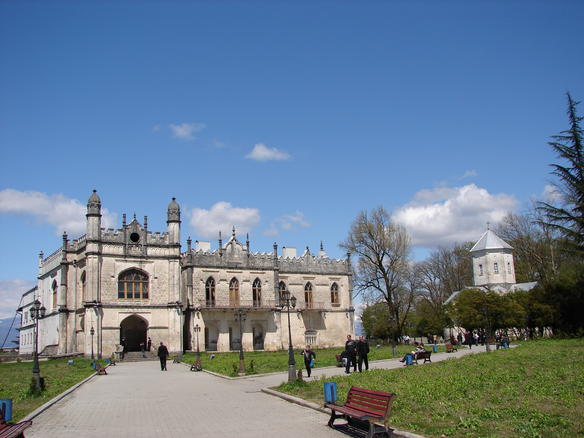
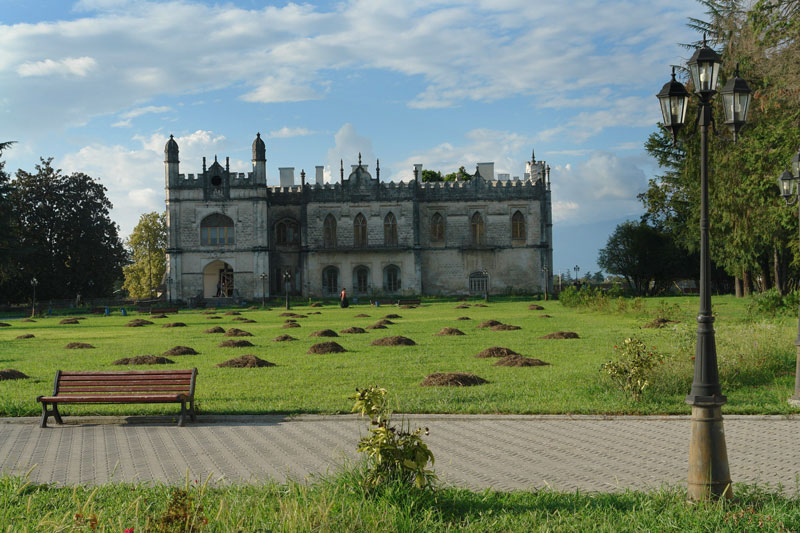
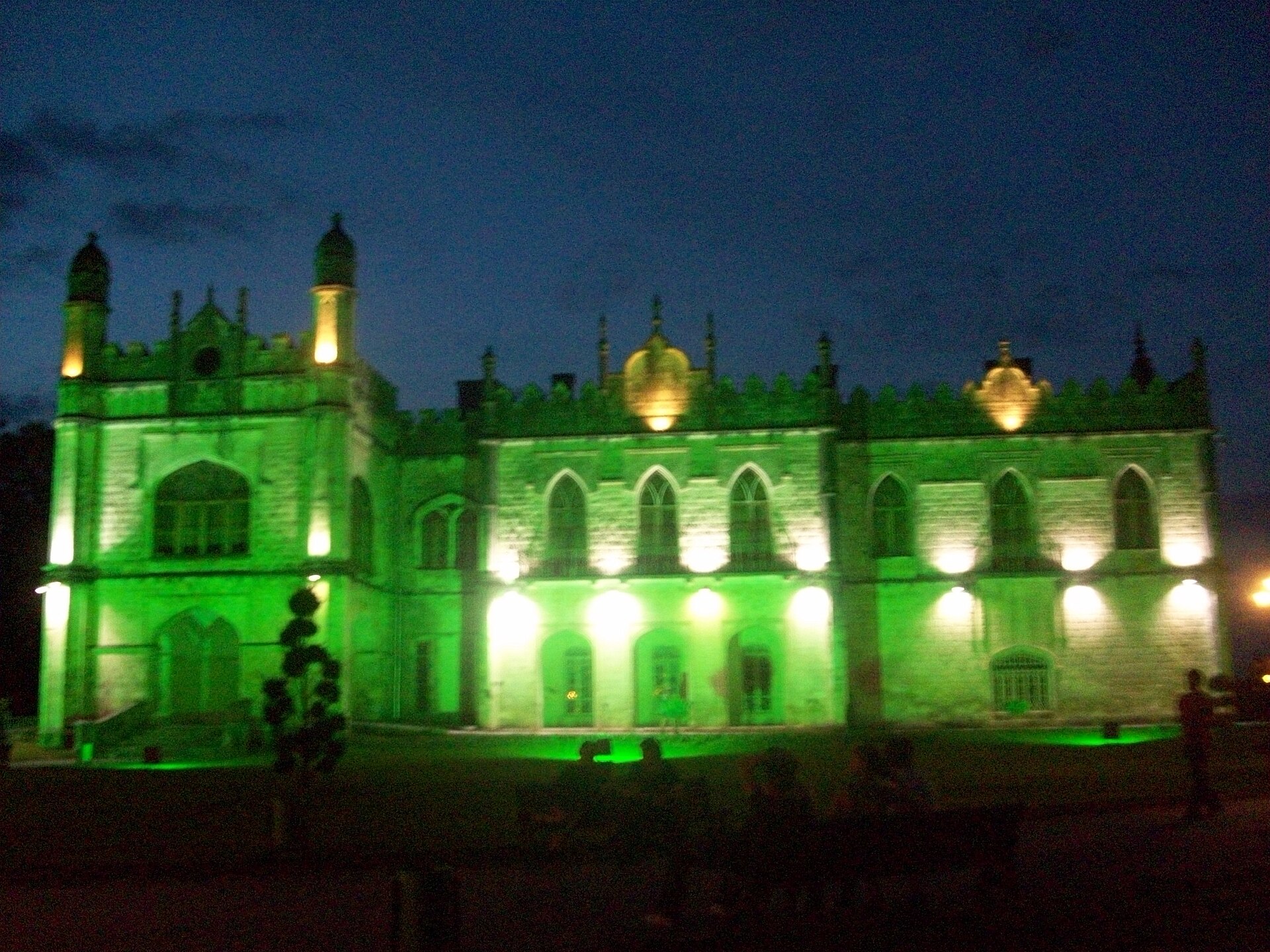
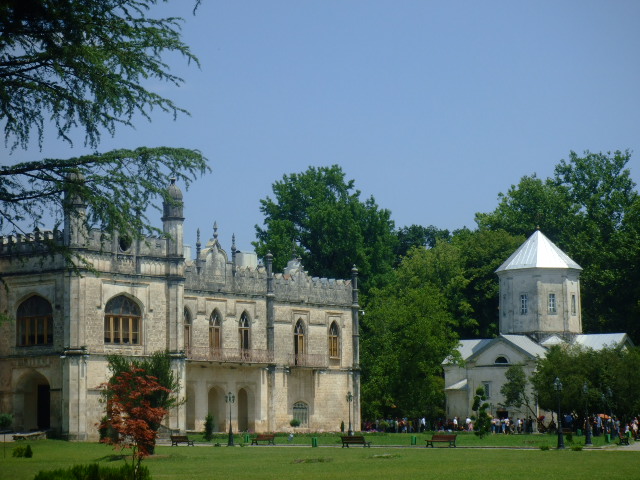
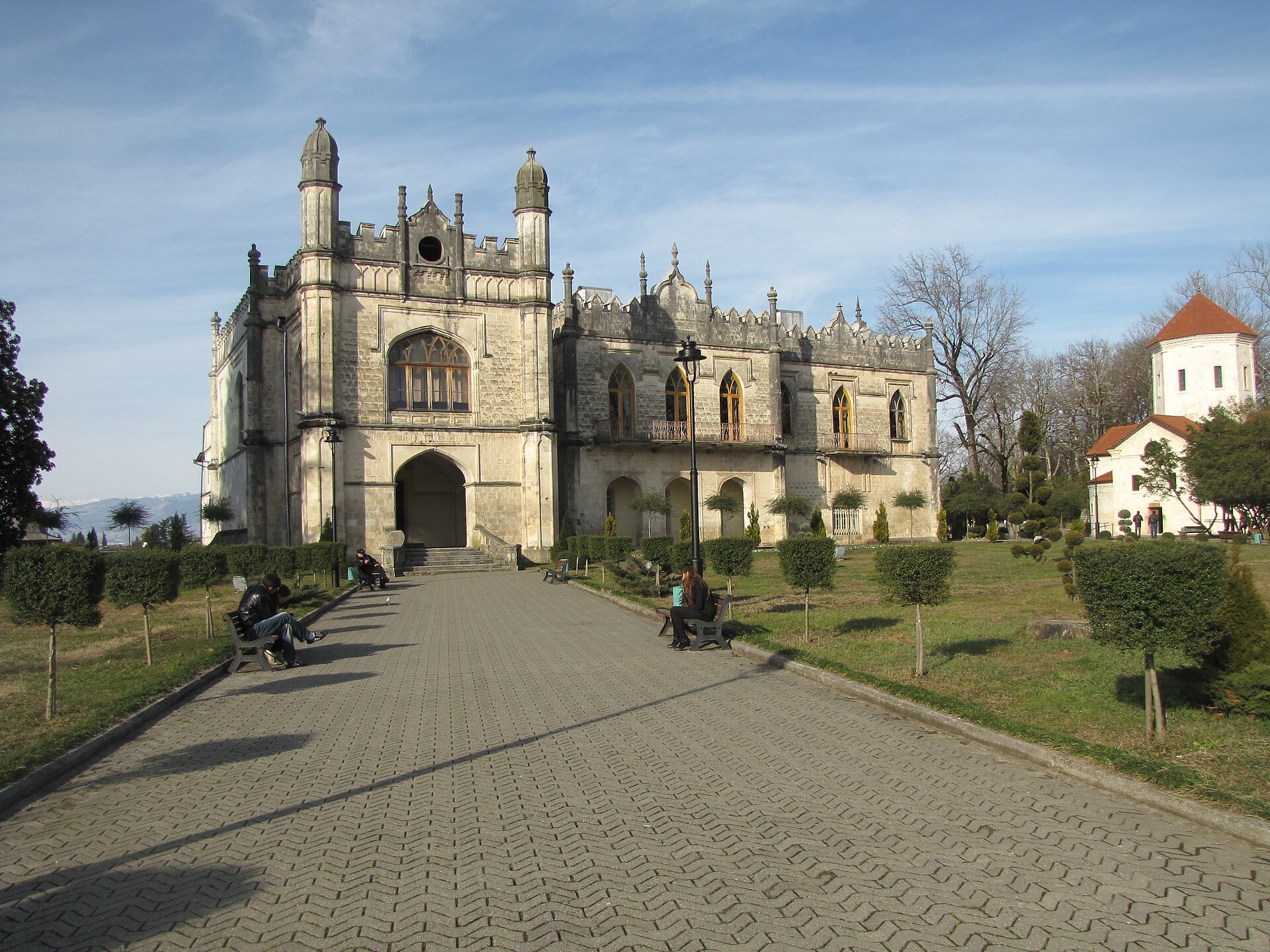
The Dadiani Palace as it stands today is largely a creation of the nineteenth century, an elegant complex reflecting the tastes and connections of a princely family at home in the European world of its age. Rather than a single monolithic building, it comprises more than one palace structure set within extensive grounds, along with associated buildings, forming a princely ensemble.
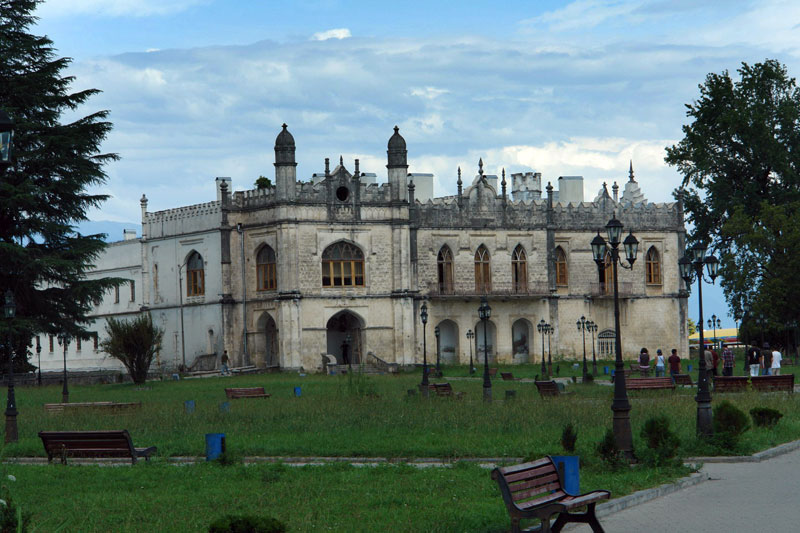
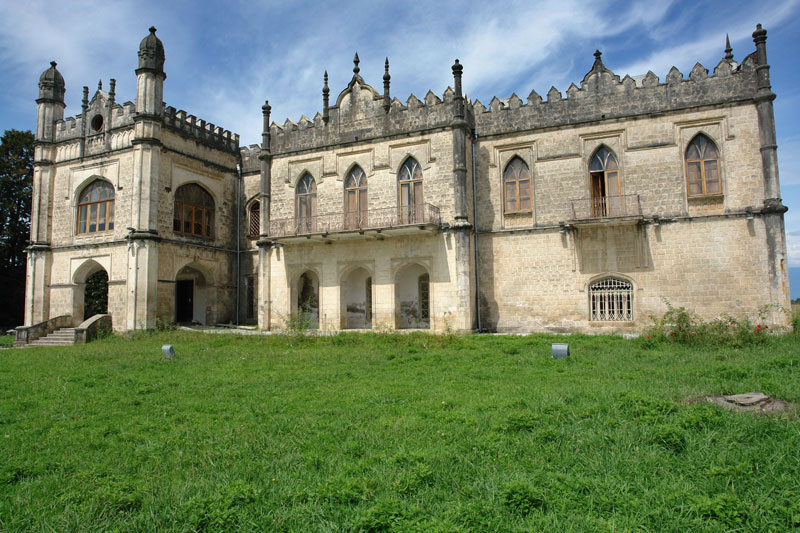
The architecture of the palace blends European influences with local traditions, producing buildings of refined and dignified character. The main palace structures present handsome facades to their gardens, their proportions and detailing speaking of a family that looked to the architectural fashions of Europe while remaining rooted in their Georgian homeland.
The palace was designed not as a fortress but as a comfortable and cultivated residence, a home in which the Dadiani could live in the style appropriate to their rank, entertain guests, display their collections, and pursue the cultural interests that increasingly defined the family. It was, in short, the residence of a modern princely family rather than a medieval stronghold.
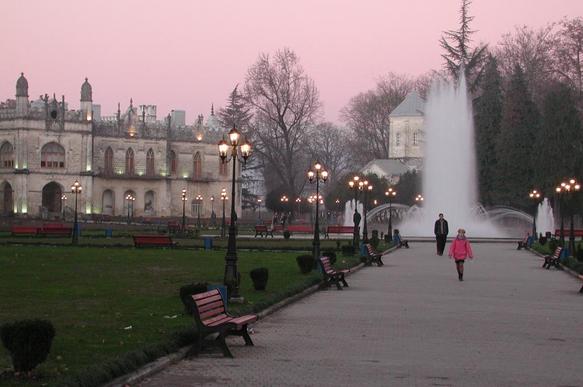
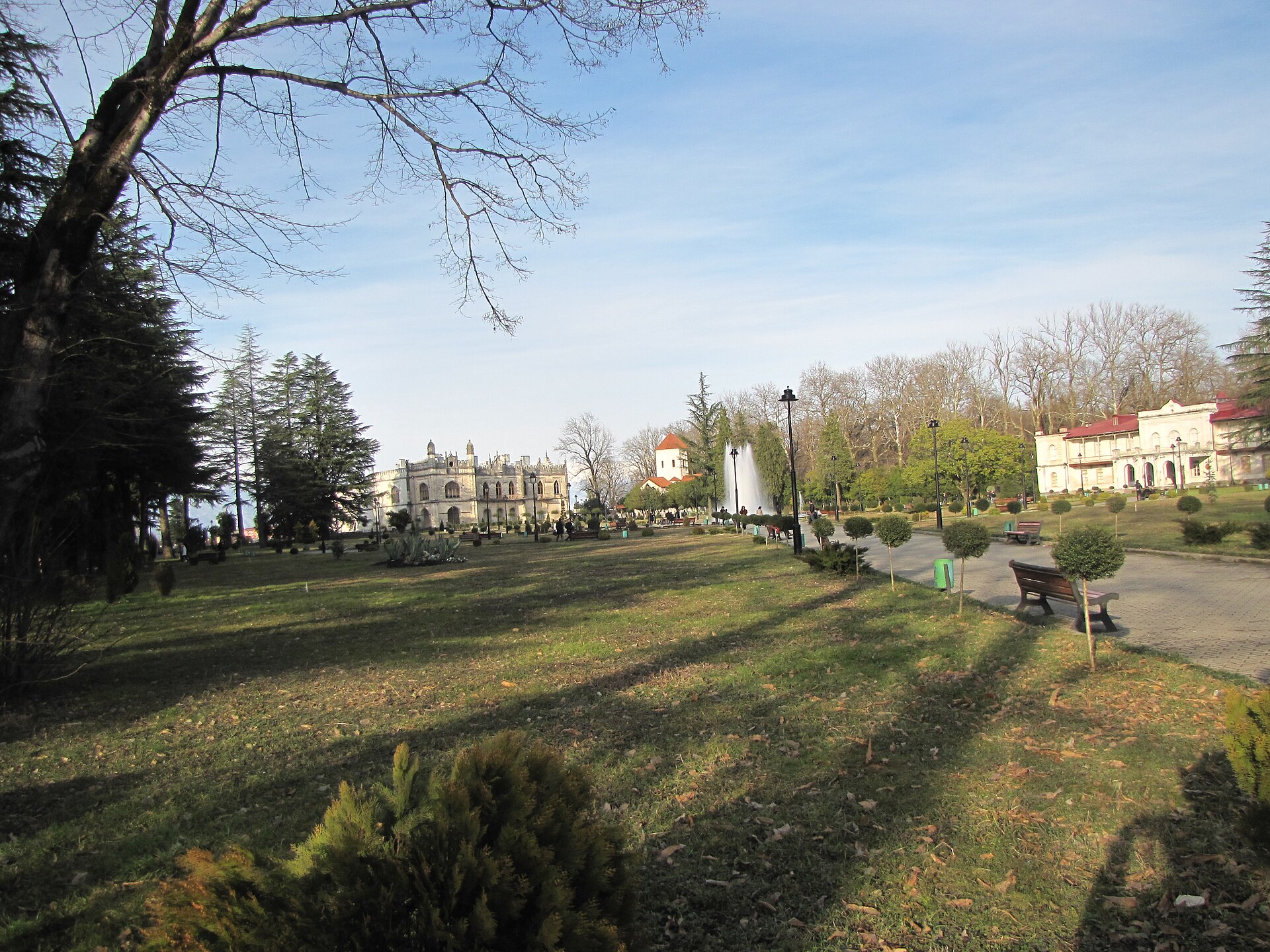
Set within its green grounds in the subtropical climate of western Georgia, the palace enjoys a lush and beautiful setting, and the combination of elegant architecture and verdant gardens gives the whole complex a serene and welcoming atmosphere that continues to charm visitors today.
The choice to build in this comfortable, European-inflected style rather than in the manner of a fortified medieval residence was itself a statement. It announced that the Dadiani were a modern family, secure enough not to need thick walls and defensive towers, and cultivated enough to prefer the graceful architecture of the contemporary European world. The building embodies a whole philosophy of aristocratic life.
The Botanical Garden
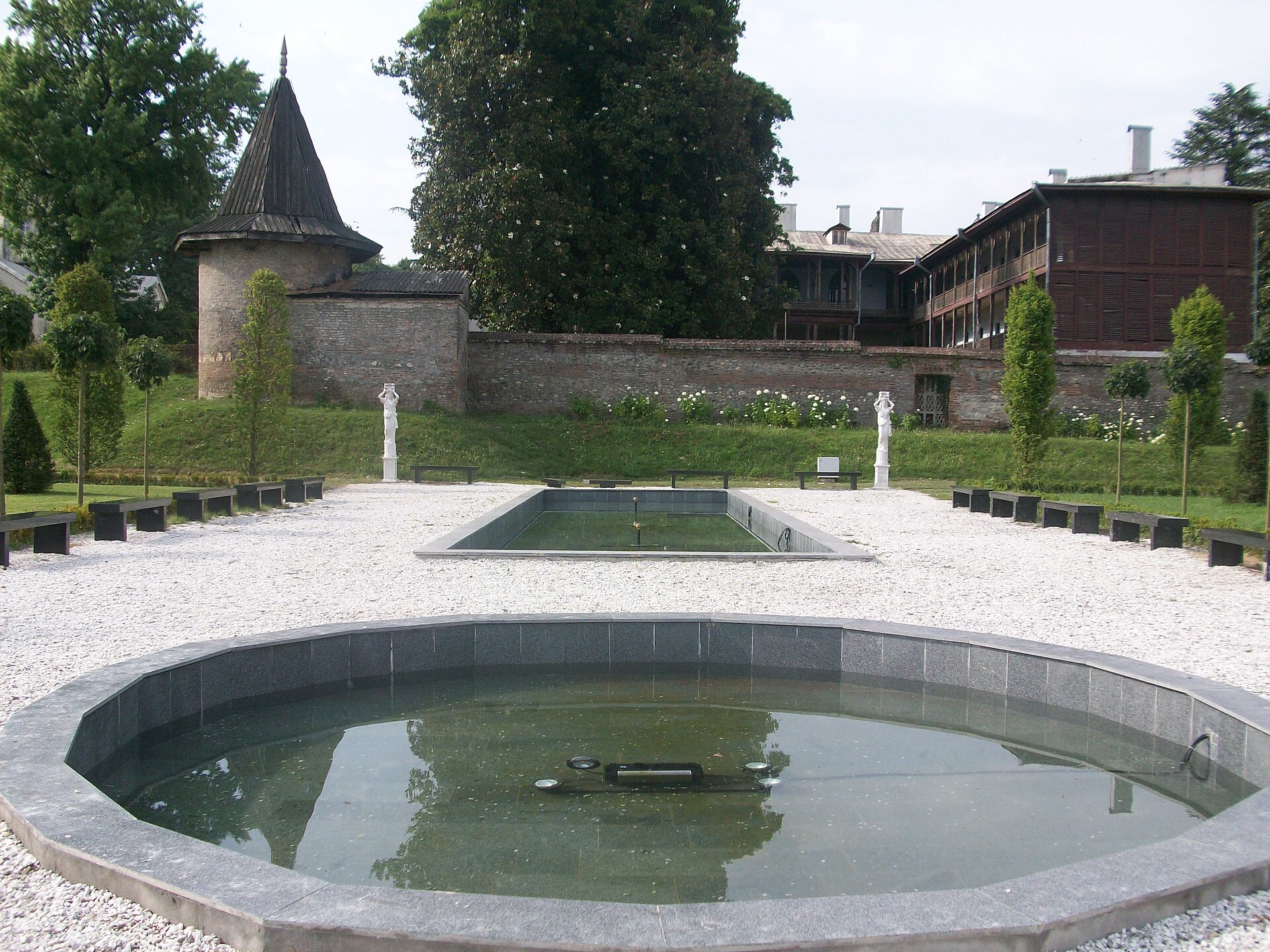
One of the great pleasures of the Dadiani Palace is its setting within a botanical garden, a legacy of the family’s cultivated interests and of the extraordinary fertility of the Mingrelian climate. The subtropical conditions of western Georgia, warm and well-watered, allow a remarkable variety of plants to flourish, and the garden became a showcase of exotic and native species alike.
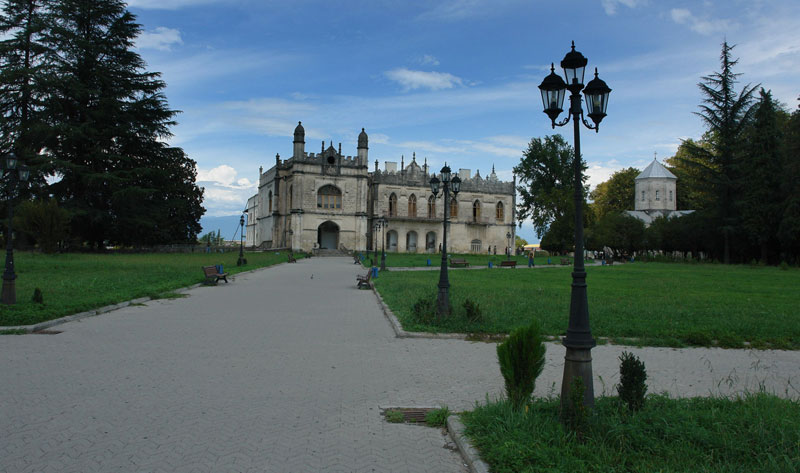
The creation of the garden reflected a nineteenth-century passion for botany and for the collection and cultivation of plants from around the world, an interest the Dadiani shared with cultivated families across Europe. The garden brought together trees, shrubs, and flowers gathered from many lands, transforming the palace grounds into a living collection to complement the treasures held indoors.
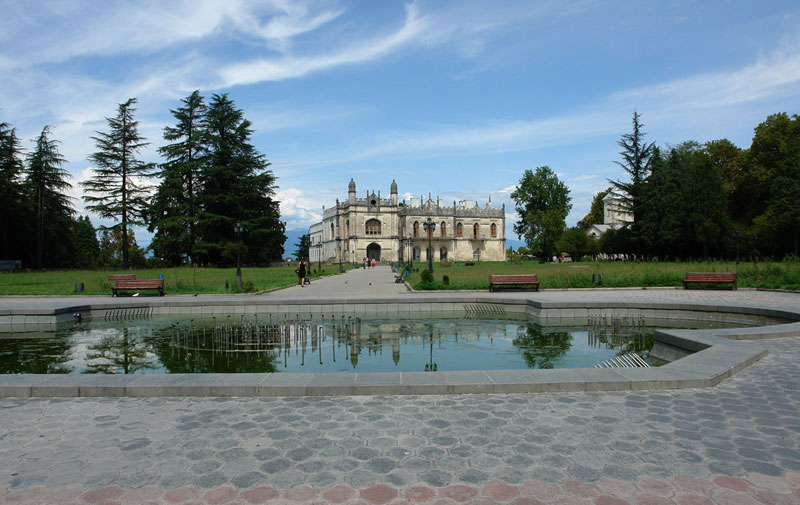
For the visitor, the garden provides a beautiful and tranquil setting for the palace, a green oasis in which to stroll among mature trees and enjoy the mild climate of the region. The interplay of architecture and nature, of the elegant palace buildings amid the lush greenery, is one of the defining characteristics of the whole complex.
The garden also connects the palace to the wider landscape of Mingrelia, a region of exceptional natural richness, and it reminds the visitor that the Dadiani were not only patrons of art and culture but stewards of a fertile and beautiful land in the green heart of western Georgia.
Wandering the garden today, one senses the pleasure the family must have taken in it, the delight of watching rare species from distant lands take root and flourish in the mild Mingrelian air. A botanical garden is a form of collecting as surely as the gathering of paintings or icons, and the Dadiani pursued it with the same passion they brought to the treasures they kept indoors.
The Napoleon Connection
The single most surprising fact about this provincial Georgian palace is its connection to Napoleon Bonaparte, one of the towering figures of European history. This unlikely link came about through marriage, when a member of the Dadiani family married into the Murat family, descendants of Joachim Murat, one of Napoleon’s most famous marshals and the husband of the emperor’s sister.
Through this connection, the Dadiani came into possession of objects associated with the Bonaparte family, and the palace at Zugdidi became the unexpected home of relics of the French emperor. Chief among these is one of the death masks of Napoleon, cast after his death in exile, of which only a small number exist in the world, making the example held at Zugdidi a treasure of international significance.
The presence of such objects in a palace in western Georgia is a vivid illustration of how the great families of Europe were connected across vast distances by ties of marriage and dynasty. A death mask of a French emperor, held in a palace in the Caucasus, is the kind of historical curiosity that captures the imagination and draws visitors from around the world.
The Napoleon connection has become one of the defining features of the palace’s identity, a point of pride and fascination that links this quiet corner of Georgia to one of the most dramatic chapters in the history of Europe, and that gives the collection at Zugdidi a fame far beyond the borders of the region.
It is worth savoring the sheer improbability of the thing. Napoleon died in exile on a remote island in the South Atlantic, and yet one of the death masks made of his features found its way, through the tangled genealogies of European royalty, to a palace in the subtropical lowlands of western Georgia. Few objects better illustrate the strange and unexpected connections that history weaves across the world.
A Museum of Treasures
Beyond the Napoleon relics, the Dadiani Palace houses a collection of extraordinary richness and variety, accumulated by the family over generations and now preserved as one of the most important museum collections in Georgia. The range of objects reflects both the family’s European connections and their deep roots in Georgian culture and religion.
The collection includes European art and decorative objects, furniture, and personal effects that give a vivid sense of the cultivated life of the princely family. Paintings, sculptures, and objets d’art gathered from across the continent fill the rooms, testifying to the taste and the resources of a family fully at home in the artistic world of nineteenth-century Europe.
Equally significant are the Georgian treasures held in the collection, including religious objects of great antiquity and importance. Among these are icons, crosses, and other sacred items that connect the palace to the deep Christian heritage of Georgia, one of the oldest Christian nations in the world, and that make the museum a repository of national as well as family history.
Together these collections make a visit to the Dadiani Palace a journey through several worlds at once, the world of European art and royalty, the world of Georgian faith and tradition, and the world of the Dadiani family itself, all preserved within the elegant rooms of the princely residence.
The scholarly value of the collection is immense. For researchers of Georgian history, of European art, and of the intertwined dynasties of the nineteenth century, the holdings of the Dadiani Palace offer a wealth of material, much of it preserved in the context of the family and residence for which it was gathered, a rare and precious circumstance.
Sacred Treasures of Georgia
Among the most precious holdings of the palace museum are its Georgian religious treasures, objects that speak to the ancient and profound Christian heritage of the nation. Georgia was among the first countries in the world to adopt Christianity as its state religion, and over the centuries it produced a rich tradition of religious art, some of the finest examples of which are preserved at Zugdidi.
The collection includes icons of great age and beauty, worked in precious metals and adorned with gems, as well as crosses and other sacred objects used in the worship of the Georgian Orthodox Church. These items are not merely artistically significant but are objects of deep spiritual meaning, treasured relics of a faith that has been central to Georgian identity for many centuries.
That such treasures came to be held in the Dadiani Palace reflects the role of the princely family as patrons and protectors of the church, a role that great noble houses traditionally played in the religious life of their lands. The preservation of these objects in the family’s residence linked the Dadiani to the sacred as well as the secular history of Georgia.
For visitors, these religious treasures offer a window into a dimension of Georgian culture that is central to the nation’s sense of itself, and they add a note of spiritual depth to a collection otherwise famous for its royal and European connections, reminding us of the ancient faith at the heart of Georgian life.
The safekeeping of such sacred objects also carried a heavy responsibility, for these were not merely artworks but items venerated by the faithful. In preserving them, the Dadiani acted as guardians of a spiritual inheritance that belonged, in a sense, to the whole Georgian people, and their stewardship helped ensure that these treasures survived to be admired and revered today.
A Cultivated Princely Family
The Dadiani who created the palace and its collections were a family of remarkable cultivation, at home in the intellectual and artistic currents of their age. Far from being provincial nobles isolated in a distant corner of the Caucasus, they were connected by marriage, education, and culture to the wider European world, and they brought its influences home to Mingrelia.
The women of the family, in particular, played notable roles in the cultural life of the palace, and the family as a whole devoted itself to the collection of art, the cultivation of the garden, and the patronage of learning and the church. The palace became a center of culture, a place where the treasures of Europe and Georgia were gathered, studied, and enjoyed.
This cultivation is written into every aspect of the palace and its collections, from the European paintings on the walls to the exotic plants in the garden, from the Georgian icons to the relics of Napoleon. The Dadiani created not merely a residence but a cultural institution, one that reflected their wide horizons and their deep sense of their own heritage.
It is this quality that gives the palace its special character, distinguishing it from a mere aristocratic residence and making it a monument to a particular kind of nineteenth-century cultivation, in which an ancient princely family embraced the wider world while cherishing its own traditions.
Visitors often come away from the palace with a sense of having met the family itself, so strongly does the residence bear the imprint of the Dadiani personality. The particular combination of European sophistication, Georgian devotion, and scholarly passion that defined the family is written into every room, making the palace feel less like a museum and more like a home whose owners have only just stepped out.
Survival Through a Turbulent Century
The twentieth century brought enormous upheaval to Georgia and to the Dadiani. The Russian revolution and the establishment of Soviet rule transformed the country, sweeping away the old order of princes and nobles and bringing the property of families like the Dadiani under state control. The palace ceased to be a private residence and entered a new phase of its existence.
Under Soviet rule, the palace and its collections were nationalized and turned into a state museum. This transformation, whatever its political context, had the effect of preserving the collections and opening them to the public, ensuring that the treasures accumulated by the Dadiani were kept together and made accessible rather than dispersed or lost.
The Soviet period was a time of great change and often of hardship for Georgia, but the museum at Zugdidi endured, its staff working to care for the collections through decades of political turbulence. The palace remained a cultural landmark, a place where the heritage of Mingrelia and of Georgia was preserved for future generations.
With the end of the Soviet Union and the restoration of Georgian independence, the palace entered yet another era, this time as a museum in a free Georgia, cherished as part of the national heritage and increasingly recognized as one of the country’s cultural jewels.
There is a certain irony in the fact that the Soviet state, so hostile to the aristocratic world the Dadiani represented, became the custodian of their treasures. Yet the practical result was the preservation of the collection as a unified whole, open to the public, and this survival through the upheavals of the twentieth century is one of the more fortunate outcomes in the troubled cultural history of the region.
The Dadiani Palace Museum Today
Today the Dadiani Palace functions as a museum, one of the most important and best loved in Georgia, welcoming visitors who come to see its remarkable collections and to experience the atmosphere of the princely residence. The museum presents the palace’s treasures in the very rooms where the Dadiani once lived, giving visitors a vivid sense of the family and their world.
The museum’s displays span the full range of the collection, from the Napoleon death mask and the European art to the Georgian religious treasures and the objects associated with the Dadiani family. Careful curation helps visitors to understand the significance of what they are seeing and to appreciate the many strands of history that come together in this one remarkable place.
Efforts to conserve and study the collections continue, ensuring that these treasures are properly cared for and that our understanding of them deepens over time. The museum also plays an important role in the cultural life of Zugdidi and of Mingrelia, serving as a focus for regional identity and pride and as a draw for visitors to the region.
For the traveler, the museum offers an experience unlike any other in Georgia, a chance to encounter treasures of European and Georgian history in the elegant setting of a princely palace amid a subtropical garden, and to discover a corner of the Caucasus whose connections reach all the way to the courts of imperial Europe.
The museum has also embraced its role in the wider cultural tourism of Georgia, drawing visitors who might otherwise never venture into Mingrelia and introducing them to the distinctive heritage of the west of the country. In doing so it helps to spread the benefits of tourism beyond the well-worn routes and to keep the story of the Dadiani and their principality alive in the national imagination.
A Bridge Between Worlds
The Dadiani Palace occupies a unique place in the cultural landscape of Georgia and of the wider Caucasus. As the residence of one of the great Georgian princely houses, it embodies the history of Mingrelia and of the Georgian nobility, while its collections connect it to the artistic and dynastic worlds of Europe in a way that few other monuments in the region can match.
The palace serves as a kind of bridge between worlds, linking Georgia to Europe, the Caucasus to the courts of the west, and the ancient Christian traditions of the nation to the modern cultural currents of the nineteenth century. This quality of connection, of a place where distant worlds meet, is what gives the palace its special fascination.
For Georgians, the palace is a source of pride, a reminder of the sophistication and international standing of their princely families and of the depth of their national heritage. For visitors from abroad, it is a place of surprising discoveries, a provincial Georgian palace that turns out to hold treasures of world significance.
In this way the Dadiani Palace continues to tell its story to all who visit, a story of an ancient princely house, of a fertile and beautiful land, and of the remarkable connections that bound a corner of the Caucasus to the great currents of European history.
Perhaps that is the deepest lesson of Zugdidi, that history is not confined to the famous capitals and celebrated monuments, but hides in unexpected places, waiting to surprise the traveler who is willing to look. A death mask of an emperor, an ancient icon, a garden of exotic trees, all gathered in one quiet Georgian town, remind us how wide and interconnected the world has always been.
See the Palace for Yourself
The story of the Dadiani Palace, with its princely family, its European connections, and its extraordinary collection, is one that comes alive when you can see the palace and its treasures for yourself. A video tour conveys the atmosphere of the place, the elegance of the buildings, the lushness of the garden, and the richness of the collections in a way that words alone cannot.
The short film below offers an introduction to the palace, the Dadiani dynasty, and the region of Mingrelia to which they belonged, helping to set the palace in its historical and cultural context. It is an ideal companion to everything you have read here, giving you a feel for this remarkable place before you visit in person.
As you watch, consider the extraordinary journey that brought a death mask of Napoleon and treasures of European art to a palace in western Georgia, and the deep roots of the Dadiani family in the ancient land of Mingrelia. Then, when you visit Zugdidi, you will recognize the palace not just as a pretty building but as a meeting point of worlds, a treasure house in the green heart of the Caucasus.
Visiting Zugdidi Today
For the modern traveler, the Dadiani Palace is one of the essential sights of western Georgia and a highlight of any journey through the region of Mingrelia. Located in the town of Zugdidi, the palace and its museum are easily visited, and they reward the traveler willing to venture beyond the more familiar destinations of eastern Georgia into the lush and distinctive west of the country.
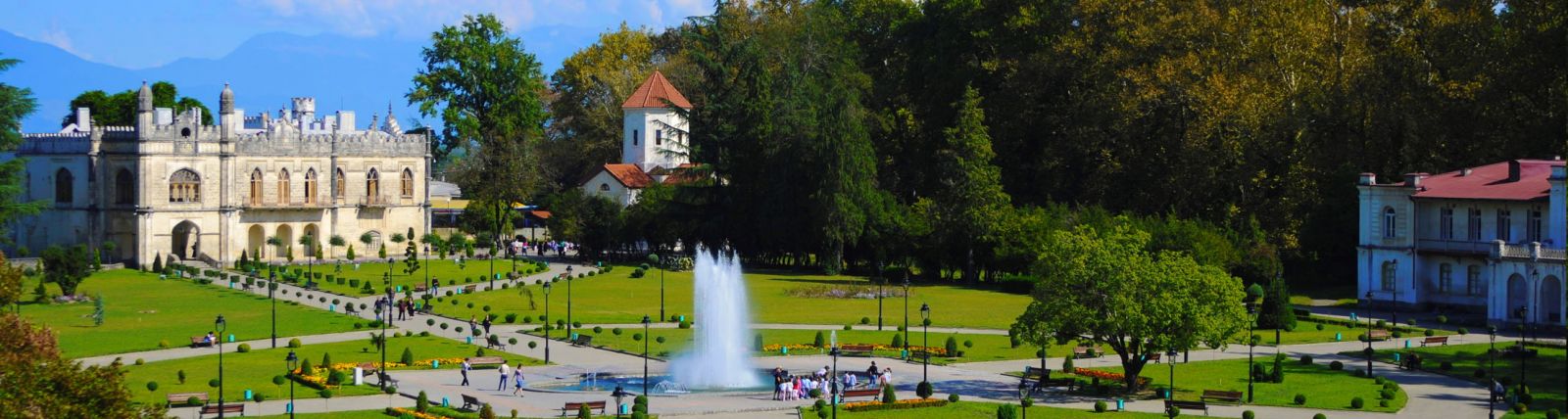
The museum is open to visitors, who can explore the palace rooms, see the famous collections including the Napoleon death mask and the Georgian religious treasures, and stroll in the botanical garden that surrounds the buildings. Allowing enough time to appreciate both the collections and the garden makes for a rich and rewarding visit.
Zugdidi lies in the west of Georgia, within reach of the Black Sea coast and serving as a gateway to the mountainous region of Svaneti to the north, so a visit to the palace can be combined with wider exploration of this beautiful and varied part of the country. As always, it is wise to check current opening arrangements before you travel.
However you approach it, the Dadiani Palace rewards the visitor who understands its story. This is not merely an elegant provincial residence but the treasure house of an ancient princely dynasty, a place where the history of Georgia meets the history of Europe, and a monument that continues to embody the culture, faith, and pride of Mingrelia and of the wider Georgian nation.
Palaces Nearby
If the princely palace of Mingrelia has drawn you into the world of the Caucasus and its courts, two more royal residences of the region make natural companions to a visit here, each telling the story of a different people and dynasty.
- The Palace of the Shirvanshahs in Baku — the medieval stone residence of the rulers of Shirvan, crowning the walled old city above the Caspian.
- The Summer Palace of the Sheki Khans — the dazzling painted pavilion of a mountain khanate, famed for its stained glass and frescoes.
You May Like
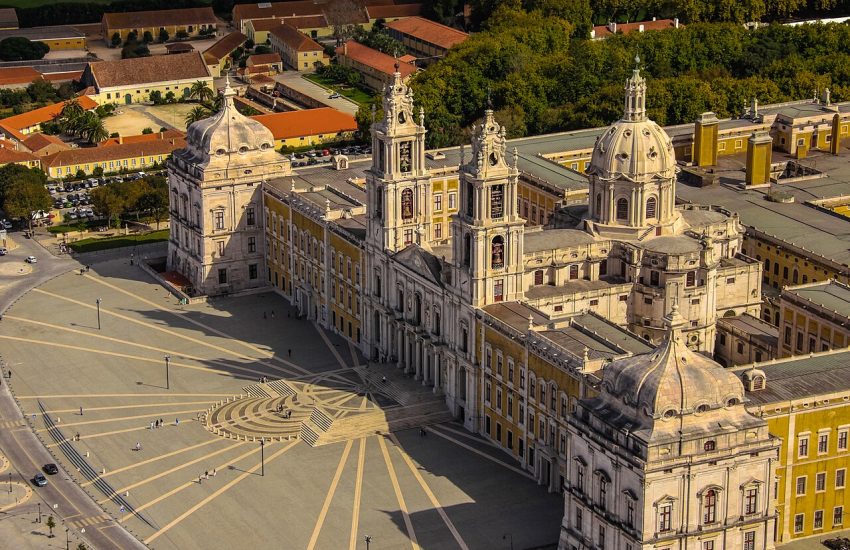
Mafra, the Palace a King Built From a Vow