Its known date is BC. There are many settlement ruins from the ancient Bronze Age Hittite and Scythian civilizations in Amasya and its surroundings, dating back to 2500 BC.
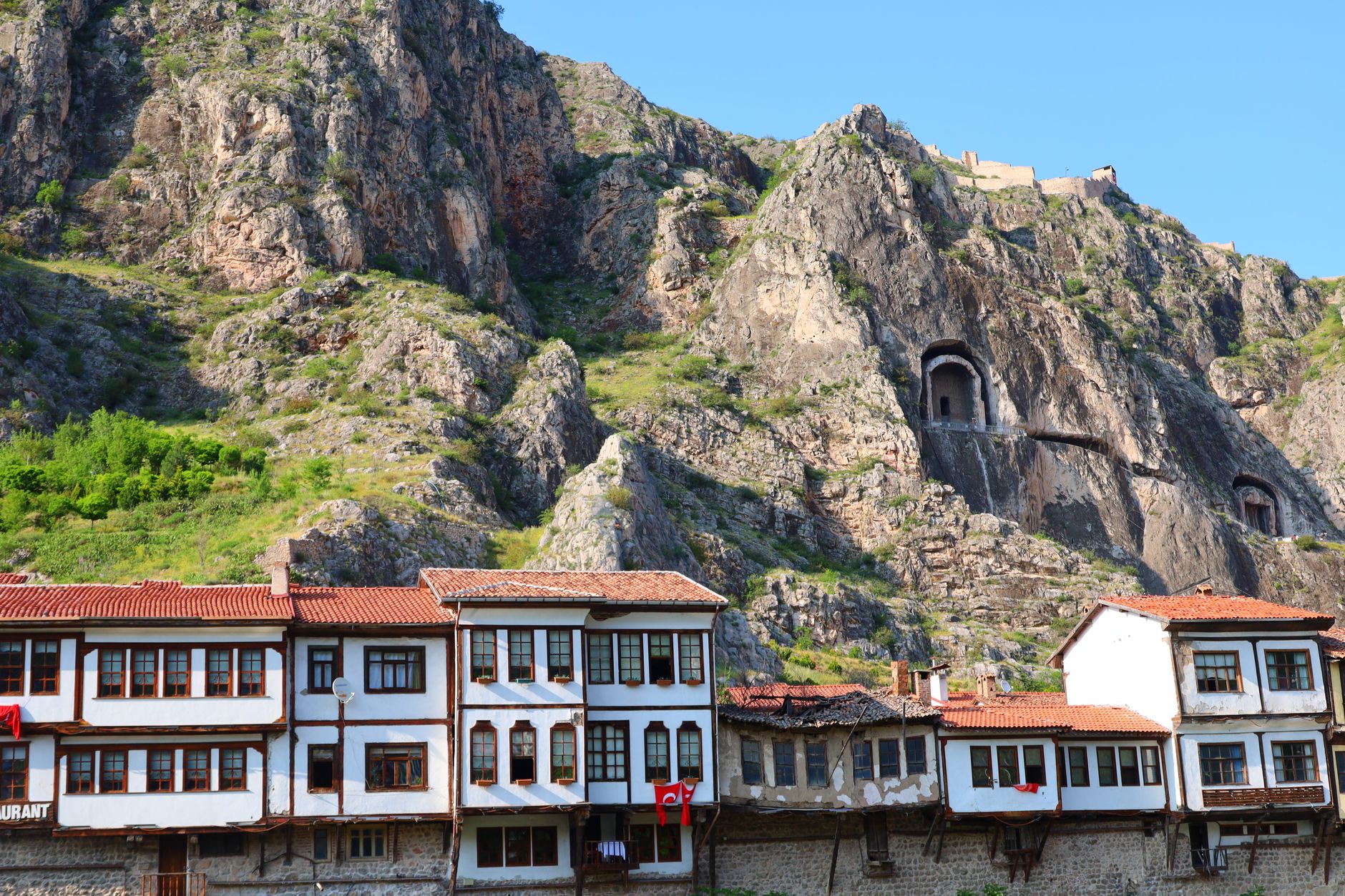
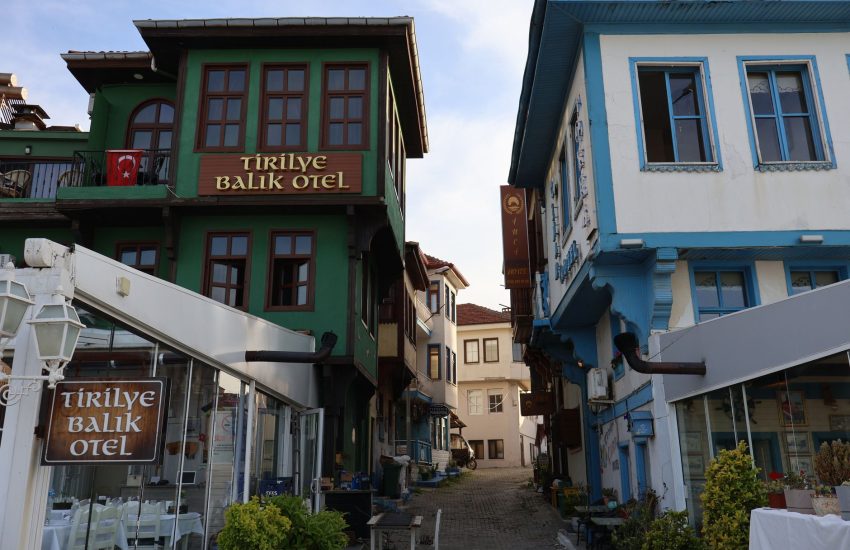
Its known date is BC. There are many settlement ruins from the ancient Bronze Age Hittite and Scythian civilizations in Amasya and its surroundings, dating back to 2500 BC. Another feature of this historical city, which was the city of sultans and princes during the Ottoman Empire, is its historical mansions and beautiful livable houses. The most beautiful panorama of the houses can be seen on Yalıboyu Street, located on the Yeşilırmak valley.
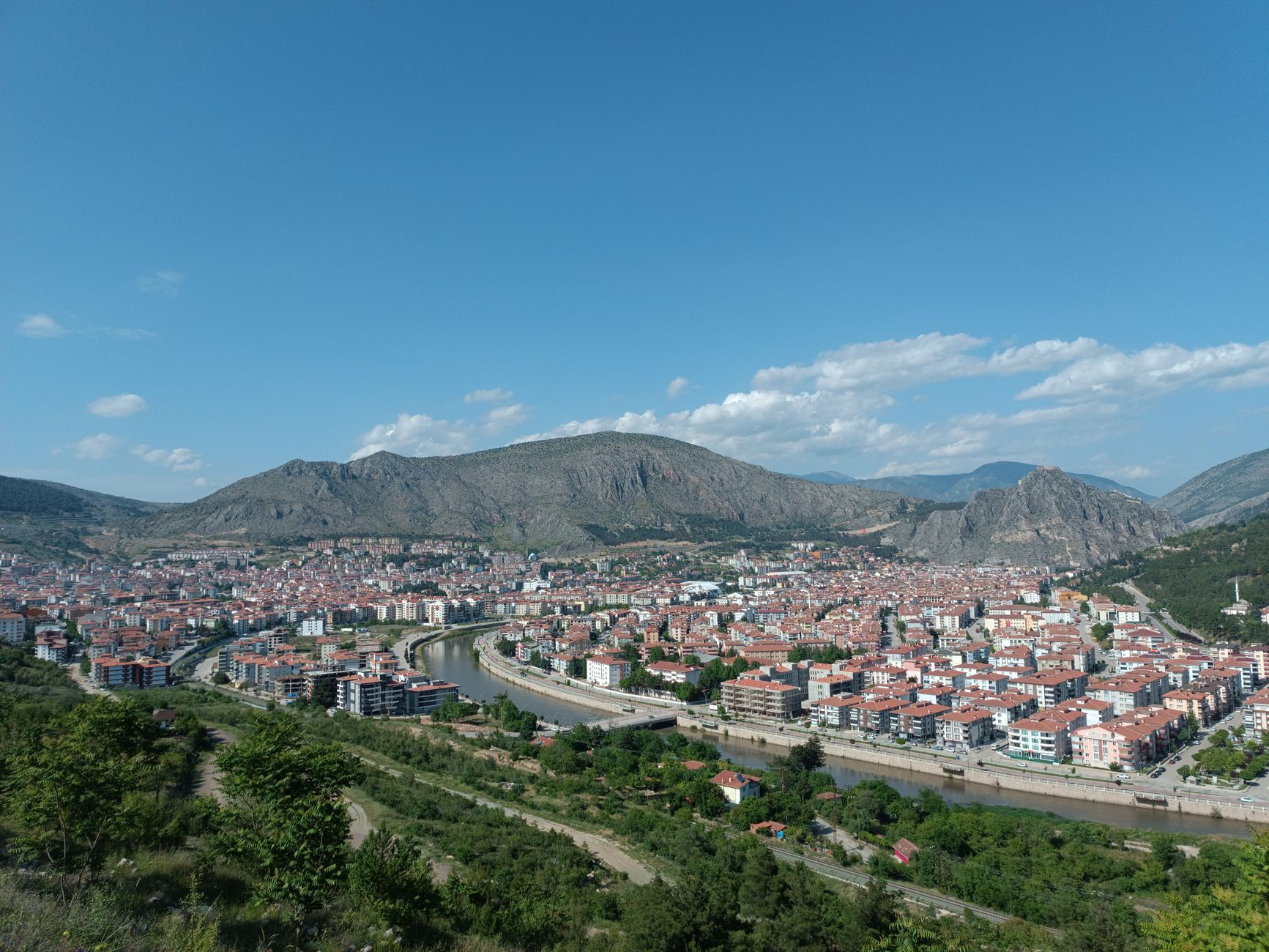
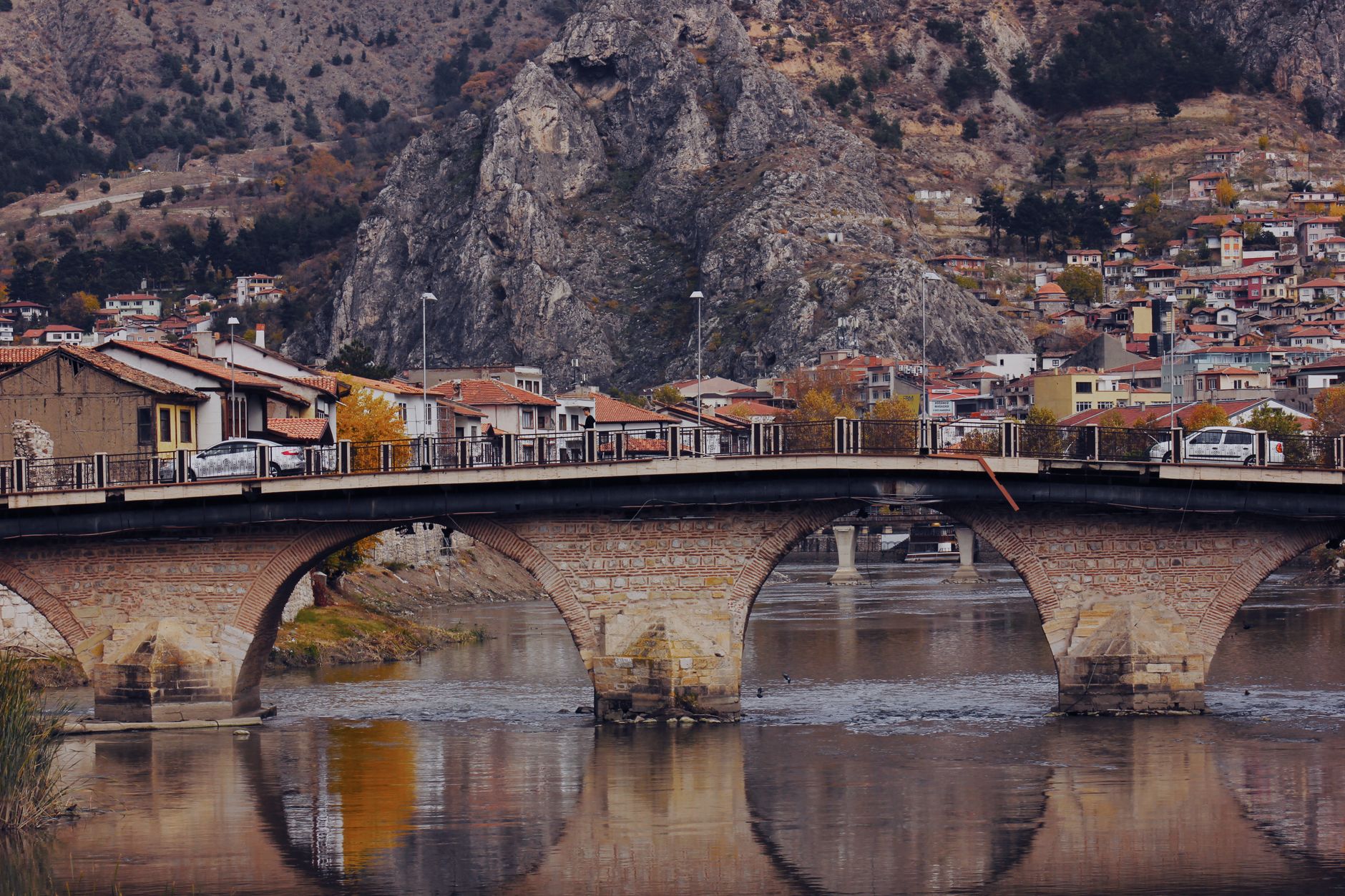
The first thing you notice at the entrance of Amasya is that the city is surrounded by steep cliffs. While Yeşilırmak, which turns blue after the rainy season, divides the city into two and flows non-stop through the middle; It brings movement and scenic activity to the city, you cannot sit idle. With a very enjoyable walk, you can see the historical texture in a short time and come across many objects and landscapes that you can take videos, photographs or even paint.
Houses with bay windows, which attract attention with their sofas, rooms and interior equipment, look like models. In fact, it’s almost like a theater decoration. The most famous of them is the “Hazeranlar Mansion” located on the banks of Yeşilırmak. The objects in the mansion, which is visited as a museum, shed light on the period and reflect it to the present day. The historical and aesthetic mansion, whose ground floor serves as an exhibition hall, dates back to 1865. The entrance of the mansion is located on the side of Kralkaya tombs.
Bimarhane was built between 1308-1309 and is used as an art center today. In Bimarhane, where courses and lectures were given and music studies were held, mental patients were once treated with water and the sound of music. Those who enter through the Crown Gate, one of the most beautiful examples of stone carving, encounter arched rooms opening to a pristine courtyard.15. Sultan II. century. Bayezid Complex, dated 1485.
The mosque is quite impressive with its garden and fountain. Büyük Ağa Madrasa has a pleasing architecture with its octagonal courtyard, dome and chimneys. Currently, there are private teaching institutions where Quran courses are given.
If you leave Amasya, where there are many other worth-seeing works such as Amasya Castle, rock tombs, waterways, Gökmedrese, bridges, station building, tombs, Burmalı minaret, Mehmet Pasha and Gümüşlü mosques, and head towards Merzifon, this time you will be greeted by the statue of Kara Mustafa Pasha on his rearing horse at the entrance of the city via a wide and beautiful road.
If you enter the city fabric a little further and follow the sign showing the Kara Mustafa Pasha Mosque on the one-way road, you will reach the famous mosque built in 1666. You cannot take your eyes off the interior ceiling decorations of the dome, where you can sit and watch the fountain in the courtyard. Next to the fountain, there are two giant monumental plane trees whose trunks defy the years. The perimeters of the plane trees, which are worth seeing, integrated with the mosque and the fountain, reach 7 and 8.5 meters.
Although some of the trunks that resemble cave entrances have begun to empty, plane trees continue their lives on their majestic trunks. During your visit to the historical stone bazaar, passing through the arched gate of the mosque courtyard, you may find yourself in a bazaar with many shops where items you have never thought of are sold.
During the Merzifon tour, another monument that you will definitely see from some angle is the clock tower. Ziya Pasha was built in 1866, on the monumental entrance gate of Merzifon Çelebi Mehmet Madrasa. The three-layered body of the round clock also has a balcony. The clock in the octagonal clock room, consisting of Latin letters, continues to operate.
The most important feature that distinguishes it from other watches is that it is a tower clock that works with a weight system.
“Mirror Lake” in Amasya: Borabay Picnic tables scattered on the edge of the water and in the forest… Rest houses at intervals, stoves to light a fire, a huge restaurant with a garden, a long narrow pedestrian bridge in front, a kiosk where needs can be met, and springs gushing from everywhere… Fountains with pleasant, soft water… Oaks, acorns, hornbeams and elms around it, whose images are reflected on the surface… Borabay I also gave the lake a name: Mirror Lake. When evening falls, horizontal rays create different effects.
The shadow lengthens, the noble lights turn into dark yellow and begin to show themselves, and immediately there is a recession. It was at that time that I entered Amasya. My goal was to capture Borabay in these last lights before sunset. I went tangent to the city and used the Erzincan road, and turned to the Ladik road, which turns left before entering Taşova at the 45th km. As you ascend the ramp, turn left again, another ramp and asphalt 5 km inland. I slowly passed through the village and threw myself into Borabay.
The sun is at its peak and it looks like it’s saying 10 minutes left for me to take a photo. I’m halfway around the lake, no leaves are moving, no one is there except the officer. The lake surface is like a mirror, a boat is tied to the shore so that anyone can rent it and wander around. There are trees in the water, half up to the waist, it is saturated with water. On the beach, there are picnic tables in the water so that people can put their feet in the water, relax, eat and have a picnic.
Others are scattered throughout the forest. Rest houses are spaced apart, stoves to light a fire, a huge restaurant with a garden, a long narrow pedestrian bridge in front of it, a kiosk where needs can be met, and springs gushing from everywhere… Fountains with pleasant, soft water… I also gave Borabay a name: Mirror Lake.
There are mirror carp and catfish in the lake. You are also allowed to fish for free for fun. There are 8-10 types of trees around Borabay, the brightly shining “Mirror Lake” measuring 900×300 meters, and their reflections on its surface. The first ones that catch the eye are oak, acorn, pine, hornbeam, elm and comb. Supposedly it is forbidden, but you can also enter the lake for swimming purposes. The deepest part of the crater lake, which is fed by spring waters from the bottom, is 30 meters.
First, accompanied by the chorus of birds bidding farewell to the sun, I enjoyed being 63 km away from Amasya and 2061 meters above Akdağ, 2 km above Borabay village, in clean air, in an environment free of visual and auditory pollution, and so far from city life.
I returned to Amasya, leaving my dream of parking by the lake and having a picnic or pulling the car near the rest houses and staying the night listening to music in a color harmony consisting of shades of green, yellow and blue, until the next time…
Amasya Pictures
Amasya Hotel Pension Accommodations
Where is Amasya?
You May Like
Amasya Hotel Pension Accommodations