It is 60 km from Zonguldak city center in the inner parts of the Western Black Sea Region. Devrek District, located in the southeast, is famous for its walking sticks. The statue showing cane making and the giant cane, the symbol of the district, located in Cumhuriyet Square in the district center, welcome visitors.
The most important river of the district originates from the Abant Mountains and continues under the name Büyüksu. Within the borders of the district, the country’s richest forests, coniferous pine trees, broad-leaved pine and oak trees, display magnificent beauties. In Devrek, whose ancestor’s profession is walking stick making, the tree turns from being a tree into a work of art with the skills of the masters.
Walking sticks are in great demand, especially from abroad. They are ordered by many statesmen.
Devrek canes
Former cane maker Mıntıka Çelebi used to make her world-renowned canes by hand on a floor lathe. He would rotate and round the dogwood stick, which he had pinched with his feet, under a sharp wood knife at one end, and embroider various motifs such as snakes with a rasp. The most popular snake relief was inspired by the cane under the British commander’s arm during the Egyptian war.
They made motifs and ornaments on the cranberry tree by coloring it with vitriol, heating it with wire, and applying moxibustion. They polished it with shellac and attached a buffalo horn handle to the palm part. It was very popular… Master Latif Küçükler, famous for his handmade canes, said, “A good cane can be produced within 1-10 days. If I don’t like what I did, if I don’t feel comfortable with it, I will hit the cane with a wedge and break it!” he says. There are braided, spiral, snake, pyramid and gnarled body shapes and motifs.
The best quality is the “shepherd’s notch” walking stick. Those who are interested would pay between 8-40 million. There are also those with wolf, horse, eagle heads, hooks, knobs and orthopedic handles. They say the powerful animal heads provide psychological power to the user, and the snake motif was chosen because it completely fills the cane. Rüştü Çelebi, who continues his father’s job, said: “A walking stick lives for 150 years, it must be cut while water is falling on the tree.
The tree is rested, we drain the water, we heat it and straighten it in the oven, and then it is processed. Dogwood branches are not used in the furniture industry, they are densely textured and not suitable for burning. Since the dogwood tree bears fruit, it needs to be pruned, it is waste material. We make the handle from buffalo horn and put a bracelet on the shoe part from the leg bone left over from the restaurant. In this way, we can bring garbage into the economy with the Devrek cane…” he says.
The thick and heavy walking stick tires the arm and causes pain in the biceps. A thin cane was preferred and was used to ensure balance and harmonious walking of the person rather than carrying it.
You May Like
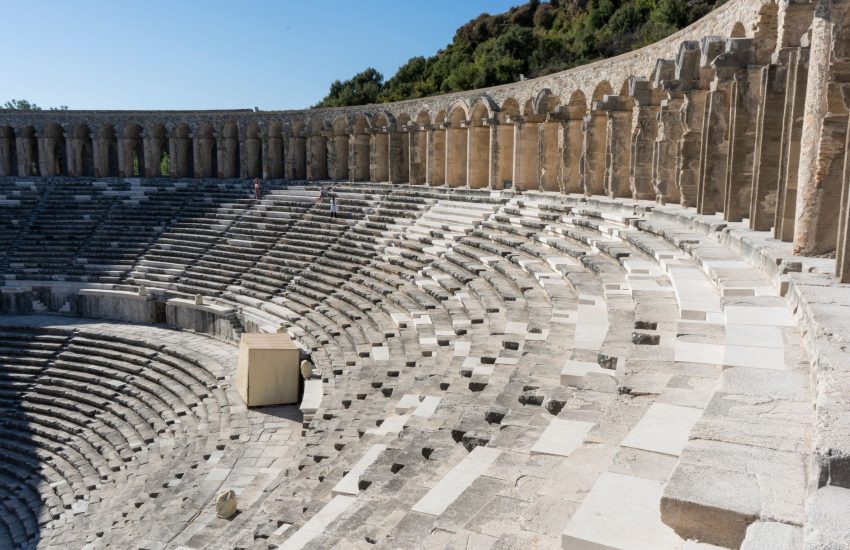
Aspendos Ancient Theater Travel Guide