Kayaköy is a unique stop in the chain of civilizations formed within the tunnel of time, where the wild Taurus Mountains glide from the inaccessible peaks and meet the foamy dark blue waters of the Mediterranean. This village of approximately 3500 houses, whose streets were once filled with uncivil children’s voices, has been experiencing sad loneliness and abandonment since 1922.
This little-known town of Fethiye district, 130 km away from Mugla, but recently tried to be popularized by the Chamber of Architects, can be reached in two ways. It is a 7-kilometer forest road that goes southwards behind Fethiye Castle. The other one is the 4-kilometer road that continues from Hisarönü Village on the way from Fethiye to Ölüdeniz.
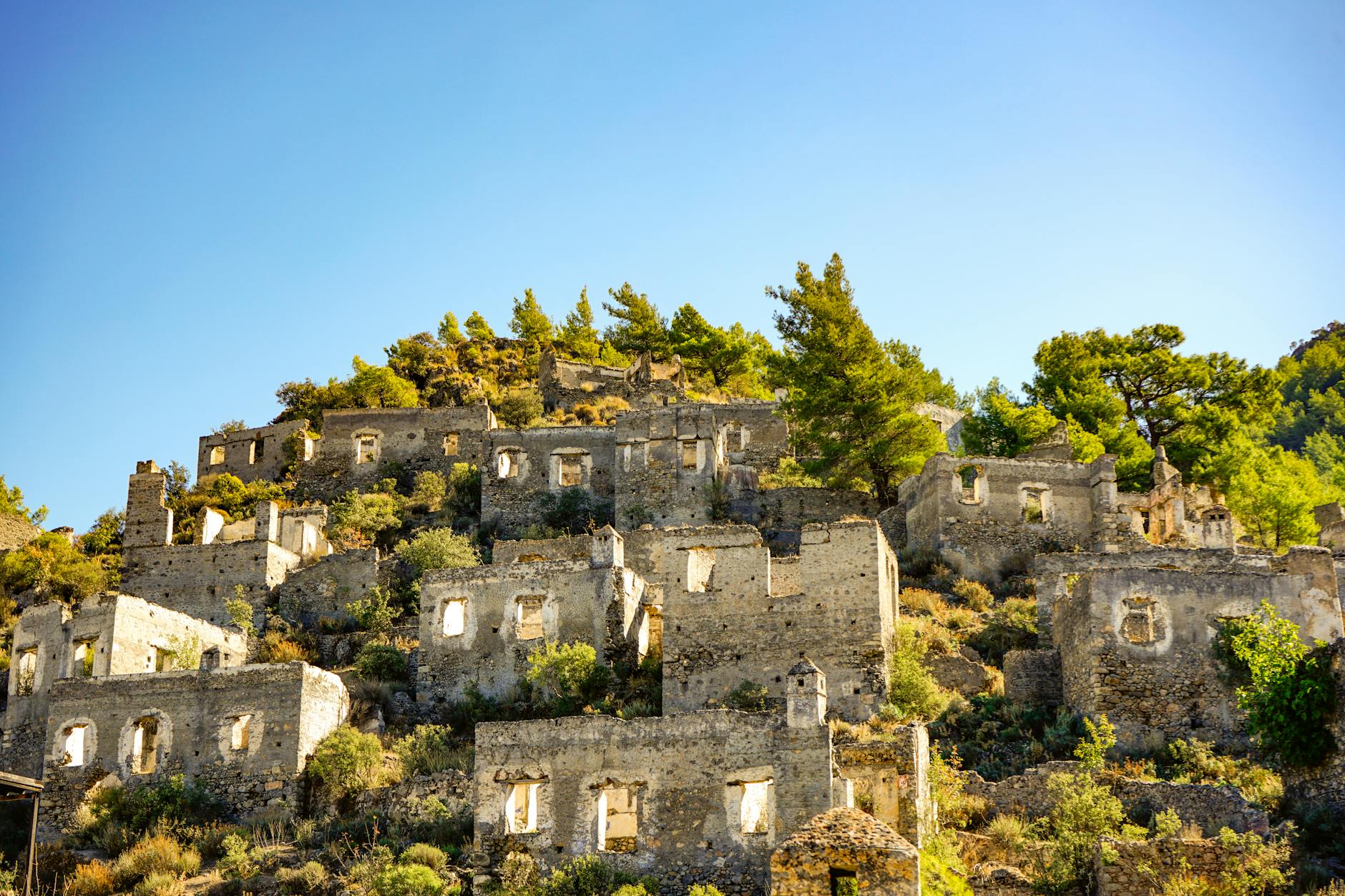
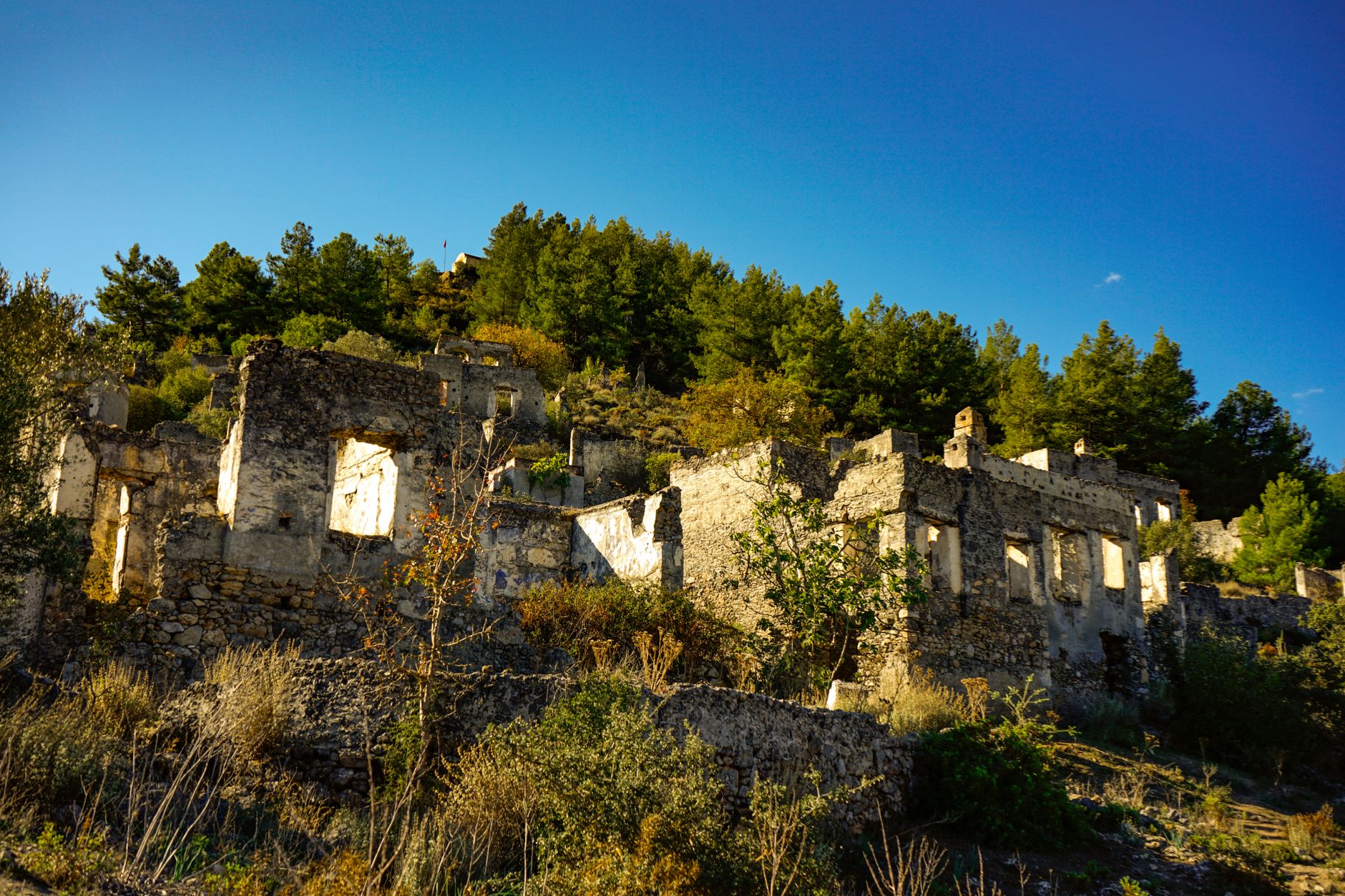
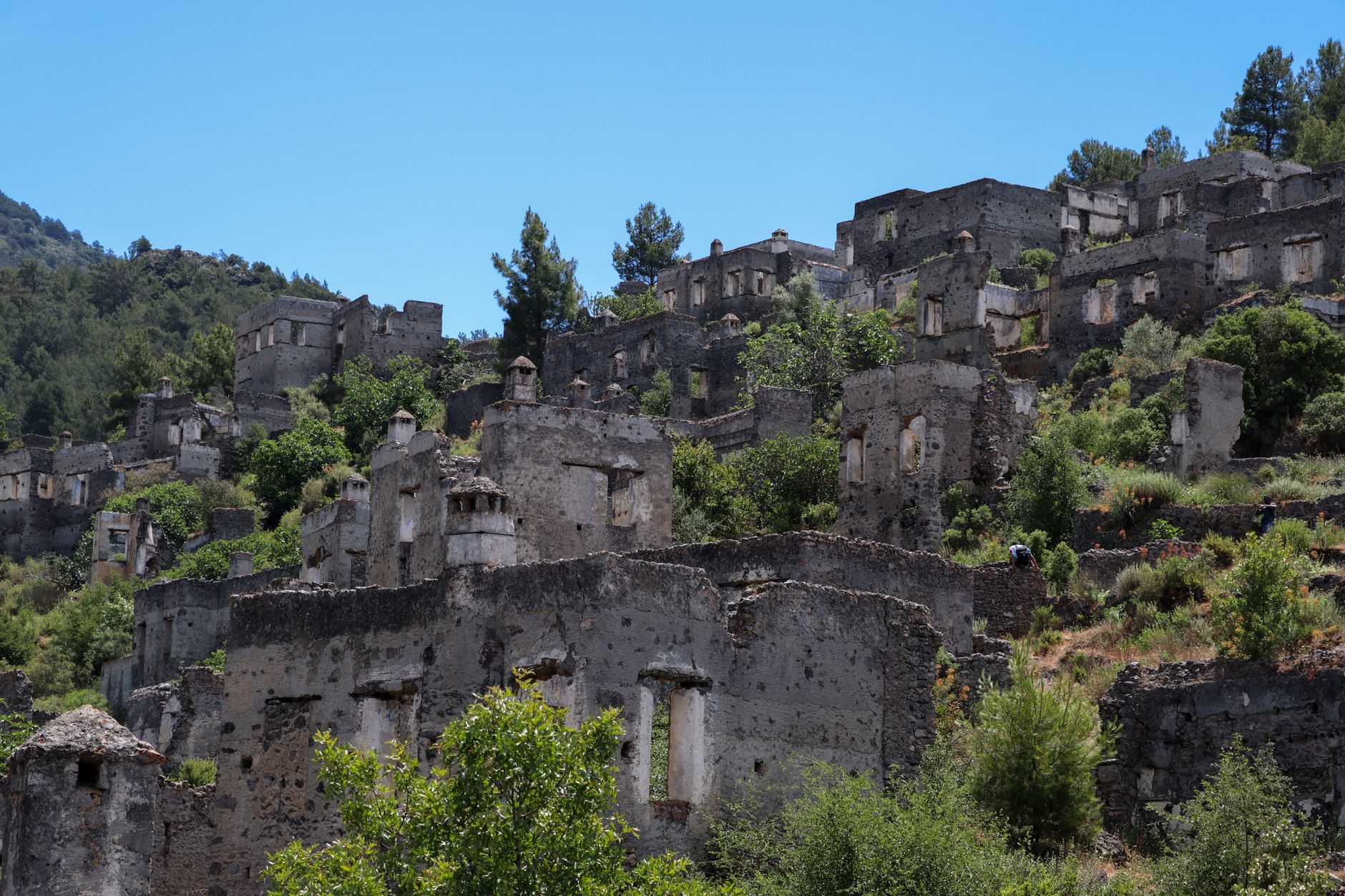
When you reach the steep slope at the end of the road, you will be greeted by the roofless and shattered stone houses of Kayaköy. These houses, some of which were destroyed by nature and some by human hands, seem to carry the silence of years of waiting.
Kayaköy, which was founded on the ruins of the Lycian civilization by the Greeks living in the region in the 11th century according to some sources and in the 14th century according to some sources, has witnessed two major earthquakes since its foundation. The first of these earthquakes occurred in 1856 and the second in 1957.
Kayaköy’s stone houses and churches, which managed to survive both earthquakes, temporarily hosted the people of Fethiye, who were left homeless as a result of the earthquake in 1856.
When the architectural structures of Kayaköy, formerly known as Lévissi, are examined, it is observed that this small town had a rich cultural and economic history until the 20th century. Kayaköy bears the traces of a rich cultural heritage with nearly 3500 stone houses, 2 large churches, 2 chapels, a school, a hospital, a pharmacy, shops, craft workshops, a library and even a printing house that once published the most powerful newspaper of the Southern Aegean, “Karya”.
One cannot help but ask oneself: What was life like here before the population exchange?…. Neighborhoods, friendships, jealousies, secretly experienced or perhaps unfinished loves, this chain of questions that start with ‘I wonder’ inevitably takes you back to those days…’
The houses in Kayaköy appear to have a perfect arrangement when compared to the buildings of that period. All the houses in the village are built inside each other, but in a way that does not block each other’s view and does not block the sun’s rays. Two or more fireplaces and cisterns are built in almost every house.
Cisterns built due to the water shortage experienced in the region for many years are generally located in the kitchen section of the house or next to the fireplaces. These “natural water tanks”, accumulated as a result of the water channels opened on the walls and the collection of rainwater coming from the roof, came to the aid of the people in dry periods.
The first of the two large churches of the village is the Taxiarhis Church on the hill. The other large church is the Panaghia Pyrgiotissa Church, located in the lower neighborhood of the village. Panaghia Pyrgiotissa, whose marble parts were brought from Rhodes, was restored 8 years after the 1880 earthquake. The mosaics of this church, which is thought to be 350 years old, were made with pebbles collected from the beach.
Another interesting aspect of the church is the closed window motifs under the windows. The chapel located at the top of the hill on which the village was founded was also used as a watchtower from time to time. The bay behind the hill served as a natural harbor for many years, and was mostly used to bring and carry goods from Greece and Rhodes.
The sarcophagi located just beyond Kayaköy are known by very few people. These were built as single-person or 3-person family graves. There are also unfinished remains of these tombs carved into rocks.
The main source of income of the Greeks, who were very active and successful in trade, was winemaking and small-scale investment. The Greeks built their houses on the surrounding rocky lands and used the arable, fertile lands for winemaking. The wines kept just below the cellar on the hill where the village was founded, both met the needs of the region and were used for commercial purposes.
After the wines were prepared, they were placed in wooden barrels and placed in caves that functioned as cellars, and they could be stored in these caves that resembled cold storage for at least a year without spoiling. Kayakoy, church, exterior
Kayaköy, which was a Greek village before the Lausanne Exchange, was chosen as a settlement area by Turks coming from Greece after the exchange.
With the settlement of the Turks in the village, the village people turned to agriculture and animal husbandry, but since the lands and geographical features of the village did not contain the natural resources required for agriculture, the Turks who migrated here gradually left Kayaköy, and over time the village became an empty place. Kayakoy is a cave located on the hill and used as a wine cellar.
Meanwhile, the Greeks who left Kayaköy and migrated to Greece established a new settlement called Levissi near Athens and said goodbye to their stone houses by packing their memories in Kayaköy. Kayaköy, a view of roofless stone houses…
Kayaköy, which resembles a ghost town with its roofless houses, has been declared a 3rd degree Urban and Archaeological protected area under the protection of the Turkish Ministry of Public Works in recent years. At the same time, efforts are being made to transform Kayaköy into a Turkish-Greek friendship village within the scope of a project initiated under the leadership of the Turkish Chamber of Architects and the Turkish-Greek Friendship Association.
You May Like
Aspendos Ancient Theater Travel Guide