Xanthos
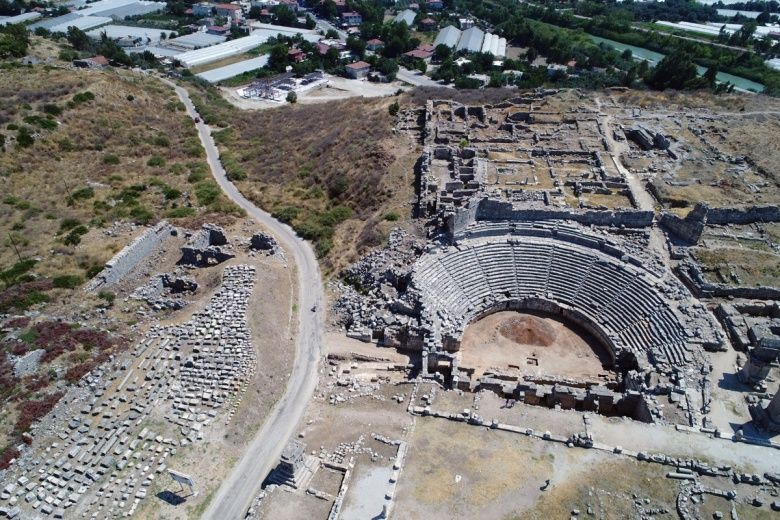
It is 45 km from Kas. Xanthos, located on the east coast of Eşen Stream,
is the capital. It means “yellow” in ancient Greek. Surface finds obtained from the acropolis of the city date back to BC. It reveals that it dates back to the 8th century. Xanthos, literally a city of disasters, dates back to BC. It lived independently until the Persian invasions in 429. The people of Xanthos, who heroically defended their city during the Persian invasion, realized that they could not prevent the invasion, first killed all their women and children, then committed suicide by setting the city on fire. The city was rebuilt by 80 families who survived this slaughter and immigrants from elsewhere. But Xanthos was destroyed again with a fire that broke out 100 years later.
Despite this, the city, which was established from the beginning, continued its existence as an important center for a long time as a result of its good relations with the western world. However, this situation did not last long. B.C. When they resisted the taxes of the Roman Brutus in 429, the people of Xanthos were dragged into another war that would completely destroy their city.
The most striking historical building in the ancient city is a war memorial… This grave monument, which is 8.87 meters high, consists of a massive pillar carved from the rocks and a small burial chamber surrounded by a frieze on four sides. The reliefs of the mausoleums, the Nereid Monument, the Harpy Monument, the Payave Sarcophagus and the Lion Tomb in this room, which is covered with a cover stone, were taken to London by British Fellows in 1842. Plaster copies taken from the originals were placed in their places. In the reliefs, gifts offered by the tomb owner and his wife, and other family members are depicted. Half bird-half female creatures in the north and south, called Siren, symbolize babies and carry the soul of the dead to the sky. This tomb BC. It is estimated to belong to the years 470-480.
The city walls were repaired in the Roman and Byzantine periods and strengthened with various additions. In the south, BC. There is a door from the 2nd century. Behind this gate, there is the Triumphal Arch belonging to Emperor Vespasian. In the southwest is the Lycian Acropolis, where the city was first established. The remains of a temple thought to belong to Artemis and a Byzantine Church are also located in the acropolis. In the northern Roman Acropolis, a magnificent monastery draws attention. The theater, which is dated to the 2nd century, belongs to the Roman Period.
You May Like
Aspendos Ancient Theater Travel Guide