Head about thirty kilometers south of St. Petersburg and you reach Pavlovsk, a palace that feels less like a monument and more like a very grand country home, which is exactly what it was meant to be. Where the great imperial residences nearby overwhelm you with gold and scale, Pavlovsk charms you instead with proportion, light, and an enormous landscape park that many visitors come to love even more than the house itself. It is the palace you go to when you want to breathe.
Pavlovsk was built for Paul, the son of Catherine the Great, and above all it bears the stamp of his wife, Maria Feodorovna, a woman of formidable taste who spent decades shaping its rooms and gardens. The palace and park grew together as a single artistic vision, a refined neoclassical house set within one of the finest landscape parks in Europe, and the result is a place where architecture and nature are in unusually gentle conversation.
This is the second article in a short set on three imperial-era palaces around St. Petersburg. After the dense, gilded drama of the Yusupov Palace in the city, Pavlovsk offers a complete change of key, calmer, greener, and more personal. By the end you will understand why generations of visitors have treated it less as a sight to tick off and more as a place to spend a whole unhurried day.
In This Article
- Arriving at Pavlovsk
- Paul, Maria Feodorovna, and a Personal Palace
- Neoclassical Architecture and a Scottish Hand
- The State Rooms and Their Refined Interiors
- The Grecian Hall and Rooms of Classical Dreams
- Collections, Porcelain, and a Love of Craft
- The Great Landscape Park
- Destruction in War and a Heroic Restoration
- A Court at Ease in the Country
- The Library, Studies, and Private Rooms
- Pavilions and the Temple of Friendship
- Seeing Pavlovsk in Motion
- Visiting Pavlovsk Today
Arriving at Pavlovsk

Your first impression of Pavlovsk is of balance rather than bulk. The main palace is a creamy, domed neoclassical building with a central block and curving wings that reach out as if to embrace the courtyard in front of it. It sits on a rise above a river, and the whole composition feels measured and human, grand without being crushing, the work of architects who valued harmony above spectacle.
That sense of proportion is the keynote of the entire estate. Pavlovsk was conceived in the late eighteenth century, when the cool clarity of neoclassicism was at its height, and the palace embodies those ideals, clean lines, restrained ornament, and a calm dialogue between the building and the land around it. Even before you step inside, you can feel that this is a place designed to soothe rather than to dazzle.
The approach also tells you that nature is a full partner here. The palace does not stand isolated on a paved square but rises out of a landscape of trees, lawns, and water, with the great park unrolling behind it. From the very first view you sense that the house and the park were made for each other, two halves of one idea.
Take your bearings slowly. Many visitors make the mistake of rushing the interiors and leaving too little time for the park, or the reverse. Pavlovsk rewards those who treat palace and grounds as a single experience, moving between the refined rooms and the open landscape so that each sets off the other.
It helps to remember, too, that Pavlovsk was always meant to be arrived at from the park as much as from the road. The designers thought carefully about sightlines, about the moment the dome first appears through the trees, and about how the building reveals itself gradually rather than all at once. That staged approach is part of the artistry, and it rewards visitors who slow down and let the palace come to them.
Paul, Maria Feodorovna, and a Personal Palace
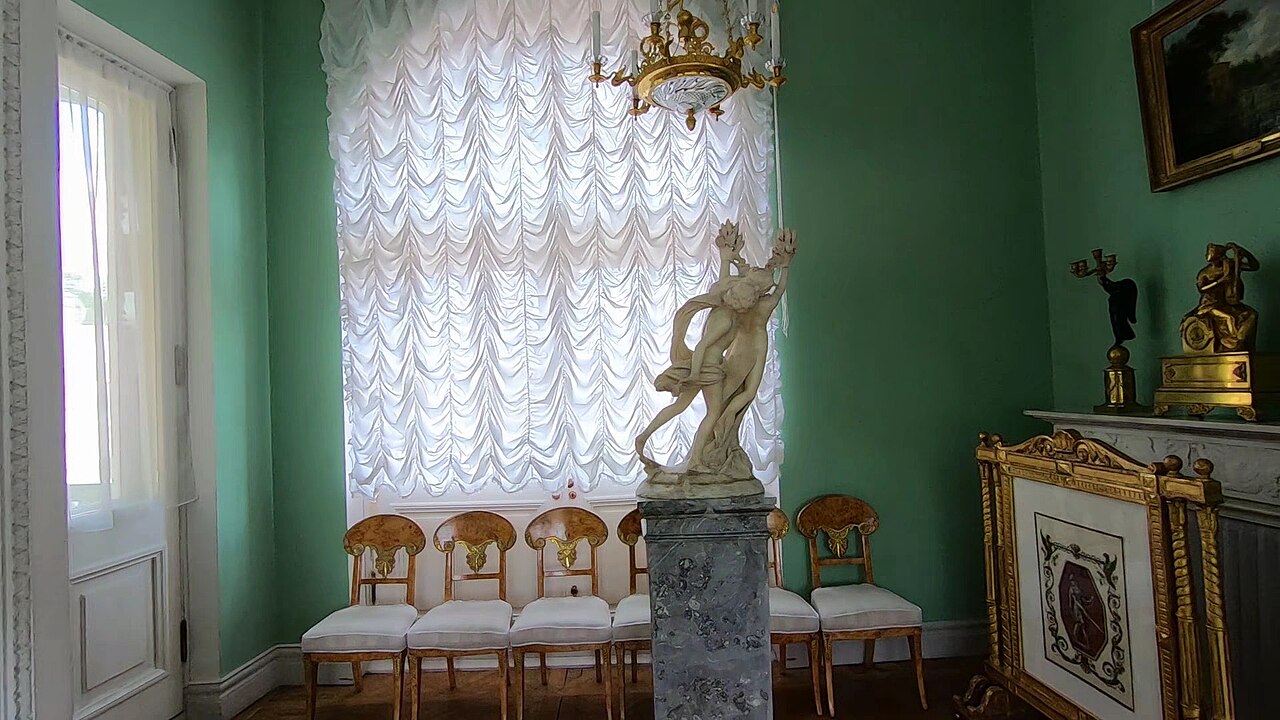
Pavlovsk began as a gift. Catherine the Great granted the land to her son Paul and his wife Maria Feodorovna, and the couple set about creating a country residence that would be theirs in a way the vast state palaces never could be. From the start it was a more private, personal project, shaped by the tastes and interests of its owners rather than by pure dynastic display.
Maria Feodorovna in particular left her mark on nearly every corner. Cultured, energetic, and deeply interested in art, gardening, and craftsmanship, she devoted much of her long life to perfecting the palace and park, collecting objects, commissioning furnishings, and refining the planting. More than any architect, she is the presiding spirit of Pavlovsk, and the estate reflects her sensibility at every turn.
This personal quality is what gives the palace its warmth. The rooms were designed to be lived in and enjoyed, filled with things the family loved, from paintings and sculpture to porcelain and furniture chosen with real care. Pavlovsk feels less like a stage for power and more like the cherished home of people with the means to make it beautiful.
Paul’s own story was troubled, his reign short and ending in violence, but Pavlovsk outlived him as Maria Feodorovna continued to shape it for decades as a widow. In a sense the palace is her life’s work, a continuous project of refinement carried on across changing times, and walking through it is a way of meeting her taste directly.
It is worth dwelling on how unusual this personal stamp was. Most imperial residences were shaped by committees of officials and the weight of state ceremony, but Pavlovsk bears the fingerprints of individual taste, above all Maria Feodorovna’s, across half a century of patient work. That continuity of vision is rare, and it gives the estate a coherence that grander, more institutional palaces often lack.
Neoclassical Architecture and a Scottish Hand

The core of the palace was designed by the Scottish architect Charles Cameron, who brought to Russia a deep knowledge of classical antiquity and the restrained, elegant style then fashionable in Britain. His Pavlovsk is a model of neoclassical poise, a central domed rotunda flanked by wings, with interiors that draw on Greek and Roman models filtered through eighteenth-century taste.
Cameron was not the only hand, however. Over time other architects contributed, expanding and adjusting the building to meet the needs and ambitions of its owners, especially after fires and changing fashions called for repairs and additions. The palace you see is thus a layered neoclassical creation, but one that holds together remarkably well around Cameron’s original vision.
What makes the architecture special is its lightness. Where some neoclassical buildings feel cold, Pavlovsk feels airy and gracious, its proportions carefully judged so that grandeur never tips into heaviness. The rooms flow logically, the light is handled with care, and the decoration supports rather than overwhelms the architecture.
This architectural restraint is deliberate and sophisticated. It takes real confidence to build a royal palace that whispers rather than shouts, and Pavlovsk’s enduring appeal rests on exactly that quality. It is a building for people who find beauty in proportion and refinement rather than in sheer quantity of gold.
Cameron’s influence reached beyond the walls of the palace into the park and its structures, where the same classical vocabulary of columns, domes, and clean geometry reappears in miniature. This consistency of language, from the grand house to the smallest garden pavilion, ties the whole estate together and reflects a unified vision of beauty rooted in the ideals of antiquity. It is one of the reasons Pavlovsk feels so complete.
The State Rooms and Their Refined Interiors
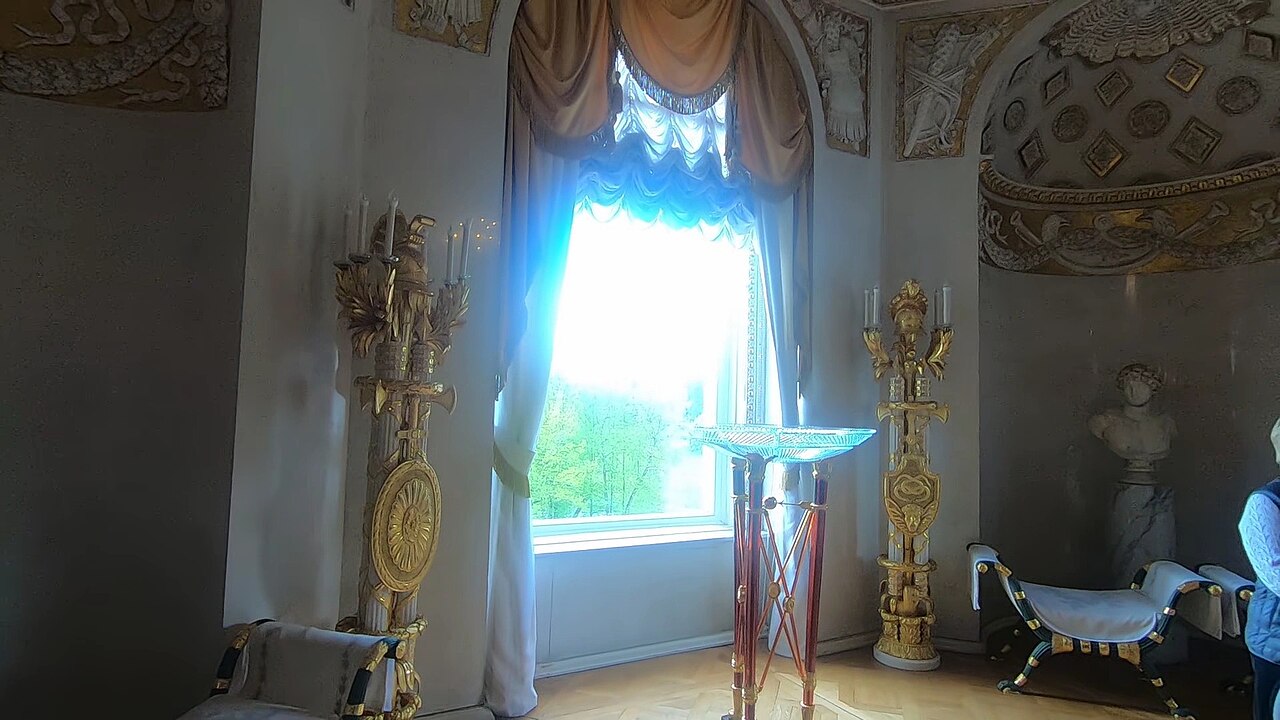
Inside, Pavlovsk unfolds as a sequence of beautifully composed state rooms, each with its own character but all sharing a cool neoclassical elegance. There are grand halls for ceremony, intimate drawing rooms for family life, and specialized spaces designed around particular themes, from classical antiquity to the natural world, reflecting the wide interests of Maria Feodorovna.
The decoration is a masterclass in restraint and quality. Instead of smothering the rooms in gilding, the designers used fine proportions, delicate plasterwork, carefully chosen colors, and superb furnishings to create interiors that feel rich but never oppressive. Classical motifs, columns, and sculpture appear throughout, tying the rooms to the antique ideals the age admired.
Many rooms were built around the collections the family gathered on their travels and through commissions, including paintings, sculpture, porcelain, and furniture of the highest quality. These objects were not afterthoughts but central to the design, and the rooms were conceived as settings for them, so that art and architecture reinforce each other.
Moving through the state rooms, you get a vivid sense of a cultivated household at ease with beauty. These were spaces for reading, music, conversation, and the quiet pleasures of a refined court, and even now, carefully restored, they communicate that gentler, more domestic kind of grandeur that sets Pavlovsk apart from its grander neighbors.
The restoration of these rooms deserves a word as well, because what you see is the result of extraordinary scholarship. Each color, molding, and furnishing was researched and recreated with precision, so that the interiors you walk through are faithful to the originals rather than modern reinterpretations. That fidelity is part of what makes a visit so rewarding for anyone who cares about the decorative arts.
The Grecian Hall and Rooms of Classical Dreams

Among the most admired interiors are the great ceremonial halls, including a Grecian Hall whose columns and cool palette evoke the temples of antiquity. Rooms like this show the age’s love affair with classical Greece and Rome, reimagining the ancient world as a model of harmony and good taste to be woven into modern life.
These spaces were designed as the climax of the interior sequence, the rooms where the household gathered for its grandest occasions. Their decoration is more elaborate than the private apartments, but it remains disciplined, using classical architecture itself, columns, friezes, and sculpture, as the main source of splendor rather than piling on unrelated ornament.
The effect is both impressive and serene. Standing in a hall ringed with columns, under a carefully proportioned ceiling, you feel the calm authority that neoclassicism aimed for, a sense that beauty and order are expressions of the same ideal. It is a very different emotion from the dazzle of a baroque or rococo state room.
These halls also reveal how seriously the owners took the classical ideal. This was not mere fashion but a whole way of thinking about taste, learning, and virtue, embodied in architecture. Pavlovsk’s grandest rooms are, in a sense, arguments in stone and plaster for a particular vision of civilized life.
Light plays a crucial role in these grand rooms. The architects positioned windows and chose finishes so that daylight would model the columns and sculpture and bring the pale surfaces to life, and on a bright day the halls seem almost to glow from within. This careful handling of light is one of the quiet triumphs of the design, turning architecture into something closer to a living, changing experience.
Collections, Porcelain, and a Love of Craft

Maria Feodorovna was a passionate collector and patron of craftsmanship, and the palace is full of the results. Fine porcelain, furniture, clocks, bronzes, and decorative objects fill the rooms, many of them of exceptional quality and chosen or commissioned with a connoisseur’s eye. Pavlovsk is as much a museum of the decorative arts as it is a house.
Her interests ranged widely. She supported workshops and artists, took a hands-on interest in design, and even practiced crafts herself, and this engagement shows in the integrated feel of the interiors, where furnishings and architecture were conceived together. The objects are not random accumulations but part of a coherent artistic environment.
Much of the collection reflects the European taste of the time, with pieces gathered on the couple’s grand tour of Europe and from leading makers of the day. These objects connected Pavlovsk to the wider world of courtly culture, placing this Russian country palace firmly within the international language of refined aristocratic life.
For visitors who enjoy the decorative arts, Pavlovsk is a particular delight, because the quality is consistently high and the objects are shown in their intended settings rather than isolated in cases. You see how such pieces were meant to be lived with, as part of the daily texture of a cultivated home.
The couple’s grand tour of Europe, undertaken under an assumed title, was a turning point for the collections. Received at courts across the continent, they gathered furniture, porcelain, paintings, and decorative objects of the first rank, and brought home not only treasures but ideas that shaped the design of Pavlovsk for years afterward. The palace is in part a record of that journey, a distillation of the finest European taste of the moment.
The Great Landscape Park

For many people the park is the real glory of Pavlovsk. Spreading over a huge area along the river, it is one of the largest and most admired landscape parks in Europe, designed in the naturalistic English style that was fashionable at the time. Instead of rigid geometric avenues, it offers winding paths, open meadows, groves of trees, and carefully framed views that unfold as you walk.
The park was shaped over decades to feel natural while being entirely composed, with every vista, bridge, and clearing placed for effect. Streams and the river were used to create a sense of gentle movement, and the planting was chosen to give changing moods and colors through the seasons. It is landscape treated as a fine art, a painting you can walk into.
Scattered through the park are pavilions, monuments, and temples that act as focal points and places to rest, each contributing to the romantic, idealized vision of nature the designers pursued. These structures turn a walk into a sequence of discoveries, rewarding those who explore beyond the immediate surroundings of the palace.
Whatever the season, the park transforms a visit. In summer it is green and full of birdsong, in autumn it blazes with color, and in winter it becomes a quiet world of snow. Many regular visitors come as much for the park as for the palace, and to understand Pavlovsk you really must give yourself time to wander it.
The scale of the park is genuinely hard to grasp until you are inside it. Paths lead on and on, opening into new scenes, river valleys, open meadows, shaded groves, and quiet corners that feel miles from any building. You can spend a whole day walking and still not see all of it, which is part of why visitors return again and again, finding something new in every season and every direction.
The naturalistic design also means the park changes character as you move through it. One stretch feels wild and wooded, another open and pastoral, another intimate and enclosed, and these shifting moods were all carefully planned. The effect is of walking through a series of landscape paintings, each composed with the same care that went into the rooms of the palace itself.
Destruction in War and a Heroic Restoration

Pavlovsk’s beauty makes its twentieth-century history all the more painful. During the Second World War the area was occupied, and the palace suffered terribly, damaged by fire and looting, with many of its interiors gutted and treasures lost or scattered. At the end of the war, much of the glorious house lay in ruins.
What followed is one of the great stories of cultural restoration. Over many years, teams of specialists, craftspeople, and scholars painstakingly rebuilt the palace, recreating lost interiors from old photographs, drawings, and surviving fragments, and recovering or remaking furnishings. The work demanded extraordinary skill and patience, and it brought Pavlovsk back from near-total loss.
Crucially, many objects had been evacuated before the occupation, which meant that a core of the original collection survived to anchor the restoration. Around these pieces, the restorers reconstructed the rooms with remarkable accuracy, so that today’s visitor sees not a modern approximation but a careful resurrection of the original artistic vision.
Knowing this history changes how you see the palace. The serene rooms you walk through are also a monument to the determination not to let war erase beauty, a testament to the people who gave decades of their lives to bringing Pavlovsk back. The calm you feel there is hard-won.
The scale of what was lost and then recovered is sobering. Entire ceilings, floors, and wall treatments had to be remade by hand, often by reviving old techniques that had nearly died out. The restorers trained a new generation of craftspeople in the process, so that the rebuilding of Pavlovsk became not only a recovery of one palace but a revival of skills that enriched restoration work across the country.
A Court at Ease in the Country
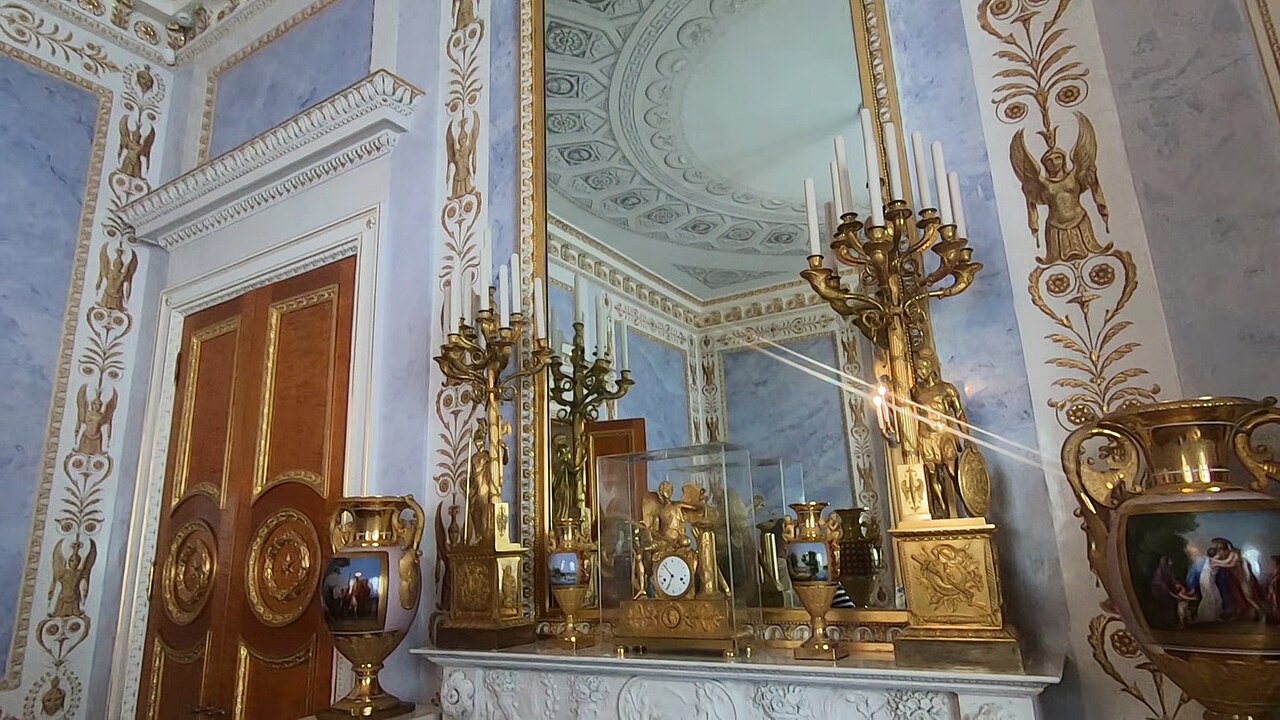
Pavlovsk was built for a particular kind of life, more relaxed and domestic than the ceremonial existence of the great city palaces. Here the imperial family and their guests could enjoy the pleasures of the countryside, walks in the park, music, reading, and the quiet routines of a cultivated household, away from the full glare of court ritual.
That gentler rhythm shaped the design. Alongside the grand state rooms are comfortable private apartments and intimate spaces made for everyday use, and the close relationship with the park meant that daily life flowed easily between indoors and out. Pavlovsk was a place to live well rather than merely to rule.
Music and culture were central to this life. The household valued the arts, and the estate hosted concerts and gatherings that made it a center of refined entertainment. In later times the area around Pavlovsk even became associated with music and leisure, extending its reputation as a place of pleasure beyond the palace walls.
Imagining this daily life helps bring the rooms alive. Rather than a cold showcase, picture Pavlovsk as a warm, busy home where people with exquisite taste spent their days surrounded by art and nature, and the palace’s particular charm, its blend of grandeur and ease, comes clearly into focus.
In the warmer months especially, life at Pavlovsk spilled outdoors. The family and their guests strolled the park, took their leisure in the pavilions, and enjoyed the gardens as extensions of the house, so that the boundary between inside and outside almost dissolved. This easy flow between palace and parkland is the defining pleasure of the place, and it shaped everything from the architecture to the daily rhythm of those who lived there.
The Library, Studies, and Private Rooms
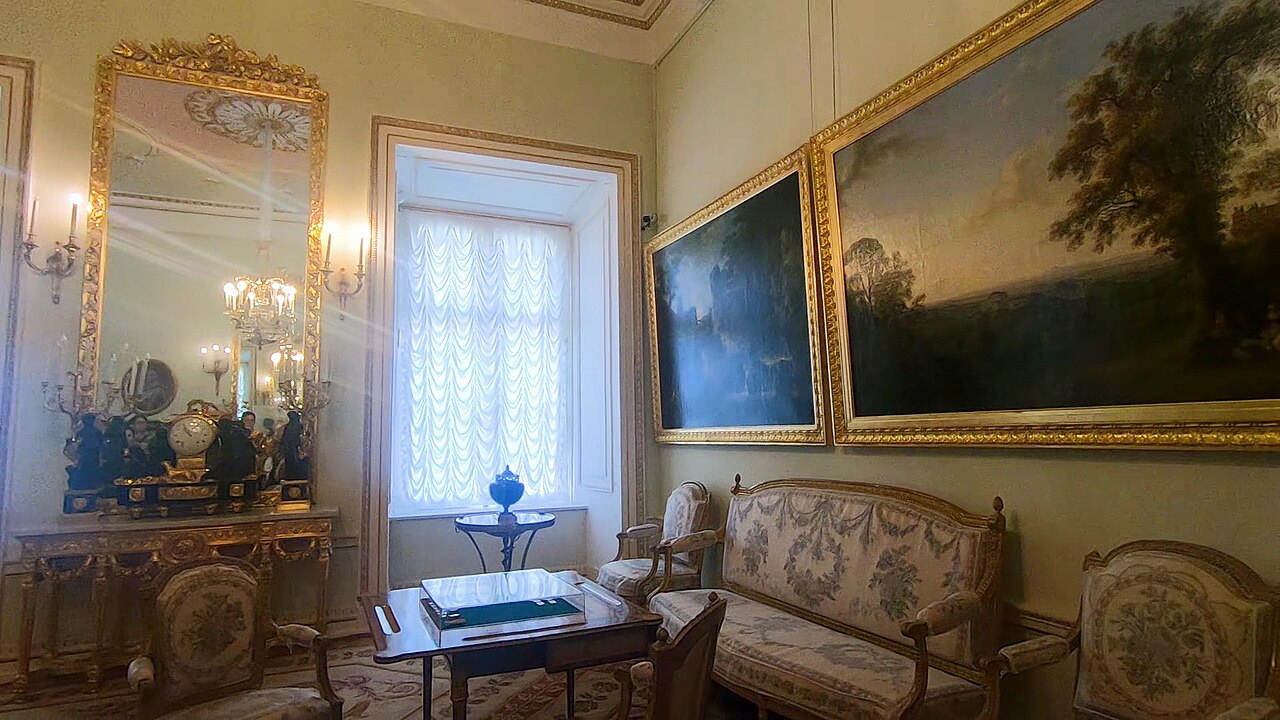
Beyond the ceremonial halls lie the quieter, more personal spaces that reveal how Pavlovsk was actually inhabited. Libraries, studies, and private cabinets held the books, papers, and treasured objects of a family that genuinely valued learning and the arts, and these rooms have an intimacy that the grand halls, for all their beauty, cannot match.
Maria Feodorovna’s own interests shine in these spaces. As a cultivated woman with a lifelong devotion to art and craft, she filled her private rooms with carefully chosen objects, from fine books to decorative pieces she had collected or even helped design. Stepping into them feels like glimpsing the private world behind the public grandeur.
The decoration here is often more delicate and personal than in the state rooms, scaled for individual use rather than for show. Writing desks, comfortable seating, and smaller works of art create an atmosphere of refined domestic comfort, the setting for reading, correspondence, and quiet reflection away from the demands of court life.
These rooms matter because they humanize the palace. They remind you that Pavlovsk was not only a showplace but a home, lived in by real people with real tastes and daily routines, and they deepen your sense of the cultivated, book-loving household that shaped the whole estate over so many years.
There is something moving about these intimate rooms surviving at all, given how much of the palace was destroyed and rebuilt. To stand in a recreated study and sense the personality of the woman who shaped the whole estate is to feel the human story behind the grand architecture, and it is often these smaller, quieter spaces that visitors remember most fondly once the dazzle of the great halls has faded.
Pavilions and the Temple of Friendship

The park at Pavlovsk is dotted with elegant structures that turn a walk into a sequence of romantic discoveries. Among the most famous is the Temple of Friendship, a graceful circular colonnade set in a bend of the river, a classical pavilion designed as a focal point in the landscape and a symbol of the ideals the family held dear.
These garden buildings were an essential part of the eighteenth-century landscape park. Pavilions, bridges, monuments, and temples were placed to catch the eye, frame views, and give walkers destinations and places to rest, each one contributing to the carefully composed experience of moving through the grounds. They blur the line between architecture and scenery.
Many carry meaning as well as beauty. A temple of friendship, a monument to loved ones, or a classical rotunda each spoke a language of sentiment and ideals that the cultivated visitors of the day understood, turning the park into a kind of poem about nature, memory, and virtue to be read on foot.
Seeking out these structures is one of the great pleasures of a visit. Scattered across the vast park, they reward exploration and give shape to a long walk, and discovering a graceful colonnade reflected in the river, or a quiet monument among the trees, is exactly the kind of moment the designers of Pavlovsk hoped to create.
Seeing Pavlovsk in Motion
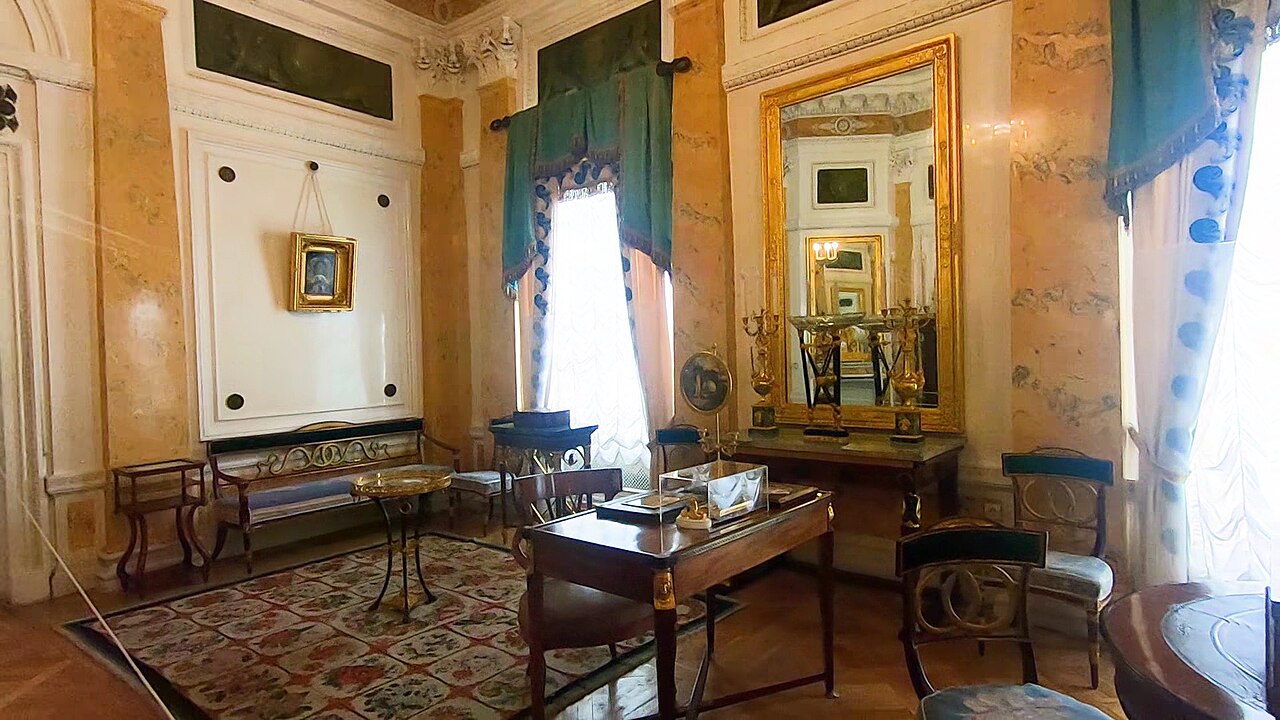
Because Pavlovsk is as much about atmosphere as about individual rooms, a walkthrough video is a wonderful way to prepare for a visit or to revisit it afterward. On film you can follow the sequence of state rooms, see how the light moves through the neoclassical interiors, and get a real sense of the proportions that photographs alone can flatten.
Watch, too, for the relationship between the palace and its park. A good video will take you from the refined rooms out into the vast landscape garden, which is the best way to understand how the two were conceived as a single work of art. The transition from interior elegance to open parkland is the essence of Pavlovsk.
Seeing the palace in motion also helps you appreciate the restoration. Knowing that these serene rooms were rebuilt from ruins after the war, you can watch the footage with a deeper awareness of the craftsmanship involved, and of how completely the original vision has been recovered.
Visiting Pavlovsk Today

Today Pavlovsk is a museum-reserve, with both the palace and its enormous park open to visitors, and it makes an ideal day trip from St. Petersburg. You can tour the restored state rooms and private apartments, admire the collections, and then spend hours exploring the landscape park, which is free to wander and endlessly rewarding in every season.
Getting there is straightforward, by train or road from the city, and Pavlovsk is often combined with nearby Tsarskoye Selo, since the two lie close together. If you try to see both in one day, be realistic about time, because each deserves real attention and rushing them does neither justice. Many people find Pavlovsk alone fills a happy day.
Dress for walking and for the weather, because the park is large and much of the pleasure lies in exploring it on foot. Check current opening arrangements for the palace interiors in advance, and consider arriving early to enjoy the grounds before the busiest hours. Pack a sense of leisure; this is not a place to hurry.
You will find Pavlovsk south of St. Petersburg near Tsarskoye Selo; see the map below to help plan your route: see the map below. Whether you come for the refined neoclassical rooms, the superb decorative arts, or simply the chance to lose yourself in one of Europe’s great landscape parks, Pavlovsk offers a gentler, greener vision of imperial Russia that stays with you long after you leave.
If you have any interest in gardens, try to time your visit for a season that appeals to you, because Pavlovsk is famous for how completely it transforms through the year. The golden autumn is especially celebrated, when the vast park turns to copper and gold, but spring blossom and deep winter snow each have their devoted admirers. There is really no wrong time to come, only different moods of the same beautiful place.
View the location on Google Maps
Palaces Nearby
If you are exploring the imperial palaces around Saint Petersburg, these two pair naturally with a visit here:
You May Like
Konopiste the Bohemian Castle of a Doomed Archduke


One thought on “Pavlovsk Palace, the Gentle Country Retreat of Russia’s Imperial Family”