Before St. Petersburg had its grand imperial palaces, before the Winter Palace or the great suburban residences, there was the Menshikov Palace, the first truly magnificent stone building in Peter the Great’s brand-new city. It was raised not by the tsar himself but by his closest friend and right-hand man, and for a time it was the most splendid house in Russia’s young capital, the place where the court gathered and foreign guests were dazzled.
The man who built it, Alexander Menshikov, had one of the most extraordinary life stories of his age, rising from humble beginnings to become the richest and most powerful subject in the empire, and then falling just as spectacularly into disgrace and exile. His palace is the monument to that dizzying rise, a statement in brick and stone of how far a clever, ambitious favorite could climb at the side of a reforming tsar.
This is the second of three articles on the grand city palaces of St. Petersburg, following the dark drama of Mikhailovsky Castle. The Menshikov Palace takes us back to the very beginnings of the city, to the age of Peter the Great, and by the end you will see why this elegant riverside building, with its famous Dutch-tiled rooms, is one of the most important and atmospheric survivors from the dawn of imperial Russia.
In This Article
- Arriving at the First Palace of the City
- Peter the Greats Favorite and His Fortune
- The First Great Stone Building in St. Petersburg
- Petrine Baroque and a Dutch Flavor
- The Famous Dutch-Tiled Rooms
- The Great Hall and Receptions for the Tsar
- The Walnut Study and Private Rooms
- A Window into Early Imperial Culture
- The Spectacular Fall of a Favorite
- A New Life as a Military Academy
- Part of the Great Hermitage Museum
- The Palace on Film
- Visiting the Menshikov Palace Today
Arriving at the First Palace of the City

The Menshikov Palace stands on the bank of the great river, facing the water with a long, elegant facade that still commands attention three centuries after it was built. In a city later filled with grander buildings, it keeps a quiet dignity, and knowing that it was the first great stone palace of St. Petersburg lends every detail an extra weight of history.
From the riverside you can appreciate how the palace was designed to be seen from the water, in an age when the river was the main highway of the new city. Its position and its fine facade announced the importance of its owner to everyone passing by, a deliberate display of wealth and status in the heart of Peter the Great’s ambitious capital.
The building has an early, slightly foreign character that sets it apart from later Russian palaces. Reflecting the tastes and influences of its time, especially the Dutch connections so dear to Peter the Great, it speaks of a moment when Russia was eagerly importing European ideas and styles to furnish its new window on the West.
Approaching it today, you are stepping back to the very foundation of the city. This is where the grand social life of early St. Petersburg unfolded, and crossing its threshold is a way of entering the world of Peter the Great and his companions, the energetic, hard-living, forward-looking circle that built a new Russia on the marshes of the north.
It is worth pausing on the riverbank to take in the setting before you go inside. The broad water, the open sky, and the long facade together recall the moment when this was the grandest sight in a city still rising from the marshes, and that sense of standing at the very beginning of St. Petersburg gives the visit a special resonance from the start.
Peter the Greats Favorite and His Fortune
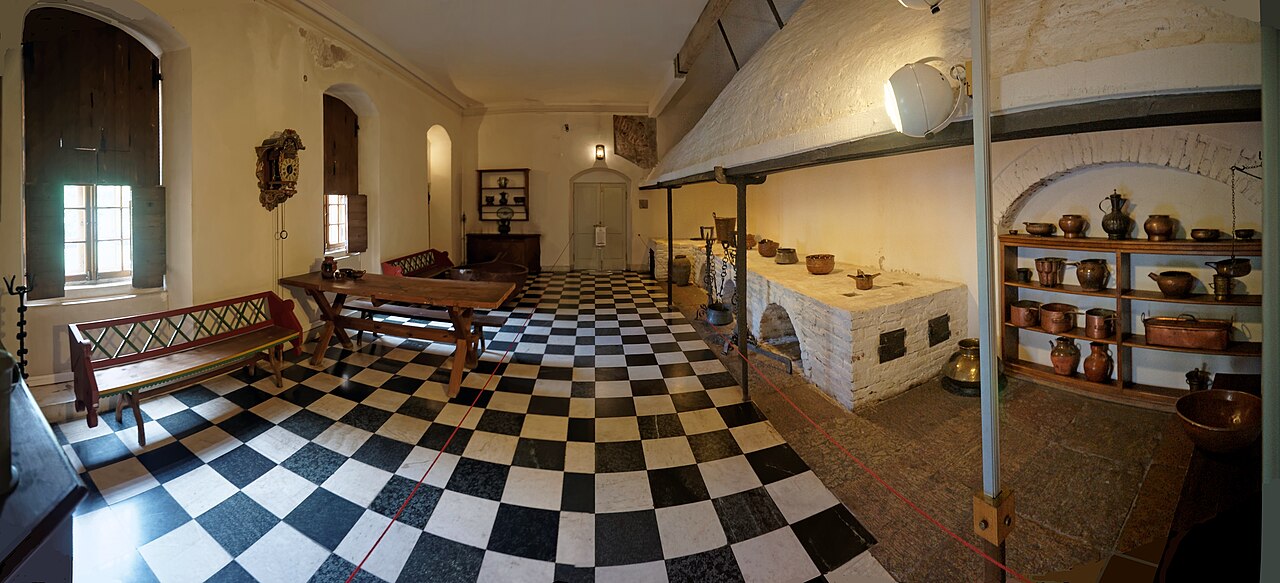
The story of the palace is inseparable from the story of its builder. Alexander Menshikov rose from obscure beginnings to become the closest companion of Peter the Great, sharing in the tsar’s campaigns, reforms, and ambitions. Through talent, loyalty, and boundless ambition, he climbed to the very summit of power, accumulating titles, offices, and an immense fortune.
Menshikov became, in effect, the second man in the empire, trusted with vast responsibilities and rewarded on a scale that matched his importance. As the first governor of the new city of St. Petersburg, he was central to its creation, and his wealth and influence seemed to know no bounds during the years of his ascendancy.
His palace was the supreme expression of this success. Built to outshine anything else in the young capital, it proclaimed his status as the greatest subject in Russia, a man who could entertain the tsar and the court in surroundings of unmatched splendor. Few buildings have so directly embodied the fortunes of a single individual.
Yet Menshikov’s story is also a lesson in the fragility of power. His rise depended on the favor of the crown, and when that favor was withdrawn after Peter’s death, his fall was swift and total. The palace that celebrated his triumph would outlive his disgrace, becoming a monument to both the heights he reached and the depths to which he was cast down.
Contemporaries marveled at the scale of his wealth, which included estates, palaces, and treasures on a scale that seemed to rival the crown itself. Stories of his riches and his lavish way of life circulated widely, and his palace on the river was the most visible proof of a fortune that had been assembled with astonishing speed in the service of an equally astonishing tsar.
The First Great Stone Building in St. Petersburg

In the earliest years of St. Petersburg, most buildings were modest and made of wood, and the city was still a rough construction site rising from the marshes. The Menshikov Palace changed that, standing out as the first large stone residence of real grandeur, a bold statement that the new capital could rival the great cities of Europe.
As such, the palace was far more than a private home. It served as a center of official and social life, hosting receptions, celebrations, and ceremonies, often on behalf of the tsar himself, who for a time lacked a grand palace of his own in the city. In these rooms the business and pleasure of the new court were conducted amid unprecedented splendor.
The palace thus played a key role in establishing the character of St. Petersburg as a European capital. Its grandeur set a standard and signaled ambition, showing visitors and residents alike that this remote northern city intended to be taken seriously as a seat of power and culture. It helped turn Peter’s vision into visible reality.
Understanding this pioneering role is essential to appreciating the palace. It is not just one grand house among many but the original from which the city’s tradition of palatial building grew, the first chapter in a story that would eventually include some of the most magnificent palaces in the world.
The choice of stone was itself significant in a city where fire was a constant danger and where most early structures were of timber. A great stone palace was a statement of permanence and confidence, a declaration that St. Petersburg was here to stay and that its leading men intended to build for the ages, not merely for the moment.
Petrine Baroque and a Dutch Flavor

Architecturally, the Menshikov Palace belongs to the early phase of St. Petersburg’s development, built in the restrained, practical style of the Petrine age before the exuberant later baroque of the city’s most famous palaces. Its design reflects the influence of the European architects and tastes that Peter the Great imported to shape his new capital.
A particularly strong influence was Dutch, in keeping with Peter’s well-known admiration for the Netherlands, where he had studied and worked. This Dutch flavor appears in the character of the building and, most famously, in its interiors, giving the palace a distinctive early-modern European feel that distinguishes it from later, more purely Russian creations.
The style is elegant but comparatively sober, emphasizing fine proportions and quality materials over lavish ornament. This reflects both the taste of the period and the practical realities of building in a new city, where ambition had to be matched to what could actually be achieved on the ground at the time.
The result is a building of real historical importance as well as beauty, a rare and well-preserved example of the architecture of early St. Petersburg. For anyone interested in how the city began and in the European influences that shaped it, the palace is an invaluable survivor from a formative age.
Comparing the palace mentally with the later, more flamboyant baroque palaces of the city is instructive. Where those buildings overflow with ornament and gold, the Menshikov Palace keeps a calmer, more grounded elegance, reflecting an earlier moment when the new capital was still finding its architectural voice and borrowing heavily from its northern European models.
The Famous Dutch-Tiled Rooms
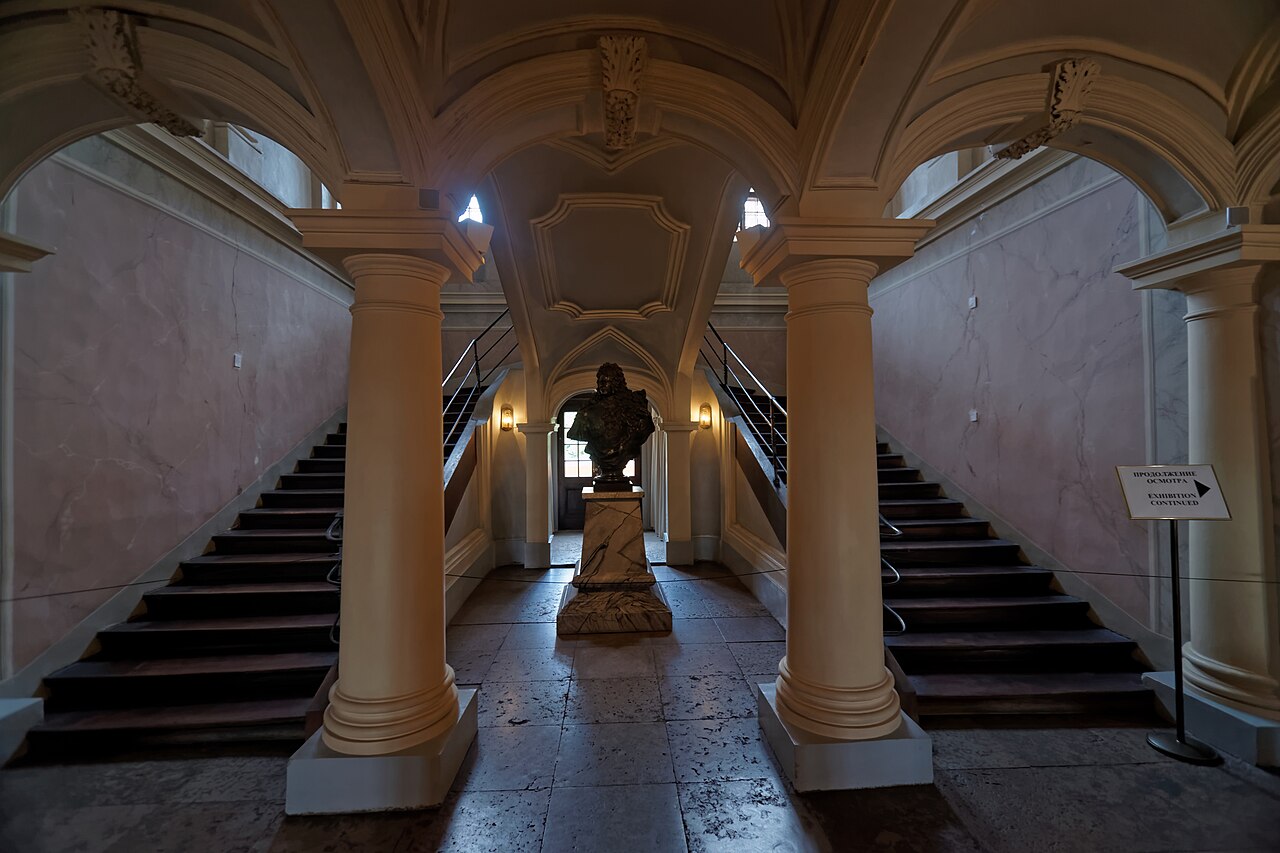
The most celebrated feature of the Menshikov Palace is its use of Dutch tiles, which line the walls of several rooms in dazzling arrays of blue and white. These hand-painted ceramic tiles, imported at great expense, cover whole surfaces with intricate patterns and scenes, creating interiors of remarkable charm and originality that are among the glories of the building.
Tiled rooms like these were a fashionable luxury of the age, and the taste for them reflected Peter the Great’s love of all things Dutch. For Menshikov to fill rooms with such tiles was both a display of wealth and a nod to the tsar’s preferences, aligning his palace with the cultural tastes of his powerful patron.
The effect of these rooms is unforgettable. Entering a chamber entirely clad in blue and white tiles is like stepping into a jewel box, the repeating patterns and painted scenes wrapping you in cool, bright color. They are a highlight of any visit and a vivid reminder of the European connections that shaped early Russian taste.
That these tiled interiors survive and have been carefully preserved is a great good fortune. They offer a direct, sensory connection to the world of Peter the Great, letting modern visitors experience the kind of luxury that astonished guests three centuries ago, and they remain the single most memorable feature of the palace.
The tiles themselves repay close attention, for each one carries its own small painted scene or motif, and together they form vast compositions that reward slow looking. Figures, landscapes, ships, and ornamental patterns unfold across the walls, turning the rooms into galleries of miniature art as well as triumphs of interior decoration.
Producing and transporting such quantities of fine tiles was a major undertaking, and their presence in the palace testifies both to Menshikov’s wealth and to the close trading and cultural links between Russia and the Netherlands in this period. They are a tangible sign of the European orientation that Peter the Great pressed upon his country.
The Great Hall and Receptions for the Tsar
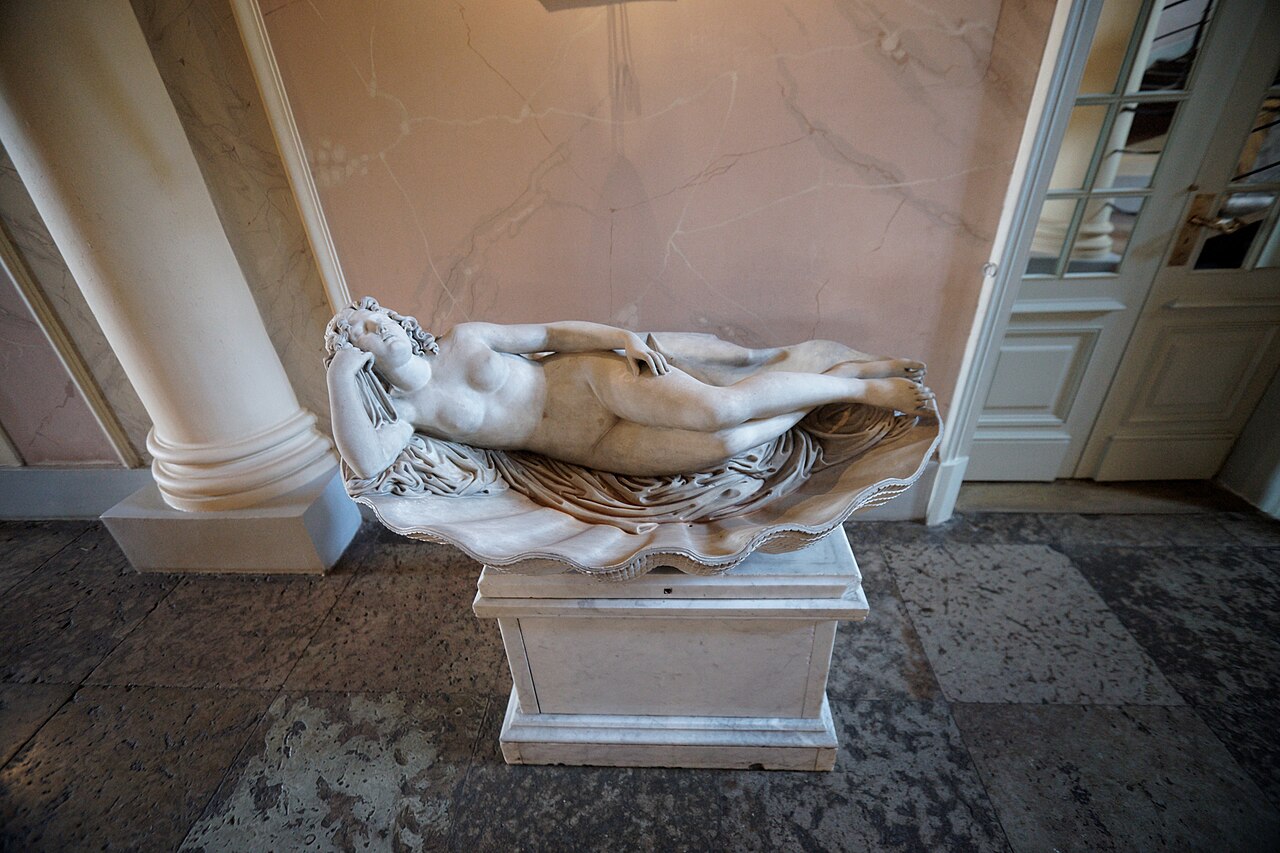
At the heart of the palace lay its great hall and principal reception rooms, designed for entertaining on a grand scale. Here Menshikov hosted lavish gatherings, often standing in for the tsar as host of official celebrations, from banquets and balls to weddings and diplomatic receptions that brought the new court together in splendor.
These occasions were central to the life of early St. Petersburg. In the absence of a grand imperial palace, Menshikov’s rooms served as the setting for the public ceremonies of Peter’s reign, making the palace a true center of power and sociability. The business of the court, conducted amid feasting and festivity, flowed through these very spaces.
The grand rooms were decorated and furnished to impress, with the finest materials and objects the age could provide. They proclaimed the wealth and importance of their owner and, by extension, the ambition of the new capital, offering guests a vision of Russia as a rising European power rather than a remote and backward land.
To stand in these rooms is to imagine the vigorous, often boisterous social world of Peter the Great and his circle. The tsar himself was a frequent presence, and the gatherings here were famous for their energy and their mixture of ceremony and revelry, capturing the distinctive spirit of an age of transformation.
The energy of these gatherings was legendary. Peter the Great’s court was famous for its vigorous, sometimes exhausting celebrations, where ceremony mingled with hard drinking and boisterous entertainment, and the Menshikov Palace was one of the principal stages for this distinctive social world. The walls of these rooms witnessed the founding spirit of the new capital at its most exuberant.
The Walnut Study and Private Rooms
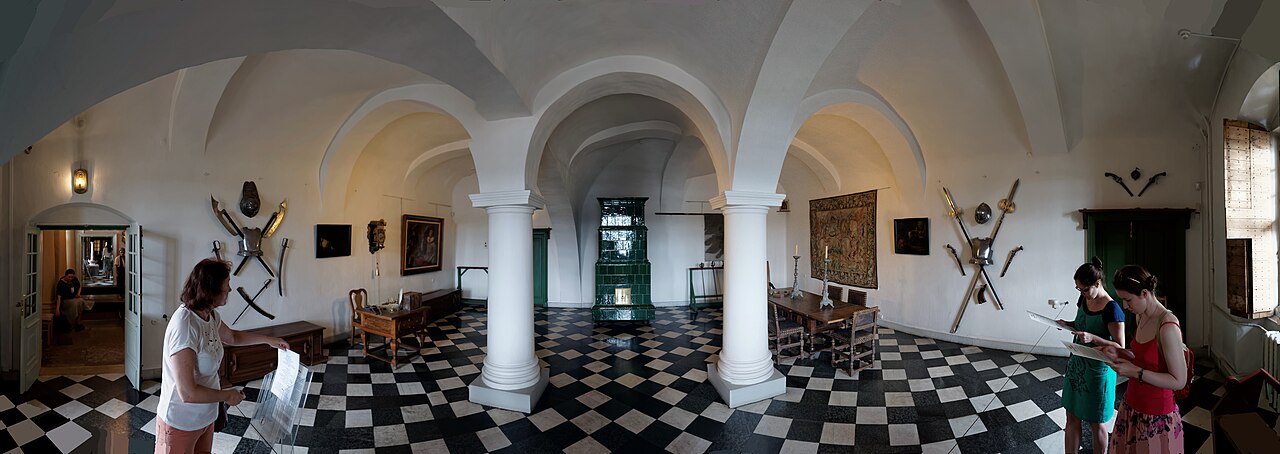
Among the palace’s most admired interiors is a study panelled in rich walnut, a warm and intimate room that contrasts with the cool brightness of the tiled chambers. Fine woodwork of this kind was a luxury in its own right, and the room shows the care and expense lavished on even the more private spaces of the palace.
Rooms like this reveal the domestic side of the building, the spaces where its owner could withdraw from the demands of public life. Behind the grand halls lay more personal apartments, decorated with the same attention to quality but scaled for comfort and privacy rather than display, offering a glimpse of daily life at the summit of power.
The survival and restoration of such rooms adds greatly to the richness of a visit. They allow you to move between the public grandeur of the reception halls and the more intimate atmosphere of the private quarters, experiencing the full range of the palace as a working residence rather than merely a showcase.
These interiors also showcase the craftsmanship of the period, from fine joinery to carefully chosen materials. Together with the tiled rooms, they make the Menshikov Palace a treasury of early eighteenth-century decorative arts, a place where the tastes and techniques of Peter the Great’s age are preserved in remarkable detail.
The combination of cool tiled rooms and warm wooden chambers gives the palace a varied, almost musical rhythm as you move through it. Each room sets off the next, and the shifts in material and mood keep the visit constantly engaging, a reminder that even at the very beginning of the city, its builders understood how to orchestrate a sequence of interiors for maximum effect.
A Window into Early Imperial Culture

Today the palace is furnished and arranged to evoke the culture of early eighteenth-century Russia, displaying furniture, paintings, objects, and decorative arts of the period. Rather than a hollow shell, it presents a rich picture of how the elite of Peter the Great’s age lived, worked, and entertained.
The collections reflect the cosmopolitan character of the time, mixing Russian and European elements in a way that mirrors Peter’s drive to open his country to Western influence. Visitors can see how imported tastes and goods blended with local traditions to create the distinctive culture of the new capital.
Through these displays, the palace serves as a kind of museum of its own era, telling the story not just of Menshikov himself but of the whole formative period of imperial Russia. It brings to life a moment of rapid change, when an old world was being transformed into something new under the energetic hand of a remarkable tsar.
For visitors, this makes the palace doubly rewarding, both a beautiful historic building and an illuminating introduction to the age that created St. Petersburg. Walking through its rooms, you gain a vivid sense of the ambitions, tastes, and energies that shaped the early empire.
The arrangement of the rooms also helps visitors understand how such a palace actually functioned, from grand public spaces to private quarters, and how its owner balanced the demands of ceremony with the comforts of domestic life. It is this completeness, the sense of a whole way of living preserved, that makes the museum so rewarding.
The Spectacular Fall of a Favorite

The glory of the palace is shadowed by the dramatic downfall of the man who built it. After the death of Peter the Great, Menshikov remained immensely powerful for a time, but his enemies and his own overreaching ambition eventually brought him down. He was stripped of his titles and wealth and sent into distant exile, where he died far from the splendor he had known.
The suddenness and completeness of his fall astonished contemporaries and has fascinated historians ever since. One day the richest and most powerful subject in the empire, the next a disgraced exile, Menshikov embodied the perils of a life built entirely on royal favor and personal ambition in an age of shifting court politics.
His palace, confiscated along with the rest of his fortune, passed out of his family’s hands and into other uses. The building that had celebrated his triumph became a silent witness to his ruin, its grand rooms emptied of the man whose rise and fall they had so vividly expressed.
This dramatic story gives the palace a human depth beyond its architectural beauty. As you walk its halls, you are moving through the monument of a man who gambled everything on power and lost, and the splendor around you carries an undertone of warning about the fragility of fortune at the heights of a court.
His exile became one of the most famous reversals of fortune in Russian history, a story retold for generations as a warning and a wonder. From the heights of wealth and power he descended to a remote and humble end, and the contrast between his glittering palace and his lonely place of exile has fascinated artists and writers ever since.
A New Life as a Military Academy

After Menshikov’s fall, the palace found a long second life as a military academy, housing a cadet corps that trained young men for service to the state. For many years the grand rooms once filled with the revelry of Peter’s court echoed instead with the routines of military education, a striking change of purpose.
This long institutional use shaped the building’s later history and, importantly, helped ensure its survival. By serving a continuing practical function, the palace was maintained and adapted rather than abandoned, allowing it to endure through the centuries to reach us today, even as the city around it grew and changed.
The academy years connect the palace to the broader story of Russian education and military tradition, adding another layer to its already rich history. Generations of cadets passed through its halls, and the building became woven into the life of the city in a new and different way, far removed from its origins as a favorite’s showpiece.
This chapter reminds us that great buildings often outlive their original purposes, finding new roles as the world changes around them. The Menshikov Palace has been in turn a symbol of power, a center of court life, a military school, and finally a museum, each phase leaving its mark on the building we visit now.
The transformation also reflects wider changes in Russian society, as the age of all-powerful royal favorites gave way to more institutional forms of service to the state. In housing a school for future officers, the palace played a quiet part in shaping the men who would serve the empire, a far cry from its origins as the private triumph of a single ambitious man.
Part of the Great Hermitage Museum

In modern times the Menshikov Palace has become a branch of the famous State Hermitage Museum, restored and opened to the public as a showcase of early eighteenth-century Russian culture. This role has secured its future and made its treasures accessible to visitors from around the world.
As part of one of the greatest museums on earth, the palace benefits from expert care and interpretation. Its interiors have been carefully restored, its collections thoughtfully arranged, and its story clearly told, so that a visit is both a pleasure and an education in the origins of imperial Russia.
The museum role allows the full significance of the palace to be appreciated, from its architectural importance as the first great stone building of the city to its famous tiled rooms and its dramatic human history. Few buildings offer such a direct connection to the age of Peter the Great.
This latest chapter has confirmed the palace’s place among the essential sights of St. Petersburg. Restored and cared for as part of the Hermitage, it stands today as a treasured survivor from the dawn of the city, ready to share its remarkable story with all who come to see it.
Being part of the Hermitage also means that the palace is presented within the wider story of Russian and European art and history that the great museum tells. Visitors can connect what they see here to the vast collections across the river, understanding the Menshikov Palace as the starting point of a cultural tradition that the Hermitage carries to its fullest expression.
The Palace on Film

Because the Menshikov Palace is so rich in historic interiors, a video walkthrough is an excellent way to appreciate it, especially the famous Dutch-tiled rooms whose effect is hard to capture in words. On film you can follow the sequence of chambers, from the grand halls to the intimate private rooms, and take in the detail of the decoration.
As you watch, notice the early, slightly foreign character of the building, the Dutch influence, the fine tilework, and the elegant proportions that mark it as a creation of Peter the Great’s age. Seeing the rooms in sequence helps you understand how the palace functioned as both a private residence and a center of the early court.
Video also helps convey the atmosphere of the place, the sense of stepping back three centuries to the very beginnings of St. Petersburg. Following a camera through the restored interiors, you gain a vivid impression of the world of Menshikov and Peter the Great, and of the splendor that once astonished visitors to the young capital.
Visiting the Menshikov Palace Today

Today the Menshikov Palace is open to visitors as a branch of the State Hermitage Museum, standing on the riverbank in the heart of St. Petersburg. You can tour the restored interiors, marvel at the Dutch-tiled rooms, and explore the collections that bring the age of Peter the Great to life, all in a building of great historical importance.
Its central, riverside location makes it easy to include in a day of exploring the city, and it pairs naturally with the other great museums and palaces nearby. As part of the Hermitage, it is worth checking current opening hours and ticketing arrangements before you visit, especially if you plan to see several related sites in one trip.
Give yourself time to savor the historic interiors, above all the tiled rooms, which are the highlight of any visit. Knowing the dramatic story of Menshikov’s rise and fall, and the palace’s role as the first great building of the city, transforms a simple museum visit into an encounter with the very origins of imperial Russia.
You will find the palace on the river in central St. Petersburg; see the map below to help plan your route: see the map below. Whether you come for the famous Dutch tiles, the elegant early architecture, or the extraordinary human story behind it, the Menshikov Palace offers a uniquely vivid window into the age of Peter the Great and the dawn of his remarkable city.
For anyone interested in the origins of St. Petersburg and the age of Peter the Great, the Menshikov Palace is close to essential. It offers a depth of history and a quality of preservation that few other buildings can match, and it rewards the curious visitor with one of the most atmospheric experiences in a city rich in palaces.
View the location on Google Maps
Palaces Nearby
If you are exploring the grand city palaces of Saint Petersburg, these two pair naturally with a visit here:
You May Like
Konopiste the Bohemian Castle of a Doomed Archduke


One thought on “The Menshikov Palace, the First Grand Stone House of Peter the Great’s City”