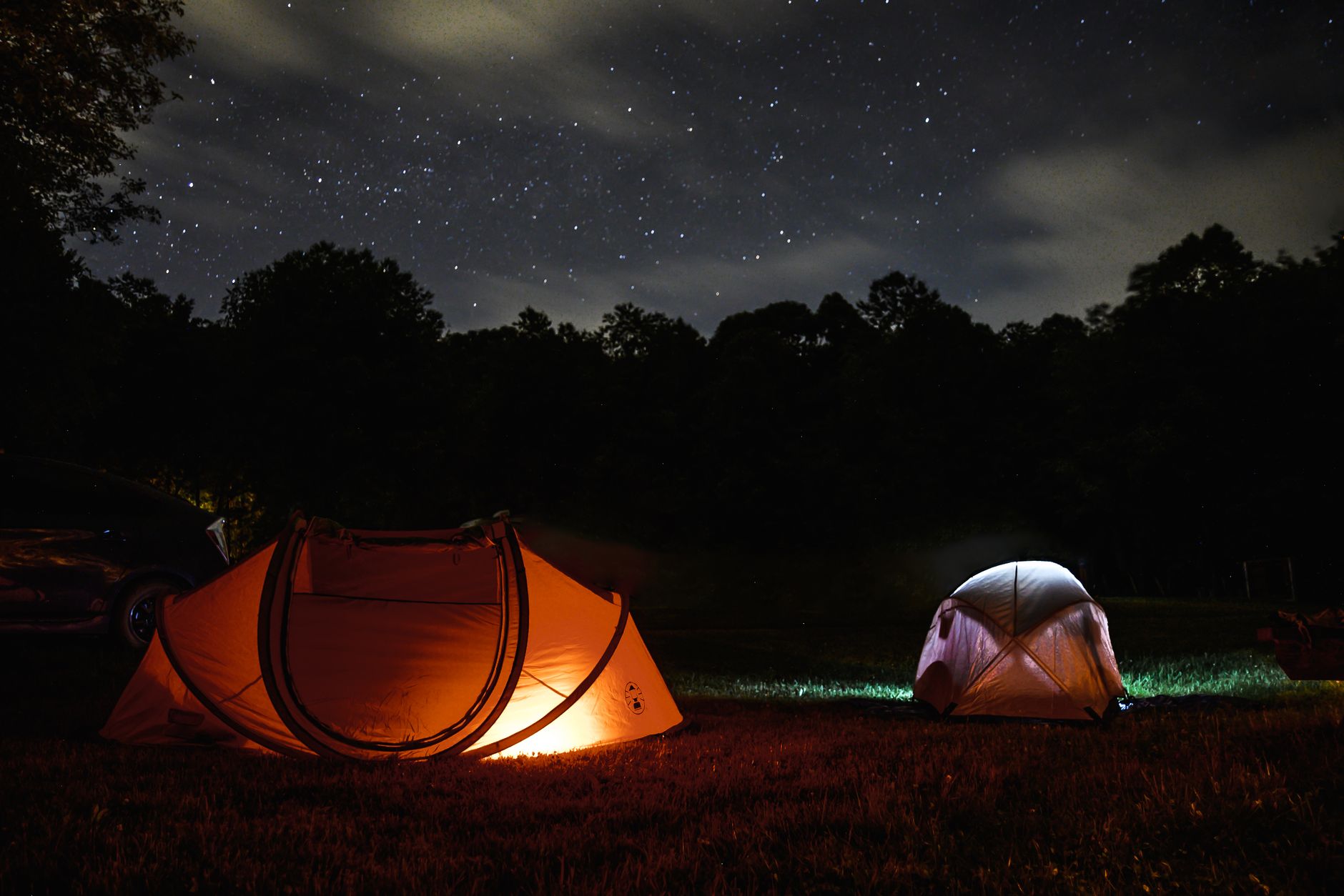
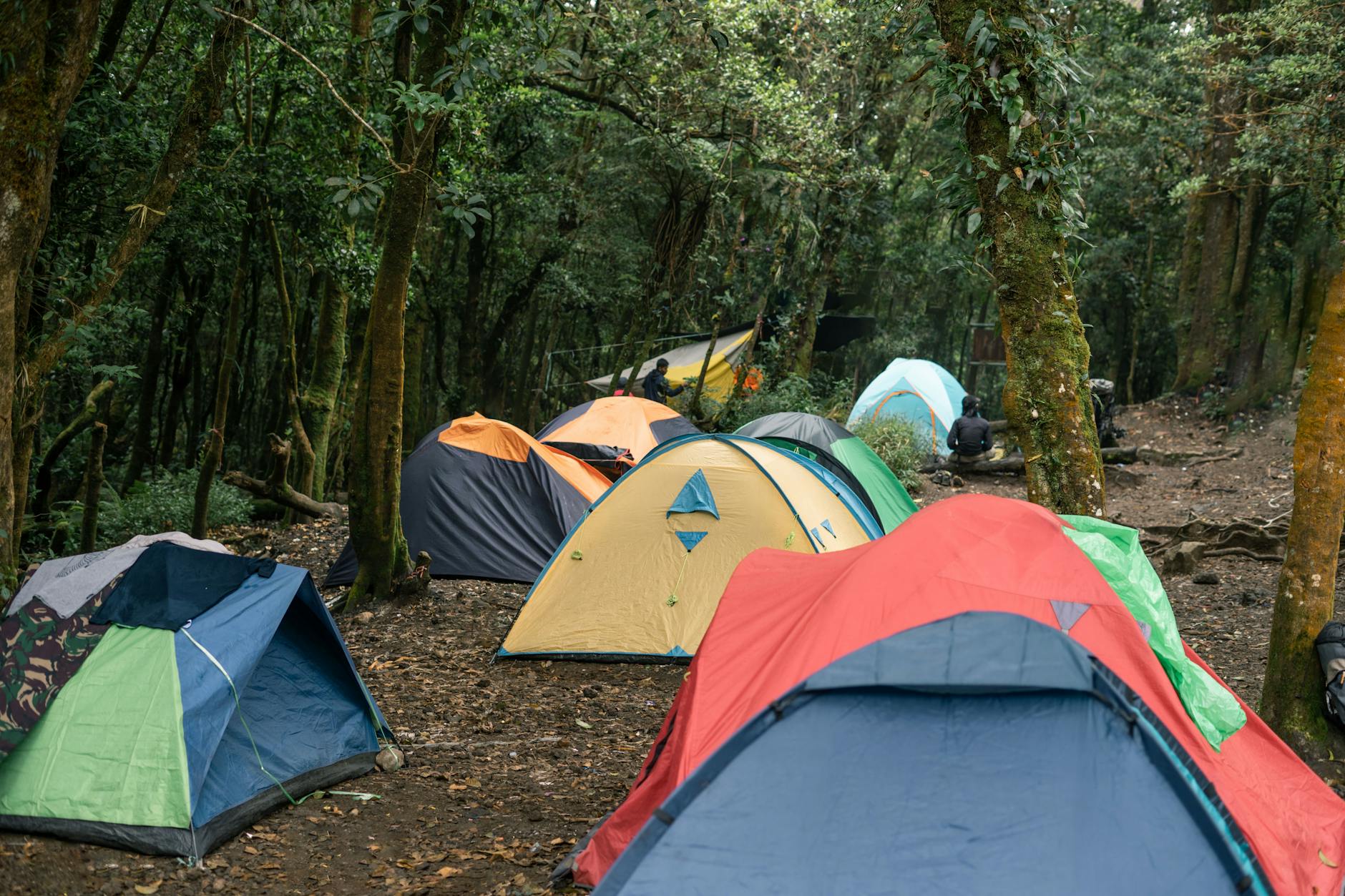
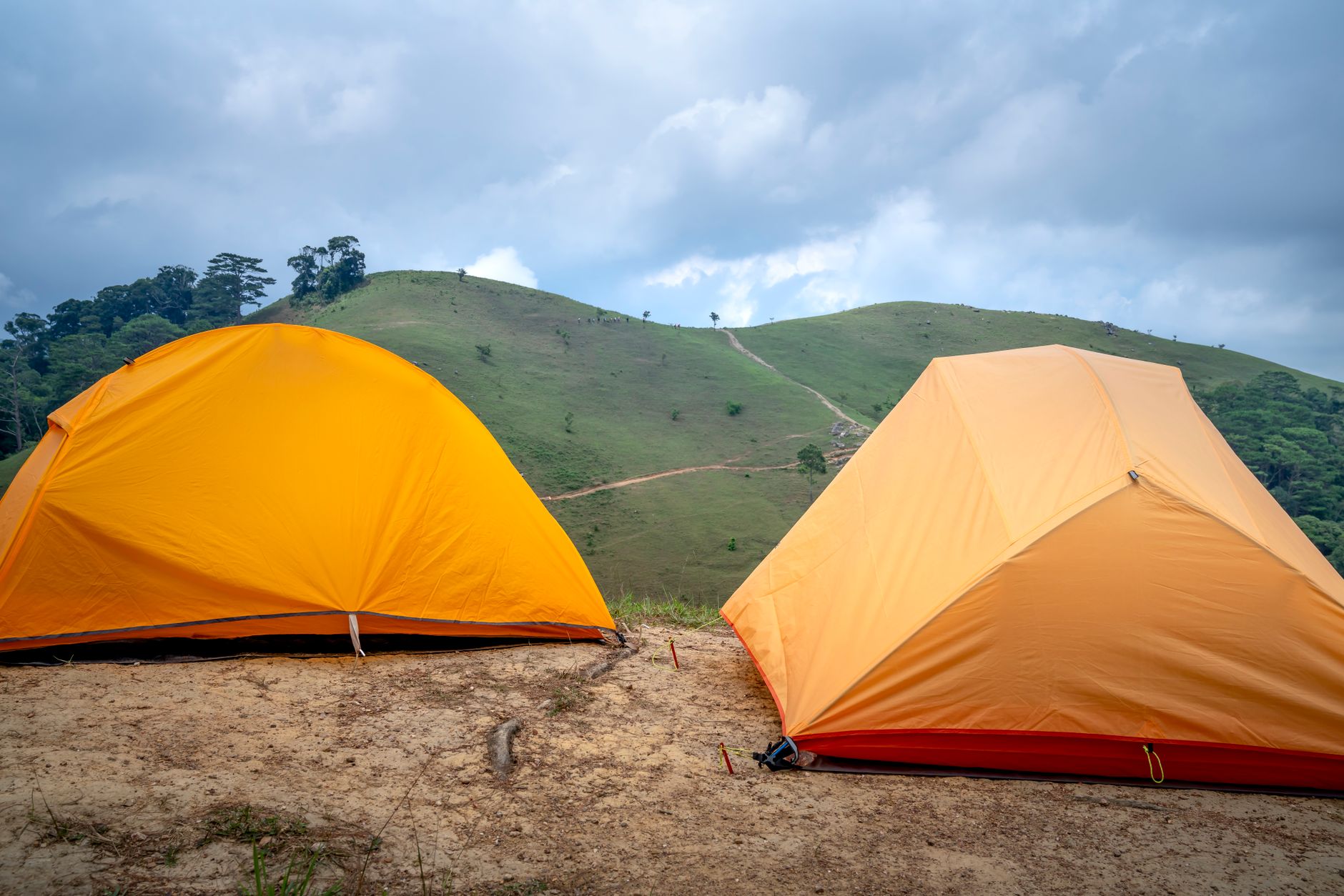
TENTs are shelters built to protect people from external factors and to continue their daily activities at a minimum level and have the feature of covering.
TENT TYPES
Tents are generally divided into non-framed and framed.
Skeletonless Tents: Made of two-layer material that is air and water impermeable. These are tents that can be set up by inflating them by letting air in between the layers. It is more suitable for creating larger spaces. It is sheltered and healthy. It is easy to set up and move. It is used for general purposes. The cost is high.
Skeleton Tents :
Half-frame Tents: These are tents made of fabric or tarpaulin material stretched only around the middle pole and around it. They are easy to install but are affected by environmental conditions. It can be used for personal, family and general purposes. There are also oba type tents that can be set up by adding small poles to the edges to expand the space.
It can also be set up as a large tent that can be used for general purposes (Dormitory, Dining Hall, Warehouse, etc.) by adding a few middle poles and many smaller poles.
Fully Skeleton Tents: The skeleton is created using aluminum or durable wood material. The skeleton is covered with fabric or other suitable material only on the outside or on the inside and outside of the skeleton. It can be used for personal, family and general purposes. Spaces of any desired size can be created. Those whose inner and outer sides of the skeleton are covered are extremely useful and healthy. Its disadvantage is that it takes a long time to install.
All tent types can be heated with any type of heater.
These tents listed above can be classified as personal, family and general purpose tents in terms of their types. They are used for holidays, temporary residence and headquarters purposes.
Tents Types According to Their Shapes
Tents are grouped into three groups according to their shape. In addition, there are models produced with different designs and materials in each group, depending on the number of people who will benefit from the tent, the climate of the region where the tent will be set up, and the duration of the event.
triangle tents
These tents are not resistant to wind and are difficult to set up. The tent must be fixed at 8 points in order to stand. They are usually used in spring or summer. Although they are considered not resistant to wind, they can withstand quite strong winds if the entrance is installed facing the opposite direction of the wind, the stakes are driven properly and the guy ropes are sufficiently tightened.
The structure of the soil where the piles will be driven is the primary factor in wind resistance. The harder the soil into which the pile will be driven, the more firmly the pile will sit. Moist and loose soil cannot hold the stake.
Since tent stakes are made of aluminum and its alloys to be light, they are not very strong materials and they warp quickly in very hard soil. The same will happen if there is a stone or rock under the ground. In this case, it is necessary to change the angle of entry to the ground slightly.
The tension ropes of the inner awning should be tightened as hard as possible. Of course, not enough to cause the fabric to tear. The tension ropes of the outer awning are also kept taut, but must provide a certain amount of stretch.
Today, triangular tents are produced from double-layered material. The interior material, that is, the material covering the living space, is generally a fabric with very high air and moisture permeability and provides very effective ventilation. The awning stretched over this, the material that prevents moisture and air flow, prevents the inside of the tent from being seen and provides a cover against moisture.
The inner awning completely surrounds the living space. The floor section is made of a thick, waterproof material. The outer awning is an external covering and is installed to stay about a span above the ground. This is necessary for the flow of air and therefore moisture.
It is generally used by amateur outdoor athletes for one-day or multi-day activities.
tunnel tents
They have a larger area than triangle tents and are more resistant to wind, but it is necessary to pay attention to the wind direction before setting up the tent. In order for this tent to remain stable, the tent must be fixed at 4 points.
It is a type of tent commonly used by professional mountaineers in camps that may last several days in extreme conditions.
dome tents
Due to their shape, they do not resist wind and this makes them wind resistant. They are preferred because they do not accumulate snow and are easy to install. They have large internal areas and do not require fixing from many points.
Tents types according to their intended use
Today, different tents are produced for different usage styles and different environments. When choosing a tent to be used for a particular event, it is necessary to choose a tent type that is suitable for the environment, climate, microclimate of the area where the tent will be erected, the number of people who will benefit from the tent, and the duration of use.
For this reason, people interested in nature sports and camping have more than one tent.
One of the conditions to be looked for in a suitable tent is the moisture permeability of the material. It is essential that the tent is able to expel moisture from the inside but prevent moisture from outside from entering. Double-decker tents are often used for this. However, single-layer tents made of Gore-Tex or similar breathable material are also used.
If possible, tents with a luggage compartment should be preferred. The trunk is the volume formed by waterproof fabric extensions outside the entrance section of the tent, covering the sides and top. It can be used as a storage area for wet and muddy materials that do not want to be taken into the tent, and it can also be used for cooking in snowy and rainy weather. However, this should only be tried in rainy weather; in dry weather, a fire should be lit outside the tent.
Inside the tent, fires, including cigarettes, should never be lit.
Triangular tents, which are airy and have larger internal volumes, are preferred for events in spring and summer. Tunnel tents will be more comfortable and safer for unpredictable weather conditions. In difficult climatic conditions such as snow, storm and rain, dome tents should definitely be preferred.
GENERAL PRINCIPLES TO BE CONSIDERED WHEN ESTABLISHING A CAMP:
Location and Ground Selection:
1- The ground should not be very soft or a hollow place that retains water. Ground that cannot be easily excavated by hand should be preferred.
2- If it is necessary to install it on a soft ground, the edge piles should be attached deep and the piles should be supported with stones around them. Channels should be opened for water drainage, and if the environment is likely to be muddy, the surrounding and in-camp roads should be covered with gravel or stones.
3- Areas with landslide or rockfall danger should not be chosen.
4- It should not be installed in or very close to ponds, closed basins or stream beds.
5- If possible, places that are sheltered against the prevailing winds of the region should be chosen.
6- It should not be installed in very crowded, underfoot and difficult to control places.
7- A place that can control the environment should be chosen.
8- It should be established in places away from noise, if possible, on roads with easy and alternative access to residential centers.
9- It should be close to a drinkable and usable water source.
Installation Order:
1- If a single tent is to be set up, it should be set up with the entrance facing south.
2- If large numbers of buildings are to be established for residential purposes, their entrances should be located to the south and out of sight of each other.
3- If it is to be established as a headquarters, the entrances should be in a (U) or circular arrangement, facing each other, and the headquarters tent should be located in a dominant place that can control all tents.
4- Tents set up for toilet, bathroom and laundry purposes should be set up in the area that will receive the last wind and at a certain distance from the settlement tents.
5- There should be a space between the tent blocks that is wide enough to provide access to vehicles and a distance of at least two meters between tents.
6- A waste center should be established at a certain distance from the camp center, using closed containers and disposable plastic bags for water and utility waste, and in a way that will catch the wind last.
7- The energy center should be established in the safest, sheltered place of the camp and in a constantly observable location, on the side that will receive the wind last.
8- Vehicles should be parked regularly in an area where they can maneuver at the edge of the camp, either with their cabins facing the center, forming one side of the (U) arrangement, or in the section of general purpose and outbuilding tents that will see the wind last.
Other Points to Consider:
Security:
1- Entrance and exit to the camp should be from a single point, and an alternative exit point should be determined.
2- Entrances, exits and the environment should be controllable.
3- Fire etc. To avoid danger, a distance that can be intervened between the tents should be maintained, and a center should be established to store the necessary materials for this purpose.
4- Electrical installations should not be installed in face-to-face contact with the tents.
5- Heaters should be used in accordance with the instructions for use in terms of fire hazard.
6- The materials to be used should be removed as needed and those whose work is completed should be placed in their places.
Cleaning:
1- The environment should be kept clean at all times.
2- Tents should be ventilated when not in them.
3- Blankets, sleeping bags, clothes and other items should be ventilated and sunbathed.
4- WC, bathroom, laundry and waste center surroundings should be kept clean and disinfected at all times.
5- Liquid soap must be used for personnel cleaning.
STORAGE AND STORAGE OF TENTS:
– Tents must be stored dry and clean, folded properly.
– Each tent should be packed with its own parts.
– An airy, dry warehouse should be chosen.
– The warehouse should be ventilated and cleaned from time to time.
– Tents should be stacked on racks if possible. It should be placed on a grill on the ground.
– From time to time, tents should be taken out of storage, spread out and left to sunbathe.
Parts made of metal, wood, ropes and ropes should be stored in clean and dry packaging. Materials that have expired as a result of periodic checks and are worn, worn, defective and unusable should be replaced with new ones immediately.
You May Like
Amasya Hotel Pension Accommodations