HomeHoliday-TravelUşak Ancient City – Blaundos (Blaunda)
Uşak Ancient City – Blaundos (Blaunda)
July 9, 2022
Blaundos is 2 km from Sülümendi village, located in the south-west of Ulubey district of Uşak. It is an ancient settlement located in the north. Blaundos was derived from a word from the Luwian language and adapted to the Hellenic language. No surface survey or archaeological excavation has been carried out in the area where Blaundos is located. His name is not mentioned in ancient sources. However, some ruins have survived to the present day in a very good condition.
For example, the arch of the entrance gate of the northern walls built in the Hellenistic age, some parts of the city walls, and the ruins of the Ionic style temple and other structures have survived. Also in the middle of the city, 7.60 x 14.20 m. The temple of the Roman Emperor Claudius and the stadium, which has seating levels on only one side, have survived to the present day in very good condition.
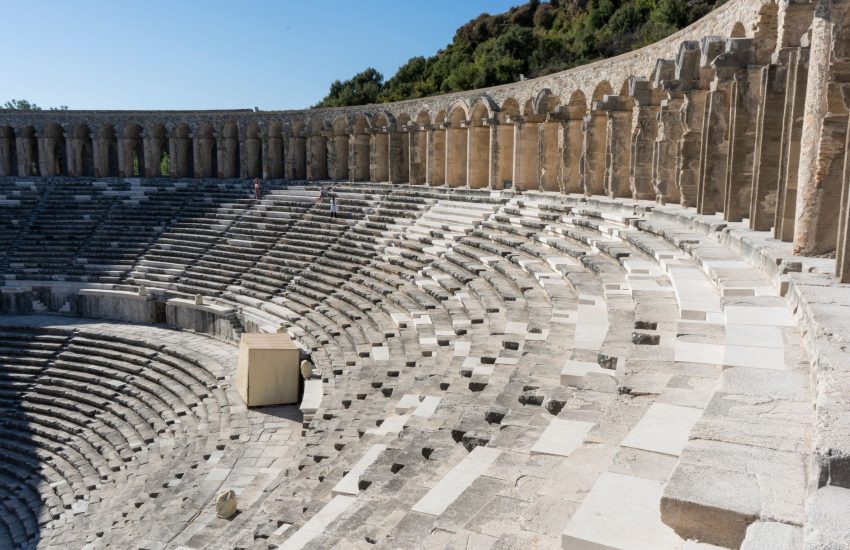
The ruins of the theater on the slope in the south of the city and the rock tombs right next to it also attract attention.
Klannoud (Uşak-Ulubey)
It is on the small hill that the villagers call Hâcet Castle, in the middle of two large hills behind the Kışla village on the road extending from Ulubey to Eşme in Uşak. It is thought that the word Klannoudda comes from the Lydian language. This name, which was later Hellenized, means “Holy Child”.
The information is extremely limited as there are no surface surveys or archaeological excavations where the city is located, where ancient sources do not provide sufficient information. Pottery sherds and architectural pieces can be found on the hill and scattered around. There are some ruins on the hill, thought to be the walls of the inner castle in the Acropolis. The stones of the city were probably used in the construction of the village.
Nais (İnay) (Uşak-Ulubey)
7 km from Ulubeyli district of Uşak province. 2 km from İnay village in the west. away. Nais means “water fairy” in the Hellenic language. Prof. Bilge Umar writes that there was plenty of water in the area where İnay village is located and the villagers covered this reservoir with concrete in 1975. Although Buresch and H.Keil made some studies on the city, they could not provide sufficient information. For this reason, the history of the city remained dark.
The stones where the city is located were used during the Roman period, and the Ottomans removed the stones for the construction of the caravanserai in the surrounding area. However, not much has survived to the present day, except for the arched gate of the Hellenistic walls and the ruins thought to belong to Nnymqhaeion.
Opsikion, Ovsekyon (Uşak) (Uşak-Central)
49 km from Manisa’s Salihli District. It is in the middle of a volcanic plain surrounded by mountains to the east. Strabo also refers to this place as Katakekaumene (burnt area). Opsikion, one of the names of the mother goddess in Anatolia, means “Place of the People of the Mother Goddess”. It is unknown when Opsikion was founded and its history. Additionally, some different claims have been put forward regarding its location.
According to some, today’s Kula district is identified with Opsikion. Prof.Bilge Umar says that Opsikion is not in Kula. Byzantine historians wrote that it was on the ridges. However, Opsikion was founded in the pit between the hills in Kula. XIII.
While mentioning the places dominated by the Byzantine Empire, which moved to Nikaeia (Iznik) in the 16th century, the following phrase was found: “Saittai and Koula, which have castles next to Magidon and Opsikion…” This shows that Kula is near Opsikion and is not the same place as it. No surface survey or archaeological excavation has been conducted in this region. In this regard, it is very difficult to provide information that will concretize the claims.
Only where the city is thought to be located, marble architectural pieces, inscriptions and a Kybele relief were found. In addition, the votive stele of the god Men, who healed the son of a woman named Onesime, is in the Uşak Museum today. antiquetravelcitytravelholiday
A Favor
A person who does not make the world better is not human.
Post navigation
PrevNext
Similar Articles
Kedrai – Kedreai, Kedreiai – Sedir Island Trip
Knidos Datça Travel Guide
Ancient Cities Around Bodrum Travel Guide
Iasos Ancient City Milas Travel Guide
Leave a replyCancel replyYour email address will not be published.
Required fields are marked *Comment * Name *
Email *
website
Δ
document.getElementById( “ak_js_1” ).setAttribute( “value”, ( new Date() ).getTime() );
Good Introduction
Log in
Username:
Password:
remember me
Log in
Sign up
lost password
New Articles
subartramer
How to Make an Open Computer Case?
TRANSPORT OF RESPIRATORY GASES (O2-CO2) IN BLOOD
HIP JOINT: BONES AND LIGAMENTOUS SYSTEM
OVERVIEW OF CELL STRUCTURE
Current issues
I am a 4th year midwifery student and I need a scholarship.
All mimsy were the borogoves, And the mome raths outgrabe. http://biriyilik.com
Kayseri Kahraman Maraş Malatya Adıyaman Gazi Antep Urfa Earthquake Risk
Possible Earthquake in the Sea of Marmara May Affect Depending on Its Size
Live Earthquake Information
Forums
Those Who Want to Stay in Nature
Literature Club
Those Who Ask Where Is The Old Music?
News
Homework Resource Repository
Travel Routes
Technology and Science Club
Those who want to help
Help Requests
Assistance Requests
Those Who Want to Help
You May Like
Aspendos Ancient Theater Travel Guide