On a small island in the heart of Copenhagen stands a palace unlike any other in the world. Christiansborg is the only building on earth that houses, under a single roof, all three branches of a nation’s government, the parliament, the supreme court, and the office of the prime minister, together with the grand reception rooms still used by the monarch. It is at once the seat of Danish democracy and a royal palace, the meeting point of the crown and the people.
The island on which it stands, known as the Castle Islet, has been the centre of Danish power for more than eight centuries, ever since a bishop built the first castle here and, in doing so, founded the city of Copenhagen. Palace has succeeded palace on this spot, twice destroyed by fire and twice rebuilt, so that the present Christiansborg is the latest in a long line of seats of power reaching back to the Middle Ages.
Behind its granite walls lie a soaring tower, magnificent royal halls hung with modern tapestries that tell the whole story of Denmark, the chambers of parliament and court, the royal stables, and, deep beneath, the excavated ruins of the very first castle. In the sections that follow you will get to know this extraordinary building, its unique role, and the eight hundred years of history layered on the little island at the heart of the Danish capital.
In This Article
- Arriving at Christiansborg
- Three Branches Under One Roof
- Absalon and the Island of Slotsholmen
- Three Palaces and Two Great Fires
- The Palace You See Today
- The Folketing and Danish Democracy
- The Royal Reception Rooms
- The Queens Tapestries
- The Ruins Beneath Your Feet
- The Royal Stables and Riding Grounds
- Where Monarchy Meets Democracy
- A Closer Look on Film
- Christiansborg Today
The Palace on the Castle Islet
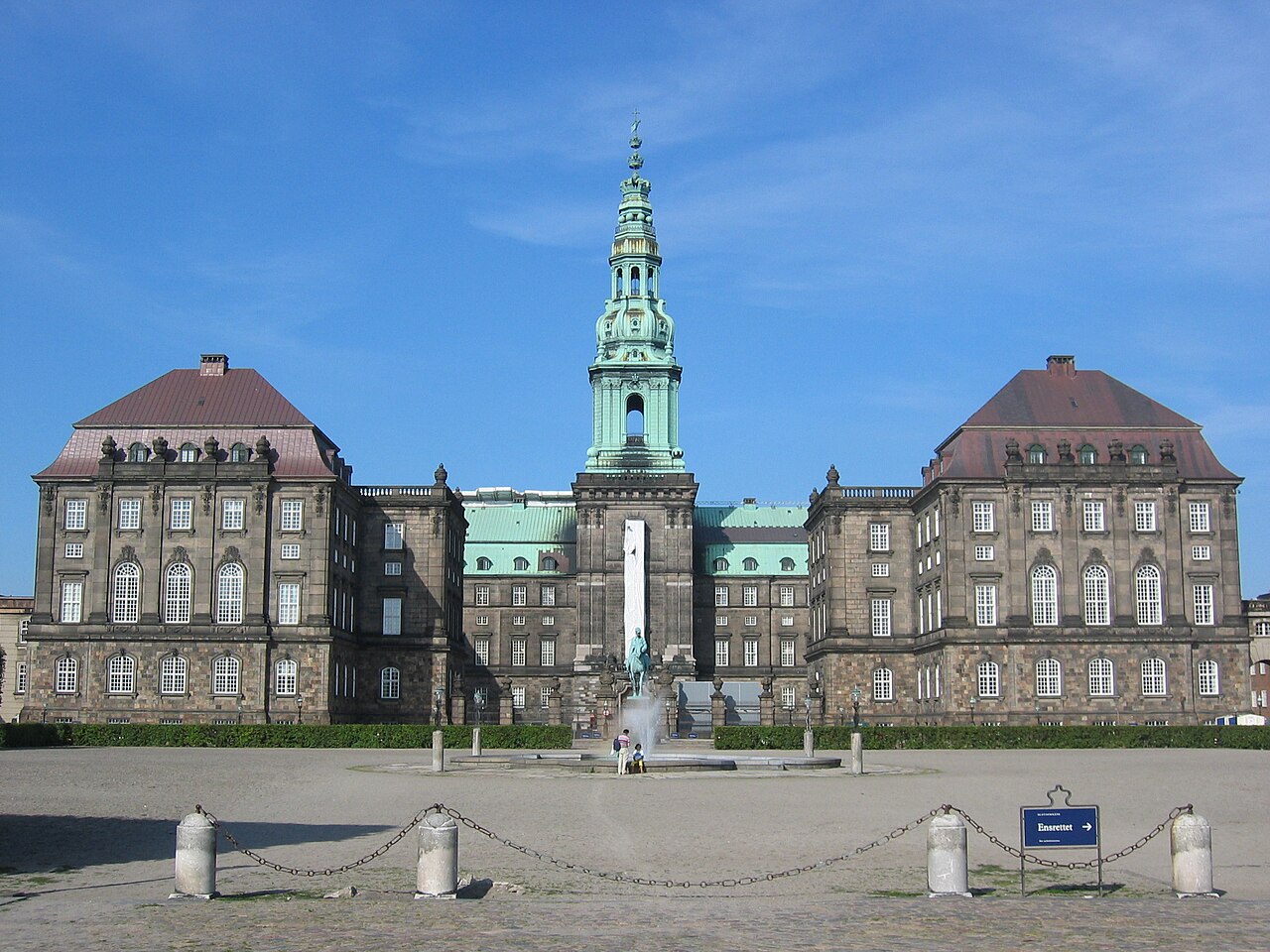
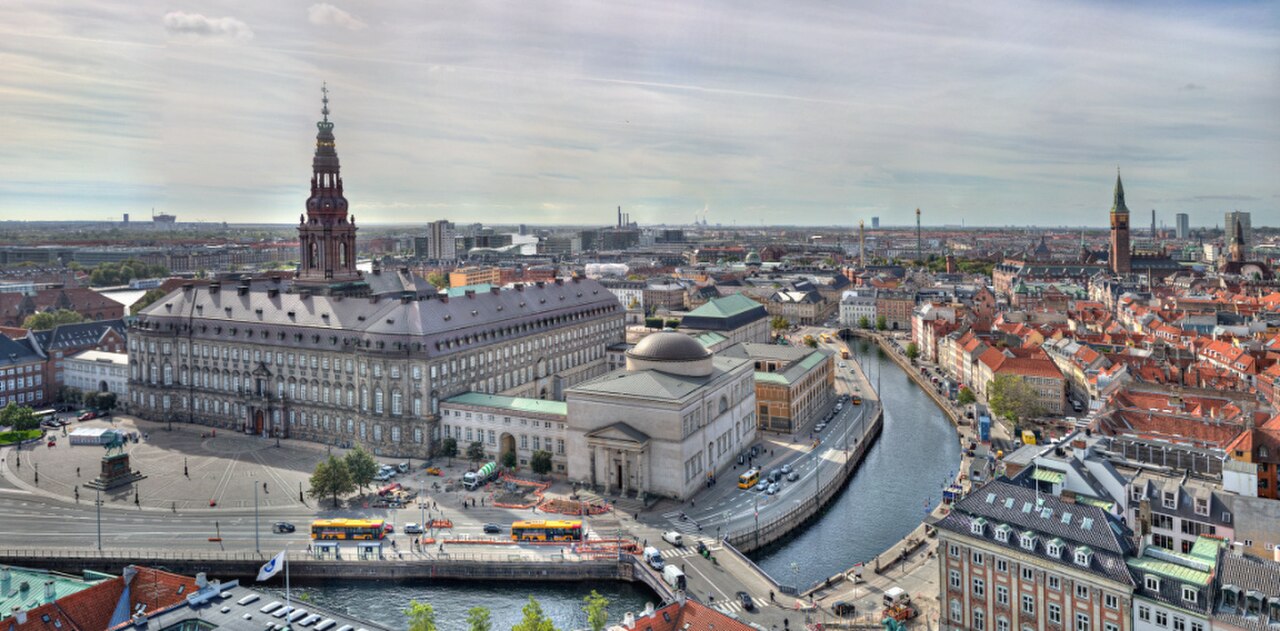
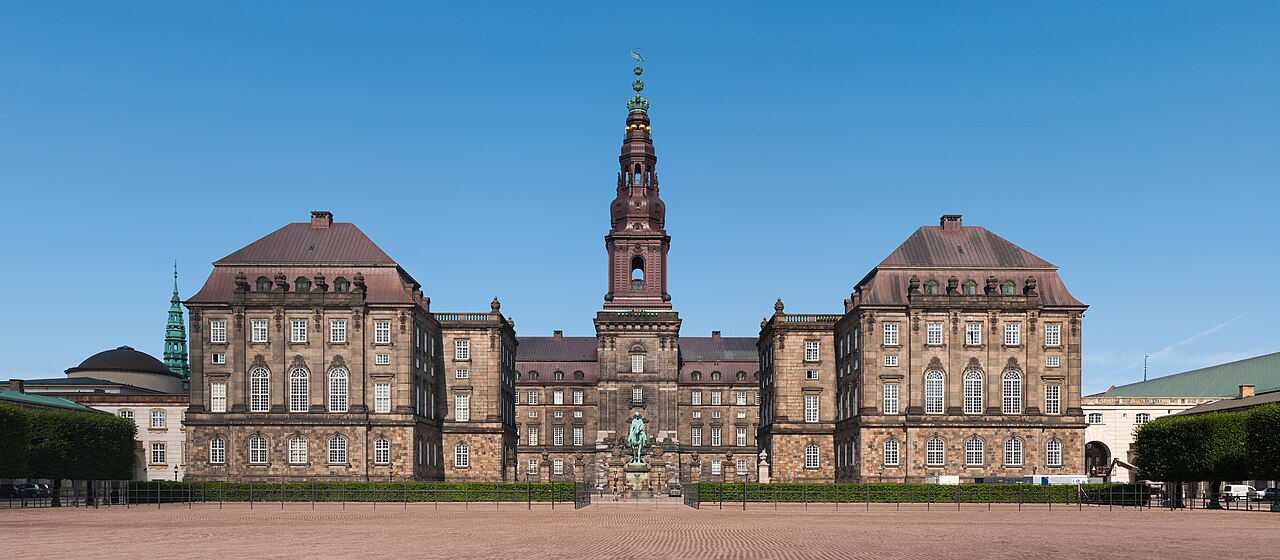
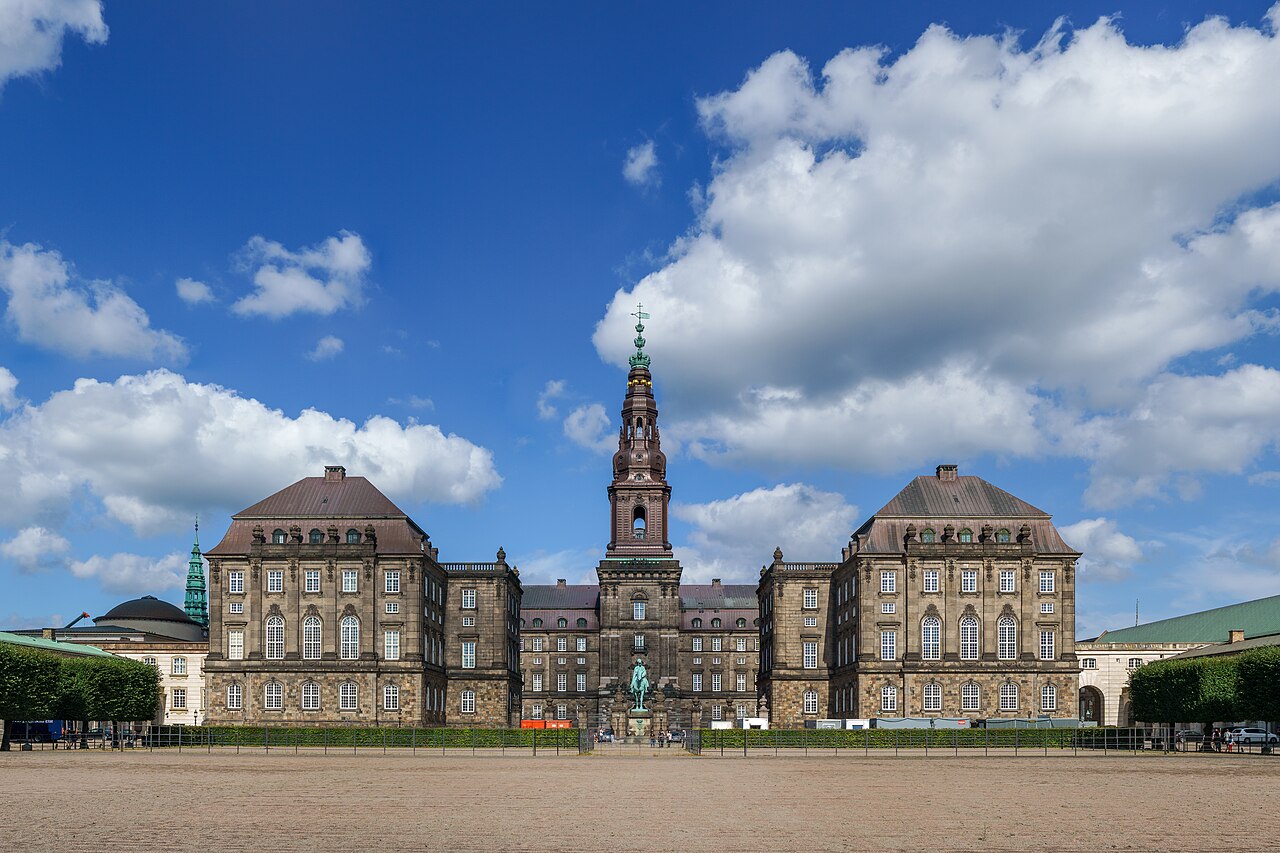
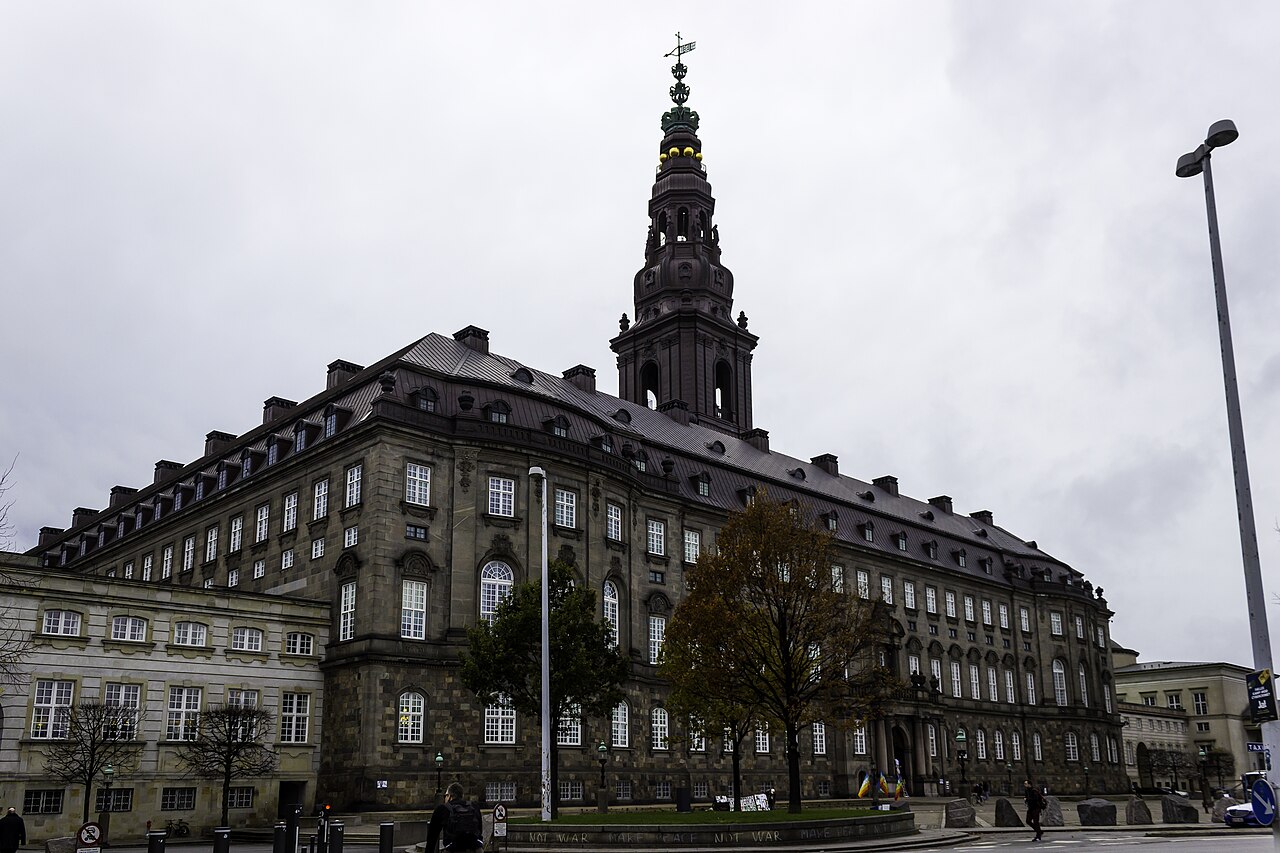
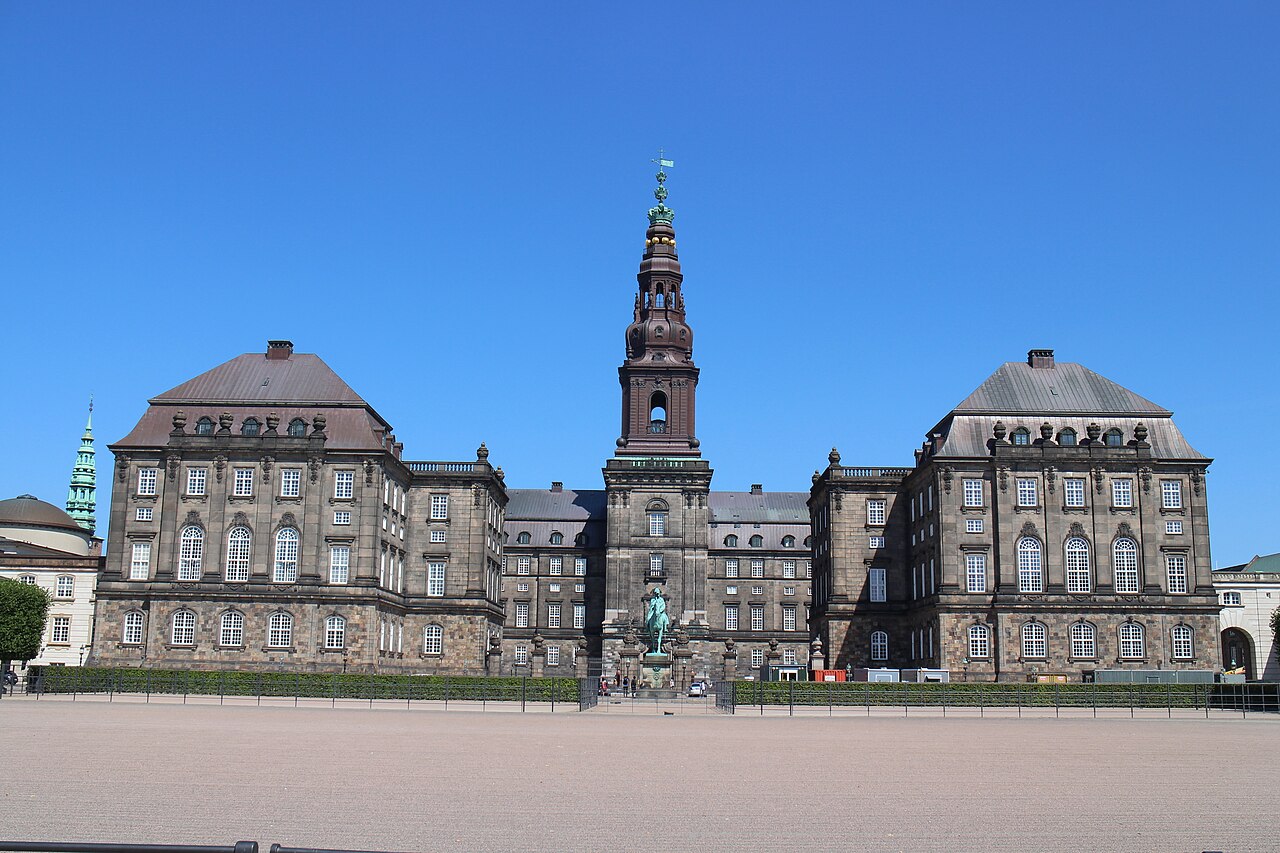
Christiansborg occupies the whole of a small island in central Copenhagen, a site known as Slotsholmen, or the Castle Islet, which has been the seat of power in Denmark for centuries. The palace is a vast and imposing complex of grey granite, dominated by a tall tower that rises above the city, and it presides over the surrounding canals, bridges, and squares at the very heart of the capital.
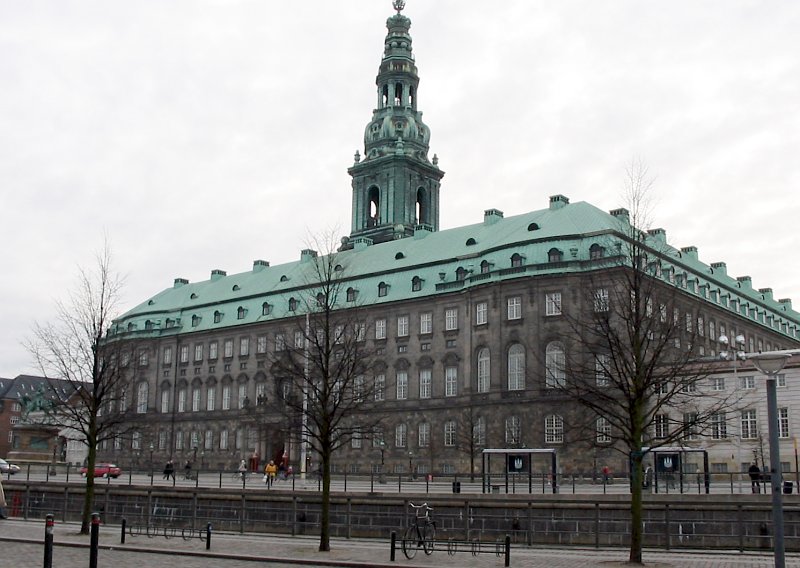
The building is grand and somewhat severe, in a heavy neo-baroque style, its granite facades and monumental scale conveying the seriousness of its role as the seat of the Danish state. Its tower, the tallest in the city, is a landmark visible across Copenhagen, crowned with a spire and offering, for those who climb it, sweeping views over the capital.
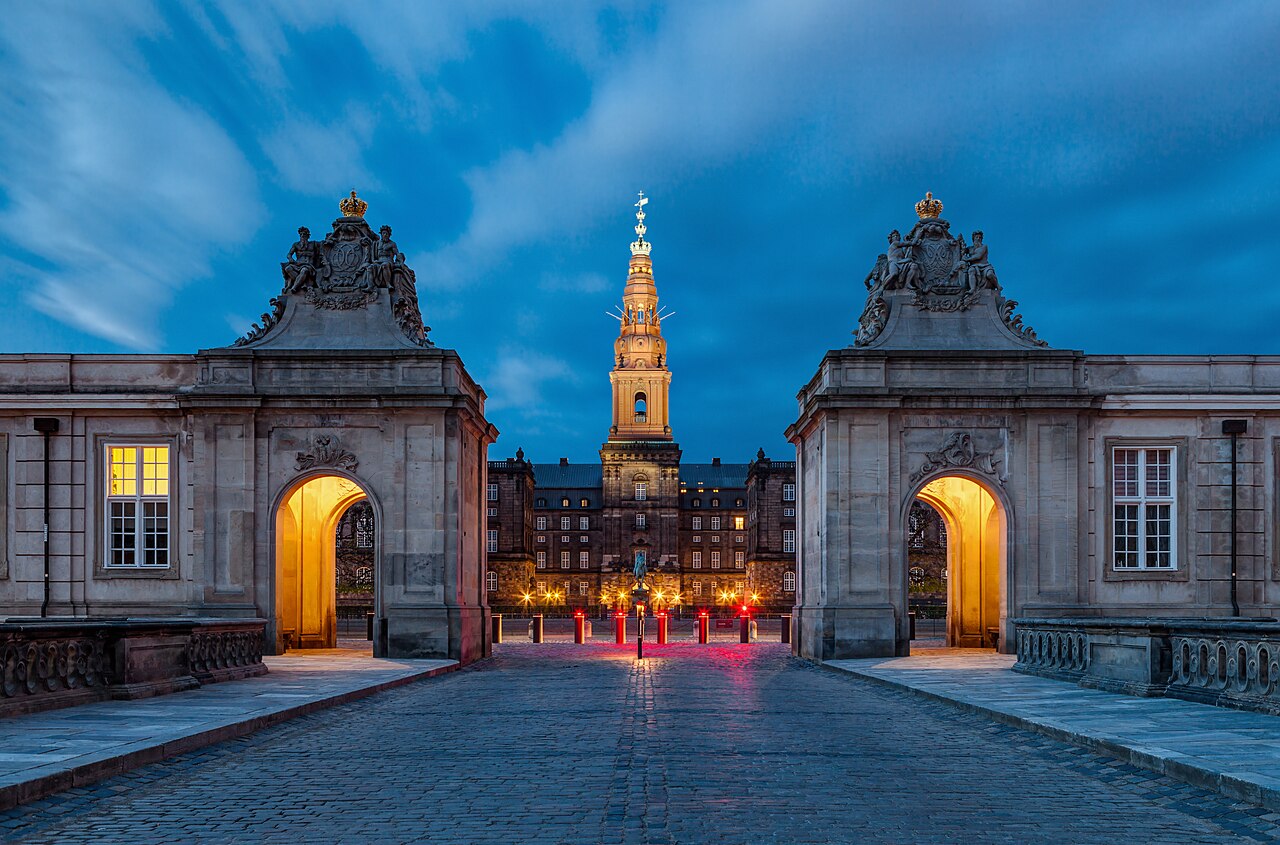
Around the palace lie the other buildings of the complex, including the royal stables, the chapel, and the riding ground, together with the bridges and squares that connect the island to the rest of the city. The whole ensemble forms a monumental government and royal quarter, the administrative and ceremonial heart of Denmark, gathered on and around its historic island.
To arrive at Christiansborg is thus to arrive at the centre of the Danish nation, the place where its government works and its monarch performs the ceremonies of state. Grand, historic, and unique in its combination of functions, the palace is one of the most important buildings in the country, a seat of power layered with more than eight centuries of history.
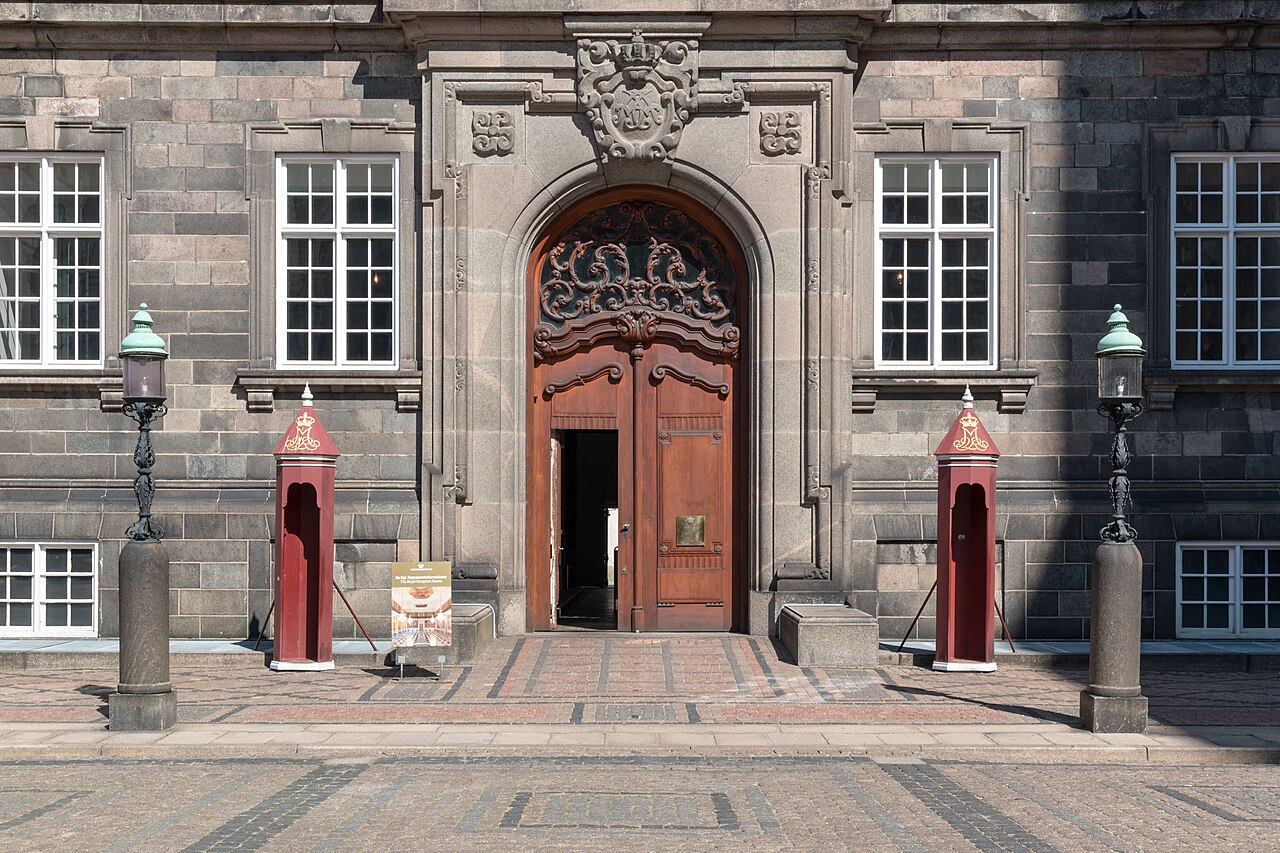
Give yourself a moment before you go inside. The scale of Christiansborg only registers when you stand still and let your eyes travel from the granite base up to the copper roofline, and you realize you are looking at a building that has been rebuilt from ashes more than once and still refuses to feel like a replica. There is something honest about a palace that wears its survival so plainly.
You will notice, too, how ordinary life carries on right beside all this grandeur. Commuters cut across the island on their way to work, cyclists thread past the equestrian statue, and the guards change without much ceremony most days. This is not a museum sealed off behind velvet rope; it is a working center of Danish public life that happens to be extraordinarily beautiful.
Where All Three Powers Meet
What makes Christiansborg truly unique is that it houses, within a single building, all three branches of a nation’s government. Here sit the Danish parliament, the supreme court, and the office of the prime minister, so that the legislative, judicial, and executive powers of the state all share the same palace, an arrangement found nowhere else in the world.
This concentration of the three powers in one building is a remarkable expression of the workings of Danish democracy. The parliament debates and legislates, the supreme court delivers justice, and the prime minister leads the government, all within the walls of Christiansborg, so that the palace is, in a very real sense, the beating heart of the Danish state.
Alongside these branches of government, the palace also contains the royal reception rooms, used by the monarch for official functions, so that the crown too has its place at Christiansborg. The building thus unites the democratic institutions of the modern state with the ceremonial role of the ancient monarchy, bringing together the elected and the royal in a single seat of power.
This extraordinary combination gives Christiansborg a significance beyond that of any ordinary palace or parliament. It is a physical embodiment of the Danish constitution, the place where the powers of the state and the dignity of the crown coexist, and to understand it is to understand the very structure of the Danish nation, gathered under one great granite roof on its island in the capital.
It helps to think of Christiansborg less as a single institution and more as a truce between forces that in most countries live in separate buildings entirely. Here they share walls, corridors, and a history, and the arrangement forces a kind of daily conversation between them that shapes how Denmark governs itself.
When you understand that layering, the whole visit changes. You stop seeing rooms and start seeing relationships, the way a monarch’s reception hall sits a short walk from a chamber where elected representatives argue over budgets and laws. Few places in the world compress so much of a nation’s machinery into one footprint.
The Bishop Who Founded a City
The history of Christiansborg begins more than eight centuries ago, when a powerful bishop built a castle on the little island to guard the approaches to a growing settlement. This castle, and the community that gathered around it, marked the founding of Copenhagen, so that the story of the Danish capital begins on the very spot where Christiansborg now stands.
The bishop’s castle guarded the harbour and the trade routes, and over the centuries the settlement it protected grew into a great city and, in time, the capital of Denmark. The island remained the centre of power throughout, its castle rebuilt and replaced as the fortunes of the kingdom changed, but always the seat from which Denmark was ruled.
The remains of this original castle survive, remarkably, beneath the present palace, where they were excavated and can be visited today, a tangible link to the very origins of Copenhagen and of Danish royal power. These ruins connect the modern seat of government directly to its medieval beginnings, a span of history few sites anywhere can match.
The founding of the city by the bishop’s castle gives Christiansborg a depth of history that reaches back to the birth of Copenhagen itself. The island has been the centre of Danish power without interruption from that day to this, and the present palace is only the latest chapter in a story that began with a medieval fortress guarding a harbour, more than eight hundred years ago.
Slotsholmen has always been about control of the water. Whoever held this small island held the approach to the harbor, and that simple geographic fact turned a defensive gesture in the twelfth century into the seed of a capital. Every later builder inherited that logic whether they thought about it or not.
Standing on the island today, you can still read that story in the way the canals wrap around the built-up core. The moat is gone in spirit but the shape remains, a reminder that this seat of power began as a fort meant to keep enemies from slipping past into the heart of the young town.
Palaces Built and Burned
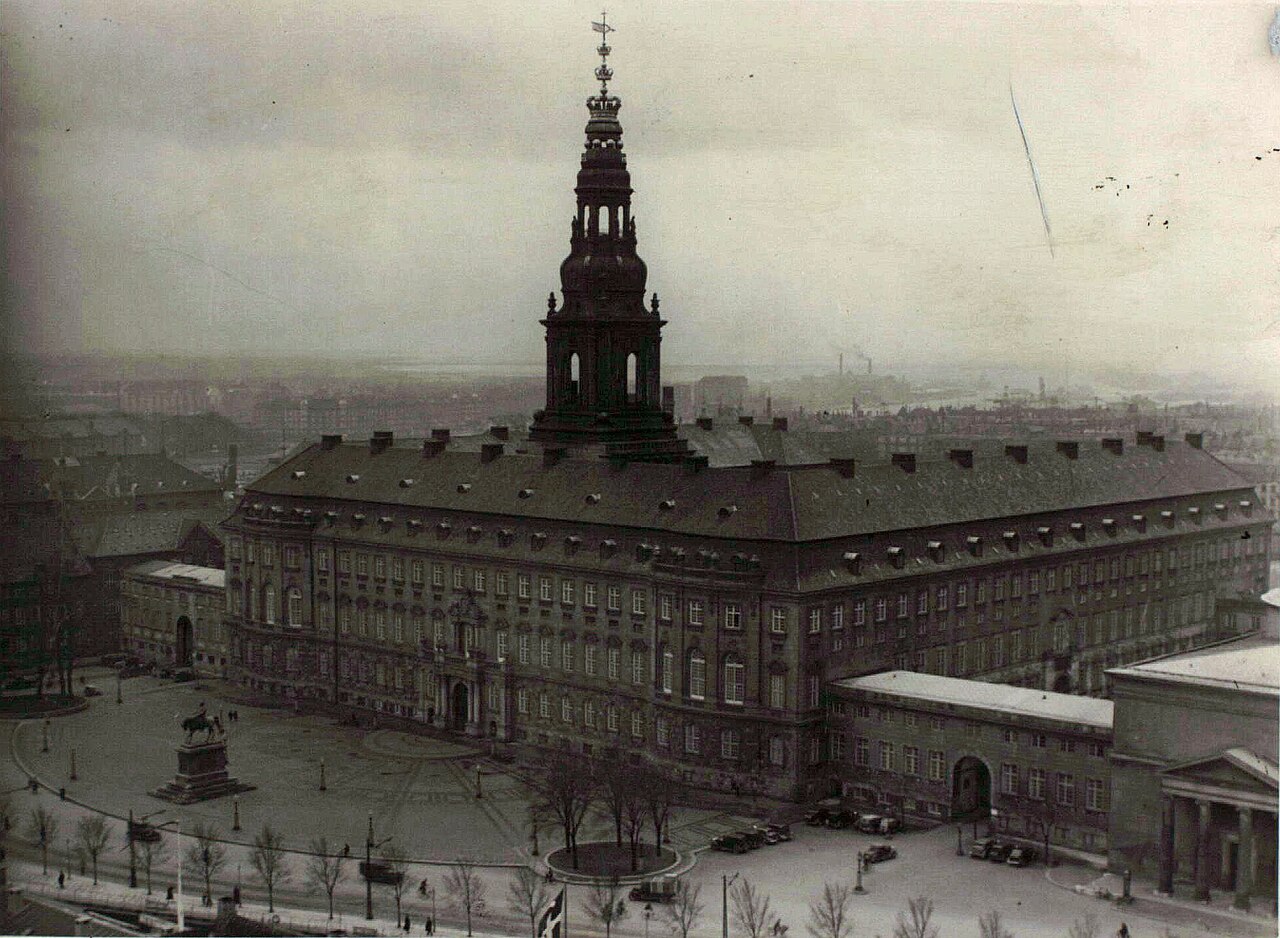
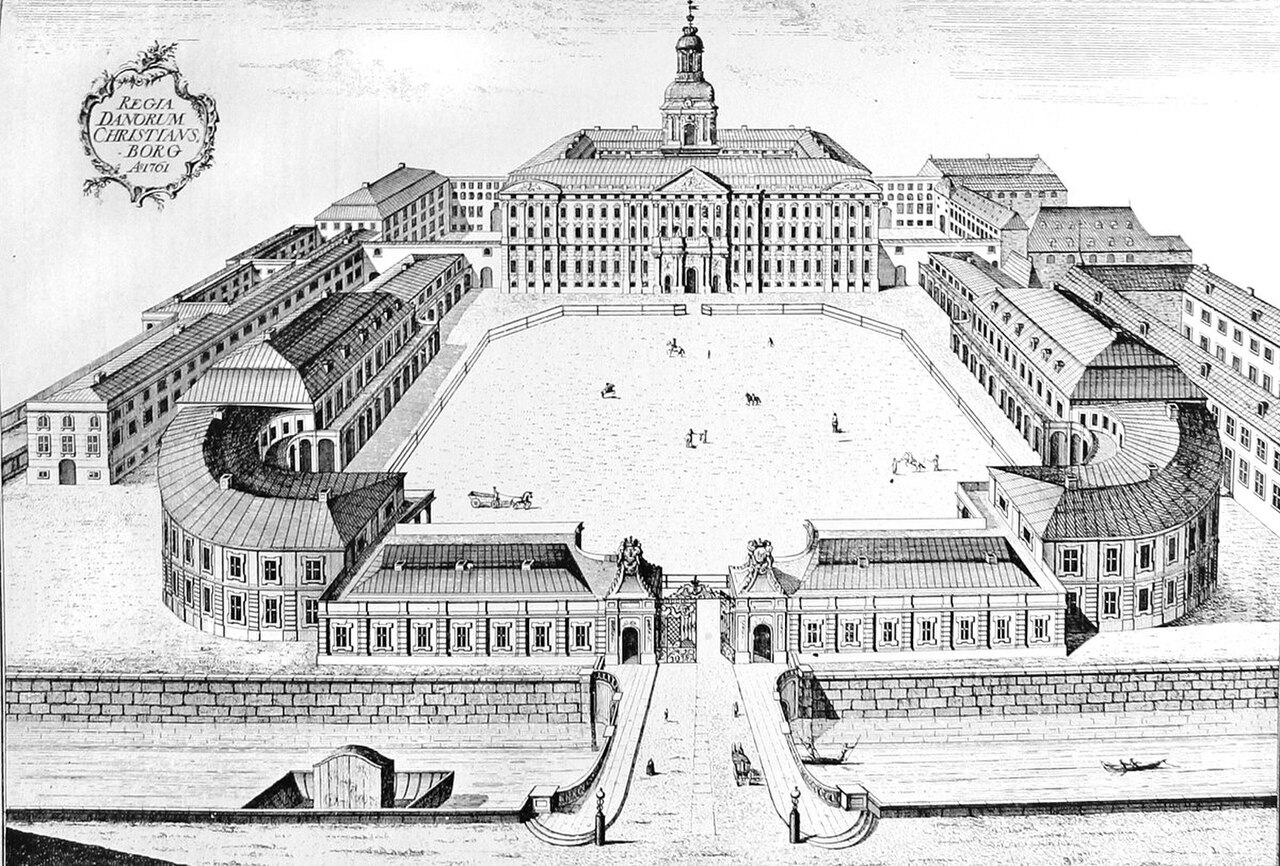
The present Christiansborg is the third palace of that name to stand on the island, its predecessors having twice been destroyed by fire. The first Christiansborg, a magnificent baroque palace built in the eighteenth century, was one of the grandest royal residences in northern Europe, but it was consumed by a devastating fire that left it in ruins after only a few decades.
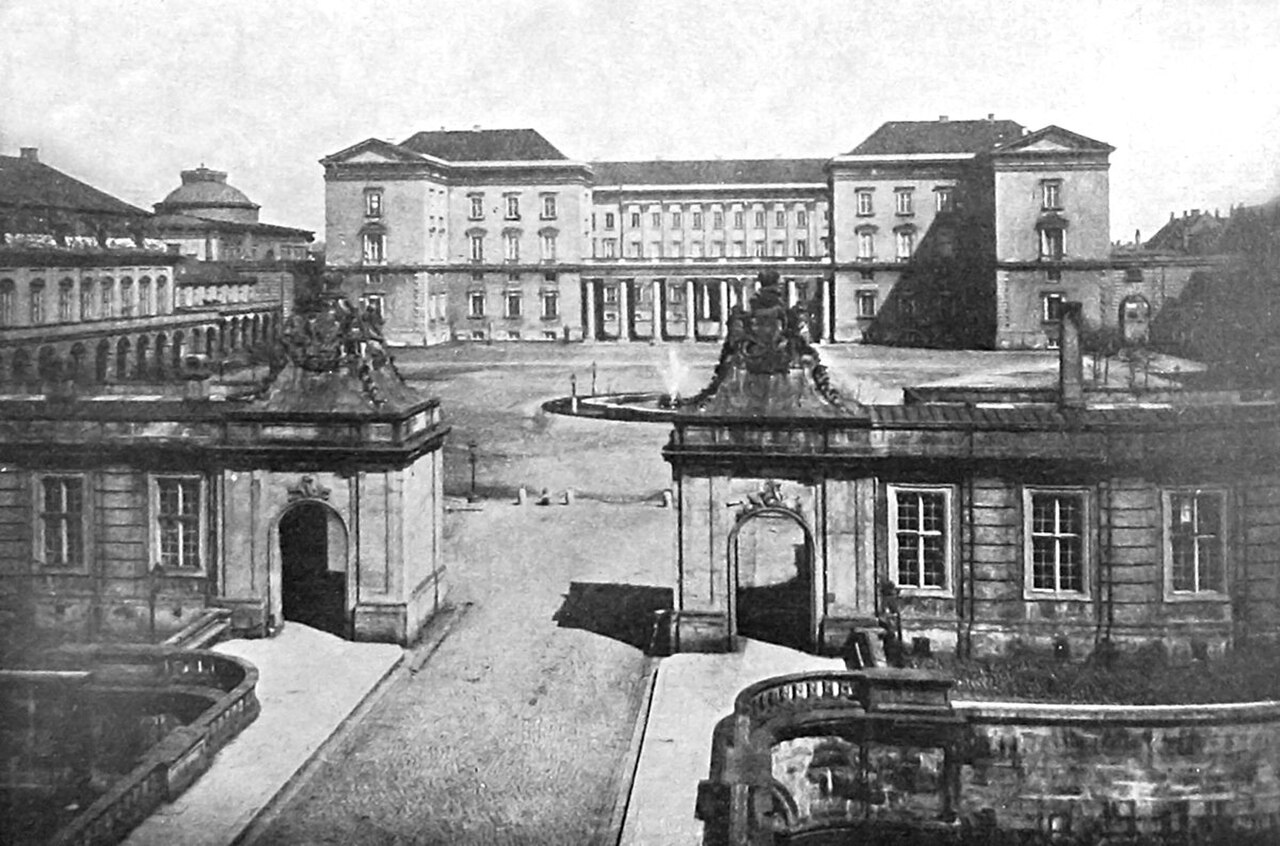
A second Christiansborg was built to replace it in the early nineteenth century, in a more restrained classical style, but this too fell victim to fire, burning down later in the century and once again leaving the seat of Danish power in ashes. Twice, then, the great palace on the island was reduced to ruins, and twice the nation set about rebuilding it.
These repeated fires are a striking feature of the palace’s history, a reminder of how vulnerable even the grandest buildings were to such disasters in the age before modern fire protection. Each time, the destruction was a great loss, sweeping away splendid interiors and treasures, but each time the importance of the site ensured that a new palace would rise in place of the old.
The present palace, the third Christiansborg, was built in the early twentieth century, and it was constructed with fire resistance very much in mind, so that the seat of Danish power might at last be secure. Its history of fire and rebuilding is part of what makes Christiansborg so fascinating, a palace that has risen three times on the same ancient island, each incarnation reflecting the age that built it.
Fire is the recurring villain in Christiansborg’s story, and it is worth sitting with just how devastating those blazes were. A palace that took decades and fortunes to raise could be reduced to a blackened shell in a single night, and twice the Danes chose to build again on the same scarred ground rather than walk away. That stubbornness tells you something about what the site means.
Each rebuilding also became a chance to reinvent, so the palace you see is not a frozen copy of any single lost original but a considered response to loss. Architects folded new tastes and new technologies into each version, which is why the building feels coherent rather than nostalgic.
The Third Christiansborg
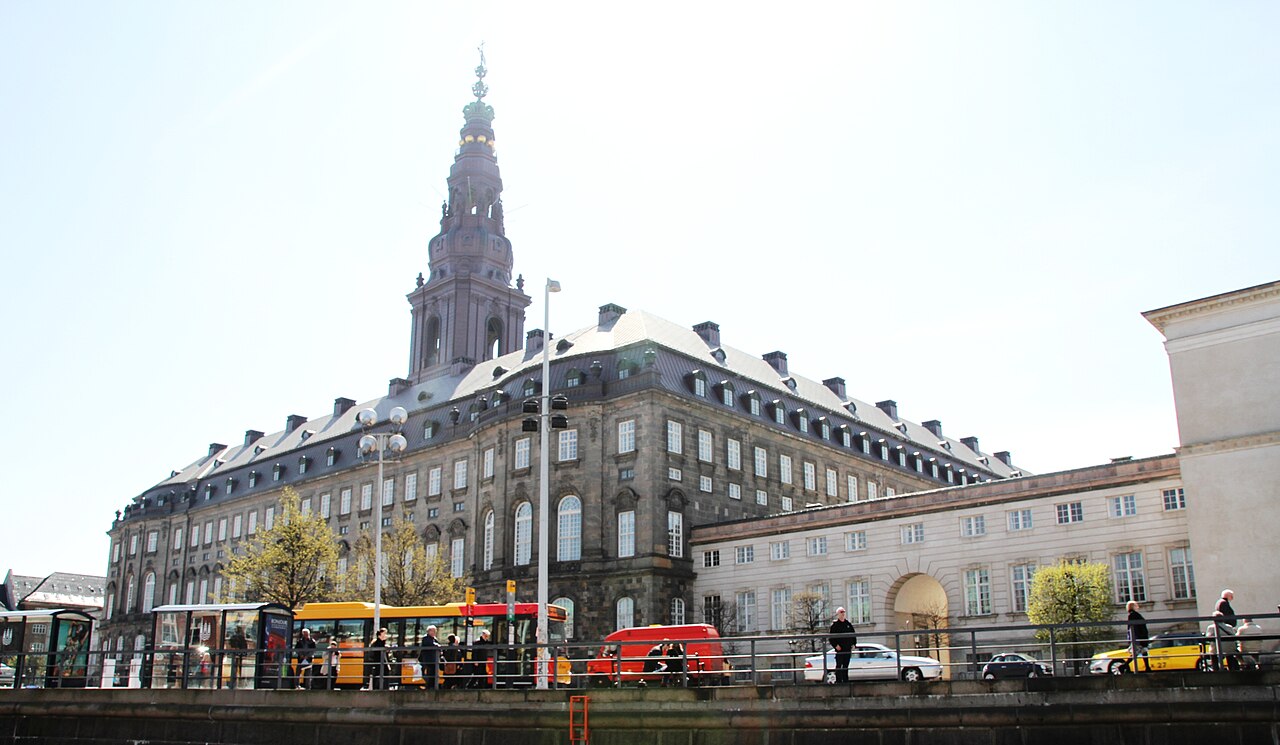
The Christiansborg that stands today was completed in the early twentieth century, built in a monumental neo-baroque style of grey granite, designed to be both grand and fireproof after the disasters that had destroyed its predecessors. It is a massive and imposing building, its scale and its heavy stone facades expressing the seriousness of its role as the seat of the Danish state.
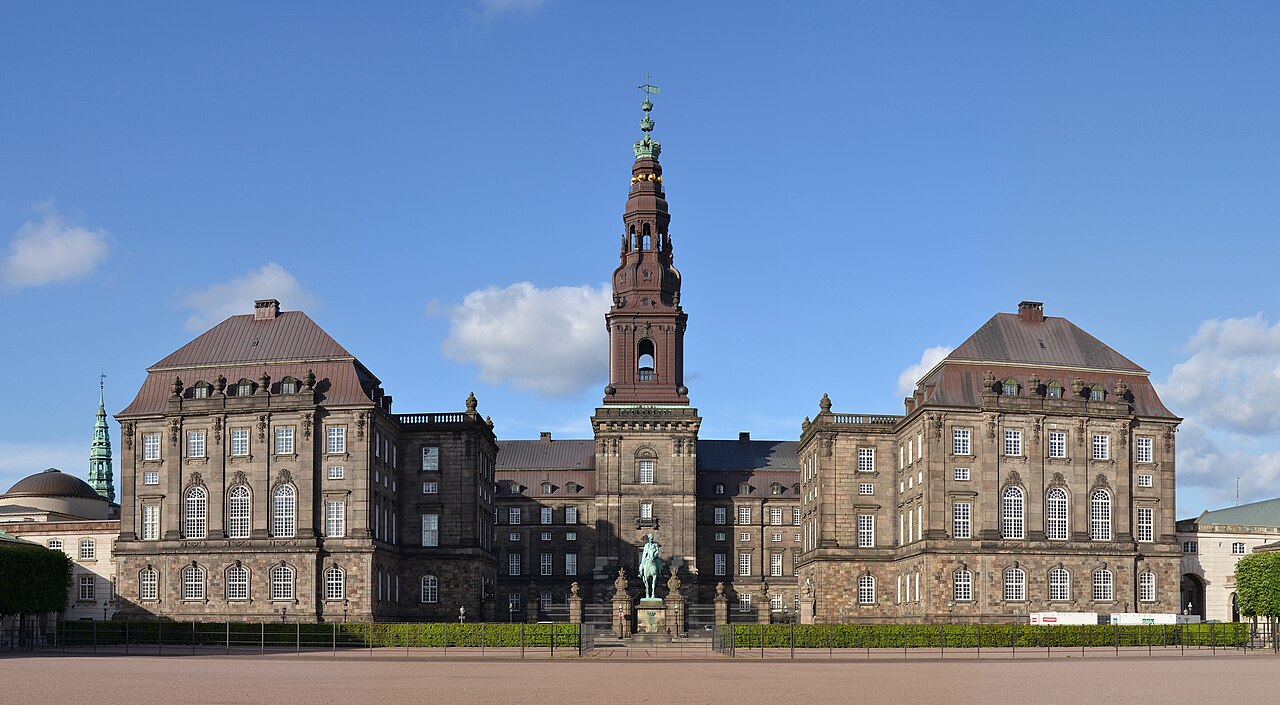
The palace is crowned by a great tower, the tallest in Copenhagen, which rises high above the city and has become one of its landmarks. The tower is open to visitors, who can ascend it for panoramic views over the capital, and it gives the palace a distinctive and commanding silhouette on the Copenhagen skyline.
Inside, the palace contains the chambers of parliament and court, the offices of government, and the grand royal reception rooms, arranged within the vast building according to their various functions. The interiors range from the businesslike spaces of the modern state to the sumptuous halls used for royal ceremony, reflecting the palace’s dual role as a seat of democracy and a royal residence.
Built to endure, the third Christiansborg has served for a century as the secure and monumental seat of Danish power. It combines the grandeur of a royal palace with the practical functions of a modern government building, and its granite walls and soaring tower have made it one of the defining monuments of Copenhagen, the latest and most durable of the palaces to rise on the ancient island.
The current palace, completed in the twentieth century, carries itself with a heavier, more monumental confidence than its predecessors. The designers reached for granite and a severe neo-baroque language meant to project permanence, as if daring fire and fate to try again. Whether that gamble paid off is something you can judge for yourself as you walk the halls.
Look closely at the craftsmanship and you will find that this was no rushed reconstruction. Skilled workers were given time to get the details right, from the carved stone to the ironwork, and the result rewards the kind of slow, attentive looking that so many grand interiors quietly ask of us.
The Home of Danish Democracy
At the heart of Christiansborg’s role as the seat of the state is the Danish parliament, which has its home within the palace. Here the elected representatives of the Danish people meet to debate and pass the laws of the nation, so that the palace is the living centre of Danish democracy, the place where the nation governs itself.
The parliament chamber and the surrounding halls and offices form a working legislature within the palace, busy with the daily life of democratic government. Visitors can see something of this, and the presence of the parliament gives Christiansborg a vitality quite different from that of a museum, for it is a place where the real business of the nation is conducted every day.
That the parliament should share a building with the monarch’s reception rooms, the supreme court, and the prime minister’s office is a vivid expression of the Danish political system, in which an ancient monarchy and a modern democracy coexist. The palace embodies this balance, housing the elected legislature at the heart of a building that is also a royal palace.
For the Danish people, the parliament at Christiansborg is the centre of their national political life, the place from which their laws come and their government is held to account. Its presence makes the palace not only a monument of history and a royal residence but a living institution of democracy, ensuring that Christiansborg remains, as it has been for centuries, the true seat of power in Denmark.
Sitting in or near the Folketing chamber is a strangely moving experience, because you are watching democracy happen in real time rather than reading about it on a plaque. Denmark runs much of its national life from these benches, and the room manages to feel both weighty and refreshingly unpretentious, which says a great deal about the political culture that fills it.
If your visit lines up with a session, take the chance to observe. Even without understanding every word, you absorb the rhythm of debate, the give and take, the sense that this is a place where decisions are argued into being rather than handed down.
The Royal Reception Rooms
Although the monarch does not live at Christiansborg, the palace contains the grand royal reception rooms, used by the sovereign for the official functions and ceremonies of the crown. These sumptuous halls are among the most splendid interiors in Denmark, the setting for state banquets, the reception of foreign dignitaries, and the great ceremonial occasions of the monarchy.
The reception rooms are richly decorated and furnished, providing a magnificent backdrop for royal ceremony within the palace that is otherwise the seat of the government. When the monarch entertains a visiting head of state or holds a great official occasion, it is here, in these grand halls, that the event takes place, so that the palace serves as the ceremonial home of the crown.
The grandest of these spaces is the Great Hall, a vast and richly adorned room used for the most important royal occasions, capable of seating large numbers of guests at a state banquet. It is one of the most impressive interiors in the country, and it is here that some of the palace’s most remarkable modern treasures are displayed.
For visitors, the royal reception rooms are among the highlights of a tour of Christiansborg, offering a glimpse of the ceremonial splendour of the Danish monarchy within the seat of the state. To move through these grand halls is to experience the royal face of a palace that is also a parliament, the place where the crown performs its role at the heart of the democratic nation.
The royal reception rooms are where Christiansborg lets itself be unabashedly splendid, and after the sober politics elsewhere in the building the contrast is delicious. Gilded surfaces, soaring ceilings, and chandeliers that seem to hover all conspire to remind you that this is still, in a real sense, a monarch’s house used for the business of state.
Take your time in each room and resist the urge to rush toward the famous tapestries. The details reward patience, from the parquet underfoot to the painted panels overhead, and the sequence of spaces was designed to build anticipation, each doorway framing the next in a way that makes the whole procession feel choreographed.
Tapestries That Tell a Nation’s Story
Among the greatest treasures of the royal reception rooms is a magnificent series of modern tapestries that hang in the Great Hall, telling the entire history of Denmark from the mists of legend to modern times. These tapestries, created by a leading Danish artist and presented to the queen, are one of the most remarkable works of modern art in the country.
The tapestries were a gift to the reigning queen on the occasion of a great birthday, the fruit of many years of work, and they depict the sweep of Danish and world history in a vivid, colourful, and imaginative style. Covering the walls of the Great Hall, they transform the room into a visual chronicle of the nation, from its earliest myths to the present day.
Rich in detail, symbolism, and humour, the tapestries blend historical figures and events with allegory and imagination, offering a personal and artistic vision of Denmark’s past and future. They are at once a celebration of the monarchy, a history of the nation, and a major work of contemporary art, and they draw visitors from around the world.
Hanging in the grandest hall of the seat of Danish power, the tapestries unite the ancient and the modern, the royal and the artistic, in a single spectacular display. They are among the most beloved treasures of Christiansborg, and they give the Great Hall a unique character, turning the ceremonial heart of the palace into a woven history of the Danish nation.
The tapestries are the emotional heart of the palace for many visitors, and it is easy to see why. They compress a thousand years of Danish history into woven color, and standing before them you feel the ambition of a nation trying to tell its own story in thread rather than stone.
Give yourself permission to linger over a single panel rather than trying to absorb them all at once. The artist packed each one with incident and symbol, and half the pleasure lies in slowly decoding what you are looking at, catching a detail on the second glance that you missed on the first.
The Ruins Beneath the Palace
Deep beneath the present palace lie the excavated ruins of the medieval castles that preceded it, including the remains of the very first castle built by the bishop who founded Copenhagen. These ruins, discovered and preserved during the construction of the current palace, can be visited today, offering an extraordinary journey into the origins of the site.
Walking among the old walls and foundations beneath the modern palace, visitors can see the physical remains of the medieval fortress and its successors, a tangible link to the beginnings of Copenhagen and of Danish royal power. The ruins connect the present seat of government directly to its medieval roots, spanning more than eight centuries of continuous history on the same spot.
The preservation of these ruins beneath the palace is a remarkable act of respect for the past, allowing the deep history of the site to be experienced alongside its modern functions. Few seats of power anywhere offer so vivid a demonstration of continuity, with the medieval origins of the state literally underlying the buildings of the present.
For visitors, the ruins are among the most fascinating parts of Christiansborg, a descent into the foundations of the Danish capital and monarchy. To stand among the remains of the bishop’s castle, beneath the palace that houses the modern parliament and crown, is to grasp the extraordinary span of history gathered on this small island, from the founding of a city to the seat of a modern democracy.
Descending into the ruins beneath the palace is like stepping into a different register of time entirely. Up above, everything is polished and ceremonial; down here, the raw medieval foundations speak in a plainer, older voice, and the temperature drop alone signals that you have crossed into another world.
There is a quiet thrill in laying your eyes on the actual stones that Absalon’s builders set in place, the literal bedrock of everything that rose afterward. It grounds the whole visit, reminding you that all the gold upstairs ultimately rests on this stubborn, unglamorous fort by the water.
The Royal Stables and Riding Ground
Part of the Christiansborg complex is given over to the royal stables and the riding ground, a grand equestrian establishment that survives from the great days of the palace and remains in use today. The stables house the horses used by the royal family for ceremonial occasions, along with historic carriages and equipment, and they are among the most charming parts of the complex.
The stables and riding ground date in part from the era of the first great Christiansborg, having survived the fires that destroyed the main palaces, so that they preserve something of the eighteenth-century splendour of the original complex. Their grand architecture and their continuing use for the royal horses make them a living link to the ceremonial traditions of the monarchy.
Visitors can see the royal horses in their stalls, admire the historic carriages and the beautifully appointed stable rooms, and learn about the role of horses in the ceremonial life of the crown. The stables offer a different and delightful perspective on the palace, connecting its grand halls to the practical and picturesque world of royal horsemanship.
The riding ground, the open space around which the stables and related buildings are arranged, completes this equestrian quarter of the complex, and it is used for ceremonial occasions. Together the stables and riding ground add greatly to the interest of Christiansborg, preserving a piece of the old palace and keeping alive the equestrian traditions of the Danish court within the modern seat of power.
The royal stables are one of those unexpected delights that make Christiansborg feel more human. There is something wonderfully grounding about the smell of horses and leather in the middle of all this state grandeur, a reminder that a palace was once a living household with practical needs as well as ceremonial ones.
The riding grounds carry that same everyday-and-extraordinary mix. Once you picture the space alive with hooves and carriages, the marble halls upstairs stop feeling quite so remote, and the whole complex knits together into a single working world rather than a series of showpieces.
Crown and People Under One Roof
Christiansborg is, in the end, a building that embodies the character of the Danish nation, in which an ancient monarchy and a modern democracy coexist in harmony. By housing the parliament, the court, the government, and the reception rooms of the crown all within a single palace, it makes visible the balance between the elected and the royal that defines the Danish state.
This coexistence is not merely symbolic but practical, for the various institutions genuinely work within the palace, and the monarch genuinely performs official functions in its halls. The building is thus a living demonstration of how a constitutional monarchy operates, with the crown and the democratic institutions sharing the same historic seat of power.
The arrangement reflects a long process of historical development, by which Denmark evolved from an absolute monarchy into a modern democracy while retaining its crown. Christiansborg, the ancient seat of the kings, became also the seat of the parliament and the government, so that the palace itself charts the transformation of the Danish state across the centuries.
For Danes and visitors alike, this union of crown and people under one roof is one of the most striking things about Christiansborg. It is a palace that is also a parliament, a royal seat that is also the home of democracy, a building in which the whole structure of the nation is gathered together. In this, Christiansborg is unique among the palaces of the world, and it stands as a monument to the distinctive genius of the Danish constitution.
What makes Christiansborg genuinely rare is that it never asks you to choose between crown and parliament. Both are here, side by side, and the building embodies a kind of national compromise that Denmark has spent centuries refining into something that works.
Walking from a chamber of elected debate into a hall built for royal ceremony, you feel that balance physically. Neither side has swallowed the other; instead they coexist, and the palace stands as a quiet argument that tradition and democracy need not be enemies.
The Palace on Film
The grandeur and the unique character of Christiansborg, its granite facades and soaring tower, its royal halls and famous tapestries, its parliament and its ancient ruins, are wonderfully conveyed in film, and the short feature below offers a tour of the palace and its many roles. Watching it alongside this article helps bring the seat of Danish power to life.
If you are planning a visit to Copenhagen, a video like this is a fine way to prepare, helping you appreciate the different parts of the palace, from the royal reception rooms and tapestries to the ruins beneath and the views from the tower, and to understand the palace’s extraordinary combination of functions.
And if a visit to Denmark lies beyond your plans for now, the film lets you explore the seat of Danish democracy and monarchy from afar. Let it play, and picture yourself before the great granite palace on its island in Copenhagen, the only building in the world where a nation’s parliament, court, government, and crown all share a single roof.
Visiting Christiansborg Today
For travellers to Copenhagen, Christiansborg is one of the essential sights of the city, set on its historic island at the very centre of the capital and offering an unusually rich and varied visit. Several parts of the palace are open to the public, including the royal reception rooms, the ruins beneath, the royal stables, the chapel, and the tower, each with its own character and history.
A visit rewards ample time, for there is much to see: the grand royal halls with their famous tapestries, the excavated ruins that reach back to the founding of the city, the charming royal stables, and the panoramic views from the tower, which is free to climb. Together these offer a full picture of the palace’s history and its many roles.
Because Christiansborg is a working seat of government, with the parliament, court, and prime minister’s office all housed within it, access to certain areas is naturally restricted, and it is worth checking what is open at the time of your visit. The public areas, however, offer more than enough to make the visit rewarding, from the royal to the democratic to the ancient.
However you come to it, Christiansborg offers a rare and fascinating encounter with the heart of the Danish nation. To visit is to experience, in a single building, a royal palace, a parliament, a court, and the ruins of a medieval castle, layered with more than eight centuries of history on the island where Copenhagen itself was born. Few places anywhere gather so much of a nation’s story into one great granite palace.
These days Christiansborg wears its many roles lightly. On any given day it might host a head of state, a parliamentary vote, a courtroom hearing, and a stream of curious visitors, all under one vast roof, and somehow it absorbs all of it without losing its dignity.
That living quality is exactly what makes a visit worthwhile. You are not touring a relic; you are stepping briefly into a place that still matters to the people who run and inhabit it, and that sense of ongoing life lingers long after you leave.
Palaces Nearby
If Christiansborg has whetted your appetite for royal architecture, two more working residences in nearby capitals make natural next stops on any northern European journey.
- Noordeinde Palace in The Hague, the quiet working office of the Dutch monarch, hidden among the city’s shops.
- the Royal Castle of Laeken, the private home of the Belgian royal family, famed for its glorious greenhouses.
You May Like


One thought on “Christiansborg Palace, Where Denmark’s Crown and Parliament Share a Roof”