On the western edge of Kassel, at the foot of a vast hillside park crowned by a colossal statue of Hercules, stands one of the most impressive classical palaces in Germany. Wilhelmshoehe Palace was built at the end of the eighteenth century for the landgraves of Hesse Kassel, and together with its mountain park, waterfalls and fountains it forms a UNESCO World Heritage Site.
The palace has seen remarkable episodes of European history. It was the residence of Napoleon’s brother Jerome as king of Westphalia, the place where Napoleon III was held prisoner after his defeat in 1870, and a favourite summer home of the German emperor Wilhelm II. Today it houses a world famous gallery of Old Master paintings.
In this article we will explore Wilhelmshoehe from the landgrave who built it to its art collections, its historic apartments and the spectacular park and water features above it, and we will finish with practical tips for your visit.
In This Article
- A Palace Beneath the Hercules
- Landgrave Wilhelm IX and His Vision
- Du Ry, Jussow and Classical Grandeur
- A Panorama of Palace and Park
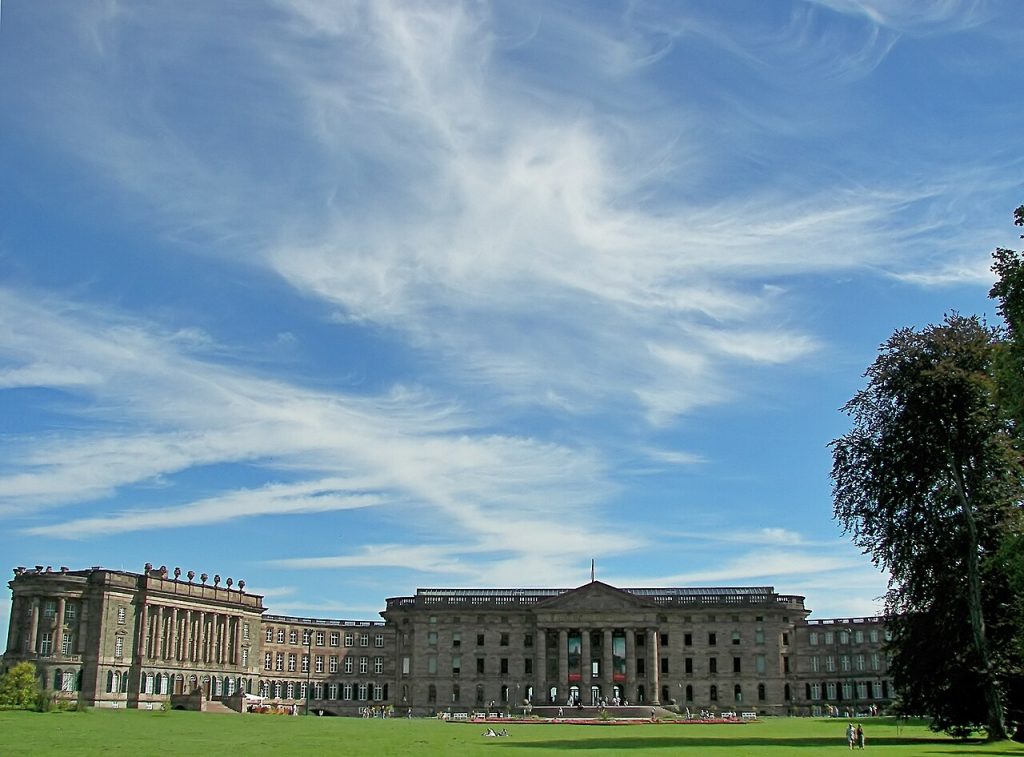
- The Portico and the Facades
- The Old Masters Picture Gallery
- Antiquities and Art Treasures
- The Historic Apartments
- Lions, Terraces and Gardens
- The Hercules and the Water Features
- The Palace and the Hercules Together
- Wilhelmshoehe on Video
- Visiting Wilhelmshoehe Today
A Palace Beneath the Hercules
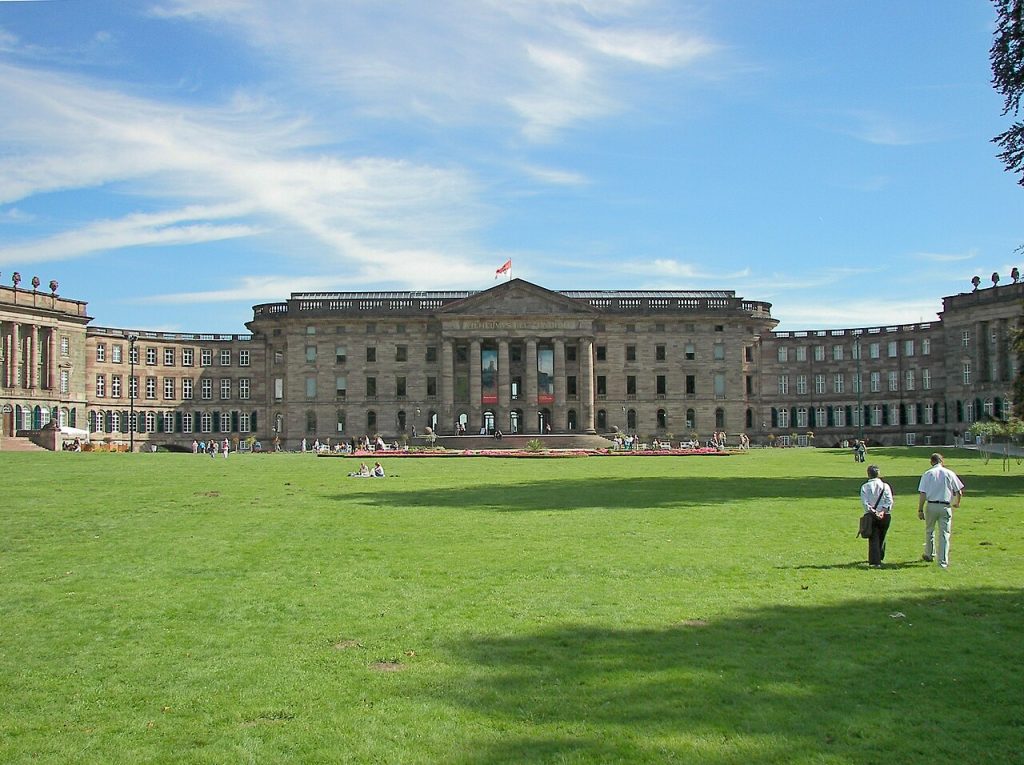
Arriving at Wilhelmshoehe, you see a long, pale palace with a central block and two wings set against the green slopes of the Habichtswald hills. High above it, on the summit, the giant statue of Hercules stands on its pyramid and octagon, watching over the park and the city.
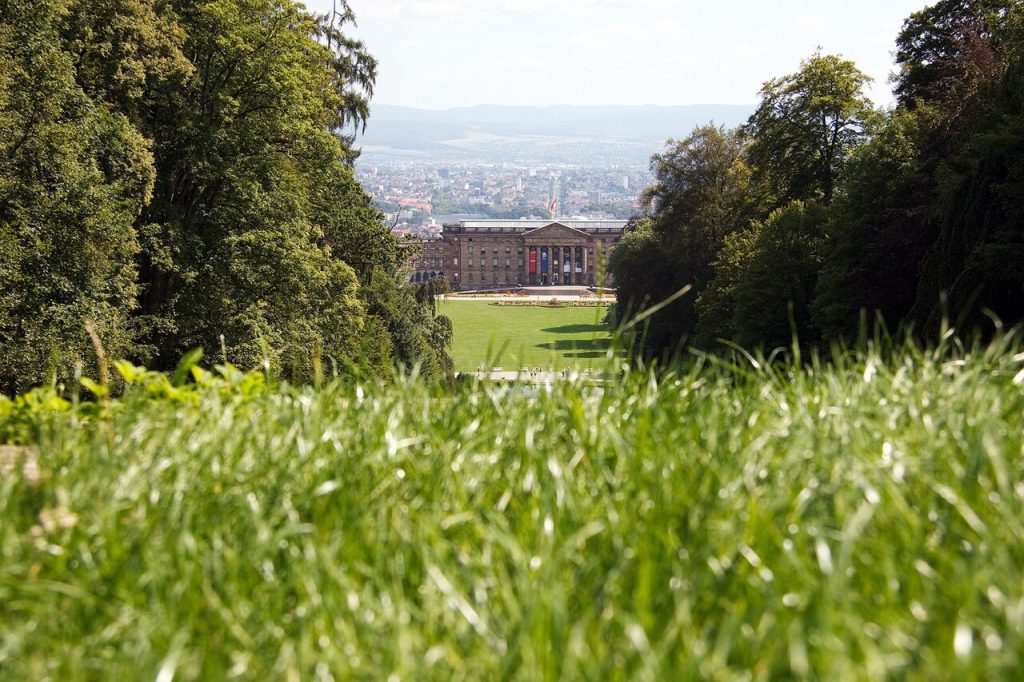
A great avenue, the Wilhelmshoher Allee, runs straight from the centre of Kassel to the palace, linking city and residence in a single grand axis that continues up the hill to the Hercules.
The setting is breathtaking. Behind the palace, the park rises steeply through forests, meadows and lakes, with cascades and fountains tumbling down the slope toward the palace.
What makes Wilhelmshoehe special is the combination of architecture, art and landscape on a monumental scale. Few places in Europe unite palace, park and water features so dramatically.
Visitors can spend an entire day here, exploring the palace museums in the morning and the park and its water features in the afternoon.
Kassel itself is known for the documenta, one of the world’s most important exhibitions of contemporary art, held every five years, and the contrast between this modern festival and the baroque and classical heritage of Wilhelmshoehe makes the city especially interesting.
The park around the palace is so large that it feels like a landscape in its own right, with forests, valleys and lakes stretching up the hill.
Landgrave Wilhelm IX and His Vision
The palace was built for Landgrave Wilhelm IX of Hesse Kassel, later Elector Wilhelm I, who ruled from 1785. He was one of the richest princes in Germany, partly thanks to the income from hiring out Hessian soldiers to Britain during the American War of Independence.
Wilhelm wanted a new residence in the latest classical style, set in the park created by his ancestors on the slopes above Kassel. Construction began in 1786 and continued until 1798.
The landgrave was a demanding patron who closely supervised the work, and the palace reflects his taste for clarity, order and grandeur.
In 1803 he was raised to the rank of elector, adding to the prestige of his house, though his reign would soon be interrupted by the upheavals of the Napoleonic wars.
His ancestor Landgrave Karl had begun the transformation of the hillside in the early eighteenth century, building the Hercules and the cascades, and Wilhelm IX completed the vision with his new palace and an English landscape park.
Wilhelm was forced into exile when Napoleon created the kingdom of Westphalia for his brother Jerome, but he returned in 1813 and resumed his rule.
Du Ry, Jussow and Classical Grandeur
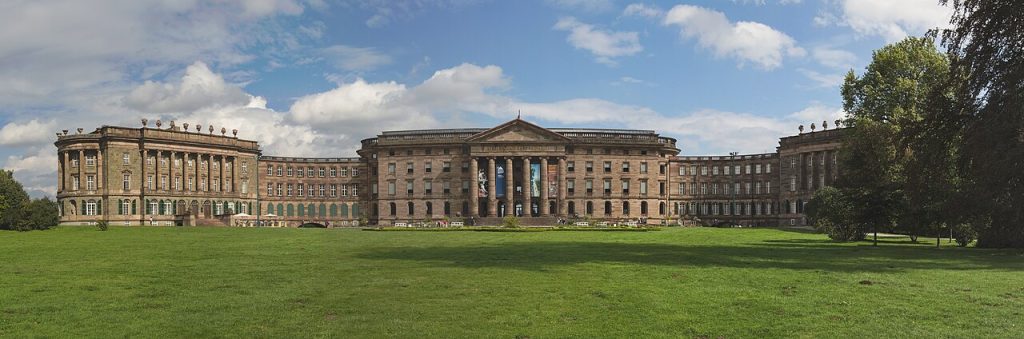
The palace was designed by Simon Louis du Ry and Heinrich Christoph Jussow, two leading architects of the Hessian court. They created a building in the strict classical style, with columns, porticos and a dome that recall the temples of antiquity.
The two wings were built first, and the central block, the Corps de Logis, was added later, connecting them into a single composition that faces the city and the long avenue.
The portico of the central block, with its tall columns and pediment, gives the palace a dignified, temple like appearance, and the attic above is decorated with sculpture.
Inside, the palace was fitted out with elegant apartments in the classical and later Empire styles, some of which survive in the Weissenstein wing.
Jussow also designed the romantic Lowenburg castle in the park, a picturesque fake medieval ruin that contrasts with the classical palace below.
The palace was badly damaged in the Second World War, and its central block was rebuilt in a simplified form, but the wings and the overall composition preserve the character of the original design.
A Panorama of Palace and Park
From the surrounding hills and viewpoints, Wilhelmshoehe reveals its full grandeur. The palace stands at the centre of a vast landscape, with the park rising behind it and the city spreading out before it.
The great axis from the city to the Hercules runs straight through the palace, creating one of the longest and most impressive baroque axes in Europe.
On clear days, the view from the Hercules over the palace and Kassel is spectacular, stretching far across the hills of northern Hesse.
This panoramic setting was carefully planned by generations of landgraves, who saw the park as a stage for their power and taste.
The long avenue from the city to the palace is nearly five kilometres long, and walking or riding along it gives a sense of the scale of the landgraves’ ambitions.
The Portico and the Facades
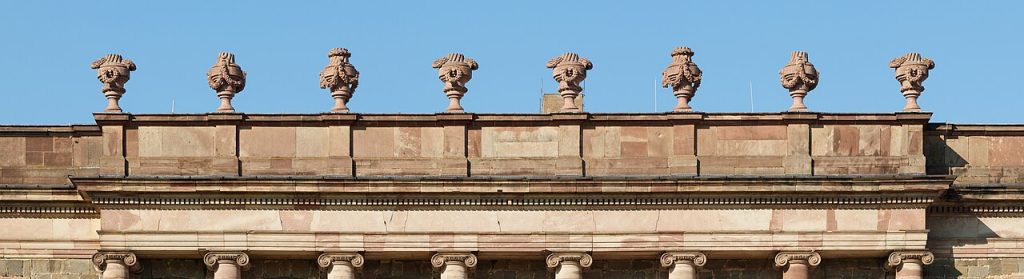
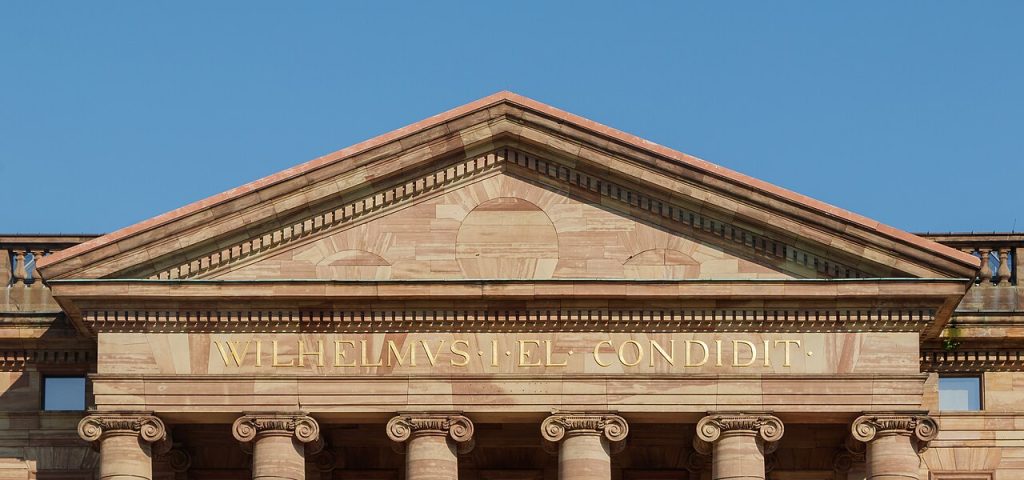
The central portico of the palace is its most striking architectural feature. Massive columns support a pediment, creating an entrance worthy of a classical temple.
The facades are restrained and elegant, with regular windows and subtle decoration that emphasises the clarity of the design.
Sculptures of lions and other figures guard the approaches, adding to the sense of dignity and power.
Seen from the avenue, the palace appears as a perfect classical composition, framed by trees and the hills behind it.
Above the cornice, the attic of the palace is decorated with sculpted figures and ornament that crown the building against the sky.
These sculptures, inspired by classical models, reflect the educated taste of the landgrave and his architects, who looked to ancient Rome and Greece for inspiration.
Lions, symbols of Hesse, appear in several places around the palace, recalling the heraldry of the ruling family.
The careful restoration of the sculpture after wartime damage has returned the palace to much of its original appearance.
At night, the illuminated portico stands out against the dark hillside, a striking sight for anyone arriving along the avenue.
The Old Masters Picture Gallery
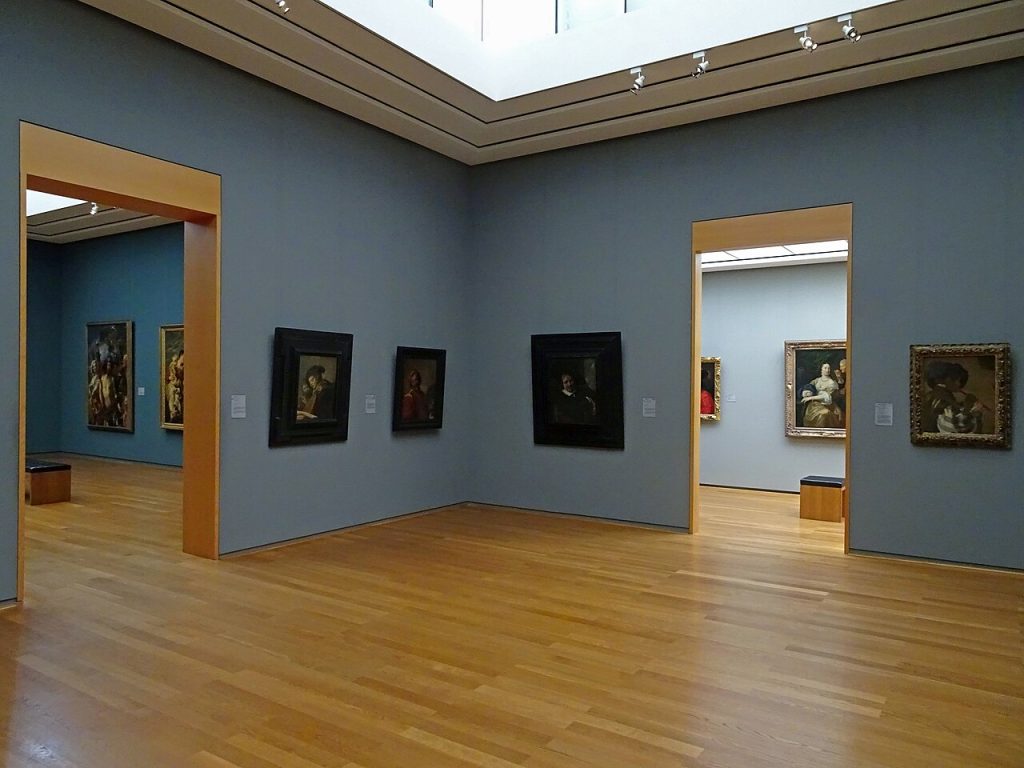
The central block of the palace houses the Old Masters Picture Gallery, one of the most important collections of European painting in Germany. Built up by the landgraves of Hesse Kassel, it includes masterpieces by Rembrandt, Rubens, Van Dyck, Frans Hals, Titian and many others.
The Rembrandt collection is especially celebrated, with works such as Jacob Blessing the Sons of Joseph and Saskia in Profile, making Kassel one of the best places in the world to see the Dutch master.
The collection was formed largely by Landgrave Wilhelm VIII in the eighteenth century, who was a passionate collector of Dutch and Flemish painting.
During the Napoleonic period, many paintings were taken to Paris, but most were returned after Napoleon’s defeat, and the collection remains one of the treasures of Hesse.
The gallery is beautifully presented, and a visit is a highlight for anyone interested in European art.
The gallery is arranged by schools and periods, allowing visitors to follow the development of European painting from the Renaissance to the eighteenth century.
Antiquities and Art Treasures
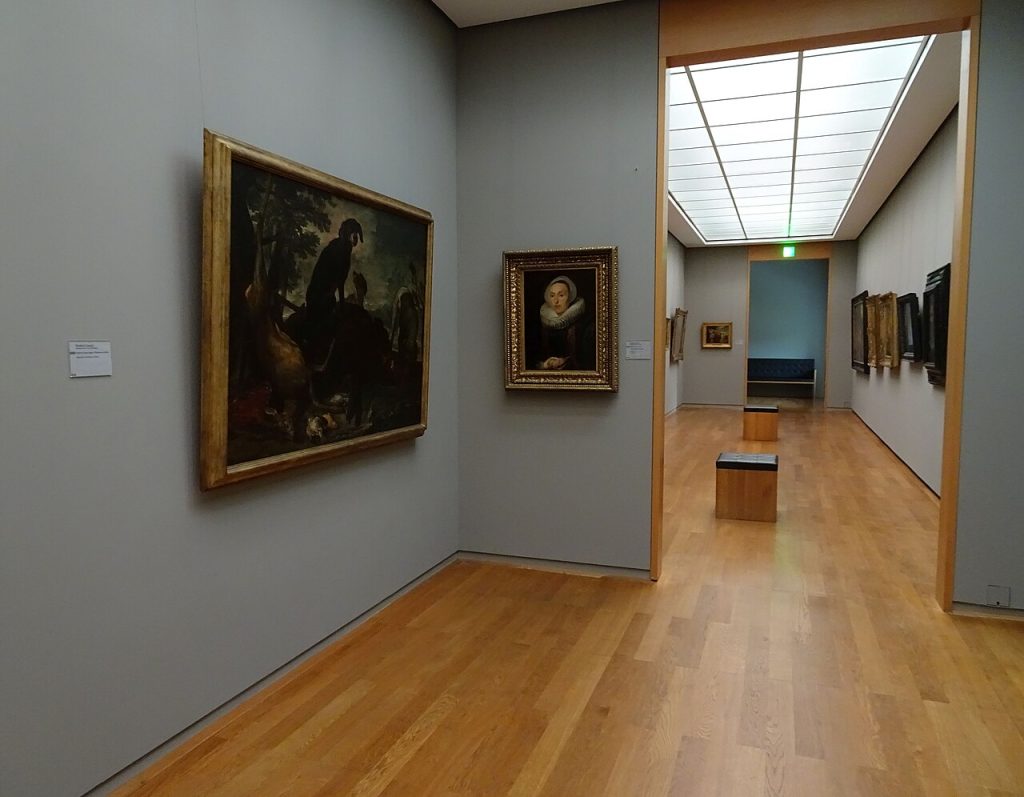
Alongside the paintings, the palace houses a collection of classical antiquities, including Greek and Roman sculptures, vases and other objects gathered by the landgraves.
Among the highlights is the famous Kassel Apollo, a Roman copy of a Greek bronze, admired for its beauty and its connection with the great sculptors of antiquity.
The antiquities reflect the classical ideals that shaped the architecture of the palace, linking the building and its contents in a single vision.
Together, the gallery and the antiquities make Wilhelmshoehe one of the richest museum palaces in Germany.
The palace also houses a collection of graphic arts and drawings, shown in temporary exhibitions that change regularly.
The Historic Apartments
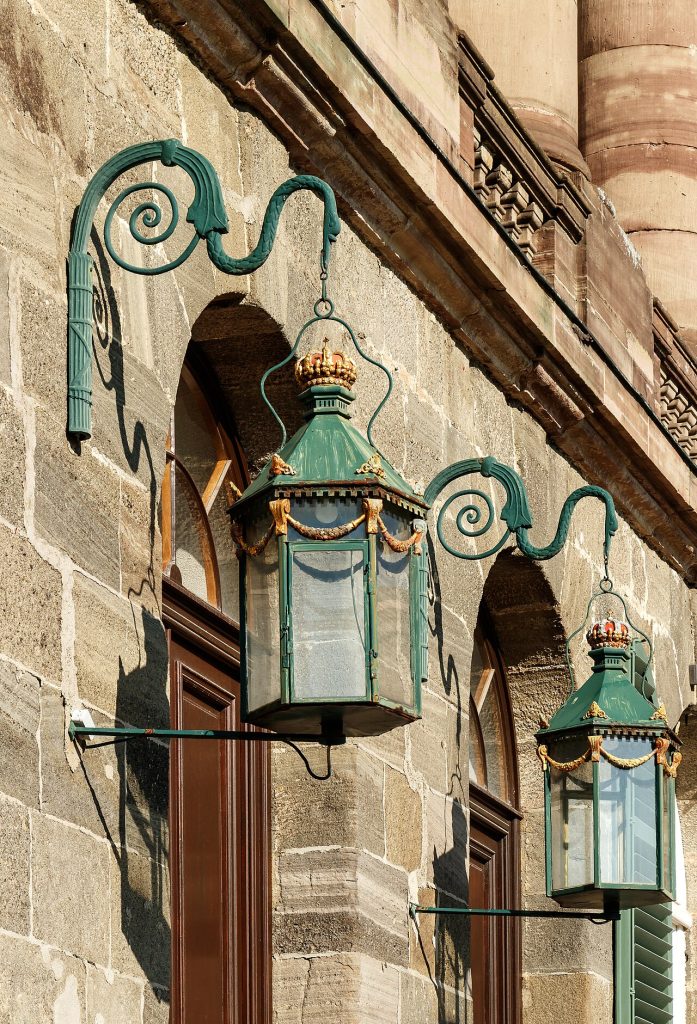
The Weissenstein wing of the palace preserves historic apartments that give a vivid picture of life in the palace in the late eighteenth and early nineteenth centuries.
The rooms are furnished in the classical and Empire styles, with fine furniture, chandeliers, wall lamps and decorative objects. Some were used by Jerome Bonaparte, Napoleon’s brother, who ruled as king of Westphalia from 1807 to 1813 and renamed the palace Napoleonshoehe.
Later, the apartments were used by Emperor Wilhelm II, who spent many summers at Wilhelmshoehe with his family, and by Napoleon III, who was held here as a prisoner after his defeat at Sedan in 1870.
Walking through these rooms, you encounter a fascinating mix of history, from the age of the landgraves to the German Empire.
Guided tours of the apartments reveal stories of the famous people who lived here and the events that unfolded within these walls.
Napoleon III’s captivity at Wilhelmshoehe lasted several months, during which he lived in comfortable rooms and received visitors before being released after the end of the Franco Prussian war.
Lions, Terraces and Gardens
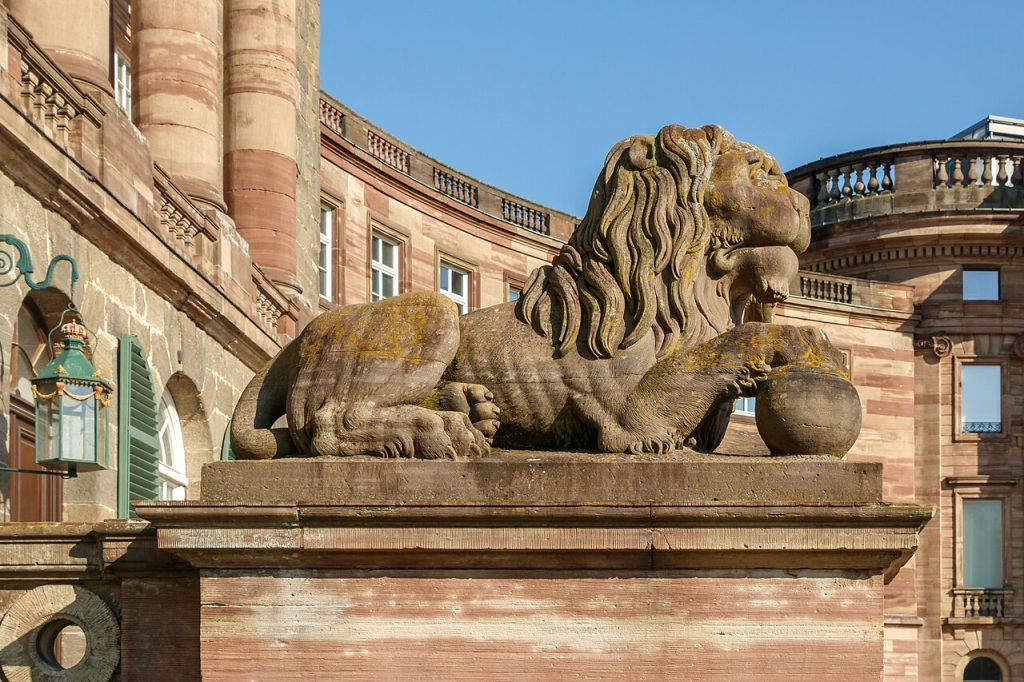
Around the palace, terraces and lawns provide a setting for walks and views. Sculpted lions and other figures guard the approaches, recalling the heraldic lion of Hesse.
From the terraces, you can look down the long avenue toward the city or up the hill toward the cascades and the Hercules.
The gardens immediately around the palace are laid out in the English landscape style, with lawns and groups of trees that open views in every direction.
On sunny days, these spaces are filled with visitors relaxing before or after exploring the park.
The meadows below the palace are popular for picnics, and the paths lead to quiet corners of the park where you can escape the crowds.
The Hercules and the Water Features
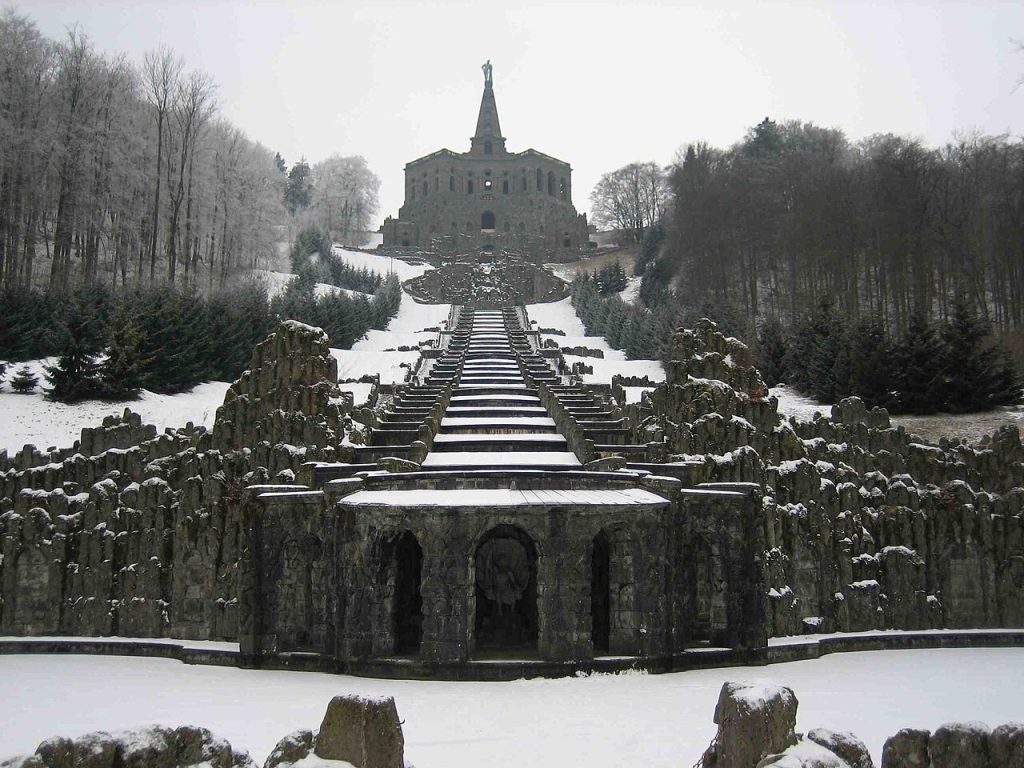
At the top of the park stands the Hercules monument, built between 1701 and 1717 for Landgrave Karl. A giant copper statue of the hero stands on a pyramid above an octagonal building, together rising more than seventy metres.
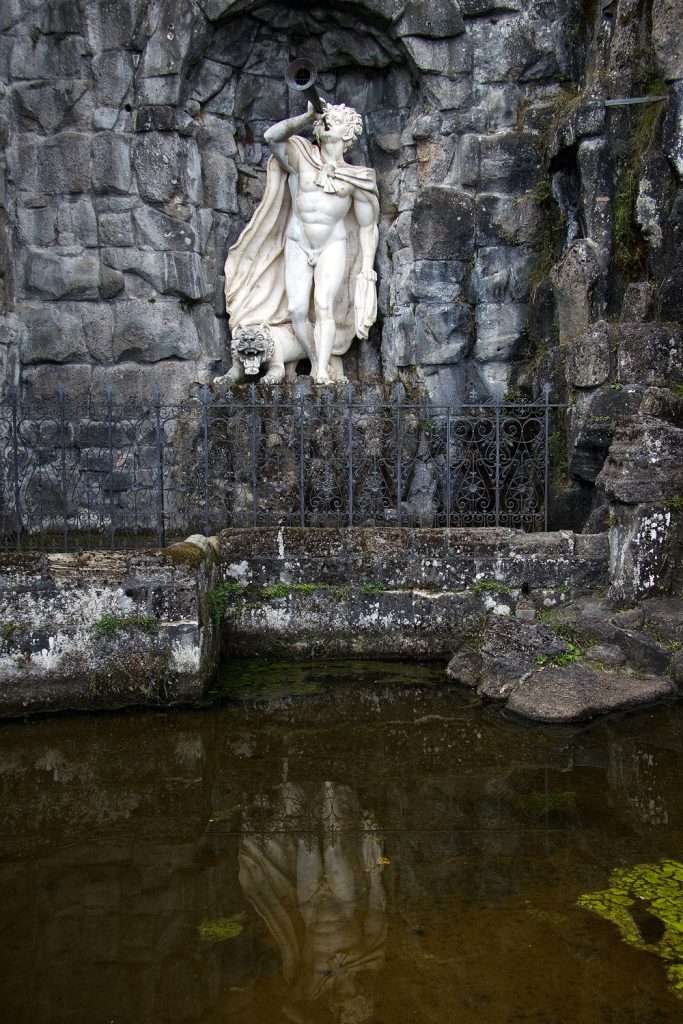
From the Hercules, a great cascade of steps descends the hillside, and on certain days in summer the famous water features are performed. Water rushes down the cascades, through grottoes and waterfalls, past an aqueduct and into a lake, ending in a great fountain that shoots fifty metres into the air.
The water features work entirely by gravity, using water collected in reservoirs on the hill, as they have for three centuries.
Following the water on its journey down the hill, from the Hercules to the palace, is one of the most spectacular experiences in Germany, and crowds gather each summer to watch.
In 2013 the mountain park, with its water features and monuments, was inscribed as a UNESCO World Heritage Site.
The Lowenburg, a romantic castle built in the style of a medieval ruin, is one of the highlights of the park and can be visited on guided tours.
The Palace and the Hercules Together
Seen from below, the palace and the Hercules form a single grand composition, linked by the axis of the park and the cascades.
The contrast between the classical palace and the baroque Hercules reflects the different eras in which they were built, yet they belong together as parts of a single vision of princely power.
At sunset, the light on the hillside and the statue creates a dramatic scene that photographers love.
Many visitors climb to the Hercules for the view, then walk down through the park, arriving at the palace as the day draws to a close.
From the Hercules, the view stretches over the whole of Kassel and far into the countryside, one of the most memorable panoramas in Germany.
Wilhelmshoehe on Video
For a look at the palace and the park from above, the video below offers drone views of Wilhelmshoehe.
Watch for the long axis from the palace to the Hercules and the landscape of the park.
If the video inspires you, read on for practical tips.
Visiting Wilhelmshoehe Today
Wilhelmshoehe Palace and the mountain park are managed by the Museumslandschaft Hessen Kassel. The palace museums are open throughout the year, except on Mondays, and the park is freely accessible.
The water features are performed on certain afternoons from May to October, and the illuminated water features take place on selected summer evenings. Check the schedule in advance.
Kassel is easy to reach by train, and tram line 1 runs along the avenue from the city centre to the palace.
Plan a full day if you want to see the palace, the gallery, the Lowenburg, the Hercules and the water features, and wear comfortable shoes for the hilly park.
There are cafes and restaurants in the park and near the palace, so you can easily make a day of it.
Whenever you visit, Wilhelmshoehe offers an extraordinary combination of art, architecture and landscape, a true highlight of any journey through central Germany.
View the location on Google Maps
Palaces Nearby
If Wilhelmshoehe has impressed you, central Germany holds more remarkable palaces. Here are two more well worth adding to your journey:
- Fasanerie Palace – the baroque summer palace of the prince abbots of Fulda, rich in porcelain and antiquities.
- The City Palace of Fulda – the baroque residence of the prince abbots with its Mirror Cabinet and Orangery.
You May Like


One thought on “Wilhelmshoehe Palace and the Hercules Mountain Park of Kassel”