Quantum technology gets talked about as if it lives in the future, but a lot of the groundwork is being laid right now by people most of us have never heard of. One of them is Mete Atatüre, a Turkish-born physicist who has spent the better part of two decades quietly figuring out how to make single particles of light behave themselves. His work sits at the meeting point of light, matter, and information, and it’s the kind of research that quantum computers and a future quantum internet will likely be built on. This is a closer look at who he is, what he actually does in the lab, and why it matters.
Table of Contents
- Who Mete Atatüre Is
- From Kayseri to Cambridge
- Quantum Dots: Atoms You Can Design
- Making Light One Piece at a Time
- Diamonds, Defects, and Spin
- How You Steer a Spin With Light
- Thin as an Atom: The 2D Frontier
- Why Any of This Matters
- The Honest Limits
- What Comes Next
- Closing Thoughts
Who Mete Atatüre Is
Mete Atatüre is an experimental physicist at the University of Cambridge, where he runs a research group focused on solid-state quantum optics. In plain terms, he studies how light and matter trade information at the smallest possible scale, and he tries to do it with enough control that you could one day build a machine out of it. Since 2023 he has also been the head of the Cavendish Laboratory, which is one of the most storied physics departments anywhere, the place where the electron was discovered and the structure of DNA was worked out. Taking the top job there is a bit like being handed the keys to a cathedral of science.
He’s not only an academic, either. He co-founded a company called Nu Quantum and serves as its chief scientific officer, which means his lab ideas have started leaking out into the real world of hardware and startups. And he has a reputation in Turkey as a genuinely public figure, someone who shows up in the media, gives talks, and gets people excited about physics rather than scaring them off with equations. A Turkish magazine once nicknamed him “Professor Laughter,” which tells you something about how he carries himself.
From Kayseri to Cambridge
Atatüre was born in Kayseri in 1975 and grew up in Turkey, finishing high school in Ankara before heading to Bilkent University for his undergraduate degree. From there he moved to the United States and earned his PhD at Boston University, working in a lab focused on quantum imaging. His thesis dealt with entanglement and the strange ways that quantum measurement can be used to extract information, which turned out to be a fitting preview of everything that came after.
The next stop shaped him a lot. He went to ETH Zurich in Switzerland to work as a postdoctoral researcher in a group led by Atac İmamoğlu, another Turkish physicist with a big reputation in quantum optics. It was there that Atatüre cut his teeth on semiconductor quantum dots and pulled off some firsts, including an early demonstration of controlling a single spin with light and the first observation of a particular optical effect from just one confined electron. By the time he arrived at Cambridge in 2007, first as a lecturer and fellow of St John’s College, he already had a track record of doing things nobody had done before. He climbed the ranks to full professor by 2015 and then to department head.
Quantum Dots: Atoms You Can Design
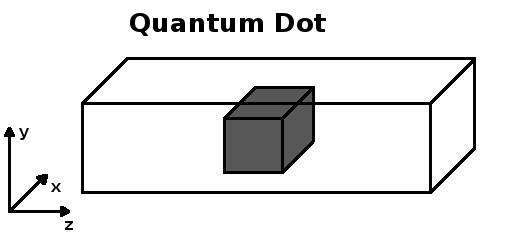
To understand his research you have to start with quantum dots, because they show up again and again in his career. A quantum dot is a tiny speck of semiconductor material, so small that the electrons trapped inside it can only take on certain specific energies, the same way electrons in a single atom can. That’s why people sometimes call quantum dots “artificial atoms.” The difference is that an atom is whatever nature handed you, while a quantum dot is something engineers can grow, shape, and tune. You get the clean, discrete behavior of an atom with the flexibility of a manufactured device.
That combination is gold for quantum optics. If you have an artificial atom you can build into a chip, you can start wiring it into useful structures, putting it inside tiny optical cavities, placing it precisely, and hitting it with laser light to read or change its state. A good chunk of Atatüre’s early reputation came from learning to control these dots with a precision that surprised people. One of his standout results, published back in 2006, showed that you could prepare the spin state of a single electron inside a quantum dot with almost perfect reliability using nothing but light. That “almost perfect” part matters enormously, because in quantum technology sloppiness is the enemy.
Making Light One Piece at a Time
Here’s a thing most people never think about: ordinary light comes in floods. A light bulb throws out an unimaginable number of photons every second, all jumbled together. But for quantum technology you often need the opposite, light delivered one photon at a time, on demand, each one clean and identical to the last. Single photons are the natural carriers of quantum information, because they travel fast, don’t interact much with their surroundings, and can be sent down optical fibers. The catch is that making them properly is hard.
This is where Atatüre’s work on resonance fluorescence comes in. When you shine laser light at an artificial atom in just the right way, it absorbs and re-emits light, and if you set things up carefully, that re-emitted light can be coaxed into a stream of single photons with very pure quantum properties. In 2015 his group went a step further and produced “squeezed” light from a single two-level system, which is a way of pushing the noise in a light field below what you’d normally think was the floor. These are the kinds of results that sound abstract but are really about craftsmanship: getting nature to hand you light that is as orderly and predictable as possible.
Why bother chasing this level of purity? Because a quantum network only works if the photons flying around it are interchangeable. If two photons from two different sources aren’t truly identical, they can’t interfere properly, and a lot of quantum protocols fall apart. So the unglamorous-sounding work of making cleaner single photons is actually foundational.
Diamonds, Defects, and Spin
One of the most charming twists in this field is that some of the best quantum hardware comes from flaws. In a perfect diamond, carbon atoms sit in a tidy lattice. But sometimes you get a defect where a nitrogen atom sneaks in next to a missing carbon atom, leaving a gap. That pairing is called a nitrogen-vacancy center, or NV center, and it behaves like a tiny trapped quantum object sitting inside an otherwise transparent crystal.
What makes NV centers special is that they hold onto their quantum state remarkably well, even at room temperature, and you can read and write that state using light and microwaves. The “state” in question is the spin of the electrons living in that defect, which you can picture loosely as a tiny compass needle that can point in a superposition of directions. Atatüre has spent years developing these defects as spin-photon interfaces, meaning systems where a stationary spin that stores information can talk to a flying photon that carries it. That handshake between something that stays put and something that moves is the core trick behind a lot of quantum networking ideas.

His group hasn’t stopped at diamond, either. In a notable 2022 result, they showed that single defects in a material called hexagonal boron nitride could be read out optically at room temperature, detecting their magnetic resonance with light. That’s a big deal because boron nitride can be peeled down to incredibly thin sheets, which opens the door to quantum sensors and devices that are flat and easy to integrate. The broader lesson across all of this is that you don’t always need exotic, ultra-cold setups; sometimes the right imperfection in the right crystal does a lot of the heavy lifting.
How You Steer a Spin With Light
So how do you actually control one of these spins? It helps to slow down and walk through the idea, because it’s genuinely clever. The spin of the trapped electron has different energy levels depending on which way it’s pointing. When you shine laser light tuned to exactly the right color, the system can absorb a photon and jump between states, or emit a photon and fall back down. By choosing the color, timing, and polarization of your light very carefully, you can nudge the spin into whatever state you want, including delicate superpositions where it’s effectively pointing in several directions at once.
Reading the state works in reverse. You ask the system a question with light and watch how it responds, because a spin pointing one way will scatter or emit light differently than a spin pointing another way. Atatüre’s early observation of a single spin’s effect on the polarization of light, the Faraday rotation result from his ETH years, was an example of exactly this: using light as a gentle probe to peek at one electron’s spin without destroying it.
One of the deepest problems in this game is noise from the surrounding atomic nuclei. Every spin you care about is sitting in a sea of other tiny magnetic moments from nearby nuclei, and they jostle your qubit around, scrambling its delicate state. Rather than just fighting this noise, Atatüre’s group took a more ambitious route and worked out how to control the nuclear environment itself. In a 2019 result, they demonstrated a quantum interface between a single electron and a whole ensemble of nuclei, essentially turning a source of trouble into a resource that could store quantum information. That shift in attitude, from suppressing the bath to commanding it, is one of the more elegant threads running through his career.

Thin as an Atom: The 2D Frontier
In the last decade Atatüre widened his focus to include a whole class of materials that are only one or a few atoms thick. These two-dimensional materials, the most famous cousin of which is graphene, behave in surprising ways precisely because they are so flat. When you stack different atomic sheets on top of each other, almost like a deck of cards, you can engineer new electronic and optical properties that don’t exist in any single material on its own.
One of the headline achievements here was building the first quantum light-emitting diode that was atomically thin, reported in 2016. An ordinary LED pours out floods of light; this device, by contrast, was designed around emitting light at the quantum level, a step toward chips that could generate single photons in a compact, electrically driven package. The appeal is obvious once you think about manufacturing: if your quantum light source is a flat film you can pattern like a normal semiconductor, it becomes far easier to imagine scaling up from one device to thousands.
This line of work also blurs the boundary between quantum optics and condensed matter physics. The same thin materials that host single-photon emitters are also playgrounds for studying how huge numbers of particles behave collectively. Atatüre has leaned into that overlap, which is part of why his group describes itself as working on quantum optical materials and systems rather than just one narrow trick.
Why Any of This Matters
It’s fair to ask what all of this adds up to. The honest answer is that Atatüre’s research is infrastructure for three big technologies that are still maturing. The first is quantum computing, where you need reliable qubits and clean ways to read and write them; his spin-control techniques speak directly to that. The second is quantum communication, where the dream is a network that can send information protected by the laws of physics rather than by clever math alone. That network needs single photons, spin-photon interfaces, and ways to link distant quantum nodes, all of which are squarely in his wheelhouse. In fact, his group has demonstrated entanglement between distant spin qubits, which is exactly the sort of link a quantum internet would be stitched together from.
The third area is quantum sensing, which often gets less attention but may arrive soonest. Because NV centers and similar defects are so sensitive to their surroundings, they make exquisite detectors of magnetic fields, temperature, and more, fine enough to potentially sense the faint signals inside living cells or materials. You can think of a single quantum defect as a measuring instrument so small it can be slipped almost anywhere. Atatüre’s work on reading out these defects, including in thin materials, feeds directly into making such sensors practical.

The Honest Limits
It would be a disservice to make this sound finished. Quantum technology is still wrestling with hard problems, and Atatüre would be the first to say so. Quantum states are fragile; they leak away into the environment in a process called decoherence, and a huge fraction of the field’s effort goes into slowing that leak down. Many of the most impressive results still require cooling devices to temperatures barely above absolute zero, using bulky equipment that you can’t exactly carry in your pocket. Even where room-temperature operation is possible, getting the performance high enough and consistent enough for real products is another mountain to climb.
Scaling is the other giant question mark. Controlling one spin beautifully is a triumph; controlling a million of them, all wired together, all behaving identically, is a different order of challenge. Each artificial atom is a little bit different from its neighbor, and making them interchangeable enough to network at scale remains an open engineering problem. None of this means the goals are out of reach, but anyone promising a quantum internet next year is selling something. The realistic picture is steady, hard-won progress, with researchers like Atatüre nailing down one piece at a time.
What Comes Next
Looking ahead, the threads of his work seem to be converging on a few practical targets. One is building reliable nodes for a quantum network, small modules that can store a quantum state, talk to photons, and link to other modules far away. His co-founding of a quantum company suggests he’s serious about pushing these ideas past the lab bench and toward something you can actually buy and deploy. Another target is integrating quantum emitters into thin, manufacturable materials so that the leap from a single hand-built device to a real chip becomes less daunting.
There’s also a quieter, more scientific frontier in his recent direction: using the same tools that control single quantum systems to study the rich physics of many particles interacting at once. The boundary between “quantum technology” and “fundamental physics” is genuinely thin here, and that’s part of what makes the work compelling. The same experiment that nudges us toward a quantum sensor might also reveal something new about how matter behaves when it’s squeezed down to a single sheet of atoms.
Closing Thoughts
Mete Atatüre’s career is a reminder that big technological revolutions are usually built from a thousand careful, specific advances rather than one dramatic leap. He takes flaws in diamonds, specks of semiconductor, and sheets of material thinner than a thought, and he learns to talk to them with light, one photon and one spin at a time. Whether or not a full quantum internet arrives in our lifetime, the toolkit he and his colleagues are assembling, clean single-photon sources, controllable spins, room-temperature quantum sensors, is already reshaping what physicists believe is possible. And there’s something fitting about the fact that a man nicknamed “Professor Laughter” spends his days coaxing order out of the most stubborn corners of the quantum world, with what sounds like genuine joy. You can read more on related topics like quantum optics, quantum dots, nitrogen-vacancy centers, and quantum networks.