On the shores of the deepest lake on earth, where the taiga meets the open steppe and the mountains of southern Siberia rise blue on the horizon, lives the largest indigenous people of the region. Around the sacred waters of Lake Baikal, in a land of forest, grassland, and cold clear rivers, the Buryats have made their home for centuries, herding, hunting, and keeping alive a way of life that reaches back to the world of the Mongols.
The Buryats are a Mongolic people, the northernmost great branch of the Mongol world and the most numerous native people of Siberia. Cousins of the Mongols of Mongolia and of the Kalmyks far to the west, they share the language, the herding life, and much of the culture of the steppe, yet their long life in the forests and mountains around Baikal has given them a character all their own, blending the ways of the nomad with those of the taiga.
This article is part of our Folks series, in which we travel from people to people across the vast spaces of Russia and its neighbours. Here we follow the Buryats through the whole arc of their story, and to keep the path clear we will move through these stages in turn:
- Origins and the Mongol world
- The name they carry and what it means
- Their language and its Mongol roots
- The homeland around Lake Baikal
- The old way of life between steppe and forest
- Society, clan, and the old order
- Religion, shamanism and Buddhism
- Traditions, epic, and song
- Crafts and the work of skilled hands
- Food and the table of the herders
- Festivals and the turning of the year
- History under the Russian state
- The Buryats today
Origins and the Mongol World
The Buryats emerged from the great world of the Mongolic peoples who have inhabited the steppes and forests of inner Asia for thousands of years. Their ancestors were among the many tribes of the Baikal region who, in the age of Genghis Khan, were drawn into the vast Mongol Empire that briefly united much of Asia under a single rule. The lands around Baikal lay close to the very heartland from which that empire sprang.
After the breakup of the Mongol Empire, the tribes of the Baikal region continued their life of herding and hunting, gradually coalescing into the group we now know as the Buryats. They were never a single unified nation in the early centuries but a collection of related tribes and clans, some living as steppe herders to the south and east of the lake, others as forest hunters in the taiga to the north and west.
This double character, part steppe nomad and part forest dweller, marks the Buryats out among the Mongolic peoples. Where the Mongols of the open plains lived almost entirely by their herds, many Buryat groups combined herding with hunting and fishing in the rich forests around Baikal, adapting the Mongol way of life to a colder, more wooded northern land.
By the time the first Russians reached the region in the seventeenth century, the Buryats were the dominant people around Lake Baikal, organized into powerful tribes and clans. Their encounter with the advancing Russian state would change their world forever, but their roots in the Mongol past and in the land around the great lake remained the foundation of who they were.
It is striking how close the Baikal region lay to the cradle of the Mongol Empire itself. The Buryats can, with some justice, be seen as a people who stayed near the ancient homeland while their kinsmen rode out to conquer half the world, keeping the old northern way of life while empires rose and fell to the south.
The Name They Carry and What It Means
The people call themselves Buryat, a name whose exact origin is uncertain and much debated. It appears in the medieval Mongol records as the name of one of the forest peoples of the Baikal region, and over the centuries it came to cover the whole group of related Mongolic tribes who lived around the lake. Various explanations have been offered, linking it to old words for wolf, for forest, or for a particular tribe, but none is certain.
Whatever its origin, the name Buryat gradually became the shared identity of the many tribes and clans of the region, uniting steppe herders and forest hunters under a single label. This sense of being one people grew stronger over time, especially as the Russian state came to deal with them all together and as a common written language and culture developed among them.
Their land took its name from them, becoming Buryatia, and today the people and their republic share the single name. The homeland lies mostly to the east and south of Lake Baikal, in the Republic of Buryatia, with other Buryat areas in the regions around it, so that the people are spread across several administrative territories of the Russian Federation.
So the name Buryat, like many names of peoples, gathered under itself a whole world of tribes and clans, each with its own history and pride. Behind the single word lies the older Mongol world of the Baikal forests and steppes, and the long process by which many related groups came to see themselves as one nation.
Their Language and Its Mongol Roots
The Buryat language belongs to the Mongolic family and is very closely related to Mongolian, so close that speakers of the two can often understand one another with a little effort. It is a northern member of the family, carrying features of its own developed during the long centuries of Buryat life around Baikal, and it is the most widely spoken Mongolic language within Russia.
Like its relatives, Buryat builds words by adding strings of suffixes to a root and follows the vowel harmony typical of the family, in which the vowels within a word agree with one another. Its vocabulary is rich in the words of the herding and hunting life, of the horse, the herd, the forest, and the sacred landscape of the Baikal region, reflecting the world in which the language grew.
For religious purposes the Buryats historically used the classical Mongolian script, the elegant vertical writing inherited from the wider Mongol world, especially for Buddhist texts and learning. Educated Buryats and the Buddhist clergy could read and write in this script, linking them to the literary and religious traditions of Mongolia and the Tibetan Buddhist world beyond.
In the modern era Buryat came to be written in the Cyrillic alphabet, with extra letters for its particular sounds, and it was taught in schools and used in books, newspapers, and broadcasts. Like many minority languages, it faces heavy pressure from Russian today, and keeping it alive among the young has become a central concern of Buryat cultural life.
The Homeland Around Lake Baikal
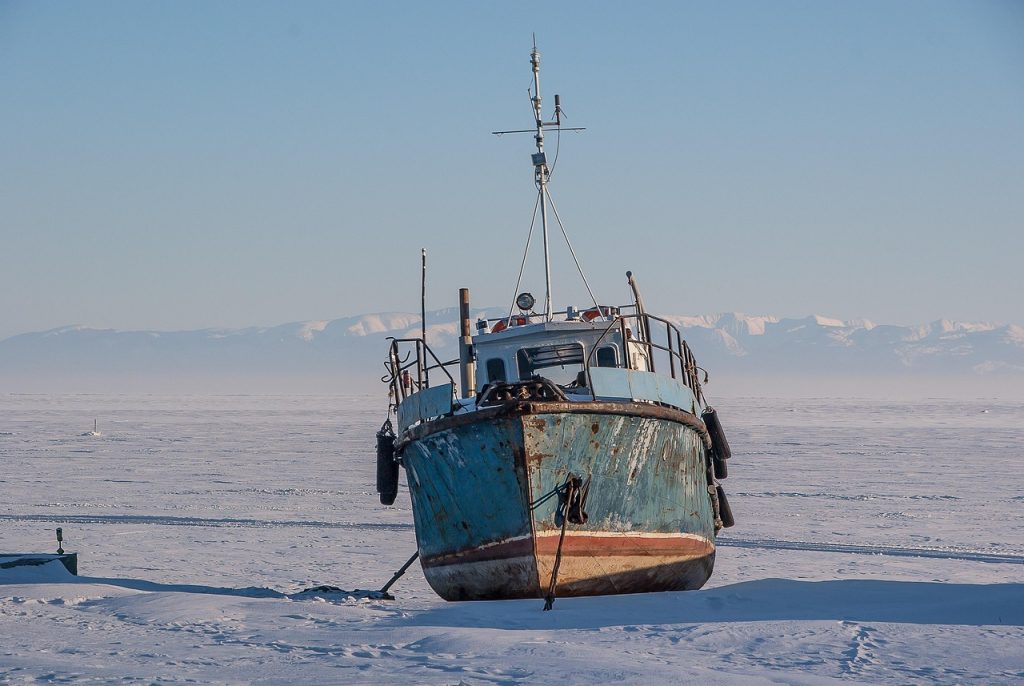
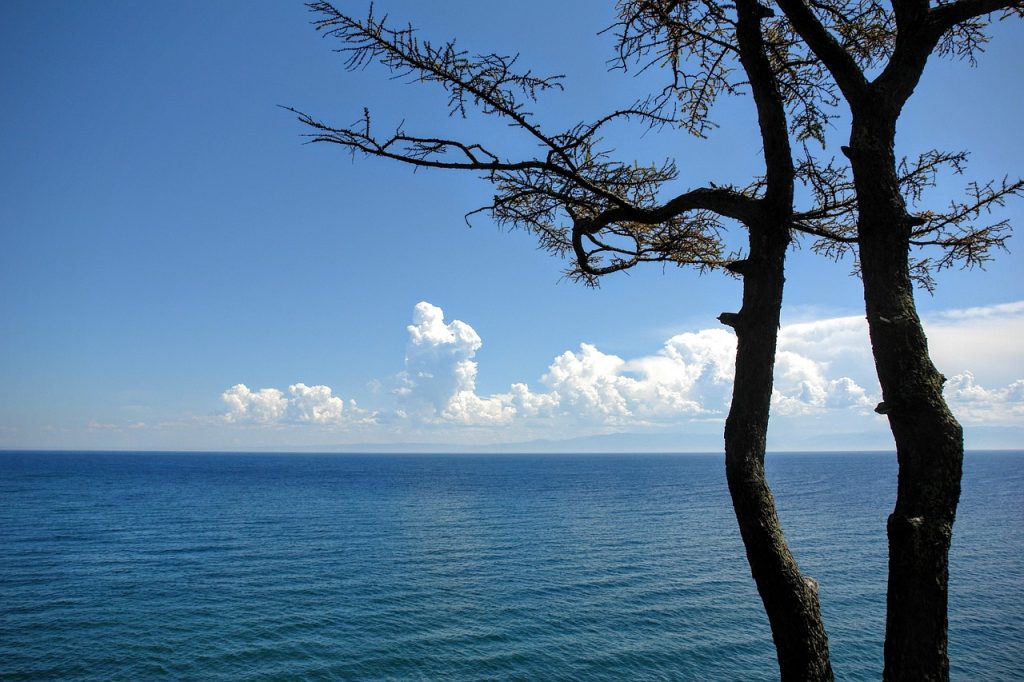
The homeland of the Buryats centres on Lake Baikal, the deepest and one of the oldest lakes on earth, a vast crescent of clear water cradled among the mountains of southern Siberia. To the Buryats, Baikal is not merely a lake but a sacred being, revered and honoured, the heart of their land and the source of countless legends. Its islands, above all the great island of Olkhon, are among the holiest places of the people.
Around the lake the land is one of striking variety. To the east and south lie open steppes and river valleys where the herding life flourished; to the north and west rise forested mountains and stretches of taiga where hunting and fishing were the way of survival. Rivers run down from the mountains into the lake, and beyond the ranges stretch the endless forests and plains of Siberia.
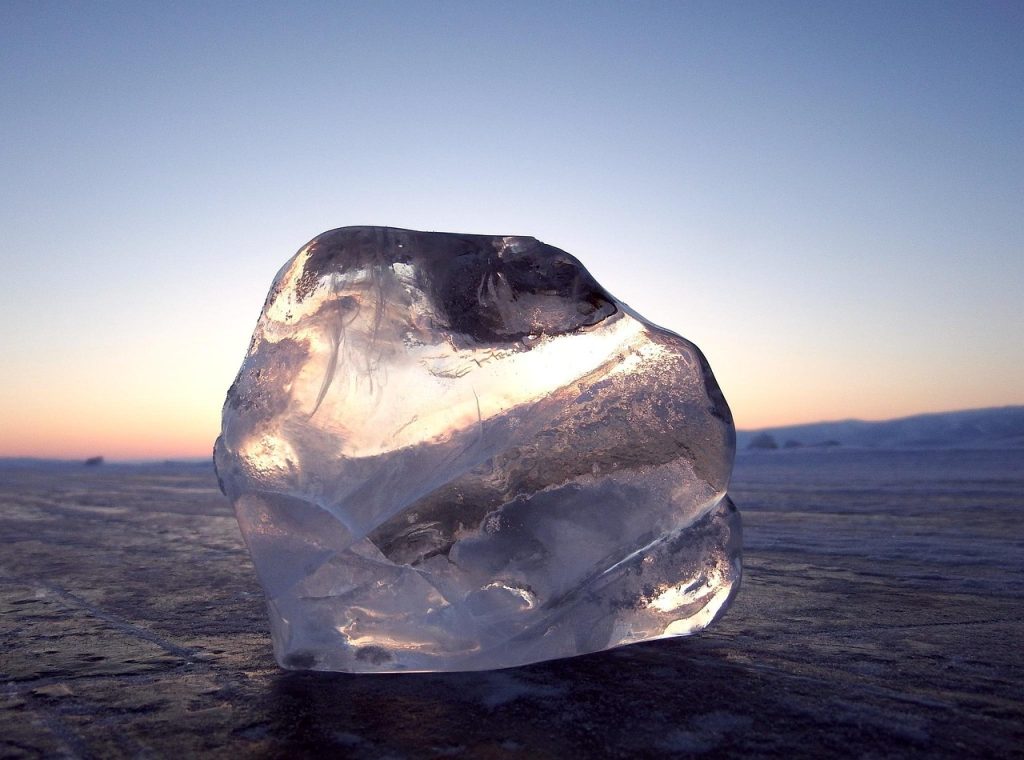
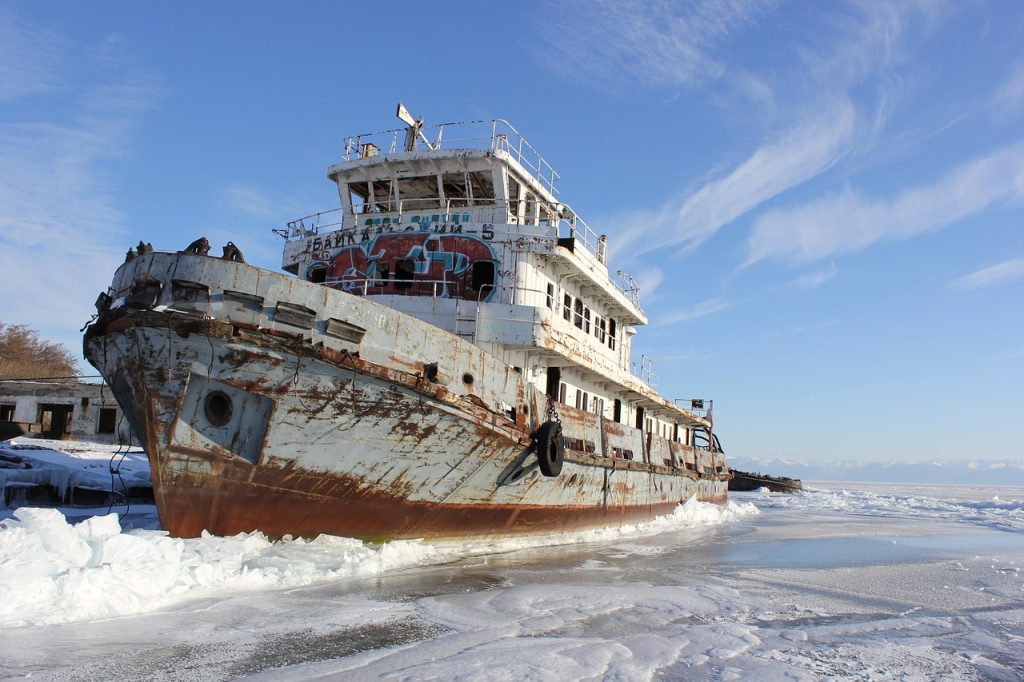
The climate is harsh and continental, with long, bitterly cold winters and short, warm summers. For months the land lies under snow and Baikal itself freezes into a sheet of ice thick enough to drive across, its surface cracking into vast patterns of blue and white. Then the brief summer brings green to the steppe and forest, and the lake shines blue beneath the mountains before the cold returns.
The capital of the Republic of Buryatia is Ulan-Ude, a Siberian city that has become the cultural and administrative heart of the people. From here the Buryat land stretches away across steppe and forest and mountain, a country shaped above all by the presence of the great sacred lake at its centre, around which the whole life and imagination of the people has turned.
The reverence for Baikal runs so deep that many Buryats will not speak ill of the lake or pollute its waters, treating it with the respect due to a living elder. Even today, travellers to the region are often struck by the sense of the sacred that hangs over its shores and islands.
The Old Way of Life Between Steppe and Forest
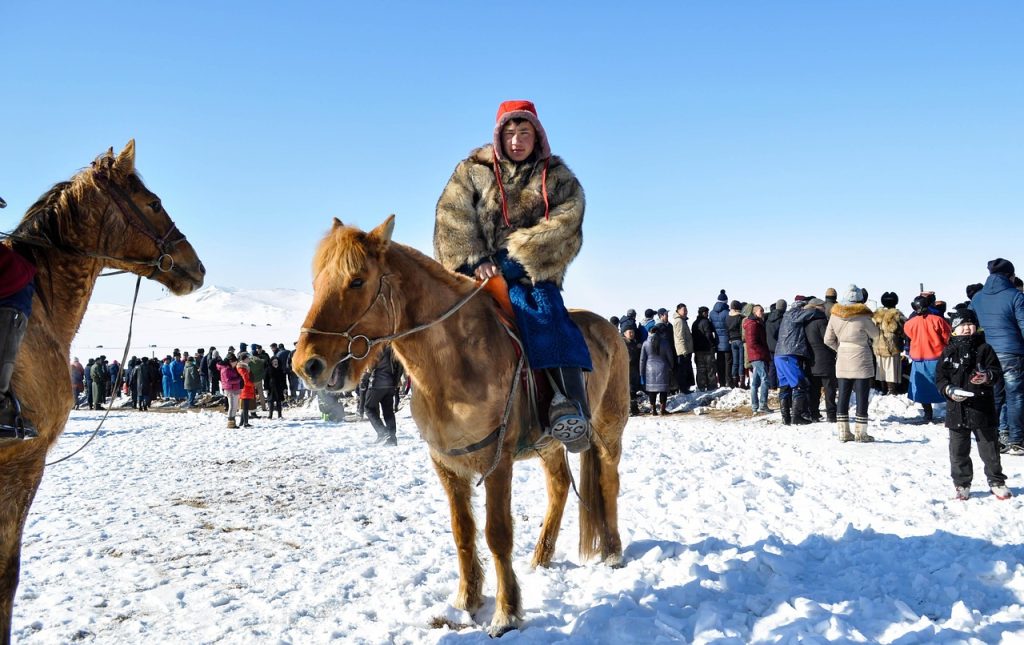
The traditional life of the Buryats varied with the land they lived in, ranging from the fully pastoral in the open steppe to the more forest-based in the taiga. The steppe Buryats lived much like the Mongols, herding horses, cattle, sheep, and goats across the grasslands, moving with the seasons in search of pasture, and dwelling in the round felt tents of the nomad world.
The forest Buryats of the taiga combined herding with hunting and fishing, taking fur-bearing animals, game, and fish from the rich northern woods and waters. For them the herd was smaller and the forest more important, and their dwellings were often more settled, including wooden and log structures suited to a life among the trees rather than on the open plain.
The horse stood at the centre of Buryat life, as it did for all the Mongolic peoples. Buryat men were fine riders, and horse racing, wrestling, and archery were the great sports and the marks of a man’s skill. Cattle and sheep gave meat, milk, wool, and hides, while the horse gave transport, pride, and, in the old days, the fermented mare’s milk drunk across the steppe world.
Over the centuries, under the influence of the Russian state and of settled neighbours, many Buryats moved gradually toward a more fixed way of life, taking up more farming and living in permanent villages. Yet the old herding culture, the love of the horse, and the deep bond with the land and the herds remained at the core of Buryat identity long after the fully nomadic life had faded.
Society, Clan, and the Old Order
Buryat society was built on kinship, organized into a web of tribes, clans, and lineages that traced descent from common ancestors. A person’s clan defined their place in the world, governing marriage, alliance, and the ownership of pasture and hunting grounds. The great tribal divisions of the Buryats, each with its own territory and history, formed the largest units of this kinship world.
Within the clans, respect flowed toward age, wealth in herds, and skill, and leadership lay with the heads of families and the elders who guided the affairs of the community. Councils of these men settled disputes, organized shared work such as the great hunts, and dealt with outsiders. It was a society without kings among the Buryats themselves, ordered more by kinship and custom than by a single ruler.
The extended family and the encampment or village were the units of daily life, with related households living, herding, and hunting together and supporting one another through the hardships of the Siberian year. Hospitality was a sacred duty, and a guest arriving at a Buryat home could expect food, shelter, and welcome, for in that harsh land the bond of guest and host was a matter of survival as well as honour.
Over this native order came, in time, the authority of the Russian state, which dealt with the Buryats through their own clan leaders and later drew them ever more tightly under its administration. Yet within their communities, the old sense of clan, lineage, and kinship endured, remaining a powerful force in Buryat identity long after the coming of the Russians.
Religion, Shamanism and Buddhism
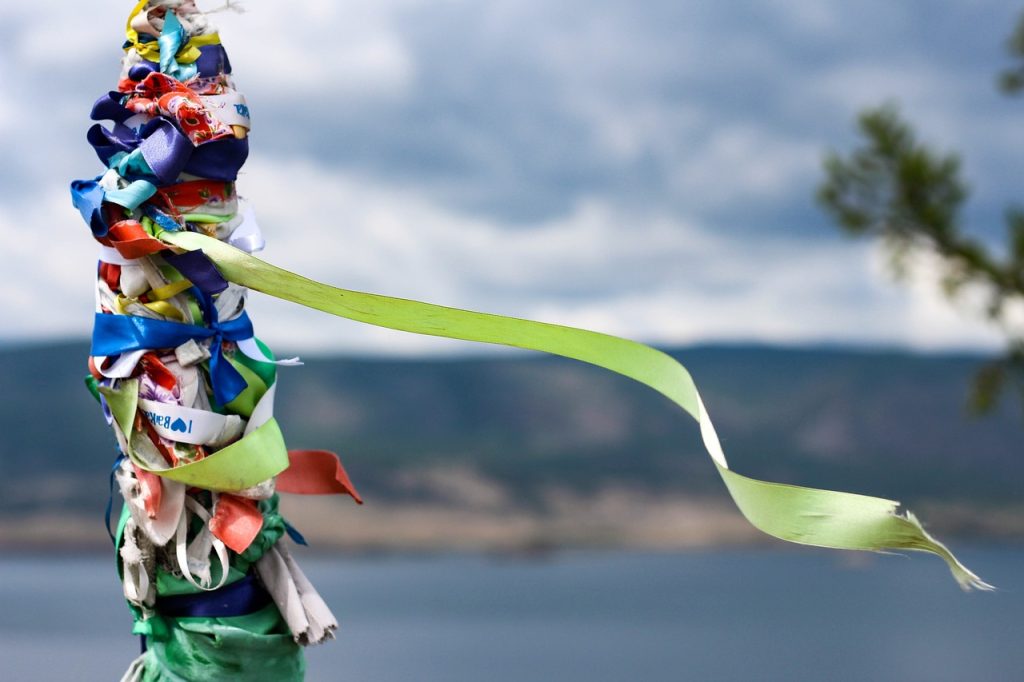
The Buryats are unusual in following two great religious traditions, divided broadly between the western and eastern branches of the people. The western Buryats, around and to the west of Baikal, largely kept their ancient shamanism, while the eastern Buryats, beyond the lake and closer to Mongolia, adopted Tibetan Buddhism. In both, older and newer beliefs wound together into a rich spiritual world.
Shamanism, the older faith, saw the world as filled with spirits of the land, the water, the sky, and the ancestors, powers that had to be honoured and appeased. The shaman, a man or woman able to enter trance and travel to the spirit world, healed the sick, foretold the future, and mediated between the people and the unseen. Sacred places, above all around Baikal and on the island of Olkhon, were revered as the dwellings of powerful spirits.
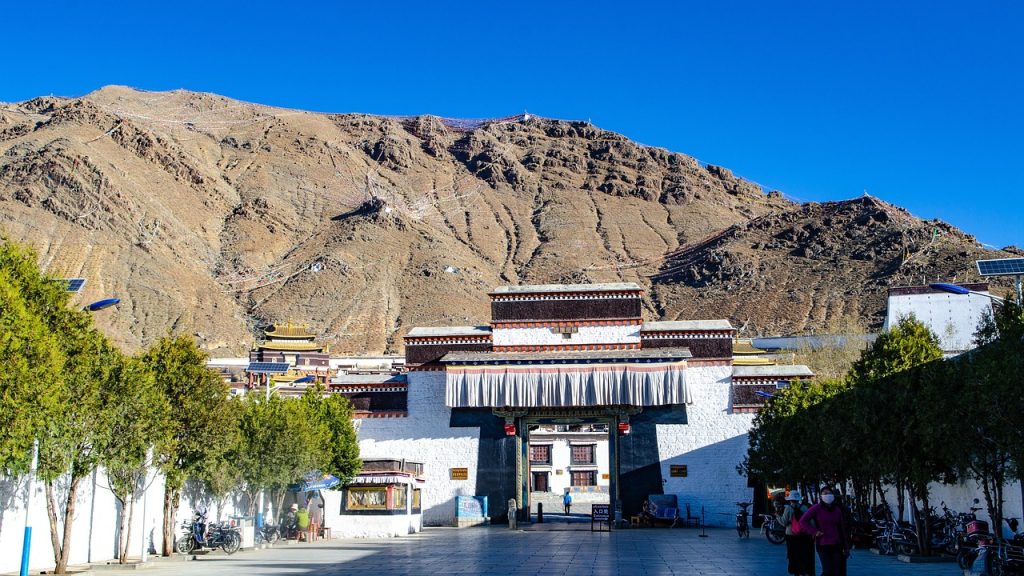
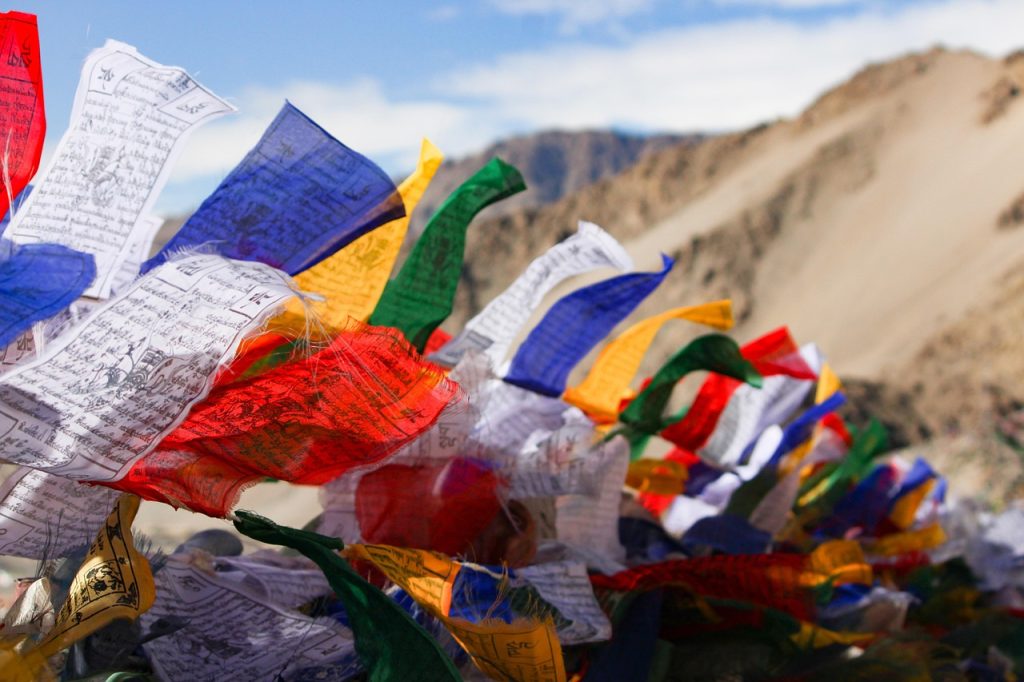
Tibetan Buddhism reached the eastern Buryats from Mongolia and Tibet and took deep root among them, so that great monasteries, the datsans, rose across their land as centres of worship, learning, medicine, and art. Buryat monks studied the Buddhist scriptures, and the region became the northern frontier of the Tibetan Buddhist world, its temples filled with images, banners, and the sound of chanting.
The two faiths did not simply replace one another; even among Buddhist Buryats the old spirits and sacred places kept their power, and shamanic and Buddhist practice often existed side by side. The twentieth century brought fierce persecution of both religions, with temples destroyed and shamans and monks repressed, yet both traditions survived and have undergone a powerful revival in recent times.
Traditions, Epic, and Song
The Buryats possess one of the richest oral traditions of any Siberian people, crowned by a vast heroic epic that ranks among the great epics of the world. This immense cycle of tales, sung by trained bards over many hours or even days, tells of a mighty hero, his battles against monsters and enemies, his fabulous horse, and his journeys through a world of gods, spirits, and marvels. To recite it was a sacred and honoured art.
Alongside the great epic were countless legends, tales, proverbs, and riddles, a whole spoken literature that carried the history, wisdom, and imagination of the people. Many of these stories were tied to the sacred landscape of Baikal, explaining the origin of the lake, its islands, and its rivers, and peopling the land with spirits, heroes, and ancestors.
Music and dance ran through Buryat life. Singers performed to traditional instruments, and the people are known for a circle dance in which dancers join hands and move together in a great ring, singing as they go, an expression of communal joy performed at every festival. Throat-singing and long, drawn-out songs of the steppe added their own distinctive voice to Buryat music.
Traditional dress marked the Buryats as a people of the Mongol world. Festive costume included long robes bound with a sash, richly decorated for women, and distinctive hats, with ornaments of silver, coral, and other stones. The bright colours, the fine embroidery, and the heavy silver jewellery of the women gave Buryat celebration a splendour that spoke of the old nomadic pride.
Crafts and the Work of Skilled Hands
The crafts of the Buryats grew from the herding and hunting life and from the materials the land provided. Working with leather and hide was essential, for the herds gave skins in plenty, turned into harness and saddlery for the all-important horses, as well as clothing, boots, and vessels. The gear of the rider, often beautifully worked, reflected the central place of the horse in Buryat life.
Felt, made from the wool of the flocks, was used for the coverings of tents, for rugs and mats, and for warm clothing, a craft shared across the Mongol world. Wood was worked into the frames of dwellings, into furniture, tools, and vessels, and among the forest Buryats into the boats and gear of the hunter and fisher. Each material was shaped by need and by long tradition.
Metalworking and silverwork were highly developed, producing the ornaments, jewellery, and fittings that adorned people, horses, and household goods. Buryat silversmiths were especially skilled, decorating women’s costume, men’s belts and knives, and ritual objects with fine work often set with coral and turquoise. The bright ritual art of the Buddhist datsans, with its images, statues, and banners, added a rich religious dimension to Buryat craft.
Because much of Buryat life had been shaped by mobility, the crafts favoured what was useful, durable, and often portable, yet within these bounds the people delighted in decoration, colour, and fine workmanship. From the humblest tool to the most splendid festive costume, Buryat craft turned the materials of the herd, the forest, and the mine into objects of both use and beauty.
Food and the Table of the Herders

The food of the Buryats was the food of the herders of the Mongol world, built above all on meat and milk. Mutton and beef were the favoured meats, boiled or cooked simply and served in hearty portions, with every part of the animal used and nothing wasted. Meat dishes stood at the centre of the table, especially at feasts and for the welcoming of guests.
Milk in all its forms was equally important. From the milk of their animals the Buryats made butter, soured milk drinks, cheeses, and other dairy foods that nourished them through the year, and in the old days the fermented mare’s milk of the wider steppe world was known among them as well. These white foods, as the Mongols call them, were honoured and even used in ritual and offering.
The most famous Buryat dish is the large steamed meat dumpling, a fist-sized parcel of dough filled with seasoned minced meat and juice, steamed and eaten by hand. Close cousin to the dumplings of the wider Mongol and Central Asian world, it is the beloved national dish, served at gatherings and celebrations and enjoyed by Buryats and their neighbours alike across the region.
Tea, often brewed with milk and salt in the steppe manner, warmed the people against the Siberian cold, and other filled and fried dough foods rounded out the cuisine. Simple, filling, and centred on the herd, Buryat food reflected a life lived between steppe and forest, where the animals gave nearly everything and hospitality demanded a full and generous table.
Festivals and the Turning of the Year
The festivals of the Buryats blend the lunar calendar of the Mongol world, the Buddhist and shamanic religious year, and the old rhythm of the herding seasons. The greatest of all is the lunar new year, celebrated in late winter as the days begin to lengthen, a time of renewal, feasting, the honouring of elders and ancestors, and the welcoming of the year to come with special foods and blessings.
In summer comes the great national festival of games, a gathering at which the people celebrate with the three manly sports of the Mongol world: wrestling, horse racing, and archery. These contests, drawing competitors and crowds from across the land, are the high point of the warm season, a joyful display of skill, strength, and horsemanship that expresses the very spirit of the steppe.
For children, these festivals are also a school of tradition, where they first learn to wrestle, to shoot, and to ride in competition, and where the songs and dances of the people are passed on. In this way the great summer gathering renews the culture as well as celebrating it.
Religious festivals mark the holy days of both traditions. The Buddhist datsans hold their services and ceremonies through the year, drawing worshippers to the temples, while the shamanic tradition keeps its own rites at the sacred places of the land, above all around Baikal, with offerings to the spirits of the water, the earth, and the ancestors performed at the holy sites.
Through all the festivals run the arts the Buryats love: the epic recitations and songs, the great circle dance, the horse games and wrestling, and the sharing of meat, dumplings, and milk foods in generous hospitality. In these gatherings the people renew their bonds of clan and community and reaffirm their double heritage as heirs both of the Mongol steppe and of the sacred land of Baikal.
History Under the Russian State
The Buryats came under Russian rule in the seventeenth century, as Cossacks and traders pushed east across Siberia in search of fur and reached the lands around Baikal. After a period of resistance and negotiation, the Buryat tribes were brought under the authority of the tsar, paying tribute in fur and later in other forms, while keeping much of their own clan-based life and self-government under their own leaders.
Under Russian rule the Buryats occupied a special place as one of the largest and most organized native peoples of Siberia. Some served the state, trade grew along the routes to Mongolia and China, and the eastern Buryats deepened their ties to the Tibetan Buddhist world through their monasteries. A Buryat educated class emerged in time, and the people developed a strong sense of their own national identity.
The twentieth century brought sweeping and often brutal change. An autonomous republic was created for the Buryats under the Soviet order, giving their nation official form and fostering education and publishing in their language, but religion was crushed, the datsans destroyed, and shamans and monks persecuted. Collectivization transformed the herding economy, and the old ways came under heavy pressure from a centralizing state.
These changes cut both ways, bringing schools, literacy, and modern institutions in the Buryat language even as they weakened traditional life and faith. The borders of the Buryat lands were redrawn more than once, dividing the people among several territories. Through all of it the Buryats endured, and with the loosening of Soviet control their religions, language, and culture began a strong revival that continues today.
The Buryats Today
Today the Buryats live mainly in the Republic of Buryatia, with its capital at Ulan-Ude, and in neighbouring regions around Lake Baikal, together with communities elsewhere in Russia and across the border in Mongolia and China. They number several hundred thousand, the most numerous indigenous people of Siberia, a nation that has held on to its identity through centuries of change on the northern edge of the Mongol world.
The revival of religion has been a great theme of recent Buryat life. Buddhist datsans have been rebuilt and reopened, monks trained, and ties renewed with the wider Buddhist world, while the ancient shamanism has also revived, with its rituals once more performed openly at the sacred places around Baikal. After the destruction of the twentieth century, both of the people’s spiritual traditions have returned to life.
This coexistence of shamanism and Buddhism, unusual anywhere in the world, gives Buryat spiritual life a particular richness. A single family may honour the Buddha in the datsan and the spirits of the land at a sacred spring, seeing no contradiction between the two but rather two ways of touching the same unseen world.
As with many peoples of Russia, the Buryat language faces serious challenges, spoken fluently by fewer of the young than before and under constant pressure from Russian. Efforts to teach and revive it, along with the epic, the songs, the dances, and the crafts of the people, are a major focus of cultural life, supported by schools, ensembles, festivals, and dedicated activists.
Buryatia’s position on the road between Russia and Mongolia has also helped, keeping the people in touch with the wider Mongol world and giving fresh energy to the revival of their shared language, faith, and customs.
The story of the Buryats is that of a Mongol people who made their home in the forests and steppes around the deepest lake on earth, keeping the ways of the herd, the horse, and the spirits through every change of fortune. From the sacred shores of Baikal, our Folks journey travels on toward the next of the many nations who share the vast lands of Russia.