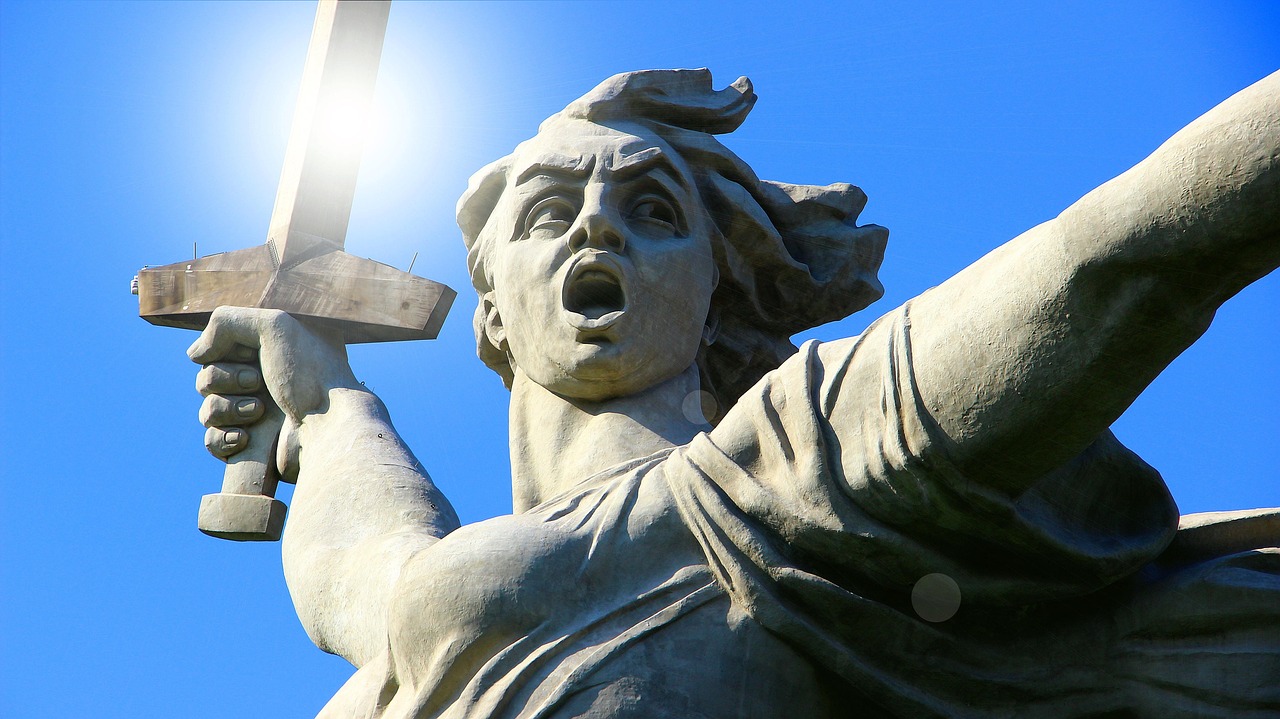
Few monuments on earth land with the physical force of Mamayev Kurgan. This low hill on the western edge of Volgograd, the city that was Stalingrad, saw some of the most savage fighting of the entire Second World War, changing hands repeatedly over 200 days as two armies bled each other white over its slopes. Today it is crowned by The Motherland Calls, a statue of a sword-raising woman so vast that for years it was the tallest sculpture in the world, and the whole hillside has been shaped into a processional memorial that you do not so much visit as submit to. This is the single reason most travellers come to Volgograd, and it deserves to be approached slowly and on foot.
Climbing the Memorial in the Right Order
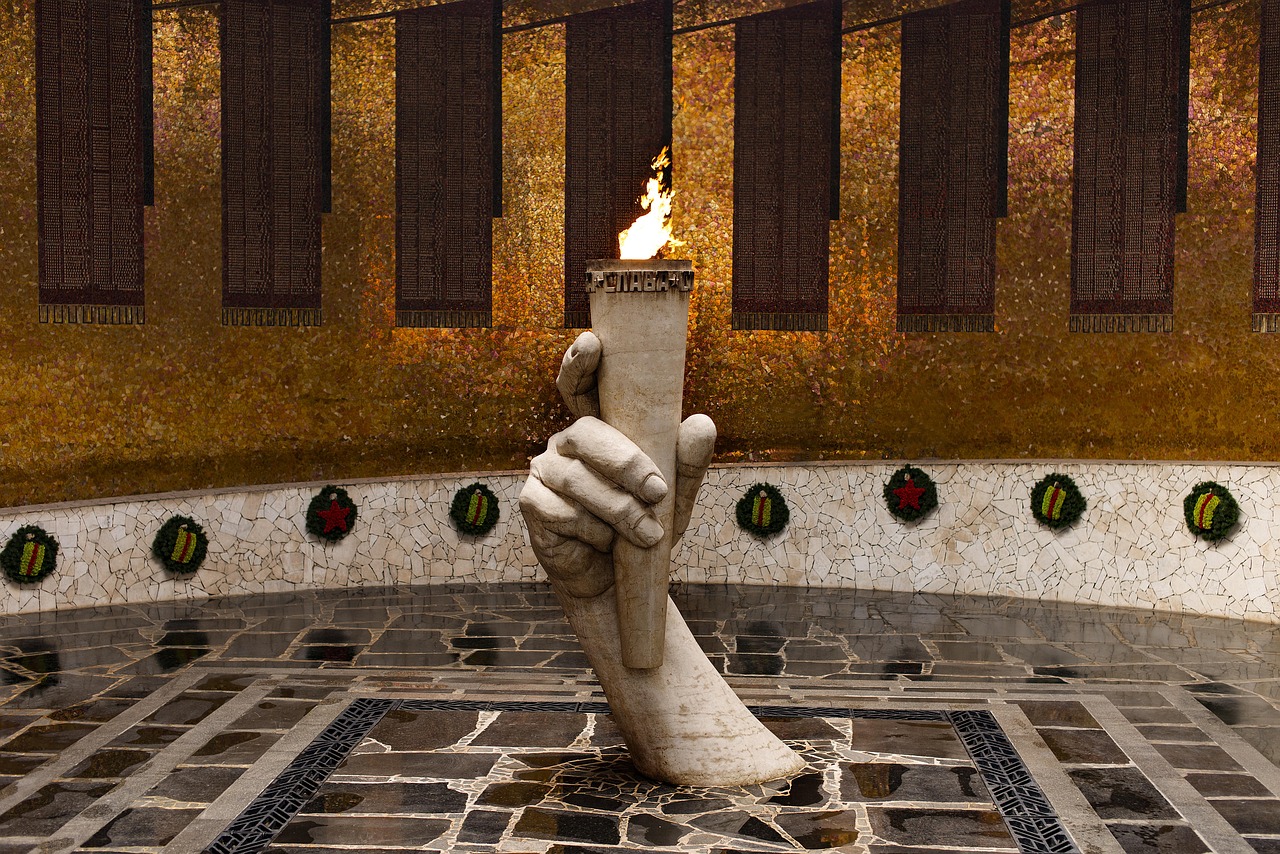
The complex is designed as one long ascent, and walking it in sequence is the point. You begin at the bottom with the Memory of Generations relief, then climb the Avenue of Poplars to the Square of Those Who Stood to the Death, where a defiant soldier rises from the stone. From there ruined symbolic walls covered in carved soldiers and real wartime quotations funnel you upward to the Square of Heroes and the Hall of Military Glory, a circular chamber lit by an eternal flame held by a giant sculpted hand, guarded around the clock. Only after all of this do you reach the summit and the statue itself. Resist the urge to shortcut straight to the top; the meaning is in the climb.
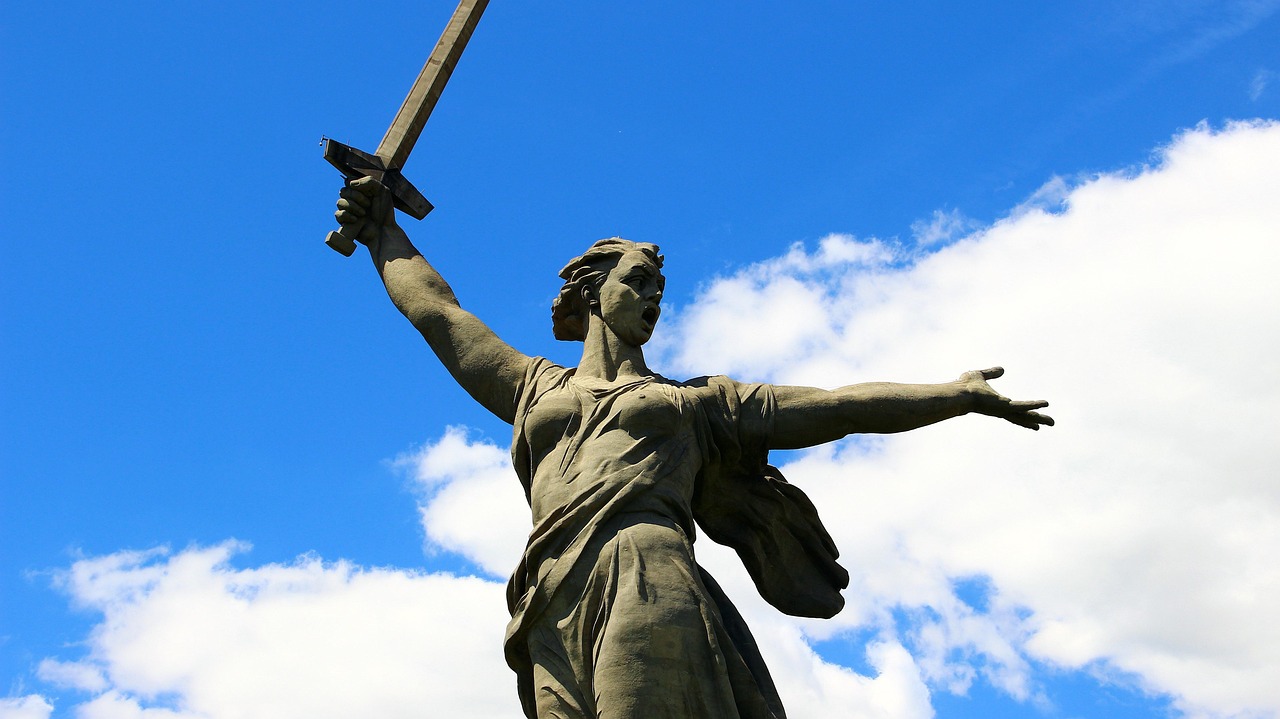
The Scale of the Statue
The Motherland Calls is hard to comprehend from photographs. Including her raised sword she stands around 85 metres tall, dwarfing the people at her feet to specks, and unlike most monumental statues she is not bolted down but balances by her own engineered weight, a feat that has needed careful structural monitoring for decades. She faces west, toward the direction the invasion came from, mid-stride and mid-shout, sword flung up as if rallying the army behind her. Standing directly below and looking up the line of that sword into the sky is one of those rare travel moments that genuinely silences a crowd.
Visiting Respectfully
This is an active place of mourning, not a theme park. Many of the roughly 35,000 identified defenders are buried in the hillside, and you will see Russian families, veterans and wedding parties laying flowers throughout the day. Keep your voice down, dress with a little care, and give people space at the eternal flame. Come early in the morning or near dusk both for softer light and thinner crowds, allow a good two hours for the full ascent and descent, and take the stairs slowly so the sequence of monuments can do its work on you. Photography is fine almost everywhere, but read the moment before you raise your camera in the Hall of Military Glory.
Mamayev Kurgan is not a casual sightseeing stop; it is the emotional core of the entire city. Walk it from bottom to top in order, give it the better part of a morning, and let the sheer scale of both the loss and the monument settle in before you move on.
More Volgograd Travel Guides
- The Battle of Stalingrad Museum and the Ruined Mill: Where the City Keeps Its Memory
- Beyond the Battlefield: Volgograd Riverfront, Its Long Streets and Everyday Life on the Volga
- Evenings in Volgograd: Riverside Bars, Summer Terraces and Where the City Relaxes
- Volgograd Guide Series (Hub)
Planning the whole trip? See our complete Volgograd master guide for every series in one place.


2 thoughts on “Mamayev Kurgan and The Motherland Calls: Standing Beneath the Worlds Most Overwhelming War Memorial”