In the high desert of the American Southwest, where adobe walls glow gold in the evening light, the Pueblo peoples who speak Tanoan languages have kept one of the oldest continuously inhabited ways of life in North America. Villages such as Taos, with its famous multi-storey adobe houses, have stood in the same place for a thousand years, their people farming corn on the dry land and gathering in underground ceremonial chambers to keep the old cycle of the year.
The Tanoan-speaking Pueblos belong to the Kiowa-Tanoan language family and include the Tiwa, Tewa and Towa communities strung along the Rio Grande and its tributaries in New Mexico. Though each village governs itself and guards its own traditions closely, together they share a farming heritage, a rich ceremonial life and a deep attachment to a landscape of mesa, river and mountain. This article traces their origins, languages, homeland and enduring culture into the present day.
Contents
- Origins in the Ancient Southwest
- A Name Rooted in Village and Language
- The Tanoan Languages of the Rio Grande
- Homeland of Mesa, River and Mountain
- The Old Farming Way of Life
- How Pueblo Society Was Organized
- The Kiva and the Ceremonial Year
- Traditions Guarded Across Centuries
- Pottery, Weaving and Pueblo Crafts
- Corn and the Foods of the Desert
- Dances, Feast Days and Gatherings
- A History of Conquest and Endurance
- Tanoan Pueblo Peoples in the World Today
Origins in the Ancient Southwest
The Tanoan-speaking Pueblos are the descendants of the ancient farming cultures that flourished across the Southwest for many centuries, peoples who built great stone and adobe settlements and mastered the difficult art of growing crops in a dry land. Their ancestors lived in cliff dwellings and canyon towns whose ruins still stand today as monuments to a long and settled history.
As climate shifts and other pressures made some of the old centres hard to sustain, communities moved and regrouped, and many of them settled along the Rio Grande, where a reliable river offered water for their fields. The Tanoan villages of today trace their roots to this long process of migration and resettlement.
This deep past gives the Pueblos an extraordinary sense of continuity, for they still live in the same region, farm the same crops and perform ceremonies descended from those of their ancestors. Few peoples anywhere can point to such an unbroken thread linking the ancient past to the living present.
Their own histories tell of emergence from the worlds below and of long journeys in search of the proper place to settle, journeys that ended when each people found its true home. These accounts bind the Pueblos firmly to the specific landscape they have occupied for so long.
Archaeologists working across the region have traced the slow development of these farming societies over many centuries, from small scattered settlements to the great towns whose ruins still draw visitors today. For the Pueblos themselves, however, these places are not simply archaeological sites but the homes of ancestors, remembered in story and honoured as part of a continuous history that reaches into the present.
The great abandoned towns of the ancient Southwest have long fascinated outsiders, but for the Pueblos they are best understood as chapters in a family story rather than mysteries to be solved. Each move and each resettlement was a step in a continuing journey, and the villages of today stand as the living conclusion of that long and deliberate path across the land.

A Name Rooted in Village and Language
The word pueblo is Spanish for town or village, and it was applied by early Spanish explorers to the settled, town-dwelling peoples of the Southwest to distinguish them from more mobile neighbours. Over time it became the common name for these communities and their descendants.
Within this broad label, the Tanoan speakers are grouped by the family of languages they share, which linguists call Tanoan. This is not a name the people themselves traditionally used, but a scholarly term for the related tongues of a set of distinct villages.
Each pueblo has its own name for itself in its own language, and villagers identify first of all with their particular community, its plaza, its sacred places and its ceremonies. Membership in a specific pueblo, rather than in a broad ethnic category, is what matters most to daily identity.
So the term Tanoan Pueblo is best understood as a way of describing a set of closely related but self-governing communities, each proud of its own history and jealous of its own traditions.
This layering of names, a Spanish word for the settlements, a scholarly term for the languages and each community’s own name for itself, reflects the complicated history through which the Pueblos have passed. Learning to use these names with care is a way of respecting both the shared heritage of the Tanoan villages and the distinct identity that each one holds so dear.

The Tanoan Languages of the Rio Grande
The Tanoan languages belong to the wider Kiowa-Tanoan family and divide into several branches, including Tiwa, Tewa and Towa, each spoken in a particular set of villages along and near the Rio Grande. Though related, these languages are distinct enough that speakers of one cannot simply understand another.
These are tonal languages with complex grammar, and they carry a great deal of ceremonial and traditional knowledge that is not easily translated. Much of the sacred vocabulary is closely guarded and not shared outside the community.
Unlike many indigenous languages elsewhere, some Tanoan tongues have remained relatively strong, spoken in the home and used in ceremony, partly because the villages guarded them carefully and limited their exposure to outside study.
Even so, communities remain watchful, running language programmes for the young and treating fluency as a vital thread connecting each new generation to the ceremonies and identity of the pueblo.
Because so much sacred knowledge is carried in these languages, their survival is bound up with the survival of the ceremonies themselves. A song or prayer often cannot simply be translated without losing its meaning and power, which is why communities place such value on raising children who can speak and understand the words of their ancestors directly.
Homeland of Mesa, River and Mountain
The homeland of the Tanoan Pueblos lies in the high desert of northern New Mexico, a landscape of wide valleys, flat-topped mesas and mountains that catch the winter snow. The Rio Grande winds through this country, its water making settled farming possible in an otherwise dry land.
This is a place of dramatic light and wide horizons, where summer thunderstorms sweep across the plateau and the peaks turn pink at sunset. Sacred mountains mark the edges of each pueblo’s world, and springs, lakes and particular rock formations carry deep religious meaning.
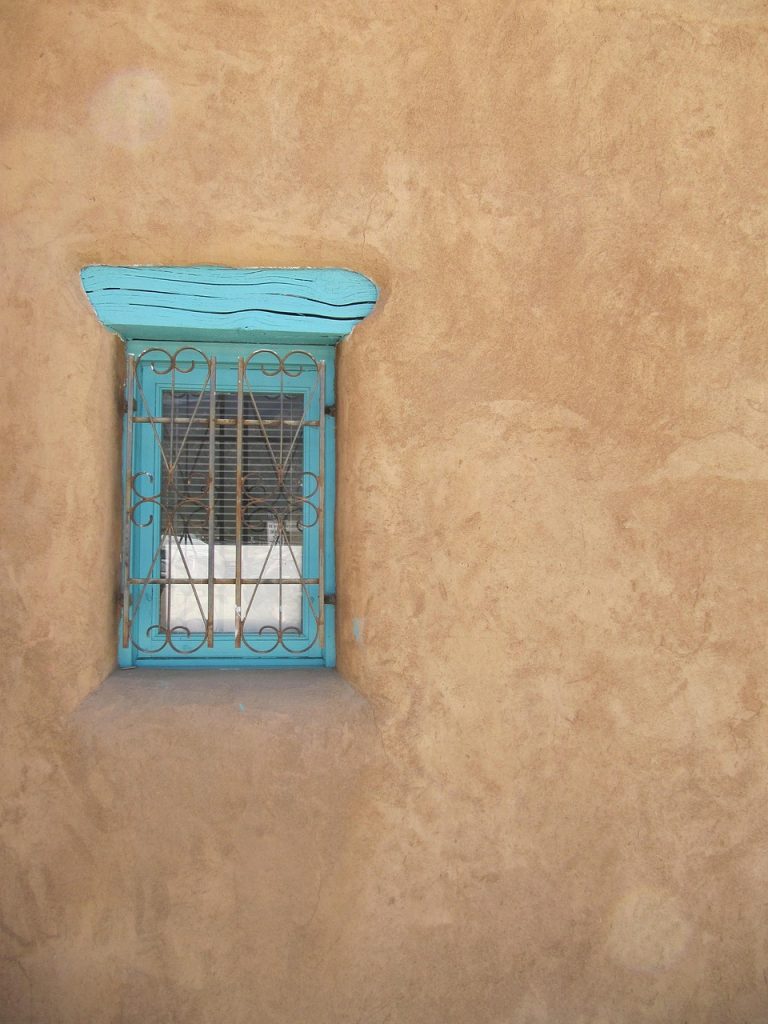
Villages were built of adobe, the sun-dried earth that is both material and metaphor for a people rooted in the land itself. The famous terraced houses of some pueblos rise several storeys, blending so completely into the landscape that they seem to grow from it.
For the Pueblos this homeland is not simply where they happen to live but the very ground of their identity, tied to them through ceremony, story and an unbroken residence stretching back many centuries.
The boundaries of this world were marked by sacred mountains in each direction, giving the landscape a shape that was at once geographic and spiritual. To live within these bounds was to live at the centre of a world carefully ordered by ceremony, where the physical features of the land and the sacred map of the people were one and the same.
Water, always scarce and always precious, gave shape to where and how people lived, drawing settlement toward the river and the reliable springs. The careful sharing and management of this water was not only a practical necessity but a moral and communal obligation, binding neighbours together in the common task of surviving in a beautiful but unforgiving country.

The Old Farming Way of Life
Farming stood at the heart of traditional Pueblo life, above all the growing of corn, together with beans, squash and other crops. In a land of little rain, farmers developed careful techniques of dry farming and irrigation, choosing their fields with great skill to make the most of scarce water.
The agricultural year shaped everything, from the timing of ceremonies to the rhythm of daily work. Planting, tending and harvesting were surrounded by ritual, for the growth of the corn was understood as both a practical and a sacred matter.
Hunting and gathering added to the harvest, with deer, rabbits and wild plants supplementing the crops from the fields. But it was the reliability of farming that allowed the Pueblos to live in permanent villages rather than moving constantly.
This settled, farming existence, carried on in the same places over many generations, gave Pueblo culture its remarkable stability and its intimate knowledge of a demanding environment.
The knowledge required to farm successfully in such a dry land was immense, covering the reading of weather, the management of scarce water and the careful selection and storage of seed. This accumulated wisdom, refined over countless growing seasons, was among the most precious inheritances a Pueblo family could pass on to its children.
Around the central work of farming grew a whole way of life, with its own tools, its own seasonal camps and its own body of songs and stories tied to the land. To be raised in a Pueblo village was to absorb this knowledge almost without noticing, learning the ways of corn and water and season simply by living within a community that had practised them for a thousand years.

How Pueblo Society Was Organized
Pueblo society was organised around the village and its clans, with membership and roles often passed down through particular family lines. Each pueblo was a self-governing community with its own leaders, its own ceremonies and its own carefully guarded customs.
Religious and civil authority were closely intertwined, with ceremonial societies playing a central role in governing the life of the village. Leadership carried heavy responsibility, especially the duty to keep the ceremonies that were believed to sustain the whole community and its world.
Cooperation was essential in such a demanding environment, and much work, from maintaining irrigation to preparing for ceremonies, was carried out collectively. The good of the village came before the ambitions of any individual.
This tightly knit social order, focused on the village and its sacred calendar, helped the Pueblos preserve their way of life through centuries of pressure from outside.
The balance between individual families, clans and ceremonial societies gave Pueblo villages a resilience that helped them weather centuries of outside pressure. Power was distributed and hedged with responsibility, so that no single person could easily overturn the customs on which the whole community depended for its survival and its sense of order.
Visitors to a pueblo often sense at once that they have entered a community with a strong and settled character, where people know their place in a web of family and ceremony that stretches back generations. This rootedness, the sense of belonging to a particular village with its own plaza and its own sacred round, lies close to the heart of what it means to be Pueblo.
The Kiva and the Ceremonial Year
At the centre of Pueblo religious life stands the kiva, a special chamber, often partly underground, where ceremonial societies gather to carry out their rituals. The kiva is both a sacred space and a symbol of emergence from the worlds below, and much of the deepest religious life takes place within it.
The Pueblo year follows a cycle of ceremonies tied to the seasons and the needs of the crops, above all the bringing of rain and the growth of the corn. Each ceremony has its proper time, its songs, its dances and its officials, and together they keep the world in balance.
Much of this religious life is deliberately kept private, shielded from outsiders, and this careful guarding of sacred knowledge has been one of the keys to its survival. What is shown in public dances is only a part of a far deeper and more secret whole.
For the Pueblos, religion is not a separate compartment of life but the framework that holds everything together, binding the community, the land and the turning year into a single sacred order.
This determined privacy has sometimes been misunderstood by outsiders, but it has been essential to the endurance of Pueblo religion through long periods when open practice was dangerous. By keeping the heart of their ceremonies hidden, the Pueblos ensured that even under the harshest pressure the sacred core of their life could continue undisturbed.
The rhythm of the ceremonial year gives shape to time itself in the pueblo, so that the passing months are measured less by a calendar on the wall than by the succession of dances and observances. In this way the sacred and the everyday are woven together so tightly that they can scarcely be pulled apart, and the whole of life takes on a ceremonial shape.

Traditions Guarded Across Centuries
Pueblo traditions have been guarded with unusual care, in part because centuries of pressure from outside taught the communities to protect what was most sacred by keeping it hidden. This determined guarding of custom is itself a defining tradition of Pueblo life.
Knowledge of ceremonies, songs and sacred stories is passed down within particular societies and families, entrusted only to those who have earned the right to hold it. Membership in ceremonial societies carries lifelong obligations to the community.
The ritual calendar itself is a living tradition, performed year after year in the same plazas and kivas, tying each generation to those who came before. To take part is to step into a role that ancestors have filled for centuries.
Through this careful transmission, the Pueblos have kept alive a body of tradition that reaches back to the ancient Southwest, adapting where necessary but never surrendering its heart.
The result is a culture in which continuity is prized above novelty, and in which the correct performance of inherited ceremony is seen as a sacred duty rather than an optional custom. This deep conservatism, far from being a weakness, has been the very strength that carried Pueblo tradition intact through centuries of change.

Pottery, Weaving and Pueblo Crafts
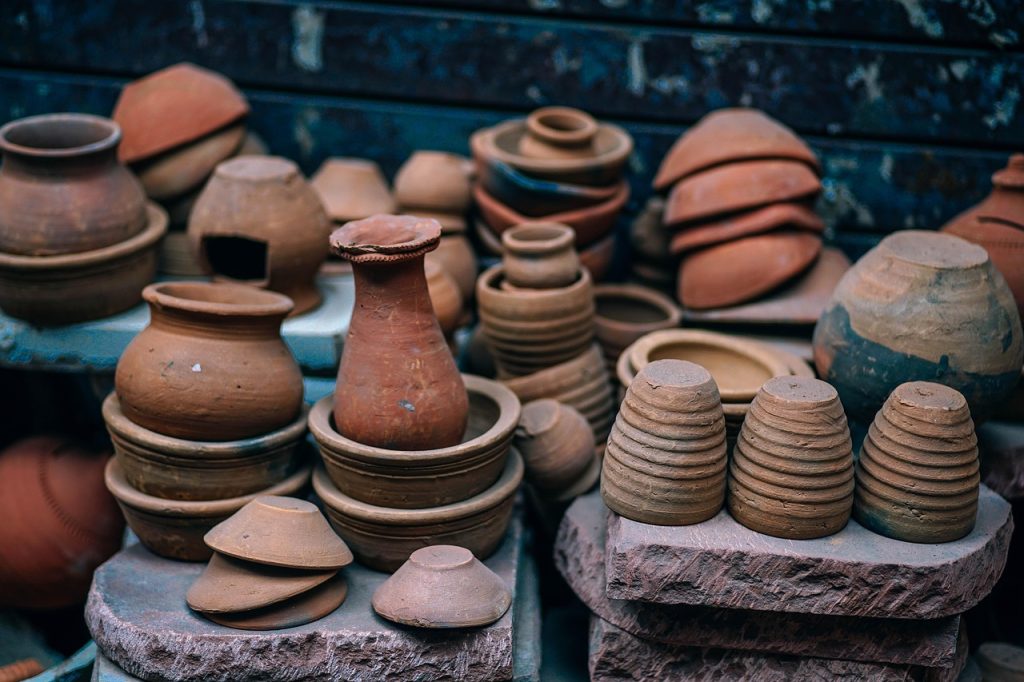
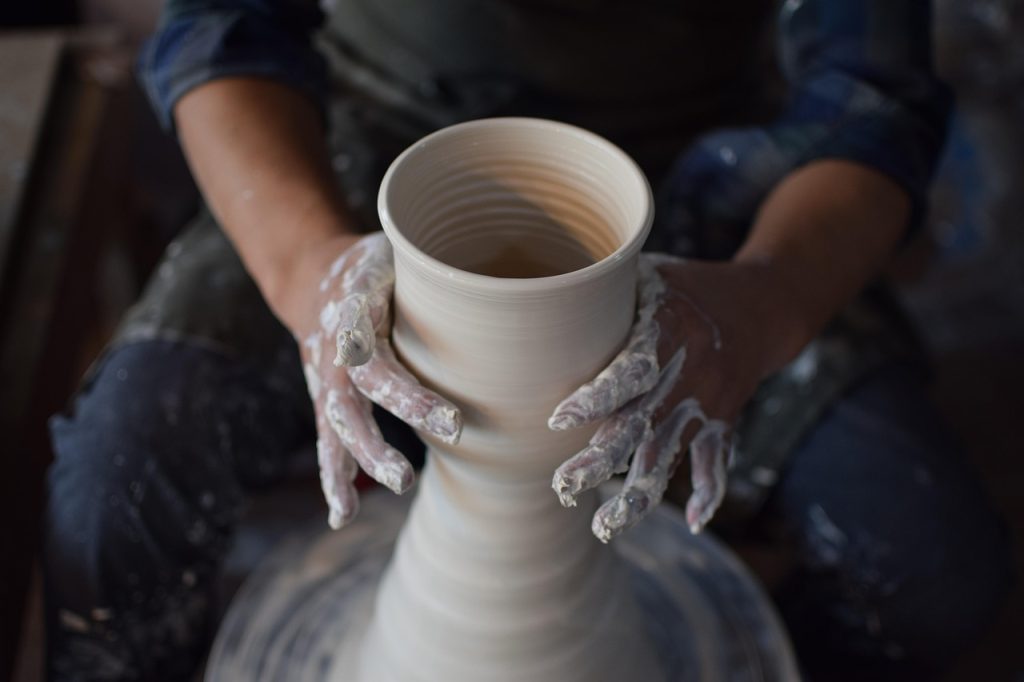
The Pueblos are world-famous for their pottery, shaped by hand from local clay and decorated with designs that vary from village to village. Each pueblo has its own distinctive style, and skilled potters are honoured figures whose work is prized far beyond the Southwest.
Weaving and textile work also have a long history, producing blankets, sashes and ceremonial garments, while other artisans work in silver, turquoise and shell to make jewellery of great beauty. These crafts combine practical use with deep aesthetic and cultural meaning.
Many of the finest objects are made for ceremonial use rather than sale, and the designs they carry often relate to rain, corn, clouds and the other forces central to Pueblo life. Craft and religion are closely woven together.
In modern times Pueblo pottery and jewellery have become celebrated forms of fine art, providing income for families while carrying the identity and design traditions of each village into galleries around the world.
Families of renowned potters have passed their techniques and designs down through the generations, so that a distinctive style can often be traced to a particular village and even a particular lineage. In this way the crafts themselves become carriers of history, linking the hands of living artists to those of their grandparents and their grandparents before them.
Beyond their beauty, these objects serve as a bridge between the pueblo and the wider world, allowing outsiders to encounter something of Pueblo culture through the work of its finest artists. Yet the deepest meanings of the designs remain rooted in the village, understood most fully by those who share the ceremonies from which the patterns ultimately spring.
Corn and the Foods of the Desert
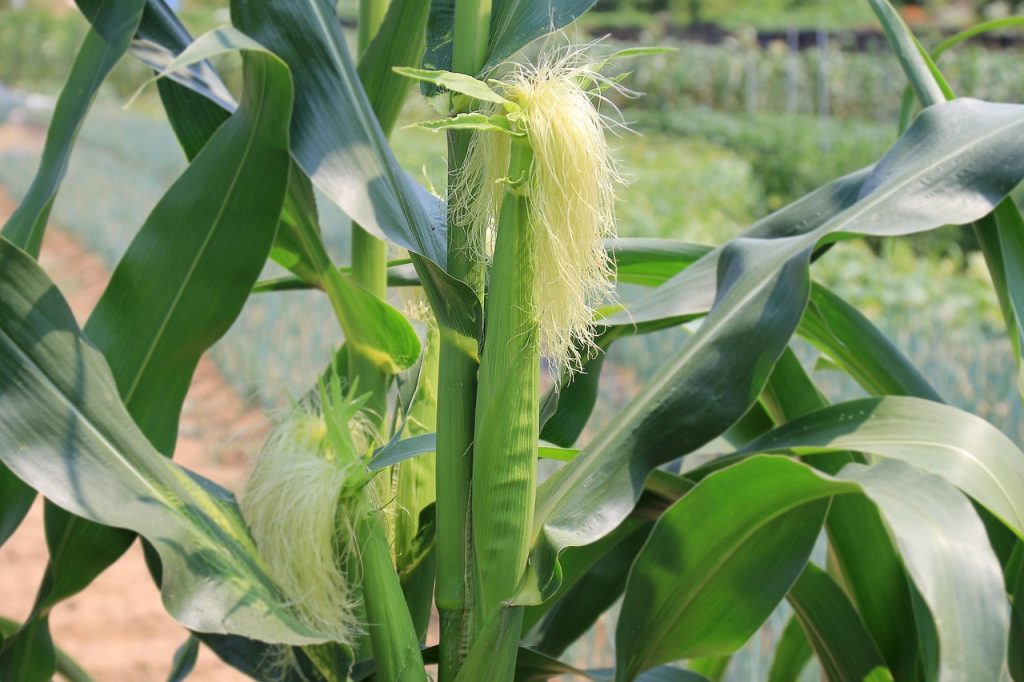
Corn is the foundation of Pueblo food and Pueblo life, grown in many colours and varieties and prepared in countless ways, from thin baked breads to stews and ground meal. It is far more than a crop, standing at the centre of ceremony and self-understanding.
Alongside corn grew beans and squash, the companions that together form a balanced and reliable diet, supplemented by chili, wild greens and the meat of hunted game. This combination sustained the villages through the long dry seasons.
Food and ceremony are deeply linked, and special dishes are prepared for feast days when families open their homes and share meals with relatives and guests. Generosity at these times is both an honour and a duty.
The careful cultivation and preparation of desert foods, above all corn, reflects a whole philosophy of living in harmony with a hard land, drawing sustenance from it through knowledge, effort and respect.
The reverence surrounding corn is expressed in the use of corn pollen and cornmeal in prayer and blessing, marking the crop as sacred as well as sustaining. To share food, and above all corn, is to affirm the bonds of kinship and community that hold the village together through the turning of the seasons.

Dances, Feast Days and Gatherings
The most visible expression of Pueblo culture to outsiders is the public dance, held on feast days through the year in the village plazas. Dancers in careful regalia move to the sound of drums and song, enacting ceremonies for rain, growth and the wellbeing of the community.
Each pueblo has its own feast days, often blending the old ceremonial calendar with dates introduced during centuries of contact, so that ancient dances may take place around a village’s patron saint day. The result is a distinctive rhythm of celebration unique to each community.
These occasions draw families home from far away and open the village to invited guests, with homes filled and tables laid for all who come. The dances are acts of worship and community renewal rather than mere performance.
Through these gatherings the Pueblos reaffirm their identity and their bonds, year after year, in the same plazas their ancestors used, keeping the ceremonial heart of the village beating strong.
For visitors fortunate enough to be welcomed, these feast days offer a glimpse of a living ceremonial tradition of extraordinary depth, though always with the understanding that much remains rightly hidden. For the Pueblos themselves, the dances are a renewal of their covenant with the land and the powers that sustain it, repeated faithfully year after year.
A History of Conquest and Endurance
The arrival of Spanish colonisers in the sixteenth century brought conquest, forced labour and pressure to abandon the old religion in favour of a new faith. The Pueblos endured harsh demands and saw their ceremonies driven underground, yet they never truly surrendered their beliefs.
In one of the most remarkable episodes in the history of the Southwest, the Pueblos united in a great revolt that drove the colonisers out of the region for more than a decade, a rare and successful act of united indigenous resistance. Though colonial rule later returned, the memory of that victory endured.
Under later Spanish, Mexican and finally United States rule, the Pueblos faced continued pressure on their land, their religion and their languages, including the removal of children to distant schools. Through all of this they held to their villages and their ceremonies.
Their history is therefore one of survival against long odds, of a people who bent when they had to but never broke, keeping their sacred life alive through centuries of upheaval.
The scars of this long history remain, but so does a fierce pride in having survived it with identity and ceremony intact. The Pueblos today often point to their endurance as proof that their way of life possesses a strength and a rightness that no conquest was ever able to destroy.

Tanoan Pueblo Peoples in the World Today
Today the Tanoan Pueblos remain vibrant, self-governing communities, each a federally recognised nation managing its own affairs while continuing the ceremonies that define it. Some villages have stood continuously inhabited for a thousand years and are honoured as living heritage.
Pueblo people move confidently in the modern world, working in every field and pursuing higher education, while returning home for the feast days and ceremonies that anchor their identity. This balance between two worlds is a defining feature of contemporary Pueblo life.
Their art, above all pottery, brings both income and recognition, and cultural tourism is carefully managed so that visitors may glimpse the public dances without intruding on what remains sacred and private. The communities guard the line between sharing and protecting with great care.
For the Tanoan Pueblos the future is rooted in the same adobe villages, the same corn fields and the same ceremonial calendar that have sustained them for centuries, carried forward by generations determined to keep their ancient way of life alive.
Younger generations increasingly take up the work of cultural preservation, learning the languages, mastering the crafts and stepping into ceremonial roles once held by their elders. In doing so they ensure that the thread linking the ancient Southwest to the modern world will not be broken, but will pass on unbroken to the children who come after them.
At the same time, the Pueblos face the same challenges as many communities, from economic pressures to the pull of the wider world on their young people. Yet the strength of their ceremonies and the depth of their attachment to their villages continue to draw people home, so that the ancient plazas still fill with dancers and the old year turns as it always has.

Related Peoples of the Region
- Kayapó, Feathered Guardians of the Xingu Forest in the Brazilian Amazon
- Pemón, Savanna Dwellers Beneath the Sacred Tepuis of the Gran Sabana
- Waorani, Forest Hunters of Ecuador Standing Guard Over the Amazon
- Wichí, Honey Gatherers and Weavers of the Gran Chaco Thornlands
- Warao, Canoe Dwellers of the Orinoco Delta and Their Tree of Life
- Coast Salish Canoe Nations of the Salish Sea and Their Cedar Longhouse World


