Deep in the rainforests of eastern Ecuador, between the headwaters of the Napo and Curaray rivers, lives a people who until recent generations had almost no contact with the outside world. The Waorani, sometimes spelled Huaorani, became famous as fierce and skilled forest hunters who defended their territory with spears and who long kept the modern world at bay. Their homeland sits atop one of the most biodiverse regions on the planet, and also atop reserves of oil that have drawn the outside world relentlessly toward them.
This is a portrait of the Waorani: their origins as an isolated forest people, their language that stands alone, their extraordinary knowledge of the rainforest, and the collision between their way of life and the pressures of oil, missionaries, and the modern state. It follows a people who moved within a single lifetime from near-total isolation to the front lines of the fight over the Amazon’s future.
The account that follows traces this dramatic arc, moving from the deep isolation of the forest to the modern struggle over oil, and showing how a people so recently apart from the world became defenders of the Amazon on the global stage.
Contents
- An Isolated People of the Ecuadorian Forest
- The Name Waorani and the Word for People
- A Language That Stands Entirely Alone
- A Homeland Between the Rivers and the Oil
- Hunting, Blowguns, and the Forest Larder
- Small Groups and the Bonds of Kinship
- Jaguars, Spirits, and the Living Forest
- Spears, Feuds, and a Warrior Reputation
- Blowguns, Hammocks, and Forest Craft
- Plantains, Game, and the Manioc Drink
- Ceremony, Chant, and Communal Life
- Contact, Missionaries, and the Coming of Oil
- The Waorani and the Battle for the Rainforest
An Isolated People of the Ecuadorian Forest
The Waorani are a people of the western Amazon, long established in the dense rainforests of eastern Ecuador between major tributaries of the upper Amazon. For most of their history they lived in near-complete isolation, deep in the forest and apart from both the Andean societies to the west and the other Amazonian peoples around them. This isolation shaped a culture of remarkable independence and self-sufficiency.
Rather than building large settlements, the Waorani lived in small, scattered groups that moved through a vast territory, relying entirely on the forest for their needs. Their history is one of a people who asked little of the outside world and fiercely resisted its intrusions, maintaining their separateness through both distance and a formidable reputation for defending their land.
This deep isolation lasted far longer than for most Amazonian peoples, with sustained contact coming only in the middle of the twentieth century. As a result, the Waorani entered the modern era carrying a way of life shaped almost entirely by the forest, and the abruptness of their encounter with the outside world gives their recent history an unusual intensity.
The depth of their isolation gave the Waorani a self-contained world in which the forest supplied every need and outsiders were simply enemies to be kept away. Few peoples entered the modern era with a way of life so little touched by the world beyond their own.
Living in small mobile groups rather than fixed towns, the Waorani ranged widely through their forest, taking what they needed and moving on. This pattern of movement was itself a strategy of independence, keeping them beyond the easy reach of any outside power.
The very abruptness of their later contact with outsiders meant that many aspects of the old forest life survived into recent memory, giving anthropologists and the Waorani themselves an unusually vivid connection to a way of living that elsewhere had long since faded.

The Name Waorani and the Word for People
The people call themselves Waorani, a word meaning people or human beings in their own language, marking them as the true humans in contrast to outsiders. This self-designation reflects the sharp distinction they long drew between themselves and all those beyond their forest world.
Outsiders historically applied other names to them, including a term used by neighboring peoples that carried hostile connotations, reflecting the Waorani reputation as fearsome fighters. In time, the people’s own name for themselves came to be the accepted term, replacing labels imposed from outside.
The distinction between the Waorani and everyone else runs deep in their worldview, dividing the human forest world from the dangerous realm of outsiders. That the word for their own people means simply human beings speaks to how completely their identity was bound up with their isolated forest existence.
That the Waorani reserved the word for true human beings for themselves alone reflects a worldview forged in isolation, one in which the boundary between their forest and everything else was as much moral as geographic.
In the wider Ecuadorian and international arena, the people are now known by their own name, a small but real recognition of their right to define themselves after generations of being labeled by others.
A Language That Stands Entirely Alone
The Waorani speak a language that has resisted every attempt to link it to any known family, making it a true isolate. It is unrelated to the Quechua of the Andes, to the languages of neighboring Amazonian peoples, or to any other tongue, a linguistic island as isolated as the people who speak it once were.
This singular language is a powerful marker of Waorani identity and a reflection of their long separation from other groups. For linguists it is a precious and somewhat mysterious survival, a language whose relatives, if they ever existed, have vanished, leaving it standing entirely on its own.
Despite the pressures that have come with contact, the language remains in daily use among the Waorani, learned by children and central to community life. Its survival, alongside the growing presence of Spanish, is closely tied to the survival of the wider Waorani culture that emerged in isolation.
The survival of this isolate carries a significance beyond the community, for its loss would erase a unique branch of human speech with no known kin to preserve its trace. That knowledge lends weight to efforts to keep it strong.
Bilingual education has begun to give the language a foothold in schools, though the growing presence of Spanish poses a real challenge. The balance between the two will help decide how firmly the mother tongue holds in generations to come.

A Homeland Between the Rivers and the Oil
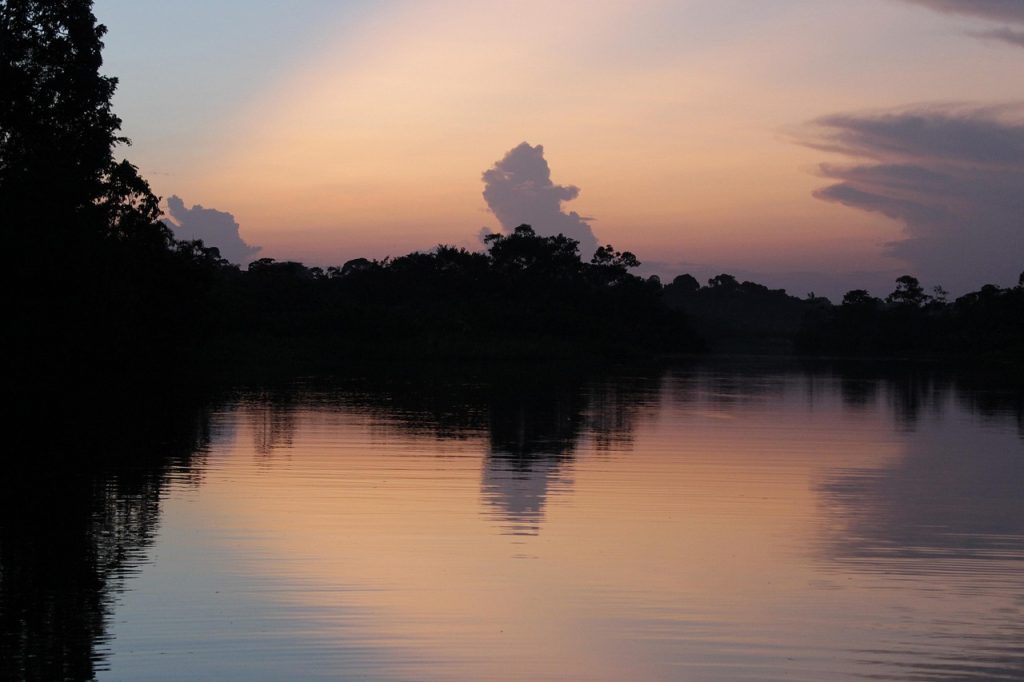
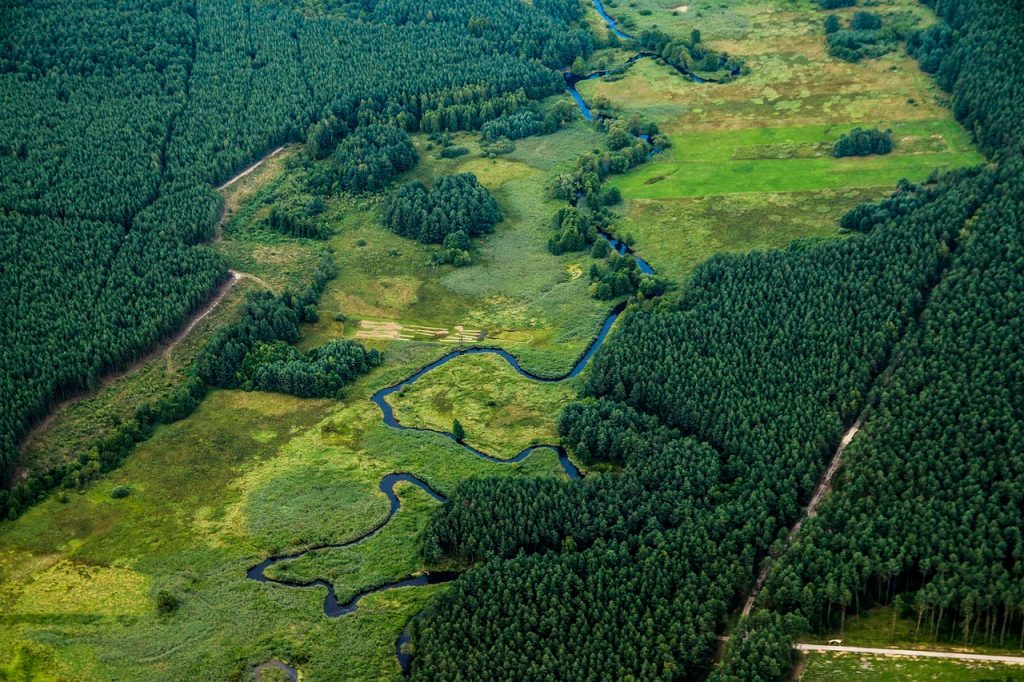
The Waorani homeland lies in the rainforests of eastern Ecuador, a region of extraordinary biological richness that includes some of the most biodiverse forest on earth. Their traditional territory covers a large area between major rivers, a world of dense jungle, winding waterways, and abundant wildlife that has sustained them for generations.
Much of this land overlaps with a great national park and biosphere reserve renowned for its staggering variety of life. For the Waorani, this forest is not a wilderness to be visited but a home to be inhabited, a place they know with an intimacy born of total dependence on its plants, animals, and rivers.
Beneath this forest, however, lie substantial reserves of oil, and it is this that has brought the outside world crashing into the Waorani homeland. The tension between an extraordinarily rich living forest above and valuable petroleum below has made their territory a battleground, placing the Waorani at the center of one of the Amazon’s most fraught conflicts.
The clash between the living wealth of the forest and the buried wealth of oil has defined the modern Waorani predicament, turning their homeland into a symbol of the wider dilemma facing the Amazon as a whole.
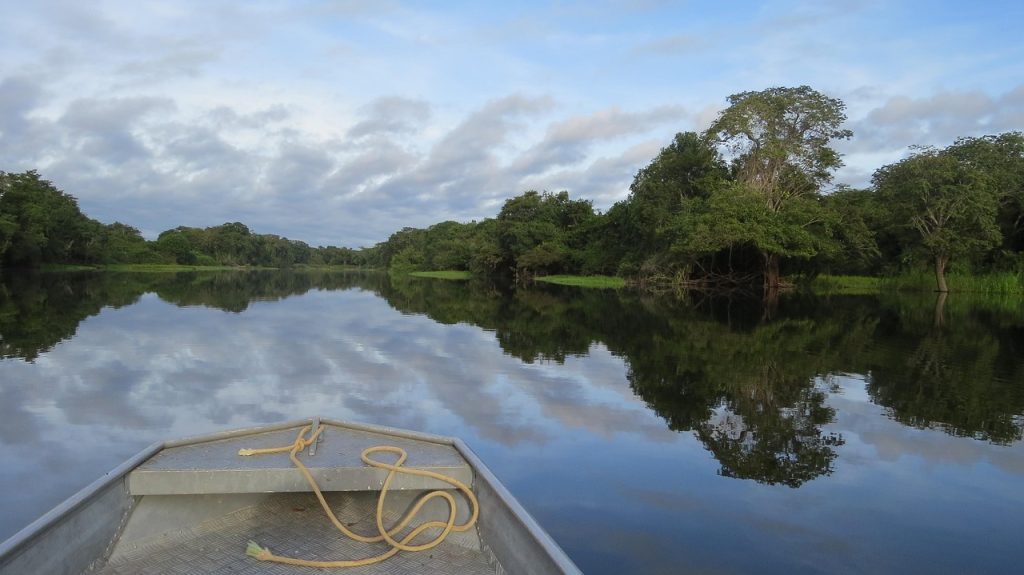
The rivers that thread the Waorani forest serve as routes of travel and sources of food, while the canopy overhead teems with the game on which the people have always depended. Together they make a world of extraordinary abundance.
The overlap of their land with a celebrated national park has drawn scientists and conservationists into the region, adding their voices to the contest over a forest prized for a diversity of life found in few other places on earth.
Hunting, Blowguns, and the Forest Larder
The Waorani are renowned as expert hunters, and hunting has always stood at the heart of their way of life. Using long blowguns and darts tipped with plant-based poison, they take monkeys, birds, and other game from the forest canopy with remarkable skill, drawing on an intimate knowledge of animal behavior built up over generations.
Alongside hunting, the Waorani cultivate gardens cleared in the forest, growing plantains, manioc, and other crops in small plots that supplement the abundant game. This gardening, combined with the gathering of forest fruits and other products, rounds out a diet drawn almost entirely from the surrounding jungle.
What sets the Waorani apart is the sheer depth of their forest knowledge, which encompasses countless plants and animals and their uses. This expertise, essential to survival in a landscape that offers everything they need, has made them among the most knowledgeable forest peoples of the Amazon and has drawn the attention of scientists studying the region’s biodiversity.
The blowgun, silent and deadly, is the perfect instrument of a hunter who must take agile prey high in the canopy, and mastery of it is a defining Waorani skill. In it, generations of forest knowledge are distilled into a single tool.
The Waorani knowledge of poisons, plants, and animal behavior is so detailed that researchers have long sought to learn from it, recognizing in it a living record of the rainforest accumulated over countless generations of close observation.
Gardening and hunting together give the Waorani a resilient economy, one that can lean on the forest’s game or the garden’s crops as circumstances require. This flexibility has long been a quiet strength of their way of life.
Small Groups and the Bonds of Kinship
Traditional Waorani society was organized into small, largely autonomous groups based on extended families, rather than into large villages or centralized structures. These bands moved through their forest territory, cooperating in hunting and daily life and connected to one another through webs of kinship and marriage.
This decentralized way of life meant that authority was diffuse, resting on the influence of respected individuals rather than on any formal chiefs or hierarchy. Decisions were matters for the group, and the independence of each band was a defining feature of Waorani social life, reflecting their broader spirit of self-reliance.
Kinship formed the essential framework binding these scattered groups, defining alliances, marriage, and obligation. In a society without strong central institutions, these ties of family were what held the wider Waorani world together, linking dispersed bands into a people who recognized one another as kin across the forest.
The autonomy of each small band suited a way of life spread thinly across a vast forest, but it also meant that unity depended entirely on the ties of kinship. Family, rather than any institution, was the true structure of Waorani society.
When contact drew many Waorani into settled communities, the old autonomy of the bands came under strain, as fixed villages required new forms of cooperation and leadership. Adapting to settled life has been one of the great changes of recent times.
The influence of respected elders and skilled hunters guided the bands without hardening into formal rule, a fluid style of leadership well suited to a mobile people. Persuasion, not command, was the currency of Waorani authority.

Jaguars, Spirits, and the Living Forest
Waorani belief is rooted in a forest understood as alive with spirits and powerful beings, where the boundary between the human and animal worlds is porous. The jaguar in particular holds a special place, associated with power and with shamans who were believed able to take on its form or share in its strength.
Shamans traditionally mediated between the community and the spiritual forces of the forest, addressing illness and misfortune understood as reaching beyond the physical. This worldview treated the forest not as mere environment but as a realm of relationships and dangers that people had to navigate with care and knowledge.
Missionary activity in the twentieth century introduced Christianity to the Waorani, sometimes with dramatic effect, and many have adopted Christian belief. Yet the older sense of a forest charged with spiritual power has not vanished, and elements of the traditional worldview persist alongside the new faith in the layered belief common across the region.
The special place of the jaguar in Waorani belief captures the closeness they feel to the animal world, in which the most powerful predator of the forest is bound up with human power and the work of the shaman.
Where shamanic practice survives, it is regarded as serious and sometimes perilous knowledge, tied to the powerful forces of the forest. Respect for that expertise lingers even among Waorani who now also embrace Christianity.

Spears, Feuds, and a Warrior Reputation
The Waorani are famous, and were long feared, for a culture in which spearing raids and blood feuds played a central role. Conflict between groups, and with outsiders who intruded on their territory, was frequent and often deadly, and the wooden spear became an emblem of a people who fiercely defended their independence.
This warrior reputation was not mere aggression but part of a way of life in which defending the group and avenging wrongs were deeply held obligations. Cycles of revenge could persist across generations, shaping the relationships between bands and contributing to the isolation that kept outsiders at bay for so long.
With sustained contact and the influence of missionaries, the intensity of these feuds diminished, and much of the old cycle of raiding came to an end. Yet the memory of this warrior tradition remains central to Waorani identity, and it informs the determination with which they now defend their land through other means.
The spear stands as the enduring symbol of this warrior past, a reminder of the fierce independence with which the Waorani long held their ground. Even as the old feuds faded, the spirit of defense they embodied did not.
The end of the old cycles of raiding did not erase the values behind them, and the fierce protectiveness that once expressed itself in feuds now finds an outlet in the determined defense of Waorani land against outside intrusion.
The fierceness that so impressed and frightened outsiders was, from within, a matter of loyalty and obligation, of protecting one’s own and answering wrongs. Understood in that light, the warrior tradition looks less like violence for its own sake than a code of defense.

Blowguns, Hammocks, and Forest Craft
Waorani craft grows directly from the needs of forest life, and no object is more emblematic than the blowgun. Long, precisely made, and paired with poisoned darts, the blowgun is a masterpiece of practical craft, its construction and the preparation of its darts representing knowledge honed over generations of hunting.
The Waorani also make hammocks, net bags, and other items woven from forest fibers, along with ornaments and tools drawn from the materials the jungle provides. These objects, essential to daily life, reflect a craft tradition rooted entirely in the resources of the surrounding forest and the skills needed to turn them into useful things.
As with other Amazonian peoples, some Waorani craft has taken on a new role with the growth of contact and limited tourism, offering a means of representing their culture and earning income. Yet the heart of their craft remains the practical toolkit of the forest hunter, above all the blowgun that symbolizes their way of life.
The making of a blowgun and the preparation of its darts demand patience and precise knowledge, from the choice of materials to the crafting of the poison. In these skills the practical genius of Waorani forest life is fully on display.
The hammock, woven from forest fibers, is another emblem of Waorani domestic life, a simple and elegant solution to rest in the humid forest that reflects the same practical ingenuity as the blowgun.
Turning these forest skills toward a modest trade with visitors has given some communities a new source of income, though the true home of Waorani craft remains the daily work of the hunt and the household.

Plantains, Game, and the Manioc Drink
The Waorani diet combines the abundant game of the forest with crops grown in their gardens, above all plantains and manioc. Meat from hunting provides the prized protein, while plantains and manioc supply the starchy foundation, prepared in various ways that anchor the everyday meal.
Manioc is also made into a fermented drink that plays an important role in social life, shared at gatherings and offered as an expression of hospitality. This drink, common across much of the Amazon, is a staple of Waorani sociability as well as a part of the diet, binding the community together in its sharing.
Forest fruits, insects, and other gathered foods add further variety, reflecting the Waorani’s deep knowledge of what the jungle can provide. As is typical across the region, food is closely tied to sharing, and the distribution of game in particular reinforces the bonds that hold the small Waorani groups together.
The sharing of the manioc drink at gatherings expresses the hospitality and sociability at the heart of Waorani life, turning a simple beverage into an instrument of community. To share it is to affirm belonging.
Hunting retains a strong link to prestige and identity, so that the successful hunter gains standing as well as meat. The distribution of game according to custom knits the small groups together around the shared bounty of the forest.

Ceremony, Chant, and Communal Life
Waorani communal life finds expression in gatherings marked by chant, song, and the sharing of food and drink. Traditional songs carry meaning tied to the forest, to hunting, and to the relationships within the group, and singing is woven through the important moments of collective life.
These gatherings bring together the members of dispersed bands, renewing the ties of kinship that connect the scattered Waorani groups. In coming together to sing, feast, and share the manioc drink, the community reaffirms the bonds that a mobile, decentralized way of life might otherwise leave loose.
Such occasions also serve to transmit knowledge and tradition to the young, carrying the songs, stories, and values that define the Waorani. Amid the pressures of a rapidly changing world, these moments of communal celebration remain important spaces in which the culture renews itself.
For a people whose bands were long scattered and mobile, these gatherings served as vital moments of connection, drawing kin together across the forest. In them the loose threads of a decentralized society were briefly pulled tight.
Chant in particular carries meaning tied to the forest and the hunt, so that in singing the Waorani rehearse the knowledge and relationships that sustain them. A gathering full of song is also a gathering full of memory.

Contact, Missionaries, and the Coming of Oil
For centuries the Waorani remained beyond the reach of outsiders, their isolation protected by the depth of the forest and their fearsome reputation. Sustained contact came only in the mid-twentieth century, when missionaries made determined efforts to reach them, an encounter that was dramatic and, in its early stages, marked by violence.
The arrival of missionaries brought profound change, drawing many Waorani into settled communities and reshaping their beliefs and way of life within a single generation. This rapid transformation, from near-total isolation to engagement with the outside world, stands as one of the most abrupt such transitions of the modern era.
Close on the heels of contact came the oil industry, drawn by the petroleum beneath the Waorani forest. Roads, drilling, and colonization followed, bringing environmental damage and social upheaval and setting the stage for the long struggle over land and oil that defines the Waorani’s recent history.
The speed of the Waorani transformation, from isolation to the front lines of the oil frontier within a single lifetime, gives their recent history a peculiar intensity, compressing changes that unfolded over centuries elsewhere.
The building of oil roads in particular opened the forest to colonists and further disruption, transforming a once-remote territory into a contested frontier almost overnight and deepening the challenges the Waorani face.
The Waorani and the Battle for the Rainforest
Today the Waorani number several thousand across their forest territory, a people who have moved within living memory from isolation to the center of a global struggle over the Amazon. Their homeland, rich in both biodiversity and oil, places them at the heart of debates about conservation, Indigenous rights, and the future of the rainforest itself.
The pressures are severe. Oil extraction, roads, and colonization threaten the forest on which the Waorani depend, while the temptations and divisions that come with outside money and a cash economy test the community from within. Balancing engagement with the modern world against the protection of their forest is a difficult and ongoing challenge.
Yet the Waorani have become determined defenders of their land, taking their fight against oil drilling to courts and international forums and winning notable victories in defense of their territory. Their story is that of a forest people who, having emerged so recently from isolation, now stand as prominent guardians of one of the Amazon’s most precious regions.
What lies ahead will depend on whether the Waorani can hold their forest against the pressure of oil, a struggle in which they have already shown surprising strength. Their homeland’s fate is bound up with that of the wider Amazon.
Even amid intense pressure, the Waorani engage the outside world with growing confidence, presenting their cause on national and international stages and refusing to be sidelined in decisions about their forest. Their recent legal victories have made them a symbol of Indigenous resistance.
The Waorani case has drawn wide attention because it distills a larger question, whether the wealth beneath the Amazon must always come at the expense of the wealth of life above it. In defending their forest, they speak to a dilemma far larger than themselves.
Related Peoples of the Region
- Meꞌphaa Speakers of the Guerrero Mountains and a Language That Stands Alone
- Garifuna Drummers and Cassava Bakers of the Central American Caribbean Coast
- Lenca Potters and River Defenders of the Honduran and Salvadoran Highlands
- Ashaninka: The People Who Drove the Spanish Out of the Forest
- Shuar: The People the Inca and Spain Both Failed to Conquer
- Yanomami: Guardians of the Amazon’s Deepest Forest


