Along the rugged outer coast of Vancouver Island and the inlets of the mainland beyond, the Wakashan-speaking nations built a maritime world of towering cedar houses, ocean-going canoes and some of the most dramatic ceremonial art on the continent. The Kwakwaka’wakw of the northern waters and the Nuu-chah-nulth of the wild western shore were master carvers, whalers and hosts of the great feasts known as potlatches, gatherings where wealth was given away to confirm rank and mark the events of life.
These nations speak languages of the Wakashan family, a group found only on this stretch of the northwest coast and unrelated to the tongues of their neighbours. Fierce guardians of their territories and their treasures, they created a culture of extraordinary richness, expressed in masked dances, painted house fronts and a social order built on inherited privilege. This article follows their origins, their languages, their homeland and their enduring way of life into the present day.
Contents
- Origins on the Wild Outer Coast
- Names of the Wakashan Nations
- The Wakashan Languages of the Coast
- Homeland of Inlet, Island and Open Sea
- The Old Way of Life on the Ocean
- How Wakashan Society Was Organized
- Masked Dances and the Spirit World
- Traditions of Rank and Ceremony
- Carving, Painting and Wakashan Crafts
- Whales, Salmon and the Foods of the Sea
- The Potlatch and the Great Gatherings
- A History of Ban, Loss and Revival
- Wakashan Coastal Peoples in the World Today
Origins on the Wild Outer Coast
The ancestors of the Wakashan-speaking nations have lived along the outer coast of what is now British Columbia for thousands of years, drawn to a shoreline where the forest meets a rich and often stormy sea. Archaeological sites reveal long occupation of the same bays and river mouths that their descendants still hold today.
This is one of the wildest coasts in North America, exposed to the full force of the open Pacific, and the peoples who settled here became superb seafarers out of necessity. Their mastery of the canoe and their knowledge of tides and weather grew from generations of living at the edge of a dangerous ocean.
The abundance of the sea, above all salmon and the great whales, allowed these nations to build permanent villages and to develop a complex society with time for art and ceremony. Wealth from the water underpinned the whole of their culture.
Their own histories tie their origins to specific places and to ancestral beings who founded the great house lineages, anchoring each family firmly to a particular stretch of the coast that it has held since the beginning.
The very harshness of this coast, so exposed to the power of the open ocean, helped shape a people of remarkable resilience and skill. Where a gentler shore might have permitted an easier life, the wild outer coast demanded mastery of the sea, and it was in meeting that demand over countless generations that the Wakashan nations forged the distinctive maritime culture for which they became famous.
Oral histories held by the great houses reach back to a founding time when ancestral beings established the lineages and claimed their territories. These accounts are not vague myths but precise charters of belonging, naming the places and the beings from which each house descends, and giving the people a depth of rootedness in their coast that no later authority could grant or take away.

Names of the Wakashan Nations
The nations of this coast are known by several names, and the labels used by outsiders have often differed from those the people use for themselves. The Kwakwaka’wakw, whose name means roughly the people who speak Kwak’wala, were long called by an older outside name that they themselves have set aside.
The Nuu-chah-nulth, whose territory lies along the west coast of Vancouver Island, likewise adopted a shared modern name to replace an older label imposed from outside. Their neighbours to the west, closely related in language, complete the Wakashan-speaking world of the region.
Within each of these groupings are many individual nations, each with its own territory, chiefs and history. People identify first with their particular nation and house, and only secondly with the broader language grouping.
The care that these peoples have taken to reclaim their own names reflects a wider determination to define themselves on their own terms after long years in which outsiders sought to name and categorise them.
The reclaiming of proper names is more than a matter of correcting old mistakes, for it reflects a people insisting on the right to be known as they know themselves. Each restored name carries with it a whole history and a whole way of understanding the world, and its use is a quiet but powerful assertion of continuing identity and sovereignty.

The Wakashan Languages of the Coast
The Wakashan languages form a family found only along this part of the northwest coast, quite unrelated to the Salishan languages spoken further south or the tongues of the interior. Kwak’wala, spoken by the Kwakwaka’wakw, and the language of the Nuu-chah-nulth are among its main members.
These languages are known for their complex sound systems and for the way they encode detailed knowledge of the coastal world. Much ceremonial and traditional lore is carried in words that resist easy translation into any other tongue.
As elsewhere on the coast, the residential school system inflicted terrible damage, punishing children for speaking their languages and driving the number of fluent speakers sharply down. For a time the survival of these tongues hung in the balance.
Today the Wakashan nations run determined language programmes, recording elders and teaching children, in the knowledge that their languages carry a way of understanding the world that exists nowhere else.
Because so much ceremonial knowledge is bound up in these languages, their revival is inseparable from the revival of the culture as a whole. A song or a prayer often cannot simply be translated without losing its power, and so the work of teaching the languages to the young is understood as essential to keeping the ceremonies, and the identity they express, alive.
Some communities have developed writing systems, dictionaries and digital tools to support the teaching of their languages, adapting modern technology to an ancient purpose. Elders who carry fluency are honoured as living treasures, and their recorded voices now help to guide a new generation of learners toward the words their ancestors spoke.
Homeland of Inlet, Island and Open Sea
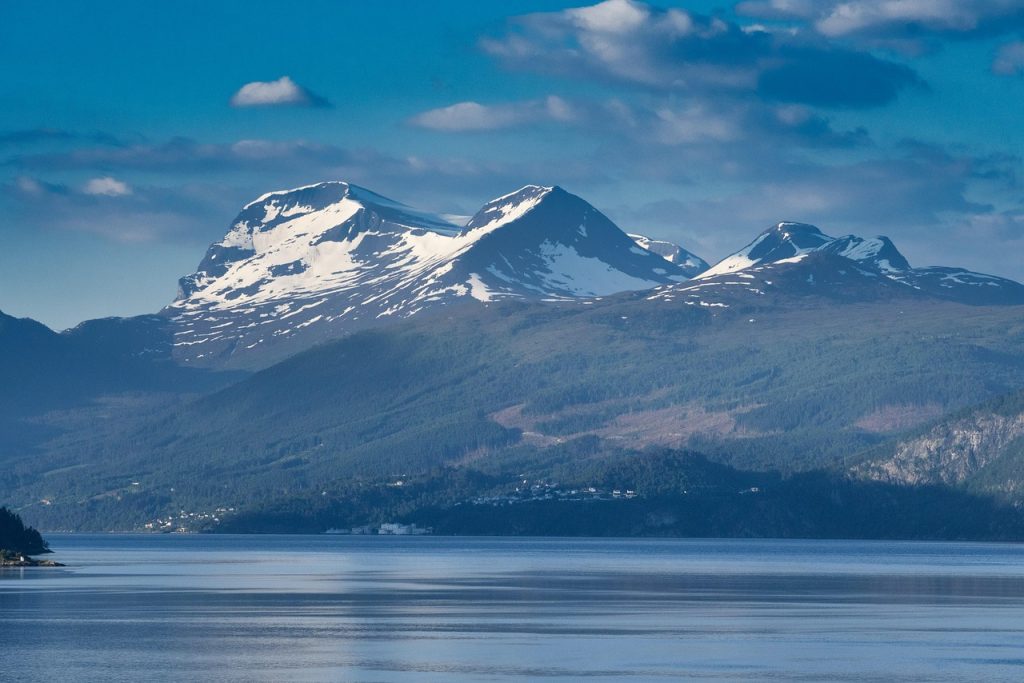
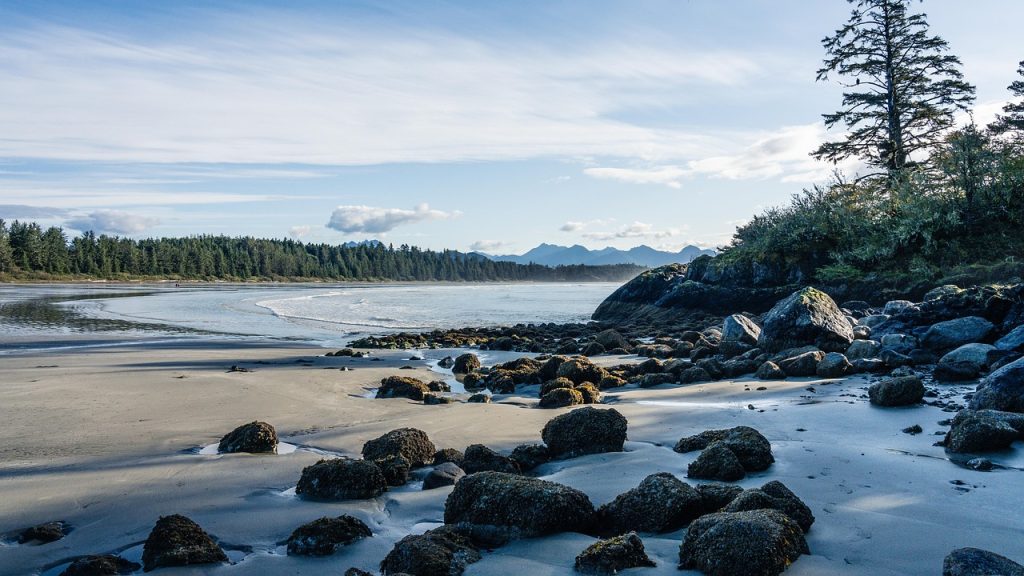
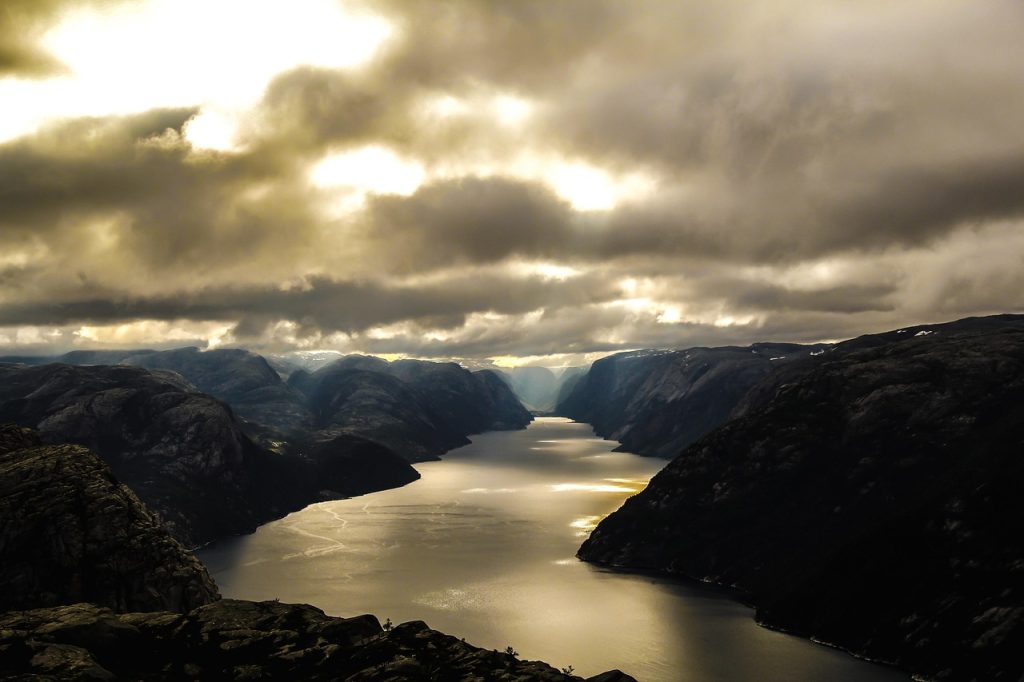
The Wakashan homeland takes in the northern part of Vancouver Island, the wild western shore facing the open Pacific and the maze of inlets and islands along the mainland coast. It is a land of deep fjords, mist-shrouded mountains and beaches battered by ocean swells.
This is a temperate rainforest coast, wet and green, where great cedars and firs crowd down to the water and rivers pour out of the mountains to fill each autumn with returning salmon. The meeting of forest and sea created an environment of remarkable richness.
Villages were placed with care at sheltered spots along this exposed coast, at river mouths and protected bays where canoes could be safely drawn up. Each nation held recognised rights to particular fishing grounds, beaches and stretches of shore.
For these peoples the ocean was not a barrier but the very centre of their world, a source of food, a highway for travel and trade, and the setting for the whaling expeditions that were among their greatest feats.
Seen from a canoe, as its people most often saw it, this homeland reveals itself as a connected world of waterways rather than a set of separate places divided by the sea. The channels and inlets that a stranger might read as obstacles were in fact the highways of this culture, joining village to village and nation to nation across the reach of the coast.
The boundary between land and sea, so sharp elsewhere, blurred along this coast into a single living world in which forest, shore and ocean were bound together by the salmon and the tides. To belong to this homeland was to understand its rhythms intimately, to read the weather and the water, and to know the countless named places that made the coast a familiar and storied home.
The Old Way of Life on the Ocean
Life on this coast revolved entirely around the sea and the great canoes carved from single cedar logs. These vessels ranged from small craft for fishing to large ocean-going canoes capable of pursuing whales far out into the open Pacific, a feat few other peoples attempted.
The yearly round followed the movements of fish and sea mammals. Families gathered salmon at the rivers, harvested shellfish and herring along the shore, and in some nations set out in canoes to hunt the whales whose meat and oil were prized above almost all else.
Cedar was the foundation of life on land, its wood building the great plank houses and canoes, its bark woven into clothing, mats and baskets. A single tree could supply a remarkable range of needs for a coastal household.
This demanding way of life required deep knowledge and great courage, above all in the pursuit of whales, and the skills it demanded were passed carefully from one generation to the next along the storm-swept coast.
The pursuit of whales in particular set some of these nations apart, for few peoples anywhere dared to hunt such enormous creatures from open canoes. The skill, courage and ritual preparation this demanded made the successful whaler a figure of the highest honour, and the hunt itself a defining expression of the culture’s relationship with the sea.
How Wakashan Society Was Organized
Wakashan society was built around ranked lineages, each headed by a chief and centred on a great cedar house. Rank ran through the whole of society, from high chiefs down through commoners to, in the past, enslaved people taken in war or trade.
Standing was expressed through inherited names, ceremonial privileges and above all the ability to host great potlatches at which wealth was given away. A chief’s prestige rested not on hoarding but on lavish generosity before witnesses.
The rights to particular songs, dances, names and crests were treasured possessions of the house, guarded jealously and displayed only by those entitled to them. To use another’s privilege without right was a serious offence.
This intricate order of rank and inherited privilege gave Wakashan society its distinctive character, in which art, ceremony and social standing were bound tightly together.
The intricate web of rank, privilege and inherited right gave Wakashan society a depth and formality that impressed many outside observers. Far from being a simple community of equals, it was a carefully ordered world in which each person understood their place, and in which the display of privilege through ceremony was central to how that order was maintained.
Beneath the formality of rank lay a strong sense of mutual obligation, for a chief’s standing depended on his ability to provide for and give generously to his people. In this way the pursuit of prestige, far from being merely selfish, drew wealth back into circulation through the great feasts, binding the whole community together in a web of giving and receiving.
Masked Dances and the Spirit World
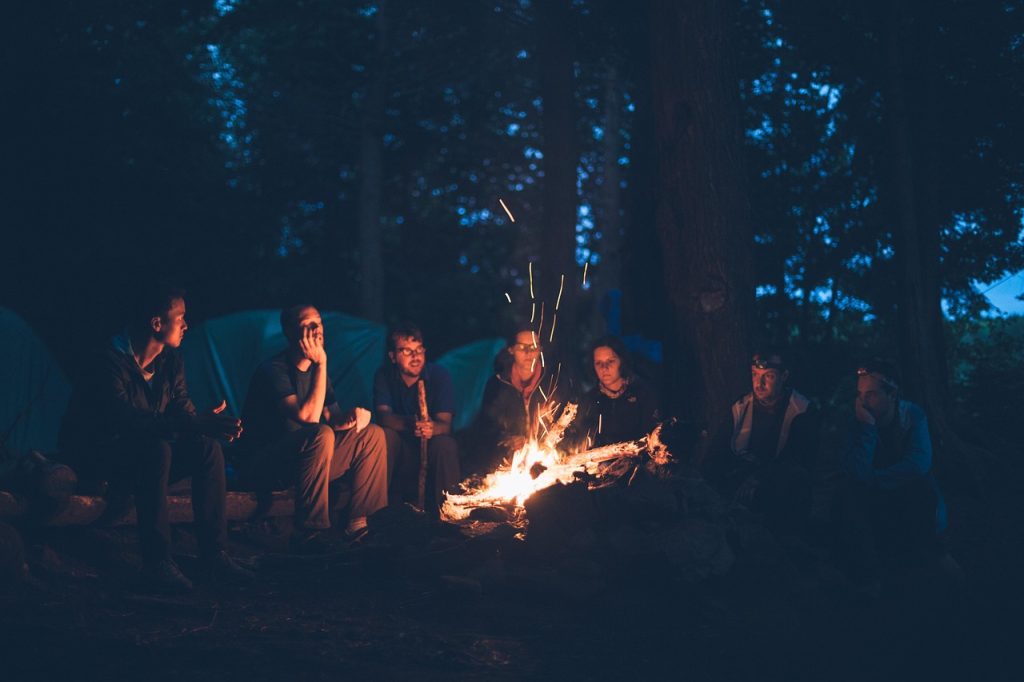
The spiritual life of these nations found its most dramatic expression in the great winter ceremonies, when dancers wearing elaborate carved masks brought the beings of the spirit world into the firelit house. Among the most famous were the powerful societies whose initiations re-enacted encounters with supernatural forces.
The masks themselves were marvels of the carver’s art, some with moving parts that opened to reveal a second face within, embodying the transformations at the heart of the ceremonies. To wear such a mask was to become, for a time, the being it represented.
Behind the public drama lay a serious religious purpose, for the ceremonies renewed the bond between the human community and the powers that governed the natural world. Initiation into the great dance societies was a profound and sometimes fearful passage.
For the Wakashan nations, the winter was the sacred season, when the ordinary order of the world gave way to the presence of the spirit beings, made visible through mask, song and dance.
The great winter ceremonies transformed the ordinary house into a stage where the boundary between the human and the supernatural grew thin. For those who witnessed the masked dancers emerging from the firelight and shadow, the beings of the spirit world became, for a time, terrifyingly and wonderfully real, renewing the community’s sense of the sacred forces surrounding it.
The great dance societies, with their initiations and their guarded knowledge, gave structure to this sacred season and marked the passage of individuals into new roles within the community. To be initiated was to be changed, to take on a relationship with the spirit powers that carried both privilege and lifelong responsibility within the ceremonial life of the house.

Traditions of Rank and Ceremony
Wakashan tradition centred on the careful transmission of inherited privileges, the names, crests, songs and dances that belonged to each house and marked its standing. These were treasured possessions, as real and as valuable as any material wealth.
The transfer of such privileges was surrounded by ceremony, above all the potlatch, where the giving away of goods before witnesses confirmed the claims being made. Tradition and social order were thus renewed through public ritual.
Elders and chiefs held the histories of their houses, the origin stories of their crests and the proper way to conduct each ceremony. This knowledge was a serious responsibility, entrusted to those who would carry it forward.
Through the faithful performance of these traditions, the Wakashan nations maintained an intricate social world in which every song, name and dance had its rightful owner and its proper place.
The result was a culture in which art, wealth and social standing were fused together in a single system of inherited privilege. To own a particular dance or crest was to hold a piece of the family’s history and identity, and the careful guarding and proper display of these treasures lay close to the heart of what it meant to belong to a great house.

Carving, Painting and Wakashan Crafts
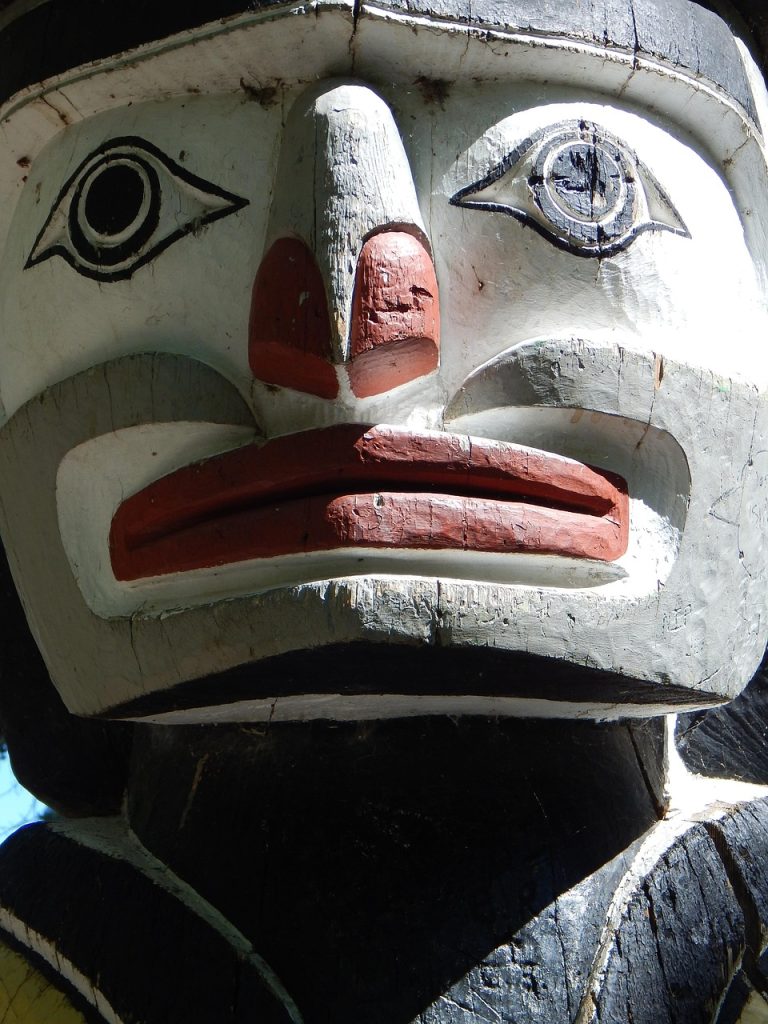
The Wakashan nations are counted among the great artists of the northwest coast, renowned above all for their bold carving and painting. House posts, totem poles, masks and canoes were worked in a powerful style of stylised animal and ancestral forms.
The carving of masks reached extraordinary heights, especially the great transformation masks that open to reveal an inner face, among the most celebrated objects in all of indigenous American art. Such pieces demanded both technical mastery and deep ceremonial knowledge.
Weaving and basketry were also highly developed, using cedar bark and other materials to make clothing, mats, hats and watertight containers. The finest work combined utility with striking design.
Across all these crafts, the objects carried meaning about rank, lineage and the supernatural world, so that a painted house front or a carved mask was a statement of identity and privilege as much as a work of art.
Contemporary Wakashan artists have carried these inherited traditions into the modern world, working in fresh forms and materials while remaining rooted in the powerful design language of their ancestors. Their work now commands respect in galleries and public spaces internationally, carrying the identity of the coast far beyond its wild shores.
The transformation masks in particular capture something essential about the worldview of these nations, in which the boundaries between human, animal and supernatural were understood as fluid rather than fixed. To open such a mask in the firelight, revealing one being within another, was to make visible a whole philosophy of change and connection at the heart of the culture.

Whales, Salmon and the Foods of the Sea
The sea was the great larder of the Wakashan nations, and salmon returning to the rivers each year formed the backbone of the diet, caught in great numbers and preserved by drying and smoking for the winter. The salmon runs shaped the whole rhythm of the year.
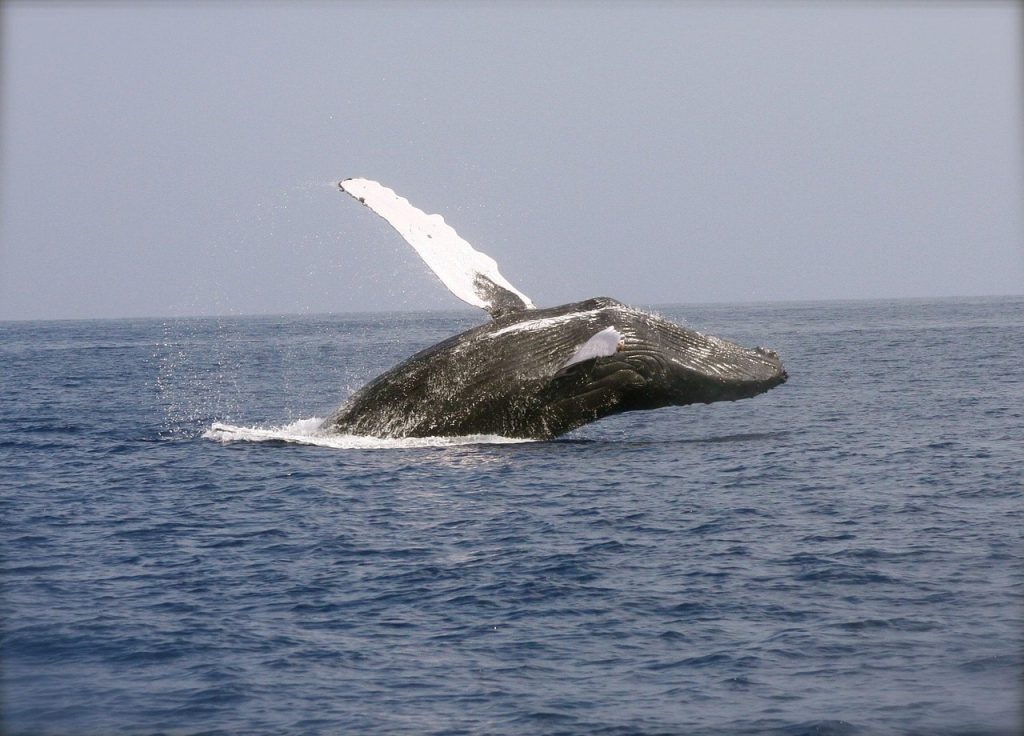
Some of these nations, above all the Nuu-chah-nulth, were among the few peoples in the world to hunt whales from open canoes, a dangerous and prestigious pursuit that yielded vast quantities of meat and oil. Success in the hunt brought a chief enormous honour.
The shore and sea offered much else besides, from herring and their eggs to shellfish, halibut, seals and sea birds. The rich intertidal zone provided a reliable food source that could be gathered throughout the year.
From the land came berries, roots and other plants, but it was the bounty of the ocean, and above all the salmon and the whale, that defined the food and the culture of these seafaring peoples.
The whole economy of these nations rested on the extraordinary richness of the sea, which supported dense populations and left time for the elaborate art and ceremony for which the coast is famous. Abundance drawn from the ocean, carefully harvested and preserved, was the foundation on which the whole of Wakashan culture was built.

The Potlatch and the Great Gatherings
The potlatch stood at the very centre of Wakashan ceremonial life, a great feast at which a host chief gave away or even destroyed large amounts of wealth to confirm his rank and mark important events. Guests served as witnesses whose acceptance validated the claims being made.
These gatherings marked births, marriages, deaths and the transfer of names and privileges, and they could last for days, filled with feasting, oratory, the display of treasures and the performance of masked dances. Generosity, not accumulation, was the measure of greatness.
The potlatch was so central to this society that when colonial authorities sought to break the culture, they banned it outright, driving the ceremony underground for decades. Its survival through those years is a testament to the determination of the people.
Today the potlatch has been powerfully revived, and great gatherings once again fill the ceremonial houses of the coast, renewing the bonds of kinship and confirming the standing of chiefs before assembled witnesses.
For the people themselves, the revival of the potlatch has been an act of profound cultural healing, a reclaiming of a ceremony that colonial authorities once tried to destroy. Each great gathering held today is thus both a continuation of ancient custom and a living proof that the attempt to break the culture ultimately failed.
A History of Ban, Loss and Revival
The arrival of Europeans brought waves of devastating disease, above all smallpox, which killed a terrible share of the coastal population and left many villages emptied before their people had fully understood what was happening. The loss reshaped the whole society.
As colonial control tightened, the authorities set out to suppress the culture directly, banning the potlatch and confiscating the ceremonial treasures of those who defied the law. Masks, coppers and regalia were seized and scattered to distant museums.
The residential school system took children from their families and sought to erase their language and identity, inflicting wounds whose effects are still felt today. For a time it seemed the old way of life might be lost entirely.
Yet the Wakashan nations endured, keeping their ceremonies alive in secret through the years of the ban and, when the law was finally lifted, beginning the long work of revival that continues to this day, including the return of many seized treasures.
The story of this period is one of both terrible loss and stubborn survival, of a people who suffered disease, dispossession and a direct assault on their ceremonies yet refused to surrender their identity. Understanding this history is essential to understanding the strength and pride of the Wakashan nations today.
Wakashan Coastal Peoples in the World Today
Today the Kwakwaka’wakw, Nuu-chah-nulth and their relatives are vital, self-governing nations, managing their own affairs while asserting their rights to their lands and waters. The potlatch and the great dances have returned in full strength to the ceremonial houses of the coast.
The art of these nations is celebrated around the world, and their carvers, working in the powerful traditional style, are among the most admired indigenous artists anywhere. Their masks and poles stand in galleries and public spaces far beyond the coast.
Language revitalisation, treaty negotiations and the reclaiming of seized ceremonial treasures are all part of a wider resurgence, as the nations rebuild what colonial policy sought to destroy. Young people once again learn the dances and the words of their ancestors.
For the Wakashan peoples the future is rooted in the same wild coast, the same cedar forests and the same ocean that shaped their ancestors, carried forward by nations determined to keep their extraordinary culture alive and strong.
Younger generations increasingly move between worlds, pursuing education and careers in the wider society while remaining deeply engaged in the dances, languages and governance of their nations. In them the long story of the Wakashan peoples continues, carried forward with a confidence born of having survived the worst that history could inflict.
At the same time the nations face the familiar challenges of the modern age, from economic pressures to the effects of historical trauma passed down through the generations. Yet the strength of the revived ceremonies and the depth of attachment to the coast continue to draw people home, so that the great houses fill once more with song, dance and the giving of gifts.
Related Peoples of the Region
- Waorani, Forest Hunters of Ecuador Standing Guard Over the Amazon
- Wichí, Honey Gatherers and Weavers of the Gran Chaco Thornlands
- Warao, Canoe Dwellers of the Orinoco Delta and Their Tree of Life
- Coast Salish Canoe Nations of the Salish Sea and Their Cedar Longhouse World
- Tanoan Pueblo Peoples of the Rio Grande and Their Thousand-Year Adobe Villages
- Keresan Sky City Dwellers of Acoma and a Language With No Known Kin
You May Like
The Damara, an Ancient People of Namibia


One thought on “Kwakwaka’wakw and Nuu-chah-nulth Whalers of the Wakashan Coast and Their Masked Dances”