In the high, rolling grasslands of southeastern Venezuela, where flat-topped mountains rise like islands above a sea of savanna, lives a people whose homeland ranks among the most spectacular landscapes on earth. The Pemón inhabit the Gran Sabana and the surrounding borderlands with Guyana and Brazil, a country of tepuis, waterfalls, and open plain that includes the towering table mountain of Roraima and the world’s highest waterfall. For the Pemón, these dramatic formations are not merely scenery but the sacred furniture of a living world.
This is a portrait of the Pemón: their place among the Cariban peoples, the language they speak, the savanna and highland world they inhabit, and the beliefs, foods, and struggles that shape their lives today. It follows a people whose identity is bound to one of the great natural wonders of South America and whose way of life unfolds in the shadow of the tepuis.
The account that follows moves from the deep past of the highlands to the pressures of the present, showing how a people bound to the tepuis has sought to hold its ground amid conservation, tourism, and the turmoil of a nation in crisis.
Contents
- A People of the Gran Sabana
- The Meaning of the Name Pemón
- A Cariban Language of the Highlands
- Tepuis, Savanna, and a Sacred Landscape
- Farming the Savanna and Fishing the Rivers
- Scattered Settlements and Village Life
- Spirits of the Mountains and the Shaman’s Role
- Legends of the Tepuis and the Flood
- Cassava Craft and the Work of the Home
- Cassava, Fish, and the Savanna Table
- Dance, Song, and Community Celebration
- Mining, Tourism, and the Struggle to Endure
- The Pemón in a Troubled Venezuela
A People of the Gran Sabana
The Pemón are one of the Indigenous peoples of the Guiana Highlands, long established in the vast upland savanna of southeastern Venezuela and the neighboring borderlands. Their ancestors adapted to a landscape quite unlike the dense lowland rainforest, a high country of open grassland broken by gallery forest along the rivers and dominated by the sheer walls of the tepuis. This distinctive environment set the terms of Pemón life from the start.
They belong to the wider family of Cariban-speaking peoples who once ranged across much of northern South America and the Caribbean. Within this broad world, the Pemón developed as a highland savanna people, distinct from the river-focused groups of the Amazon lowlands and shaped by the particular demands of their upland home.
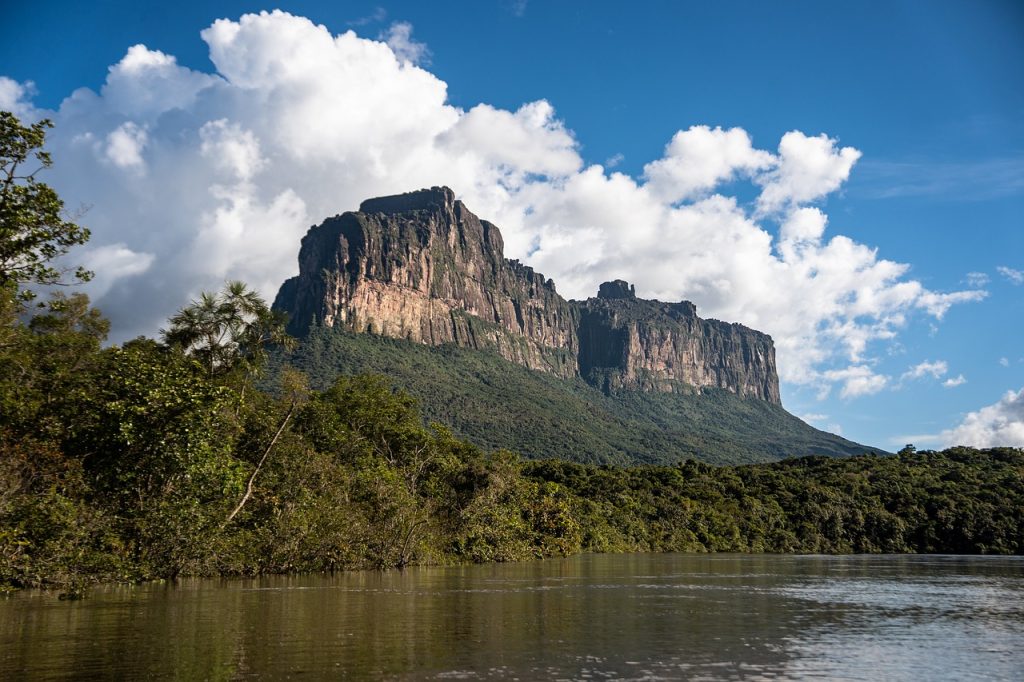
The Gran Sabana that the Pemón inhabit is a landscape of extraordinary age and character, where ancient sandstone tablelands preserve a world apart on their summits. Living among these formations, the Pemón built a culture in which the great mountains loom not only over the horizon but over the imagination, anchoring their sense of place and origin.
The isolation of the highlands helped preserve a distinct Pemón identity, since the savanna and its guardian mountains lay far from the colonial towns of the coast. Distance became a kind of shelter, allowing a highland culture to develop along its own lines.
Their place within the Cariban world links them to peoples scattered across northern South America, a reminder that the Pemón are one branch of a once far-reaching family whose members adapted to environments as varied as coast, forest, and highland.
The great table mountains, remnants of a far older land surface, lend the Gran Sabana an almost otherworldly quality, and the Pemón have made this ancient setting the backdrop of their entire way of life.
The Meaning of the Name Pemón
The name Pemón is the people’s own word for themselves, meaning simply people, a self-designation of the kind common among Indigenous groups. It sets them apart from outsiders and expresses their sense of themselves as the human community of their highland world.
The Pemón are usually described as comprising several closely related subgroups, distinguished by dialect and region while sharing a common language and identity. These divisions reflect the spread of the people across a large territory, but they sit within a clear overall unity that the shared name expresses.
Because the Pemón homeland straddles the meeting of three countries, the people have been known and recorded under a name that crosses borders much as they do. The single term Pemón gathers together communities divided among nations, affirming that they remain one people despite the frontiers that cut through their land.
The simplicity of the name, meaning nothing more than people, carries its own quiet significance, marking the Pemón as the human community of their world in contrast to the spirits and outsiders who share or surround it.
The subgroups within the Pemón, distinguished mainly by dialect and locality, illustrate how a single people can contain internal variety while still holding firmly to a shared name and a common sense of belonging.

A Cariban Language of the Highlands
The Pemón speak a language belonging to the Cariban family, one of the major language groupings of northern South America. Cariban languages were once spoken across a wide arc of the continent’s north and into the Caribbean, and the Pemón tongue ties the people firmly to this broad linguistic heritage. It is distinct from the Arawakan and other languages of neighboring regions.
The language remains in daily use across Pemón communities, spoken at home and learned by children, which has helped preserve the oral traditions and knowledge it carries. In a region where many Indigenous languages have come under heavy pressure, this everyday vitality is an important support for Pemón identity.
Spanish, and along the Guyana side English, have entered Pemón life through schooling, trade, and contact with the wider societies that surround them. This has produced widespread bilingualism, yet the mother tongue continues to hold its place in the home and community, remaining a central marker of who the Pemón are.
The survival of the Cariban tongue matters beyond the community, for it preserves a living branch of a family whose reach across the continent has shrunk dramatically over the centuries. Every fluent speaker helps keep that heritage alive.
Bilingual schooling has helped some communities give the language a written form alongside its strong spoken presence, reinforcing its place both at home and in the classroom and offering a further defense against erosion.

Tepuis, Savanna, and a Sacred Landscape
The Pemón homeland is centered on the Gran Sabana, a vast expanse of high savanna in the far southeast of Venezuela, extending toward the borders with Guyana and Brazil. Much of it lies within a great national park, a landscape of open grassland, winding rivers, and dramatic waterfalls set beneath the walls of the tepuis. It is a country of immense horizons and startling vertical drama.
The tepuis, the flat-topped table mountains that rise abruptly from the plain, dominate this world both physically and spiritually. For the Pemón these formations are far more than geological wonders; they are charged with meaning, understood as the abodes of powerful spirits and the settings of important stories. The greatest of them hold a special place in Pemón belief.
Among the wonders of this land is the towering waterfall that plunges from one of the tepuis, known to the world as the highest of its kind, along with countless other cascades that tumble across the savanna. For the Pemón, these are landmarks in a landscape that is at once home, larder, and sacred geography, a place where the practical and the spiritual are woven together.
To live among the tepuis is to live with a constant reminder of the sacred, since the great mountains are visible from far across the plain and impossible to ignore. Their presence shapes not only the view but the very way the Pemón understand their place in the world.
The national park that encompasses much of their land has brought the Pemón into contact with conservation authorities and visitors from around the world, adding a layer of outside attention to a homeland that was long remote and little known.
The rivers that thread the savanna soften its harshness, carving out ribbons of forest and feeding the countless waterfalls that give the Gran Sabana its fame. Along these waters the Pemón place their gardens and their homes.

Farming the Savanna and Fishing the Rivers
Pemón subsistence rests on the cultivation of bitter cassava, the staple crop grown in gardens cleared from the gallery forests that line the savanna’s rivers. Cassava is processed into flour and flatbread, providing the dietary foundation, and its cultivation shapes the rhythm of work across the community. Around it grow other crops suited to the highland soils.
Fishing in the rivers that cross the savanna provides an important source of protein, while hunting of the game found in forest and grassland adds further variety. The Pemón have learned to draw on the resources of both the open plain and the wooded riverbanks, making the most of a landscape that is less lush than the lowland forest but rich in its own way.
Gathering of wild fruits and other forest products completes this way of life, which is finely adapted to the particular conditions of the highlands. The combination of cassava farming, fishing, hunting, and gathering has long allowed the Pemón to live well in a demanding environment, sustaining scattered communities across a wide territory.
The careful processing of bitter cassava is itself a marker of deep environmental knowledge, since the raw root is toxic and must be treated correctly to be eaten. Mastery of this process is a foundation of Pemón survival in the savanna.
The balance between savanna and gallery forest is central to this way of life, since the open grassland offers grazing and space while the wooded riverbanks provide the moist soils that cassava gardens require. The Pemón use both with practiced skill.
Across the year the mix of farming, fishing, hunting, and gathering gives the Pemón a flexible economy, one that can lean on whichever resource the season and the landscape offer most readily.

Scattered Settlements and Village Life
Pemón communities are typically small and dispersed, scattered across the wide savanna rather than concentrated in large towns. This settlement pattern reflects both the demands of shifting cassava cultivation and the sheer extent of the territory, with families spread out to make use of gardens, fishing spots, and grazing across a broad area.
Social life centers on the extended family and the web of kinship that links households across the landscape. Cooperation among relatives underpins the work of clearing gardens, processing cassava, and managing daily life, and these ties bind the scattered settlements into a wider community that recognizes itself as one people.
Leadership has traditionally been informal, resting on respect and the ability to guide by consensus rather than on strong central authority. In the modern era, community organizations and elected representatives have taken on the task of speaking for the Pemón in dealings with the state, adding a new layer to the older, looser patterns of village life.
The dispersed pattern of settlement suits a way of life that depends on spreading out to use the land, but it also places a premium on the ties that connect distant households. Kinship, in effect, does the work that dense towns do elsewhere.
When families move toward towns or mining areas in search of income, the ties of kinship stretch to follow them, carrying obligations and connections into new and often difficult settings far from the home savanna.
Consensus-based leadership suits a society without strong central authority, allowing communities to reach decisions through discussion rather than command. It is a style well matched to a dispersed and independent-minded people.
Spirits of the Mountains and the Shaman’s Role
Pemón belief centers on a world alive with spirits, above all those associated with the tepuis, which are widely regarded as the dwelling places of powerful beings. The great table mountains are treated with caution and respect, and their summits in particular are surrounded by a sense of danger and sacredness that shapes how the Pemón relate to their landscape.
The shaman, or piai, traditionally serves as the mediator between the human community and this spirit world, called upon to heal illness, interpret misfortune, and manage the relationship with unseen forces. Illness is understood as often having spiritual causes, and the shaman’s knowledge is central to restoring balance and health.
Christianity has also made inroads among the Pemón through missionary activity, and many today combine Christian belief with elements of the older worldview. Yet the sense of the tepuis as sacred and spirit-filled has not disappeared, and the landscape itself continues to carry a religious weight that no outside faith has fully displaced.
The caution surrounding the summits of the tepuis reflects a worldview in which certain places are simply not for ordinary human presence, being the domain of spirits. This sense of sacred geography remains a powerful thread in Pemón life.
Where the role of the piai survives, it is treated as serious and sometimes perilous knowledge, concerned with forces that can heal or harm. Respect for that expertise persists even among those who now also attend church.

Legends of the Tepuis and the Flood
The Pemón possess a rich body of oral tradition, with myths and legends that explain the origin of the tepuis, the waterfalls, and the features of their striking landscape. These stories tie the people to their environment, accounting for the great mountains and the dramatic terrain in narratives passed down through generations.
Central to this tradition are tales of powerful beings and events that shaped the world, including stories in which the tepuis themselves feature as the remains or settings of mythic happenings. Such legends give meaning to the extraordinary geography, transforming geological wonders into chapters of a sacred history that the Pemón carry in memory.
These oral traditions are more than entertainment; they encode knowledge, values, and the relationship between people and place. Told and retold, they keep alive the Pemón understanding of their world and reinforce the bonds between the community and the spectacular land it inhabits.
Because these legends are tied so closely to visible landmarks, the landscape itself serves as a kind of map of Pemón mythology, with each great mountain and waterfall recalling a story. To travel the savanna is to move through a living narrative.
Elders who carry these stories hold a valued place in the community, for in remembering the legends they preserve the knowledge that binds the Pemón to their land. Their telling is a form of teaching as much as of entertainment.
The sheer drama of the tepuis has drawn outside interest to these legends, but for the Pemón they remain first of all their own inheritance, an explanation of the world handed down from those who came before.

Cassava Craft and the Work of the Home
Much Pemón craft grows directly out of the work of daily life, above all the processing of bitter cassava into food. The making of the graters, presses, and sieves used to render the toxic root safe and turn it into flour and flatbread represents a body of practical craft honed over generations, essential to survival in the savanna.
Basketry and the weaving of household items from savanna and forest fibers form another important strand of Pemón craft. These woven objects, used for carrying, storing, and processing food, combine utility with skill, and their making draws on detailed knowledge of the plants that supply the materials.
As contact with the wider world has grown, some Pemón craft has found buyers among visitors drawn to the region’s spectacular scenery. This has given traditional skills a new economic role, though the heart of Pemón craft remains tied to the practical needs of the household and the work of turning the savanna’s resources into daily life.
The tools of cassava processing represent a quiet but essential technology, refined over generations to turn a dangerous root into a dependable staple. In them, Pemón ingenuity is written in the humblest objects of daily life.
Basketry in particular reflects a deep familiarity with the fibers of the savanna and forest, and the finished pieces combine everyday usefulness with an understated elegance born of long tradition.

Cassava, Fish, and the Savanna Table
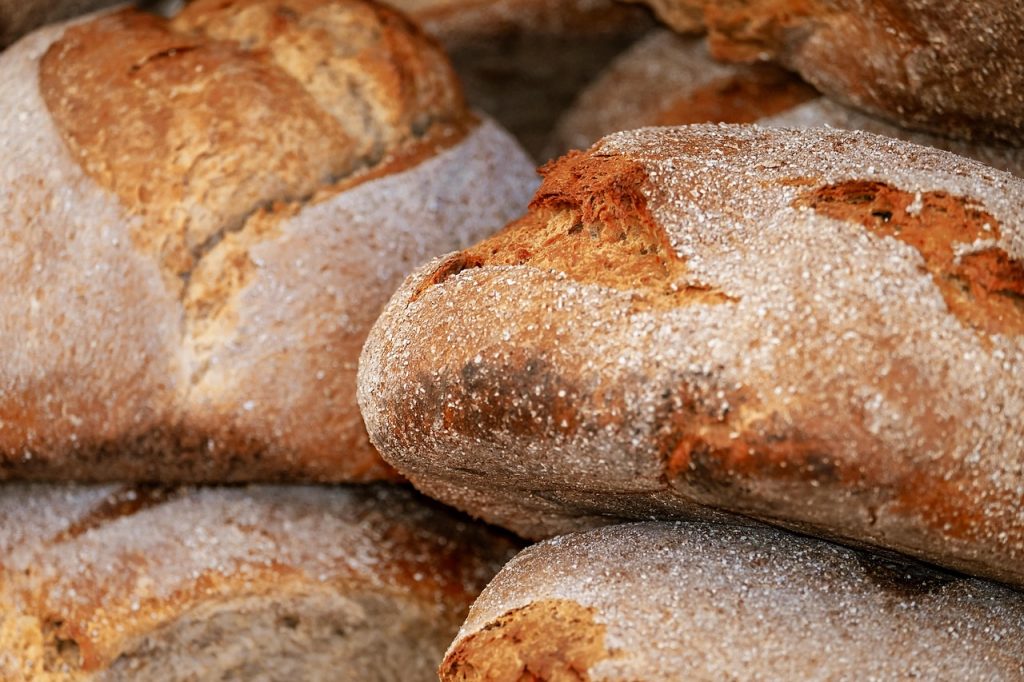
The Pemón diet is built above all on cassava, the bitter variety that must be carefully processed to remove its toxins before it can be eaten. Turned into flour and flatbread, cassava is the daily staple, the reliable foundation on which the rest of the diet is built. Its preparation is a constant rhythm of household life.
Fish from the savanna’s rivers provide the main source of protein, supplemented by game hunted in the forest and grassland. This combination of cassava and fish, rounded out with wild fruits and other gathered foods, reflects a diet drawn entirely from the resources of the highland environment.
As elsewhere among Indigenous peoples of the region, food is bound up with sharing and hospitality, so that meals bring families together and a good catch or harvest is distributed among kin. In this way the savanna table reinforces the ties that hold the dispersed Pemón communities together.
The daily labor of processing cassava binds households together, as the work is shared and its results distributed among kin. In this sense the Pemón table reflects the cooperative spirit that sustains scattered savanna communities.
Meals tend to be communal and shared readily with kin and visitors, reflecting an ethic of hospitality common across the region. To be offered cassava bread and fish is to be welcomed into the rhythm of Pemón life.
Dance, Song, and Community Celebration
Pemón communal life finds expression in gatherings marked by dance, song, and shared celebration. Traditional dances, often accompanied by distinctive music, bring people together on important occasions and serve as vivid expressions of Pemón identity, performed in ways that carry meaning far beyond entertainment.
These celebrations draw scattered families together from across the wide savanna, renewing the ties of kinship and community that distance might otherwise strain. In coming together to dance and sing, the Pemón reaffirm their unity as a people spread across a vast and demanding landscape.
Music and dance also serve to transmit tradition to the young, carrying songs and movements that belong to the Pemón heritage. Amid the pressures of the modern world, these gatherings remain vital occasions on which the community renews itself and celebrates the culture that binds it together.
For a people spread thinly across a vast territory, these gatherings carry special weight as moments of reunion and renewal. To celebrate together is to overcome, however briefly, the distances that separate the savanna’s scattered homes.
Music at these gatherings carries meaning tied to particular occasions and stories, so that to perform it is to keep alive a heritage that would otherwise fade. Song, here, is a vessel of collective memory.
Mining, Tourism, and the Struggle to Endure
The Pemón long lived at a distance from the centers of colonial power, their highland home offering some protection from the disruptions that struck peoples nearer the coast. Yet contact came through missionaries, traders, and eventually the reach of the modern state, gradually drawing the Pemón into the wider currents of Venezuelan life.
The twentieth and twenty-first centuries brought new and intense pressures, above all from mining. The lure of gold and other minerals in and around Pemón territory has drawn miners into the region, bringing environmental damage, social disruption, and conflict. The Pemón have repeatedly found themselves defending their land and rivers against this encroachment.
At the same time, the creation of a great national park and the growth of tourism to the region’s famous scenery have reshaped Pemón life in complex ways, offering income while also bringing outside pressures. Through these changes the Pemón have organized to defend their interests, asserting their rights to a land that is both spectacular and increasingly contested.
The pressures of mining in particular have made the defense of land and water a central concern, forcing the Pemón to organize and resist in order to protect the environment on which their way of life depends. That struggle continues to define their public life.
The arrival of a great national park transformed the region’s relationship with the outside world, drawing tourists and authorities into a landscape that had long stood apart and forcing the Pemón to navigate new interests on their land.
The Pemón in a Troubled Venezuela
Today the Pemón number in the tens of thousands across their savanna homeland, remaining one of the significant Indigenous peoples of the Guiana Highlands. Their territory, centered on a landscape of world-renowned beauty, places them at the meeting point of conservation, tourism, and the relentless pressure of mining that marks the region.
The wider crisis afflicting Venezuela has fallen heavily on the Pemón, as economic collapse and instability have driven many to seek illegal mining as a means of survival and pushed others to migrate across the borders into Brazil and Guyana. These pressures have tested the community severely, straining both its social fabric and its environment.
Yet the Pemón continue to assert their identity and defend their homeland, organizing to protect their land and rivers and insisting on their place in the region’s future. Their story is that of a highland people bound to an extraordinary landscape, striving to endure amid the turmoil of a country in crisis while holding fast to the tepuis that define their world.
What lies ahead will depend heavily on whether the Pemón can protect their homeland amid Venezuela’s crisis and the relentless advance of mining. Their bond to the tepuis gives them a powerful reason to endure, and a record of resistance to draw upon.
Even amid hardship, the Pemón continue to present their identity with pride and to engage the outside world on their own terms, refusing to be reduced to bystanders in decisions about the spectacular land they call home.

Related Peoples of the Region
- Meꞌphaa Speakers of the Guerrero Mountains and a Language That Stands Alone
- Garifuna Drummers and Cassava Bakers of the Central American Caribbean Coast
- Lenca Potters and River Defenders of the Honduran and Salvadoran Highlands
- Muisca: The Confederation Behind the Legend of El Dorado
- Yanomami: Guardians of the Amazon’s Deepest Forest
- Wayuu: The Desert People an Empire Could Never Conquer


