If Mamayev Kurgan is where Volgograd grieves, the Museum-Reserve Battle of Stalingrad is where it explains. Sitting on the bank of the Volga at the heart of the old battlefield, this is one of the most ambitious war museums anywhere, and the single ruin standing beside it may be the most eloquent object in the whole city. Together they turn an abstract historical catastrophe into something you can walk through and almost feel. Plan at least half a day here, because between the circular panorama, the halls of artefacts and the shattered mill outside, there is far more to absorb than most visitors expect.
The Panorama That Surrounds You
The museum centrepiece is its vast circular panorama painting, a single continuous canvas wrapping the full 360 degrees around a raised central platform, depicting the final assault on the German forces from the vantage of Mamayev Kurgan. The painted battlefield blends seamlessly into a foreground of real debris, broken weapons and earthworks, so that the join between picture and floor disappears and you seem to stand inside the fighting itself. It is a genuinely disorienting, immersive piece of art and one of the largest works of its kind in the world. Allow time simply to turn slowly on the spot and trace the action all the way around.
The Gerhardt Mill, Left Exactly as It Fell
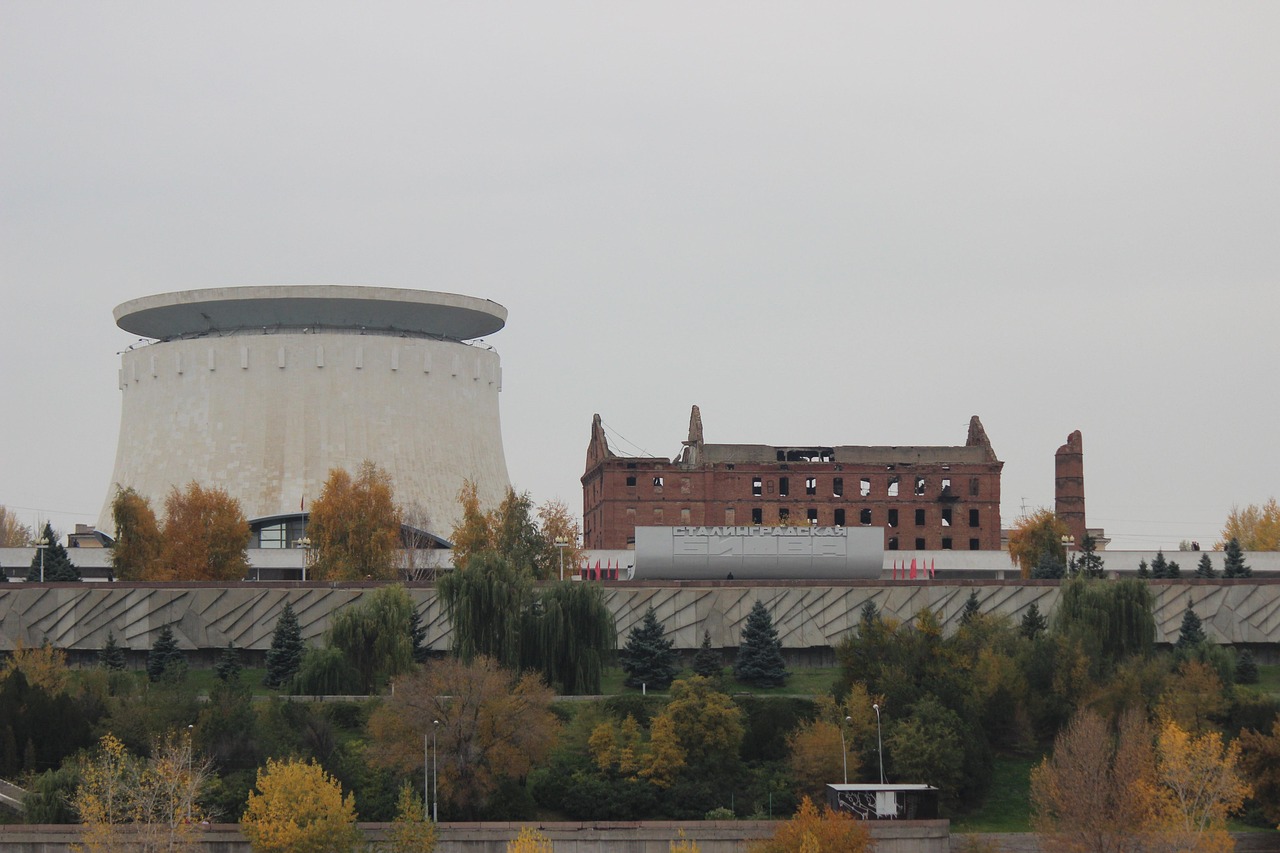
Outside the museum stands the single most powerful sight in Volgograd after the great statue: the Gerhardt Mill, a brick flour mill blasted to a skeleton in 1942 and deliberately never repaired. Every wall is pocked and torn by shellfire and bullets, the roof gone, the floors collapsed, and the city has left it frozen exactly as the battle left it as a permanent witness. Standing in front of it, with the gleaming modern museum directly behind, is the moment the scale of the destruction finally becomes real, because this is not a reconstruction or a sculpture but the actual ruined fabric of the city.
Inside the Halls and Down to the River
The indoor galleries hold an enormous collection: uniforms, weapons, personal letters, the famous fountain of children dancing around a crocodile recreated nearby, and the surrendered effects of Field Marshal Paulus and his trapped army. Outdoor terraces display tanks, including restored T-34s, and heavy guns. When you are done, walk the short distance to the Volga embankment where supplies and reinforcements were ferried across under fire; the river is wide, calm and beautiful now, and the contrast with what happened on these banks is the quiet emotional finish to the visit.
Pair the museum with Mamayev Kurgan on the same trip and you will understand Volgograd as a whole. Give the panorama and the ruined mill the time they deserve, and finish on the riverbank where the tide of the battle finally turned.
More Volgograd Travel Guides
- Mamayev Kurgan and The Motherland Calls: Standing Beneath the Worlds Most Overwhelming War Memorial
- Beyond the Battlefield: Volgograd Riverfront, Its Long Streets and Everyday Life on the Volga
- Evenings in Volgograd: Riverside Bars, Summer Terraces and Where the City Relaxes
- Volgograd Guide Series (Hub)
Planning the whole trip? See our complete Volgograd master guide for every series in one place.


One thought on “The Battle of Stalingrad Museum and the Ruined Mill: Where the City Keeps Its Memory”