Climb into the misty mountains of southwestern China and you enter a different world, a land of terraced hillsides and wooden villages where women walk to festivals wearing many kilograms of silver, their headdresses towering, their pleated skirts a blur of embroidered color. These are the Miao, one of the oldest and most striking of China’s many peoples, a mountain folk whose history is a long story of migration, resistance, and a fierce holding-on to their own way of life.
The Miao are not really a single tribe but a great family of related groups, scattered across the highlands of several provinces and spilling over the borders into Southeast Asia, where many of them are known to the world as the Hmong. They speak related tongues, wear a dazzling variety of local costumes, and share a sense of common origin reaching back thousands of years, to a time when, by their own traditions, their ancestors lived on the plains before being driven into the hills.
This account follows the Miao through the many facets of their world: their ancient origins and the tangle of names by which they are known, a language that long went unwritten and a history stitched instead into cloth, the mountain homeland they made their own, the old life of terraced farming, the structure of their villages, their beliefs in ancestors and spirits, their extraordinary costume and craft, their sour mountain food, their music-filled festivals, the long saga of migration and revolt that shaped them, and their place in China today.
- An ancient people of the southern hills
- Miao, Hmong, and a knot of names
- A language stitched into cloth
- Making a home in the mountains
- Terraces, rice, and the old village life
- Villages, clans, and the bonds of kinship
- Ancestors, spirits, and the shaman’s world
- Silver and splendor: the Miao in festival dress
- Embroidery, batik, and the smith’s fine work
- Sour flavors from the mountain kitchen
- A year of song, dance, and courtship
- Migration and revolt: the long Miao road
- The Miao in China today
An ancient people of the southern hills
The Miao are among the oldest peoples of China, with a presence in the historical record stretching back thousands of years. Their own traditions and much scholarship trace their ancestry to ancient groups who lived along the middle reaches of the great rivers of central China, on the fertile plains, long before the expansion of the Chinese state pushed them southward and upward into the mountains.
According to a story cherished among the Miao, their ancestors once possessed a kingdom on the plains, ruled by a great leader, until they were defeated in war by the forebears of the Chinese and forced to flee. Whether legend or memory, this narrative of a lost homeland and a long exile into the highlands lies at the very heart of how the Miao understand themselves.
Over many centuries, the ancestors of the Miao migrated in waves ever deeper into the mountainous south and southwest, settling the rugged highlands of what are now several Chinese provinces. Isolation in these remote hills allowed them to preserve their languages and customs, while also splitting them into the many local groups that make up the Miao today.
From this deep past emerges a people defined by endurance. Pushed from their old lands, scattered across difficult terrain, subject over the ages to pressure from powerful neighbors, the Miao nonetheless held fast to a distinct identity. Their long history is, in a sense, the story of how a people can lose a homeland and yet remain fully themselves.
Miao, Hmong, and a knot of names
The name Miao is the official Chinese term for this people, and it embraces a number of related groups who do not all use it for themselves. Some of these groups call themselves Hmong, others by different names, and the relationship between the broad Chinese category of Miao and the various self-names of its subgroups has long been a subject of discussion.
Historically, the term applied to the Miao carried unflattering overtones in Chinese usage, and it has sometimes been resented. Yet within China it has also become an accepted label of official recognition, and many Miao use it without objection today. Among those who migrated abroad, the name Hmong is generally preferred, and it is under that name that the group is best known in the wider world.
Outsiders have often distinguished the Miao by the colors and styles of their clothing, giving rise to names such as the Black Miao, the White Miao, the Flowery Miao, and others. These labels, based on costume, reflect the great diversity among Miao groups, each with its own distinctive dress, dialect, and local customs, united within the larger whole.
So the naming of the Miao is a layered affair, involving an official Chinese term, a variety of self-names, colorful descriptive labels, and the internationally known name Hmong. Behind this tangle lies a real and shared identity, but one internally diverse enough that no single name can quite capture it.
A language stitched into cloth
The Miao languages belong to a distinct family, sometimes grouped with the neighboring Yao, and are unrelated to Chinese despite long contact with it. They are spoken in a range of dialects so varied that Miao from different regions often cannot understand one another, a reflection of the scattering of the people across isolated mountain districts over many centuries.
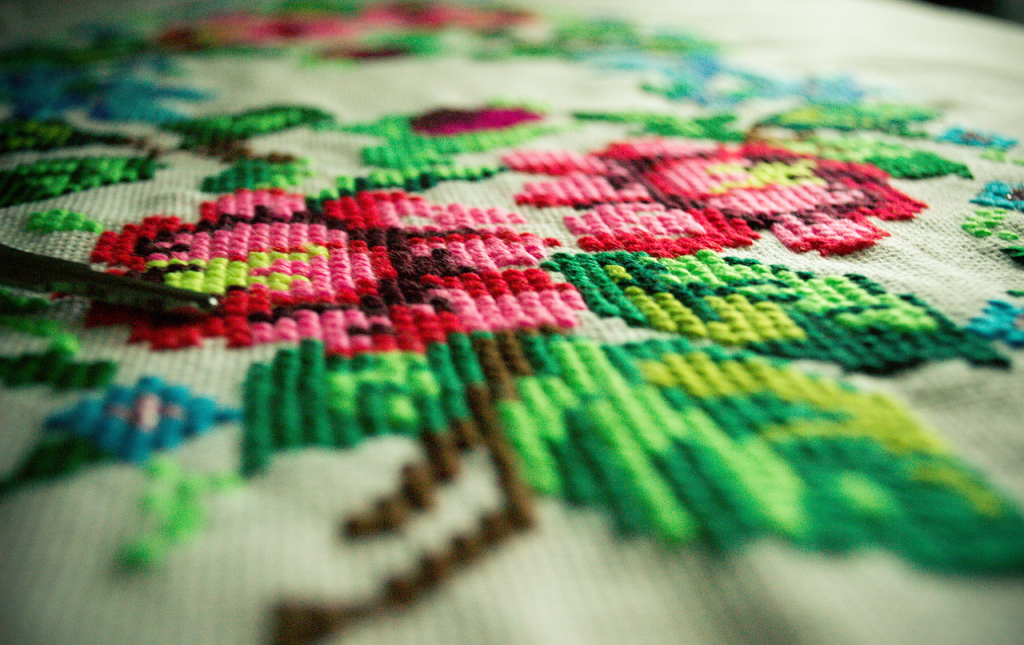
For most of their history the Miao had no written script of their own. In a remarkable turn, they preserved their history, myths, and identity instead through oral tradition and, above all, through embroidery. The intricate patterns worked into Miao clothing are far more than decoration; they encode stories, symbols of migration, rivers crossed and lands lost, so that a woman’s costume becomes a kind of wearable chronicle of her people.
This idea of history carried in cloth is one of the most poignant features of Miao culture. Denied a written language, the Miao are said to have sewn their past into their skirts and jackets, passing down through the generations the memory of their origins in the patterns that mothers taught daughters at the embroidery frame.
In modern times, written scripts for Miao languages have been developed, using the Latin alphabet, allowing the languages to be recorded and taught. Yet the older tradition endures, and the embroidered garment remains a treasured vessel of Miao memory, a script of thread and color older than any alphabet the people now use.
The image of history sewn into cloth deserves a moment more, for it is one of the most moving ideas in all of China’s ethnic cultures. On certain Miao skirts, bands of pattern are said to represent the rivers and cities the ancestors passed on their long flight from the plains, so that a woman quite literally wears the map of her people’s migration. Few peoples have found so beautiful a way to carry an unwritten past.
Making a home in the mountains
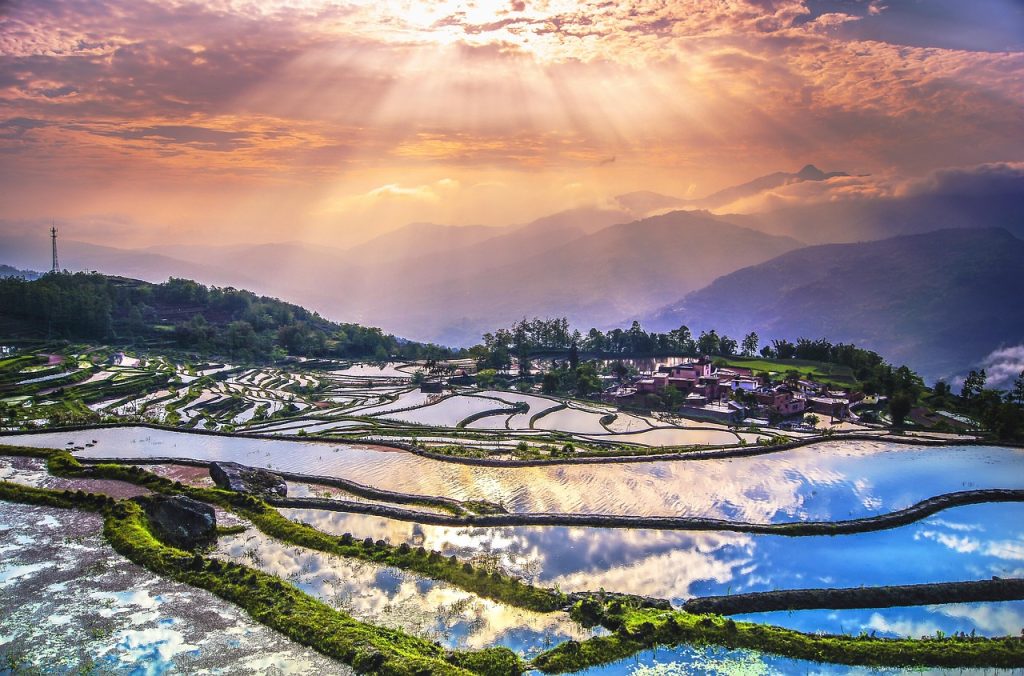
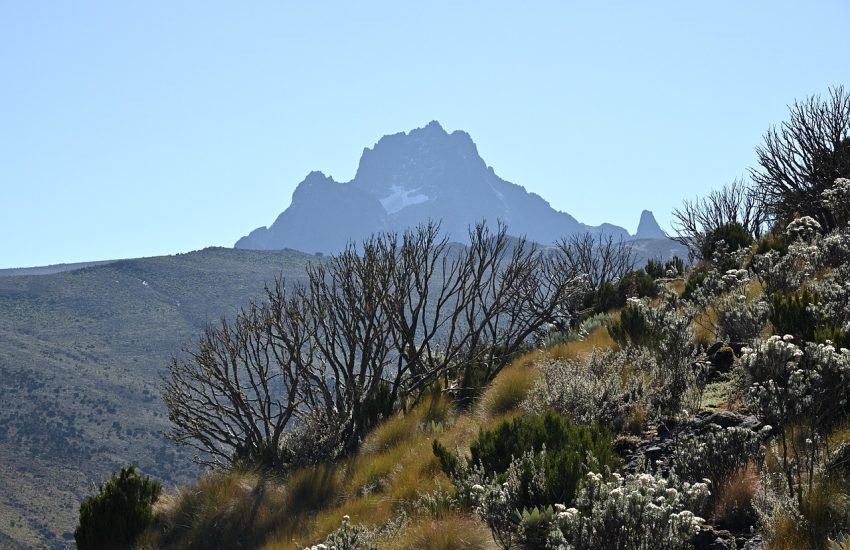
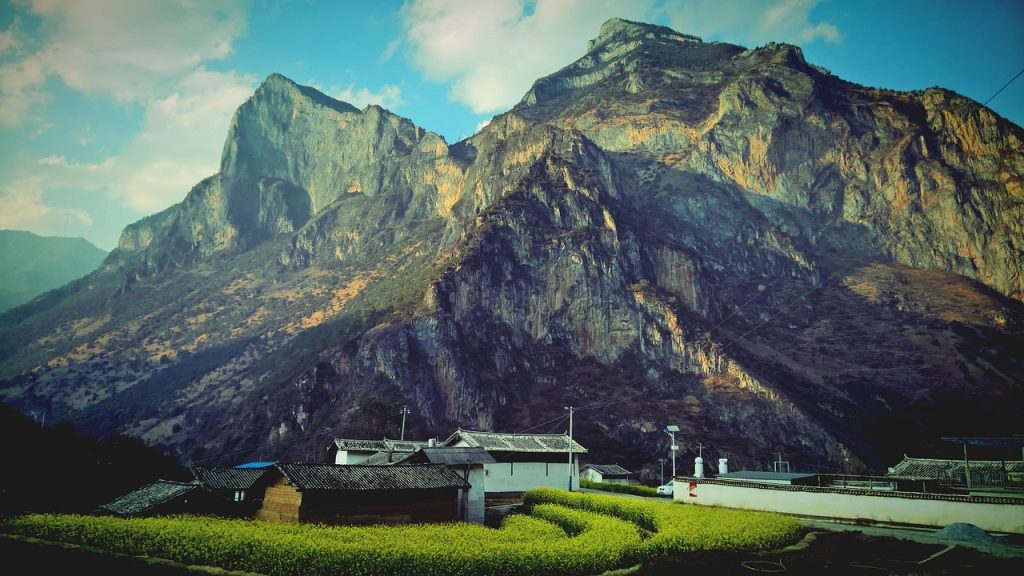
The Miao homeland today lies in the mountainous heart of southwestern China, above all in the highlands of Guizhou province, with substantial populations in the surrounding provinces as well. This is a land of steep green mountains, deep valleys, terraced slopes, and scattered villages, one of the most rugged and, until recently, most isolated regions of the country.
It was not the land the Miao would have chosen, but the land into which they were driven. Pushed from the plains by more powerful peoples, they took refuge in terrain too difficult for easy conquest, carving out a living on hillsides where flatter, richer land was unavailable. The very harshness of the mountains became their protection, allowing them to preserve their independence and their culture.
It is worth dwelling on the sheer scale of Miao diversity, for it is easy to speak of the Miao as though they were one uniform people when in truth they are a mosaic. Dozens of distinct groups, each with its own dialect, its own festival dress, its own local customs and dances, shelter under the single name. What binds them is not uniformity but a shared sense of origin and a common thread of history running through all their scattered branches.
Beyond China’s borders, later migrations carried Miao groups into the highlands of northern Vietnam, Laos, and Thailand, and from there, following the upheavals of the twentieth century, to communities in the West. The Miao world thus extends far beyond its Chinese heartland, a diaspora spread across the mountains of a whole region and, ultimately, across the globe.
Within their Chinese homeland, the Miao adapted brilliantly to mountain life, terracing the slopes for rice, building distinctive wooden houses raised on stilts against the steep and humid ground, and developing a culture finely attuned to their highland environment. The mountains that were once a place of exile became, over the centuries, a true and cherished home.
Terraces, rice, and the old village life
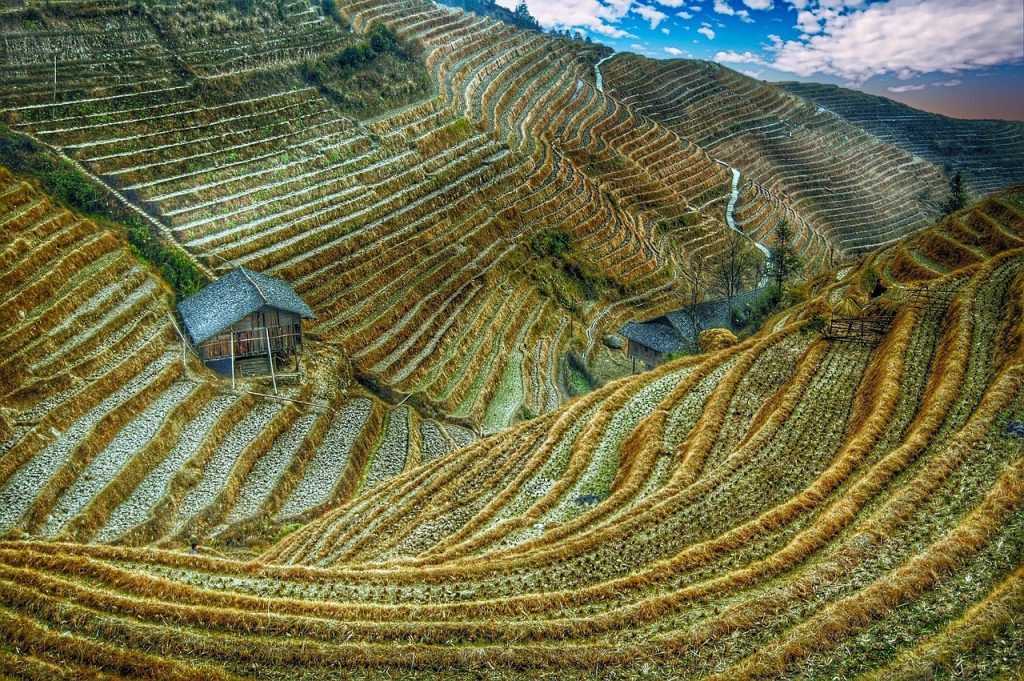
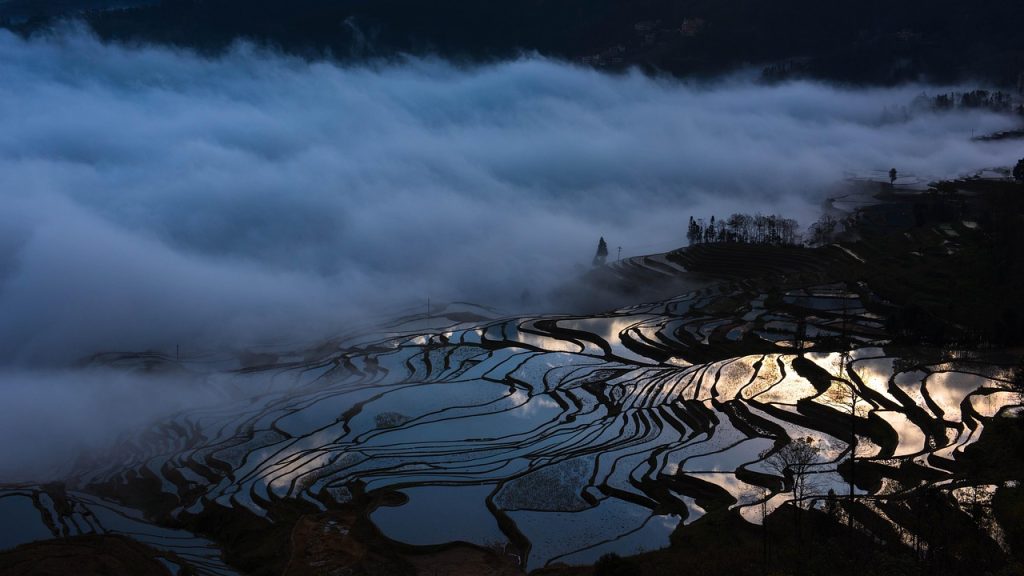
Traditional Miao life was built on farming the mountains. Where the Han of the plains had broad fields, the Miao had slopes, and so they became masters of the terrace, cutting the hillsides into stairways of paddies that hold water and soil against the pull of gravity. These terraces, some of them centuries old, are among the great works of the region and a marvel of patient labor.
Rice was the staple, grown in the flooded terraces, supplemented by maize, buckwheat, and other crops suited to the highlands, along with vegetables and the raising of pigs, chickens, and buffalo. Fishing in the paddies and streams and gathering from the forests rounded out a livelihood wrung from a demanding landscape.
Life followed the rhythm of the farming year, from the flooding and planting of the terraces to the harvest, punctuated by the festivals that gathered communities together in the slack seasons. Work was communal and cooperative, as the demands of terrace agriculture required, binding villagers together in shared labor as much as shared descent.
This old agricultural life shaped Miao society down to its roots, in its cooperative ethic, its attachment to the ancestral village and its lands, and its festivals timed to the farming calendar. Though modernization has transformed much, the terraced hillside and the mountain village remain the enduring image of the traditional Miao world.
Villages, clans, and the bonds of kinship
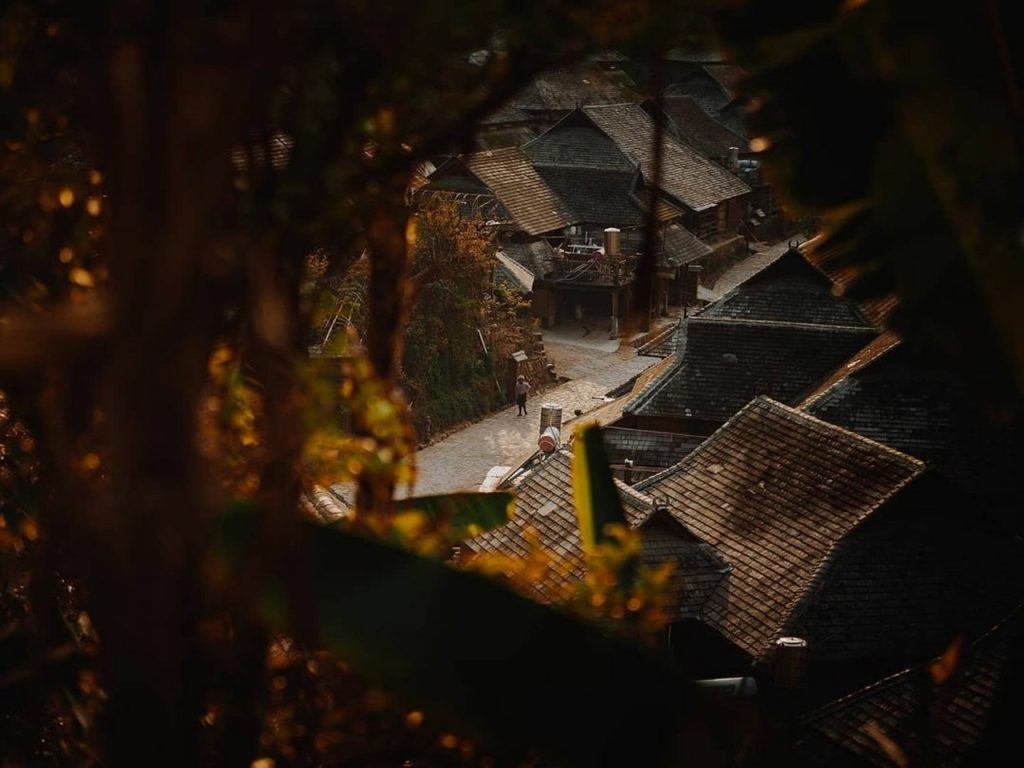
Miao society traditionally centered on the village and the clan. Villages, often perched dramatically on mountainsides, were communities of related families, and kinship reckoned through the male line organized social life, marriage, and mutual obligation. To be Miao was to belong to a clan and a village, rooted in a particular patch of the mountains.
Lacking, for much of their history, a centralized state of their own, the Miao governed themselves through village elders, clan heads, and respected figures whose authority rested on custom and consensus rather than formal office. Councils of elders settled disputes, and unwritten customary law, remembered and applied by those learned in it, regulated the life of the community.
Kinship and locality were reinforced by a rich communal life. The great festivals, with their mass gatherings, their music and dance, and their opportunities for young people to meet and court, knit together not only single villages but whole networks of related communities across the mountains, sustaining a sense of shared identity despite the absence of political unity.
This decentralized, kin-based order gave Miao society both resilience and flexibility. It could absorb the shocks of migration and dispersal, reconstituting itself in new mountains around the familiar institutions of village and clan. It also, however, left the Miao without the unified leadership that might have resisted powerful outside states, a vulnerability that shaped their turbulent history.
Ancestors, spirits, and the shaman’s world
The traditional religion of the Miao was rooted in the veneration of ancestors and a vivid sense of a world alive with spirits. The souls of the dead were honored and appeased, for the ancestors watched over their descendants and expected the proper rites; neglect could bring misfortune. Ancestral ritual thus stood at the center of Miao spiritual life.
Beyond the ancestors lay a crowded spirit world. The mountains, rivers, trees, and stones of the Miao landscape were inhabited by spirits that had to be respected and, when necessary, propitiated. Illness, misfortune, and disaster were often understood as the work of offended or malevolent spirits, requiring the intervention of a specialist to set things right.
That specialist was the shaman, a figure of great importance in Miao communities, able to communicate with the spirit world, to diagnose the spiritual causes of trouble, and to perform the rituals of healing and appeasement. Through trance, chant, and sacrifice, the shaman mediated between the living, the dead, and the spirits, restoring the balance on which the wellbeing of the community depended.
Elaborate rituals marked the great passages of life and death, none more so than the funeral, at which lengthy chants guided the soul of the deceased back along the ancestral path of migration to the land of the forefathers. In these rites, the Miao sense of history, identity, and the spirit world came together, binding the individual to the long story of the people.
Silver and splendor: the Miao in festival dress

No aspect of Miao culture is more famous than the costume, above all the festival dress of the women, which ranks among the most spectacular traditional attire in the world. On great occasions, Miao women appear in richly embroidered jackets and pleated skirts, adorned with a profusion of silver: towering headdresses, heavy necklaces, collars, and ornaments that can weigh many kilograms in all.
The silver is not mere decoration but a display of family wealth, artistry, and identity, accumulated over years and passed down through generations. The great horned or crown-like headdresses, the layered torques, and the plates and pendants that cover the chest transform the wearer into a dazzling figure, the very embodiment of Miao festival splendor.
The embroidery of the costumes is equally remarkable, worked in brilliant colors and intricate patterns that vary from group to group and carry symbolic and historical meaning. A single festival garment can represent months or years of a woman’s needlework, and the styles are so distinctive that a knowledgeable eye can identify a woman’s home region from her dress alone.
These costumes come into their own at the great festivals, where the massed silver and embroidery of the dancers create an unforgettable spectacle. For the Miao, the festival dress is far more than clothing; it is a portable heritage, an assertion of identity, and a work of art, embodying the pride and creativity of a people in every gleaming ornament and stitched design.
Embroidery, batik, and the smith’s fine work
The crafts of the Miao are inseparable from their famous costume, and chief among them is embroidery. Miao women are extraordinary needlewomen, mastering a wide range of stitches and techniques to create the dense, colorful designs that cover their festival clothes. The skill is taught from girlhood, mother to daughter, and a fine embroiderer enjoys high esteem within her community.
Alongside embroidery flourishes the ancient art of batik, in which patterns are drawn on cloth in wax before dyeing, so that the waxed areas resist the dye and emerge as pale designs against a deep blue ground. Miao batik, with its bold geometric and natural motifs, is among the finest in China and adorns clothing and household textiles alike.
The making of the silver ornaments is the work of specialist smiths, often men, who hammer, cast, and engrave the metal into the elaborate headdresses and jewelry that crown the Miao costume. The silversmith’s art, demanding both technical skill and a deep knowledge of traditional forms, is one of the most prestigious crafts in Miao society.
Together, embroidery, batik, and silverwork constitute a material culture of exceptional richness, and one that carries meaning as well as beauty. In a people who long lacked writing, these crafts became the bearers of identity and memory, and they remain today both a source of pride and, increasingly, a livelihood, as Miao artistry finds admirers far beyond the mountains.
Sour flavors from the mountain kitchen
Miao cuisine is the cooking of the mountains, and its most distinctive characteristic is a love of sour flavors. In a damp highland climate where preservation mattered, the Miao became masters of fermentation and pickling, and sour tastes pervade their food, from pickled vegetables to the celebrated sour fish soup that is among their signature dishes.
Rice, the staple crop, appears in many forms, including glutinous rice steamed and eaten by hand, while maize and other highland grains fill out the diet. Pork and other meats, often preserved by smoking or fermenting, chili peppers, and a wealth of wild mountain herbs and vegetables give Miao cooking its robust and pungent character.
The famous sour fish soup captures the spirit of the cuisine: fish simmered with fermented, sour ingredients and mountain herbs into a dish at once tangy, warming, and deeply satisfying. Alongside such dishes, the Miao brew their own rice wine, an essential accompaniment to festivals and to the elaborate rituals of hospitality for which they are known.
Hospitality itself is central to Miao food culture. Guests are welcomed with wine and feasting, and the offering and pressing of drink upon visitors is a cherished custom, sometimes conducted with song. The mountain kitchen, sour and hearty and generous, expresses the warmth and the resourcefulness of a people who made abundance out of a difficult land.
A year of song, dance, and courtship
The Miao year is rich in festivals, and these gatherings are the beating heart of their communal life. The greatest, a New Year celebration held after the harvest, brings whole districts together for days of feasting, ritual, and above all music and dance, when the women don their full silver and embroidery and the villages come alive with celebration.
Central to many festivals is the lusheng, a reed mouth-organ whose droning, resonant music is the characteristic sound of Miao celebration. Men play the lusheng, sometimes dancing as they do so, while lines of women dance in their festival finery, the silver flashing and ringing with every step. The lusheng festivals are famous throughout the region for their spectacle and energy.
Festivals are also, traditionally, the great occasions for courtship. Young people from different villages meet at these gatherings, and singing plays a central role, with young men and women exchanging improvised songs as a way of flirting, testing wits, and choosing partners. Many a Miao marriage began with a song exchanged across a festival field.
Through feasting, music, dance, ritual, and courtship, the festivals sustain the whole fabric of Miao society, renewing the bonds of kinship and community, honoring the ancestors, and passing the culture to the young. In a people long without a state of their own, these joyous gatherings have been the great unifying institution, the living expression of what it means to be Miao.
Migration and revolt: the long Miao road
The history of the Miao is dominated by two great themes: migration and resistance. From their remembered origins on the central plains, they were pushed over the centuries steadily southward and into the mountains, in a long series of migrations driven by the expansion of the Chinese state and the pressure of more powerful neighbors.
This retreat into the highlands was punctuated by repeated resistance. The Miao rose again and again against the encroachment of imperial power, in a series of revolts that echo through the records of successive Chinese dynasties. These uprisings, often provoked by heavy taxation, land seizure, and official abuse, were suppressed with great severity, yet they testify to a fierce determination to defend Miao autonomy.
The largest of these conflicts, in the nineteenth century, were vast and bloody affairs that devastated the Miao population and drove fresh waves of migration, including the movements that carried Miao groups across the southern border into Southeast Asia. There, as the Hmong, they would later be caught up in the wars of the twentieth century, leading eventually to the flight of many to the West.
Through all this turbulence, the essential pattern held: pressed, defeated, and dispersed, the Miao migrated to new mountains and rebuilt their communities, preserving their identity through every upheaval. Their history is a hard one, marked by loss and suffering, yet also by an extraordinary tenacity that carried a distinct people through millennia of pressure into the modern age.
The Miao in China today
Today the Miao are one of the larger of China’s recognized minority peoples, numbering many millions, concentrated in the mountainous southwest but increasingly present in the cities as migration and modernization reshape their world. Beyond China, the related Hmong communities of Southeast Asia and the Western diaspora extend the Miao world across continents.
Modern life has brought sweeping change. Roads and schools have reached once-isolated villages; many younger Miao have left the terraces for work in distant cities; and the pull of the wider Chinese economy and culture is strong. As elsewhere, this raises the familiar tension between development and the preservation of a distinctive traditional way of life.
Yet Miao culture shows real vitality. The great festivals continue to draw huge gatherings; the embroidery and silverwork have found new markets and admirers through tourism and craft revival; and the spectacular costumes have become emblematic of China’s ethnic diversity, celebrated in the wider culture. The very features that make the Miao distinctive have become, in part, a resource for their survival.
The Miao thus enter the modern world as they have always faced change, adapting while holding to their identity, carrying the memory of their long migration in the patterns of their cloth.
There is a striking dignity in the way the Miao have met a history of defeat. A people can be driven from its land, scattered across mountains and borders, and defeated in war again and again, and yet refuse to be erased. The Miao chose, over and over, to rebuild rather than to vanish, and their survival as a vivid and creative people is itself a kind of victory won across the centuries.
From these silver-clad people of the southwestern mountains, the series turns next to their great neighbors on the highlands of Yunnan, a people of fire festivals and ancient script: the Yi.
More Peoples Worth Meeting
If the Miao drew you in, here are other peoples of China whose stories are just as rich:
- A Fifth of Humanity, the Story of the Han Chinese
- A Civilization of the Silk Road Oases, the Story of the Uyghurs
- The Giants China Overlooks, the Story of the Zhuang People
- Chinese in Everything but Faith, the Story of the Hui
- Conquerors Absorbed by Their Conquest, the Story of the Manchus
- A Civilization on the Roof of the World, the Story of the Tibetans