Every “Harappan” artifact, every reference to the “Harappan civilization” in a textbook, traces back to a single mound beside the Ravi River in Pakistani Punjab where British engineers, laying railway track in the 1850s, casually carted off ancient fired bricks to use as ballast, unaware they were dismantling the type site of an entire Bronze Age civilization before anyone had properly excavated it.
Table of Contents
- The city that became railway ballast
- Early travelers’ reports and the first surveys
- A civilization named after the damage done to it
- A walled mound, a granary, and a grid of streets
- Standardized bricks and orderly neighborhoods
- A script no one has ever read
- Seals, unicorns, and their unknown purpose
- Beads, weights, and a surprisingly standardized economy
- Reaching all the way to Mesopotamia
- A cemetery that quietly reveals a diverse population
- What genetic studies have and haven’t shown
- Religion without confirmed temples
- A slow fade, not a sudden collapse
- A drainage system centuries ahead of its time
- A standardized system of weights used across a thousand miles
- Wheat, barley, and cotton: what Harappans grew and wore
- Children’s toys and the small pleasures of Harappan life
- Figurines, jewelry, and the question of women’s status
- A hundred years of failed attempts to read the script
- What happened to the people afterward
- A century of excavation, interrupted repeatedly
- Climate, rivers, and the many theories for decline
- An excavation that shaped how South Asia sees its own past
- What was the citadel mound actually for?
- Harappa and Mohenjo-daro: sisters of the Indus
- What the Indus left to later South Asia
- Nearby in the Indus Valley’s ancient story
- Closing thoughts
The city that became railway ballast
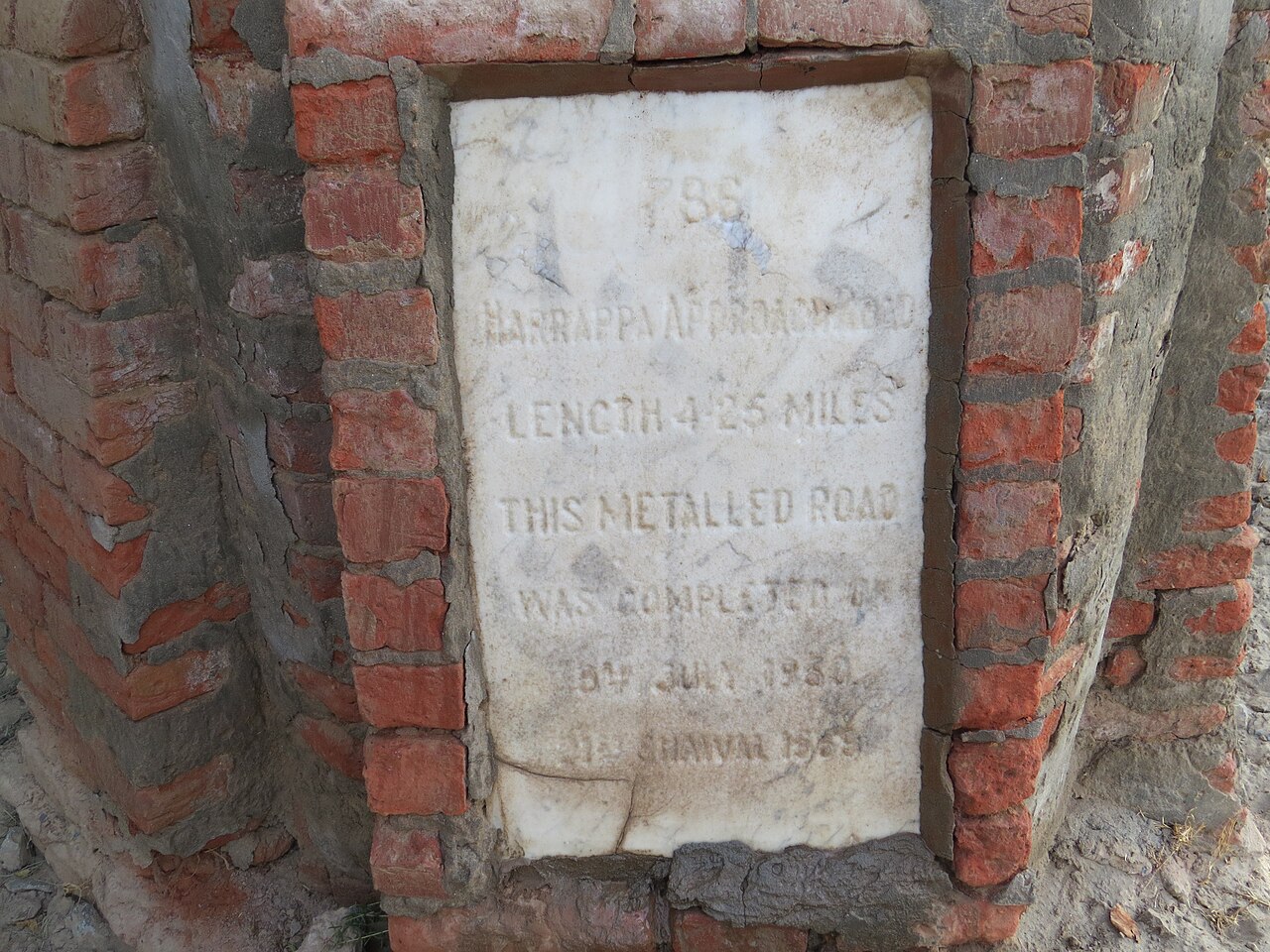
By the time archaeologists took Harappa seriously in the 1920s, decades of brick robbing for the Lahore-Multan railway had already destroyed much of the upper city, leaving a far more fragmentary record than its better-preserved sister site, Mohenjo-daro, some six hundred kilometers to the south.
Nineteenth-century engineers had no idea what they were dismantling. Ancient fired bricks, remarkably uniform and durable even after four thousand years, made convenient, ready-cut ballast material, and an estimated hundreds of thousands of bricks were removed from Harappa’s mounds before any serious archaeological protection was put in place.
The irony is difficult to overstate: the very durability and standardization that made Harappan brick-making so advanced for its time is also what made the ruins so attractive to destroy for entirely unrelated modern purposes.
Early travelers’ reports and the first surveys
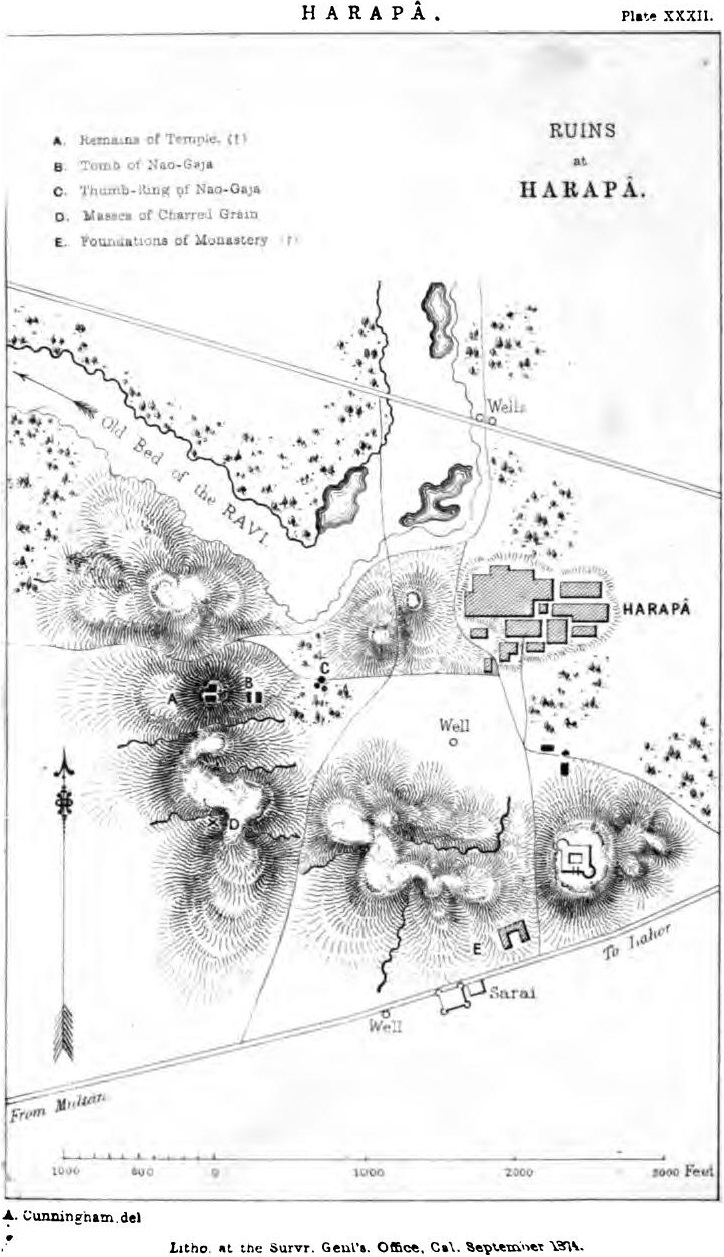
European travelers had noted the Harappa mounds as early as the 1820s, describing an impressive ruined city without any clear sense of its true age or significance, and it was not until Alexander Cunningham, founder of the Archaeological Survey of India, visited in the 1850s and 1870s that the site began receiving serious scholarly attention, though even then its true antiquity remained badly underestimated.
It took the discovery of similar material at Mohenjo-daro in the early 1920s, and the recognition that the two sites shared the same distinctive pottery, seals, and script, for archaeologists to finally grasp that they were looking at a previously unknown, remarkably early civilization rather than isolated ruins from a more recent, already documented period of South Asian history.
A civilization named after the damage done to it
Despite that destruction, it was Harappa that gave its name to the entire cultural horizon archaeologists now call the Harappan or Indus Valley Civilization, simply because it was the first major site of this kind identified by modern excavators, in 1921, a year before Mohenjo-daro followed.
This naming convention, common in archaeology, means an entire civilization spanning hundreds of sites and well over a million square kilometers carries the name of one particular, heavily damaged city, a quirk of discovery history rather than any special status Harappa held among its own contemporaries.
A walled mound, a granary, and a grid of streets
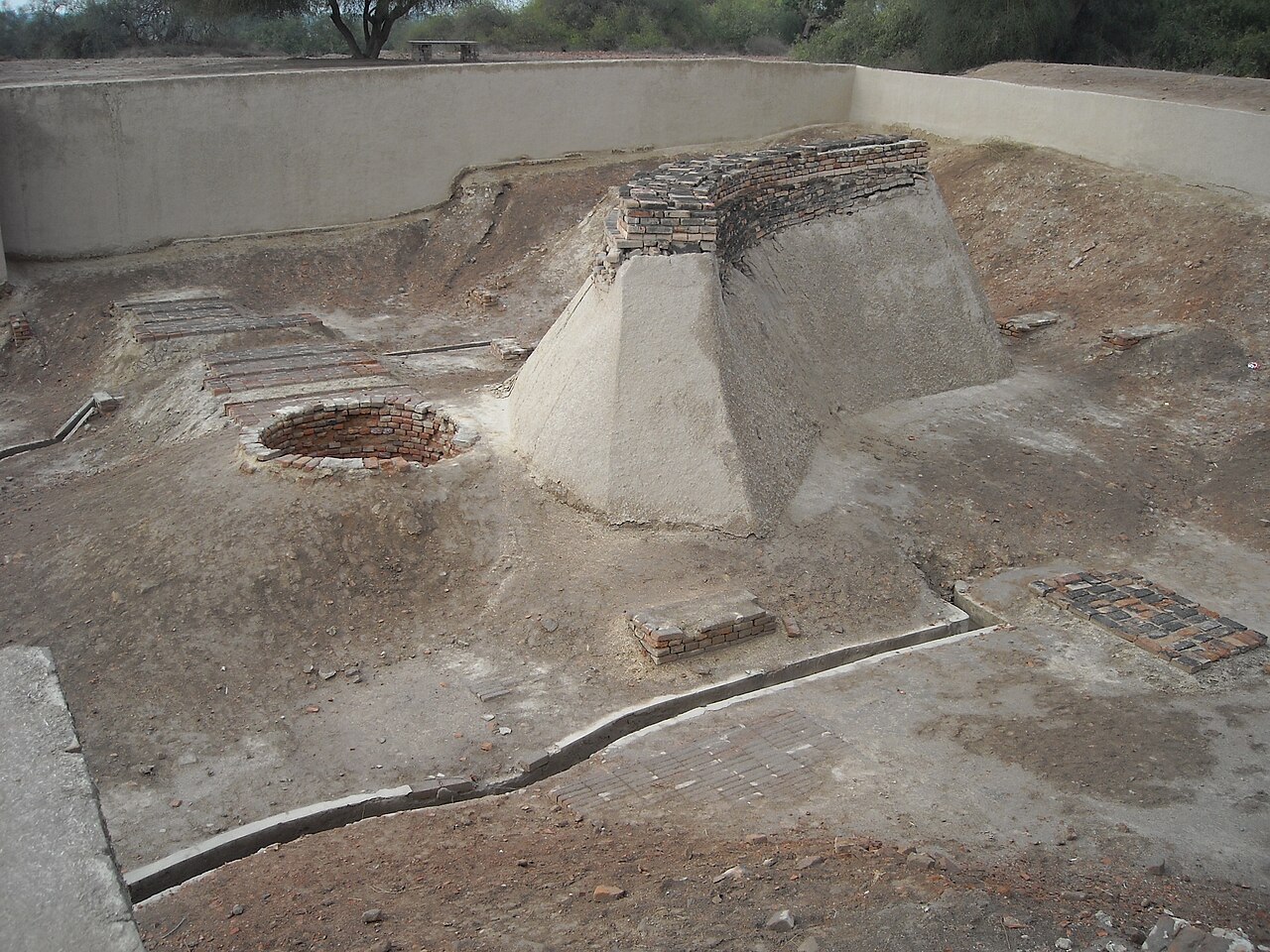
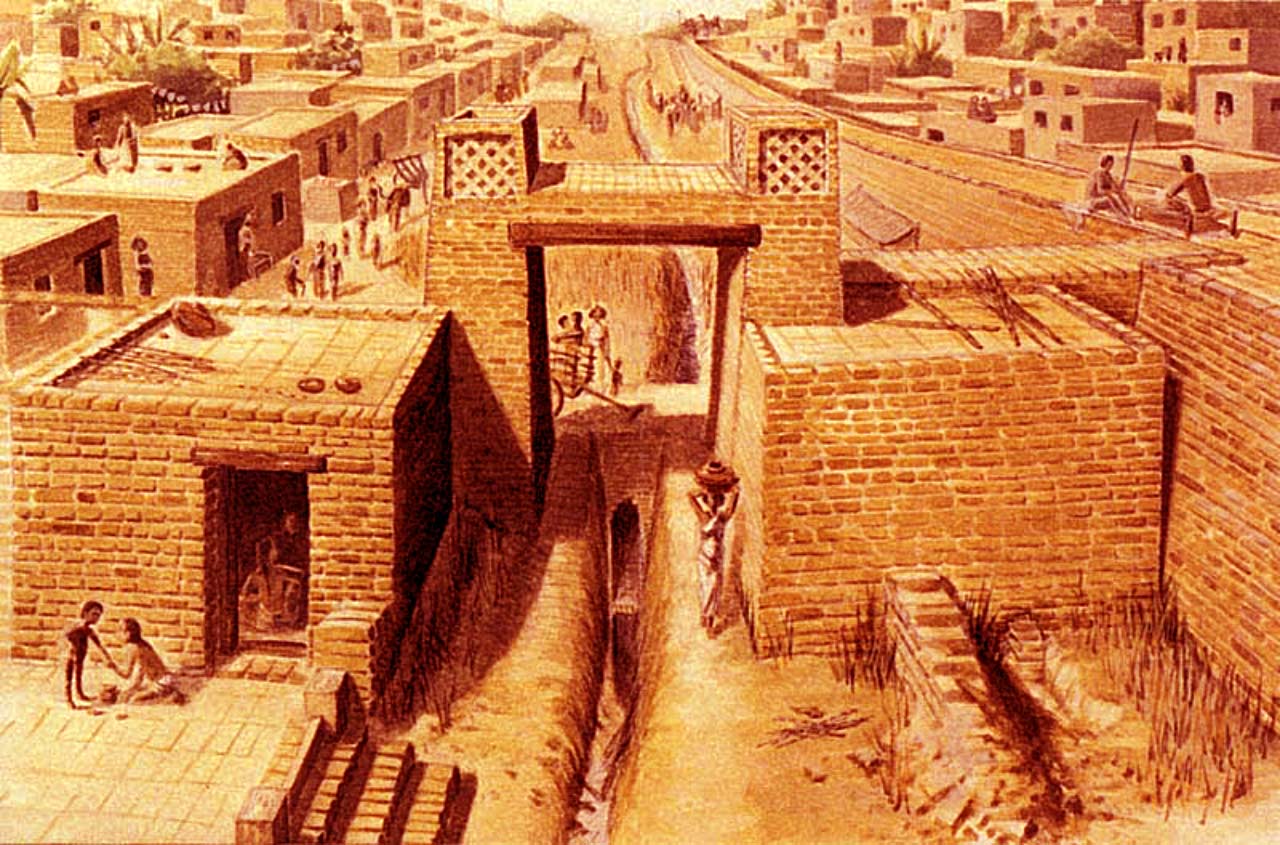
What survives shows the same disciplined urban planning found across Harappan cities: a raised citadel mound for public or ceremonial buildings, a lower town laid out on a grid, brick-lined drains running beneath the streets, and large rectangular platforms once identified as granaries, though their exact function is still debated.
The citadel mound at Harappa stood apart from the lower residential city, likely reflecting some form of social or administrative separation, though without deciphered texts, archaeologists can only infer the exact nature of whatever authority controlled access to this elevated precinct.
Street layouts across the lower town follow a surprisingly consistent grid orientation, suggesting centralized urban planning decisions rather than the more organic, gradually accumulated street patterns typical of many other ancient cities that grew without this kind of coordinated oversight.
Standardized bricks and orderly neighborhoods
Harappan fired bricks follow a remarkably consistent ratio of length to width to thickness across the entire civilization’s vast territory, a level of standardization that implies some shared system of measurement or building convention transmitted across hundreds of kilometers and multiple cities.
Individual houses typically included private wells and bathing areas connected to the city’s drainage network, suggesting a broadly shared standard of domestic sanitation across much of the urban population, not merely a privilege reserved for a wealthy elite minority.
A script no one has ever read
Harappa has produced hundreds of the short inscriptions in the still-undeciphered Indus script, stamped onto small steatite seals carved with animals, most famously a unicorn-like bull, that were likely used to mark ownership of traded goods. Without a bilingual text to compare it against, no one has yet cracked what the symbols actually say.
Most surviving inscriptions are extremely short, rarely more than a handful of symbols, which has made statistical and computational decipherment attempts difficult, since even sophisticated pattern analysis struggles without a larger body of connected text to work from.
Seals, unicorns, and their unknown purpose
The so-called unicorn seal, showing a bull-like animal in profile with a single visible horn, is the most common individual motif found on Harappan seals, though its precise religious or civic meaning remains unknown, with theories ranging from clan or lineage emblems to religious icons tied to a now-lost mythology.
Other seals depict recognizable animals including elephants, tigers, and water buffalo, along with occasional composite or fantastical creatures, suggesting a rich symbolic visual culture whose full meaning is likely permanently lost without the ability to read the accompanying script.
Beads, weights, and a surprisingly standardized economy
Excavators recovered a remarkably consistent system of cubical stone weights at Harappa, suggesting some form of regulated trade or taxation stretching across the wider civilization, alongside carnelian beads and shell ornaments that traveled as far as Mesopotamia, where Harappan seals have turned up in the ruins of Ur itself.
The weight system follows a binary-like progression, doubling and halving across a defined sequence, a level of mathematical sophistication in everyday commerce that predates comparable standardized weight systems in many other early civilizations.
Reaching all the way to Mesopotamia
Mesopotamian cuneiform texts occasionally reference a distant trading partner called Meluhha, which many scholars now believe refers to the Indus Valley Civilization itself, describing imported goods including carnelian, ivory, and exotic animals arriving via long maritime and overland routes stretching across the Arabian Sea and Persian Gulf.
This trade connection places Harappa and its sister cities within a genuinely international Bronze Age exchange network, one linking South Asia, the Persian Gulf, and Mesopotamia centuries before more commonly cited examples of ancient long-distance trade elsewhere in the world.
A cemetery that quietly reveals a diverse population
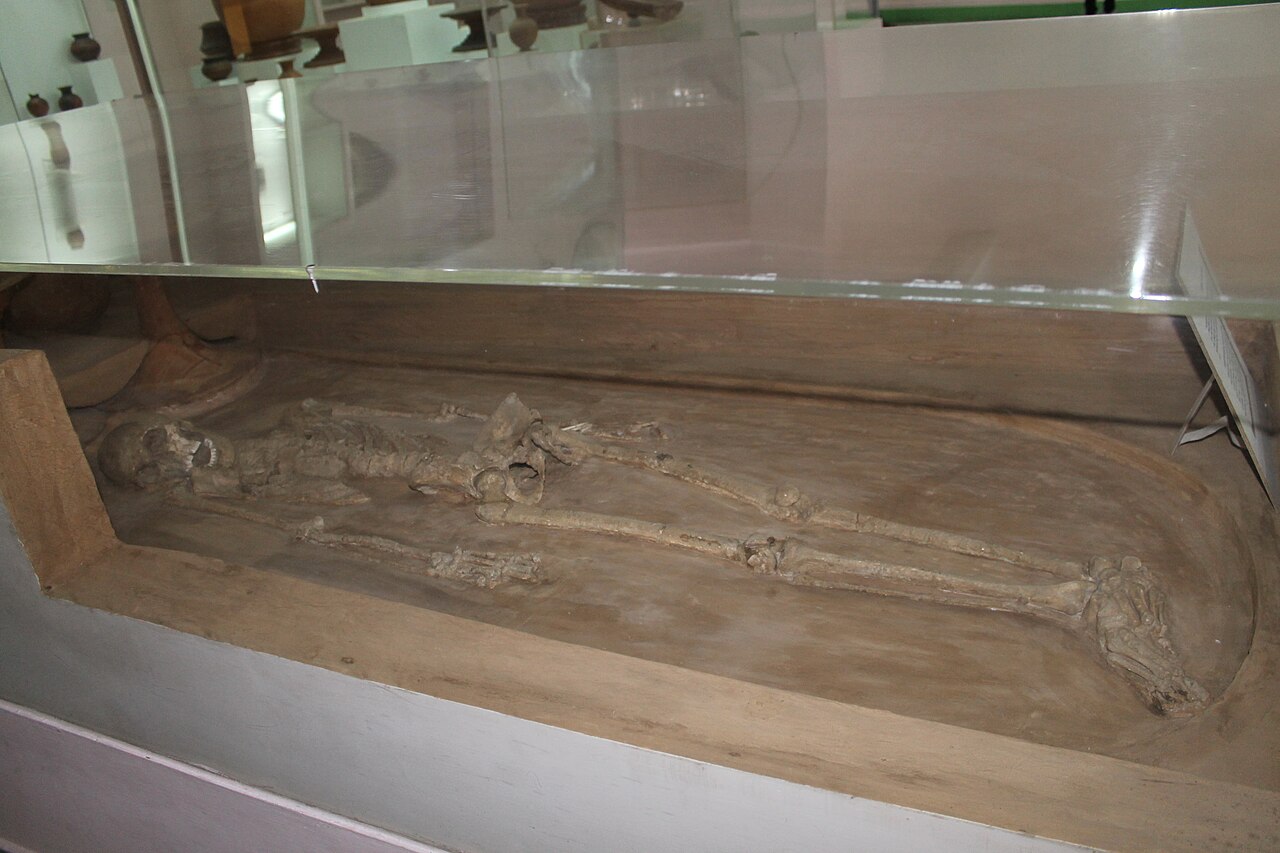
Burials excavated at Harappa show a range of grave goods and body treatments, and genetic studies on skeletal remains have added to an ongoing debate about the population’s origins and its relationship, if any, to later Indo-Aryan-speaking groups who appear in the region after the civilization’s decline.
Grave goods found alongside burials, including pottery, ornaments, and occasionally copper objects, vary enough between individuals to suggest some degree of social differentiation existed within Harappan society, though nothing approaching the extreme wealth disparities seen in contemporary royal burials elsewhere, such as at Ur.
What genetic studies have and haven’t shown
Recent ancient DNA analysis from South Asian sites broadly associated with the Indus Valley tradition has suggested a population with limited genetic input from later steppe pastoralist migrations, supporting a model in which Indo-Aryan languages arrived in the subcontinent through later migration rather than representing the language of the Harappan civilization itself.
These findings remain an active and sometimes politically sensitive area of research, and specialists continue to debate exactly how much weight limited ancient DNA samples can bear in reconstructing the language and identity of a civilization that left no readable texts of its own.
Religion without confirmed temples
Unlike contemporary Mesopotamia or Egypt, no structure at Harappa has been confidently identified as a temple, and reconstructing Harappan religious belief depends almost entirely on interpreting seal imagery, figurines, and ambiguous ritual-looking spaces, including the so-called Great Bath found at the related site of Mohenjo-daro.
Some scholars have proposed connections between Harappan seal imagery, particularly figures in yogic-like postures surrounded by animals, and much later Hindu religious iconography, though this remains a speculative and debated interpretation given the enormous chronological gap separating the two traditions.
A slow fade, not a sudden collapse
Rather than any single catastrophe, current evidence points to a gradual decline across the wider Harappan world around 1900 BCE, likely tied to weakening monsoon rains and the drying up of the Ghaggar-Hakra river system that many Harappan settlements depended on.
Urban populations appear to have dispersed toward smaller rural settlements over the following centuries, rather than vanishing entirely, suggesting a reorganization of society away from large cities rather than a total civilizational collapse or population replacement.
What happened to the people afterward
Many material traditions associated with Harappan culture, including certain craft techniques, agricultural practices, and settlement patterns, continued in modified form into the subsequent period of South Asian history, suggesting real cultural continuity even as the largest cities themselves were abandoned or shrank dramatically.
This makes the Harappan “collapse” better understood as a significant transformation and de-urbanization rather than the disappearance of an entire people, a distinction increasingly emphasized in current archaeological interpretation of the period.
A drainage system centuries ahead of its time
Among the most consistently praised features of Harappa and its sister cities is a covered drainage system that ran beneath the streets, collecting wastewater from individual houses through brick-lined channels that emptied into larger municipal drains. Many homes had their own private bathing areas and, in some cases, what appear to be latrines connected to this network, a level of domestic sanitation that would not be matched in most of Europe until many centuries later. The consistency of this infrastructure across such a wide area of the Indus Valley suggests a shared engineering tradition, or perhaps even shared standards enforced by some form of coordinating authority, rather than each settlement independently inventing similar solutions.
Maintaining this system required ongoing civic labor: drains had to be cleared of silt and waste periodically, and inspection holes built into the brickwork at intervals allowed workers to access blockages without tearing up the street above, a detail of urban maintenance planning that implies a level of long-term civic organization historians do not always associate with Bronze Age societies.
A standardized system of weights used across a thousand miles
Excavators at Harappa and related sites have recovered cubical stone weights made from chert, following a strikingly consistent binary-like system, in which each weight is a simple multiple or fraction of a base unit. What makes this remarkable is that nearly identical weights, accurate to a fraction of a gram, have been found at Indus sites separated by well over a thousand miles, from Gujarat in the south to sites near the Afghan border in the north, implying either a shared administrative authority or, at the very least, an extraordinarily durable shared commercial convention that merchants across the entire civilization agreed to honor.
Standardized brick sizes follow a similar pattern, with a consistent ratio of length to width to thickness recurring at Harappa, Mohenjo-daro, and smaller settlements alike, suggesting that some form of shared technical knowledge, whether transmitted through traveling specialists, common training, or centralized planning, guided construction practice across the entire civilization for centuries.
Wheat, barley, and cotton: what Harappans grew and wore
Harappa’s farmers cultivated wheat and barley as staple grains, supplemented by peas, sesame, and dates, while archaeobotanical evidence also confirms cultivation of cotton, making the Indus Valley one of the earliest known regions in the world to spin and weave cotton textiles, a craft that would eventually spread from South Asia across the ancient world over the following millennia. Cattle, water buffalo, sheep, and goats were kept both for meat and for secondary products including milk, wool, and labor, with cattle imagery appearing frequently on carved seals, suggesting particular cultural or religious importance beyond simple economic value.
Faunal remains recovered from Harappa’s residential areas also show evidence of fishing and hunting supplementing the farmed diet, and charred grain deposits found in storage contexts indicate that surplus grain was being systematically stored, likely as insurance against poor harvests and possibly as a form of taxation or tribute collected by whatever administrative structure oversaw the settlement’s granaries.
Children’s toys and the small pleasures of Harappan life
Not everything recovered from Harappa speaks to trade, religion, or governance. Excavators have found terracotta animal figurines with movable heads, small carts with wheels that actually turn, whistles shaped like birds, and gaming pieces that resemble dice and board-game counters, evidence of a domestic culture with time and resources for play, not merely subsistence and labor. These small objects, easy to overlook next to monumental granaries or the still-undeciphered script, offer a rare glimpse of Harappan life at its most ordinary and least ceremonial, closer to the daily reality of most residents than the grander seals and civic architecture that usually dominate discussion of the civilization.
Figurines, jewelry, and the question of women’s status
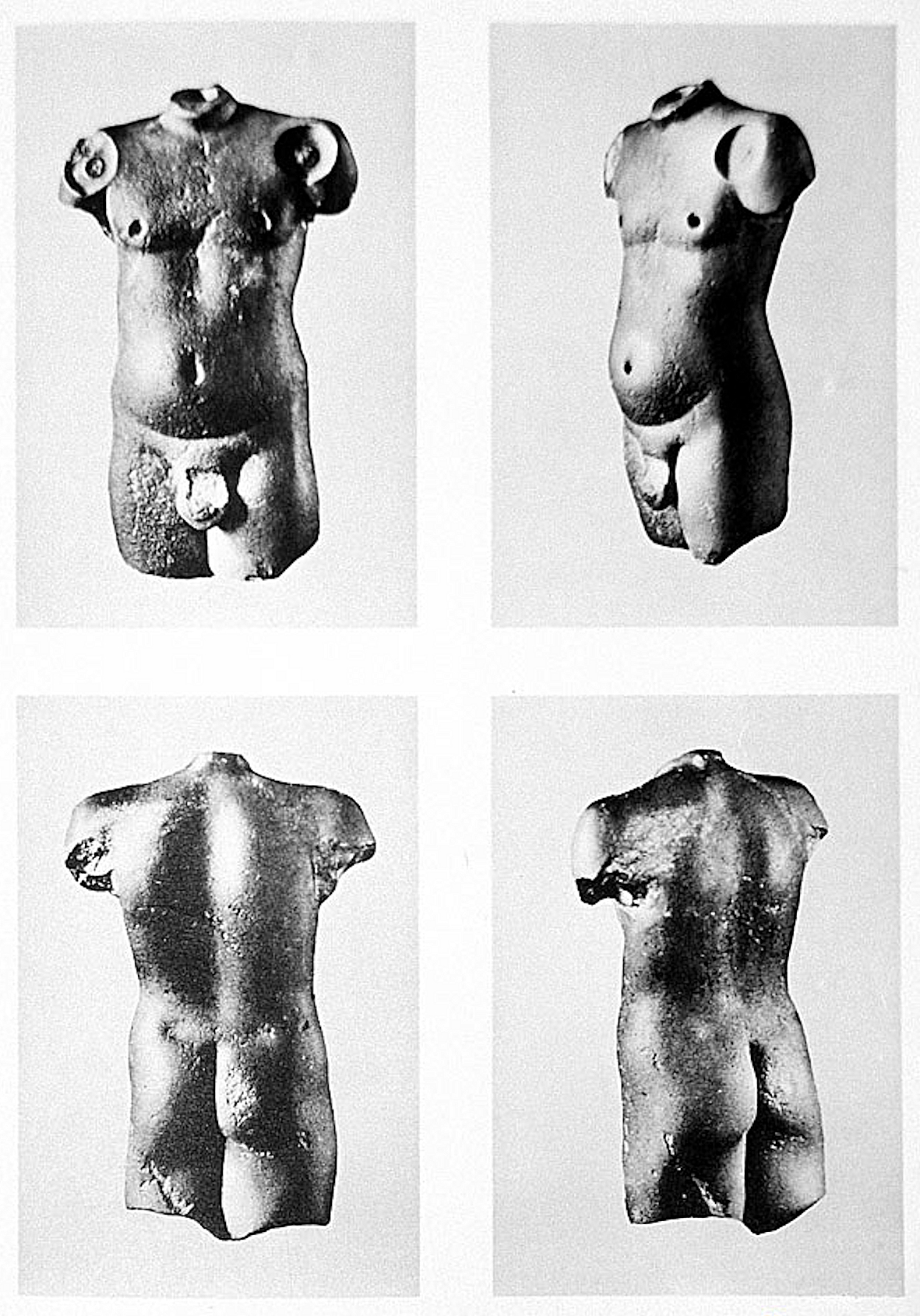
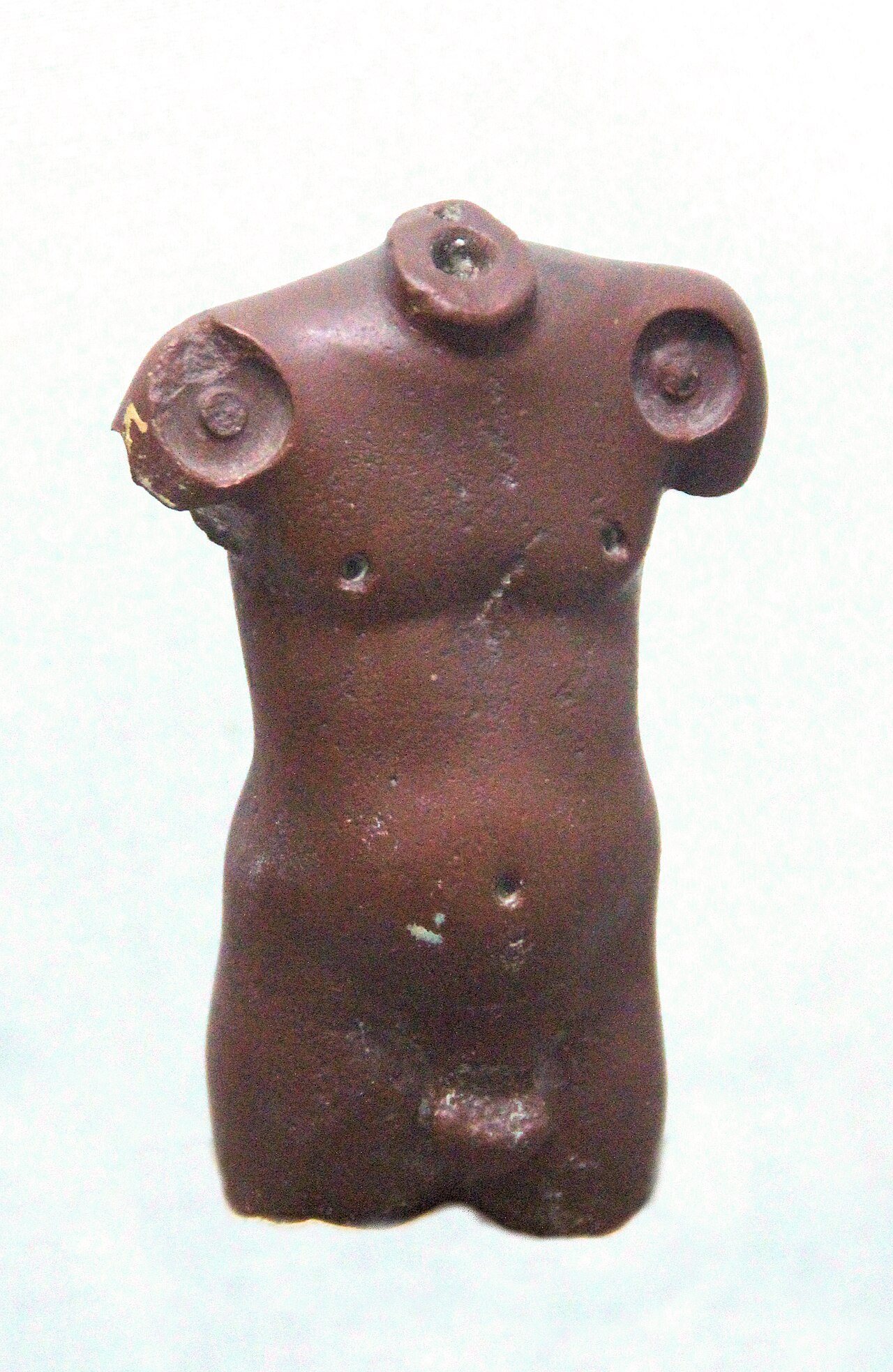
Terracotta figurines of women, often adorned with elaborate headdresses and jewelry, are among the most commonly recovered art objects from Harappa, leading some early twentieth-century excavators to speculate about goddess worship or a female-centered fertility cult, though later scholars have urged caution given how little direct evidence exists to confirm specific religious interpretations. Burial goods recovered from Harappa’s cemetery include jewelry, sometimes elaborate, found with female skeletons in quantities comparable to male burials, suggesting that at least some women held recognized social status reflected in mortuary treatment.
Bangles made of shell, faience, and terracotta, recovered in enormous numbers, appear to have been worn in quantity by women across the social spectrum, based on their presence in both modest and more elaborate residential contexts, indicating that certain forms of personal adornment were widely accessible rather than restricted to a narrow elite.
A hundred years of failed attempts to read the script
Since the Indus script was first noticed on seals in the late nineteenth century, dozens of researchers have proposed decipherments, linking it variously to Dravidian languages, Sanskrit, Sumerian, and even, in fringe proposals, to scripts from entirely unrelated parts of the world. None of these proposed readings has gained the kind of consensus support enjoyed by successfully deciphered scripts like Egyptian hieroglyphs or Linear B, largely because the average Indus inscription is extremely short, rarely more than a handful of signs, leaving too little text for confident statistical or comparative analysis.
Some linguists have even questioned whether the Indus symbols represent a full writing system encoding spoken language at all, suggesting they may instead function more like a system of political, religious, or commercial emblems rather than a script capable of recording connected speech, a genuinely unresolved debate that keeps Harappa’s most iconic artifacts, its carved seals, at the center of ongoing scholarly disagreement rather than settled interpretation.
A century of excavation, interrupted repeatedly
Excavation at Harappa has proceeded in fits and starts since the 1920s, interrupted by the partition of British India in 1947, subsequent shifts in regional archaeological priorities, and ongoing challenges in funding and site protection within modern Pakistan.
The Harappa Archaeological Research Project, active from the 1980s through the 2000s under American and Pakistani co-direction, brought substantially more systematic modern excavation methods to the site, refining the chronology and expanding understanding of the city well beyond what the damaged nineteenth-century remains alone could reveal.
Climate, rivers, and the many theories for decline
For much of the twentieth century, the decline of the Indus Valley Civilization was popularly attributed to an Aryan invasion sweeping in from the northwest, a theory drawn more from interpreting later Vedic texts than from archaeological evidence at Harappa itself, and one that has been largely abandoned by mainstream archaeologists. Current research instead points toward a combination of factors unfolding over generations rather than a single conquest: weakening of the monsoon system that fed the rivers the cities depended on, the drying up or course-shifting of the Ghaggar-Hakra river system that supported a large number of Indus settlements, and a gradual eastward and southward redistribution of population toward the Ganges plain and Gujarat as older water sources became unreliable.
Isotope analysis of skeletal remains and sediment cores from the region has provided increasing support for a multi-decade weakening of seasonal rainfall around the turn of the second millennium BCE, a change gradual enough that communities had time to relocate and adapt rather than experience sudden catastrophic collapse, which fits with archaeological evidence showing Harappan material culture persisting in altered, smaller-scale forms at new settlements well after the largest cities had been abandoned.
An excavation that shaped how South Asia sees its own past
The rediscovery of Harappa and Mohenjo-daro in the 1920s fundamentally rewrote the history of South Asia, pushing back the region’s urban civilization by well over a thousand years and demonstrating that sophisticated city life in South Asia did not begin with the arrival of Indo-Aryan speaking groups, as many colonial-era historians had assumed, but existed independently many centuries earlier. This discovery has since become a significant point of national pride and, at times, political debate in both India and Pakistan, with archaeologists, nationalist commentators, and religious movements in both countries sometimes contesting how directly the Indus civilization should be linked to later Hindu, Vedic, or regional identities.
Harappa itself sits within modern Pakistan’s Punjab province, and the Pakistani government has invested in a site museum and conservation programs, even as the destructive railway construction of the nineteenth century, and decades of brick robbing by local farmers before the site was protected, mean that Harappa today yields less intact standing architecture than Mohenjo-daro, its better-preserved sister city further south along the Indus.
What was the citadel mound actually for?
Harappa’s raised western mound, often called the citadel, was originally interpreted by early excavators as a fortified seat of ruling authority, comparable to a palace complex in contemporary Mesopotamia or Egypt. Decades of further excavation have complicated this picture considerably: no structure unambiguously identifiable as a palace or royal residence has ever been found there, and no monumental royal tombs or inscriptions naming individual rulers have surfaced anywhere in the Indus Valley, in sharp contrast to the abundant textual and architectural evidence of named kings from contemporary Egypt and Mesopotamia.
This absence has led many archaeologists to suggest that Harappa may have been governed through some form of collective or corporate authority, perhaps a council of merchants, priests, or clan leaders, rather than through the single all-powerful monarch familiar from other early civilizations, though without decipherable texts this remains an inference drawn from the absence of expected evidence rather than a confirmed political structure, one of the many ways Harappa continues to resist easy comparison with its better-documented Bronze Age contemporaries.
Harappa and Mohenjo-daro: sisters of the Indus
Harappa is best understood alongside its great sister city of Mohenjo-daro, situated further south along the Indus in what is now Sindh, for together they define the mature phase of the Indus Valley Civilization. The two cities share a striking family resemblance, the same standardized baked bricks, the same grid-like street planning, the same sophisticated drainage, and the same repertoire of carved seals and standardized weights, evidence of a shared culture spanning a vast territory. Mohenjo-daro, better preserved than Harappa thanks to its later and less destructive disturbance, has yielded famous structures such as the Great Bath, a carefully constructed watertight tank often interpreted as serving ritual purposes.
The remarkable uniformity between these distant cities is one of the enduring puzzles of the Indus civilization, for it implies some mechanism, whether shared administration, common cultural norms, or intensive contact, capable of maintaining consistent standards across an area larger than that controlled by contemporary Egypt or Mesopotamia. Yet unlike those civilizations, the Indus cities left no monuments to individual rulers and no readable inscriptions to explain how such uniformity was achieved, leaving Harappa and Mohenjo-daro as twin witnesses to a sophisticated society whose inner workings remain tantalizingly obscure.
What the Indus left to later South Asia
Although the great Indus cities declined and their script fell silent, elements of Harappan culture may have persisted and contributed to the later development of South Asian civilization. Some scholars have suggested continuities in certain religious motifs, craft traditions, agricultural practices, and aspects of urban life, while cautioning that direct lines of descent are difficult to demonstrate given the gap in the record and the transformations that followed the decline of the cities. The cultivation of cotton, the use of certain crops and animals, and possibly some symbolic and religious ideas may represent threads connecting the Indus world to the societies that came after.
Whatever the precise nature of these continuities, the Indus Valley Civilization established South Asia as one of the world’s original centers of urban life, a distinction that reshaped how the region’s deep history is understood. Harappa, the city whose partial destruction gave the whole civilization its name, thus stands not only as a monument to a vanished society but as a foundational chapter in the long story of one of the most populous and culturally rich regions on Earth, its significance still being fully appreciated a century after its rediscovery.
Nearby in the Indus Valley’s Ancient Story
Harappa’s story is only one thread in a much wider civilization, already told through its sister cities.
- Mohenjo-daro: The 4,500-Year-Old City That Was Centuries Ahead of Its Time
- Dholavira: The 4,500-Year-Old City That Beat the Desert With Water Engineering
- Kalibangan: The Indus Town With the World’s Oldest Ploughed Field
- Mehrgarh: The 9,000-Year-Old Village Where South Asia Learned to Farm

Closing thoughts
An entire Bronze Age civilization now carries the name of a city that nineteenth-century railway builders half-destroyed without ever knowing what they were breaking apart.
You May Like

Mafra, the Palace a King Built From a Vow