Hidden in the woodlands of northeastern Louisiana stands one of the most quietly astonishing monuments in the Americas, a place that forced archaeologists to rewrite what they thought they knew about the deep human past. This is the story of Watson Brake, the oldest known mound complex on the continent, raised by hunter-gatherers thousands of years before farming, pottery, or cities came to the region.
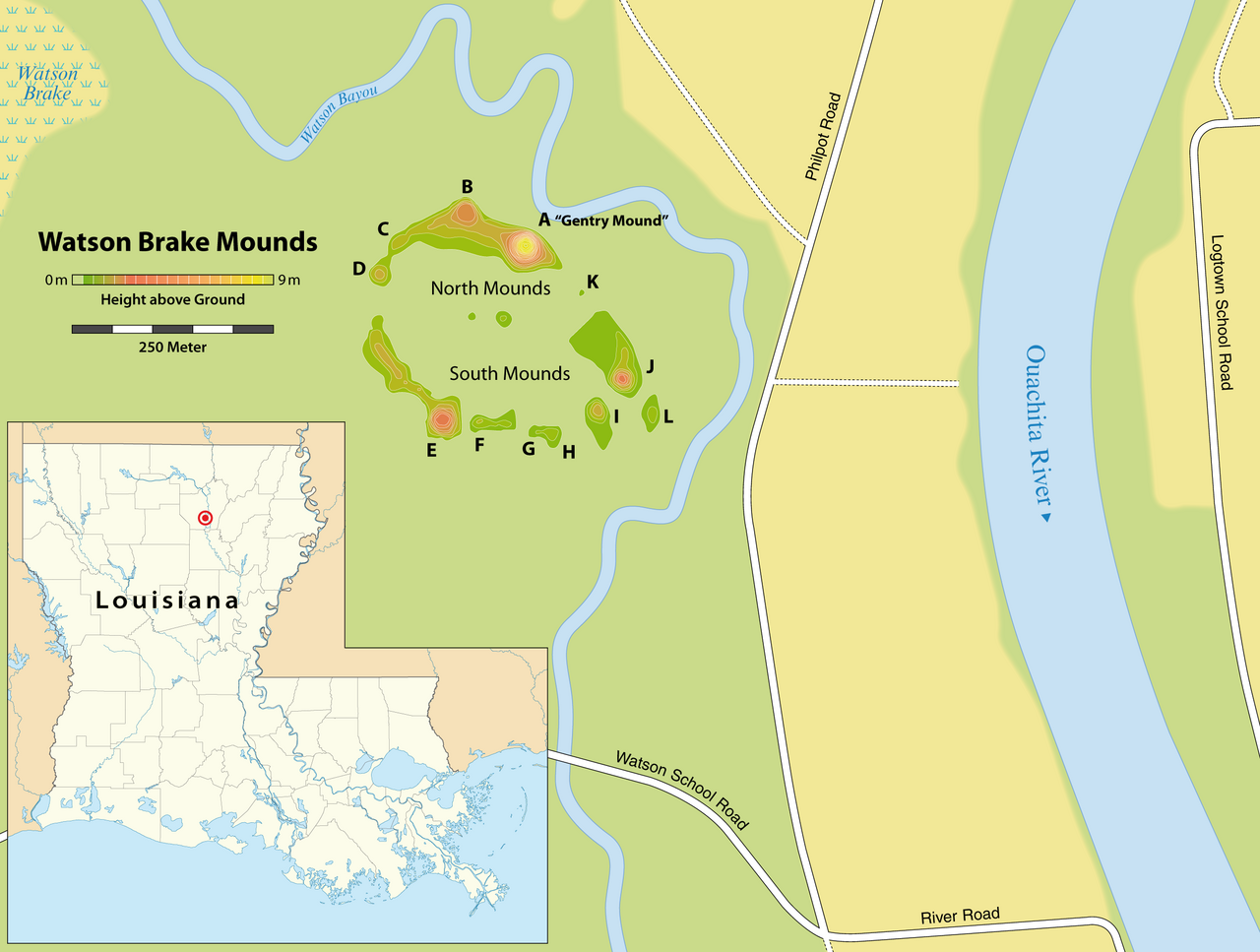
Table of Contents
- Older than the pyramids, built by people with no pottery
- A quiet arc of mounds in the Louisiana woods
- How archaeologists proved its astonishing age
- Who were the people who built it?
- Baskets of earth, carried for centuries
- What was Watson Brake for?
- The shadow of a more famous neighbor
- Rewriting the story of early North America
- Protecting a fragile and understated monument
- A humble mound complex with an outsized place in history
- From overlooked hillocks to headline discovery
- A place returned to, season after season
- The Middle Archaic world of the American Southeast
- The river valley that made it possible
- A heritage that belongs to living descendants
- Watson Brake and the world’s other early monuments
- The enduring questions the mounds still hold
- Nearby in the Americas’ ancient story
- Closing thoughts
Older than the pyramids, built by people with no pottery
Watson Brake, a modest arc of eleven earthen mounds connected by low ridges in the woodlands of northeastern Louisiana, holds a claim that startled North American archaeology when its true age was confirmed in the 1990s: it is the oldest known mound complex in the Americas, built around 3500 BCE, roughly two thousand years before the far more famous nearby site of Poverty Point, and older than the Egyptian pyramids and Stonehenge. For decades archaeologists had assumed that monumental construction in North America required settled agricultural societies with pottery and dense populations, and the discovery that Watson Brake was raised long before any of those things existed in the region forced a fundamental rethinking of what small-scale societies were capable of.
What makes the achievement so remarkable is precisely who built it. The people of Watson Brake were hunter-gatherers and fishers, not farmers; they had no domesticated crops to speak of, no pottery in the earliest phases, and no permanent year-round town. And yet these mobile foragers came together, generation after generation, to raise and maintain a planned complex of earthworks, an undertaking that overturns the long-held assumption that such monuments were the exclusive product of settled agricultural life.
A quiet arc of mounds in the Louisiana woods
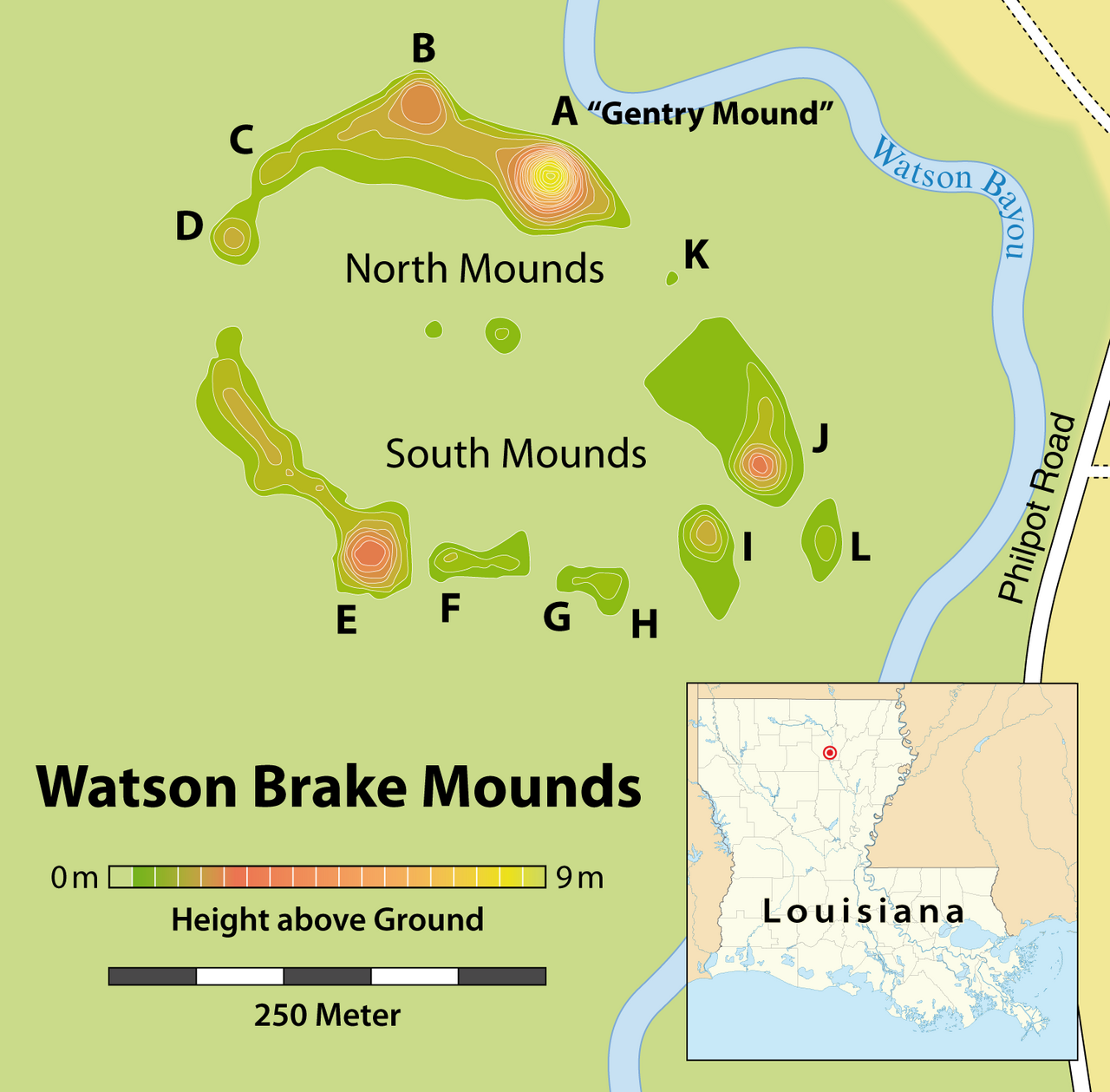
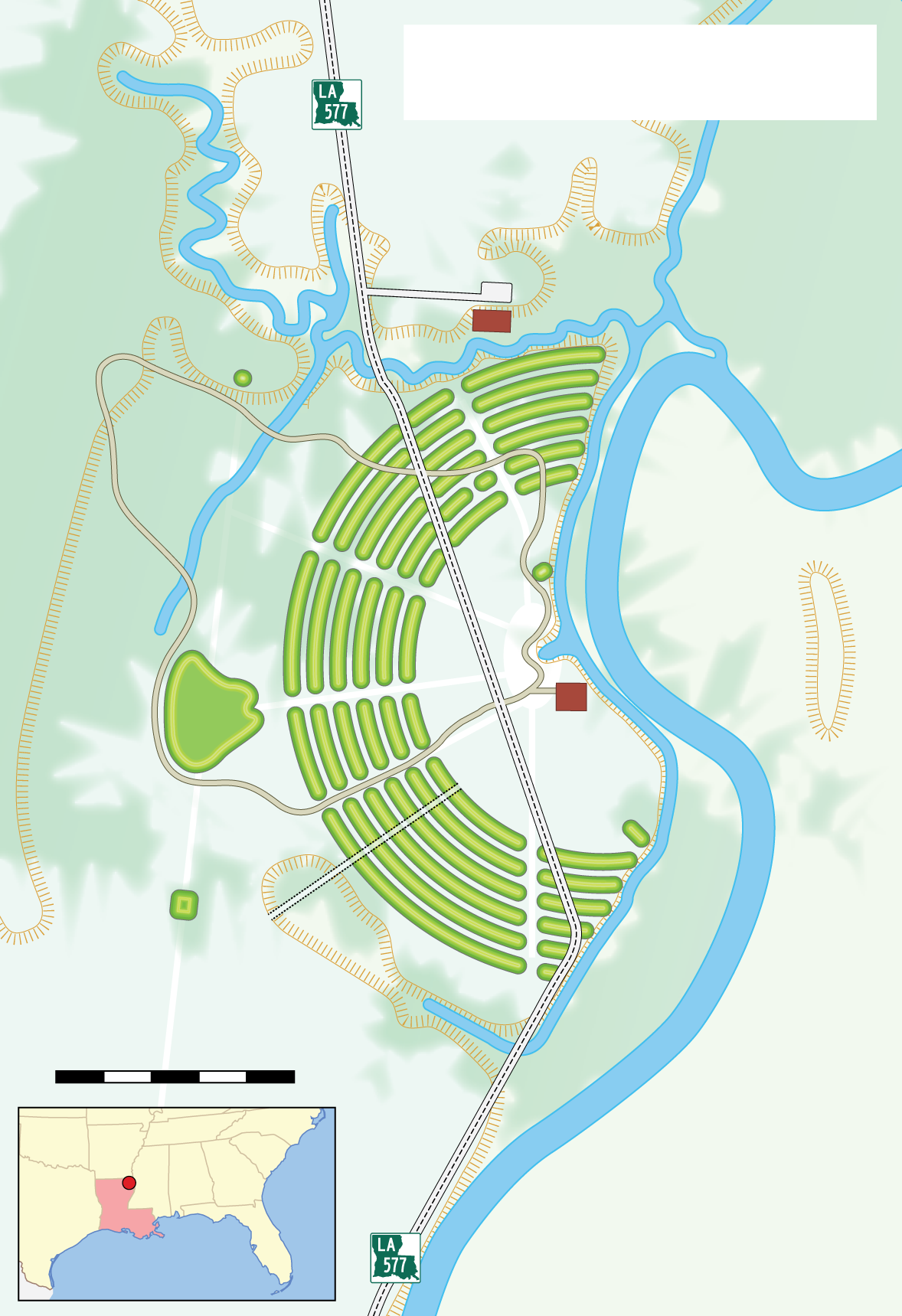
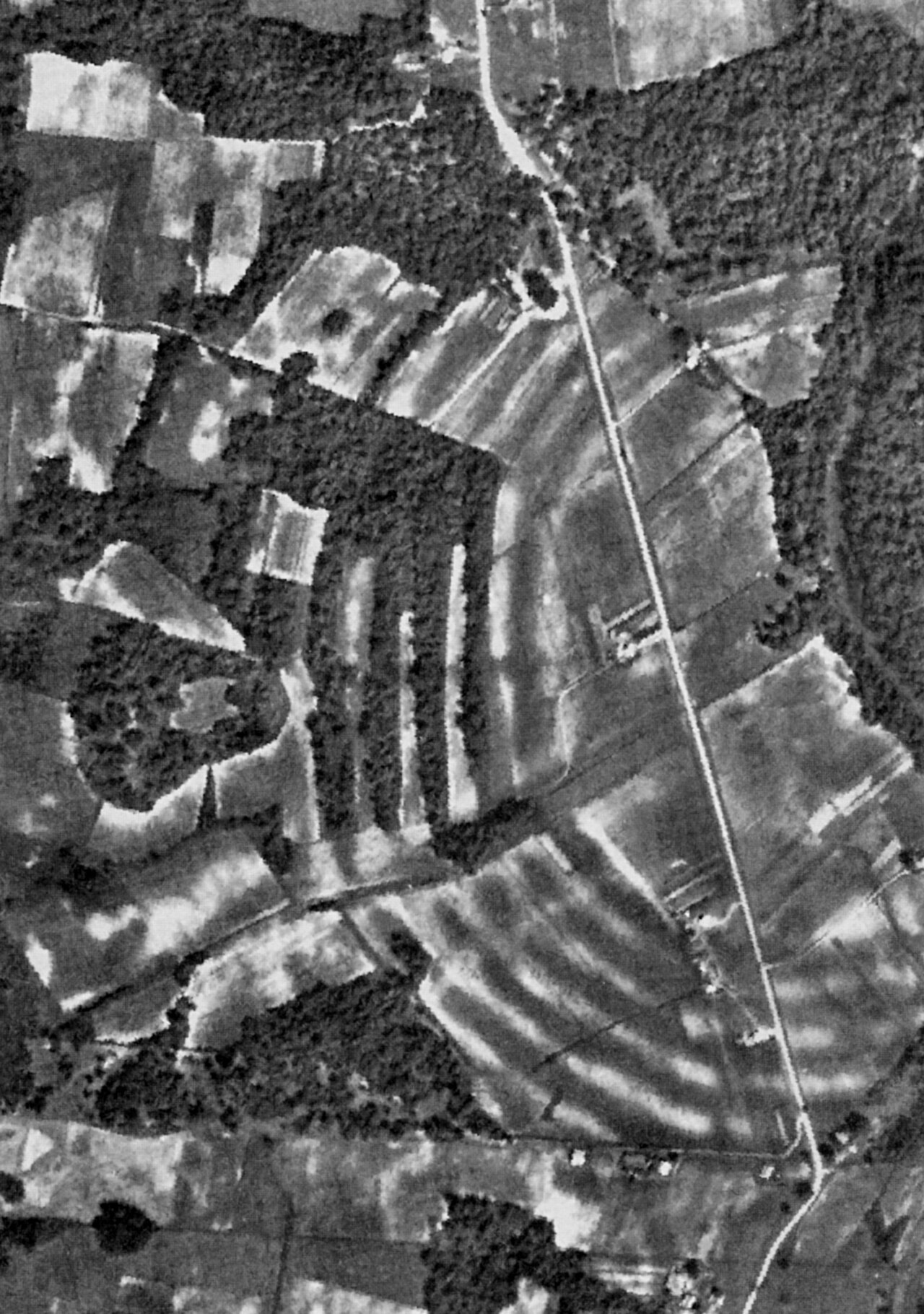
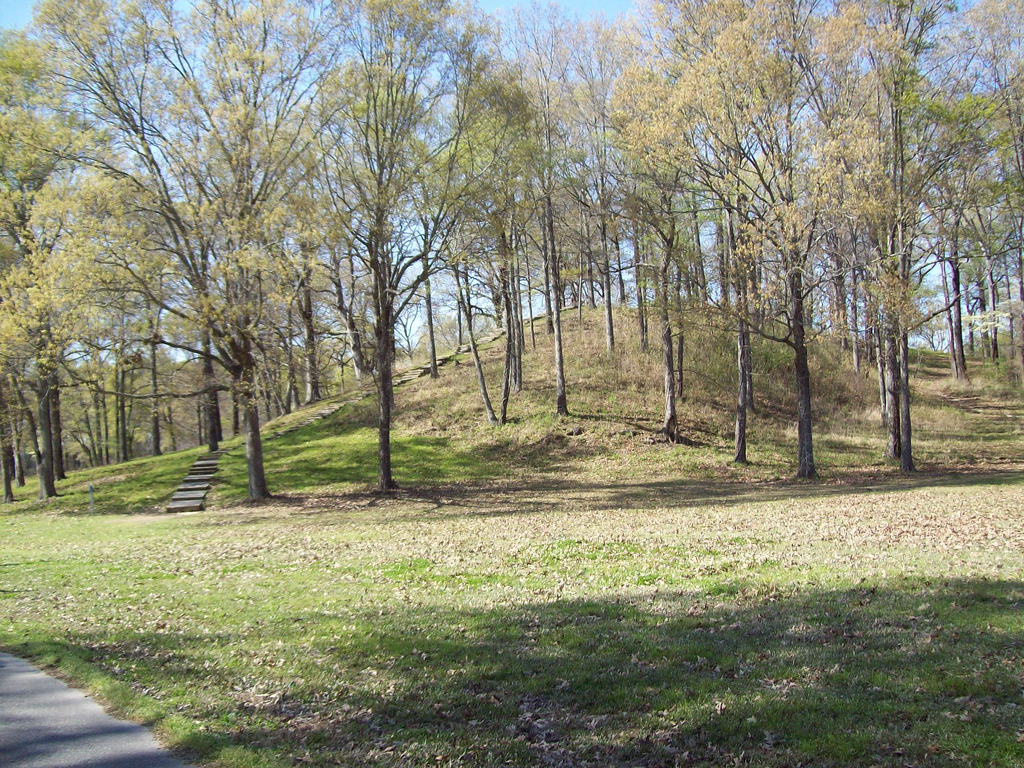
The Watson Brake complex sits on a terrace above a floodplain in the Ouachita River valley, arranged as an oval or arc of eleven mounds joined by connecting ridges to enclose a roughly circular plaza, the whole formation spanning some three hundred and seventy meters across. The largest of the mounds rises about seven meters, a substantial height achieved entirely through the patient hauling and piling of earth in baskets, and the deliberate, planned layout of the complex, with its mounds set out in an intentional geometric arrangement around a central open space, speaks to a shared design maintained across the many generations it took to build.
Today the site is relatively unassuming, its mounds softened by time and cloaked in woodland, and for a long time it attracted little attention, mistaken for natural features or minor works of no great antiquity. Only careful study revealed the artificial origin of the mounds and the astonishing age of their construction, transforming this quiet Louisiana landscape into one of the most important early monumental sites anywhere in the world.
How archaeologists proved its astonishing age
The confirmation of Watson Brake’s extraordinary antiquity came through careful excavation and a suite of dating techniques, including radiocarbon dating of organic material and analysis of the soil layers within the mounds, work carried out and published in the 1990s that placed the beginning of construction around 3500 BCE. These results were initially met with skepticism, so thoroughly did they contradict the prevailing assumptions about when and by whom North American mounds were built, but the dates held up under scrutiny and have since been widely accepted, establishing Watson Brake as the oldest securely dated mound complex on the continent.
The dating also revealed that the mounds were not thrown up in a single burst but built gradually over a span of several centuries, with layers accumulating as the site was used, added to, and maintained across many generations. This long, incremental construction is itself significant, indicating a sustained communal commitment to the place and its purpose that persisted across the lifetimes of countless individuals, a continuity of tradition among a mobile foraging people that is as impressive as the earthworks themselves.
Who were the people who built it?
The builders of Watson Brake belonged to the Middle Archaic period of the American Southeast, a time long before the introduction of agriculture, pottery-making at scale, or permanent villages in the region. They lived by hunting deer and small game, fishing the rivers and wetlands, and gathering wild plant foods, nuts, and shellfish, following a seasonal round that took advantage of the rich and varied resources of the Ouachita River valley. Analysis of food remains at the site shows a broad diet drawn from this abundant environment, the kind of reliable natural bounty that, as at other early monumental sites around the world, seems to have provided the surplus and stability that made communal construction possible.
These were not, then, the impoverished and precarious wanderers that outdated stereotypes of hunter-gatherers might suggest, but a people secure enough in their subsistence to invest enormous collective effort in a project of evidently deep social and spiritual importance. Understanding this reframes our sense of what foraging societies could achieve, and places Watson Brake alongside sites like Göbekli Tepe in the Near East as evidence that monumental construction sometimes preceded, rather than followed, the adoption of farming.
Baskets of earth, carried for centuries
Building Watson Brake required moving enormous quantities of soil using nothing more than baskets, digging sticks, and human labor, hauling earth from borrow areas and piling it up mound by mound, layer by layer, over the course of several hundred years. There were no draft animals, no wheeled carts, and no metal tools; every cubic meter of the mounds represents human muscle and organized effort, carried out by a community that returned to the task repeatedly across many generations. Studies of the mound layers suggest the construction was carefully managed, with stages of building and stabilization that kept the growing earthworks from slumping or eroding away.
This sustained, multi-generational labor poses fascinating questions about how a mobile foraging society organized such a project. It implies some mechanism for coordinating work, transmitting the design and purpose of the complex across generations, and motivating people to contribute to a construction that no single individual would see completed, hinting at social structures, shared beliefs, and communal institutions considerably more developed than the simple band-level organization once assumed for pre-agricultural peoples.
What was Watson Brake for?
The purpose of Watson Brake remains genuinely uncertain, as it does for so many prehistoric monuments whose builders left no written record. There is little evidence that the mounds were used for burials, which sets them apart from many later mound-building traditions in North America, and no sign that they supported large permanent buildings or served an obvious practical function such as defense or flood control. This absence of a mundane explanation has led most researchers to interpret the complex as a ceremonial or social gathering place, a location where dispersed groups came together periodically for ritual, exchange, and the reinforcement of communal bonds.
Under this interpretation, the very act of building and maintaining the mounds may have been as important as any use to which the finished complex was put, a communal undertaking that brought people together, expressed and strengthened their shared identity, and inscribed their relationship with the land into the landscape itself. Whether the mounds also marked astronomical events, seasonal cycles, or cosmological beliefs remains a matter of speculation, part of the enduring mystery of a site whose builders’ minds we can only glimpse through the earthworks they left behind.
The shadow of a more famous neighbor
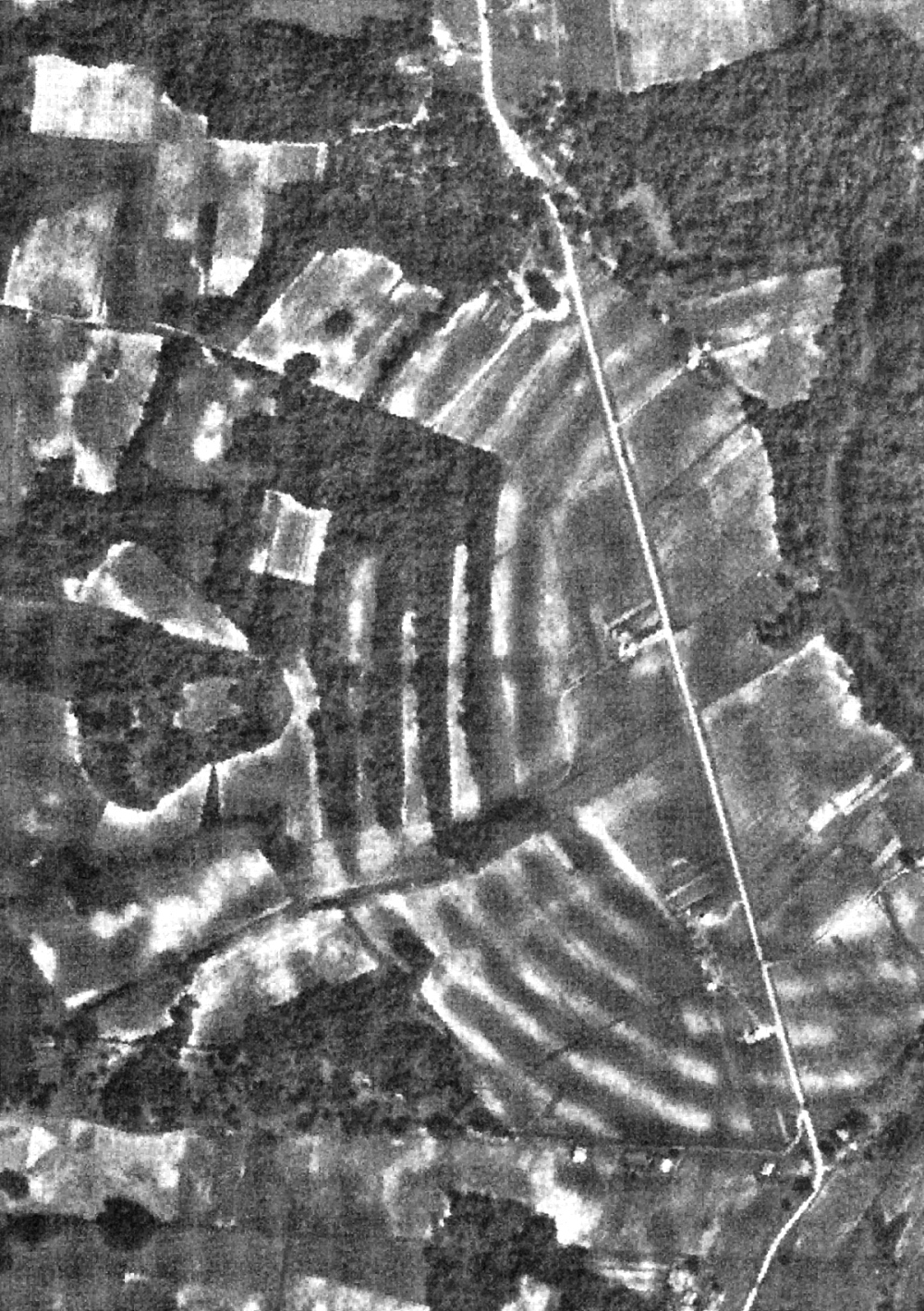
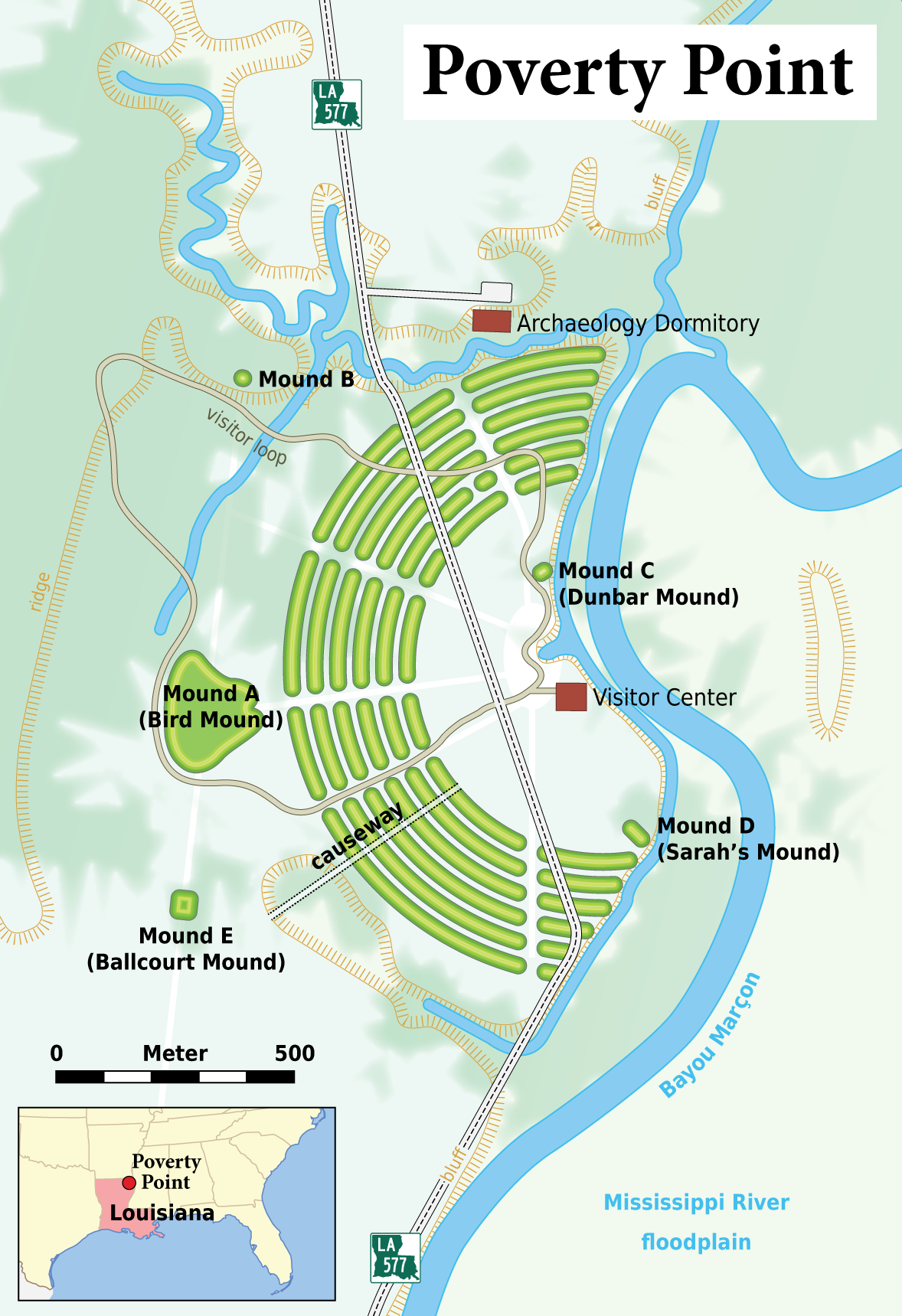
Watson Brake is often introduced in relation to Poverty Point, the spectacular and much larger earthwork complex located not far away in northeastern Louisiana, which was built roughly two thousand years later and has achieved World Heritage status and considerable fame. For a long time Poverty Point was regarded as the pioneering achievement of early monumental construction in the region, and the discovery that Watson Brake predated it by two millennia was all the more startling for revealing that the tradition of mound-building in the lower Mississippi valley reached back far deeper in time than anyone had realized.
The relationship between the two sites, separated by such a vast span of time, is not one of direct continuity, since the mound-building impulse appears to have waned and revived rather than persisting unbroken across those two thousand years. But together they establish the lower Mississippi valley as a region of remarkably early and recurring monumental construction, a heartland of the North American earthwork tradition whose roots, thanks to Watson Brake, are now known to be far older than the pyramids of Egypt.

Rewriting the story of early North America
The significance of Watson Brake extends well beyond its own mounds, for its confirmed antiquity forced a broad reconsideration of the capabilities of pre-agricultural societies in the Americas and beyond. The old model, in which monumental architecture was seen as a hallmark of settled farming civilizations with dense populations and centralized authority, simply could not accommodate a planned mound complex built by mobile hunter-gatherers two thousand years before the local advent of agriculture. Watson Brake, along with a handful of comparably early sites, helped drive a wider shift in archaeological thinking toward recognizing the sophistication, ambition, and social complexity of foraging peoples.
This reassessment resonates with discoveries on other continents, from the monumental enclosures of Göbekli Tepe to the engineered aquaculture of Budj Bim in Australia, all of which point to the same conclusion: that the human capacity for large-scale cooperation, planning, and symbolic construction does not depend on farming, cities, or states, but is a deep and ancient feature of our species, expressed in astonishingly diverse ways across the prehistoric world.
Protecting a fragile and understated monument
Because Watson Brake sits on land that has at times been privately held, and because its mounds are subtle and easily mistaken for natural features, the site has faced particular challenges of protection and interpretation. Earthen mounds are inherently vulnerable, susceptible to erosion, agricultural disturbance, and looting, and the very understatedness that allowed Watson Brake to escape notice for so long also left it exposed. Efforts by archaeologists, landowners, and heritage authorities have aimed to document, protect, and preserve the complex, recognizing its immense scientific and cultural importance despite its modest appearance.
Unlike some more visited and developed sites, Watson Brake has generally been kept relatively secluded, both to protect the fragile earthworks and out of respect for its significance, meaning that public access has been limited. This careful, low-key stewardship reflects a balance between the desire to share and celebrate an extraordinary piece of human heritage and the need to safeguard a fragile monument that has already survived, against considerable odds, for some five and a half thousand years.
A humble mound complex with an outsized place in history
Watson Brake may lack the visual drama of Stonehenge or the grandeur of the pyramids, but its quiet arc of earthen mounds occupies an outsized place in the story of humanity’s early monuments. As the oldest known mound complex in the Americas, built by hunter-gatherers long before farming reshaped their world, it stands as a testament to the ambition, cooperation, and vision of a people whose achievement was overlooked for generations and is even now not as widely known as it deserves to be. Its very existence expands our sense of what early human societies were capable of and enriches the global history of the oldest settlements and monuments.
In the broader sweep of this series, tracing the world’s earliest settlements and monumental places, Watson Brake supplies an essential North American chapter, reminding us that the impulse to build, to gather, and to mark the land with enduring earthworks arose independently across the continents, among farmers and foragers alike. It is a fitting example of how the deep human past continues to surprise us, hidden sometimes in the most unassuming of places, waiting in a quiet Louisiana woodland to overturn our assumptions about who our ancestors were and what they could do.
From overlooked hillocks to headline discovery
For much of the twentieth century, the low rises at Watson Brake were not recognized for what they were. Local people knew the mounds existed, but they were widely assumed to be natural knolls or, at most, minor and comparatively recent works of no special significance. It was only through the persistent attention of archaeologists in the late twentieth century, who examined the site closely, excavated test units, and submitted samples for dating, that the true nature and age of the complex came to light, revealing a planned monumental construction of staggering antiquity where casual observers had seen only unremarkable bumps in the landscape.
The announcement of Watson Brake’s age in the mid-1990s made news well beyond the archaeological community, precisely because it overturned so decisively the textbook account of early North America. The discovery stands as a reminder of how much of the deep past may still lie unrecognized in ordinary landscapes, its significance hidden until the right questions are asked and the right methods applied, and of how dramatically a single well-dated site can reshape an entire field’s understanding.
A place returned to, season after season
Evidence from Watson Brake suggests that the people who built it were not living there permanently but returning to the site repeatedly, most likely on a seasonal basis, as part of the annual round of a mobile foraging life. The food remains recovered point to occupation during particular times of year when local resources, fish, shellfish, nuts, and game, were especially abundant, implying that the mound-building took place during seasonal aggregations when otherwise dispersed groups gathered together at this significant place.
This pattern of seasonal gathering and construction is telling, for it means the mounds were built not by a resident labor force but by a periodically assembling community, whose members carried the design, purpose, and tradition of the site with them across the landscape and through the generations. The very rhythm of building, tied to the seasons and to the coming together of scattered groups, would have woven the act of construction into the social and ceremonial fabric of these people’s lives, making Watson Brake as much an occasion as a place.
The Middle Archaic world of the American Southeast
To understand Watson Brake fully, it helps to picture the wider world of the Middle Archaic period in which it was built, a time several thousand years before the rise of the agricultural chiefdoms and towns that would later characterize the American Southeast. This was a landscape of rich river valleys, wetlands, and forests inhabited by mobile foraging communities who had developed a deep and detailed knowledge of their environment, exploiting a wide range of wild resources with considerable skill. Trade networks moved materials such as stone for toolmaking across considerable distances, and other early earthworks from roughly the same era have been identified elsewhere in the lower Mississippi region, hinting that Watson Brake was part of a broader, if still poorly understood, tradition of Archaic monumental construction.
Placing Watson Brake in this context dispels any notion that it was a bizarre one-off, an inexplicable anomaly. Instead it emerges as the most impressive known expression of a wider capacity among Archaic peoples for cooperation, planning, and the marking of the landscape, a capacity that flowered here into one of the earliest monumental complexes on Earth and that testifies to the richness and sophistication of a world too often dismissed as simple or primitive.
The river valley that made it possible
Watson Brake owes much to its setting in the resource-rich environment of the Ouachita River valley, part of the broader lower Mississippi floodplain whose waters, wetlands, and forests supported an exceptional abundance of wild foods. The rivers teemed with fish and freshwater mussels, the wetlands drew waterfowl, and the surrounding woodlands supplied deer, nuts, and a wealth of edible plants, providing the kind of dependable natural bounty that, without any need for farming, could sustain a substantial population and free up the collective energy required for monumental construction.
This abundance is a recurring theme in the story of the world’s earliest monuments. Just as the fishing grounds of the Danube supported the settled foragers of Lepenski Vir, and the eel-rich wetlands sustained the builders of Budj Bim, so the productive floodplain of the Ouachita underwrote the achievement of Watson Brake. In each case, a naturally generous environment allowed a non-agricultural people to attain the security and surplus that made ambitious communal projects possible, underscoring how closely early monumental building was tied to particularly rich local ecologies.
A heritage that belongs to living descendants
Like all the ancient mound sites of the American Southeast, Watson Brake forms part of the heritage of Native American peoples, whose ancestors built and used these earthworks over thousands of years. The mound-building traditions that Watson Brake helped inaugurate would continue and evolve across millennia, culminating in the great mound centers of later eras, and the recognition of Watson Brake’s antiquity has contributed to a deeper appreciation of the long, rich, and continuous Indigenous history of the region, a history far older and more sophisticated than colonial narratives ever acknowledged.
Honoring this heritage means recognizing not only the scientific importance of Watson Brake but its cultural and spiritual significance as a testament to the achievements of Native American ancestors. The site stands as tangible evidence of a deep-rooted presence on the land, one whose monuments predate the pyramids and whose builders shaped the landscape with a vision and cooperation that command respect, a legacy that belongs first and foremost to the descendants of the people who raised these mounds so long ago.
Watson Brake and the world’s other early monuments
Set on a global stage, Watson Brake takes its place among a small and remarkable group of early monuments built by societies that had not yet adopted, or in some cases never would adopt, farming as their primary way of life. The great enclosures of Göbekli Tepe in Anatolia, raised by hunter-gatherers thousands of years earlier still, and the engineered eel-farming landscape of Budj Bim in Australia, maintained by foraging communities across an immense span of time, share with Watson Brake a common lesson: that monumental achievement was never the exclusive property of settled agricultural civilizations. Across widely separated continents, mobile and semi-mobile peoples proved capable of extraordinary feats of cooperation and construction.
Comparing these sites reveals both their diversity and their underlying kinship. Each arose from a particular environment and expressed a particular set of beliefs, yet all testify to the same deep human capacities for planning, collective labor, and the marking of the world with enduring works. Watson Brake, humble as it appears, thus belongs to a genuinely global story, one that has forced archaeologists everywhere to abandon tidy assumptions about the supposed prerequisites of monumental building and to embrace a far richer and more surprising picture of the human past.
The enduring questions the mounds still hold
For all that has been learned about Watson Brake, much about it remains beyond our reach, and this enduring mystery is part of its fascination. We cannot say with certainty what ceremonies, if any, took place within its plaza, what beliefs animated the people who returned season after season to add to its mounds, or precisely how a mobile foraging society organized and sustained such a long-term communal project. The builders left no writing, no clearly interpretable art, and few of the burials or artifacts that at other sites help archaeologists reconstruct ancient lives and beliefs.
Yet this very silence invites a kind of humility and wonder. Watson Brake reminds us that the deep human past is not fully knowable, that beneath the confident narratives of textbooks lie countless lives, choices, and meanings we can only partially glimpse. Standing among its weathered mounds, one is left to contemplate the vast reach of human time and the persistent, mysterious impulse, shared across the ages and around the world, to gather, to build, and to leave upon the earth some lasting sign of a people’s presence and belief.
Nearby in the Americas’ ancient story
To place Watson Brake within its wider hemisphere, these related sites from across the Americas trace the deep and varied history of early monumental building on the continents:
- Poverty Point and the great earthworks of Louisiana
- La Venta and the Olmec of Mesoamerica
- Caral and the oldest cities of the Andes
Closing thoughts
Watson Brake endures as a reminder that greatness in the human past did not always announce itself with towering stone or gleaming gold. Sometimes it lies low and unassuming in a wooded valley, a patient arc of earth raised basket by basket over centuries by people we once underestimated, waiting quietly to change the way we understand ourselves.
You May Like

Mafra, the Palace a King Built From a Vow


3 thoughts on “Two Thousand Years Before Its Famous Neighbor, Hunter-Gatherers Built This: The Story of Watson Brake”