Beneath the busy streets of Hamadan, one of the oldest continuously inhabited cities in Iran, lies the buried capital of a vanished empire. This is Ecbatana, known in ancient times as the great city of the Medes, later a summer residence of the kings of Persia, and a place wrapped in some of the most dazzling legends of the ancient world. Its story runs unbroken from the dawn of the Iranian empires down to the modern city that sits, quite literally, on top of it.
Set high on a plateau at the foot of Mount Alvand in western Iran, Ecbatana enjoyed a cool climate and a strategic position on the routes crossing the Zagros mountains. The Medes made it their capital in the years when they and their Persian cousins were rising to challenge the great empires of Mesopotamia, and from here, according to tradition, a Median dynasty helped bring down the mighty Assyrian Empire.
For all its fame in ancient texts, Ecbatana is a difficult site to see, because the modern city grew directly over the ancient one. Yet excavations have begun to reveal the buried capital, and the surrounding region preserves striking monuments, from royal inscriptions carved into a mountainside to a Hellenistic stone lion and an ancient tomb revered for centuries. Ecbatana is a city where legend, history, and a living modern town are layered inseparably together.
Contents
- The First Capital of the Medes
- Seven Walls of Silver and Gold
- A Summer Retreat for Persian Kings
- Alexander, Parmenion, and a Fortune in Treasure
- Under Parthians and Sasanians
- The Inscriptions in the Mountain
- The Tomb of Esther and Mordechai
- A City Living on Top of Itself
- Digging Beneath Modern Hamadan
- Visiting Ecbatana
- Nearby Places to Explore
- The Buried Capital of Three Empires
The First Capital of the Medes
The Medes were an ancient Iranian people who settled across the western plateau of what is now Iran in the early first millennium BC. For a long time they lived as a loose collection of tribes, but according to the Greek historian Herodotus they were eventually united under a line of kings, and it was one of these rulers who is said to have founded Ecbatana as the capital of a new and powerful Median state.
From this base the Medes grew into a major power. In alliance with the Babylonians they played a decisive role in the destruction of the Assyrian Empire in the late seventh century BC, sacking its great cities and helping to end the domination that Assyria had exercised over the Near East for centuries. For a time the Median kingdom, ruled from Ecbatana, was one of the leading states of the ancient world.
That supremacy did not last. In the middle of the sixth century BC the Median king was overthrown by his own vassal and kinsman, Cyrus the Great of Persia, who absorbed the Median realm into the rising Persian Empire. But rather than destroying Ecbatana, the Persians took it over, and the former Median capital became one of the key cities of the new and far larger empire that Cyrus and his successors would build.
Because the Medes left few written records of their own, much of what we know about them and their capital comes from later Greek and Near Eastern sources, which mix history with legend. This makes the early story of Ecbatana tantalizing and uncertain. But the broad outline is clear: here was the seat of the first great Iranian empire, the place from which the Medes rose to challenge and help topple Assyria before yielding, in turn, to their Persian relatives.
The very name Ecbatana comes down to us through Greek, rendering an older Iranian name that survives in the modern form Hegmataneh, thought to mean something like ‘place of gathering’ or ‘meeting place.’ The name itself hints at the city’s early role as a center where the scattered Median tribes came together, a focal point for a people in the process of becoming a nation and then an empire.
Seven Walls of Silver and Gold
The most famous description of Ecbatana comes from Herodotus, who gives an account so vivid that it has colored every telling of the city’s story since. He describes the Median king building a great fortified palace surrounded by seven concentric walls, each rising higher than the one before, arranged so that the battlements of each ring stood above those of the ring outside it.
What made the description unforgettable was the color. According to Herodotus, the battlements of the seven walls were painted, or plated, in a sequence of colors: white, black, scarlet, blue, and orange, with the innermost two crowned in silver and gold. The royal palace and the treasury stood within the golden heart of this dazzling ring of walls, a vision of a capital gleaming with precious metal at its center.
Historians have long debated how much of this to believe. The seven walls may echo a symbolic or cosmological scheme, with the colors linked to the heavenly bodies, rather than a literal engineering description. Whether Ecbatana truly shone with silver and gold or whether Herodotus embroidered a memory of a splendid citadel, the image captures the awe the city inspired, a capital rich and magnificent enough to generate legends.
No trace of the seven walls has been securely identified in the ground, buried as the ancient city is beneath the modern one. But the legend endures, and it tells us something real: that Ecbatana was remembered across the ancient world as a place of extraordinary wealth and grandeur, the golden capital of the Medes, whose splendor lived on in story long after its walls, of whatever color, had crumbled into the earth.
Whatever the reality behind the description, the seven walls of Ecbatana entered the imagination of the ancient world and never quite left it. Later writers echoed the image, and it became one of the standard wonders associated with the Persian east. The story shows how a real capital could be transformed, in the retelling, into something close to a fairy-tale city, its actual splendor magnified into legend by distance and time.
A Summer Retreat for Persian Kings
Under the Persian Empire founded by Cyrus the Great, Ecbatana took on a new role. The Achaemenid kings ruled a vast realm stretching from the Aegean to the Indus, and they moved between several capitals according to the season and the needs of government. Ecbatana, set high on its cool plateau, became a favored summer residence, a place to escape the fierce heat of the lowland capitals like Susa and Babylon.
The city thus became one of the great royal centers of the empire, alongside Persepolis, Pasargadae, Susa, and Babylon. The kings kept a palace and a treasury here, and important state business was conducted within its walls. It was at Ecbatana, tradition holds, that a crucial document authorizing the rebuilding of the temple in Jerusalem was later found in the royal archives, a small sign of the city’s role as a repository of imperial records.
Ecbatana’s position also made it a key node on the network of roads that held the empire together, including the great routes running east into the heart of Iran and beyond. Goods, officials, and armies passed through, and the city’s markets and treasuries reflected the wealth that flowed along these arteries. As a summer capital and a road hub, Ecbatana was woven deeply into the fabric of the Persian state.
For roughly two centuries, through the height of the Achaemenid Empire, Ecbatana enjoyed this status as one of the royal cities of the greatest empire the world had yet seen. Its treasuries filled with tribute, its palaces hosted the court, and its name became familiar across the ancient world as one of the seats of Persian power, a city where the King of Kings held court in the cool of the mountain summer.
The system of multiple capitals was a deliberate feature of Achaemenid rule, allowing the king and his court to be present in different parts of the empire and to enjoy the most agreeable climate through the year. Ecbatana’s role as the summer capital thus placed it at the very center of imperial life for part of each year, when the entire apparatus of the court moved up onto the cool plateau to escape the lowland heat.
Alexander, Parmenion, and a Fortune in Treasure
The Achaemenid chapter of Ecbatana’s story ended with the arrival of Alexander the Great. After his decisive victories over the Persian king Darius III, Alexander swept through the empire, and Ecbatana became an important center in his campaigns. It was here that he gathered and stored an immense quantity of treasure seized from the Persian royal capitals, a fortune almost beyond reckoning.
Ecbatana also became the setting for one of the darker episodes of Alexander’s reign. It was here that his trusted senior general Parmenion was based, guarding the treasure and the lines of communication. When Parmenion’s son was implicated in a conspiracy against the king and executed, Alexander sent orders for the aging general himself to be killed at Ecbatana, a ruthless act that shocked many and revealed the growing suspicion and autocracy of the conqueror.
The city was also linked to a personal tragedy for Alexander. His closest companion, Hephaestion, fell ill and died at Ecbatana, and the grief-stricken king is said to have plunged into extravagant mourning, ordering lavish honors and a costly funeral. Ecbatana thus witnessed both the vast wealth of Alexander’s conquests and the passions and cruelties of his court at their most intense.
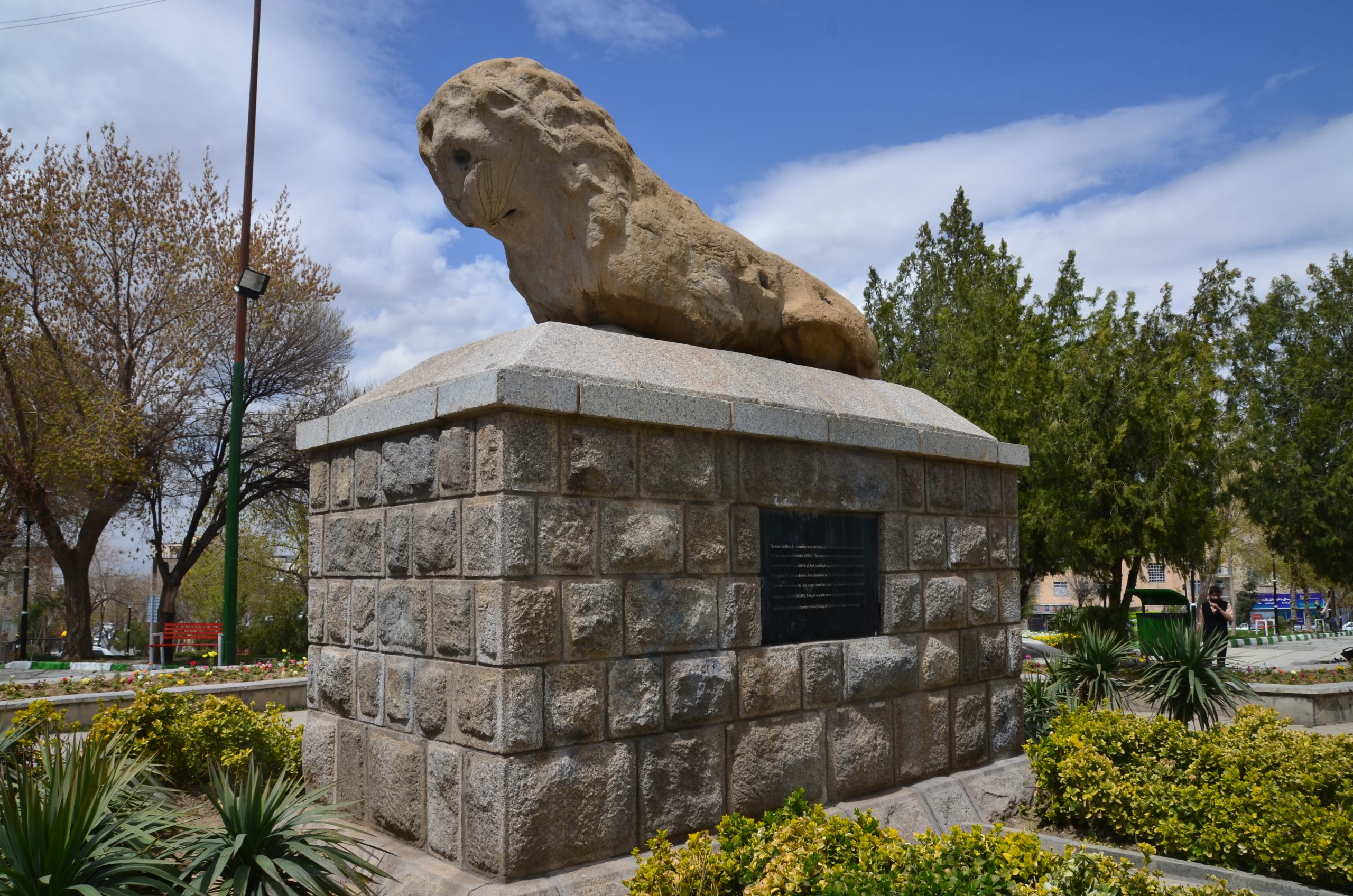
After Alexander’s own death soon afterward, Ecbatana passed to his successors and became part of the Seleucid kingdom that ruled much of his eastern conquests. The Hellenistic period left its mark on the city, and it is very likely from this era that the great stone lion of Hamadan dates, a sculpture that may once have guarded a gate or monument and that still survives, worn and battered, as a relic of the Greek presence in this ancient Iranian capital.
Under Parthians and Sasanians
Ecbatana’s importance did not fade with the Greeks. When the Parthians, a new Iranian power, rose to dominate the plateau and challenge Rome, Ecbatana once again became a royal city, serving the Parthian kings much as it had served their Median and Persian predecessors. Its cool summer climate and strategic position kept it valuable to every empire that ruled the region.
Under the Parthians and then the Sasanians, the great Persian dynasty that followed them, Ecbatana continued as an important urban center. It remained a mint, a market, and an administrative hub, its long continuity a testament to the enduring advantages of its location. Few cities have served as a capital or royal seat for so many successive empires across so many centuries.
This unbroken importance is part of what makes Ecbatana so remarkable. Where many ancient capitals rose with one empire and fell with it, Ecbatana was passed from Medes to Persians to Greeks to Parthians to Sasanians, each finding it worth keeping. The city adapted again and again, its role shifting but its significance enduring through more than a thousand years of imperial history.
With the coming of Islam, the city, now increasingly known by the name Hamadan, remained a significant place, a stop on the great roads and a center of learning and commerce. It suffered in the turbulent centuries that followed, including devastating attacks during the Mongol invasions, but like so many times before, it survived and rebuilt, carrying its ancient identity forward into the medieval and modern worlds.
Coins minted at Ecbatana across these centuries offer a small but telling record of its enduring economic importance. As successive dynasties struck currency here, the city’s mint kept working through changes of ruler and regime, a quiet marker of continuity beneath the dramatic shifts of imperial history. Money, as so often, tracked the persistence of a place that politics kept passing from hand to hand.
The Inscriptions in the Mountain
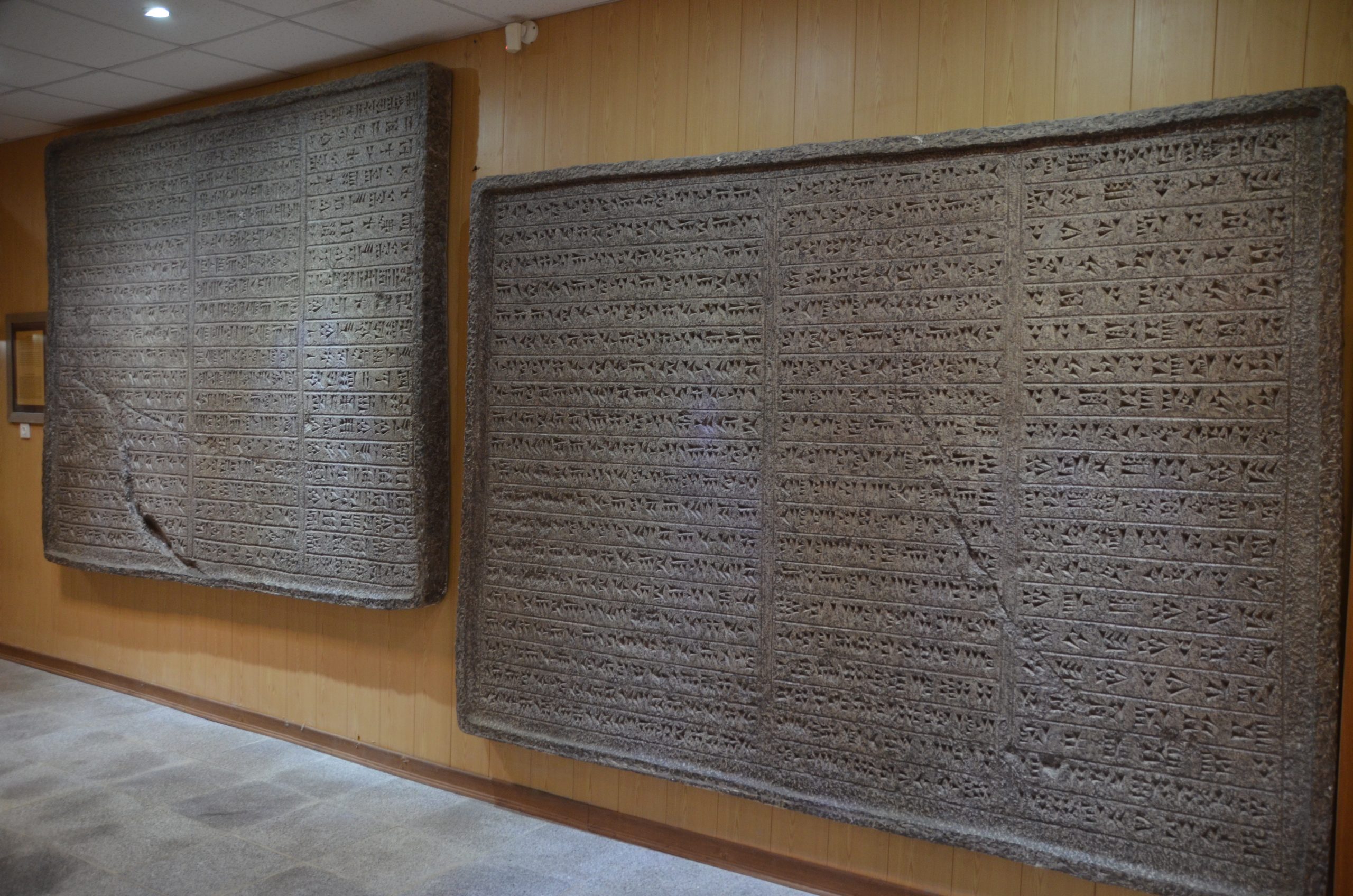
A short distance outside Hamadan, at the foot of Mount Alvand, lies one of the most striking ancient monuments in the region: the inscriptions known as Ganjnameh. Carved into the face of a rock beside a mountain stream, they consist of two panels of cuneiform writing, cut on the orders of the Achaemenid kings Darius the Great and his son Xerxes.
Each inscription is written three times, in Old Persian, Elamite, and Babylonian, the three languages the Achaemenid rulers used for their royal proclamations. The texts praise the supreme god Ahura Mazda and record the titles and lineage of the kings, standard formulas of Achaemenid royal ideology, here set permanently into the living rock of the mountain above their summer capital.
The name Ganjnameh means ‘treasure book’ in Persian, a name that arose in later centuries when the meaning of the cuneiform script had been forgotten. Local people, unable to read the ancient writing, imagined that the mysterious symbols must be a coded guide to hidden treasure, and the name preserves that folk belief. In fact the true treasure of the inscriptions is historical, not material: they are precious records of the Persian kings and their language.
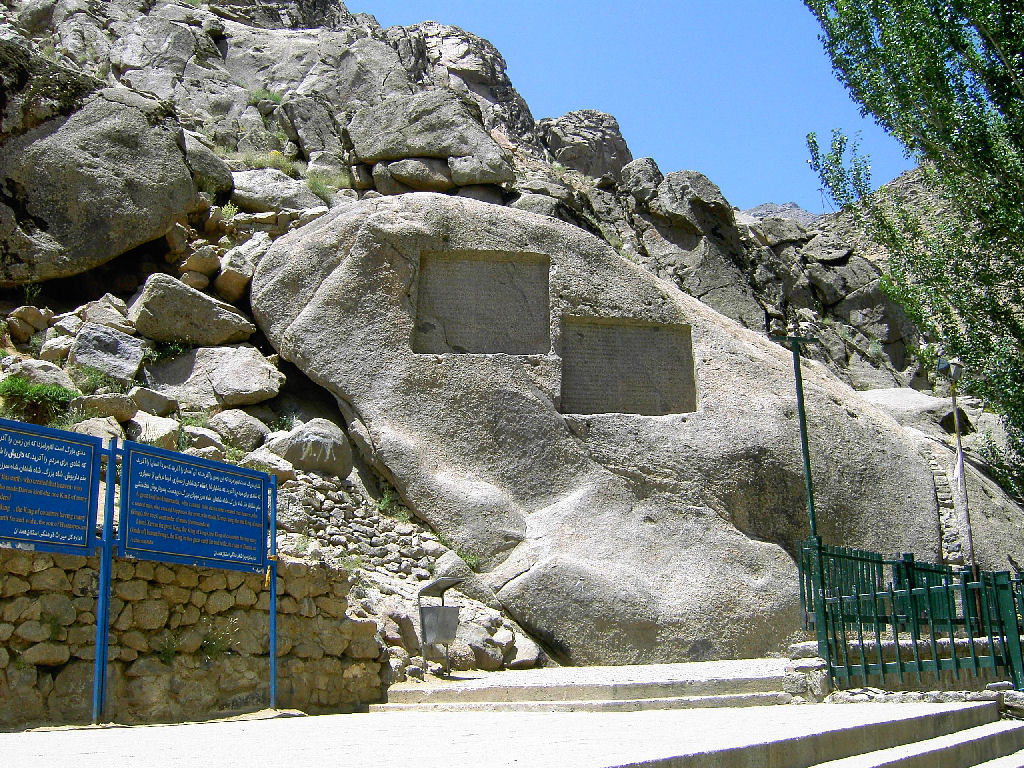
Set in a beautiful spot beside a waterfall, with the mountains rising behind, Ganjnameh is today a popular destination and one of the most accessible ways to connect directly with the Achaemenid world around Hamadan. Standing before the crisp cuneiform, cut on the command of Darius and Xerxes more than two thousand years ago, a visitor touches the same royal tradition that raised Persepolis and ruled the ancient world from Ecbatana and its sister capitals.
The trilingual form of the inscriptions is itself historically precious. By repeating the same royal text in Old Persian, Elamite, and Babylonian, the Achaemenid kings created parallel versions that would later prove invaluable to scholars working to decipher these ancient scripts. Inscriptions like those at Ganjnameh, alongside the more famous ones elsewhere, helped unlock the lost languages of the ancient Near East.
The Tomb of Esther and Mordechai
Within the modern city of Hamadan stands a monument of great importance to Jewish tradition: a shrine revered for centuries as the tomb of Esther and Mordechai, the heroine and hero of the biblical Book of Esther. According to that book, a Jewish queen named Esther and her kinsman Mordechai saved their people from destruction in the Persian Empire, and their story is celebrated in the festival of Purim.
The association of the tomb with Ecbatana fits the setting of the biblical story in the Persian court, and for a very long time the shrine has been an important place of pilgrimage for Jews, one of the most significant Jewish holy sites in Iran. The building, with its distinctive dome, shelters what tradition holds to be the graves of the two biblical figures, drawing visitors and prayers across the generations.
Historians debate the precise origins and dating of the shrine and the identities of those actually buried there, as they do with many ancient holy places. But its long veneration is a fact in itself, and it reflects the deep and ancient roots of Jewish life in Iran, going back to the time when the Persian Empire ruled over a vast Jewish population and figures like Esther and Mordechai could, in the tradition, rise to prominence at the royal court.
The tomb is a reminder that Ecbatana and Hamadan have been home to many peoples and faiths across their long history. Medes, Persians, Greeks, Jews, and later Muslims all left their mark here, and the survival of such a shrine at the heart of the modern city underlines the extraordinary continuity of religious and cultural life in this ancient capital, layered like the archaeology beneath it.
A City Living on Top of Itself
The greatest challenge in studying Ecbatana is also the simplest to state: the modern city sits directly on top of the ancient one. Hamadan is a thriving, populous place, and its streets, houses, and shops cover the buried remains of the Median and Persian capital. For most of its history, ancient Ecbatana was effectively inaccessible, hidden beneath the living town that had grown from its roots.
This continuity is itself extraordinary. Few great capitals of the ancient world have remained continuously inhabited for so long that a modern city still occupies the exact same spot. Where Persepolis stands abandoned and Susa is a field of mounds, Ecbatana never died; it simply became Hamadan, its ancient identity submerged beneath centuries of later life but never entirely lost.
The cost of this survival, for archaeology, has been high. Every excavation must work in the gaps between modern buildings, on the few open plots where the ancient layers can be reached. Large areas of the ancient capital lie permanently beyond reach beneath the modern city, and archaeologists must piece together the story of Ecbatana from limited windows into the past.
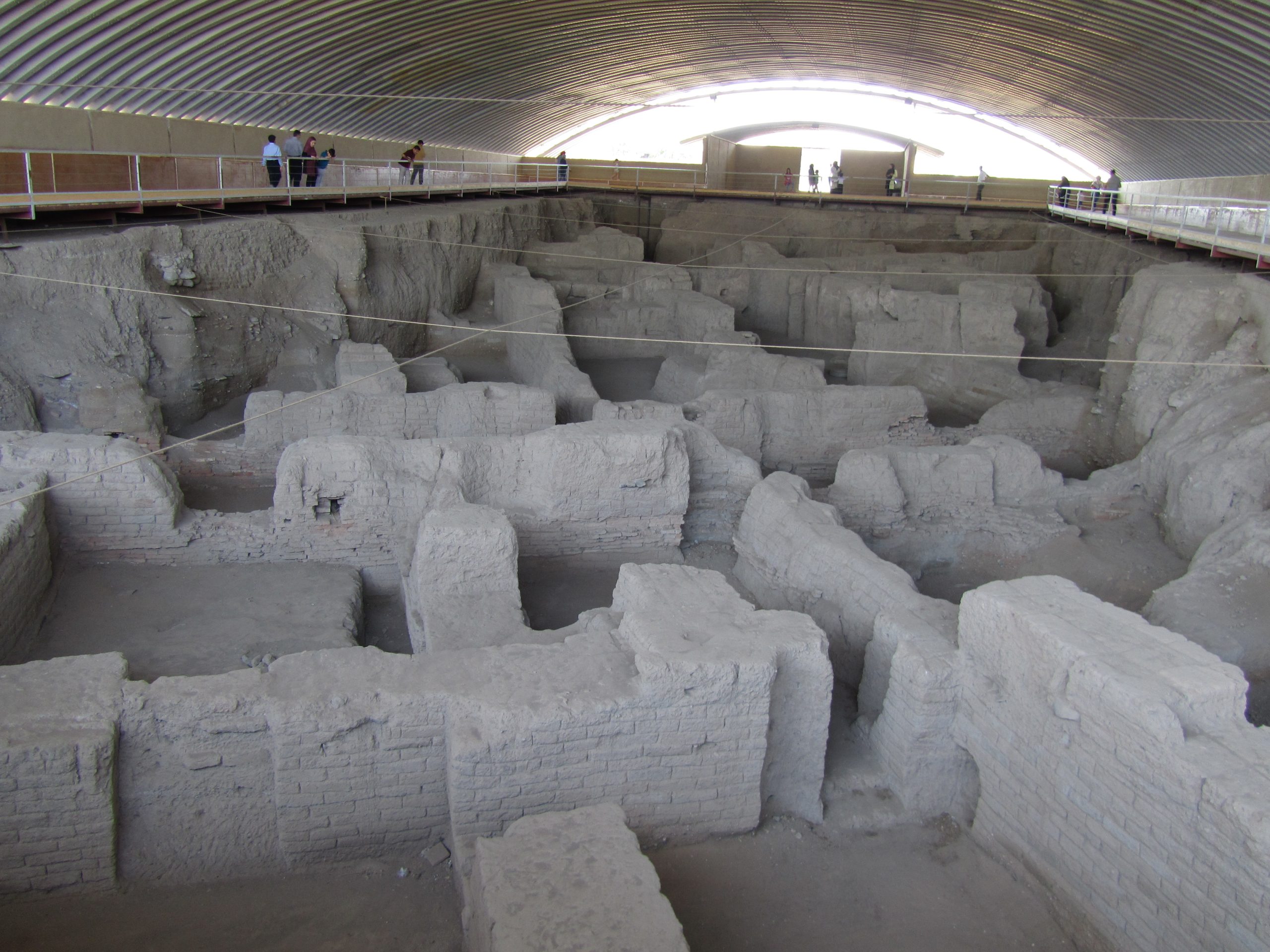
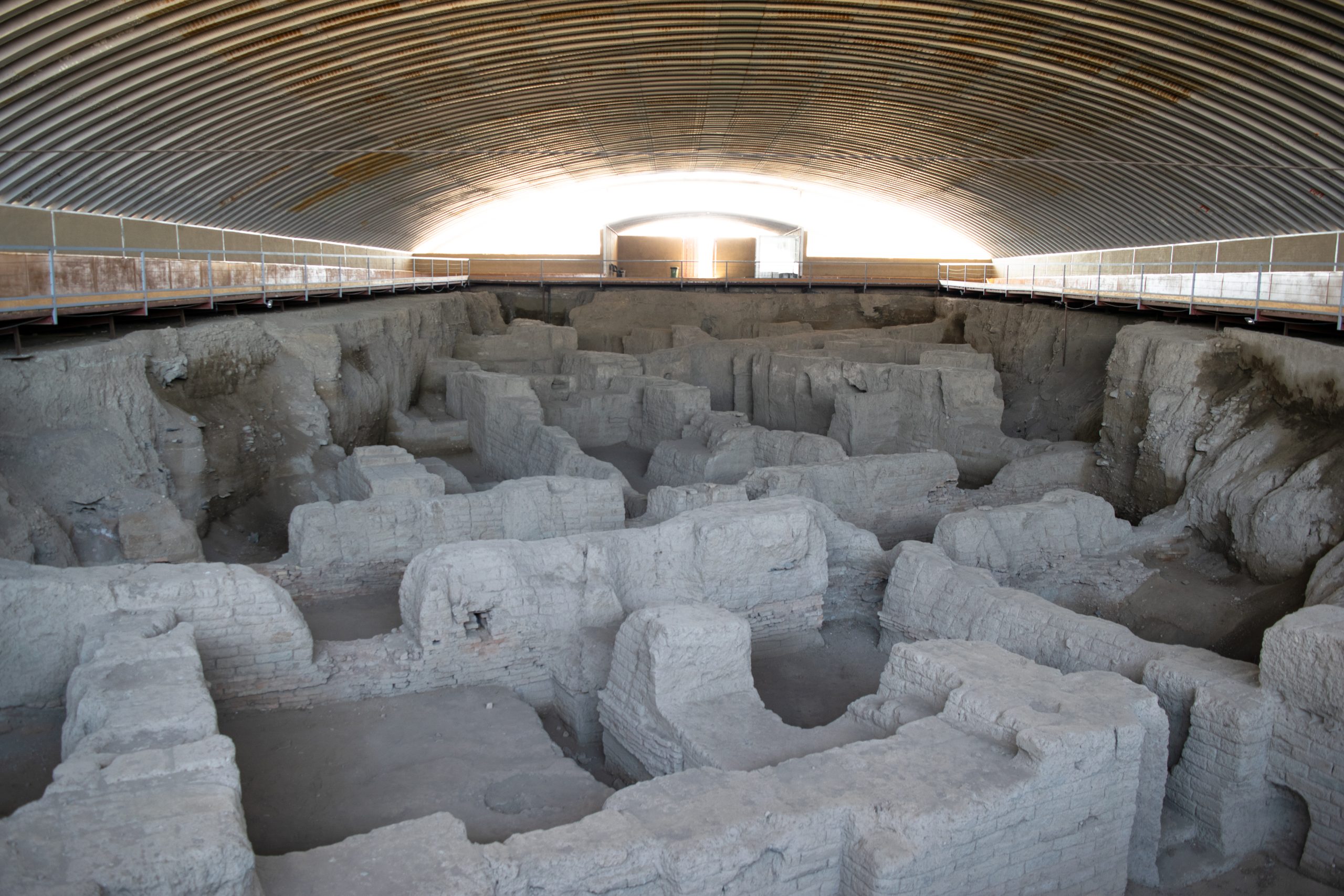
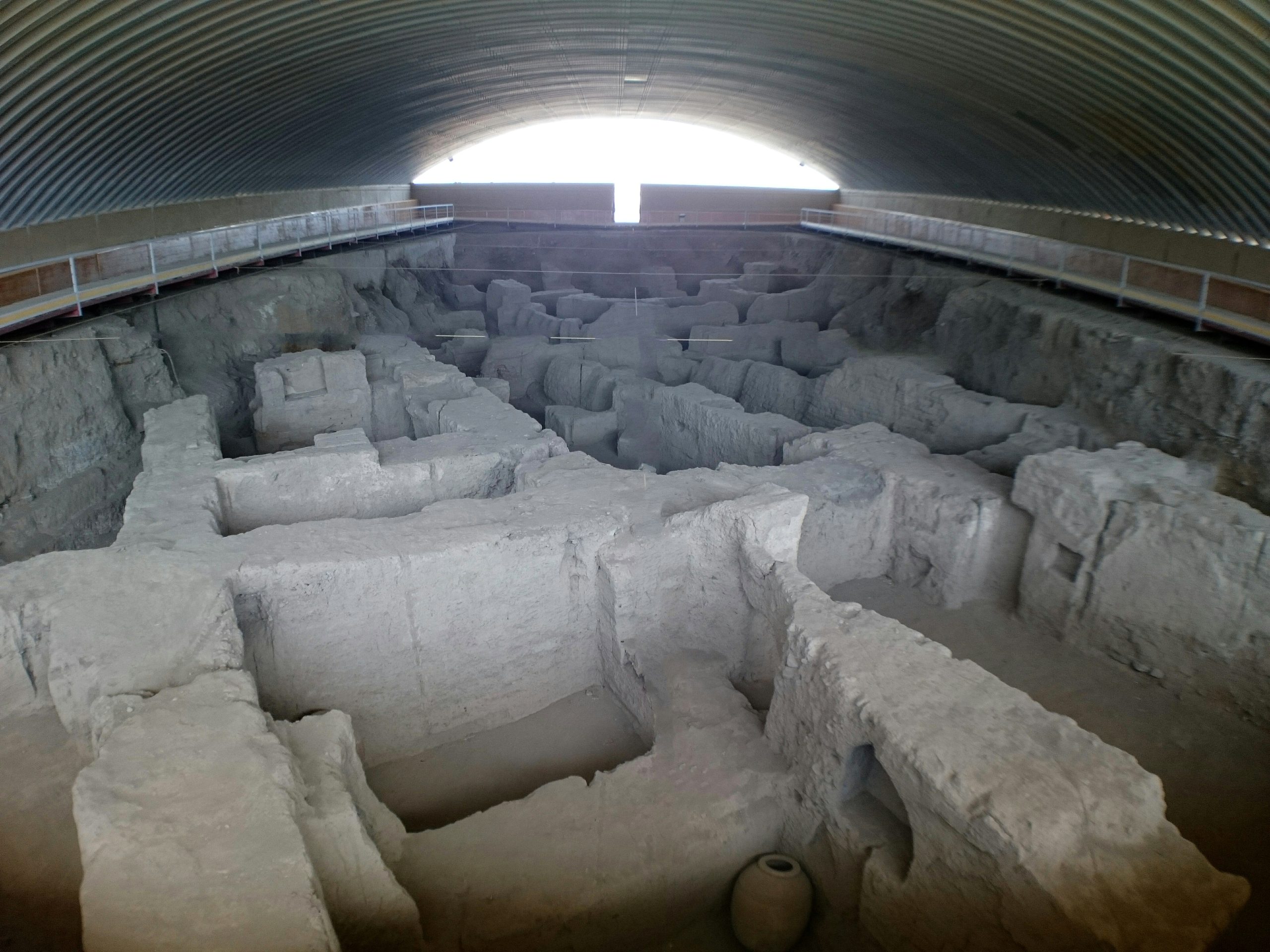
Yet those windows have proved rewarding. Where excavation has been possible, notably at the mound known as Hegmataneh, the ancient name of the city, archaeologists have uncovered a planned urban layout with streets and substantial buildings, giving a real, physical glimpse of the city beneath the legends. The buried capital is slowly, patiently, being brought back into the light.
Digging Beneath Modern Hamadan
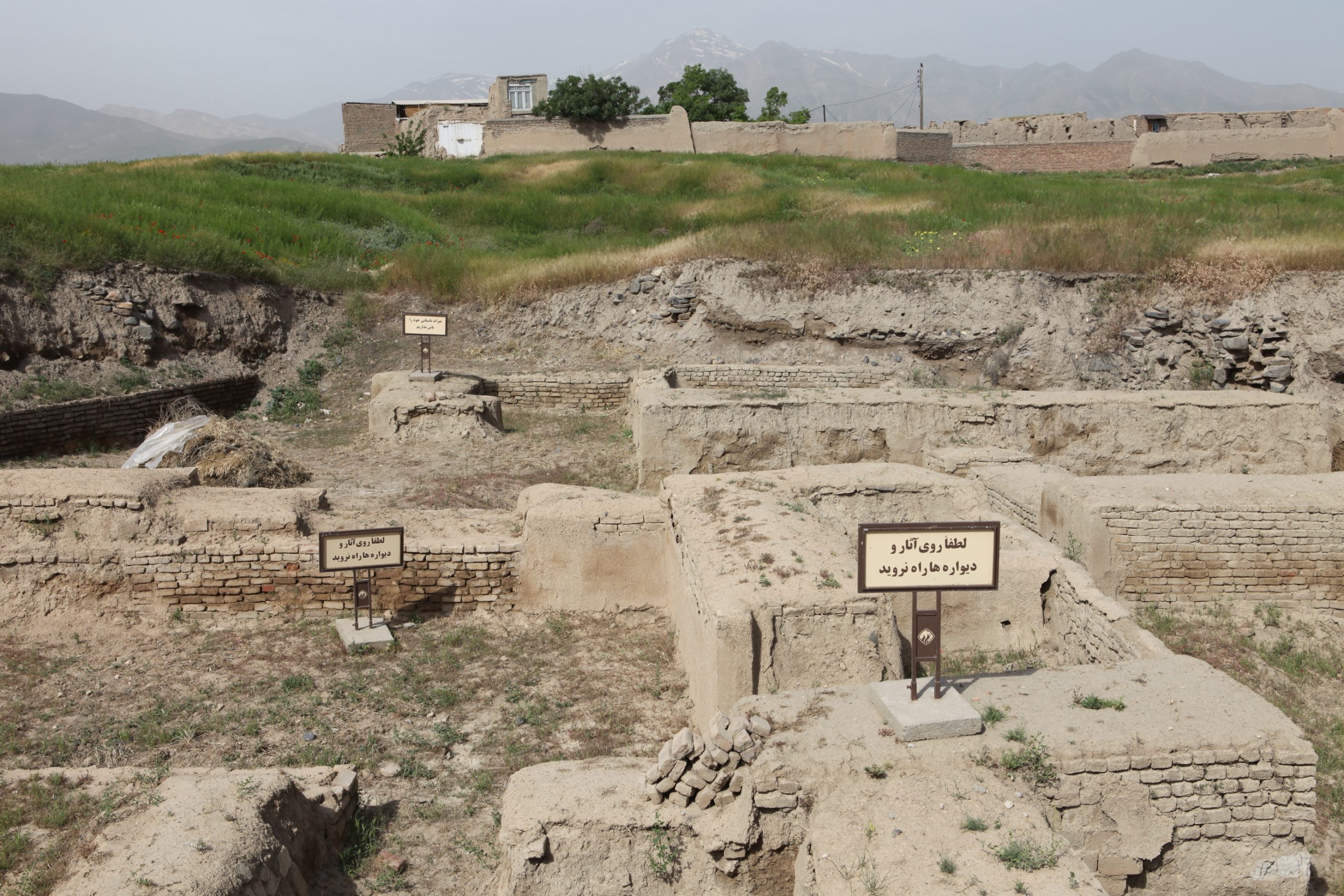
Excavations at the Hegmataneh mound, in the heart of Hamadan, have revealed the most tangible evidence yet of the ancient city. Archaeologists have uncovered a section of a planned settlement, with a grid of streets and rows of substantial mud-brick buildings, protected by a great enclosing wall. The regularity of the layout speaks to careful urban planning in antiquity.
Dating the remains has proved complex, and scholars continue to debate exactly which phases belong to the Median, Achaemenid, and later periods. The long, dense occupation of the site means that layers are mixed and overlapping, and disentangling the sequence requires painstaking work. But the excavated area gives a genuine sense of the scale and organization of the ancient city, beyond the legends of colored walls and golden treasuries.
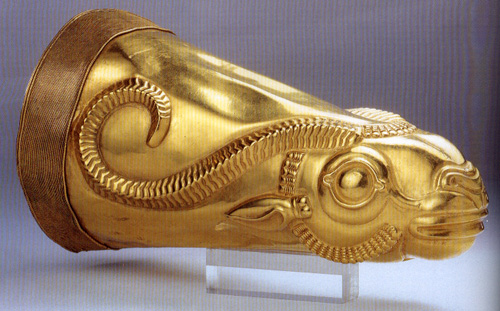
Alongside the architecture, excavations and chance finds over the years have produced a scatter of precious objects, including gold and silver vessels and ornaments of Achaemenid date, hinting at the wealth that once filled the royal treasuries here. Such finds, some famous and some controversial in their history, connect the physical site to the fabled riches of ancient accounts.
The Hegmataneh site is now protected as an archaeological zone within the city, with a museum that displays finds and interprets the history of Ecbatana. Ongoing work continues to expand our knowledge, and there is hope that further excavation, wherever the modern city allows, will gradually fill in the picture of one of the great capitals of the ancient Iranian world.
The story of how some of Ecbatana’s treasures reached the wider world is a complicated and sometimes troubling one, involving early finds that were dispersed to collections far from Iran before modern controls existed. This scattered legacy means that objects associated with ancient Ecbatana can be found in museums around the world, even as archaeologists work to study what remains in the ground at Hamadan itself.
Visiting Ecbatana
For the modern visitor, experiencing Ecbatana means exploring several scattered sites within and around Hamadan rather than a single grand ruin. The Hegmataneh archaeological zone offers the closest encounter with the ancient city itself, where the excavated streets and walls can be seen and a museum tells the story of the successive empires that ruled here.
Around the city lie the other monuments that make up the wider heritage of ancient Ecbatana: the stone lion of Hamadan, a battered but evocative relic of the Hellenistic age; the tomb of Esther and Mordechai in the city center; and, a short drive away at the foot of Mount Alvand, the beautiful Ganjnameh inscriptions beside their waterfall. Together they let a visitor assemble the layered story of the city.
Hamadan itself is a pleasant highland city, cool in summer and proud of its deep history, and it makes a rewarding base for exploring this ancient corner of Iran. Its bustling modern life, going on directly above the buried capital, is part of the experience: here, more than at almost any other ancient site, the past and the present occupy exactly the same ground.
To visit Ecbatana is to accept that much of it can only be imagined, buried as it is beneath the living city. But that act of imagination is richly rewarded. Standing in Hamadan, aware of the Median walls, Persian palaces, and Greek treasures somewhere beneath your feet, you feel the extraordinary depth of time that this one place contains, an unbroken thread of urban life reaching back nearly three thousand years.
Because the ancient monuments are spread across the modern city and its surroundings, exploring Ecbatana rewards a little planning and a willingness to move between quite different kinds of site, from an active archaeological dig to a revered shrine to a mountainside carved with royal proclamations. Each adds a different facet to the story, and together they convey the astonishing span of history that this one city embodies.
Nearby Places to Explore
Ecbatana lies in the highlands of western Iran, at the heart of the land where the great Iranian empires first arose. If the story of the Median and Persian capital has drawn you in, these neighboring sites carry the history of ancient Iran onward, from the royal cities of the Achaemenids to the deep antiquity of Elam.
- Persepolis — the magnificent ceremonial capital of the Achaemenid Empire, whose carved terraces and columns embody Persian royal grandeur.
- Pasargadae — the first capital of Cyrus the Great, the very king who absorbed Ecbatana and the Medes into the Persian Empire.
- Susa — the ancient lowland capital that served, with Ecbatana, as one of the great royal seats of the Persian kings.
The Buried Capital of Three Empires
Ecbatana is unusual among the great cities of antiquity in that it never truly died. From the golden capital of the Medes, wrapped in Herodotus’s legend of seven colored walls, to a summer seat of the Persian kings, a treasure house for Alexander, and a royal city of the Parthians and Sasanians, it served empire after empire before flowing seamlessly into the modern city of Hamadan that covers it today. Few places compress so much history into a single spot of ground.
That very continuity is what hides Ecbatana from view and what makes it so poignant. The seven walls, if they ever existed, are gone; the palaces and treasuries lie buried beneath streets and houses; and yet the city lives on, its ancient name surviving in the excavated mound of Hegmataneh and its royal past preserved in inscriptions, monuments, and legends. Ecbatana reminds us that some cities do not end in ruin and abandonment but simply keep living, carrying their immense antiquity quietly beneath the footsteps of the present.
You May Like
Norse Explorers Reached Canada 500 Years Before Columbus