Before the great terraced splendor of the later Persian capital, there was a quieter, more intimate royal center out on a high plain in what is now southern Iran. Pasargadae was the first capital of the Persian empire, founded by the ruler remembered as its great founding figure, and it has a very different character from the monuments that came after it. Where the later capital overwhelms, Pasargadae speaks softly, its scattered palaces and its famous solitary tomb set amid the wide openness of the plain, dignified and restrained rather than grandiose.
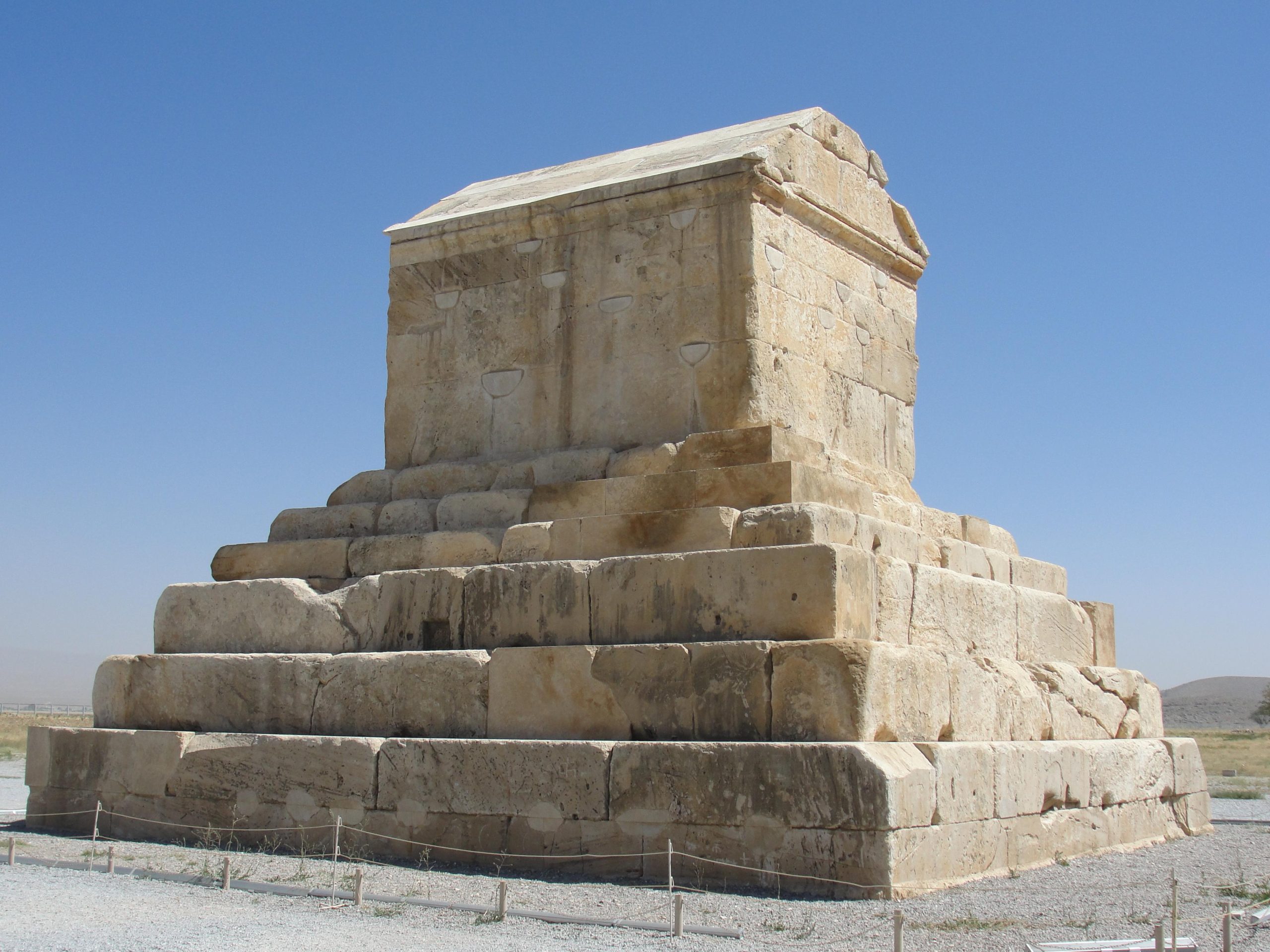
It is a place defined as much by absence as by presence. The buildings do not crowd together on a single terrace but stand apart, separated by the open ground where gardens once grew, so that the visitor moves through a landscape rather than a dense architectural complex. At its heart, rising alone from the plain, stands the stepped stone tomb that has made the site famous, a monument of remarkable simplicity that has watched over this ground for some two and a half thousand years.
This is the story of that first Persian capital: its founder and his enduring reputation for a distinctive kind of kingship, the innovative gardens and palaces he built here, the tomb that became a place of pilgrimage, and the way Pasargadae passed from a living royal center into a sacred memory that has endured across the ages.
Contents
- The Capital Before the Capital
- A Tomb of Startling Simplicity
- The Words That Traveled Through Time
- Palaces Scattered Across a Garden
- The Winged Figure at the Gate
- Inventing the Royal Paradise
- A Fortress on the Height
- The Founder and His Reputation
- From Living City to Sacred Memory
- Pasargadae Today
- Nearby Places
- Closing Reflections
The Capital Before the Capital
Pasargadae holds a special place in the story of ancient Persia as the empire’s original capital, established by the founder of the dynasty in the region that was the heartland of the Persian people. It was here, according to tradition, that the founding king chose to build his royal center, on ground associated with a decisive early victory that set him on the path to greatness. The location was thus charged with meaning from the outset, a place where the empire’s origins and its founder’s triumph were commemorated together.
As the first capital, Pasargadae represents the beginnings of Persian imperial architecture, the first flowering of a style that would later reach its fullest expression at the more famous ceremonial capital built by his successors. Many of the elements that would characterize Persian royal building appear here in an early form: columned halls, carved reliefs, monumental gateways, and a concern for the integration of buildings with designed landscape. Pasargadae is where the visual language of Persian empire was first worked out.
Yet Pasargadae never became a dense, monumental complex like the later capital. Its buildings remained relatively dispersed, set within an extensive designed landscape rather than packed onto a single great platform. This gives the site a distinctive and rather gentle character, a sense of spaciousness and calm quite unlike the concentrated grandeur that came later. In its restraint, Pasargadae reflects the character of a founding moment, ambitious but not yet given over to overwhelming display.
The site’s importance was recognized in its own time and has never been entirely forgotten since. As the burial place of the dynasty’s revered founder and the empire’s first capital, it retained a powerful symbolic significance long after the political center of gravity had shifted elsewhere. To understand Persian civilization, one must begin here, at the place where the empire first took architectural shape and where its founder chose to be laid to rest amid the landscape he had made his own.
A Tomb of Startling Simplicity
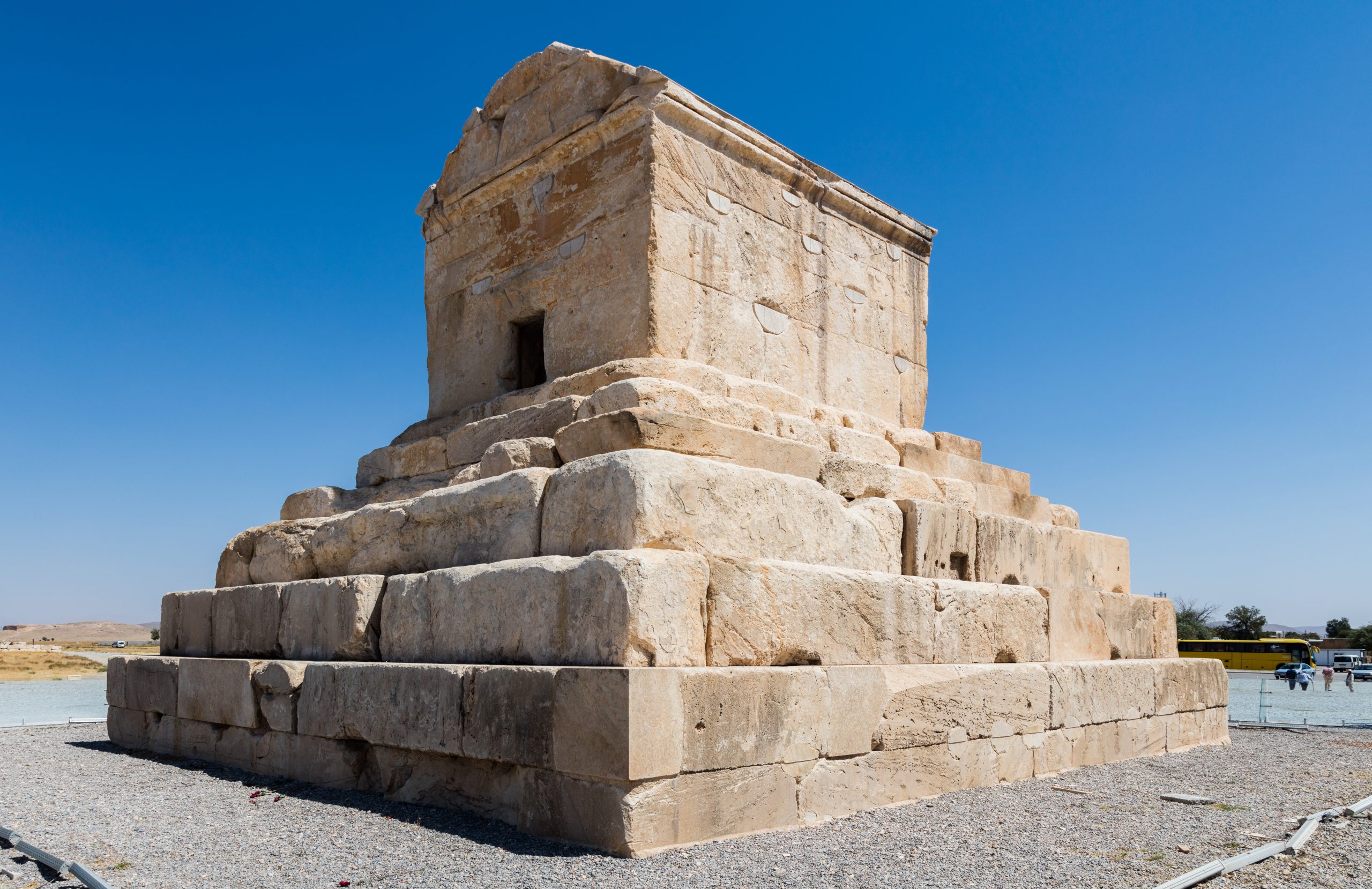
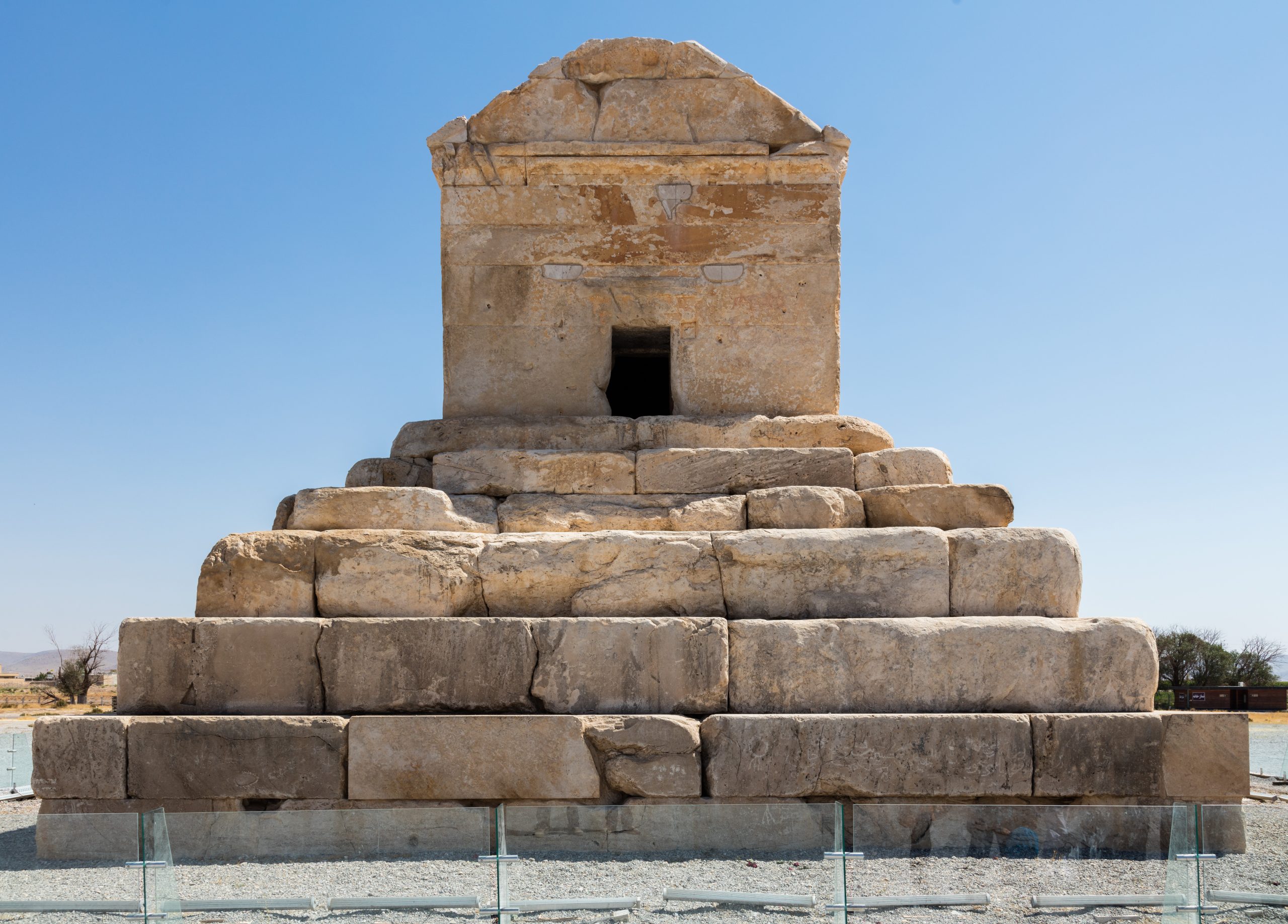
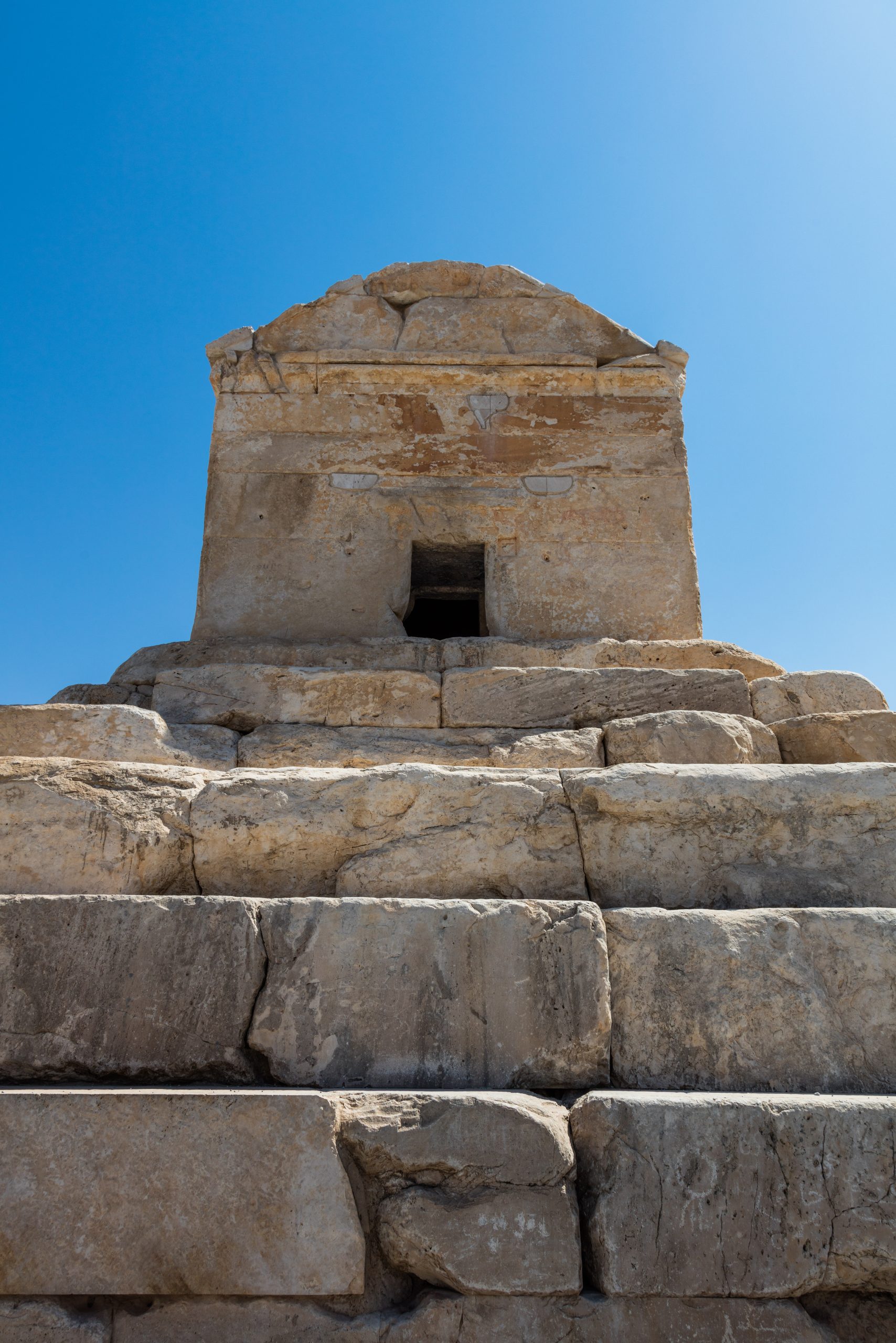
The single most famous monument at Pasargadae is the tomb of the empire’s founder, and its power comes precisely from its simplicity. Rather than an elaborate, ornamented structure, it is a plain rectangular stone chamber set atop a series of receding steps, forming a modest pyramid-like base. There are no grand carvings, no boastful reliefs, no towering columns, only clean lines and honest stone. In an age when rulers often piled ornament upon ornament, this restraint is striking and, to many visitors, deeply moving.
The tomb has survived remarkably well through more than two and a half thousand years, standing alone on the plain as generation after generation has passed. Its endurance is partly a matter of solid construction and partly a matter of the reverence it has inspired, which has protected it through many changes of religion and power. That so ancient and so significant a monument still stands largely intact is one of the wonders of the site, a direct physical link to the very origins of the Persian empire.
Ancient accounts describe the interior of the tomb and the treasures and honors once maintained there, painting a picture of a monument that was carefully tended as a focus of royal memory. Over the centuries, however, the tomb was stripped of its original contents and its purpose was at times forgotten or misremembered, with later peoples attaching their own legends to the mysterious stepped structure. Through all these transformations, the building itself remained, quietly outlasting the stories told about it.
There is something profoundly dignified about this lonely tomb on its open plain. It makes its statement not through grandeur but through simplicity and endurance, a fitting memorial for a founder remembered for a particular kind of restraint and wisdom. Standing before it, one feels the weight of the immense span of time it has witnessed, and the strange intimacy of being in the presence of the actual resting place of one of history’s most consequential figures, marked by nothing more than honest, enduring stone.
The comparison with what came later is instructive. The successors who built the empire’s grander ceremonial capital covered their monuments with elaborate reliefs proclaiming imperial power, yet the founder’s own tomb resists all such display. It is tempting to read this contrast as meaningful, as though the first great king preferred to let simplicity speak where his heirs chose splendor. Whether or not that reading is fair, the plainness of the tomb has become part of its message, ensuring that it stands apart from almost every other royal monument of the ancient world.
The Words That Traveled Through Time
Among the most evocative things associated with Pasargadae is an inscription that ancient writers reported as being placed at the tomb of the founder, words attributed to the great king himself addressing those who would come to gaze upon his resting place. Though the physical inscription does not survive, the message preserved in ancient accounts has echoed down the centuries, a rare instance of a voice seemingly reaching across the gulf of time to speak directly to later generations of visitors.
The reported words carry a tone of dignified humility quite in keeping with the simplicity of the tomb itself. Rather than boasting endlessly of conquests, the message asks the visitor not to begrudge the founder the modest ground his monument occupies, reflecting on the shared mortality that binds even the greatest king to the humblest passerby. This blend of pride and humility has struck many readers over the ages as remarkably affecting, humanizing a figure who might otherwise seem impossibly remote.
The reputation of this inscription grew over time, and it is said to have moved later conquerors and travelers who encountered the tomb, reminding them of the transience of all human power. That a few reported words could have such an effect testifies to the enduring fascination of the founder’s memory and to the way the simple tomb served as a focus for reflection on greatness, mortality, and the passage of empires. The monument became a place to contemplate the limits of even the mightiest ambition.
Whether or not the words were ever precisely as later writers reported them, their survival in memory is itself significant. They express an idea about kingship and mortality that resonated deeply with those who told and retold the story, an idea of the king as a mortal man who, for all his achievements, would in the end share the common fate of humanity. In this way, the inscription became part of the meaning of Pasargadae, adding a note of philosophical reflection to the quiet dignity of the site.
Palaces Scattered Across a Garden
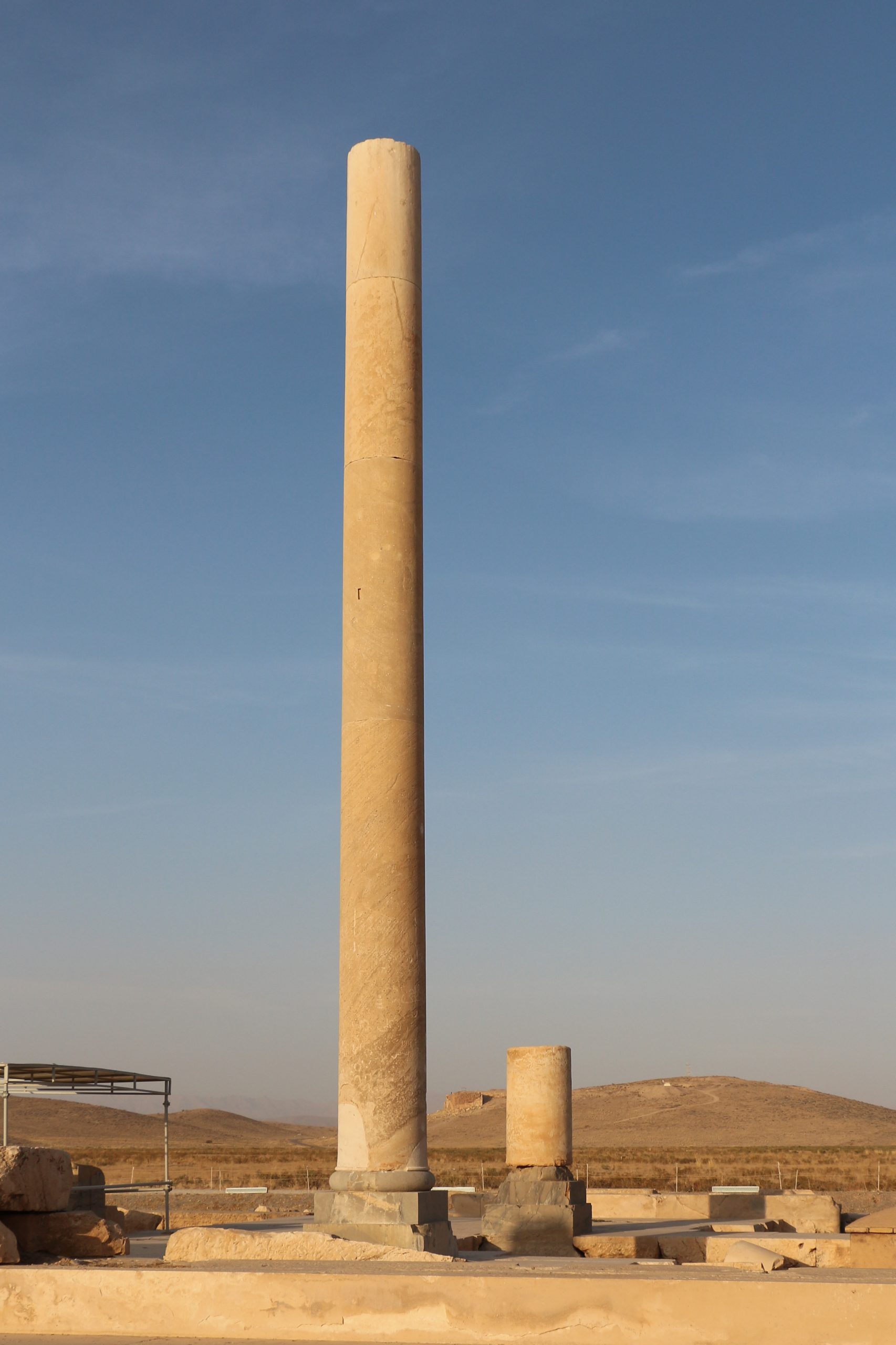
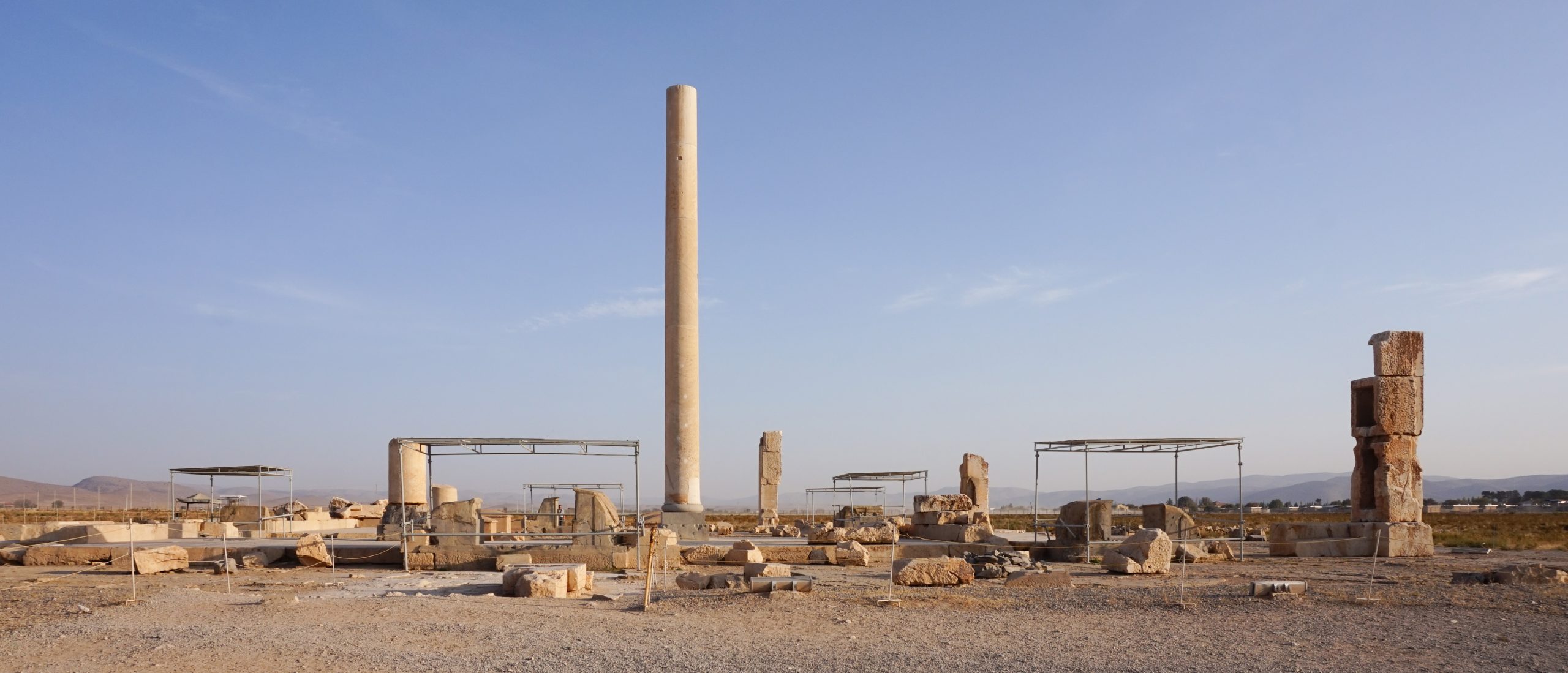
Beyond the famous tomb, Pasargadae contains the remains of several palaces spread across its extensive site, each contributing to the picture of an early Persian royal center. These included halls for audiences and ceremonies as well as more private royal residences, built with the columned architecture that would become characteristic of Persian palaces. Though much has been lost, enough survives, including doorways, column bases, and fragments of relief, to convey the character of these early royal buildings.
What distinguishes the arrangement at Pasargadae is the way the palaces were set apart from one another within a designed landscape, rather than crowded together. Visitors and courtiers would have moved between the buildings through gardens and open spaces, experiencing the royal center as a kind of parkland dotted with elegant structures. This integration of architecture and landscape was a deliberate and innovative feature, one that gave the capital its distinctive spacious and harmonious quality.
The palaces preserve traces of the refined craftsmanship that Persian royal building demanded. Carved reliefs once decorated doorways, and the remains of columned halls speak of spaces designed for ceremony and display. Some inscriptions found at the site proclaim the identity and achievements of the founder in the manner that would become standard in Persian royal architecture, marking the buildings with the authority of the king who commanded their construction.
Walking among these scattered ruins today, one senses the gentle grandeur of the original conception. This was a royal center designed not to intimidate through sheer mass but to impress through elegance, refinement, and harmony with the surrounding landscape. The dispersed palaces of Pasargadae, set within their gardens, embody an early and appealing vision of Persian kingship, one that valued beauty and proportion as much as raw magnificence, and that has left a subtle but lasting impression on all who visit.
The Winged Figure at the Gate
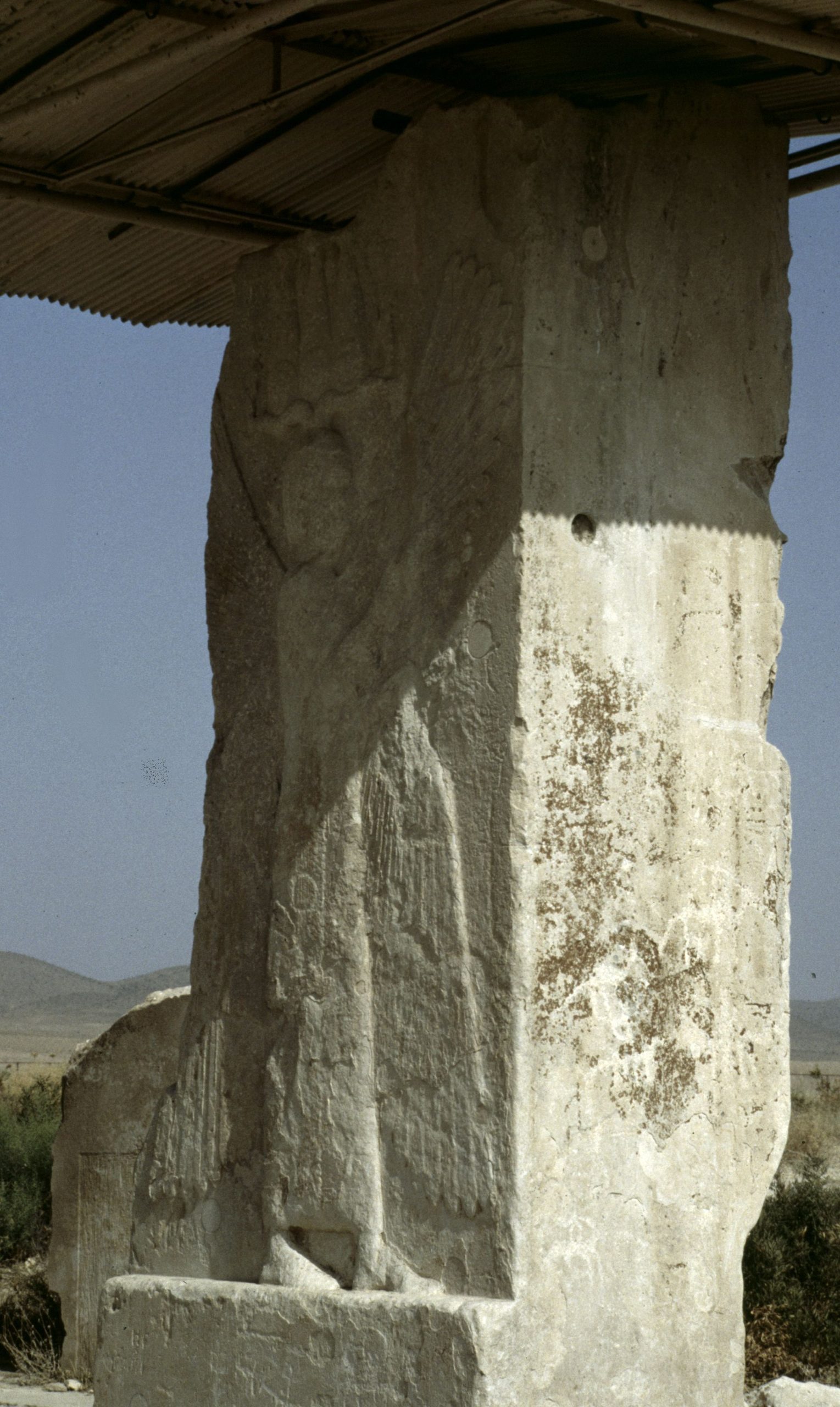
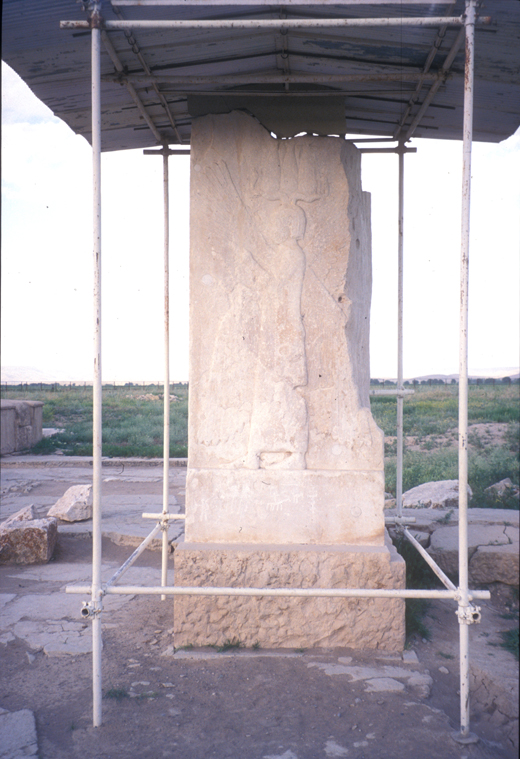
One of the most intriguing survivals at Pasargadae is a carved relief depicting a winged figure, an image that has fascinated scholars and visitors alike. Preserved on a doorway of one of the palace structures, the figure shows a standing man equipped with great wings and wearing an elaborate crown, an enigmatic image whose exact meaning has been debated at length. It is among the finest and most mysterious pieces of sculpture to survive from the early Persian empire.
The identity and significance of the winged figure remain uncertain, and various interpretations have been proposed over the years. Some have seen it as a representation of the founding king himself in an idealized or divine aspect, while others have understood it as a protective genius or guardian spirit watching over the palace. The elaborate crown and the wings combine elements drawn from several artistic traditions, reflecting the way early Persian art absorbed and blended influences from the many cultures of the region.
This blending of influences is itself deeply revealing. The winged figure draws on artistic conventions from earlier and neighboring civilizations, yet combines them into something distinctively Persian, illustrating how the new empire fashioned its own visual language from the rich traditions it inherited. In this single relief we can see the process by which Persian imperial art was born, synthesizing diverse sources into a coherent and original style that would characterize the monuments of the empire.
Above the figure, an inscription once identified it in the name of the founder, though the relationship between the words and the image has been part of the scholarly puzzle. Whatever its precise meaning, the winged figure stands as a haunting emblem of early Pasargadae, a mysterious guardian presiding over the ruins of the first Persian capital. Its enigmatic gaze, preserved across the millennia, continues to intrigue everyone who encounters it, a beautiful riddle carved in stone at the very dawn of the Persian empire.
Inventing the Royal Paradise
One of the most significant and least visible achievements at Pasargadae is its garden, for the site preserves evidence of one of the earliest known examples of a formal royal garden of a kind that would prove enormously influential. The Persians developed the idea of an enclosed, carefully designed garden, laid out with geometric precision and watered by channels, as a setting for royal life and a symbol of the king’s power to create order and abundance. Pasargadae stands near the beginning of this long and beautiful tradition.
The garden at Pasargadae was organized around a system of water channels and basins that divided the space and nourished the plantings, creating a green and orderly paradise within the wider landscape. This layout, in which water and geometry combined to structure a designed garden, established principles that would echo through the history of garden design across a vast region and many centuries. The very word for such an enclosed pleasure garden has roots that connect to this Persian tradition.
The significance of the royal garden went beyond mere pleasure. A cultivated, well-watered garden in a dry landscape was a powerful symbol, demonstrating the king’s ability to command resources, impose order, and create life and beauty where nature alone would not provide them. The garden was thus an expression of royal authority and even of a kind of cosmic role, casting the king as a bringer of order and fertility. The palaces of Pasargadae, set within such a garden, gained meaning from their green surroundings.
Though the plantings are long gone, the archaeological traces of the water channels and the layout of the garden allow us to reconstruct this early paradise and to appreciate its importance. Pasargadae reminds us that Persian genius expressed itself not only in monumental stone but in the shaping of living landscapes, and that the idea of the garden as a designed, watered, geometric paradise, so influential in later ages, has some of its earliest known roots here, on this high plain where the empire began.
A Fortress on the Height
Overlooking the palaces and gardens of Pasargadae stands the remains of a massive stone platform built against a hill, a structure that once served defensive and perhaps ceremonial purposes. This elevated terrace, constructed from great blocks of finely worked stone, represents a different face of the site from the elegant palaces below, speaking of the practical need for security and the desire to command the surrounding landscape from a height. It reminds us that even a royal paradise required protection.
The stonework of this platform is impressive, demonstrating the skill of the builders who shaped and fitted its enormous blocks. Such careful masonry, achieved without modern tools, testifies to the resources and expertise the early Persian empire could command. The platform was evidently intended to support structures above it, and though what stood there has largely vanished, the surviving substructure conveys the ambition and solidity of the original conception, a fortress-like counterpart to the graceful palaces nearby.
From this height, the whole site of Pasargadae and the surrounding plain would have been visible, allowing those stationed there to survey the royal center and the approaches to it. The elevated position combined practical advantages of defense and observation with the symbolic value of height, associating the royal power with a commanding view over the landscape. In this the platform anticipates the later Persian practice of building royal complexes on great raised terraces, elevating the king above the ordinary world.
Today the platform stands as another intriguing element of the varied site, its solid stonework enduring alongside the tomb, the palaces, and the traces of the garden. Together these different components, the elegant and the defensive, the ceremonial and the practical, build up a rounded picture of Pasargadae as a complete royal center, combining beauty, symbolism, and security. The fortress on its height reminds us that this was not merely a pleasure ground but the working capital of a rising empire.
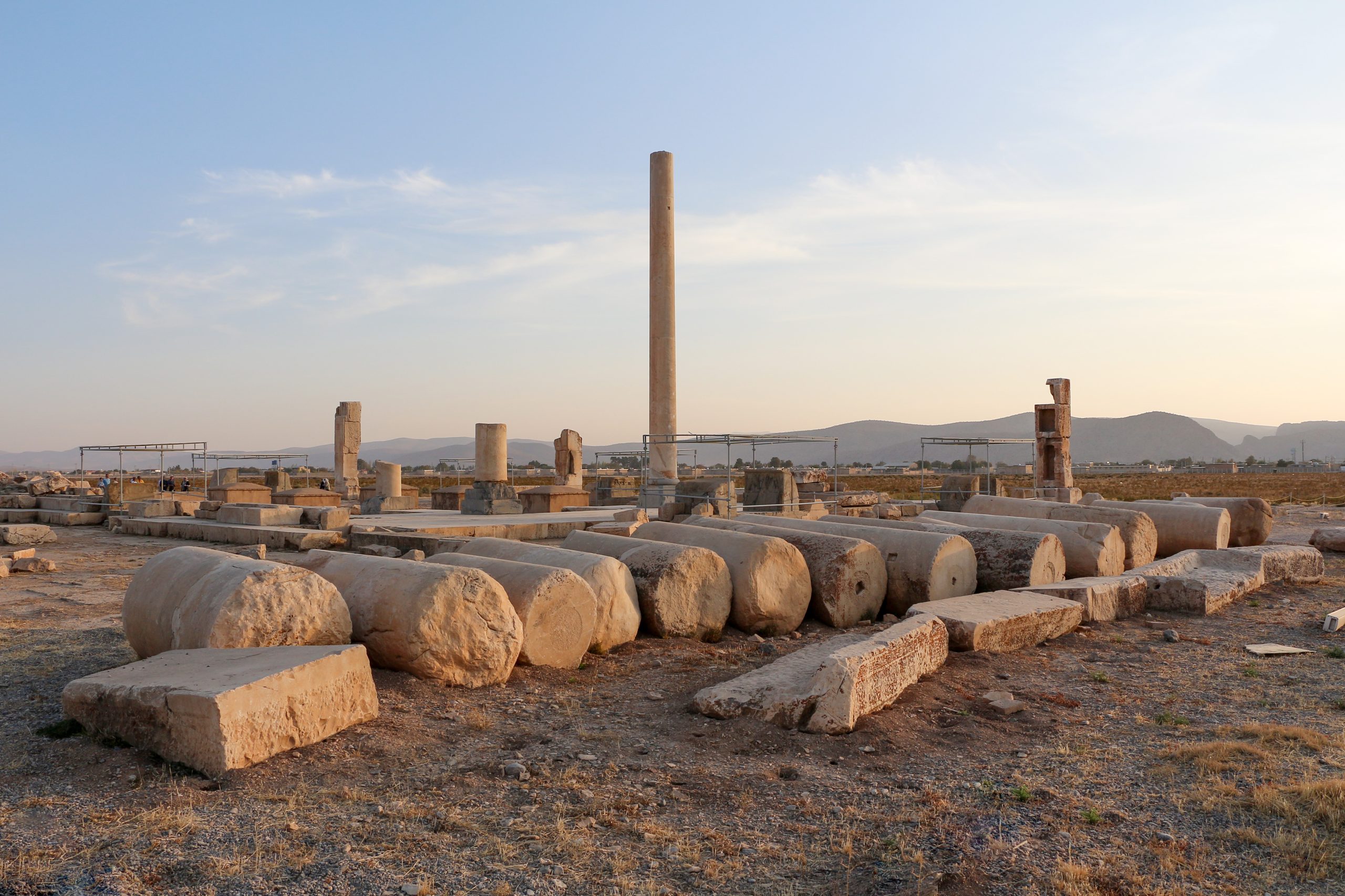
Standing on or near this height and looking out over the whole site, a visitor gains a sense of the deliberate planning that shaped Pasargadae. The scattered palaces, the garden channels, the tomb on its plain, and the defensive platform were not thrown together at random but composed as parts of a single royal landscape, each placed to serve a purpose and to contribute to the overall effect. This coordination of many elements across a wide space is one of the site’s quiet achievements, an early experiment in designing not just buildings but a complete royal environment.
The Founder and His Reputation
It is impossible to separate Pasargadae from the towering reputation of the ruler who founded it, a figure remembered across many cultures as an exceptional kind of conqueror and king. He built one of the largest empires the world had yet seen, but he became famous less for the extent of his conquests than for the manner in which he ruled, which tradition remembers as unusually tolerant and respectful of the peoples he absorbed into his realm. This reputation has given him an enduring and almost unique place in historical memory.
Accounts from various traditions credit the founder with a policy of respecting the customs, religions, and identities of conquered peoples, allowing them to maintain their ways and even restoring displaced communities. Whether or not every detail of this reputation is historically precise, it reflects a genuine strand in how the early Persian empire presented and, to a considerable degree, conducted itself. The image of a powerful ruler who governed with restraint and magnanimity has proven remarkably durable across the ages.
This reputation has echoed far beyond the ancient Near East, with the founder invoked in later ages as a model of enlightened rule and even, by some, as a pioneer of ideas about the just treatment of subject peoples. His memory has been claimed and celebrated by many, and his name carries weight even today as a symbol of a particular ideal of kingship. Few ancient rulers have enjoyed so positive and so lasting a reputation across such a wide range of cultures and eras.
Pasargadae, as the capital he founded and the place of his burial, is inseparable from this legacy. The simple dignity of his tomb, the reported humility of the words associated with it, and the harmonious elegance of the site all seem to reflect the qualities for which he is remembered. In visiting Pasargadae, one is not merely touring ancient ruins but standing at the memorial of a figure whose reputation for a distinctive kind of kingship has resonated through history down to the present day.
It is worth being honest that reputations of this kind are always partly shaped by later needs and ideals, and the glowing memory of the founder owes something to the uses that subsequent ages made of him. Yet even allowing for embellishment, the persistence of this positive image across so many different cultures suggests that it rested on something real in the conduct and self-presentation of the early empire. Pasargadae, in its dignified restraint, feels consistent with that memory, as though the character attributed to the founder were somehow written into the very stones of the capital he built.
From Living City to Sacred Memory
After serving as the empire’s first capital, Pasargadae was gradually eclipsed as the political center shifted to grander new capitals built by later rulers. Yet it never lost its symbolic importance, for as the burial place of the revered founder it remained a site of deep significance, a place of memory and reverence even as its practical role diminished. The living capital slowly became a sacred landscape, honored for its association with the origins of the empire and its founder.
Through the centuries and the many changes of rulers and religions that swept over the region, the tomb and the site endured, protected by the respect that clung to the founder’s memory. At times its original meaning was obscured, and later peoples wove their own legends around the ancient stones, but the physical remains survived. This continuity of a sacred place across vast stretches of time, through profound cultural transformations, is one of the most remarkable aspects of Pasargadae’s long history.
In the modern era, Pasargadae has taken on renewed significance as a symbol of national heritage and identity, a tangible connection to a founding moment of extraordinary historical importance. It draws those who wish to honor the memory of the founder and to connect with the deep roots of a civilization. The transformation of Pasargadae from a working capital into an enduring focus of memory and pride reflects the lasting power of the ideas and reputation associated with its founder.
Pasargadae Today
Pasargadae is recognized as a UNESCO World Heritage site, valued for its outstanding importance as the first capital of the Persian empire and as an early expression of Persian art, architecture, and landscape design. The site preserves the tomb of the founder, the remains of palaces, the traces of the royal garden, and the great stone platform, spread across the wide plain in a way that rewards a slow and contemplative visit. Its spacious, understated character sets it apart from more crowded ancient sites.
Conservation and research continue at Pasargadae, protecting its fragile remains and deepening understanding of its layout and significance. Study of the site has illuminated the origins of Persian imperial architecture and the early development of the formal garden, revealing Pasargadae as a place of genuine innovation as well as symbolic importance. Each investigation adds to appreciation of how much of the later Persian tradition had its beginnings here on this high plain.
For the visitor, the appeal of Pasargadae lies in its combination of profound historical importance and quiet, dignified beauty. To stand before the ancient tomb, to walk among the scattered palaces and the traces of the garden, and to feel the openness of the surrounding landscape is to encounter the origins of a great empire in an unusually intimate and moving setting. Pasargadae offers not spectacle but reflection, an encounter with the deep beginnings of Persian civilization amid the calm of the open plain.
Nearby Places
The lands of the ancient Near East are rich with the remains of great cities and empires, from the ceremonial capitals of Persia to the venerable cities of Mesopotamia and the fortresses of Anatolia. If the origins of Persian greatness have captured your interest, these related sites extend the story across the wider region.
- The Ceremonial Capital Where an Empire Carved Its Own Reflection: The Story of Persepolis
- The City Where Kingship Descended From Heaven, Almost: The Story of Ur
- The Highland Capital of a Forgotten Superpower: The Story of Hattusa
Closing Reflections
Pasargadae holds a quiet but profound place among the great sites of the ancient world. As the first capital of the Persian empire and the burial place of its revered founder, it marks the beginning of one of history’s most influential civilizations. Yet its greatness lies not in overwhelming scale but in dignity, restraint, and the harmony of its buildings with the surrounding land, qualities that make it one of the most affecting of ancient sites.
Perhaps the enduring power of Pasargadae is best captured by its famous solitary tomb, standing alone on the plain through two and a half thousand years of change. In its simplicity it seems to speak of the very qualities for which its occupant is remembered, and of the humbling truth that even the founder of a great empire must in the end return to the earth. To stand before it is to feel the deep continuity of human memory, and to sense, across an immense span of time, the presence of a moment when an empire, and an ideal of kingship, first took shape upon this ground.
You May Like
Mafra, the Palace a King Built From a Vow


One thought on “Pasargadae: Cyrus the Great’s Quiet First Persian Capital”