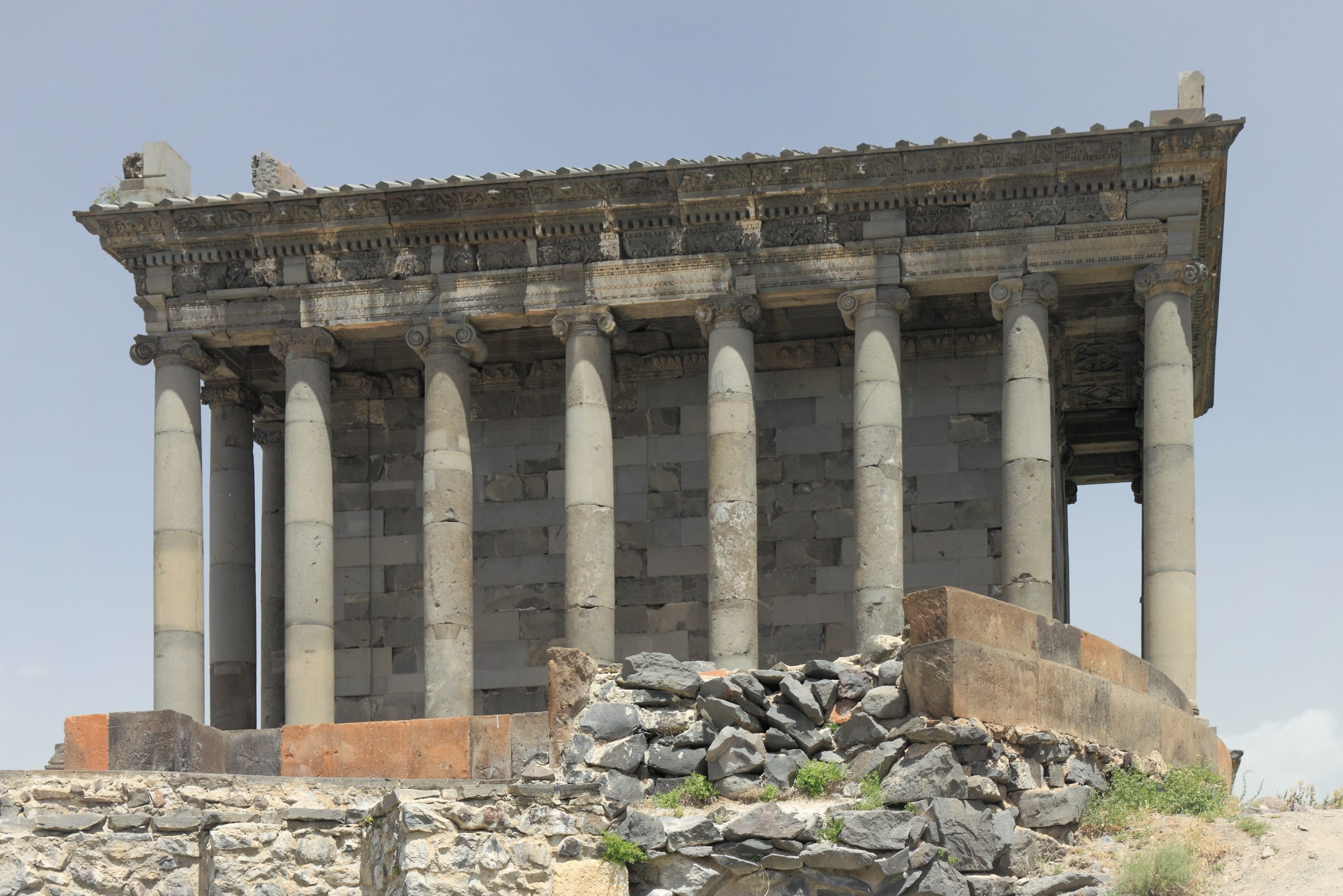
Set on a dramatic promontory high in the Armenian highlands, above a deep gorge whose walls are lined with strange columns of natural stone, stands a building that seems at first glance to have wandered far from home. It is a classical temple, its rows of slender columns and its triangular pediment recalling the sanctuaries of the Mediterranean world, yet here it rises amid the mountains of the Caucasus, far from the Greek and Roman lands where such architecture was born. This is the temple of Garni, one of the most striking and beloved ancient monuments of the region.
Garni is a place where worlds meet. Built in a thoroughly classical style, it belongs to a landscape and a history shaped by the meeting of East and West, where the culture of the Mediterranean mingled with the traditions of the Armenian highlands and the influence of the great Persian world. The temple, together with the fortress and other structures that once surrounded it, tells a story of royal power, religious devotion, cultural exchange, and remarkable survival across the changing ages of the region’s history.
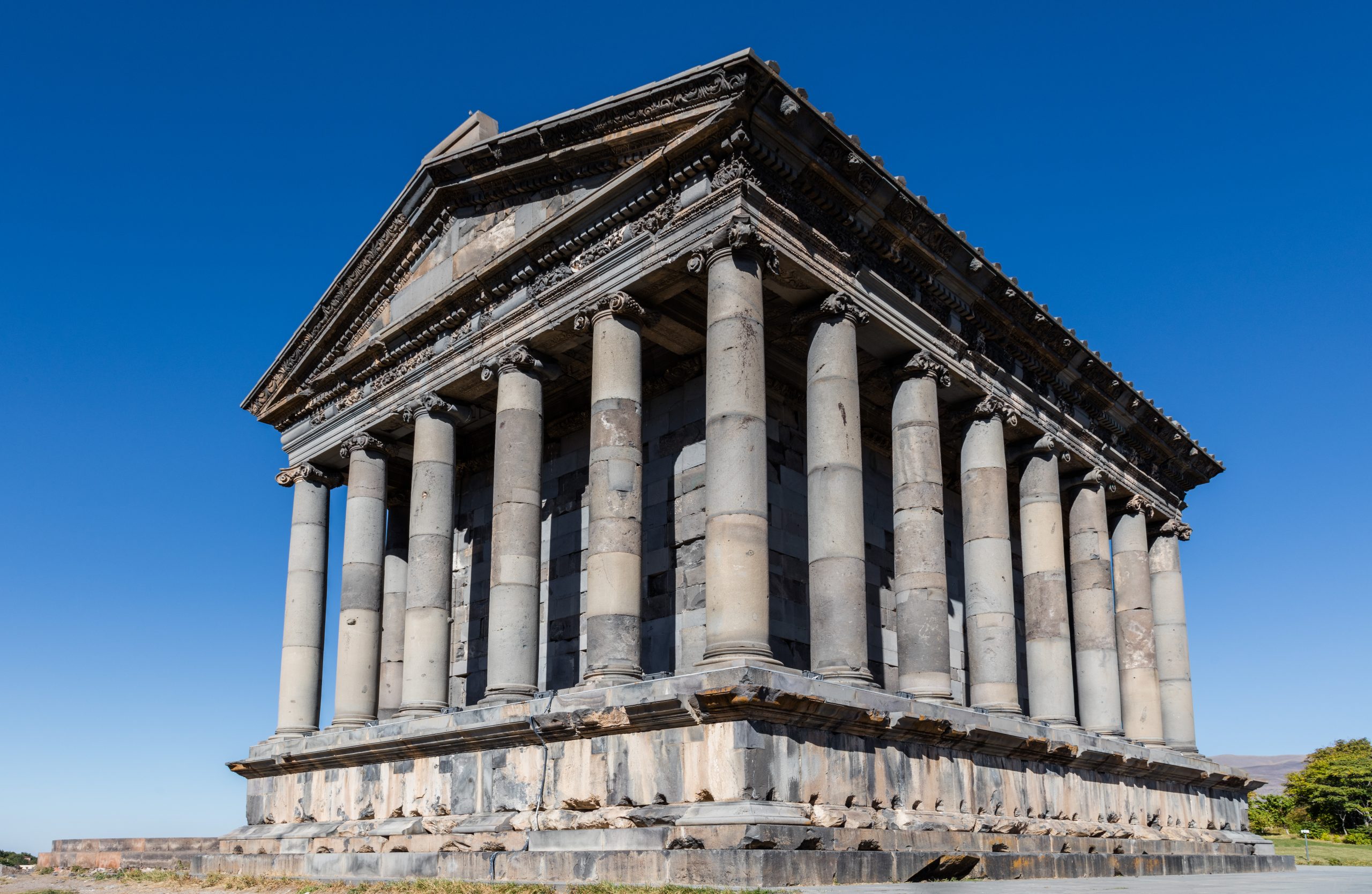
This is the story of that elegant temple on its promontory: the sun god it may have honored, the royal fortress and baths that accompanied it, the extraordinary gorge of stone columns below, and the dramatic history of destruction and reconstruction that has made Garni a cherished symbol of the deep past of the Armenian highlands.
Contents
- A Greek Temple in the Armenian Highlands
- The Sun God on the Edge of a Gorge
- A Royal Retreat and a Mighty Fortress
- Baths, Mosaics, and Roman Comforts
- The Symphony of Stones Below
- Surviving the Coming of Christianity
- The Earthquake and the Long Ruin
- Raising the Columns Again
- Where East Met West
- Visiting Garni Now
- Nearby Places
- Final Reflections
A Greek Temple in the Armenian Highlands
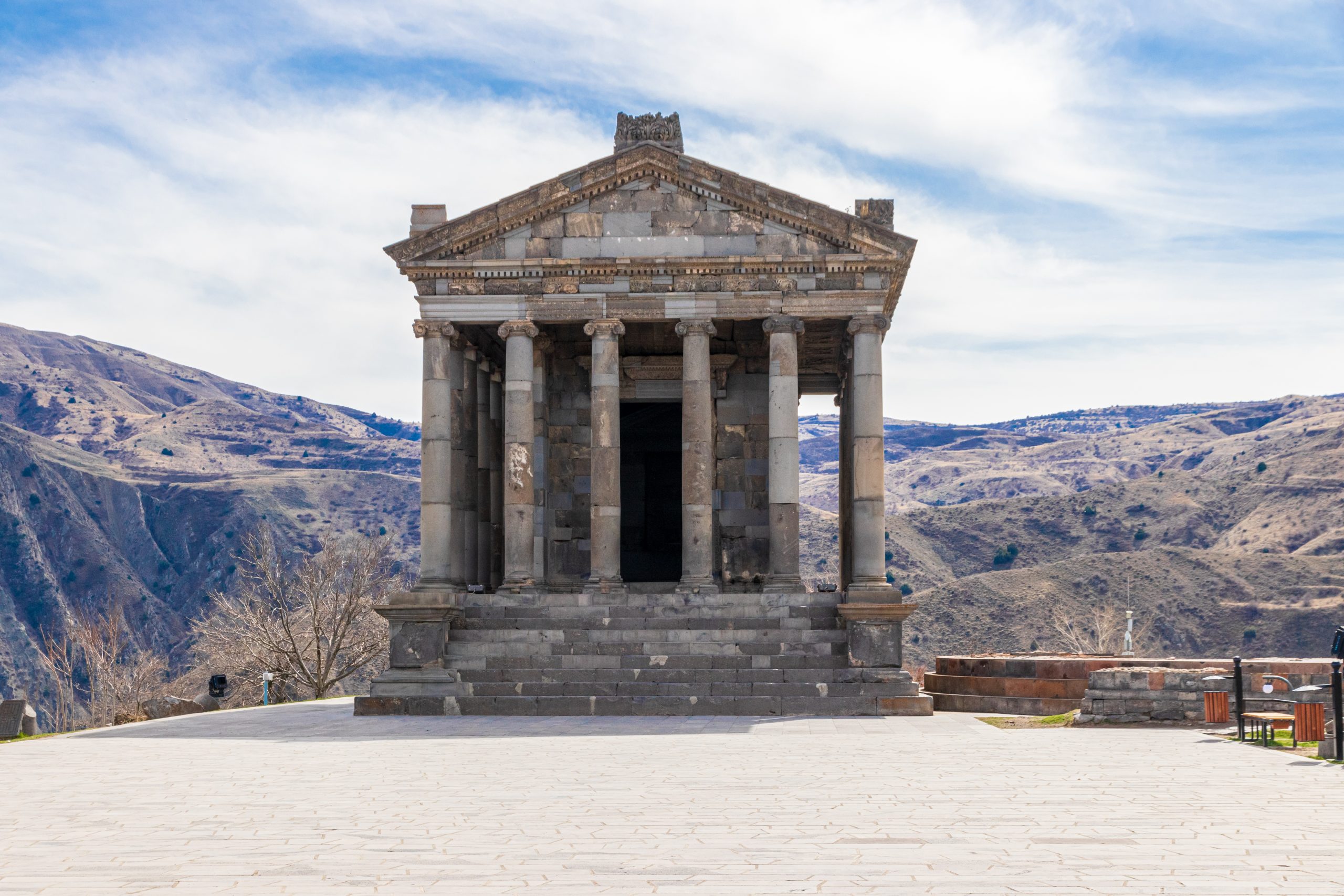
The most immediately striking thing about Garni is its unmistakably classical form. The temple follows the design familiar from the Greco-Roman world, a rectangular structure surrounded by a colonnade, approached by a flight of steps, and crowned by a triangular pediment. Its slender columns, carved capitals, and elegant proportions place it firmly within the architectural tradition of the ancient Mediterranean, making it a remarkable presence in the highlands of the Caucasus, far from the heartlands of that style.
The presence of such a building here reflects the deep cultural currents that flowed through the region in antiquity. The Armenian highlands lay at a crossroads between the classical world to the west and the great powers to the east and south, and the kingdom that ruled here absorbed influences from many directions. The adoption of classical architecture for a major monument shows how thoroughly the culture of the Mediterranean had penetrated the region, blending with local and eastern traditions to produce a distinctive synthesis.
Built from the hard local stone, the temple was constructed with considerable skill, its blocks carefully cut and fitted to create the refined forms of classical architecture. The use of this durable material contributed to the survival of much of the structure, even through the disasters that later befell it. The craftsmanship evident in the temple speaks of the resources and sophistication of the kingdom that built it, capable of raising a monument that would not have looked out of place in the great cities of the classical world.
Standing on its high promontory, the temple commands attention and admiration, its classical elegance set against the dramatic backdrop of the surrounding mountains and gorge. The contrast between the Mediterranean form of the building and its highland setting is part of what makes Garni so memorable, a meeting of architectural traditions in a landscape of great natural beauty. It is a monument that embodies the cultural richness and connectedness of the ancient Armenian world.
The Sun God on the Edge of a Gorge
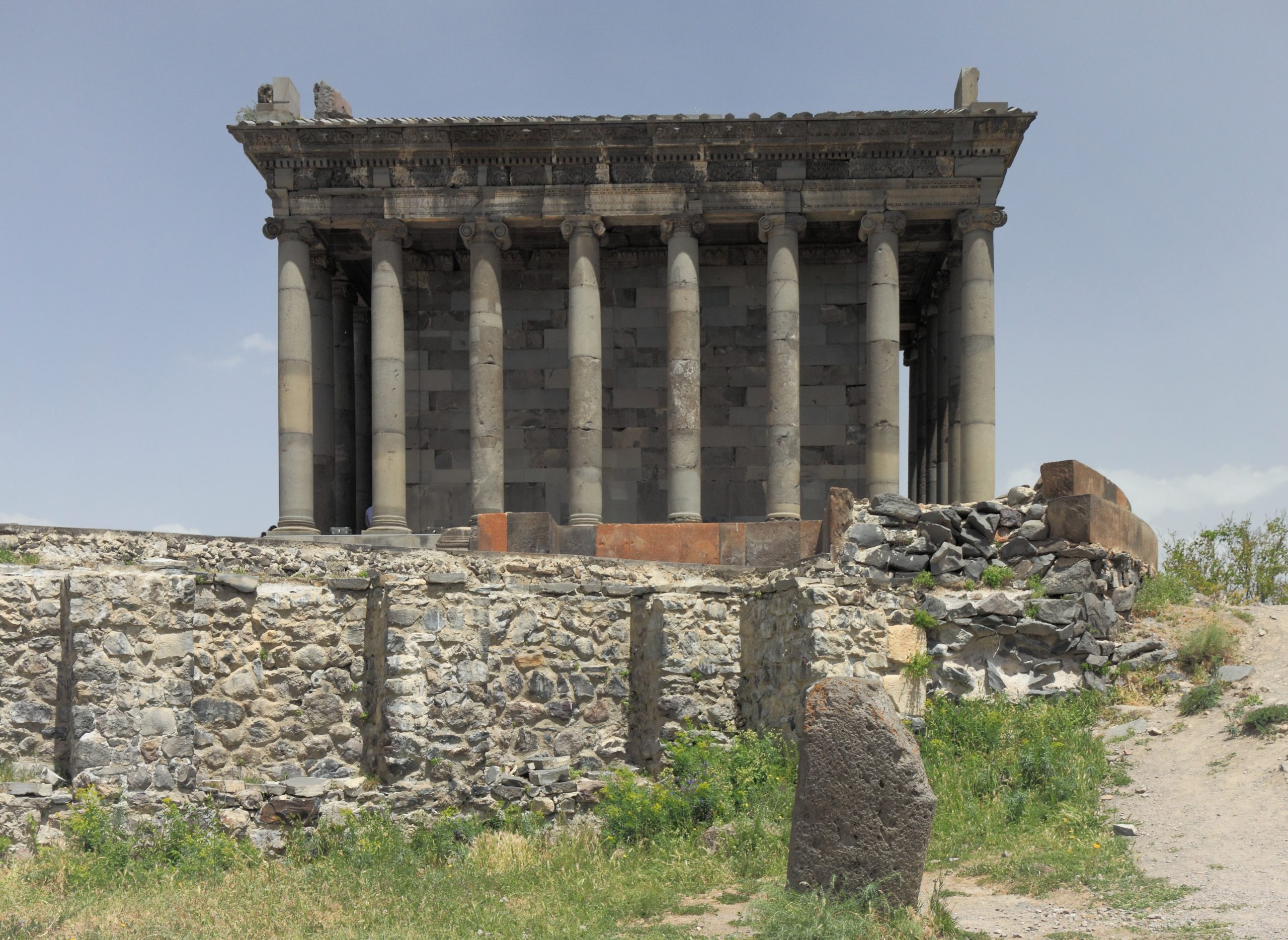
The temple of Garni is generally understood to have been dedicated to a solar deity, a god associated with the sun who held an important place in the religious life of the ancient Armenian kingdom. This dedication connects the temple to the pre-Christian religion of the region, in which deities drawn from local, classical, and eastern traditions were worshipped. The sun god honored here embodied the syncretic character of Armenian religion in this period, blending elements from the various cultural worlds that met in the highlands.
The worship of a solar deity was widespread in the ancient world, and its presence at Garni reflects the broad currents of religious belief that flowed through the region. The Armenian pantheon of the time incorporated gods that could be identified with figures from the classical and eastern traditions, and the temple would have served as a center for the rituals and offerings dedicated to its patron deity. Religion was closely tied to royal power, and a grand temple such as this expressed both piety and the prestige of the kingdom.
The choice of location for the temple, on a commanding promontory above a dramatic gorge, was surely connected to its religious significance. Such striking natural settings were often regarded as appropriate for sacred sites, their beauty and grandeur enhancing the sense of the divine. The temple’s position, elevated and imposing, would have made it a powerful focus for worship, visible from afar and set apart from the ordinary world by its dramatic surroundings. The sun god was honored in a place of fitting splendor.
The dedication of the temple to a solar deity places it within the rich religious history of the ancient Armenian highlands, a history shaped by the meeting of many traditions. Before the region embraced Christianity, temples like Garni were centers of a vibrant polytheistic worship, and the survival of this one allows us a glimpse into that vanished world of belief. The sun god of Garni, honored on the edge of the gorge, represents the ancient spiritual life of a land that stood at the crossroads of civilizations.
A Royal Retreat and a Mighty Fortress
The temple was not an isolated monument but part of a larger complex that included a royal residence and a powerful fortress. Garni served as a summer retreat for the rulers of the ancient Armenian kingdom, a place where they could escape the heat and enjoy the beauty and cool air of the highland setting. The site combined the functions of a religious sanctuary, a royal residence, and a military stronghold, making it an important center of power and pleasure for the kings who used it.
The fortress at Garni was strongly defended, its position on the promontory above the gorge providing natural protection that was enhanced by massive walls. The site was chosen with an eye to defense, for the steep drops on several sides made it difficult to attack, while the fortifications guarded the more accessible approaches. This combination of natural and constructed defenses made Garni a formidable stronghold, capable of withstanding sieges and serving as a secure base in times of danger.
As a royal retreat, Garni offered the rulers of the kingdom a place of comfort and beauty away from the demands of the capital. The site’s amenities, including its baths and residential quarters, provided for the pleasures and needs of the court, while its dramatic setting offered a retreat of exceptional character. The kings who used Garni could enjoy the cool highland air, the beauty of the gorge, and the elegance of the classical temple, all within the security of a well-defended fortress.
The multiple functions of Garni, as sanctuary, residence, and fortress, made it a place of great importance in the ancient Armenian kingdom. It was here that religious devotion, royal life, and military strength came together in a single dramatic setting. The complex embodied the power and sophistication of the kingdom, providing its rulers with a stronghold that was also a place of beauty and worship. In its combination of purposes, Garni reflects the character of the ancient Armenian state at its height.
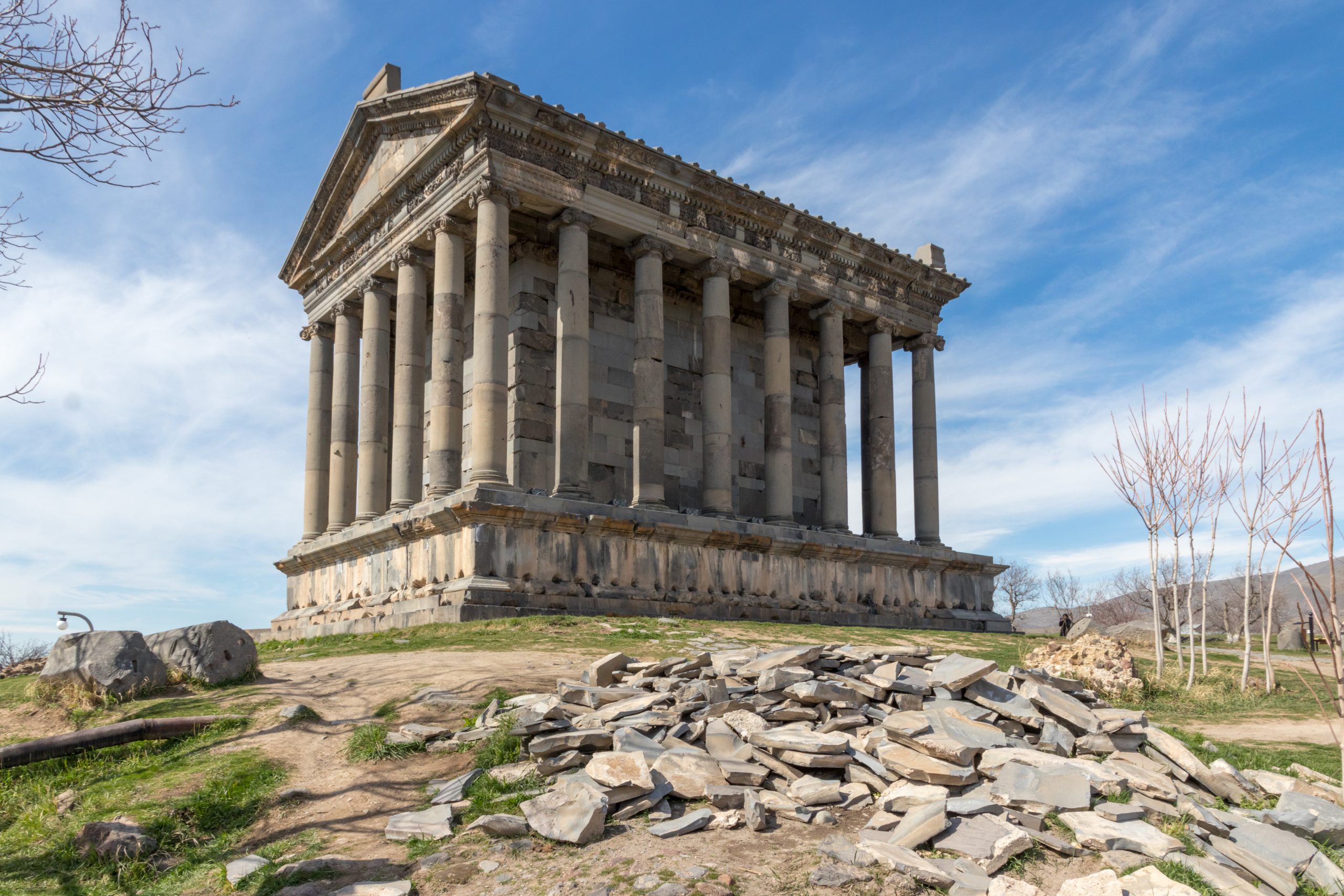
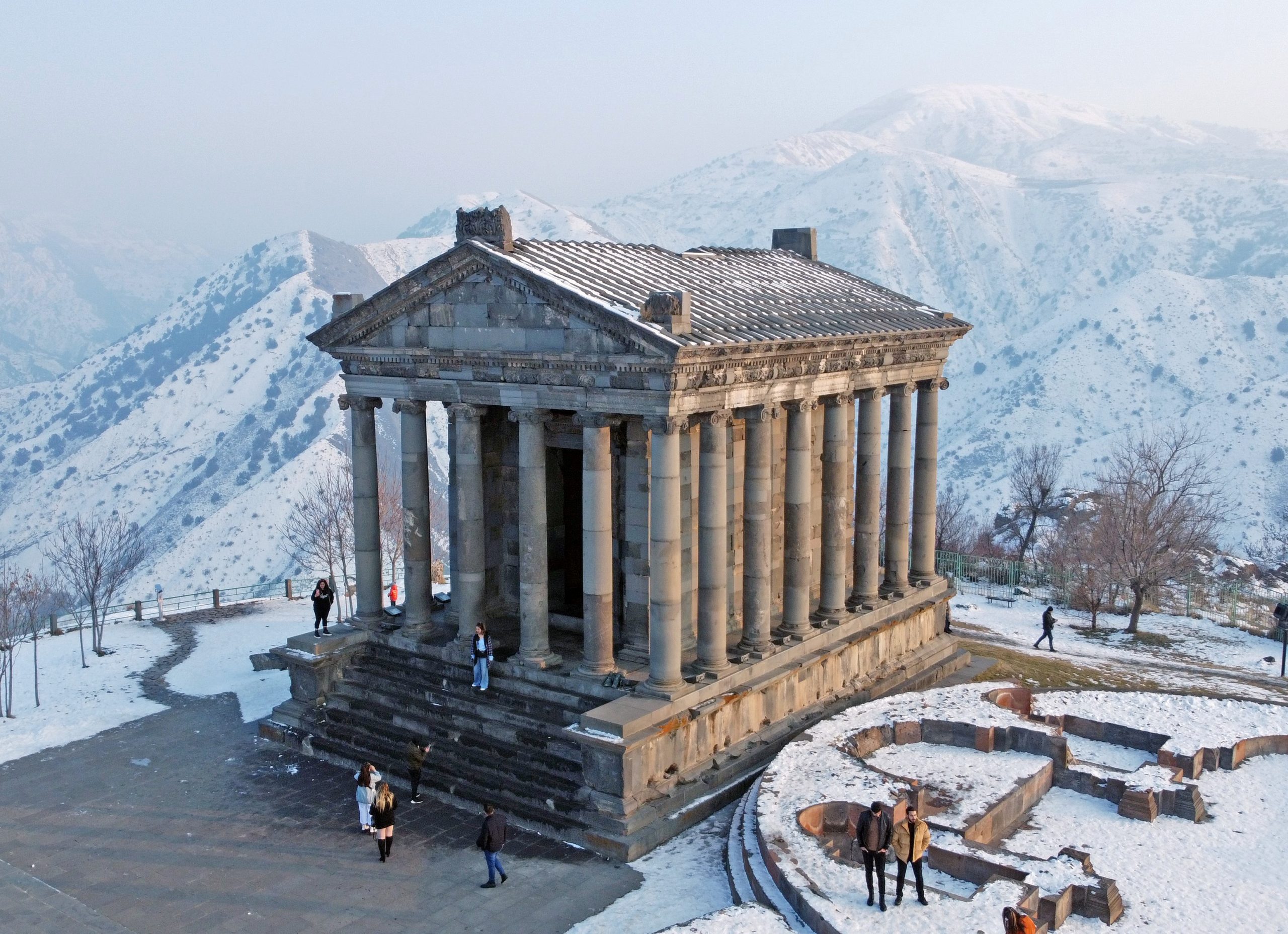
Seen from above, the logic of the site becomes especially clear, the promontory jutting out over the gorge with steep drops on several sides and a single more approachable neck of land where the defenses were concentrated. This natural strong point, enhanced by walls, made Garni almost a fortress by geography alone, a place where a relatively small garrison could hold out against a much larger force. The rulers who chose this spot understood that beauty and defensibility could go together, and they exploited both to the full.
Baths, Mosaics, and Roman Comforts
Among the most fascinating remains at Garni are those of a bath complex, built in the Roman manner and equipped with the sophisticated features of classical bathing establishments. The baths included the range of heated and cool rooms typical of the Roman world, warmed by a system that circulated hot air beneath the floors and through the walls. Their presence at Garni is further evidence of the deep penetration of classical culture into the ancient Armenian highlands, bringing the comforts of Mediterranean civilization to this mountain retreat.
The most celebrated feature of the baths is a mosaic floor, decorated with figures and an inscription, that has survived to reveal the artistry that once adorned the complex. Executed in the classical style, the mosaic depicts scenes drawn from the mythological world of the Mediterranean, and it carries a Greek inscription. This work of art is a precious survival, demonstrating the sophistication and cultural connections of those who used the baths, and adding a touch of Mediterranean elegance to the highland site.
The bath complex, with its heating system and decorated floors, illustrates how thoroughly the elite of the ancient Armenian kingdom had adopted the amenities and tastes of the classical world. Bathing was a central social and cultural activity in the Roman world, and the presence of such a complex at Garni shows the kingdom’s rulers enjoying the same comforts and customs as their Mediterranean counterparts. The baths were a place of relaxation and sociability, bringing a refined dimension to life at the royal retreat.
The survival of the baths and their mosaic enriches understanding of daily life and cultural connections at Garni, complementing the grandeur of the temple with the more intimate comforts of the bath. Together they reveal a site where the culture of the classical world was fully at home, adopted and adapted by the rulers of the highland kingdom. The baths of Garni, with their heated rooms and beautiful mosaic, stand as a testament to the cosmopolitan character of the ancient Armenian court.
The Symphony of Stones Below
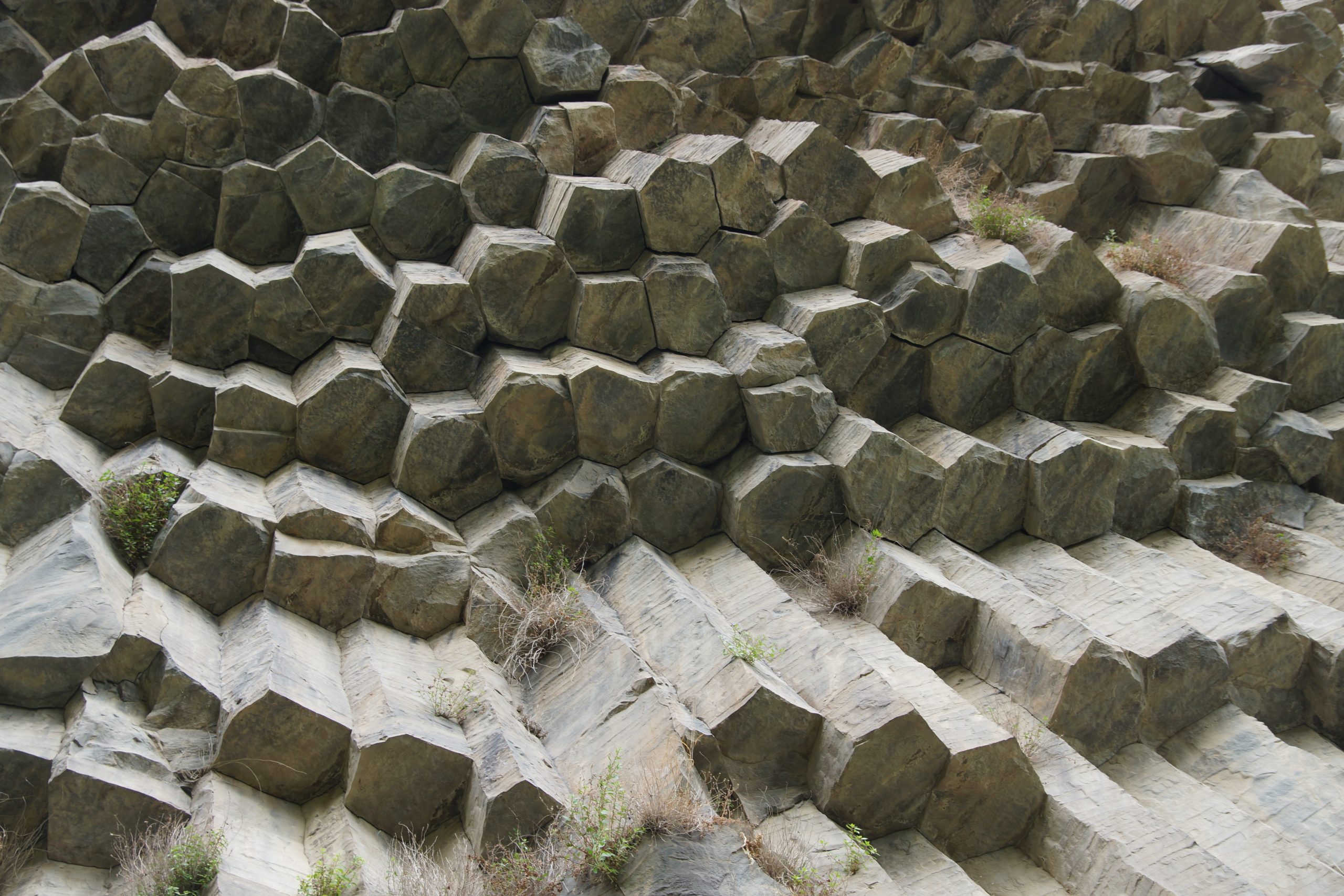
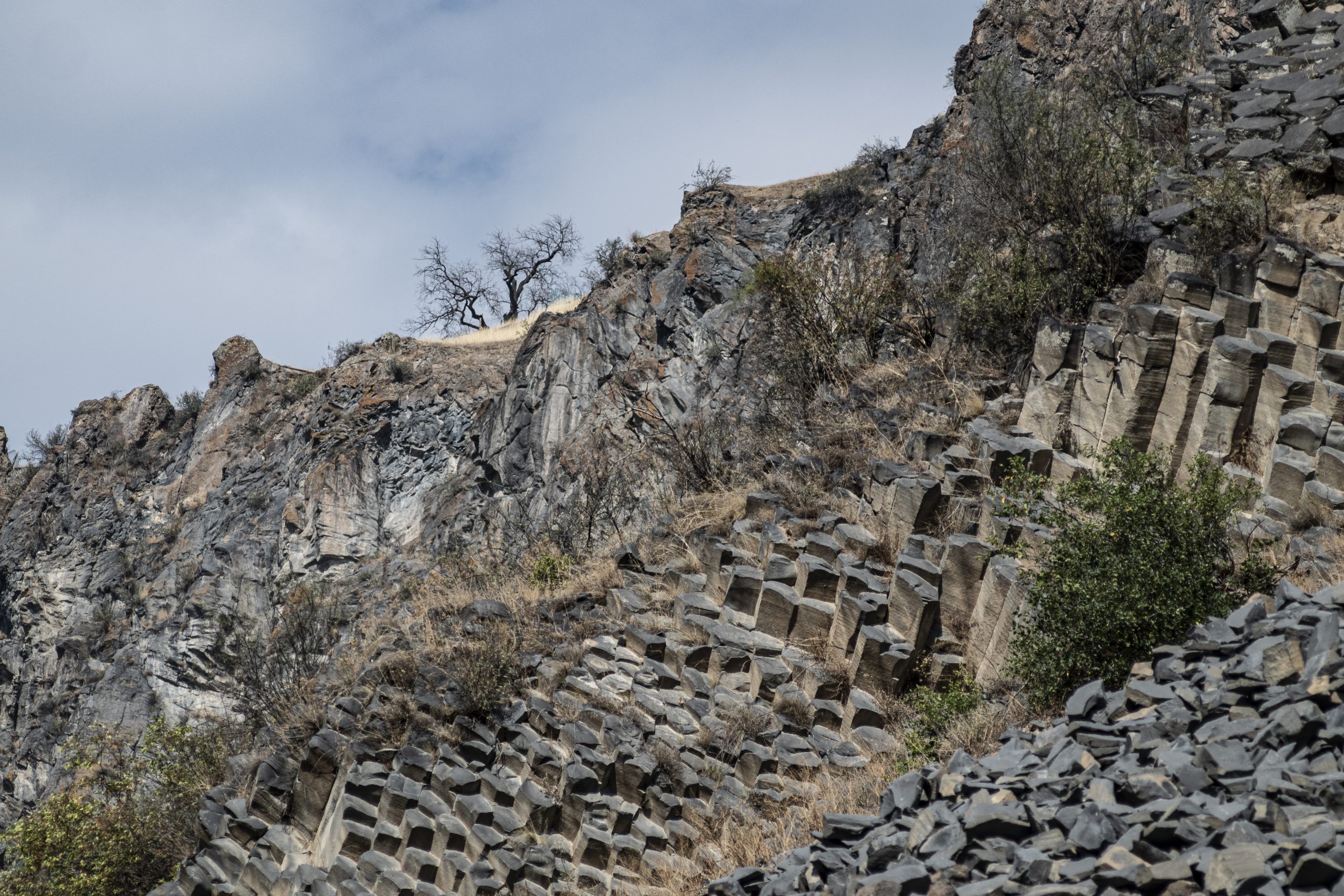
Beneath the temple, the gorge that gives Garni much of its dramatic character is famous for an extraordinary natural phenomenon: walls of towering, regular columns of basalt, formed by the ancient cooling of volcanic rock. These remarkable formations, rising in tightly packed vertical shafts along the sides of the gorge, create a spectacle of natural geometry so striking that they have earned a poetic nickname evoking a great organ or a symphony rendered in stone. They are among the most beautiful geological features in the region.
The basalt columns formed as molten rock cooled and contracted, cracking into the characteristic polygonal shafts that line the gorge. The result is a natural colonnade of astonishing regularity, the stone columns standing in ranks like the pipes of a vast instrument or the pillars of a temple built by the earth itself. This natural architecture echoes, in a curious way, the human-made columns of the temple above, creating a resonance between the works of nature and of humanity at the site.
The gorge and its columns add a dimension of natural wonder to the cultural riches of Garni, making the site a meeting place of human artistry and geological beauty. Visitors are drawn not only by the temple and fortress but by the spectacular scenery of the gorge, with its dramatic cliffs of columnar basalt and the river that runs below. The combination of the elegant classical temple and the sublime natural formations creates an experience of rare and memorable beauty.
The poetic name given to the basalt columns captures the way they seem to transform the gorge into a natural work of art, a symphony of stone. This blending of the natural and the cultural is central to the appeal of Garni, where a Greco-Roman temple crowns a promontory above a gorge lined with the earth’s own columns. In this extraordinary setting, the achievements of ancient builders are matched and complemented by the grandeur of the natural world, making Garni a place of exceptional and enduring fascination.
Surviving the Coming of Christianity
One of the most remarkable aspects of Garni’s history is that the temple survived the conversion of the region to Christianity, a transformation that saw many pagan temples destroyed or abandoned. When the ancient Armenian kingdom became one of the first states to adopt Christianity as its religion, the old temples dedicated to the pre-Christian gods generally lost their purpose and often their existence. That the temple of Garni endured through this profound religious change is a striking exception to the usual fate of such buildings.
The survival of the temple has been explained by the suggestion that it was preserved for secular use rather than destroyed as a center of pagan worship. Repurposed as part of the royal residence or for some other function, the building may have escaped the destruction that befell temples that remained active places of the old religion. Whatever the precise reason, the temple’s endurance through the Christianization of the region is a fortunate circumstance that allowed this unique monument to survive into later ages.
This survival makes Garni especially valuable, for it is a rare example of a pre-Christian temple preserved in a region that embraced Christianity early and thoroughly. Most of the pagan sanctuaries of the ancient Armenian kingdom have vanished, leaving Garni as a precious window onto the religious world that existed before the conversion. The temple stands as a link to the polytheistic past of the region, a survivor from an age of gods that was largely swept away by the new faith.
The endurance of the temple through such a fundamental religious transformation adds to its significance and its poignancy. It represents the continuity of the physical heritage of the region across a great spiritual divide, a monument of the old religion that survived into the age of the new. In its persistence, Garni embodies the layered history of the Armenian highlands, where successive ages have left their mark and where, occasionally, a monument of an earlier era endures against the odds.
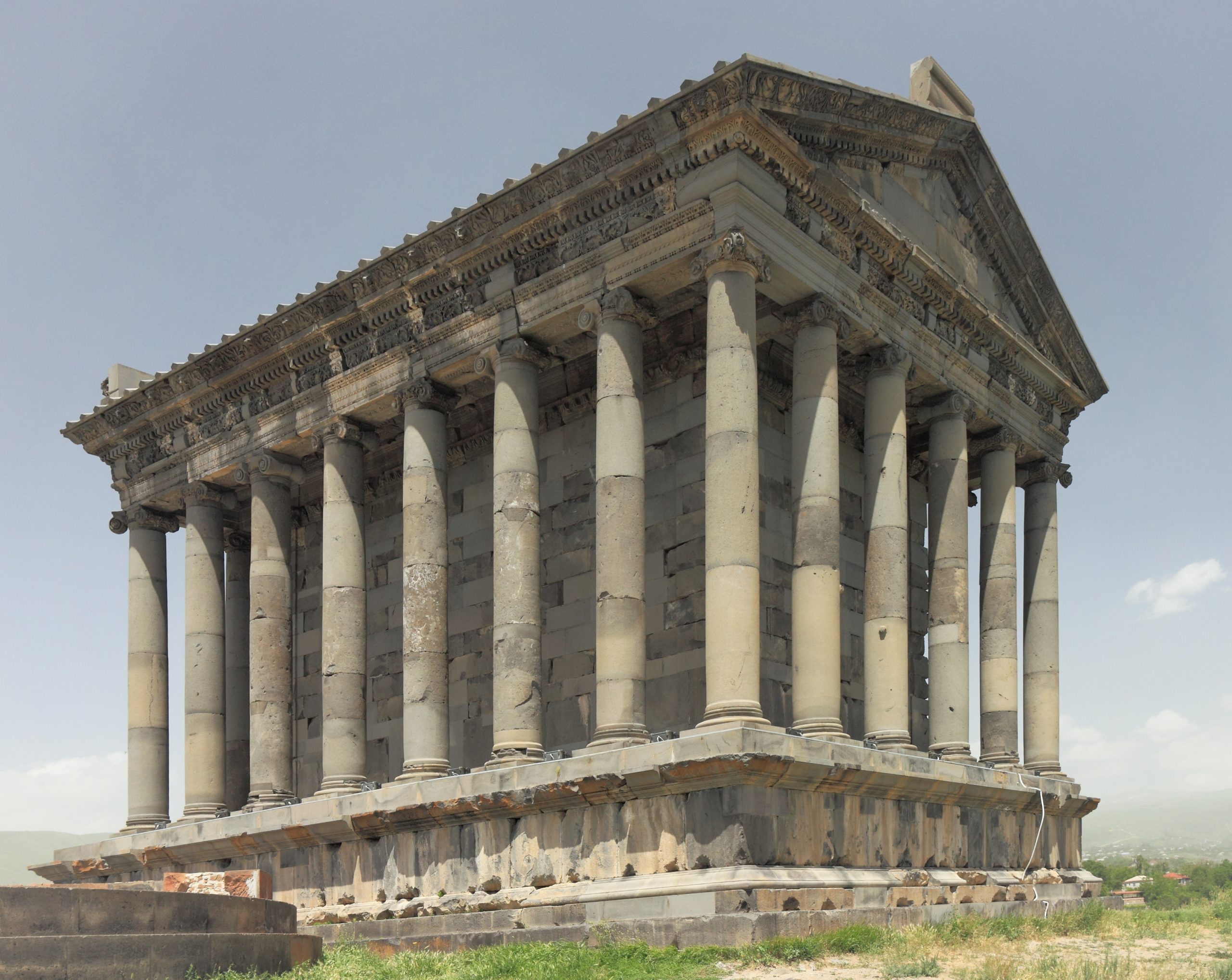
The idea that the building was spared by being turned to secular use is a plausible one, and it fits a wider pattern in which former temples across the ancient world found new life as halls, residences, or civic structures once their original religious function had lapsed. A handsome, well-built stone building was a valuable asset, and practical considerations could override the impulse to demolish a monument of the old faith. Whatever the exact motive, the result was the preservation of a rare survivor, a pagan temple that outlived the religion it was built to serve.
The Earthquake and the Long Ruin
Having survived the coming of Christianity, the temple of Garni eventually fell victim to a different kind of catastrophe: a powerful earthquake that struck the region and toppled the ancient structure. The seismic activity that afflicts the highlands brought down the temple that had stood for so long, reducing the elegant classical building to a heap of fallen columns and scattered stones. After enduring through the ages, the monument was at last laid low by the violence of the earth itself.
The collapse left the temple in ruins for a long period, its columns and blocks lying where they had fallen on the promontory. For generations the site remained a field of scattered stone, the once-proud temple reduced to fragments amid the dramatic scenery of the gorge. The earthquake had accomplished what the religious upheavals of earlier ages had not, bringing down the building and ending its long life as a standing monument. The ruin of Garni became a poignant sight, a fallen glory of the ancient world.
Yet even in ruin, the temple was not forgotten, and its scattered blocks preserved the possibility of future recovery. The fallen stones, lying on the site, remained as evidence of what had once stood there, awaiting the day when they might be raised again. The long period of ruin was thus not the final chapter in the temple’s story but an interlude between its ancient life and its eventual restoration, a time when the monument lay broken but not entirely lost.
The earthquake and the long ruin that followed are a reminder of the vulnerability of even the most enduring monuments to the forces of nature. Garni had survived wars and religious revolutions, only to be brought down by the shaking of the earth. Its collapse illustrates the precariousness of ancient heritage in a seismically active region, where the ground itself can undo the works of centuries. The fallen temple awaited a rescue that would come only much later, through the efforts of those who valued its recovery.
Raising the Columns Again
The temple that visitors admire at Garni today is the result of a major reconstruction, carried out in the twentieth century to raise the fallen monument from its ruins. Using the original blocks that had lain scattered on the site since the earthquake, together with new material where necessary, the temple was painstakingly rebuilt, restoring its columns, pediment, and overall form. This restoration brought the ancient monument back to life, allowing the elegant classical temple to stand once more on its promontory.
The reconstruction was a careful and scholarly undertaking, based on study of the surviving remains and knowledge of classical architecture. The original stones were identified and returned to their places wherever possible, so that much of the rebuilt temple consists of the genuine ancient material. Where original blocks were missing or too damaged, new pieces were added, generally in a way that allows them to be distinguished from the ancient work. The result is a reconstruction that respects the authenticity of the surviving remains.
Raising the temple again was an act of cultural recovery, restoring to the region one of its most treasured ancient monuments. The reconstruction allowed people to experience the temple as a standing building rather than a field of ruins, recovering the visual and emotional impact of the original. It transformed Garni from a scattered ruin into a living monument, a place where the achievements of the ancient Armenian kingdom could be seen and appreciated in something close to their original form.
The rebuilt temple of Garni has become a powerful symbol of the region’s ancient heritage and its endurance across the ages. Its reconstruction demonstrates the value placed on recovering and preserving the monuments of the past, and it has given the site new life as a place of pride and pilgrimage. Though the temple has been raised anew, it stands on ancient foundations, built largely from ancient stones, a genuine link to the deep past restored through the care and determination of the modern age.
Where East Met West
Garni is, above all, a monument to cultural encounter, a place where the traditions of East and West came together in the highlands of the Caucasus. Its classical architecture speaks of the influence of the Greco-Roman world, while its setting and history connect it to the Armenian highlands and the great Persian sphere to the east. The temple embodies the position of the ancient Armenian kingdom at a crossroads of civilizations, absorbing and blending influences from many directions into a distinctive whole.
This meeting of cultures was characteristic of the ancient Armenian world, which lay between the classical Mediterranean, the Persian empire, and the traditions of the Caucasus. The kingdom’s rulers drew on all these influences, adopting classical architecture, eastern religious ideas, and local traditions to create a culture that was uniquely their own. Garni, with its Greco-Roman temple, its Roman baths, and its dedication to a solar deity of the local pantheon, is a perfect expression of this rich cultural synthesis.
The blending of traditions at Garni reflects the broader character of the region as a meeting place of civilizations, where the currents of different worlds converged and mingled. Rather than belonging wholly to any single tradition, the site partakes of several, combining them into something distinctive and memorable. This cultural richness is part of what makes Garni so fascinating, a monument that cannot be understood in terms of a single civilization but only as the product of their meeting.
In standing at this crossroads, Garni testifies to the connectedness of the ancient world and to the creative results of cultural encounter. The temple on its promontory is a symbol of the way the Armenian highlands drew together the influences of East and West, producing a heritage of exceptional richness. Garni embodies this meeting of worlds, a classical temple in a Caucasian landscape, a monument to the ancient dialogue of civilizations that shaped the history of the region.
Visiting Garni Now
Today the temple of Garni is one of the most popular and beloved destinations in the region, drawing visitors to admire its classical elegance and its spectacular setting. The reconstructed temple stands proudly on its promontory, offering a vivid encounter with the ancient heritage of the Armenian highlands. From the site, visitors can take in the dramatic views of the gorge and the surrounding mountains, and explore the remains of the fortress and baths that accompanied the temple.
The site combines cultural and natural attractions in a way that makes it especially rewarding to visit. Beyond the temple itself, the remains of the bath complex with its mosaic, the fortifications, and above all the extraordinary basalt columns of the gorge offer a rich and varied experience. The combination of the elegant classical monument and the sublime natural scenery makes Garni a place of exceptional beauty and interest, cherished by visitors and locals alike.
For the modern visitor, Garni offers a moving encounter with the deep past of the region and with the meeting of cultures that shaped it. The temple, raised again from its ruins, stands as a symbol of endurance and recovery, a monument that has survived religious upheaval, earthquake, and long ruin to be restored to its former glory. In its classical form and dramatic setting, Garni embodies the rich and layered history of the Armenian highlands, a treasured survivor from an ancient age.
Nearby Places
The highlands of the Caucasus and the neighboring lands are rich in ancient sites, from Urartian fortresses to the rock art of the Caspian shore and the fortress cities of the mountains. If the classical elegance of Garni has captured your imagination, these related places carry the story of the region further.
- The Hilltop Fortress Whose Founding Stone Became a City’s Birthday: The Story of Erebuni
- The Open-Air Gallery by the Caspian Where Forty Thousand Carvings Wait: The Story of Gobustan
- The Closed Gates of the Caspian, Where a Wall Ran Into the Sea: The Story of Derbent
Final Reflections
The temple of Garni is one of the most enchanting monuments of the ancient world, a classical temple set improbably and beautifully in the highlands of the Caucasus. In its elegant columns and its dramatic setting above a gorge of natural stone pillars, it embodies the meeting of East and West that shaped the history of the region. As a survivor of religious revolution, a victim of earthquake, and a triumph of reconstruction, it carries a story of endurance and recovery as compelling as its beauty.
Perhaps the deepest appeal of Garni lies in the way it brings together so many strands: the artistry of the classical world, the spiritual life of the ancient Armenian kingdom, the grandeur of the natural landscape, and the determination of the modern age to recover and preserve its heritage. Standing before the restored temple, with the gorge and its columns of stone below and the mountains all around, one feels the rich and layered history of a land at the crossroads of civilizations, made vivid and present in a single, unforgettable monument.
You May Like
Norse Explorers Reached Canada 500 Years Before Columbus


One thought on “Garni: Armenia’s Sun-God Temple on a Cliff of Basalt Pillars”