On a stretch of rugged, semi-arid land not far from the Caspian Sea in Azerbaijan lies one of the most extraordinary open-air galleries in the world. Here, among a chaos of tumbled boulders and rocky outcrops, ancient people spent thousands of years carving images into the stone, leaving behind a vast record of their lives, beliefs, and surroundings. This is Gobustan, a place where the bare rock has become a canvas covered with the marks of countless generations, preserving a story of human presence that reaches back into the depths of prehistory.
The carvings of Gobustan are not the work of a single moment but the accumulated creation of an immense span of time, added to by people across many different eras who found this stony landscape a place worth living in and worth marking. Hunters, herders, and travelers left their images on the rocks, building up over the millennia an unparalleled visual archive of the region’s ancient inhabitants. To walk among these boulders is to move through a gallery whose exhibition has been growing for tens of thousands of years.
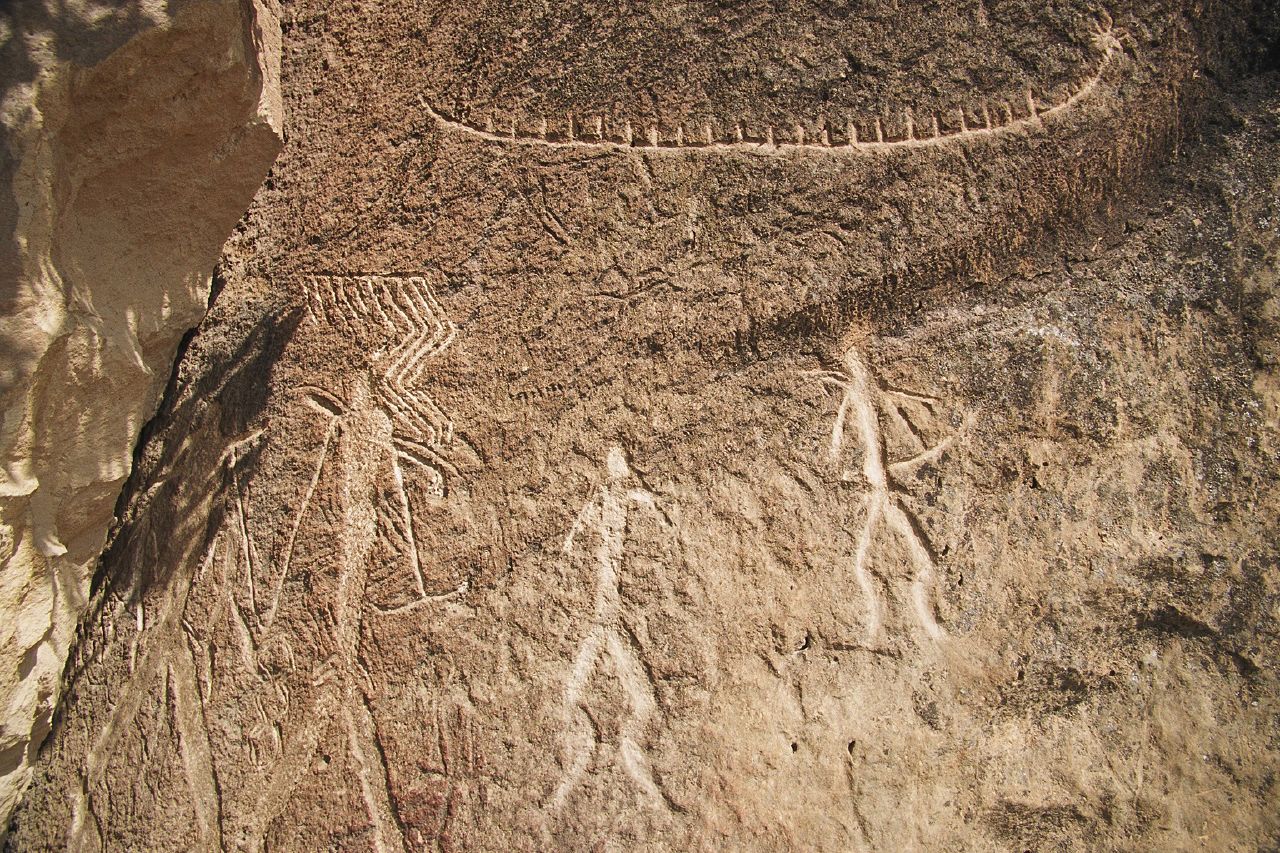
This is the story of that remarkable place: the tens of thousands of images carved into its stones, the ancient life they depict, the puzzles they pose, and the extraordinary landscape of rock and mud volcano that drew people here and kept them coming back across an almost unimaginable stretch of time.
Contents
- A Gallery Carved in Stone
- Forty Thousand Figures on the Rocks
- Hunters, Dancers, and Daily Life
- The Boats That Puzzle the Experts
- A Landscape That Kept People for Millennia
- Living Among the Boulders
- The Stone That Rings Like a Drum
- A Roman Soldier’s Signature
- Mud Volcanoes and a Strange Terrain
- Gobustan Today
- Nearby Places
- A Few Last Words
A Gallery Carved in Stone
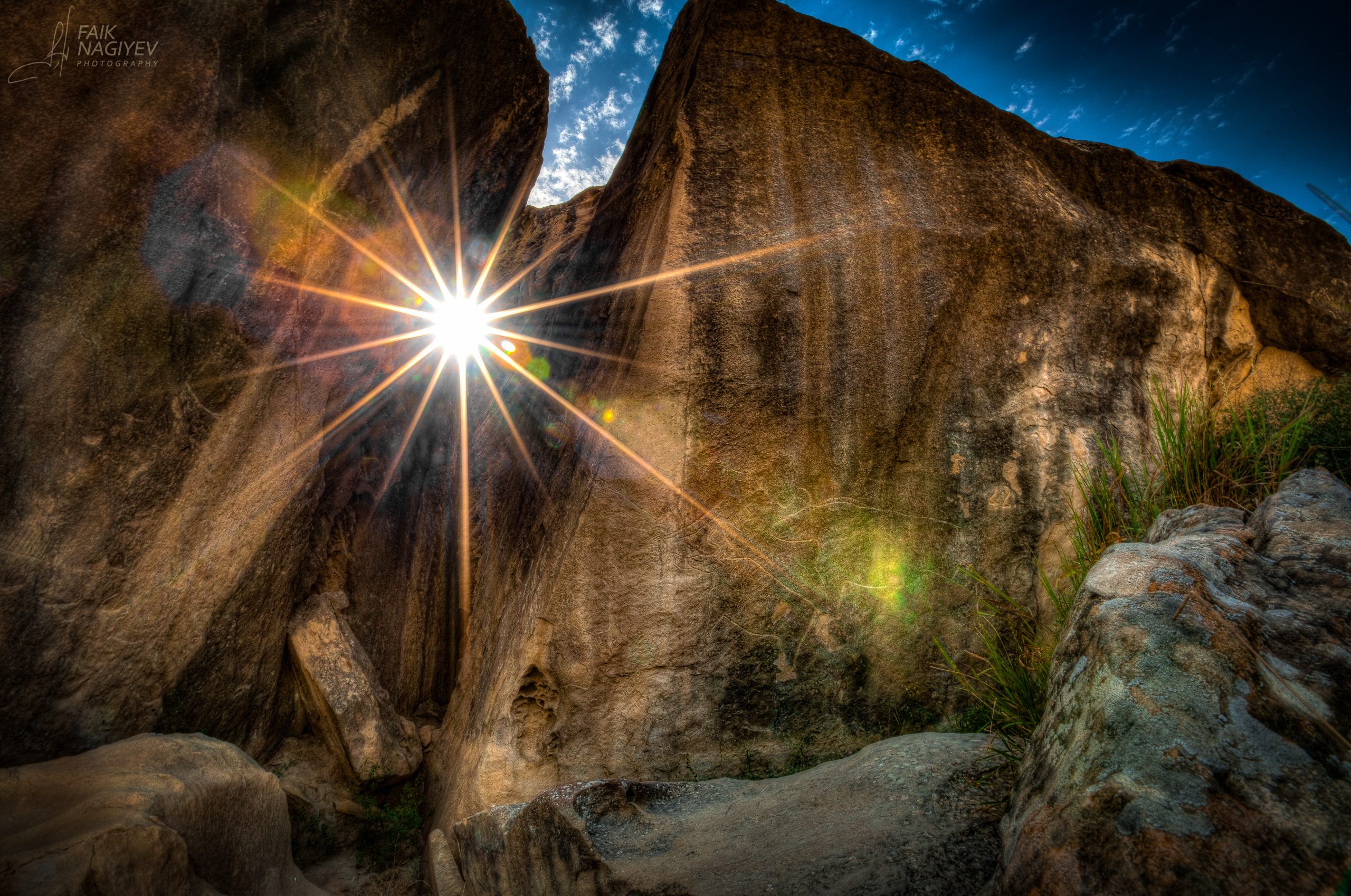
Gobustan is above all a place of rock art, one of the great concentrations of such carvings anywhere on earth. The images were created by incising, pecking, and carving into the surfaces of the rocks, a technique that allowed the ancient artists to produce durable pictures that have survived the passage of thousands of years. Spread across the boulders and rock faces of the site, these carvings form an astonishing visual record, a gallery whose walls are the very stones of the landscape.
The significance of this rock art lies not only in its quantity but in its extraordinary time depth. The carvings were made over a period stretching across many thousands of years, from the deep prehistoric past through later ages, so that the site preserves a continuous tradition of image-making sustained across an immense span of human history. Few places anywhere allow us to trace so long a record of how people depicted their world, layer upon layer of carving accumulated over the millennia.
This long continuity makes Gobustan a precious source for understanding the ancient inhabitants of the region and, more broadly, the development of human artistic expression. The carvings reveal changes in the way people lived, in the animals they encountered, and in the concerns that occupied them, offering glimpses into successive phases of prehistoric and early historic life. As a record of human presence and creativity sustained over such a vast period, the rock art of Gobustan is of outstanding importance.
The recognition of this value led to Gobustan being designated a UNESCO World Heritage site, celebrated for its rock art and for the evidence it preserves of ancient human occupation. This status reflects the site’s significance not just for the region but for the whole story of humanity, as one of the great galleries of prehistoric and early art. In its carved stones, Gobustan holds a record of the human past that is both locally rooted and universally meaningful.
Forty Thousand Figures on the Rocks
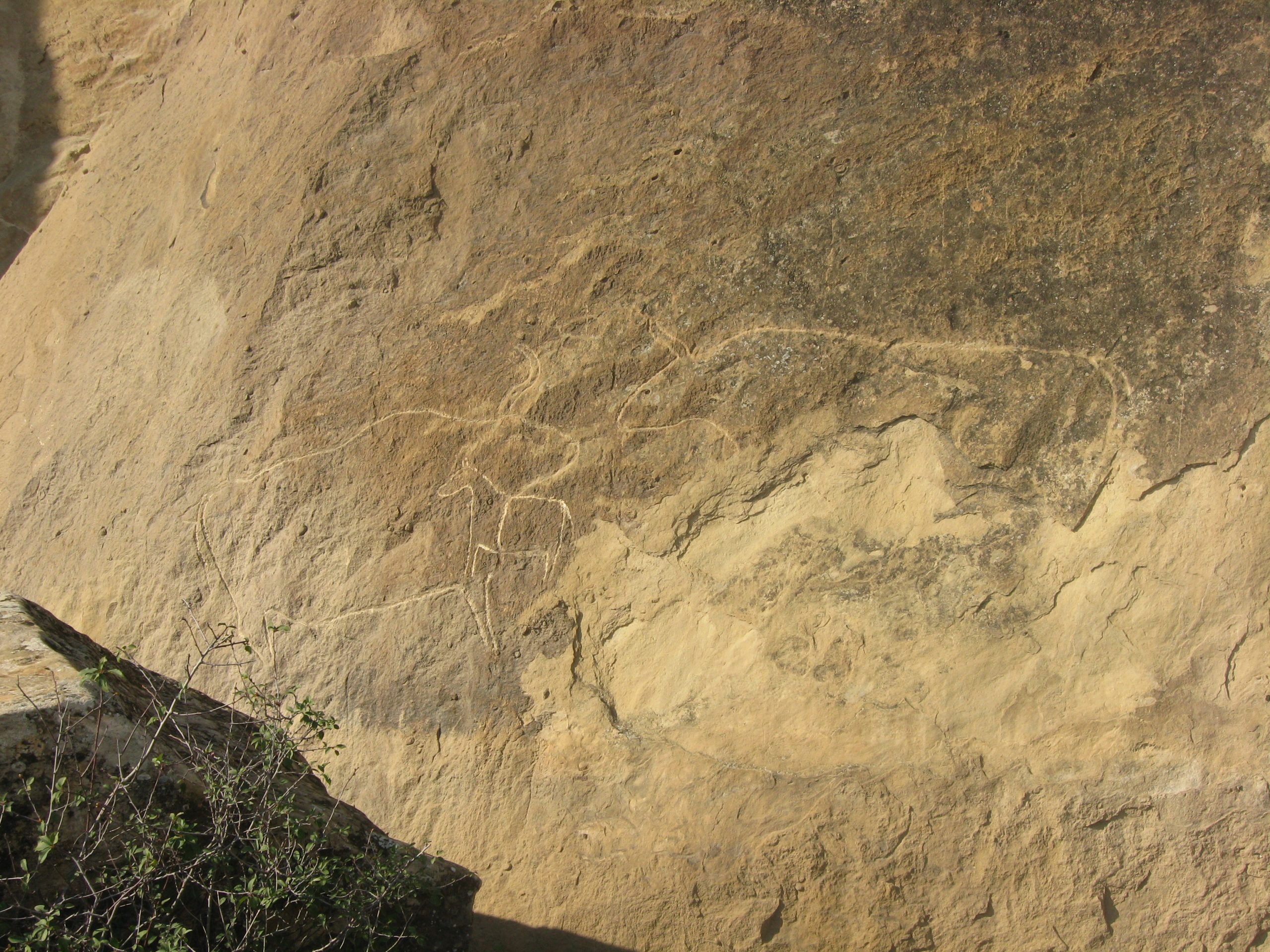
The scale of the rock art at Gobustan is difficult to overstate. Across the site, an enormous number of individual carvings have been recorded, amounting to many tens of thousands of images spread over the rocks and boulders. This vast quantity is one of the things that sets Gobustan apart, for it is not a scattering of isolated pictures but a dense and extensive body of art, accumulated over the ages into one of the richest collections of rock carvings in the world.
The sheer number of images means that Gobustan offers an unusually complete picture of the visual world of its ancient creators. Rather than a few tantalizing fragments, there is a great abundance of material, allowing scholars to study patterns, themes, and changes over time with unusual richness. The repetition and variation of certain motifs across so many carvings help reveal what mattered to the people who made them, from the animals they hunted to the rituals and activities that filled their lives.
These images range widely in subject and style, reflecting the many different periods and hands involved in their creation. Some are simple and schematic, others more detailed and dynamic, and together they display a remarkable variety within the overall tradition. The abundance and diversity of the carvings make Gobustan a place where one can trace not just individual images but the evolution of an entire artistic tradition sustained across a vast reach of time.
Confronted with tens of thousands of carvings covering the rocks, the visitor gains a powerful sense of the depth of human presence at Gobustan. Each image was made by a person who stood where the visitor stands, marking the stone with their vision of the world. Multiplied by tens of thousands and spread across millennia, these individual acts of creation add up to something overwhelming, a monument to the enduring human impulse to record and represent the world in enduring form.
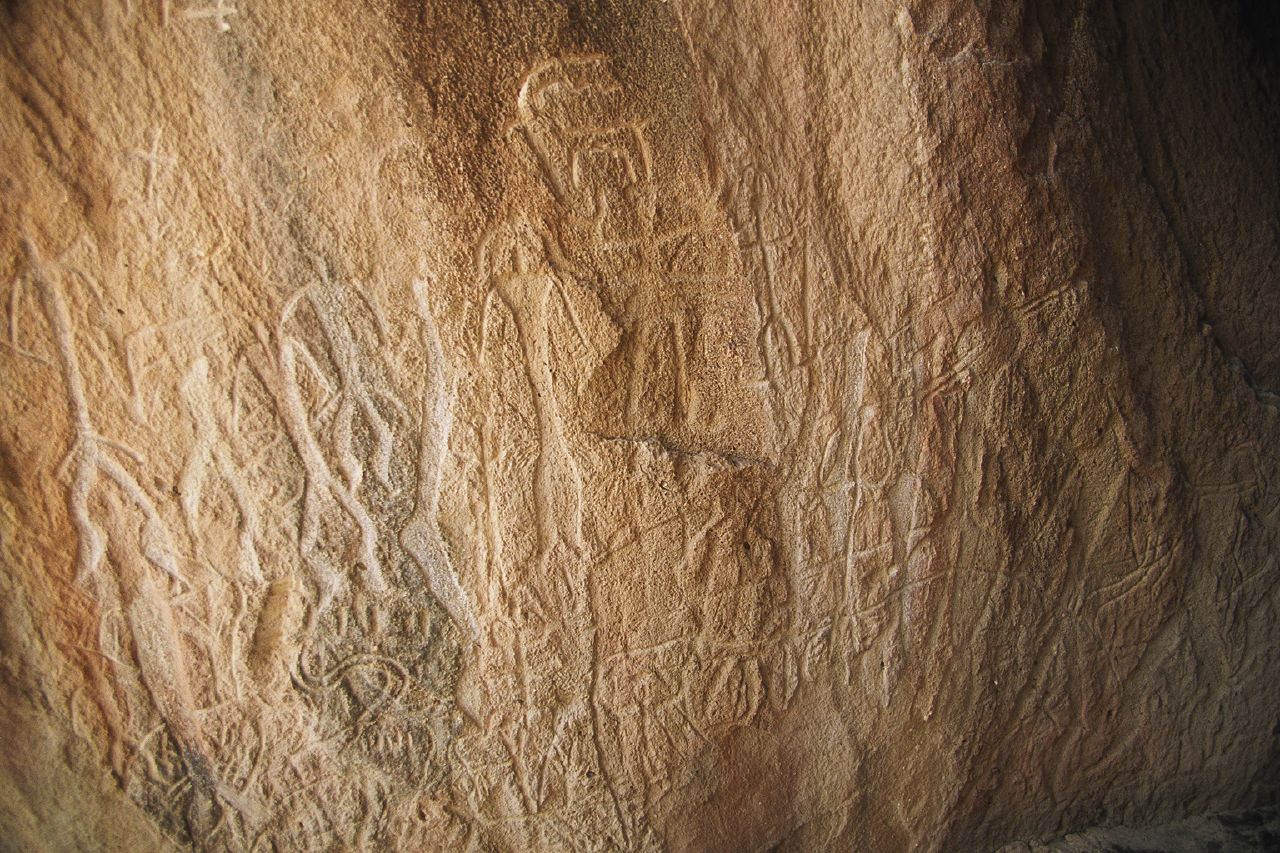
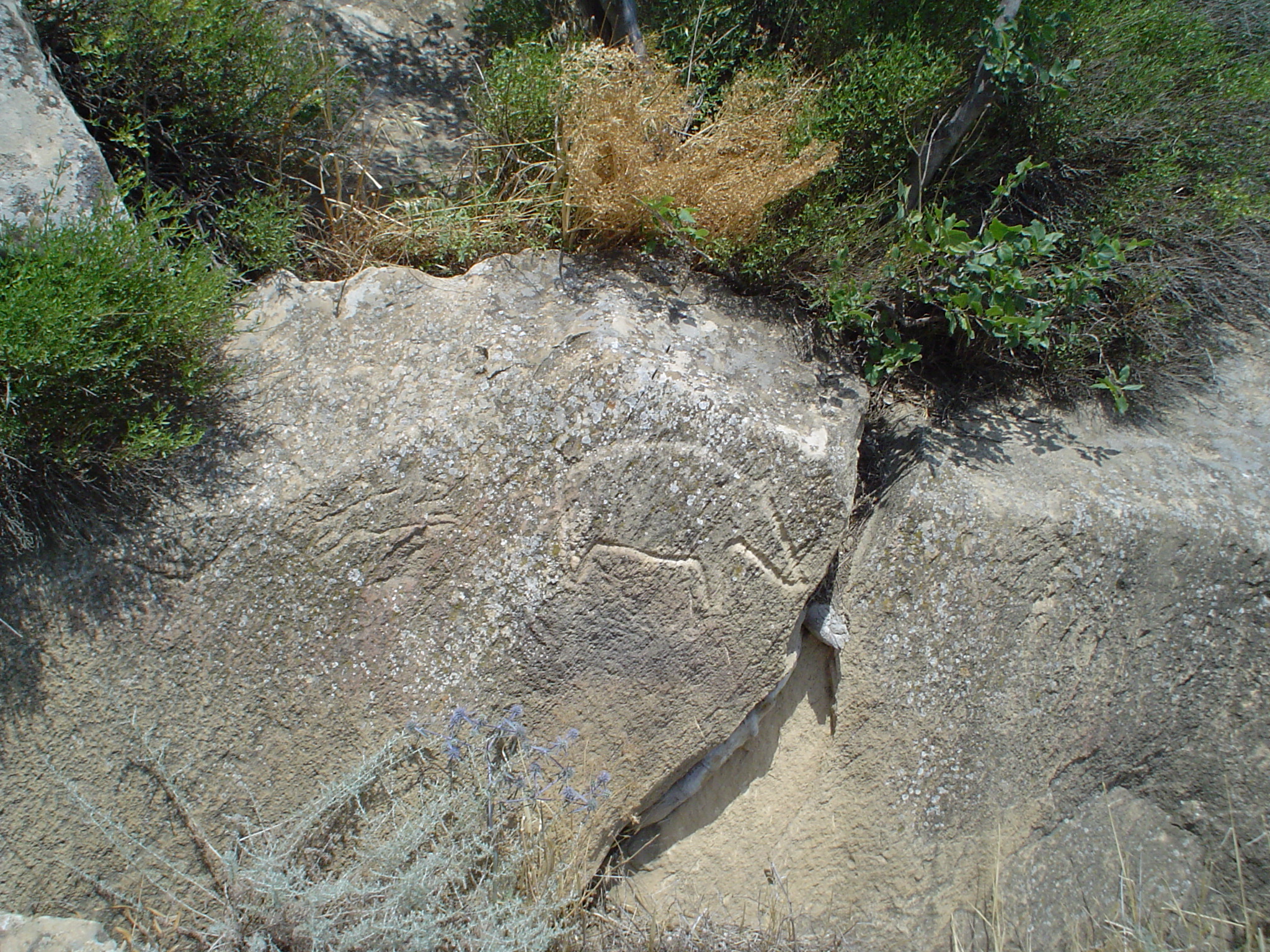
Studying such an enormous body of images also reveals how styles and techniques shifted over the long life of the site. The earliest carvings tend to differ in character from those made in later ages, in their subjects, their scale, and the confidence of their execution, so that the rocks preserve not a single frozen tradition but a slowly evolving one. Tracing these changes across the thousands of carvings is like reading a very long book written by many hands over countless generations, each adding to a story that no single author could have completed.
Hunters, Dancers, and Daily Life
The carvings of Gobustan open a vivid window onto the daily life and preoccupations of the ancient people who made them. Among the most common subjects are scenes of hunting, showing people pursuing the wild animals that were vital to their survival. These images depict the game that once roamed the region and the methods used to hunt it, offering a direct glimpse into the subsistence activities that sustained the ancient inhabitants of this landscape.
Beyond hunting, the carvings portray a rich variety of human activity, including what appear to be scenes of dancing and communal ritual. Rows of figures shown in dynamic poses have been interpreted as depictions of group dances, perhaps connected with ceremonies or celebrations, capturing moments of shared human experience across the ages. These images remind us that the ancient people of Gobustan were not merely surviving but living full social and cultural lives, marked by ritual, celebration, and community.
The animals depicted in the carvings are themselves a valuable record, showing the fauna that inhabited the region in ancient times. The images include various wild creatures that were hunted or otherwise significant to the people, providing evidence about the environment and its changes over the long period during which the carvings were made. As the climate and landscape shifted across the millennia, so too did the animals depicted, making the rock art a kind of ecological archive.
Human figures appear throughout the carvings, sometimes alone, sometimes in groups, engaged in various activities that illuminate the lives of the ancient inhabitants. These depictions of people, with their tools, weapons, and actions, bring the distant past to life in a direct and moving way. Through the carved figures of Gobustan, we encounter not abstract prehistory but individual human beings, hunting, dancing, and living amid the same rocks that still bear the marks they left behind.
The Boats That Puzzle the Experts
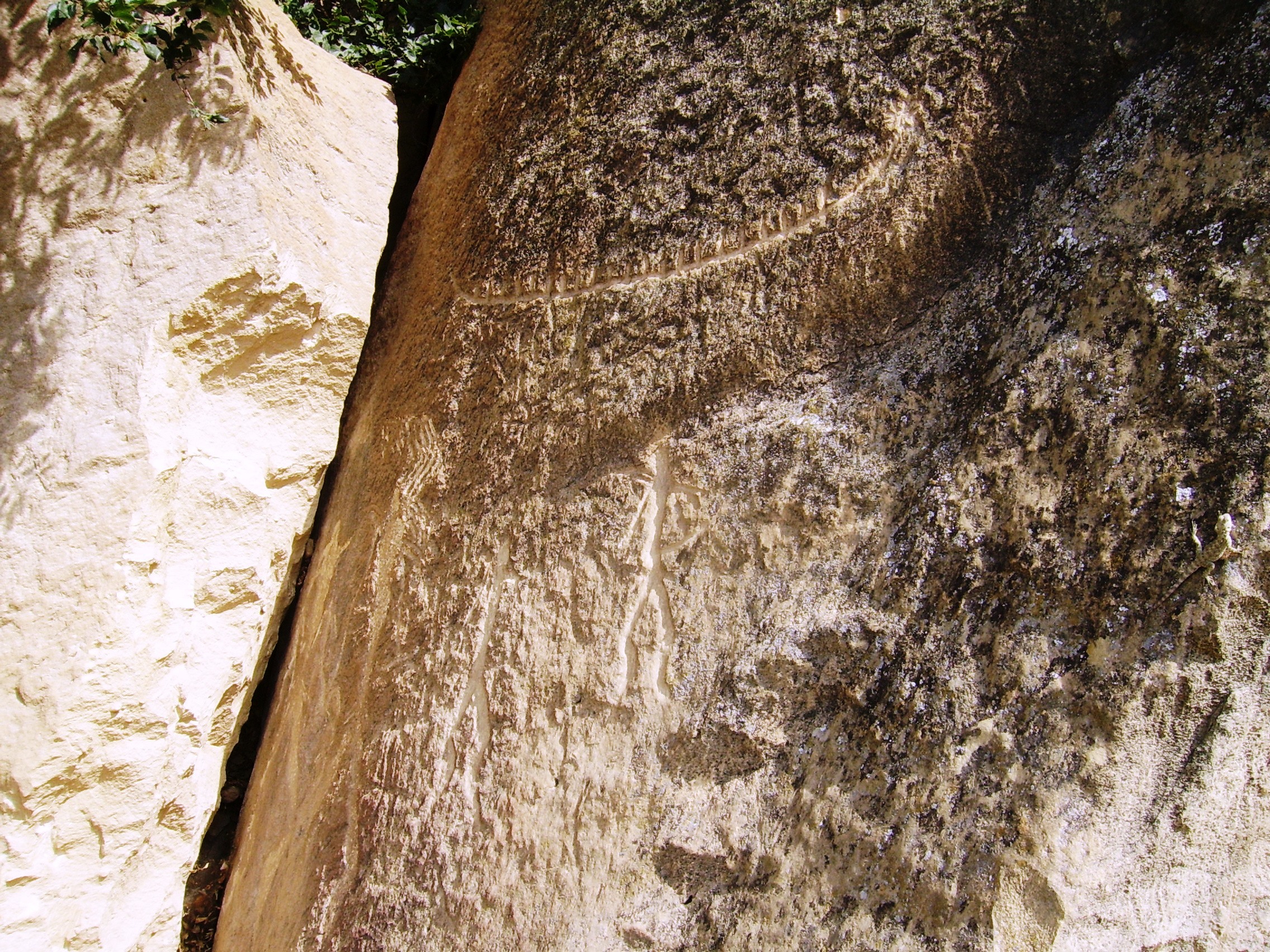
Among the most intriguing and debated images at Gobustan are depictions that appear to show boats, complete with rowers and sometimes what looks like a sun symbol at the prow. These carvings of watercraft have attracted particular attention and speculation, for they raise fascinating questions about the maritime activities and connections of the ancient people who made them. Boats in the rock art of a site near the Caspian shore naturally invite thoughts of seafaring and long-distance contact.
The boat images have featured in some famous theories about ancient migration and contact across the seas. One celebrated explorer of the ancient world was struck by the resemblance between these carved vessels and boats depicted elsewhere, and used them to support ideas about connections between distant regions and the movements of ancient peoples. Whether or not such far-reaching theories hold up, the boat carvings clearly indicate that watercraft and the sea held significance for the people of Gobustan.
The depiction of boats suggests that the ancient inhabitants were familiar with travel or fishing on the water, and that the nearby sea played a role in their lives. The details of the vessels, including the figures aboard them and the accompanying symbols, offer clues about ancient boat-building and the importance of water-based activities. These images add a maritime dimension to the picture of life at Gobustan, complementing the scenes of hunting and dancing carved into the same rocks.
The enduring fascination of the boat carvings lies partly in their mystery, for much about their precise meaning and the activities they depict remains open to interpretation. They stand as a reminder that the rock art of Gobustan, for all it reveals, also preserves puzzles that continue to intrigue scholars and visitors. In these carved vessels sailing across the ancient stone, we glimpse a maritime world whose full story we can only partly reconstruct, a tantalizing trace of the seafaring life of the distant past.
Part of what makes these vessels so compelling is the way they hint at horizons far beyond the immediate landscape. A community that carved boats and rowers was a community that thought about the water, about journeys and distances, about what lay across the reach of the nearby sea. Even if we set aside the more dramatic theories of long-range contact, the mere presence of boats among the hunting scenes broadens our sense of the ancient world of Gobustan, suggesting a people whose imagination and perhaps whose travels extended out onto the waves as well as across the surrounding land.
A Landscape That Kept People for Millennia
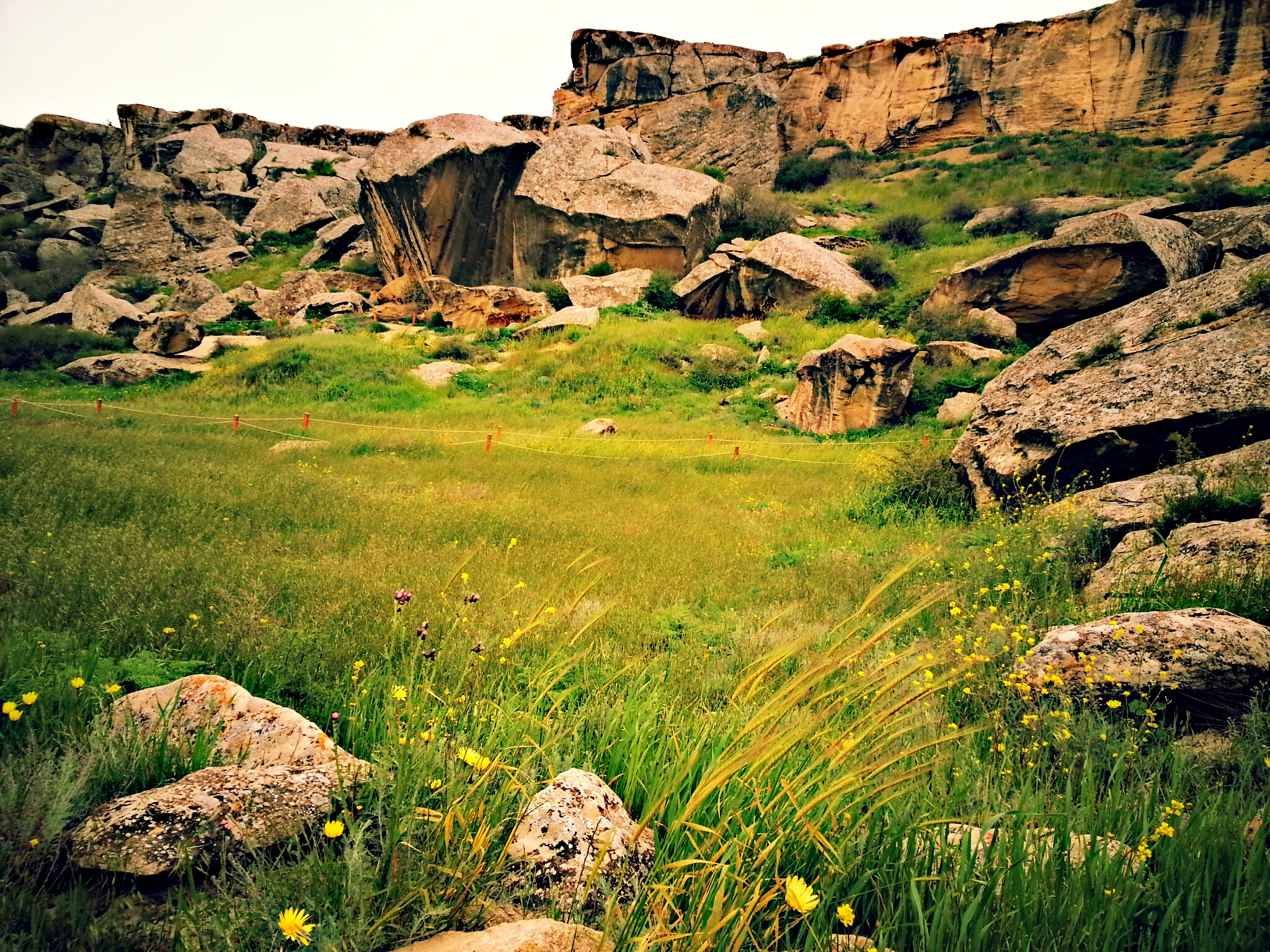
What made this stony, semi-arid landscape such an enduring home for ancient people? The answer lies in the particular combination of features that Gobustan offered. The rocky outcrops provided shelter, the surrounding lands supported game and, in wetter periods, richer resources, and the proximity to the sea added further possibilities. Together these advantages made the area attractive to human communities across an immense span of time, drawing people here generation after generation.
The landscape has not remained constant across the millennia during which the carvings were made. The climate and environment of the region changed over the long ages, shifting between wetter and drier conditions, and these changes are reflected in the rock art itself, particularly in the animals depicted. The carvings thus record not only human activity but the changing natural world in which that activity took place, preserving evidence of an environment very different, at times, from the semi-arid terrain of today.
This interplay between people and their environment is central to the story of Gobustan. The ancient inhabitants adapted to the conditions of their time, hunting the available game, using the shelter of the rocks, and exploiting the resources of land and sea. Their carvings document this relationship, showing how they engaged with the world around them across changing circumstances. Gobustan is thus a record of human adaptation and persistence in a challenging but rewarding landscape.
The remarkable continuity of human presence at Gobustan, sustained across such a vast reach of time, testifies to the enduring appeal of this particular place. Something about the combination of rock, land, and sea kept drawing people back, making the site a persistent focus of human life through age after age. In the accumulated carvings, we can read this long story of attachment to a place, a bond between people and landscape that endured across an almost unimaginable span of the human past.
Living Among the Boulders
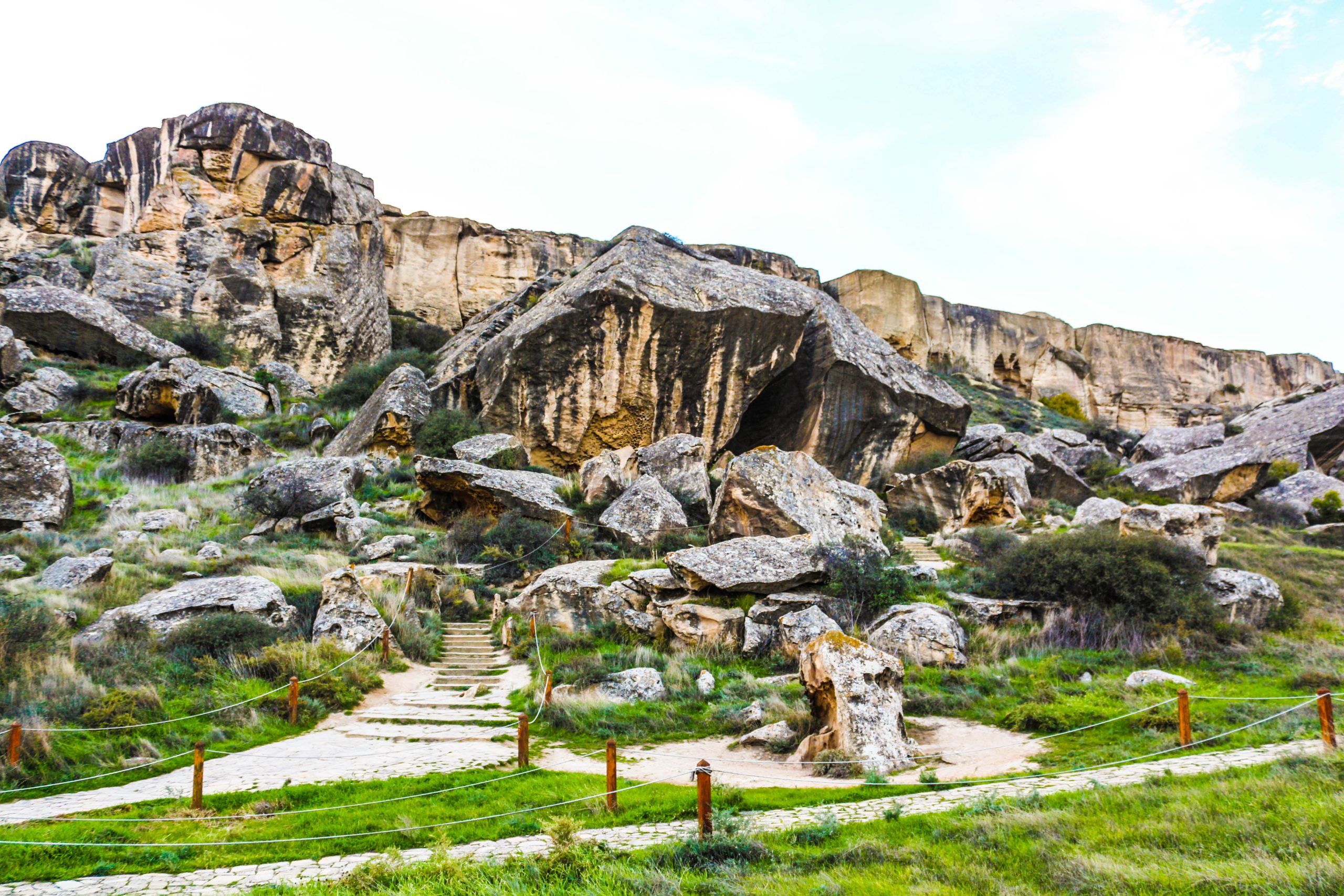
The ancient people of Gobustan did not merely visit the site to carve images; they lived among its rocks, using the natural shelters formed by the tumbled boulders and overhangs as places of habitation. These rock shelters provided protection from the elements and a base from which to hunt, gather, and carry on daily life. The evidence of this occupation, found alongside the carvings, helps flesh out the picture of Gobustan as a living community rather than merely an art gallery.
Archaeological investigation of the site has recovered traces of this ancient habitation, including the remains of the activities carried out by the people who sheltered among the rocks. Such evidence complements the rock art, allowing scholars to reconstruct not only how the ancient inhabitants depicted their world but how they actually lived in it. The combination of dwelling places and carvings makes Gobustan an unusually complete record of prehistoric life in the region.
Living among the boulders, the ancient inhabitants would have carried on the full range of human activities in and around their rocky shelters, from preparing food and making tools to the social and ritual life reflected in the carvings. The rocks that provided their homes also served as the surfaces on which they recorded their world, so that the very places where they lived became the canvas for their art. This intimate connection between dwelling and image-making is part of what makes Gobustan so evocative.
The picture that emerges is of a community deeply embedded in its stony landscape, using the rocks for shelter, sustenance, and expression alike. The ancient people of Gobustan made this place thoroughly their own, living among its boulders and marking them with the record of their lives. In doing so they created not just a collection of carvings but a whole inhabited landscape, a place where the human and the natural were intertwined across thousands of years of continuous occupation.
The Stone That Rings Like a Drum
Among the many wonders of Gobustan is a remarkable natural feature: a large flat stone that produces musical, resonant sounds when struck in different places. This stone, resting on other rocks in a way that allows it to ring, has attracted attention as a possible ancient musical instrument, its varied tones perhaps used in the rituals and dances depicted in the surrounding carvings. It is one of the most intriguing and memorable elements of the site.
The connection between this ringing stone and the scenes of dancing carved nearby is tantalizing. It is easy to imagine the resonant tones of the stone accompanying communal dances and ceremonies, providing rhythm for the kinds of gatherings that the rock art seems to depict. While the precise ancient use of the stone cannot be known for certain, its musical properties and its proximity to images of dance suggest an appealing link between the sounds it could produce and the ritual life of the ancient community.
Such natural musical stones are rare and remarkable, and the example at Gobustan adds a dimension of sound to a site otherwise defined by visual images. It reminds us that the ancient people who lived here experienced their world through all their senses, and that music and rhythm may have played a part in the rituals and celebrations that filled their lives. The ringing stone brings an unexpected liveliness to the ancient landscape, hinting at the sounds that once accompanied the making of the carvings.
For visitors, the musical stone is one of the most delightful features of Gobustan, a chance to produce, with a simple tap, tones that may echo those heard by people thousands of years ago. In its resonant sounds, the deep past becomes momentarily audible, connecting the modern visitor to the ancient rituals of the site in a direct and sensory way. The ringing stone is a fitting emblem of Gobustan, where the traces of ancient life are preserved in forms that still speak, and even sing, across the ages.
A Roman Soldier’s Signature
Amid the prehistoric carvings of Gobustan lies a very different kind of inscription, a reminder that this remote landscape was touched even by the reach of the Roman world. Carved into the rock is an inscription left by Roman soldiers, marking what is often described as one of the furthest eastern traces of the Roman military presence. This unexpected survival connects the ancient rock art of Gobustan to the wider history of the classical Mediterranean, an extraordinary meeting of distant worlds.
The Roman inscription records the presence of a military unit at this far-flung spot, its Latin words a startling contrast to the prehistoric images that surround them. That Roman soldiers reached this distant landscape near the Caspian, and left their mark upon its rocks, speaks to the astonishing extent of Roman influence and the movements of its armies across vast distances. The inscription is a precious historical document, evidence of connections reaching from the heart of the Roman world to the edge of the known.
This inscription adds yet another layer to the long human story recorded at Gobustan, extending it from prehistory into the historical era of the great classical empires. It shows how the site, already ancient when the Romans arrived, continued to attract and record human presence across ever-changing ages. The juxtaposition of prehistoric carvings and a Roman military inscription captures in miniature the immense time depth of Gobustan, where the marks of vastly different peoples and eras lie side by side.
For those who encounter it, the Roman inscription is a moment of surprising connection, linking the remote rock art of Azerbaijan to the familiar history of Rome. It reminds us that the ancient world was more interconnected than we might imagine, its influences reaching into unexpected corners. At Gobustan, the signature of a Roman soldier joins the carvings of prehistoric hunters and dancers, together forming a record of human presence that spans an extraordinary sweep of time and space.
There is a quiet poignancy in imagining the soldier who cut those Latin letters, posted at what must have felt like the very end of the earth, moved for whatever reason to leave a permanent record of his presence. In doing so he joined, without knowing it, a tradition of mark-making at this site that was already unimaginably old, adding his own small act of inscription to a rock face that hunters had been carving for thousands of years. Across that vast gulf of time, the impulse was the same: to say, in effect, that someone had been here.
Mud Volcanoes and a Strange Terrain
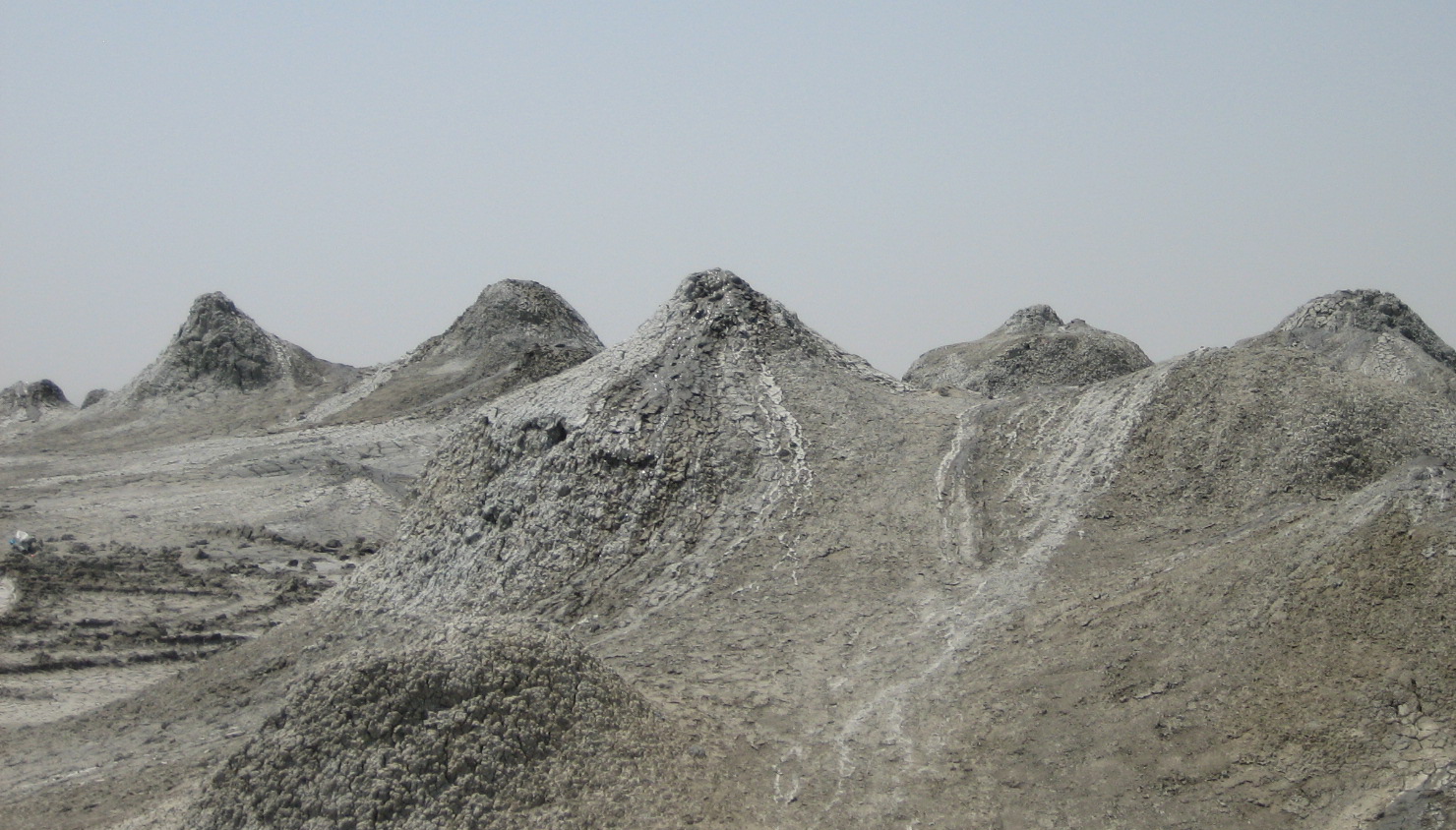
The landscape around Gobustan holds another remarkable natural phenomenon: mud volcanoes, strange formations that bubble and ooze cool mud from beneath the earth. The region is one of the great concentrations of these curious features, which create an otherworldly terrain of small cones and craters spitting and gurgling with mud. This bizarre landscape adds to the unique character of the area, complementing the rock art with a display of the earth’s own strange activity.
Mud volcanoes form where gases and fluids from deep underground push mud to the surface, building up cones and creating a constantly changing, active terrain. Unlike fiery volcanoes, these emit cool mud, making them safe to approach and observe as they bubble and occasionally erupt. The area around Gobustan is famous for hosting a large number of these formations, a testament to the geological activity beneath this part of the world, rich as it is in underground gas and oil.
For the ancient inhabitants of Gobustan, this strange and active landscape may have held special significance, its bubbling mud and occasional eruptions perhaps regarded with awe or wonder. Whether or not the mud volcanoes influenced the beliefs reflected in the rock art, they were surely a striking feature of the environment in which the ancient people lived. The dramatic terrain would have shaped the experience of inhabiting this place, adding a sense of the uncanny to the stony landscape.
Today the mud volcanoes are among the notable attractions of the wider Gobustan area, drawing visitors curious to witness this unusual natural spectacle. They form part of the distinctive environment that makes the region so remarkable, combining the human record of the rock art with the natural drama of the bubbling earth. Together, the carvings and the mud volcanoes create a landscape of extraordinary interest, where the works of ancient people and the strange activity of the planet exist side by side.
Gobustan Today
Modern Gobustan is a protected reserve and UNESCO World Heritage site, welcoming visitors who come to marvel at its ancient rock art and its unusual landscape. A museum at the site helps interpret the carvings and the long history of human occupation, providing context for the images spread across the rocks. From the museum, paths lead out among the boulders, allowing visitors to encounter the carvings in their original setting, on the very stones where ancient people created them.
The preservation of Gobustan is an important responsibility, for the rock art is a fragile and irreplaceable record of the human past. Efforts to protect the site aim to safeguard the carvings against damage and to ensure that this extraordinary gallery endures for future generations. The recognition of Gobustan’s outstanding value has brought both attention and a commitment to its care, reflecting its significance as one of the world’s great concentrations of rock art.
For the visitor, Gobustan offers a rare and moving encounter with the deep human past. To stand among the boulders, surrounded by tens of thousands of carvings made across thousands of years, is to feel the immense continuity of human presence in this place. The images of hunters, dancers, boats, and animals connect us directly to the ancient people who made them, offering a vivid and unforgettable glimpse into the lives of those who called this stony landscape home across an almost unimaginable span of time.
Nearby Places
The lands around the Caspian and the wider Near East are rich with ancient sites, from fortress cities on the sea to the great capitals of Persia. If the deep antiquity of Gobustan has captured your interest, these related places extend the story of this fascinating region.
- The Closed Gates of the Caspian, Where a Wall Ran Into the Sea: The Story of Derbent
- The Quiet First Capital Where a Great Empire Began: The Story of Pasargadae
- The City of Endless Layers Where Empires Rose and Fell: The Story of Susa
A Few Last Words
Gobustan is one of the most extraordinary windows onto the deep human past to be found anywhere. In its tens of thousands of carvings, accumulated across thousands of years, it preserves an unparalleled record of ancient life, from the hunt and the dance to the mysterious boats and the marks left by a Roman soldier at the edge of his world. Combined with its strange landscape of ringing stone and bubbling mud, it forms a place of unique and haunting character.
Perhaps the most powerful thing about Gobustan is the sense it gives of the sheer endurance of human presence, of a place inhabited and marked by people across an almost inconceivable span of time. Each carved figure was made by an individual who lived among these rocks, and together they form a testament to the persistence of human life, creativity, and expression. To walk among the stones of Gobustan is to feel the deep continuity of our species, recorded forever in the enduring surfaces of the ancient rock.
You May Like
Norse Explorers Reached Canada 500 Years Before Columbus


3 thoughts on “Gobustan: Forty Thousand Ancient Carvings Above the Caspian”