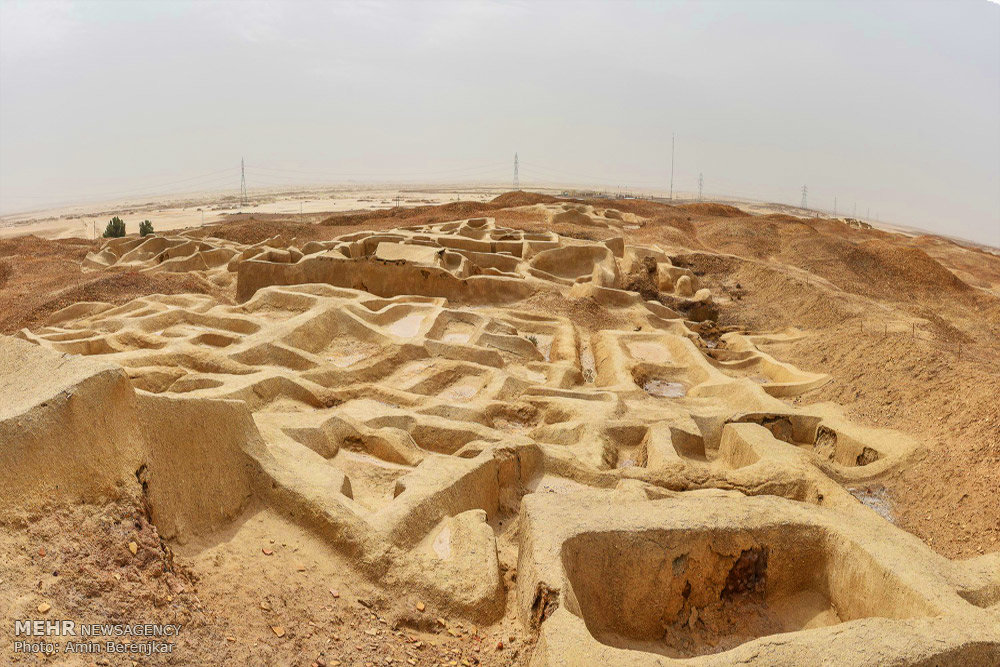
In the far southeast of Iran, near the border with Afghanistan, lies a vast field of low mounds and scattered pottery baking under the sun of the Sistan desert. This is Shahr-i Sokhta, the Burnt City, and despite its bleak surroundings and unglamorous name it is one of the most important Bronze Age sites in the world. Some five thousand years ago it was a thriving city, and the objects its people left behind have rewritten what we thought we knew about early urban life.
Founded around 3200 BC and flourishing for well over a thousand years, Shahr-i Sokhta was a major center at the crossroads of the ancient trade routes that linked Mesopotamia, the Iranian plateau, Central Asia, and the Indus valley. It was a place where goods and ideas from across a huge region met and mingled, and its wealth and sophistication have astonished the archaeologists who have excavated it.
The Burnt City has yielded a series of remarkable firsts: what may be the world’s earliest known artificial eye, one of the oldest board games ever found, and a small painted goblet that some have called the first animation. Beyond these headline discoveries lies something even more interesting, a picture of an unusually egalitarian society that seems to have prospered for centuries without kings, palaces, or fortifications. Recognized as a World Heritage site, it is a place that quietly upends many of our assumptions about the ancient world.
Contents
- A City in the Desert of Sistan
- Why They Called It the Burnt City
- An Artificial Eye, Five Thousand Years Old
- The Goblet That Moves
- A Board Game From the Bronze Age
- Craftsmen at a Crossroads of Trade
- A Society Without a Palace
- The Cemetery and Its Secrets
- When the River Changed Its Mind
- Rediscovery and the Site Today
- Nearby Places to Explore
- The Quiet Importance of a Forgotten City
A City in the Desert of Sistan
Shahr-i Sokhta sits in the Sistan region, a low-lying basin where rivers flowing down from the mountains of Afghanistan once fed a system of lakes and wetlands before losing themselves in the desert. In antiquity this was not the harsh, dry place it appears today. Water made the region fertile, and the city grew up on the banks of a branch of the Helmand River, drawing life from its flow.
At its height the city covered a very large area, making it one of the biggest urban centers of its time anywhere in the region. It was divided into distinct zones: residential districts where people lived and worked, industrial areas devoted to crafts, a monumental area of larger buildings, and, spread across a wide expanse, an enormous cemetery. This organized layout speaks to a substantial and well-ordered population.
The setting in Sistan was no accident. The region lay at a natural meeting point of routes running in every direction, and control of the fertile Helmand delta gave the city both food and a strategic position. Water, farmland, and trade came together here, and out of that combination grew a city that could support specialized craftsmen, long-distance commerce, and a population large enough to leave behind one of the great archaeological sites of Asia.
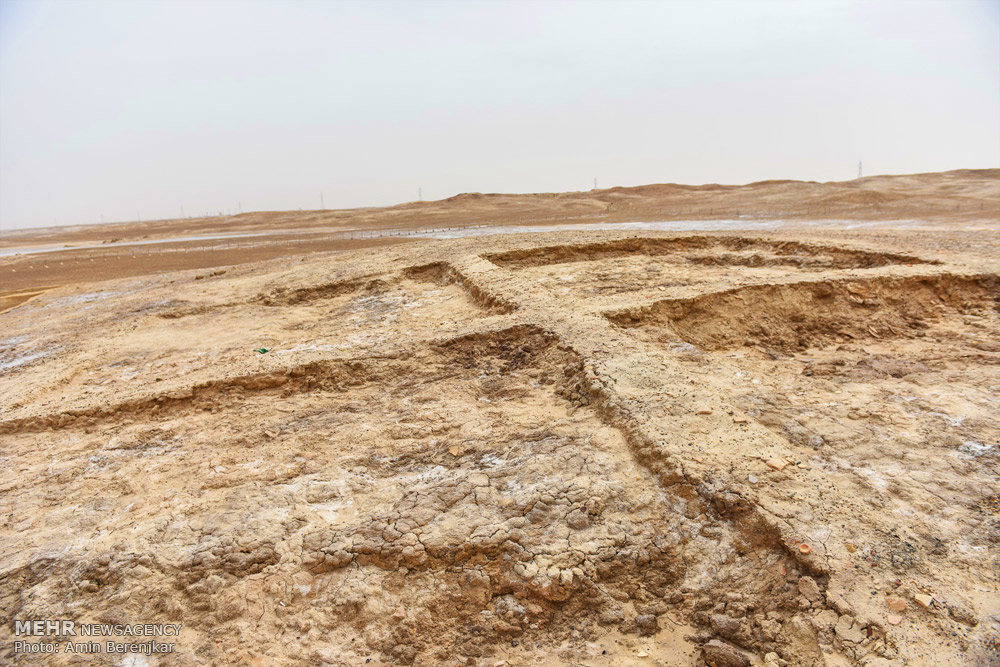
To stand on the site today, amid the wind and the dust, it takes an effort of imagination to picture the green landscape and flowing water that once sustained it. But the mounds themselves, dense with the debris of centuries, testify to how much life this now-arid basin once held. The desert that surrounds the ruins is, in a real sense, part of the story of how the city rose and, eventually, why it fell.
The scale of the settlement is worth dwelling on. At its greatest extent Shahr-i Sokhta was among the largest cities of the third millennium BC, comparable in size to major centers far to the west. That such a place grew up on the eastern edge of the Iranian world, rather than in the more famous river valleys of Mesopotamia or the Indus, is a reminder of how widely the roots of urban life were spread across ancient Asia.
Why They Called It the Burnt City
The evocative name Shahr-i Sokhta, meaning ‘Burnt City’ in Persian, comes from the layers of ash and burning found across parts of the site. Excavations revealed that the city suffered destruction by fire more than once during its long history, with major conflagrations sweeping through and leaving behind the scorched remains that gave the place its modern name centuries later.
Exactly why the city burned remains uncertain. Fire could come from many sources in an ancient town of mud brick and timber: accident, warfare, or deliberate destruction. What is clear is that the burning was serious enough to leave a lasting mark, both physically in the archaeological layers and in the name by which local people came to know the ruins long after the city itself was forgotten.
Ironically, fire that destroys can also preserve. Just as at other ancient sites, burning at Shahr-i Sokhta baked mud brick hard, carbonized organic materials, and sealed rooms full of objects beneath collapsed debris. Some of the finds that make the city so famous survived precisely because disaster froze a moment of the city’s life in place, protecting it for archaeologists thousands of years later.

The name, then, captures only one dramatic aspect of a much longer and richer story. The Burnt City was burnt, yes, but it was also rebuilt, and it lived on for many centuries as a flourishing center. The fires are part of its history, but so is the extraordinary creativity of its people, whose achievements have made the humble, ash-streaked mounds of Sistan famous far beyond Iran.
Local memory preserved the sense that something dramatic had happened here long before archaeologists arrived. The name given to the ruins by the people of the region carried the echo of catastrophe across the centuries, a folk recollection of fire and ruin attached to a place whose original name had been lost. When excavation confirmed the layers of burning, it validated a memory embedded in the very name of the site.
An Artificial Eye, Five Thousand Years Old
Among the most extraordinary discoveries at Shahr-i Sokhta is what may be the oldest known artificial eye in the world. In the grave of a young woman, excavators found a hemispherical object that had been placed in her eye socket, a prosthetic eye made from a lightweight material, possibly a mixture of natural tar and animal fat, dating to around 2900 BC.
The craftsmanship is astonishing. The surface of the artificial eye was engraved with a fine pattern of lines radiating from the center to imitate the iris, and it was even covered with a thin layer of gold. Tiny holes on either side show where a thread once held it in place, suggesting the woman wore it in life rather than having it placed only for burial. Marks on the socket hint that she had worn it for years.
This single object tells us a great deal. It reveals a society with the skill to craft a delicate prosthesis, the medical understanding to fit it, and, perhaps most movingly, a culture in which a woman with a disfiguring condition was cared for and able to live, apparently, a normal social life. It is a small artifact that opens a window onto the humanity of a people five thousand years gone.

The woman herself was tall for her time and seems to have been of some standing in the community. Whether the artificial eye was purely cosmetic or served some other purpose, its existence pushes back the history of prosthetics by millennia and stands as one of the most poignant finds from the ancient world, a testament to both technical ingenuity and simple human care.
Finds like this raise as many questions as they answer. We cannot know exactly how the artificial eye was made, how common such prosthetics were, or what the woman who wore it thought about it. But the object’s mere existence forces us to credit the people of Shahr-i Sokhta with a level of skill and care that overturns lazy assumptions about the limits of Bronze Age technology and compassion.
The Goblet That Moves
Another celebrated find is a small earthenware goblet decorated with a series of painted images running around its rim. Each image shows a wild goat, an ibex, in a slightly different position, reaching up toward the leaves of a tree. Viewed one after another in sequence, as the eye travels around the cup, the images give the impression of the goat leaping up to nibble the branches.
For this reason the goblet has been described, a little grandly, as the world’s oldest example of animation. Whether or not its makers intended it to be spun and watched as a moving picture, the deliberate sequence of poses shows a sophisticated understanding of how to suggest motion through a series of still images, the very principle that would one day underlie film and animation thousands of years later.
The goblet is a wonderful example of the artistry of Shahr-i Sokhta’s craftsmen. Its painting is confident and lively, and the choice to depict a familiar desert animal in a sequence of natural movements shows both keen observation and playful creativity. It has become one of the emblems of the site, a small object that captures the imagination far out of proportion to its size.

Like the artificial eye, the goblet reminds us not to underestimate the sophistication of Bronze Age societies. These were not primitive people fumbling toward civilization but skilled artists and thinkers, capable of subtle observation and clever invention. The Burnt City, for all its bleak name and setting, was clearly a place of considerable creativity and delight in the visual world.
A Board Game From the Bronze Age
Shahr-i Sokhta also produced one of the oldest board games ever discovered. Found in a grave, it consists of a rectangular wooden board, beautifully made in the form of a coiled serpent, together with playing pieces and a set of dice. Dating to around 2400 BC, it is a complete gaming set, testimony to the fact that the people of the Burnt City enjoyed their leisure as much as their labor.
The game appears related to a family of ancient race games known from Mesopotamia and elsewhere, in which players moved pieces around a track according to the throw of dice. The presence of such a game at Shahr-i Sokhta, in a form both elegant and elaborate, again underlines the city’s connections to the wider world of the ancient Near East and the shared culture of play that linked distant peoples.
That the board was carved in the shape of a coiled snake, with the squares running along its body, shows a delightful blend of function and artistry. This was no crude gaming board but a crafted object, valued enough to be placed in a grave to accompany its owner into the afterlife. It suggests that games held real meaning for these people, as sources of pleasure, competition, and perhaps ritual significance.

Discoveries like the board game do something valuable: they make the ancient past feel human and familiar. Across five thousand years, we can recognize the simple pleasure of a game played with friends or family, dice rattling, pieces moving around the board. The people of the Burnt City worked, traded, and buried their dead, but they also played, and that small fact brings them remarkably close.
The dice found with the game are themselves of interest, showing that the abstract idea of randomized play, of leaving part of the outcome to chance, was already well established. Games of this kind spread across the ancient world along the same routes as trade goods, and their appearance at Shahr-i Sokhta is one more thread linking this desert city to the shared civilization of the wider Bronze Age.
Craftsmen at a Crossroads of Trade
The wealth and creativity of Shahr-i Sokhta rested on its position at a crossroads of ancient trade. Situated between Mesopotamia and the Iranian plateau to the west, Central Asia to the north, and the great Indus valley civilization to the east, the city sat astride the routes along which precious materials and finished goods moved across a huge swath of Asia.
Archaeologists have found abundant evidence of craft production and long-distance exchange. Lapis lazuli, the deep blue stone prized throughout the ancient world, was worked here on its way from the mountains of Afghanistan toward the markets of Mesopotamia. Turquoise, carnelian, and other semiprecious stones were carved into beads and ornaments, and the city’s workshops turned raw materials into objects of beauty and value.
Beyond stoneworking, the people of Shahr-i Sokhta were skilled potters, metalworkers, weavers, and basket-makers. The dry conditions preserved even textiles and other organic materials that rarely survive, giving an unusually complete picture of the city’s industries. This was a manufacturing town as much as a trading one, adding value to the goods that passed through and building prosperity on the labor of its specialists.

The result was a cosmopolitan community plugged into the wider Bronze Age world. Objects and influences from distant cultures met and blended here, and the city’s own products traveled far in return. Shahr-i Sokhta was not an isolated desert outpost but a vibrant node in one of the earliest global networks of exchange, a place where the ancient world’s long-distance connections were made tangible in stone, metal, and cloth.
The workshops of the city have given archaeologists a detailed view of ancient manufacturing. Half-finished beads, waste material, tools, and raw stone found together allow the reconstruction of entire production sequences, showing how craftsmen transformed rough lapis or carnelian into finished ornaments. This is industrial archaeology at its richest, capturing not just the products but the very processes of Bronze Age craft.
A Society Without a Palace
One of the most intriguing things about Shahr-i Sokhta is what it seems to lack. Unlike many contemporary cities in Mesopotamia and elsewhere, it shows little sign of the trappings of centralized royal power. Excavators have found no grand palace, no obvious royal tombs towering over the rest, and no massive fortification walls of the kind that guarded other early cities. This absence is itself a discovery.
The evidence points instead toward a relatively egalitarian society. Houses across the residential areas are broadly similar, without the stark contrasts between grand mansions and hovels that mark strongly hierarchical societies. The graves in the vast cemetery, too, show differences in wealth but not the extreme gulf between a tiny elite and an impoverished mass that one might expect if a powerful ruling class dominated the city.
Some researchers have suggested that Shahr-i Sokhta may have been governed in a more communal or collective way, without the kind of dominant king or palace bureaucracy seen elsewhere. Studies of its burials have even pointed to women holding significant economic and social roles, with some of the richer graves belonging to women, hinting at a society organized along different lines than the male-dominated hierarchies often assumed for the age.
If these interpretations hold, Shahr-i Sokhta offers a valuable counterexample to the idea that early urban life always meant kings, palaces, and steep inequality. It suggests that there were different possible paths to complexity and prosperity, and that a large, wealthy, sophisticated city could flourish for centuries without the concentrated, coercive power we so often assume to be inseparable from civilization.
Of course, interpreting the absence of something is always tricky, and scholars rightly urge caution. Future excavation could yet reveal elite structures not yet found. But the consistent pattern across the site, the modest, similar houses, the lack of a dominating palace or citadel, the relatively even distribution of wealth in the graves, makes a genuinely strong case that this was a society organized quite differently from its royal neighbors.
The Cemetery and Its Secrets
Much of what we know about the people of Shahr-i Sokhta comes from its enormous cemetery, which spread across a wide area and held many thousands of graves accumulated over the centuries of the city’s life. The systematic study of these burials has given researchers an unusually rich picture of the population, its health, its customs, and its beliefs about death.
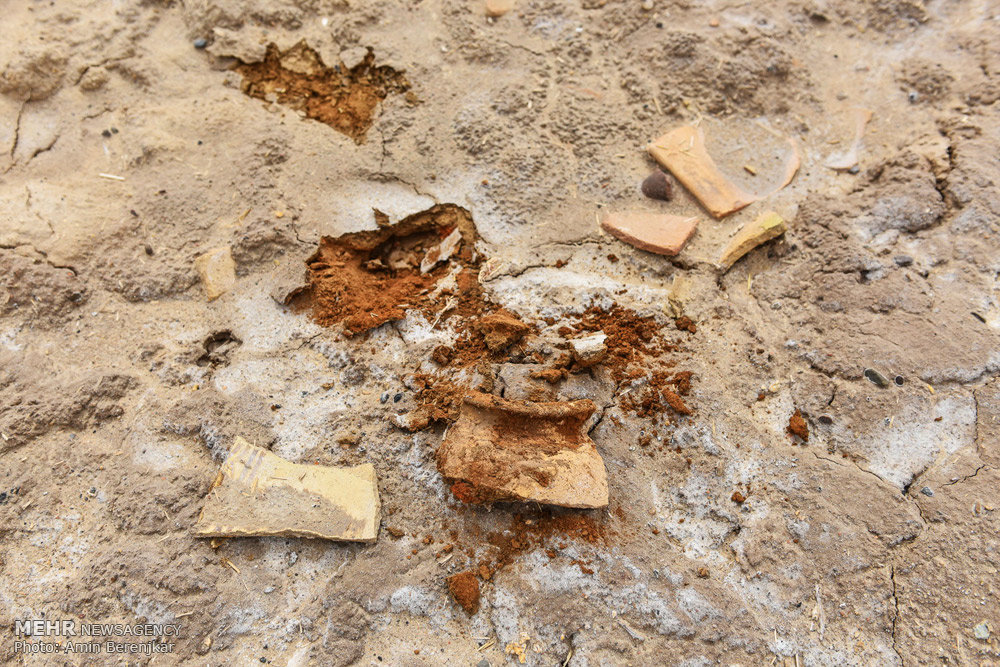
The graves varied in form and richness. Some were simple, others more elaborate, furnished with pottery, ornaments, tools, and sometimes remarkable objects like the board game or the woman with the artificial eye. The grave goods reflect both the wealth of individuals and the trade connections of the city, with imported materials and finished goods accompanying the dead into the afterlife.
Analysis of the human remains has revealed much about the living. Studies of bones and teeth shed light on diet, disease, and the hardships of ancient life, while the demographic makeup of the cemetery hints at the size and structure of the population. The care taken in many burials, and the objects placed with the dead, reflect a community with clear ideas about the proper treatment of its members after death.

The cemetery, in short, is a vast archive of ordinary and extraordinary lives. Through it we glimpse not just the famous individuals whose graves made headlines, but the broad mass of the city’s inhabitants: the craftsmen and traders, the women and men, the young and old who together made up the living community of the Burnt City across its many generations.
When the River Changed Its Mind
After flourishing for well over a thousand years, Shahr-i Sokhta declined and was ultimately abandoned around 1800 BC. The cause was almost certainly environmental. The city depended entirely on the waters of the Helmand river system, and when those waters shifted, whether through changes in the river’s course, drought, or the drying of the region, the foundation of the city’s life was pulled away.
The rivers of Sistan are notorious for changing their courses across the flat basin, and the delicate balance of water that made the region habitable could be upset by relatively small changes in climate or river behavior. As the water retreated, the farmland that fed the city would have failed, the trade that enriched it would have faltered, and the population would have had little choice but to leave.
The repeated fires that gave the city its name may have added to its troubles, but it was the loss of water, in the end, that seems to have sealed its fate. Without a reliable river, a city in the desert cannot survive, however clever its craftsmen or wide its trade connections. Shahr-i Sokhta was undone not by conquest but by the slow, implacable shifting of the environment around it.
Once abandoned, the city was never reoccupied on the same scale, and that is part of why it is so valuable to archaeologists. Because no later town was built on top of it, the Bronze Age city lies exposed and undisturbed beneath the desert, its layers accessible and its story readable. The very disaster that ended the city preserved it, in effect, as a time capsule of Bronze Age life.
Rediscovery and the Site Today
Modern archaeological work at Shahr-i Sokhta began in the 1960s, when an Italian mission started systematic excavations that revealed the site’s extraordinary richness. Iranian archaeologists later continued and expanded the work, and decades of careful research have uncovered the residential quarters, the industrial areas, the monumental buildings, and the vast cemetery, along with the celebrated individual finds.
The dry desert conditions that eventually doomed the city have proved a gift to archaeology, preserving organic materials, from wood and textiles to the artificial eye, in remarkable condition. This preservation, combined with the absence of later building over the site, has allowed researchers to reconstruct Bronze Age urban life at Shahr-i Sokhta in exceptional detail, making it a key site for understanding the era across a wide region.
For visitors, the site today is a vast expanse of low mounds and excavated areas in a stark desert landscape, with a museum and visitor facilities that help interpret what can be a challenging place to read with the untrained eye. The remoteness of the location means it sees far fewer visitors than Iran’s famous classical sites, but for those who make the journey it offers a powerful encounter with deep antiquity.
Its inscription as a World Heritage site has brought greater recognition and, with it, increased efforts at conservation and presentation. Shahr-i Sokhta is gradually taking its rightful place among the great early cities of the world, no longer an obscure name known only to specialists but a site whose discoveries have genuinely changed our understanding of the Bronze Age.
Reaching Shahr-i Sokhta requires real determination, as it lies far from Iran’s main tourist circuits in a remote and sometimes difficult border region. Yet that very remoteness has helped protect it, and for the traveler willing to make the effort, the reward is an encounter with one of the world’s great archaeological sites in something close to solitude, free of the crowds that throng more accessible ruins.
Nearby Places to Explore
Shahr-i Sokhta lies in the deep southeast of Iran, part of the long and layered history of the Iranian plateau. If the story of this Bronze Age city has captured your interest, the following sites carry the history of ancient Iran forward, from the earliest cities and empires to the great capitals of Persia.
- Susa — one of the oldest cities in the world, a great capital of Elam and later of the Persian Empire, layered with thousands of years of history.
- Chogha Zanbil — the magnificent Elamite ziggurat, one of the best-preserved stepped temples anywhere in the ancient Near East.
- Persepolis — the ceremonial capital of the Achaemenid Persian Empire, whose carved terraces and columns remain among the wonders of antiquity.
The Quiet Importance of a Forgotten City
Shahr-i Sokhta will never rival Persepolis for grandeur or fame, and its desolate setting hides its significance from the casual eye. Yet in its own quiet way it is one of the most important and thought-provoking sites of the ancient world. Its artificial eye, its animated goblet, and its board game each pushed back the frontiers of what we knew about Bronze Age ingenuity, and each brings us startlingly close to the people who made them.
More profound still is the picture it paints of a prosperous, creative, connected city that seems to have thrived for centuries without kings, palaces, or great walls. In an age when we often equate civilization with hierarchy and power, the Burnt City offers a different vision, of a society that found its own path to complexity and comfort. For that reason above all, this ash-streaked field of mounds in the Sistan desert deserves to be counted among the truly remarkable places of human history.
You May Like
Norse Explorers Reached Canada 500 Years Before Columbus