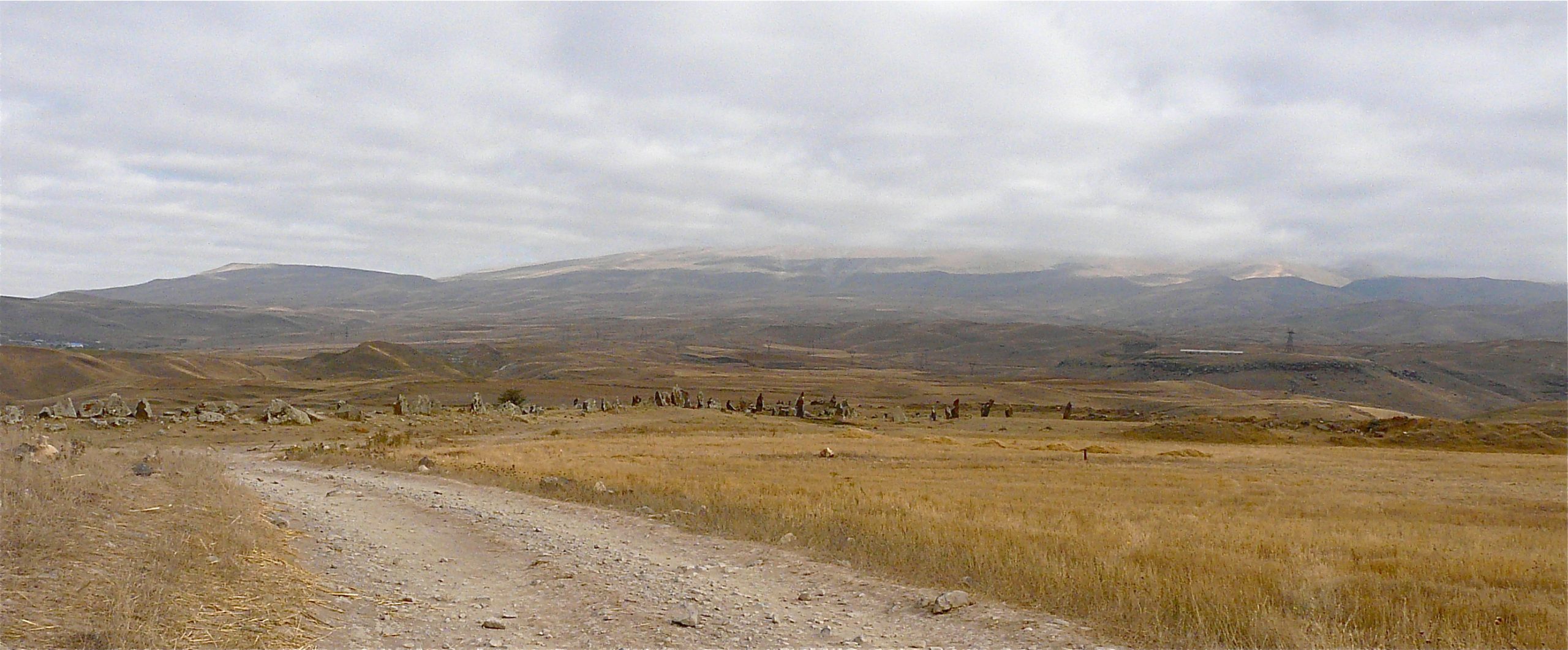
Zorats Karer, widely known as Karahunj or the Armenian Stonehenge, is a megalithic stone circle in southern Armenia where more than two hundred ancient standing stones still rise on a windswept plateau. There are more than two hundred of them, grey and lichen-stained, some barely knee-high and others taller than a person, arranged in a rough oval with straggling arms reaching out across the grass. Travelers who arrive expecting a neat, roped-off monument are often surprised. The stones sit in an open field, exposed to the same sun and snow that have weathered them since the Bronze Age, and you can walk right up to them and lay a hand on the cold basalt.
This is Zorats Karer, a prehistoric site near the town of Sisian in the province of Syunik. To many Armenians it is better known as Karahunj, and to the crowds of curious visitors who make the long drive up from Yerevan it has picked up a catchier nickname: the Armenian Stonehenge. That label has done more than any archaeologist to make the place famous, and it has also started an argument that has not really stopped for decades. Are these stones the remains of one of the oldest astronomical observatories on Earth, or are they something quieter and older still, a burial ground and gathering place whose original purpose we can only guess at?
The honest answer is that no one knows for certain, and that uncertainty is a large part of what makes Zorats Karer so compelling. It is a monument that has been measured, mapped, celebrated, and disputed, yet it still guards its secret. What follows is a tour of the site itself, the stories attached to it, the science that has been used to defend and to challenge those stories, and the quiet reality of what it feels like to stand among the stones today.
Contents
- A Field of Stones on the Roof of Armenia
- What the Names Karahunj and Zorats Karer Mean
- Walking the Circle: How the Site Is Laid Out
- The Holes That Started an Argument
- Is It Really an Ancient Observatory?
- Where the Skeptics Push Back
- A Burial Ground Before Anything Else
- How Old Are the Stones, Really?
- The Comparison With Stonehenge
- Visiting Zorats Karer Today
- Nearby Places to Explore
- Why Zorats Karer Still Matters
A Field of Stones on the Roof of Armenia
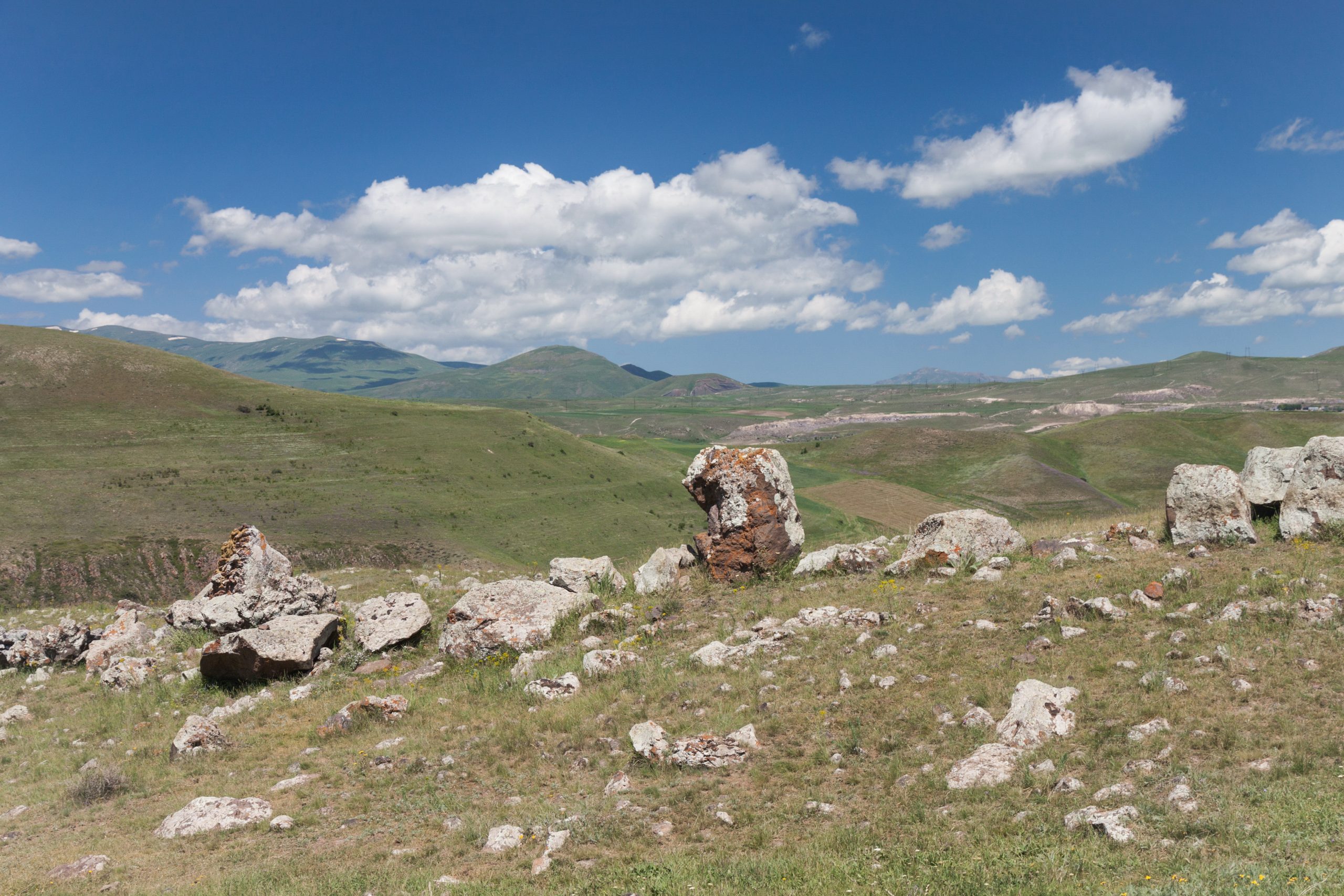
Southern Armenia is a land of high plateaus and deep gorges, and the drive to Zorats Karer climbs steadily until the horizon opens into rolling upland pasture. The site sits at roughly 1,770 meters above sea level, on a bluff overlooking the Dar River gorge. Up here the air is thin and clear, the wind rarely stops, and on a bright day you can see mountains folding away in every direction. It is exactly the kind of place a modern person might choose for a monument, and it is easy to imagine that the people who raised these stones felt the same pull toward the wide sky.
The stones themselves are blocks of local basalt, the dark volcanic rock that shapes so much of the Armenian highland. They were not quarried from far away or dragged over impossible distances. The raw material was close at hand, and the effort that went into the site was less about transport than about selection, standing, and arrangement. Some of the stones weigh up to ten tonnes, which is still no small task to move and set upright with muscle and rope, but the achievement here is one of patient organization rather than brute engineering.
Because the site is open and unfenced for most of its extent, it has a very different atmosphere from the manicured heritage parks of western Europe. Sheep sometimes graze between the megaliths. Wildflowers grow at their bases in early summer. There is no great processional avenue leading you toward a climax, no ticket booth funneling you through a single approach. You simply arrive, park at the edge of the field, and start walking into a landscape that has been marked by human hands since long before writing reached this part of the world.
That openness is both a gift and a problem. It makes the encounter with the stones feel raw and unmediated, which is thrilling. But it has also left the site vulnerable to erosion, to visitors climbing on fragile stones, and to the slow blurring of features that careful excavation might otherwise have recorded. Preservation efforts have improved in recent years, yet Zorats Karer remains a monument you meet on its own weathered terms.
There is something almost democratic about the way the plateau presents its monument. No grand entrance frames it, no visitor center rehearses an official story before you reach the stones. The landscape simply hands the site over to you, and whatever meaning you take from it you assemble yourself, standing in the grass with the mountains at your back.
What the Names Karahunj and Zorats Karer Mean
The site carries several names, and each one tells you something about how people have understood it. The oldest and most traditional is Zorats Karer, which is usually translated as the stones of the warriors or the army stones. Local tradition connected the site with soldiers, and one folk explanation held that the stones were raised as a memorial to men who fell in battle, or even that armies once mustered here before marching to war.
The name Karahunj, sometimes written Carahunge or Qarahunj, is the one that fuels the observatory theory. Enthusiasts have broken it into two parts, kar meaning stone and hunj interpreted as sound or voice, giving a poetic reading of speaking stones or singing stones. This interpretation is appealing, and it has been repeated so often that many visitors take it as established fact. Skeptical linguists point out that the reading is far from certain and that the modern popularity of the name owes a great deal to the very theory it is used to support.
There is a real village called Karahunj a short distance away, and the overlap of names has added to the confusion. Some researchers argue that the site was renamed or at least re-emphasized in the twentieth century precisely to strengthen its identification as an ancient observatory. Whatever the truth, the tangle of names is a reminder that the meaning we attach to old places is often shaped as much by recent storytelling as by ancient reality.
For clarity, most archaeological literature now uses Zorats Karer as the primary name, while acknowledging Karahunj as the popular alternative. Both refer to the same field of stones, and the choice of name often signals which side of the great debate a writer leans toward.
Walking the Circle: How the Site Is Laid Out
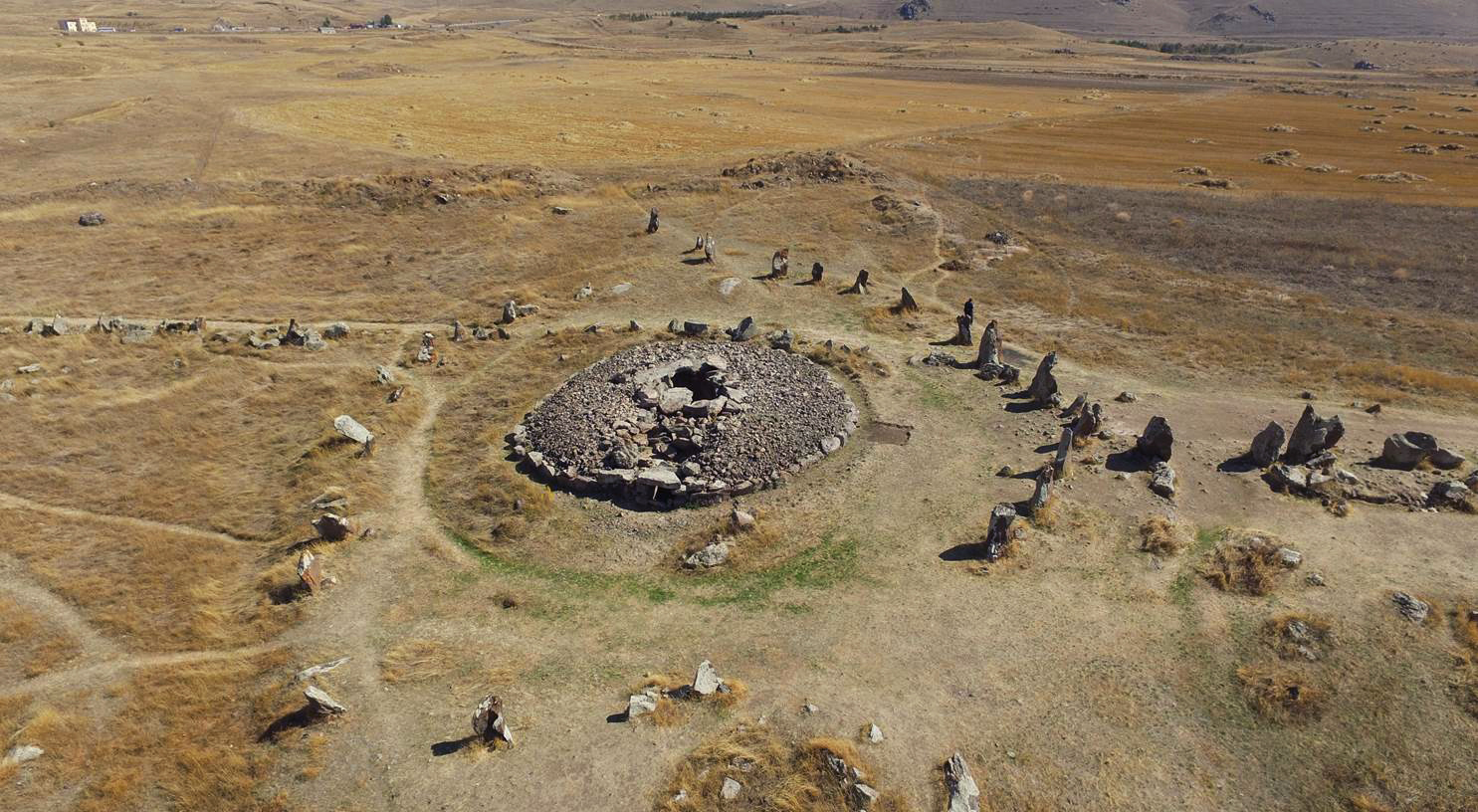
Walking the site, you begin to sense a structure beneath the apparent chaos. At the heart of Zorats Karer lies a central group of stones surrounding what appears to be a cluster of burial cists, stone-lined graves set into the ground. From this core, two long arms of standing stones stretch out to the north and the south, giving the whole layout a loose resemblance to a giant letter or a many-armed figure when seen from above.
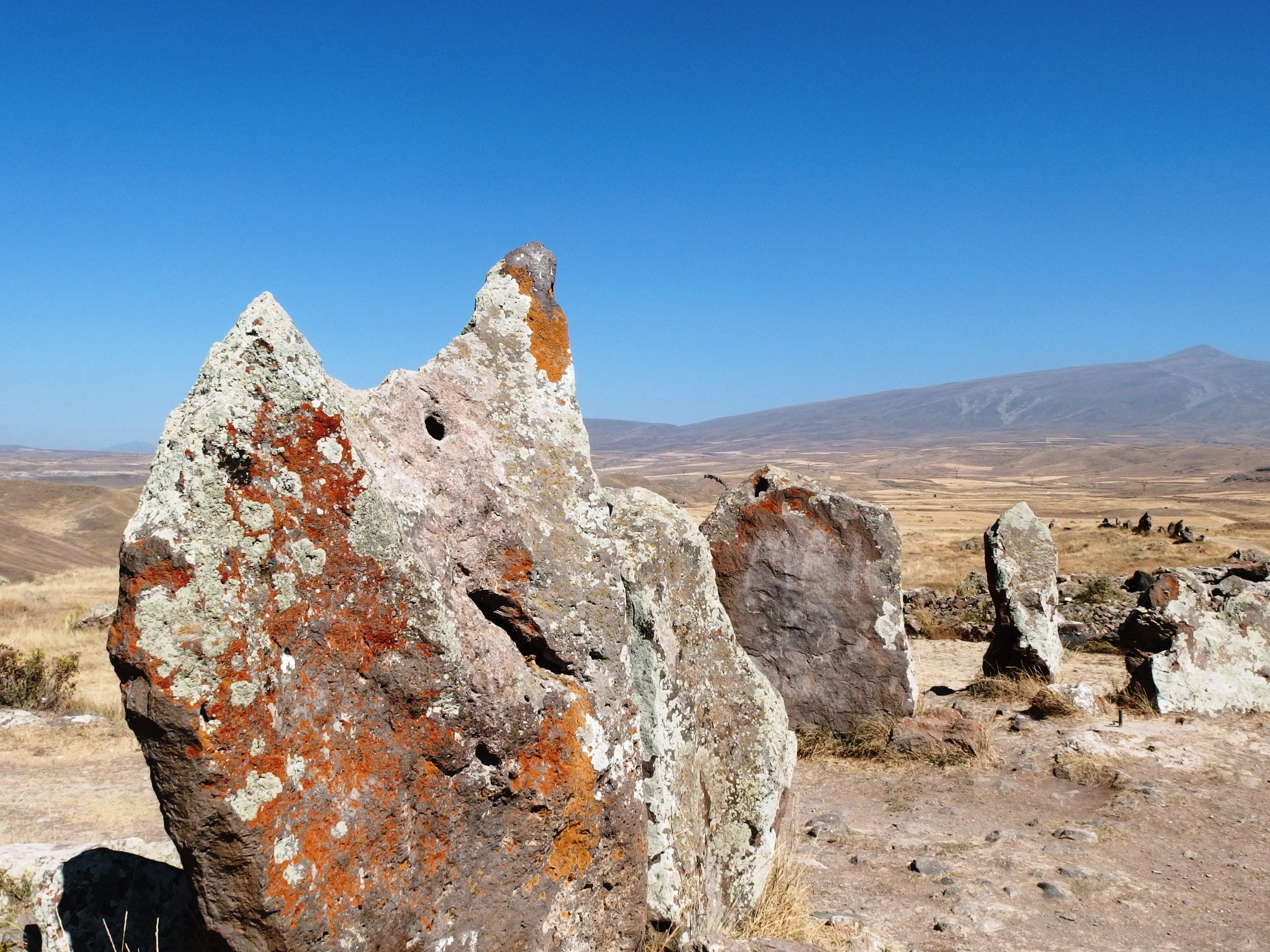
In total the site contains more than two hundred stones, though counts vary depending on how one treats fallen and fragmentary blocks. Roughly eighty of them carry the feature that has made the site famous, a smooth circular hole bored near the top. The stones are not identical. Some are slender and pointed, others broad and slab-like, and their heights range from modest markers to imposing uprights. This irregularity is part of what gives the field its strange, organic character.
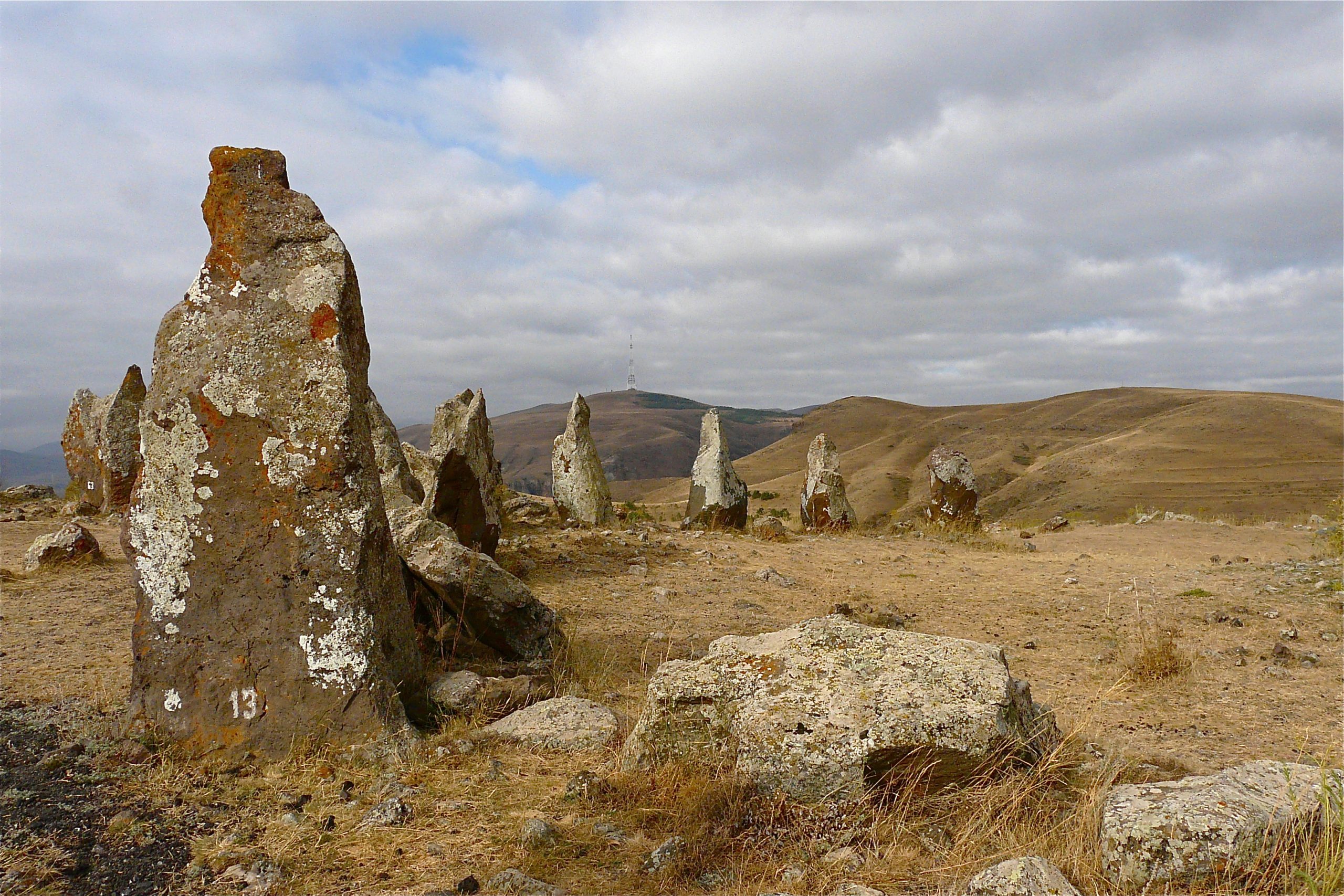
The arrangement is not a perfect circle in the way Stonehenge’s outer ring is. It is better described as an oval enclosure with radiating rows, and the exact geometry has been mapped many times with subtly different results. This lack of a single agreed plan is itself significant, because so many of the astronomical claims depend on precisely where each stone stands and which direction its hole points.
Seen from the ground, the overall effect is of a crowd frozen in place. The stones lean at various angles, some upright and some tilted by centuries of frost and settling soil. Move among them and the sightlines constantly shift, so that stones which seemed to line up from one spot fall out of alignment from another. That shifting quality is exactly why the site rewards slow, patient walking rather than a quick glance from a single viewpoint.
Photographers quickly learn that the site resists a single defining image. From one angle the rows seem to march in disciplined lines; from another they dissolve into a random scatter. That refusal to resolve into one clean picture is oddly fitting for a monument whose purpose has never resolved into one clean answer either.
The Holes That Started an Argument
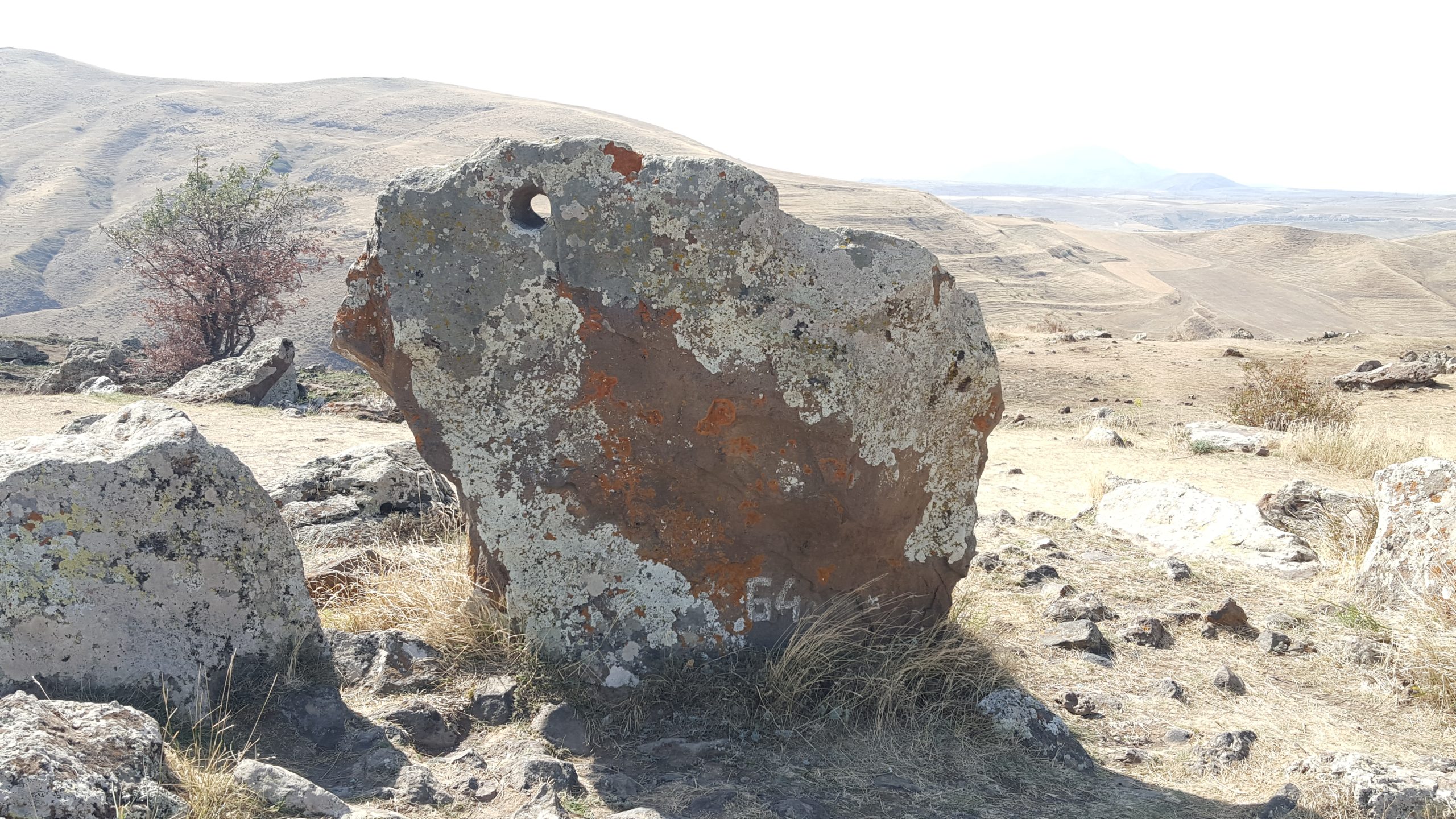
The bored holes are the single most distinctive feature of Zorats Karer, and they are the reason anyone ever thought of the site as an observatory at all. Roughly a third of the stones have one, a neat cylindrical perforation a few centimeters across, drilled through the upper part of the stone. Many of them are angled, tilted toward the sky or toward the horizon rather than lying flat, and it is this angling that first suggested they might have been used for sighting.
Stand behind one of these stones and look through its hole, and you frame a small circle of distant landscape or sky. It is genuinely evocative. It is easy to imagine an ancient watcher pressing an eye to the opening and waiting for a star, the moon, or the rising sun to appear in the frame. The holes are too regular and too deliberate to be natural, so whoever made them clearly wanted these apertures for a reason.
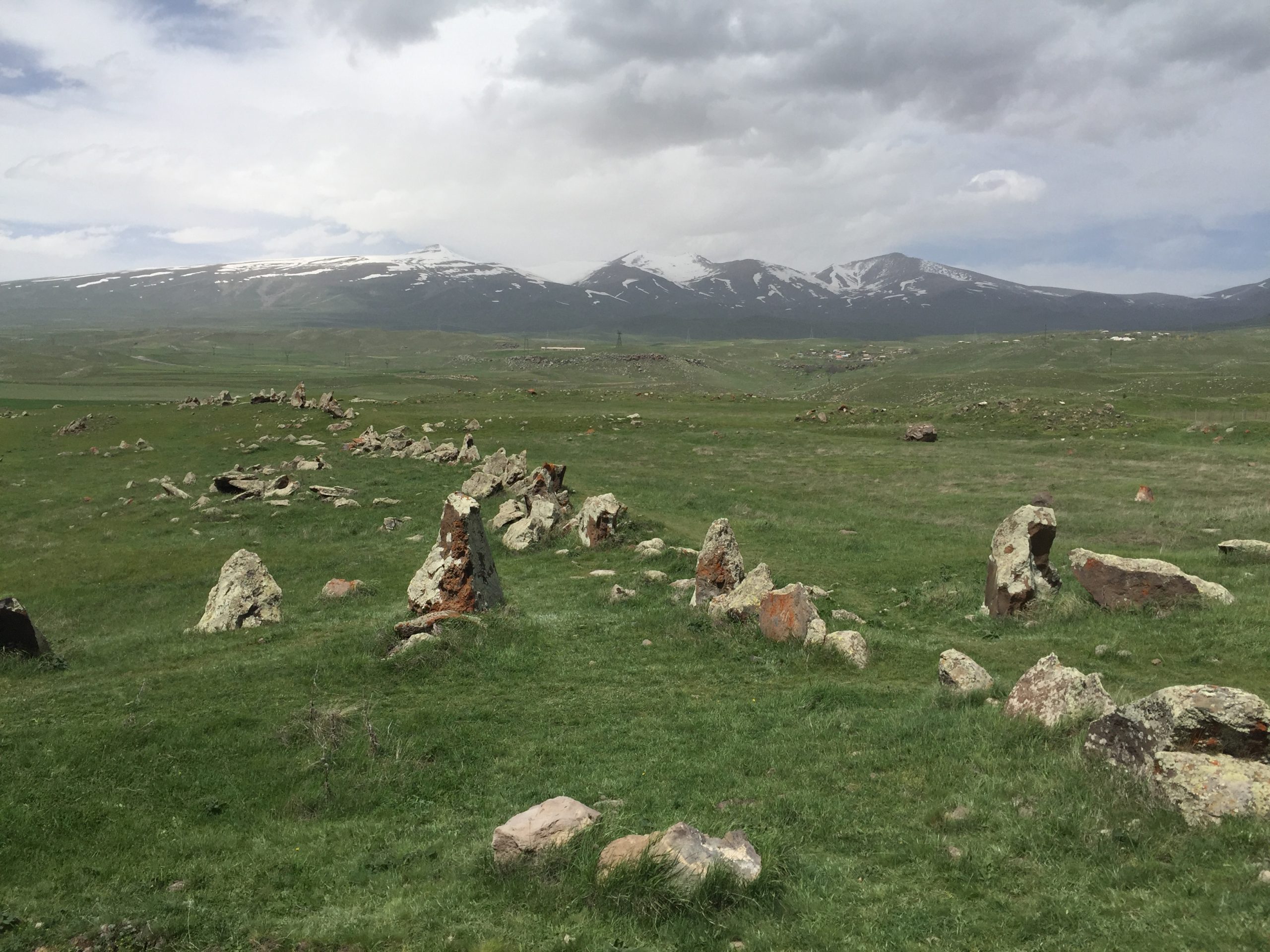
But a hole that frames the sky is not the same as a hole that was made to frame the sky for astronomy. Critics note that bored stones appear at many prehistoric sites across the region and beyond, and that holes could have served to lash stones together, to anchor ropes or wooden structures, to tether animals, or for ritual purposes we cannot recover. A hole is a tool with many possible uses, and reading a single one back into the deep past requires more than the shape alone can provide.
There is also the awkward question of the angles. Supporters of the observatory theory measured many of the holes and reported alignments with significant astronomical events. Skeptics counter that stones tilt and shift over thousands of years, that fallen stones have sometimes been re-erected, and that with dozens of holes pointing in many directions, some will inevitably line up with something in the sky by pure chance.
Curiously, the holes vary in their finish and their placement from stone to stone, which complicates any single explanation. A few are clean and cylindrical, others rougher and shallower, and their heights and angles do not follow one consistent rule. Whatever the perforations were for, they seem to have been made over time and perhaps for more than one reason, rather than as a single coordinated act of instrument-building.
Is It Really an Ancient Observatory?
The observatory theory is inseparable from the work of a small number of Armenian researchers who championed it energetically through the late twentieth and early twenty-first centuries. They surveyed the stones, measured the holes, and argued that the site functioned as a sophisticated astronomical instrument, capable of tracking the sun, the moon, and certain bright stars. In the boldest versions of the claim, Zorats Karer was presented as one of the oldest observatories in the world, older even than Stonehenge, and evidence that the ancient inhabitants of the highlands possessed advanced astronomical knowledge.
These claims found a receptive audience. National pride, the romance of a lost science, and the sheer strangeness of the stones all combined to make the observatory story irresistible. It spread through popular articles, television segments, and travel guides, and it is now the version most visitors carry with them when they arrive. The nickname Armenian Stonehenge did the rest, anchoring the site firmly in the global imagination as a place of ancient sky-watching.
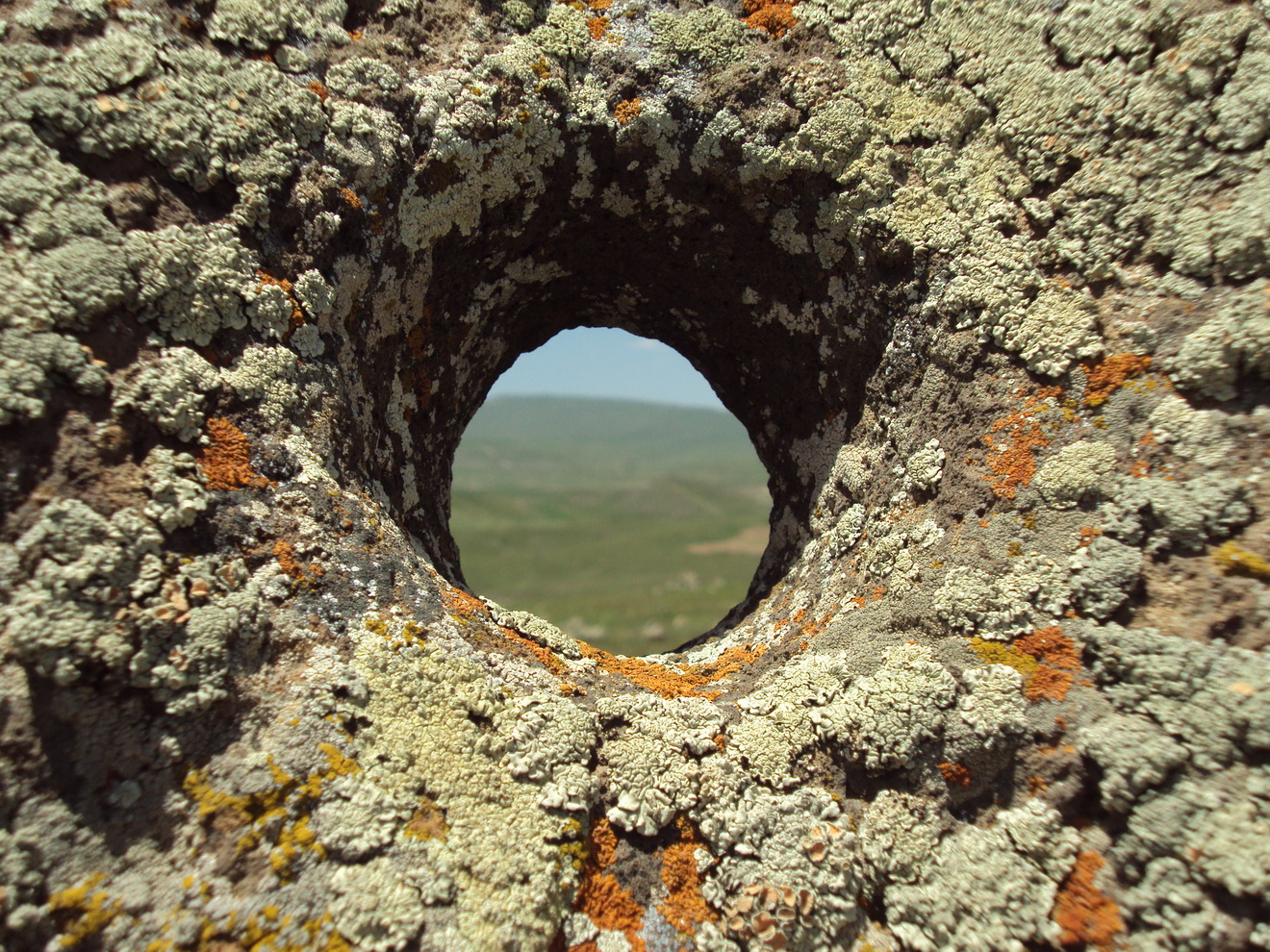
It would be unfair to dismiss the theory as pure fantasy. The people who built and used Zorats Karer certainly lived under a spectacular sky, and prehistoric communities across the world did track the seasons, the solstices, and the movements of the moon for practical and ritual reasons. It is entirely plausible that the builders of this site were attentive to the heavens. The disagreement is not really about whether ancient people watched the sky, but about whether these specific stones and holes were engineered as precise instruments to do so.
That distinction matters. There is a wide gap between a community that noticed where the sun rose at midsummer and a purpose-built observatory with deliberate sightlines calibrated to particular stars. The observatory theory asks us to accept the stronger claim, and it is that stronger claim that has drawn the sharpest criticism.
It is worth remembering, too, how much the theory owes to the particular moment in which it flourished. In the decades when Armenia was reclaiming and celebrating its ancient heritage, the idea of a homegrown observatory older than Stonehenge carried real emotional weight. Understanding that context does not settle the science, but it helps explain why the claim took hold so firmly and traveled so far.
Where the Skeptics Push Back
Mainstream archaeologists have generally been cautious or openly critical of the observatory interpretation. Their objections are not motivated by any wish to diminish the site, but by the ordinary standards of evidence that any such claim must meet. The core problem is that astronomical alignments are notoriously easy to find and hard to prove. Given enough stones, enough holes, and enough celestial targets to choose from, a determined searcher can nearly always turn up impressive-looking matches.
There is also the matter of dating. To argue that a stone points at where a particular star rose, you need to know both the exact position of the stone in antiquity and the position of that star at the time, since the sky slowly shifts over thousands of years. If the stones have moved, or if the proposed date of construction is uncertain by many centuries, the alignments lose their precision. Critics point out that many of the stones have clearly tilted or fallen and been reset, undermining confidence in any measurement taken today.
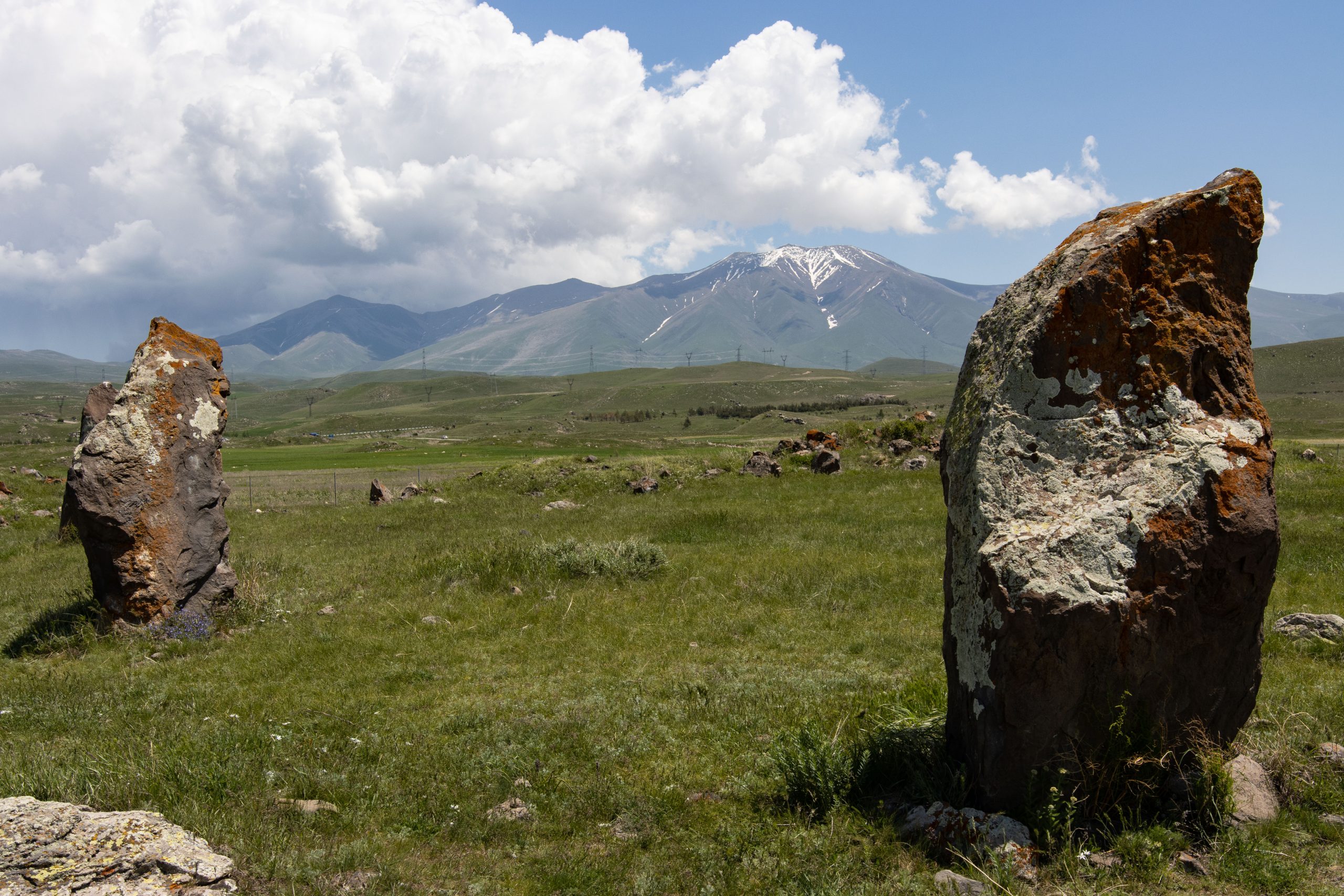
A second line of criticism concerns the site’s primary function. Excavations have shown that the central area is dominated by burials, and to many specialists this suggests the monument was above all a place of the dead, a necropolis and ceremonial ground, rather than a scientific installation. The astronomical features, if they are astronomical at all, would then be secondary to a fundamentally funerary and ritual purpose.
None of this proves that the builders ignored the sky. The skeptical position is more modest than that. It simply holds that the extraordinary claim of a precise ancient observatory has not been demonstrated to the standard such a claim requires, and that the simpler explanation, a burial ground and gathering place with stones that may have had various symbolic and practical roles, fits the evidence more comfortably.
A Burial Ground Before Anything Else
Beneath the debate about stars lies a quieter and better-supported story. The central cluster of Zorats Karer contains stone-lined graves, and archaeological work in and around the site has recovered burials along with pottery and other materials typical of the Bronze Age and Iron Age cultures of the Armenian highland. Before it was ever an observatory in anyone’s imagination, this was a place where the dead were laid to rest.
That fits a broad pattern across the ancient Caucasus and Anatolia, where communities marked important places with megaliths, raised burial mounds, and gathered at sites that combined the functions of cemetery, sanctuary, and meeting ground. A monument did not need to have a single, narrow purpose. It could be a place to bury ancestors, to hold seasonal ceremonies, to mark territory, and to gather the scattered families of a region, all at once.
Understood this way, the standing stones take on a different resonance. They may have marked graves, commemorated the dead, or defined a sacred enclosure. The effort of raising them would have bound the community together in shared labor, and the finished monument would have stood as a permanent statement of belonging on the landscape. The sky above may well have mattered to the people who gathered here, but their most tangible concern, judging by what lies in the ground, was the dead and the continuity of the living community around them.
This funerary reading does not make Zorats Karer any less remarkable. If anything, it deepens the site by connecting it to the real, documented lives of highland communities across long stretches of prehistory, rather than resting its fame on a contested claim about ancient astronomy.
How Old Are the Stones, Really?
Putting a firm date on Zorats Karer is difficult, and the difficulty is one of the reasons the debates run so hot. Estimates for the age of the site range widely. The most enthusiastic proponents of the observatory theory have suggested dates of many thousands of years, in some versions reaching back seven or eight thousand years and thereby claiming priority over the more famous monuments of the west. More conservative assessments, grounded in the excavated burials and associated finds, tend to place the main activity in the Bronze Age and Iron Age, roughly in the second and first millennia before the common era, while allowing that some features could be older.
The trouble is that standing stones are inherently hard to date. Stone itself cannot be radiocarbon dated, so archaeologists must rely on organic material found in secure association with the stones, such as remains within the burials or charcoal in undisturbed layers. Where a site has been disturbed by later reuse, by early and poorly recorded digging, or by the simple churning of centuries of frost and farming, those secure associations can be hard to establish.
What can be said with reasonable confidence is that Zorats Karer was in use during the metal ages of the Armenian highland, a period when the region supported organized communities capable of substantial collective projects. Whether the very first stones were raised centuries or millennia before that remains open. The honest scholarly position is a range rather than a single dramatic number, and readers should be wary of any source that states an exact and very early date as settled fact.
This uncertainty is frustrating for anyone who wants a tidy headline, but it is also a fair reflection of the state of knowledge. Zorats Karer has never received the sustained, large-scale, modern excavation that a monument of its interest deserves, and until it does, its precise chronology will keep a good deal of its mystery.
The absence of a definitive excavation report is keenly felt here. Where other famous monuments have shelves of published stratigraphy and radiocarbon dates, Zorats Karer has relatively little, and much of what exists is scattered or contested. Filling that gap with modern, carefully recorded fieldwork would do more to resolve the arguments than any number of fresh alignment measurements.
The Comparison With Stonehenge
The nickname Armenian Stonehenge is a marketing triumph and a source of endless confusion. The comparison is natural enough. Both sites are open-air arrangements of standing stones on high ground, both are prehistoric, and both have attracted astronomical interpretations. For a visitor trying to picture Zorats Karer before arriving, the shorthand does useful work.
But the two monuments are quite different in character. Stonehenge is a tightly engineered structure of enormous shaped stones, some carried over great distances, capped with lintels and set in a precise, planned geometry that clearly took generations of coordinated effort to build. Zorats Karer, by contrast, is a looser, more open field of unshaped local blocks, closer in spirit to the many megalithic cemeteries and standing-stone sites found across the Caucasus than to the monumental architecture of Salisbury Plain.
The comparison also flattens what is genuinely distinctive about the Armenian site, above all its bored stones, which have no real parallel at Stonehenge. If Zorats Karer is remarkable, it is remarkable on its own terms, as a highland necropolis and gathering place with a unique population of perforated megaliths, not as a lesser copy of a British monument it never resembled closely in the first place.
There is a gentle irony in the borrowed fame. The Stonehenge label brings visitors who might otherwise never have heard of Sisian, and their interest helps protect and fund the site. Yet the same label sets up expectations that the stones cannot meet, and some travelers leave mildly disappointed that Zorats Karer is not a towering ring of dressed monoliths. The site rewards those who arrive ready to appreciate it for what it actually is.
Perhaps the most useful way to hold the comparison is to treat it as an invitation rather than a definition. Let the name Armenian Stonehenge get you up the mountain, and then set it aside once you arrive. The stones deserve to be met without a foreign template laid over them, judged against the highland world that produced them rather than a monument a continent away.
Visiting Zorats Karer Today
Reaching Zorats Karer takes commitment. The site lies in Syunik, in Armenia’s mountainous south, a long drive from Yerevan along winding roads that climb through some of the country’s most dramatic scenery. Most visitors combine the trip with the nearby town of Sisian and other attractions of the region, since the journey is too long to make casually for the stones alone.
Once there, the experience is refreshingly unpackaged. There is little in the way of formal infrastructure, and for the most part you are free to wander among the megaliths at your own pace. Early morning and late afternoon are the finest times, when the low sun rakes across the field and throws long shadows from every stone, and the holes catch the light in ways that make the observatory legend feel briefly convincing. The wind is almost constant, so a jacket is wise even in summer.
Visitors are asked to treat the site with care, to avoid climbing on the stones, and to remember that this is both an archaeological monument and, in the deepest sense, a burial ground. The lack of fences is a privilege that depends on people behaving responsibly. Erosion and casual damage are real threats to a site that has survived thousands of years largely undisturbed.
For all the arguments that swirl around it, Zorats Karer is at its best experienced quietly. Stand in the middle of the field, let the debates fall away, and simply take in the improbable fact of it: a crowd of stones raised by people whose names and language and beliefs are almost entirely lost, still standing where they placed them, still framing the same sky. Few places make the depth of the human past feel so immediate.
Nearby Places to Explore
If the ancient sites of the Armenian highland draw you in, several others in the same region make natural companions to a visit to Zorats Karer. Each opens a different window onto the long story of this land, from fortified capitals to sun temples and Bronze Age metalworking towns.
- Erebuni — the Urartian fortress above Yerevan whose founding inscription gives the Armenian capital one of the most precisely dated origins of any ancient city.
- Garni — Armenia’s elegant Greco-Roman temple to a sun god, perched above a gorge of natural basalt columns.
- Metsamor — a Bronze Age settlement and metalworking center in the shadow of Mount Ararat, where the highland’s early mastery of metal comes to life.
Why Zorats Karer Still Matters
Zorats Karer occupies an unusual place in the story of the ancient world. It is famous, yet poorly understood; celebrated as an observatory, yet most securely known as a place of the dead; compared endlessly to a distant British monument, yet genuinely unlike it. That web of contradictions is not a failure of the site but a measure of how much it still has to teach, and how carefully any honest account of it must be written.
Whatever the final verdict on its bored stones and their angles, the field above the Dar gorge remains one of the most atmospheric prehistoric places in the Caucasus. It reminds us that the deep past resists our tidy explanations, that a monument can hold more than one truth at once, and that some of the most powerful encounters with history happen not in museums but out in the open, with the wind blowing and the stones simply standing there, waiting, as they have for thousands of years.
You May Like
Blarney Castle: The Irish Fortress That Gave the World a Word