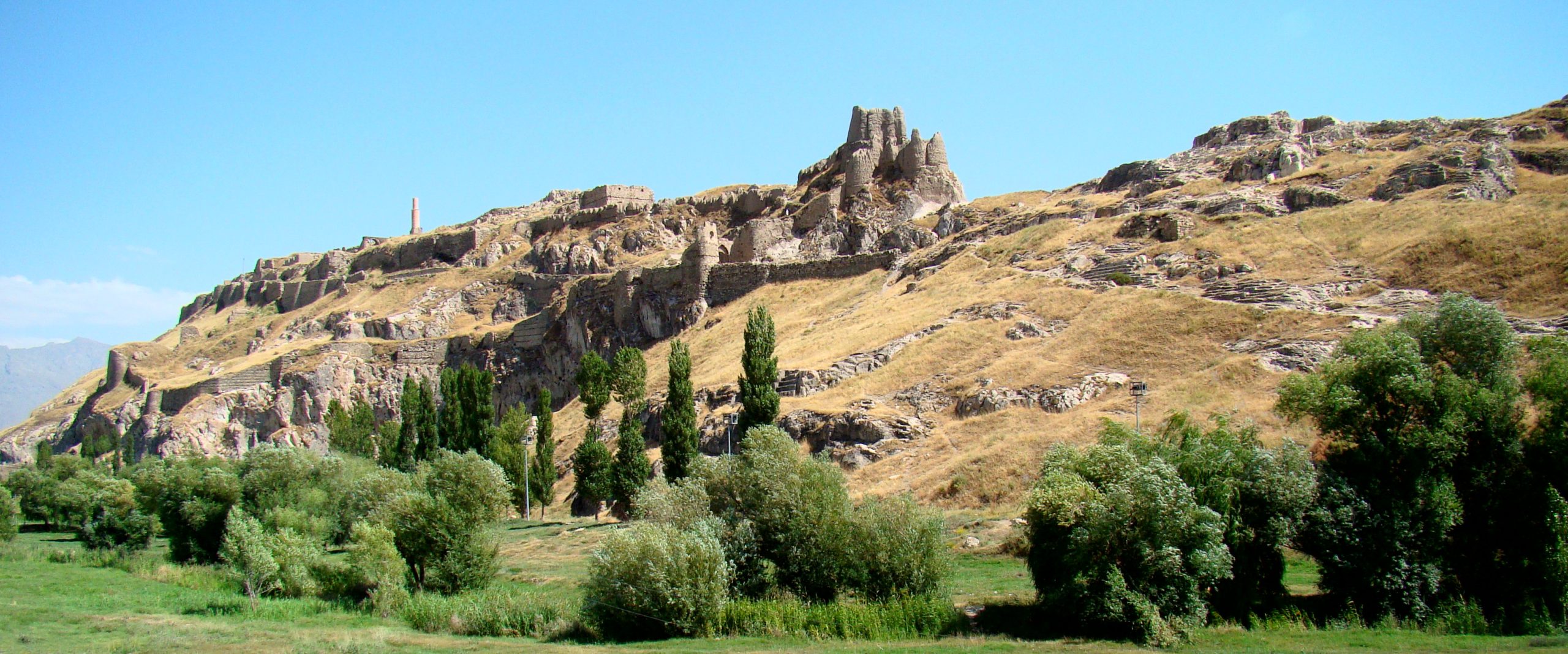
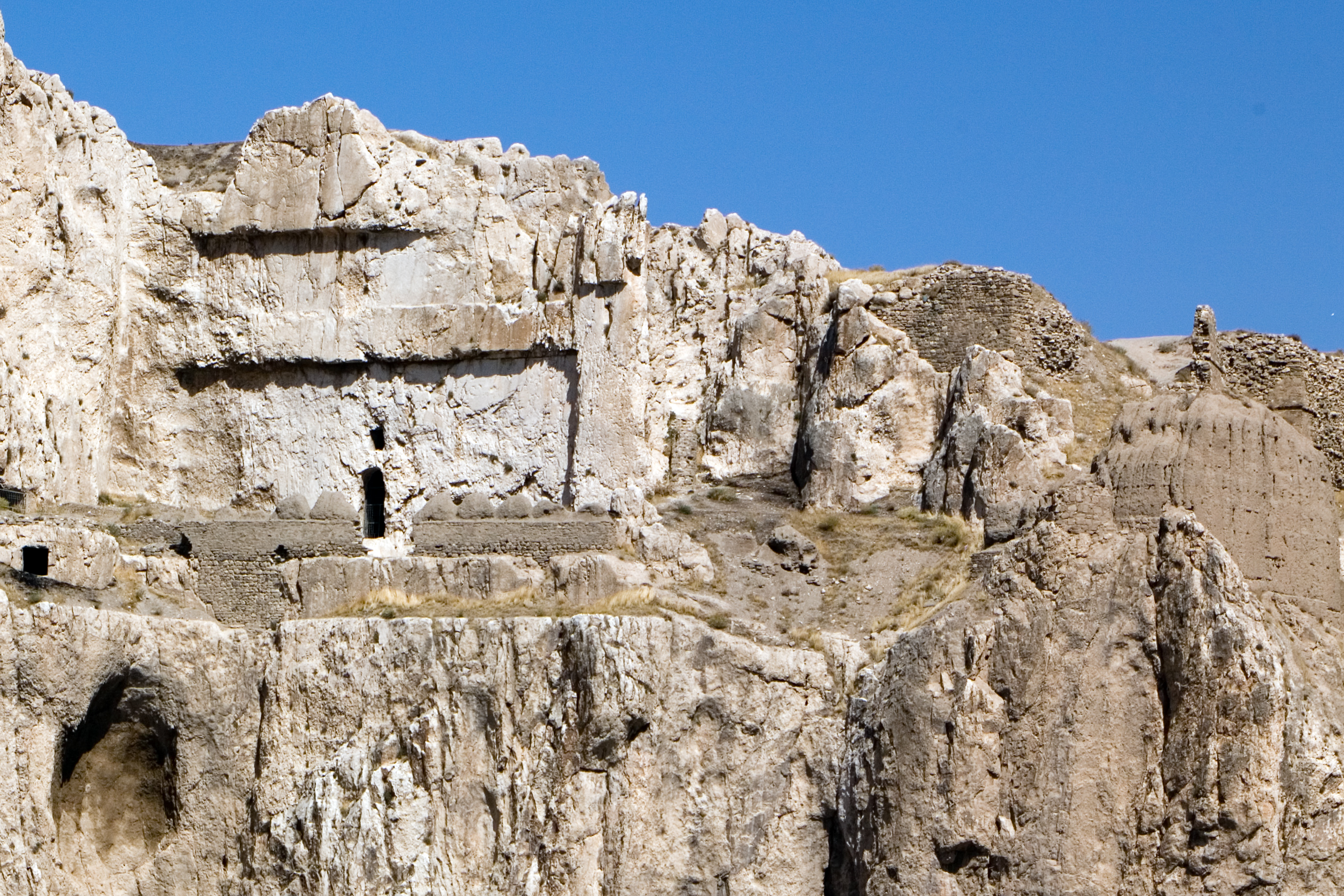
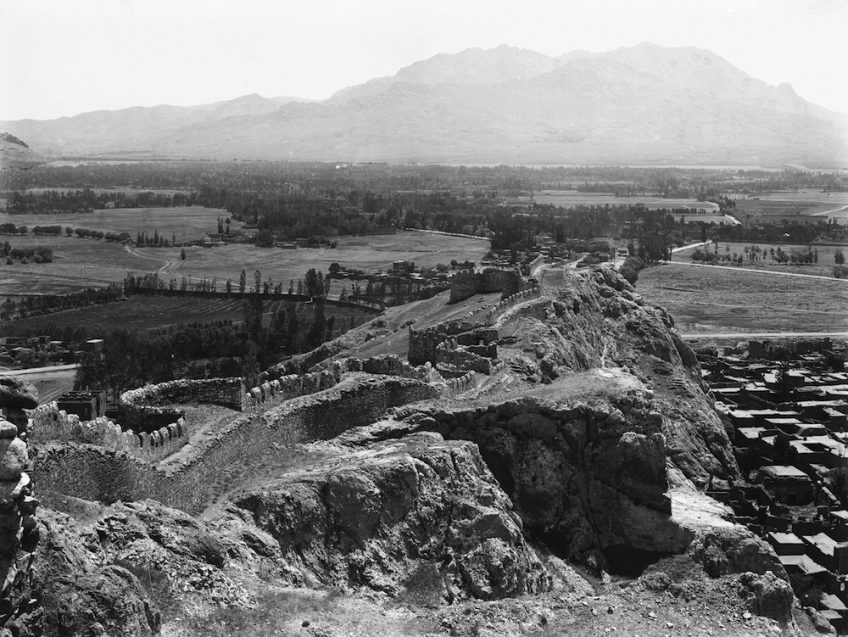
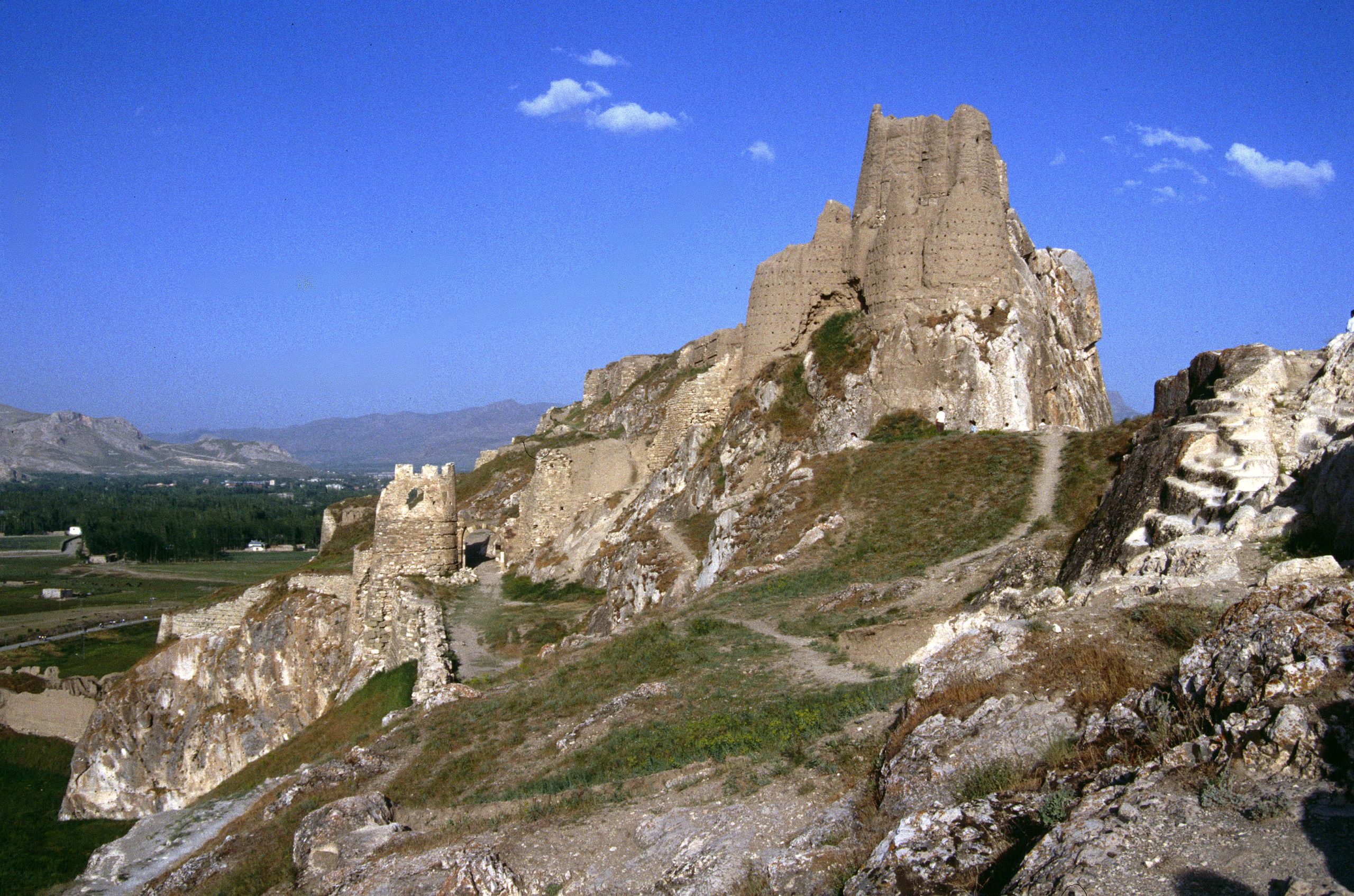
Tushpa, the ancient Urartian capital known today as Van Fortress, rises on a rock above Lake Van in eastern Turkey, its citadel carved from stone nearly three thousand years ago. It is a natural fortress, steep-sided and commanding, with the shining expanse of the great lake on one side and mountains ringing the horizon on the other. For nearly three thousand years people have built on this rock, but its first and greatest builders were the kings of a highland kingdom that once rivaled the mighty empire of Assyria. They called their capital Tushpa, and the rock still carries their name cut into its living stone.
Today the site is known as Van Fortress, or Van Kalesi, and the layers of later castles piled on top can make it easy to overlook how old the place really is. Yet beneath the medieval walls and the Ottoman additions lies the founding work of a civilization that most people have never heard of: Urartu, the kingdom that dominated the mountains around Lake Van in the early first millennium before the common era. Tushpa was its heart, and the fortress is one of the best places on earth to touch what remains of it.
The story of Tushpa is the story of a people who mastered a harsh mountain landscape, built in stone on a monumental scale, wrote their deeds in cuneiform borrowed from their enemies, and then vanished so completely that even their name had to be recovered by later scholars. This is an account of that kingdom, the capital it raised on the rock above Lake Van, and what a visitor can still see there today.
Contents
- A Rock Above the Great Lake
- The Kingdom the Assyrians Called Urartu
- Founding a Capital on Living Stone
- The King Who Left His Name in the Cliff
- Engineering Water in a Highland Kingdom
- Royal Tombs Cut Into the Fortress
- Rivals of Assyria
- How Urartu Came to an End
- Layers of Later Rulers on the Same Rock
- Climbing Van Fortress Today
- Nearby Places to Explore
- Why Tushpa Still Matters
A Rock Above the Great Lake
The setting of Tushpa is the first thing that explains it. Lake Van is one of the largest lakes in the region, a vast body of soda-rich water sitting high in the eastern Anatolian mountains, and the rock of Van rises directly from the plain near its eastern shore. The natural ridge is narrow, long, and steep, a ready-made stronghold that needed only walls and gates to become almost impregnable by the standards of its age.
For a kingdom whose whole character was shaped by mountains, this rock was the perfect royal seat. It offered security, a commanding view over the surrounding plain, and access to the water and fertile land around the lake. A ruler standing on its heights could see danger approaching from far off and could look out over the territory his power depended on, an ideal combination of safety and symbolism.
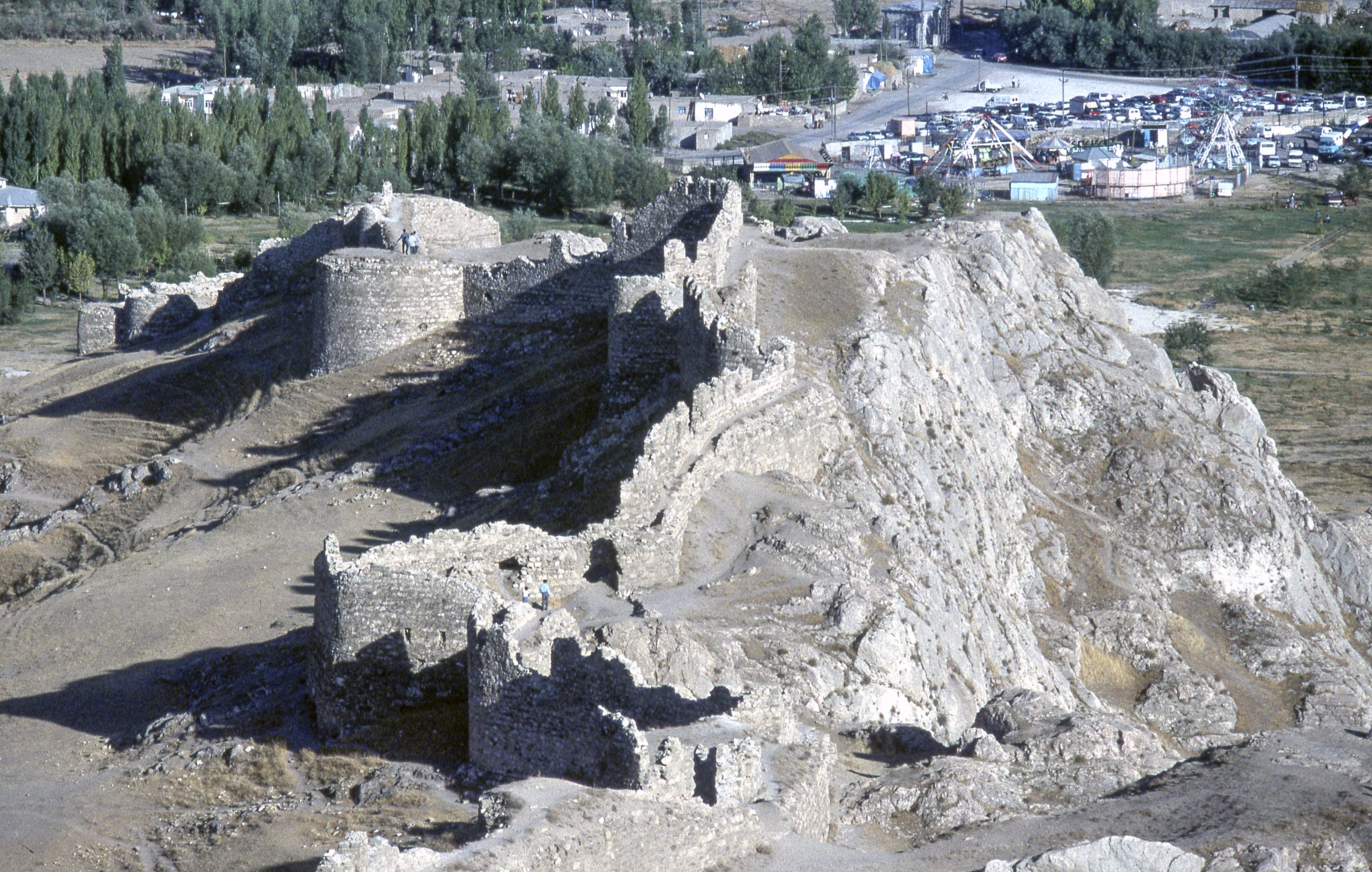
The Urartian builders worked with the rock rather than against it. They cut steps, chambers, platforms, and channels directly into the stone, and they raised massive walls of finely fitted masonry along the ridge. The result was not so much a building placed on a hill as a hill reshaped into a citadel, the natural and the man-made fused into a single monumental whole.
Standing beneath the rock today and looking up at its sheer flanks, it is easy to understand why the kings of Urartu chose this spot above all others. Few natural positions in the region combine defensibility, visibility, and access to resources so completely, and the long history of building on the same rock, stretching from Urartu to the Ottomans, is the clearest proof of how good the choice was.
There is a particular quality to arriving at the rock in the changing light of morning or late afternoon, when the low sun rakes across the stone and picks out the cut steps and worked surfaces that a midday glare tends to flatten. At those hours the human labor invested in the rock becomes suddenly legible, and the citadel reads less as a natural ridge than as the deliberate creation it truly is.
The Kingdom the Assyrians Called Urartu
Urartu is a name that comes to us mostly from the records of its great rival, Assyria, which is why the kingdom is sometimes still called by that Assyrian term. The Urartians themselves seem to have called their land Biainili, a name that survives, faintly, in the modern word Van. From roughly the ninth to the sixth centuries before the common era, this kingdom was one of the major powers of the ancient Near East, controlling a wide sweep of mountainous territory across what is now eastern Turkey, Armenia, and northwestern Iran.
It was a kingdom built on and for its landscape. The Urartians were masters of highland life, skilled at farming the mountain valleys, managing water in a dry and rugged terrain, working metal, and building fortresses on commanding heights throughout their realm. Their power rested on a network of such strongholds, and Tushpa was the greatest of them, the royal capital from which the whole system was governed.
The Urartians adopted the cuneiform writing system from Mesopotamia and used it to record the deeds of their kings in their own language, a tongue unrelated to the Semitic languages of Assyria and possibly connected to the earlier Hurrian language of the region. These inscriptions, carved on stone across the kingdom, are one of our most important sources for a civilization that left no long histories or literature of the kind Greece or Mesopotamia produced.
For a long time Urartu was almost forgotten, remembered chiefly as a shadowy enemy in Assyrian texts and, faintly, in the biblical reference to the mountains of Ararat where a great flood’s ark was said to rest. It was only through the decipherment of its inscriptions and the excavation of its fortresses that the kingdom was gradually restored to history as a major power in its own right rather than a mere footnote to Assyria.
Part of what makes Urartu so fascinating is precisely its obscurity. Here was a genuine great power, a state that fielded armies, built cities, and negotiated as an equal with the dominant empire of its day, yet one that slipped almost entirely out of historical memory. Recovering it has been one of the quieter triumphs of modern archaeology, and every fortress and inscription adds another line to a story that was once nearly blank.
Founding a Capital on Living Stone
The founding of Tushpa as a royal capital is traditionally associated with one of the early kings of the unified Urartian state, who chose the rock of Van as the seat of his growing power. From this base the kingdom expanded, absorbing neighboring peoples and building the network of fortresses that would define its rule over the mountains.
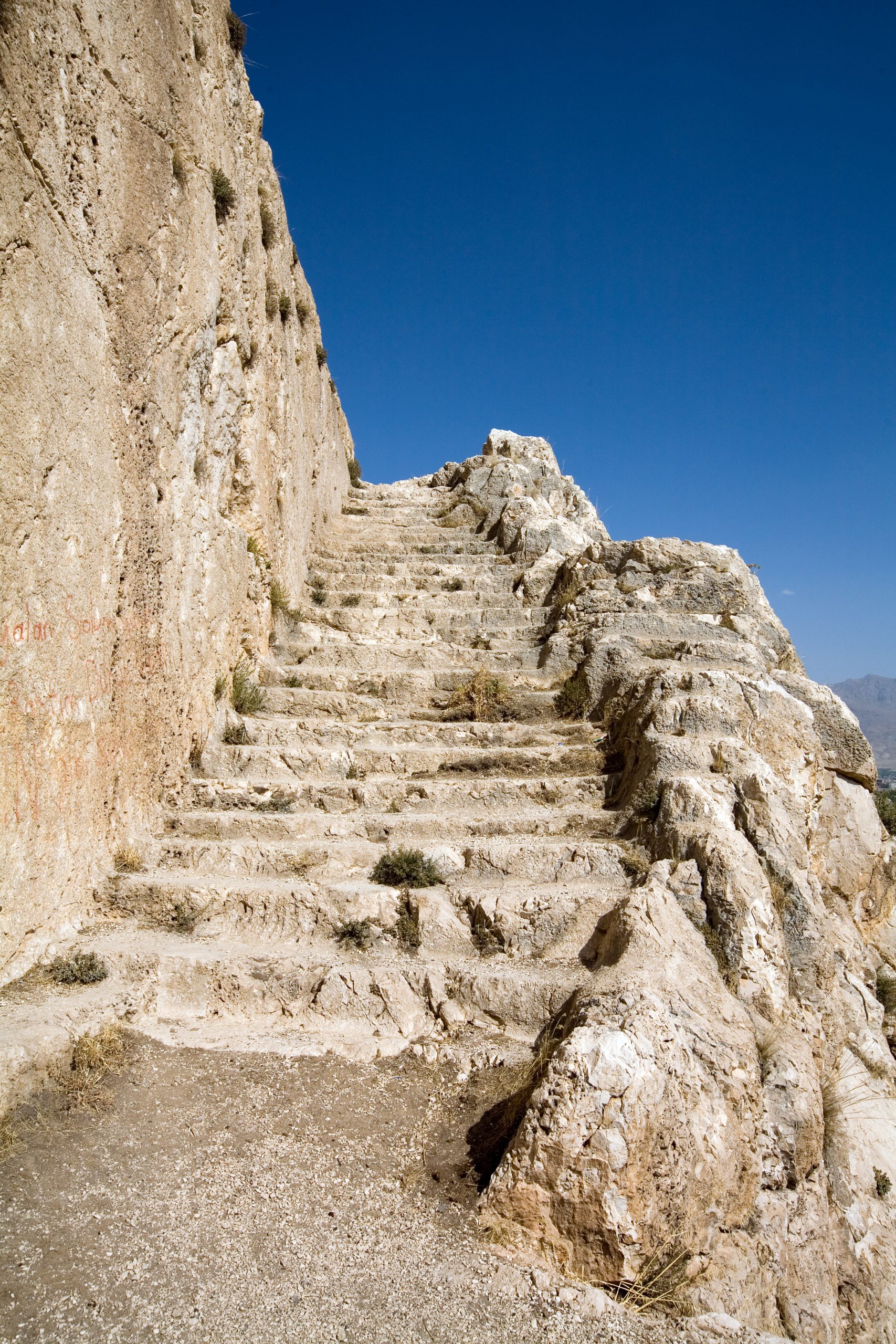
What makes the citadel remarkable is the way it was worked directly into the stone. The Urartian engineers cut broad staircases into the rock, hollowed out chambers and niches, leveled platforms for buildings, and carved the smooth surfaces that would carry royal inscriptions. Where they added masonry, they used massive, carefully shaped blocks fitted together with a precision that has allowed some of their walls to survive for nearly three thousand years.
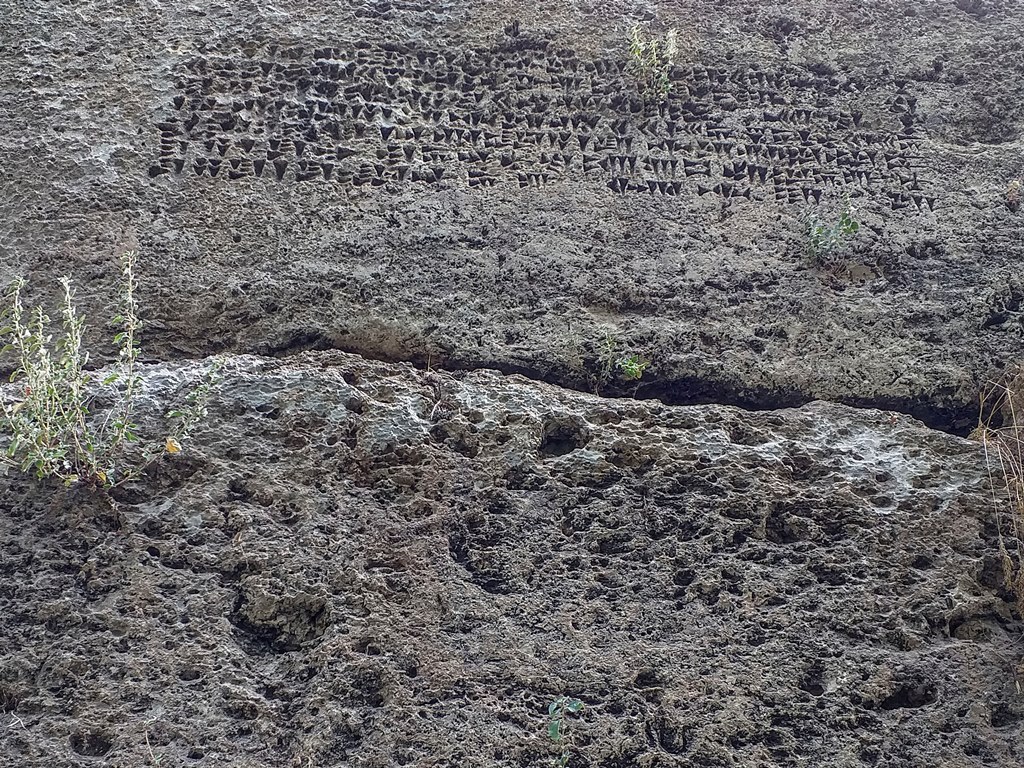
This combination of rock-cutting and monumental masonry became a hallmark of Urartian building, seen not only at Tushpa but at fortresses throughout the kingdom. It reflected both the practical demands of building in a stony highland and a royal taste for the permanent and the imposing. A citadel carved from the mountain itself was a statement that the dynasty meant to endure as long as the rock it stood on.
The capital was more than a fortress. Around and below the rock lay the wider city, with its people, workshops, and fields, and the kingdom drew on the resources of the fertile lands around Lake Van to sustain it. The rock was the royal and military heart, but Tushpa as a whole was a functioning capital, the administrative and religious center of a substantial state.
The decision to concentrate royal power on a single, spectacular rock also had a symbolic dimension that would not have been lost on the kingdom’s subjects or its rivals. A capital carved from an unmistakable natural landmark announced permanence and confidence, a claim that this dynasty and this place belonged together and would not easily be moved. Geography and propaganda reinforced each other on the rock of Van.
The King Who Left His Name in the Cliff
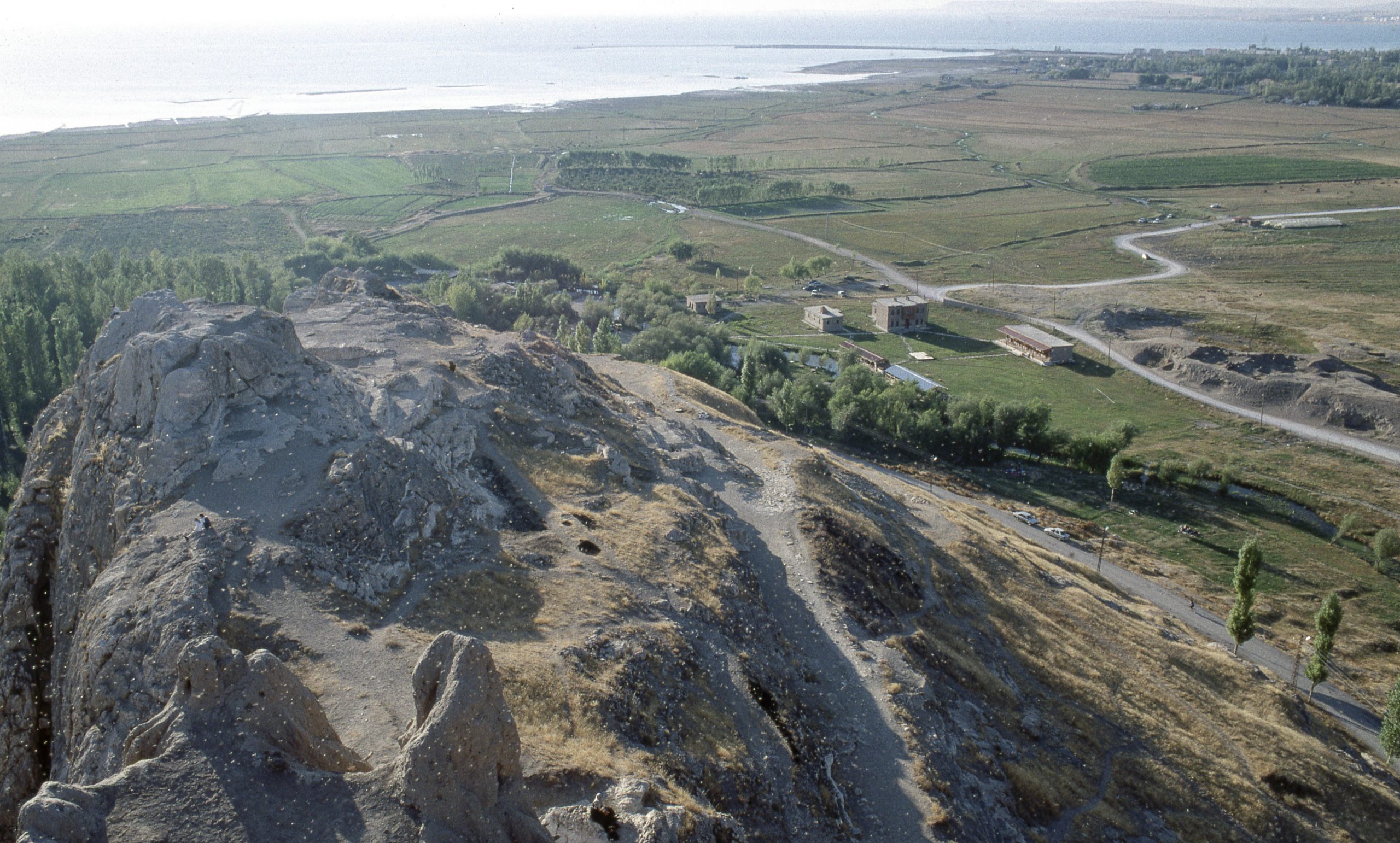
Among the most precious survivals at Van are the royal inscriptions carved into the rock and onto stone blocks, recording the names and deeds of Urartian kings. One of the earliest and most important is associated with a king named Sarduri, whose inscription, written in the Assyrian language before Urartian cuneiform came into use, effectively announces the founding of a royal center on the rock and stands as one of the oldest written records from the site.
These inscriptions are the closest thing we have to the Urartians speaking in their own voice. They record building works, military campaigns, conquests, and offerings to the gods, following formulas that let each king proclaim his power and piety. Dry as they can be, they are invaluable, because without them the fortresses and artifacts would be almost mute, a civilization known only by its stones.
The chief god of the Urartians was Haldi, a warrior deity in whose name the kings campaigned and to whom they dedicated their victories. The inscriptions are full of appeals to Haldi and the other gods of the Urartian pantheon, and great temples were built in their honor at Tushpa and other centers. Religion and kingship were tightly bound, with the king acting as the god’s agent in war and the guarantor of his worship.
Reading these royal texts, one senses a state very conscious of its own dignity and permanence. The kings of Urartu wrote as rulers of a great power, recording their conquests with confidence and expecting their monuments to last. That confidence was not misplaced for a time, though like all such kingdoms Urartu would eventually meet forces it could not overcome.
The shift from writing in the Assyrian language to writing in Urartian is itself a small but telling piece of history. It marks the moment a borrowed tool was fully made the kingdom’s own, the point at which Urartu stopped merely imitating its powerful neighbor and began to record its own affairs in its own tongue. Language, like architecture, was a way of asserting a distinct identity.
Engineering Water in a Highland Kingdom
One of the greatest achievements of the Urartians, and one of the most practical, was their mastery of water. The eastern Anatolian highlands are dry in places and subject to hard seasons, and a kingdom that wished to support cities and armies in such a landscape had to manage water with skill. The Urartians did exactly that, building canals, channels, and reservoirs on an impressive scale.
The most famous of these works is a long canal, associated with the Urartian kings, that carried fresh water many kilometers from the mountains to the area around the capital. Cut and built with great care, parts of it have remained in use for thousands of years, a testament to the durability of Urartian engineering. Bringing reliable fresh water to a region where the great lake’s own water was too alkaline to drink was a transformation of the landscape itself.
Water management was not a mere convenience but a foundation of the kingdom’s power. It allowed the fertile lands around Lake Van to be farmed intensively, supporting the population and the surpluses that fed armies and building projects. Control of water was control of life in the highlands, and the Urartian kings’ investment in it was as strategic as any fortress wall.
These hydraulic works also reveal the character of the Urartian state: organized, ambitious, and capable of mobilizing labor for large public projects that paid off over generations. A kingdom that could plan and build a canal to last millennia was a serious power, and the survival of such works long after the kingdom itself had vanished is one of the most striking parts of its legacy.
It is worth pausing on the sheer longevity of these waterworks. Engineering that still functions after the better part of three thousand years belongs to a very short list of ancient achievements, and it places the Urartian builders among the most accomplished hydraulic engineers of their era. A canal that outlasts the civilization that dug it is a monument as impressive in its way as any wall or temple.
Royal Tombs Cut Into the Fortress
Cut into the rock of Van are a series of chambers that are among the most intriguing features of the site: the rock-cut tombs of the Urartian kings. Hollowed out of the living stone of the citadel, these chambers were carved with considerable effort, and they are generally understood as the burial places of the rulers who governed from the fortress above them.
The tombs consist of rooms and passages cut deep into the rock, some with multiple chambers, reached by openings in the cliff face. Carving such spaces out of solid stone with the tools of the age was a formidable undertaking, and the effort reflects the importance the Urartians placed on providing their kings with fitting resting places within the very citadel that symbolized their power.
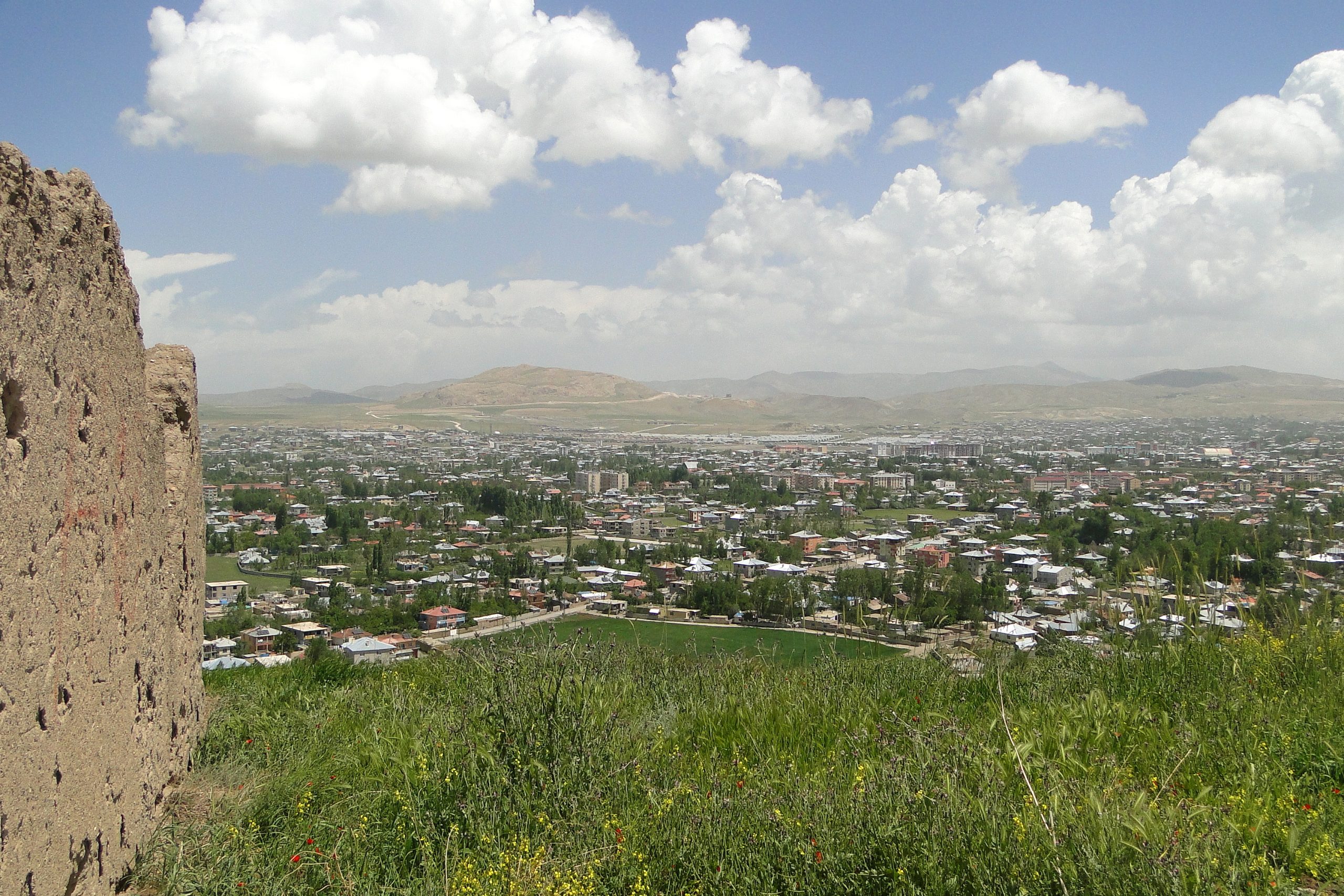
Like so much else at royal centers of the ancient world, the tombs were found empty of their original contents, having been robbed or cleared long ago. What remains is the architecture itself, the carefully cut chambers that once held the dead kings of Urartu, silent now but still eloquent about the wealth and ambition of the dynasty that made them.
To move through these rock-cut spaces is to enter directly into the Urartian world in a way that few other remains allow. The masonry walls above can be weathered or rebuilt, but the tombs are the rock itself, shaped by Urartian hands and essentially unchanged since. They are among the most authentic and moving survivals of the kingdom anywhere.
The placement of the royal dead within the citadel itself, rather than in a separate cemetery, is worth dwelling on. It bound the memory of past kings physically into the seat of living power, so that each ruler governed quite literally above his predecessors. That intimacy between the reigning king and the royal dead speaks to a dynasty deeply concerned with continuity and legitimacy across the generations.
Rivals of Assyria
For much of its history, Urartu was defined by its rivalry with Assyria, the great militarized empire to its south. The two powers clashed repeatedly across the mountains and plains that lay between them, with Assyrian kings mounting campaigns into Urartian territory and the Urartians defending their highland strongholds and striking back when they could. The Assyrian records that mention Urartu are often accounts of these wars.
The mountainous character of Urartu was one of its greatest defenses. Assyrian armies, formidable on open ground, found the highland fortresses hard to take and the terrain exhausting to campaign in. Urartu’s network of citadels, of which Tushpa was the greatest, allowed it to absorb attacks and endure as an independent power for centuries in the face of a neighbor that conquered much of the rest of the Near East.
The rivalry was not only military but cultural. Urartu borrowed the cuneiform script and some artistic conventions from the Mesopotamian world it fought against, adapting them to its own language and taste. This pattern of competition mixed with borrowing was common among the powers of the ancient Near East, where enemies often shaped one another as much through exchange as through war.
One famous Assyrian campaign against Urartu was recorded in vivid detail and gives a rare outside view of the kingdom at the height of its power, describing its fortresses, its wealth, and the temple treasures of its gods. Such accounts, written by the enemy, remain among our best windows onto how substantial and rich the Urartian state had become before its eventual decline.
That a highland kingdom could hold out against Assyria for as long as Urartu did is a reminder of how much terrain shaped the fortunes of ancient states. Empires that swept effortlessly across open plains often broke against mountains, where local defenders knew every pass and stronghold. Urartu turned its rugged geography into a strategic asset, and Tushpa was the keystone of that mountain defense.
How Urartu Came to an End
The end of Urartu is less clearly documented than its rise, and historians still debate exactly how and when the kingdom fell. What is clear is that in the later part of the seventh and into the sixth century before the common era, the Urartian state weakened and eventually disappeared as an independent power, its territory absorbed into the shifting world of new empires rising in the region.
A combination of pressures seems to have brought the kingdom down. The old rival Assyria itself collapsed dramatically, and the movements of new peoples and the rise of new powers, including the Medes and eventually the Persians, reshaped the whole region. Urartu, long a fixture of the highland world, was caught up in this upheaval and did not survive it as a distinct kingdom.
Yet the disappearance of the Urartian state did not mean the end of settlement on the rock or in the region. The land around Lake Van remained inhabited and important, passing under the control of successive powers, and the great rock of Tushpa continued to be fortified and used for thousands of years after the kings who first cut their names into it were gone.
In a real sense Urartu’s legacy outlived its political end. Its fortresses, canals, and building traditions influenced the peoples who came after, and its former heartland became part of the deep history of the Armenian highland and eastern Anatolia. The kingdom vanished, but the mark it left on the landscape endured.
Layers of Later Rulers on the Same Rock
Walk the rock of Van today and you are moving through many layers of history stacked on the Urartian foundation. After the fall of Urartu, the strategic value of the rock ensured that it was never truly abandoned, and successive rulers built and rebuilt on it across the centuries, each leaving their own mark on the ancient citadel.
Medieval and later fortifications crown the ridge, and Ottoman-era structures add yet another layer to the palimpsest. To the untrained eye these later walls can dominate the impression of the site, and it takes some looking to distinguish the massive, precisely fitted Urartian masonry and the rock-cut features from the work of much later builders piled above and around them.
This layering is part of what makes Van Fortress so rich, but also part of what has long obscured its Urartian origins. The very continuity of use that proves the rock’s importance has also buried and overwritten much of its earliest phase, so that appreciating the Urartian citadel requires separating it in the mind from the many centuries of building that followed.
Below the rock, the story continues into modern times, including the site of the old city of Van, which was largely destroyed in the upheavals of the early twentieth century, leaving the population to rebuild the modern city a little distance away. The fortress thus stands not only over the ruins of Urartu but over the layered and sometimes painful history of everything that came after.
Historians speak of such sites as palimpsests, surfaces written over again and again without the earlier text ever being fully erased. Van is a textbook example, and learning to read it means learning to see several eras at once in the same stretch of wall or stair. The reward for that effort is a uniquely vivid sense of continuity, of a single rock carrying the whole weight of a region’s history.
Climbing Van Fortress Today
Visiting Van Fortress today is a rewarding climb. The rock rises just outside the modern city of Van, and a path leads up its slopes to the citadel, offering along the way superb views over Lake Van on one side and the plain on the other. The ascent is not difficult, but the exposed heights can be windy and hot in summer, so a hat and water are wise companions.
From the top, the panorama is magnificent. The great soda lake stretches away, changing color with the light, and the surrounding mountains frame the whole scene. It is easy to see why the Urartian kings chose this spot, and the view alone rewards the climb even before one begins to examine the ancient remains underfoot.
The features to look for include the rock-cut royal tombs in the cliff, the Urartian inscriptions and worked stone surfaces, the massive early masonry, and the traces of the water systems and platforms that supported the ancient citadel. Interpreting them takes a little effort and ideally some guidance, since the layers of later building can make the Urartian elements hard to pick out at first glance.
Below the rock lies the poignant site of old Van, and nearby are museums and other remains that help set the fortress in its full context. Together they make Van one of the most rewarding destinations in eastern Turkey for anyone interested in the deep past, offering a rare chance to stand at the heart of a kingdom that once rivaled Assyria and to look out over the same lake its kings surveyed nearly three thousand years ago.
For the traveler willing to look closely, the fortress repays patience more than haste. A quick scramble to the top for the view is pleasant enough, but the deeper pleasure lies in tracing the Urartian handiwork amid the later additions, in finding an inscription or a tomb entrance and realizing how old it truly is. Few sites reward slow, attentive exploration quite so richly.
Nearby Places to Explore
The highlands where eastern Anatolia meets the Caucasus are dense with the remains of ancient kingdoms, and several sites make natural companions to a visit to Tushpa. Each casts light on a different corner of the world in which Urartu rose and fell.
- Hattusa — the Hittite capital in central Anatolia, seat of an earlier highland empire that dominated the region long before Urartu emerged.
- Erebuni — an Urartian fortress founded on the site of modern Yerevan, part of the same kingdom’s network of highland strongholds.
- Arslantepe — an ancient mound on the upper Euphrates whose long history reaches back to the earliest experiments with organized states in Anatolia.
Why Tushpa Still Matters
Tushpa is the capital of a kingdom that history almost lost. Urartu was overshadowed in its own time by Assyria, forgotten for centuries afterward, and recovered only through patient scholarship and excavation. Yet on the rock above Lake Van, in the cut staircases and royal tombs, the fitted masonry and the inscriptions carved in stone, the kingdom still speaks, and its achievement is unmistakable.
To stand on the citadel and look out over the great lake is to occupy the exact position from which Urartian kings once ruled a highland empire that held even mighty Assyria at bay. Few peoples have marked their landscape so deeply and then faded so completely from memory, and few places recover a lost civilization so directly as this long rock above the water. Tushpa endures as the enduring heart of Urartu, a kingdom worth remembering on its own terms rather than as a shadow of its more famous rivals.
You May Like

Mafra, the Palace a King Built From a Vow