Copan, in the mountain valleys of western Honduras, was one of the great intellectual and artistic capitals of the Classic Maya world, home to rulers who commissioned the longest hieroglyphic inscription in the Americas and astronomers who tracked the movements of Venus with remarkable precision.
Occupied from around 100 CE and reaching its political height between 426 and 822 CE, Copan produced some of the finest stone sculpture in the Maya region, carved not in the flat relief typical elsewhere but in deep, almost fully rounded three-dimensional forms unique to this valley.
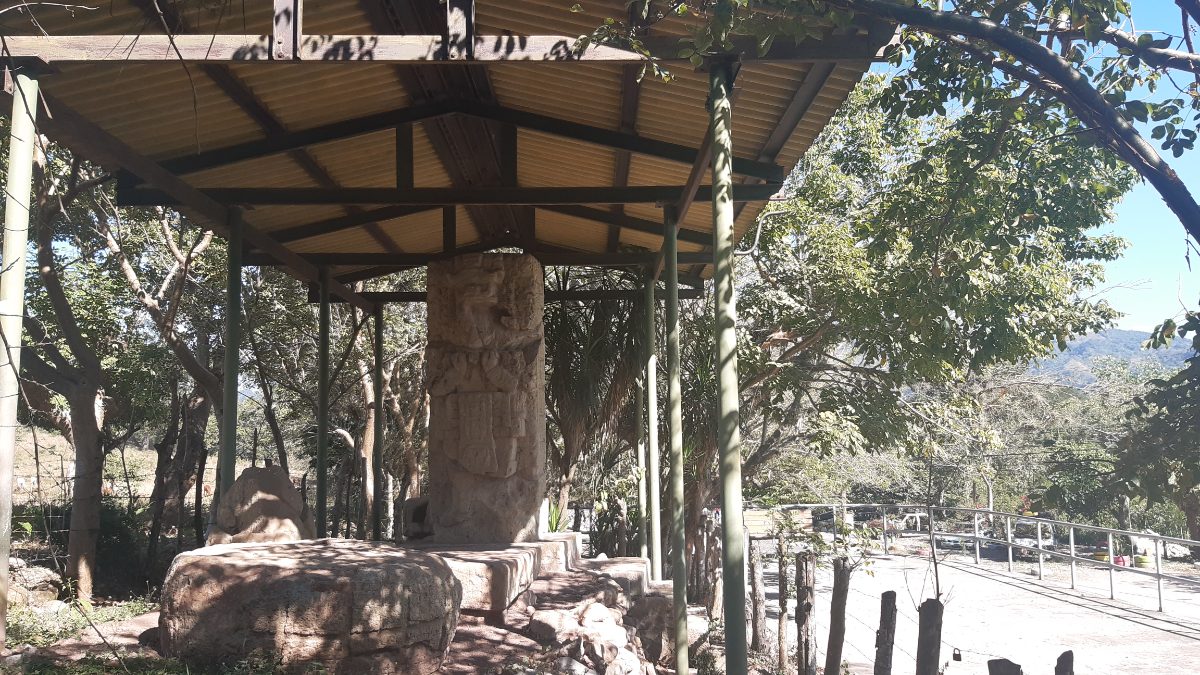
Table of Contents
- A City Carved Into the Copan Valley
- The Founding of a Dynasty
- The Acropolis and Its Temples
- The Hieroglyphic Stairway
- Altar Q and the Sixteen Kings
- The Great Ballcourt
- What Language Did the People of Copan Speak?
- Religion, Astronomy, and Daily Life
- Scribes, Sculptors, and the Maya Elite
- The Collapse of Copan
- Nearby Places to Explore
A City Carved Into the Copan Valley
Copan sits in a fertile valley along the Copan River at roughly 2,000 feet elevation, ringed by mountains that gave the city both defensible terrain and reliable water, a combination rarer in the Maya lowlands further north where seasonal drought was a constant threat.
The valley’s volcanic soils supported dense agriculture, and the city grew to support an estimated population of 20,000 people at its peak, packed into a downtown core surrounded by outlying residential compounds that climbed the surrounding hillsides as the population expanded over centuries.
Unlike many Maya cities built from porous limestone, Copan’s builders quarried a volcanic stone called tuff from nearby quarries, a material soft enough to carve with extraordinary detail when freshly cut but which hardens with air exposure, allowing the city’s sculptors to achieve a level of naturalistic detail, down to individual strands of hair and jewelry, rarely matched elsewhere in the Maya world.
The valley’s ecology also shaped Copan’s fortunes in ways its rulers could not fully control. Pollen and sediment cores taken from the valley floor show progressive deforestation across the Classic period, as growing demand for farmland, firewood, and construction timber steadily stripped the surrounding hillsides of their original forest cover, increasing erosion and reducing the soil’s long-term fertility.
Archaeologists mapping the wider valley have identified hundreds of residential sites beyond the city core, ranging from modest farming hamlets to elite compounds with their own small temples, revealing a settlement pattern far more dispersed than the monumental center alone suggests, with Copan functioning as the ceremonial and political anchor of a much larger rural population spread across the valley floor and surrounding foothills.
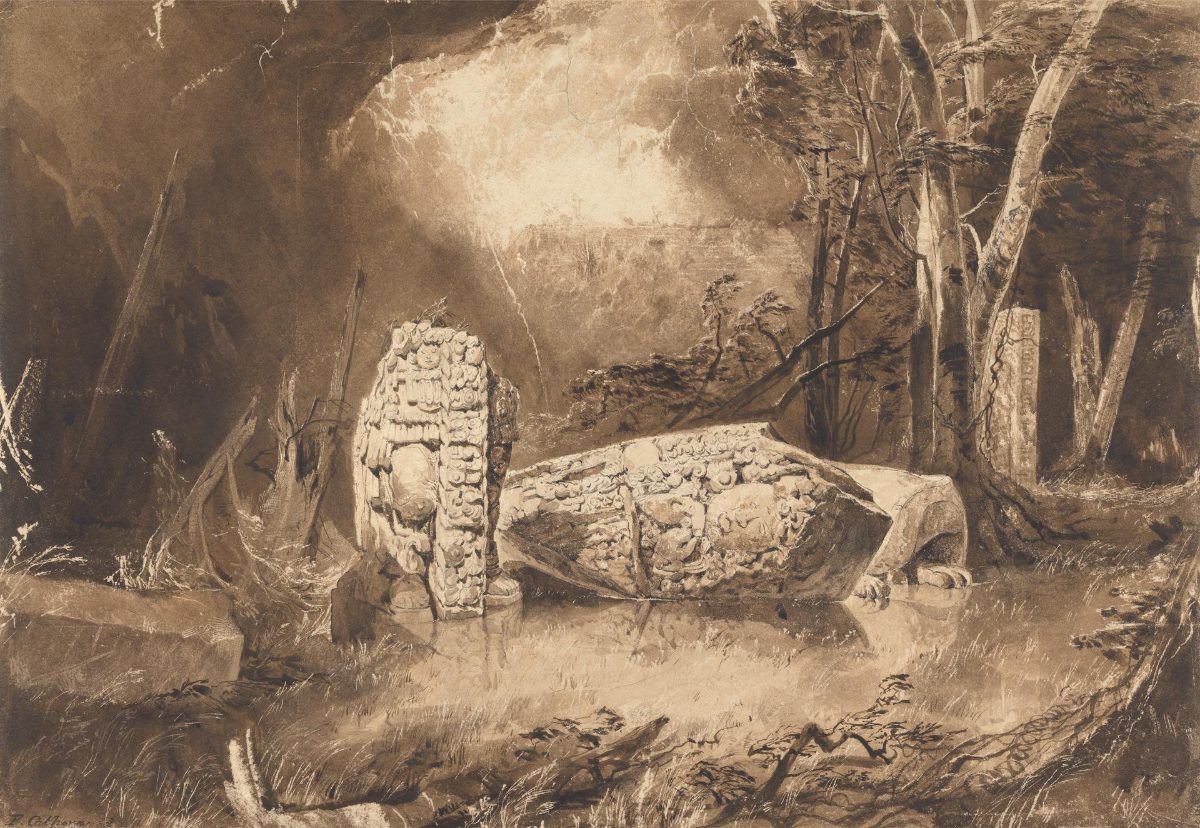
Modern excavation at Copan has benefited from an unusually long research history, stretching back to explorers John Lloyd Stephens and Frederick Catherwood, whose 1839 expedition first brought detailed illustrations and descriptions of the ruins to a wide international audience, sparking sustained scholarly interest in the site that has continued, with periodic interruptions, for nearly two centuries since.
The Copan River itself has proven a double-edged influence on the site’s preservation. Over the centuries the river shifted course and eroded away a substantial portion of the Acropolis’s eastern side, exposing a cross-section of the complex’s layered construction that archaeologists have used to study its building sequence directly, even as engineers have since worked to redirect the river’s flow and protect what remains from further loss.
The Founding of a Dynasty
Copan’s ruling dynasty began with K’inich Yax K’uk’ Mo’, who founded the royal line in 426 CE. Isotopic analysis of his skeletal remains, found beneath a later temple, shows he grew up outside the Copan valley, likely near Tikal or in the Peten region of Guatemala, suggesting Copan’s dynasty was established through a claimed connection to the powerful cities of the Maya lowlands rather than emerging purely from local roots.
Sixteen rulers followed him in an unbroken line recorded on Altar Q, commissioned by the sixteenth king, Yax Pasaj Chan Yopaat, in 763 CE. This carved dynastic record, listing each ruler by name and portrait, gives Copan one of the most complete royal chronologies of any Classic Maya city, an accounting historians can cross-reference against dated monuments erected throughout the dynasty’s four centuries in power.
Later Copan rulers went to considerable lengths to emphasize their descent from the dynasty founder, commissioning portraits and inscriptions that depicted themselves wearing the distinctive goggle-eyed headdress associated with Teotihuacan and central Mexican warfare imagery, a visual claim to distant, prestigious origins that helped legitimize their authority over the generations even as the political world around them shifted.
The twelfth ruler, K’ak’ Uti’ Witz’ K’awiil, who reigned through much of the seventh century, expanded Copan’s political reach considerably, and inscriptions credit him with installing a subordinate ruler at the nearby site of Quirigua, a relationship that would later collapse dramatically when Quirigua’s own king rebelled against Copan’s authority.
Royal women at Copan also appear in the dynastic record, though less prominently than kings; several monuments and burials indicate that queens and royal mothers held recognized ceremonial roles and were sometimes depicted participating in rituals alongside their husbands or sons, suggesting a court structure in which female members of the ruling family carried genuine, if secondary, political and religious significance.
The Acropolis and Its Temples
The Acropolis, Copan’s royal and ceremonial heart, is not a single building but a stacked complex of temples, plazas, and palaces built directly atop one another across generations, each new ruler burying and building over his predecessor’s structures rather than demolishing them, preserving earlier phases intact beneath the later city like layers in a cake.
Tunnels dug by archaeologists beneath the visible Acropolis have revealed at least five major construction phases, including the beautifully preserved Rosalila temple, built around 571 CE and later encased whole within a newer pyramid rather than torn down, a practice that has left Rosalila’s painted stucco facade remarkably intact 1,400 years later, now displayed in a full-scale replica at the site museum.
Temple 11, one of the Acropolis’s largest structures, functioned as a kind of cosmic diagram in stone, its doorway carved to resemble the open mouth of a witz monster, a mountain deity, symbolically transforming the temple entrance into a portal between the human world and the sacred landscape of Maya cosmology.
Excavation tunnels beneath Temple 16, one of the Acropolis’s central pyramids, uncovered not only the Rosalila temple but an even earlier structure beneath it, named Margarita, containing the tomb believed to belong to the dynasty founder’s wife, whose burial goods included jade ornaments and finely painted ceramics indicating extremely high status within the earliest royal court.
The layered building technique seen throughout the Acropolis was not merely practical; each new construction phase was typically dedicated with ritual offerings, including caches of jade, obsidian blades, and sometimes sacrificial remains, buried within the fill before the next layer of masonry was raised above it, embedding sacred meaning directly into the physical fabric of the growing complex.
The Hieroglyphic Stairway
The Hieroglyphic Stairway, rising along the south side of Temple 26, carries 2,200 individual glyph blocks across 63 steps, making it the longest known Maya text and one of the single richest sources of information about the dynasty’s history anywhere in the Maya world.
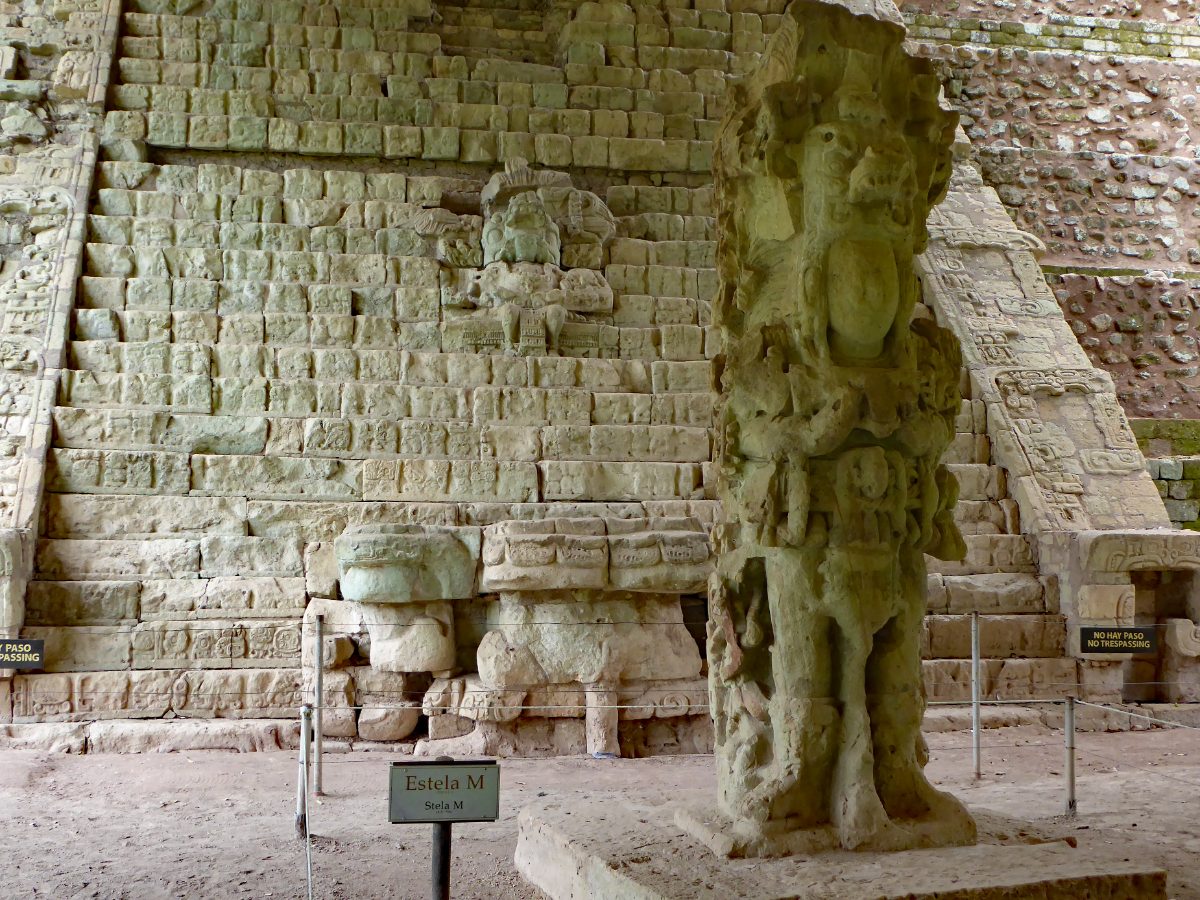
Commissioned in stages by rulers including Copan’s fifteenth king, K’ahk’ Uti’ Chan Yopaat, the stairway was intended to glorify the dynasty’s achievements and legitimize its rule through an explicit written record, a monument meant to be read, publicly and repeatedly, rather than simply admired as decoration.
Unfortunately, the stairway’s blocks were disturbed by an earlier collapse and by early, less careful excavation and reassembly in the twentieth century, so that while the glyphs have largely been recorded and translated, their original step-by-step sequence remains only partially reconstructed, an ongoing puzzle scholars continue to refine using photographs, drawings, and glyph grammar.
Epigraphers reconstructing the stairway’s text have identified references to a major military defeat Copan suffered in 738 CE, when its thirteenth ruler, Uaxaclajuun Ub’aah K’awiil, was captured and executed by the previously subordinate city of Quirigua, an extraordinary reversal the later stairway inscription appears to address directly, likely as an attempt to restore dynastic prestige after this humiliating setback.
Modern reconstruction efforts rely heavily on a detailed set of drawings and photographs made by early twentieth-century archaeologists before later disturbances further scrambled the fallen blocks, underscoring how much of Maya epigraphy depends on painstaking comparison between physical stones and older documentary records compiled long before digital imaging existed.
Later in the eighth century, following the military setback at Quirigua, Copan’s rulers appear to have shifted emphasis toward monumental building and public ceremony as a means of reasserting authority, a pattern epigraphers read in the timing and content of the Hieroglyphic Stairway’s later additions, which lean heavily on invoking ancestral legitimacy rather than recent military success.
Altar Q and the Sixteen Kings
Altar Q is a low, block-shaped stone monument carved on all four sides with portraits of Copan’s sixteen kings, seated in order around the altar as if in a council, with the dynasty founder K’inich Yax K’uk’ Mo’ and the altar’s commissioner, Yax Pasaj, shown facing one another across the top, physically closing the dynastic circle.
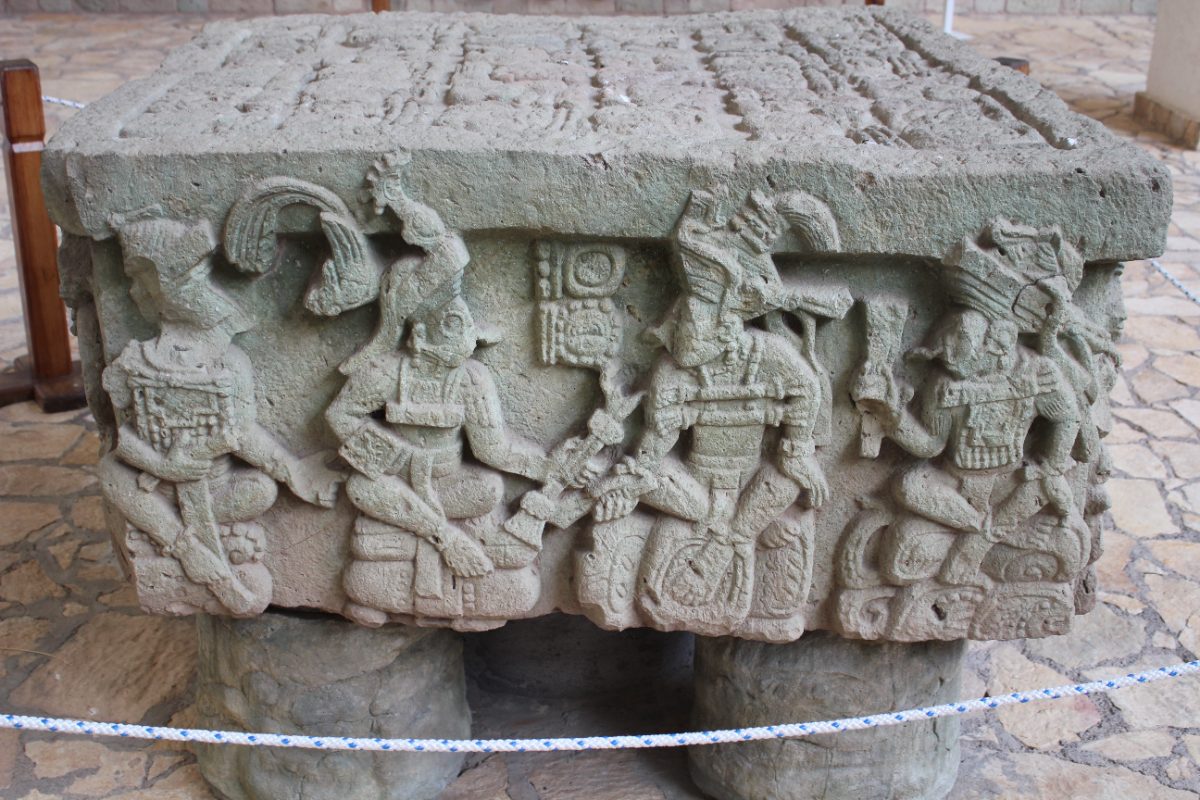
Each king on Altar Q holds an emblem of rulership and sits above a glyph naming him, giving epigraphers a securely dated king list against which every other inscription at Copan can be checked, a rare case in the Maya world where a full ruling sequence survives on a single monument rather than being pieced together from scattered, damaged texts.
Some interpretations suggest the altar was placed deliberately near Temple 16, allowing the reigning king Yax Pasaj to position his own accession within sight of the tombs of his most illustrious predecessors, physically and symbolically anchoring his authority to the deep dynastic history the monument itself commemorates.
A stone box discovered buried beneath Altar Q contained the remains of sacrificed jaguars, a species closely associated with royal power and the underworld throughout Maya iconography, suggesting the altar’s dedication involved ceremonies invoking these animals’ symbolic strength on behalf of the dynasty it commemorated.
Comparisons between Altar Q and dynastic king lists recorded at other Maya cities show broadly similar practices of commemorating rulers in sequence, but few other sites preserve so complete and legible a visual record in a single carved object, making Altar Q a particularly valuable reference point for reconstructing Copan’s political history relative to its neighbors and rivals.
The Great Ballcourt
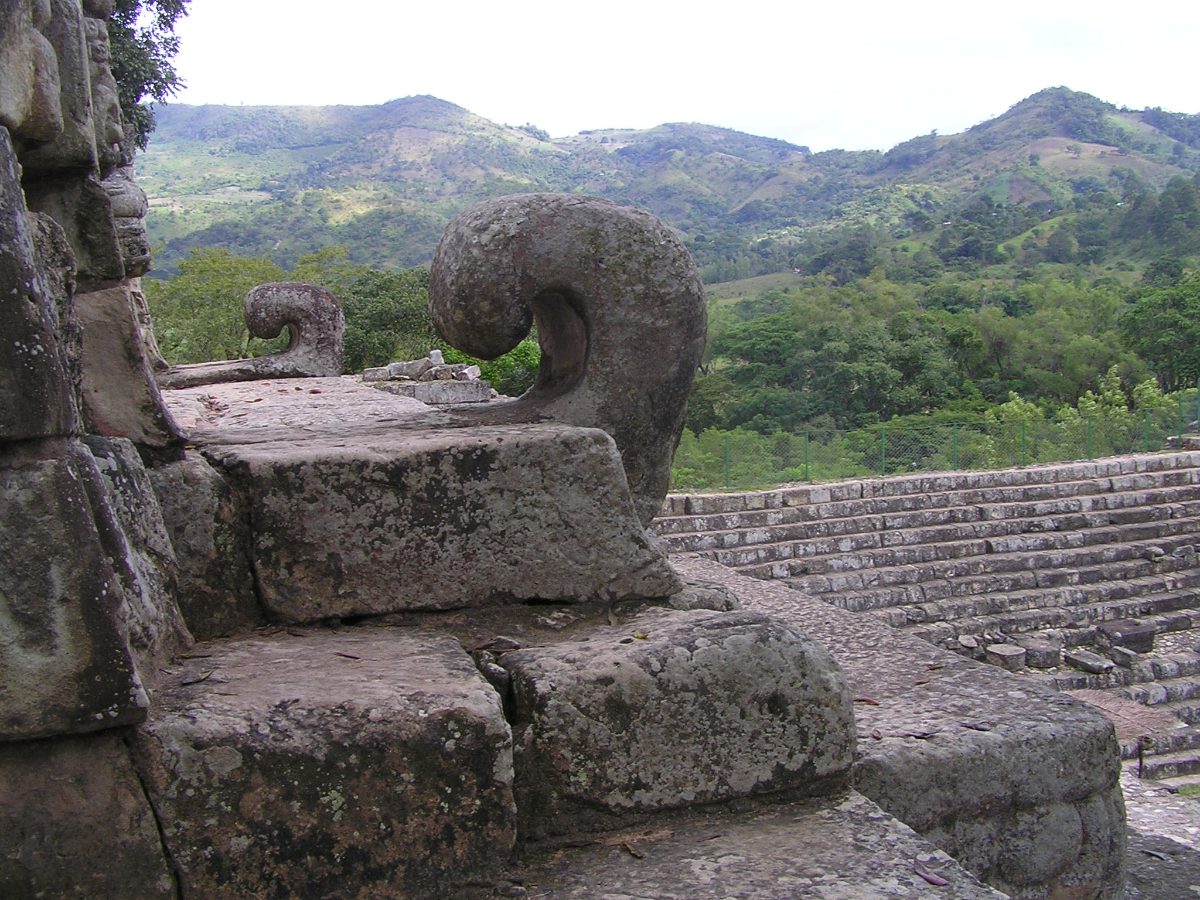
Copan’s Great Ballcourt, rebuilt at least three times between the fifth and eighth centuries, is among the most architecturally refined in the Maya region, its sloping playing walls decorated with sculpted macaw heads, since parrots and macaws held strong ritual associations with the ballgame and its cosmological symbolism.
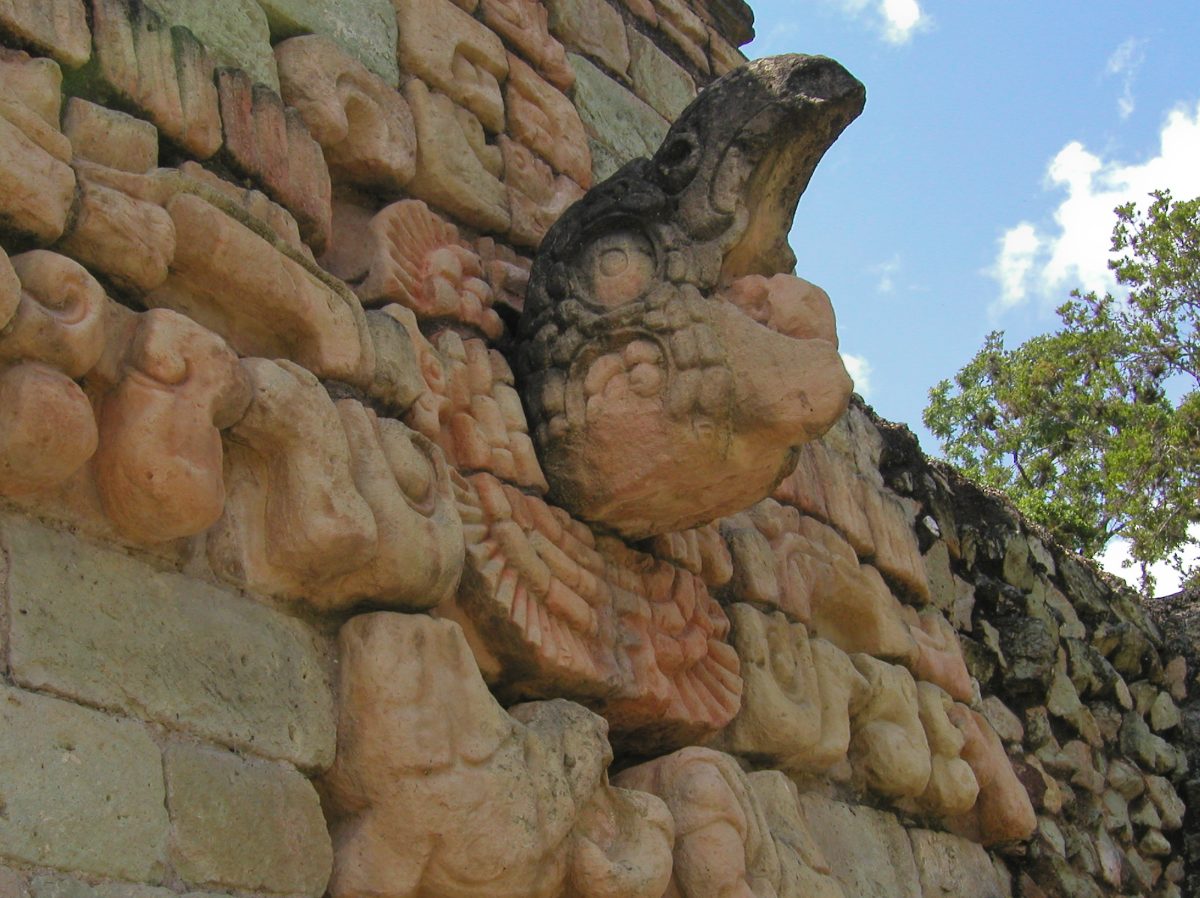
The Mesoamerican ballgame, played with a solid rubber ball using hips and thighs rather than hands, carried deep religious meaning tied to the movement of celestial bodies and the mythological Hero Twins of the Popol Vuh, a Quiche Maya narrative recorded long after Copan’s fall but reflecting beliefs likely shared, in some form, across much of the Maya world during the Classic period.
Ballgames at Copan were likely tied to significant calendrical or political events, functioning as public ceremony rather than casual sport, and some captives taken in warfare between rival cities may have been ritually sacrificed following ballgame contests, echoing imagery found on ballcourt monuments elsewhere in the Maya lowlands.
Markers set into the ballcourt’s central playing alley were carved with macaw imagery and hieroglyphic captions, and archaeoastronomical study of the court’s orientation suggests it was aligned to mark significant solar events, tying the ostensibly recreational ballgame to the same calendrical concerns that shaped nearly every other aspect of Copan’s ceremonial architecture.
Similar ballcourts appear at Maya and other Mesoamerican sites from Mexico to Honduras, but Copan’s version, with its sculpted macaw-head markers and fine masonry, is often cited by archaeologists as one of the most visually elaborate examples surviving from the entire Classic period.
Beyond its ceremonial function, the ballcourt also likely served as a venue for resolving disputes or demonstrating political dominance between allied or rival factions within the city and its wider network of subordinate settlements, turning what modern visitors might see as a sports venue into a genuine instrument of Classic Maya statecraft.
What Language Did the People of Copan Speak?
Copan’s inscriptions were written in Classic Ch’olan, the prestige literary language used across Maya hieroglyphic texts throughout the Classic period, regardless of what language ordinary residents of any given city may have spoken at home. This distinction matters: Classic Ch’olan functioned much like Latin did in medieval Europe, a learned scribal language used for monumental and courtly texts rather than necessarily everyone’s daily speech.
The valley’s everyday spoken language was most likely an early form of Ch’orti’ Maya, a language still spoken today by Ch’orti’ communities living in the same region of western Honduras and eastern Guatemala, making Copan one of the relatively rare Maya sites where a modern descendant language is still spoken close to its ancient location rather than having shifted or vanished entirely.
Maya writing itself was logosyllabic, combining word-signs with phonetic syllable signs in a system fully deciphered only in the late twentieth century after decades of scholarly work. This decipherment transformed Copan from a beautiful but silent ruin into a city that could, quite literally, speak again, its kings’ names, wars, and rituals readable directly from the stones they commissioned rather than reconstructed solely through archaeology.
Ch’olan languages as a family also include Ch’ol and Chontal, spoken today in Chiapas and Tabasco in Mexico, and comparative linguistic work situates Ch’orti’ as their easternmost surviving branch, isolated somewhat from its relatives after the political and demographic upheavals that reshaped the Maya region at the end of the Classic period.
Because Copan’s monumental texts used the shared elite Ch’olan script rather than a purely local dialect, its inscriptions can be read using the same decipherment methods applied to Maya texts from Tikal, Palenque, or Yaxchilan hundreds of miles away, evidence of a shared literate culture linking Classic Maya courts across a vast and otherwise politically fragmented region.
Efforts to revitalize Ch’orti’ language use continue today among community organizations in Honduras and Guatemala, where the language faces pressure from Spanish in schools and media, a modern linguistic challenge that mirrors, in a very different context, the long history of prestige languages and local vernaculars coexisting unevenly in the same valley since the Classic period.
Religion, Astronomy, and Daily Life
Religion at Copan centered on a pantheon of deities tied to maize, rain, the sun, and ancestor worship, with kings acting as intermediaries between the human and supernatural realms through bloodletting rituals, in which rulers pierced their tongues or genitals with stingray spines to offer blood to the gods and induce visionary trance states.
The Maya calendar, combining a 260-day ritual cycle with a 365-day solar year, governed both agricultural life and religious ceremony, and Copan’s scholars were especially devoted to tracking Venus, whose heliacal risings were treated as auspicious or dangerous omens tied to warfare and kingship, recorded with an accuracy that anticipated the planet’s orbital period to within hours over centuries of observation.
Daily life for most residents revolved around maize farming, supplemented by beans, squash, and cacao, the last reserved largely for elite consumption as a ceremonial drink. Households produced painted pottery, textiles, and obsidian tools, and archaeological surveys of residential compounds around the city core show clear differences in house size and burial goods, evidence of a stratified society with nobility, skilled craftspeople, and commoners occupying distinct social tiers.
Copan’s astronomers also tracked lunar cycles and solar eclipses, recording their observations within the same inscriptions that celebrated royal deeds, blending what a modern reader might separate into science and propaganda into a single, unified body of sacred knowledge meant to demonstrate a king’s favor with, and command over, cosmic order.
Household shrines and burial offerings found throughout the residential zones surrounding the city core show that religious practice was not confined to royal ceremony alone; ordinary families maintained their own ancestor veneration and small-scale ritual life, offering incense, food, and small carved figures at domestic altars separate from the grand public rites performed at the Acropolis.
Cacao, maize, and chili peppers appear together in painted vessel scenes depicting feasting among Copan’s elite, alongside imagery of costumed dancers and musicians playing drums, rattles, and shell trumpets, evidence of a rich courtly culture of performance and celebration that accompanied the more solemn bloodletting and calendrical rites recorded in stone.
Scribes, Sculptors, and the Maya Elite
Copan was renowned among Classic Maya cities for the quality of its scribes and sculptors, whose workshops produced sculpture in such high relief that figures sometimes stand almost fully free of the stone behind them, a style distinct enough that art historians can often identify a Copan-carved monument on sight even without reading its accompanying text.
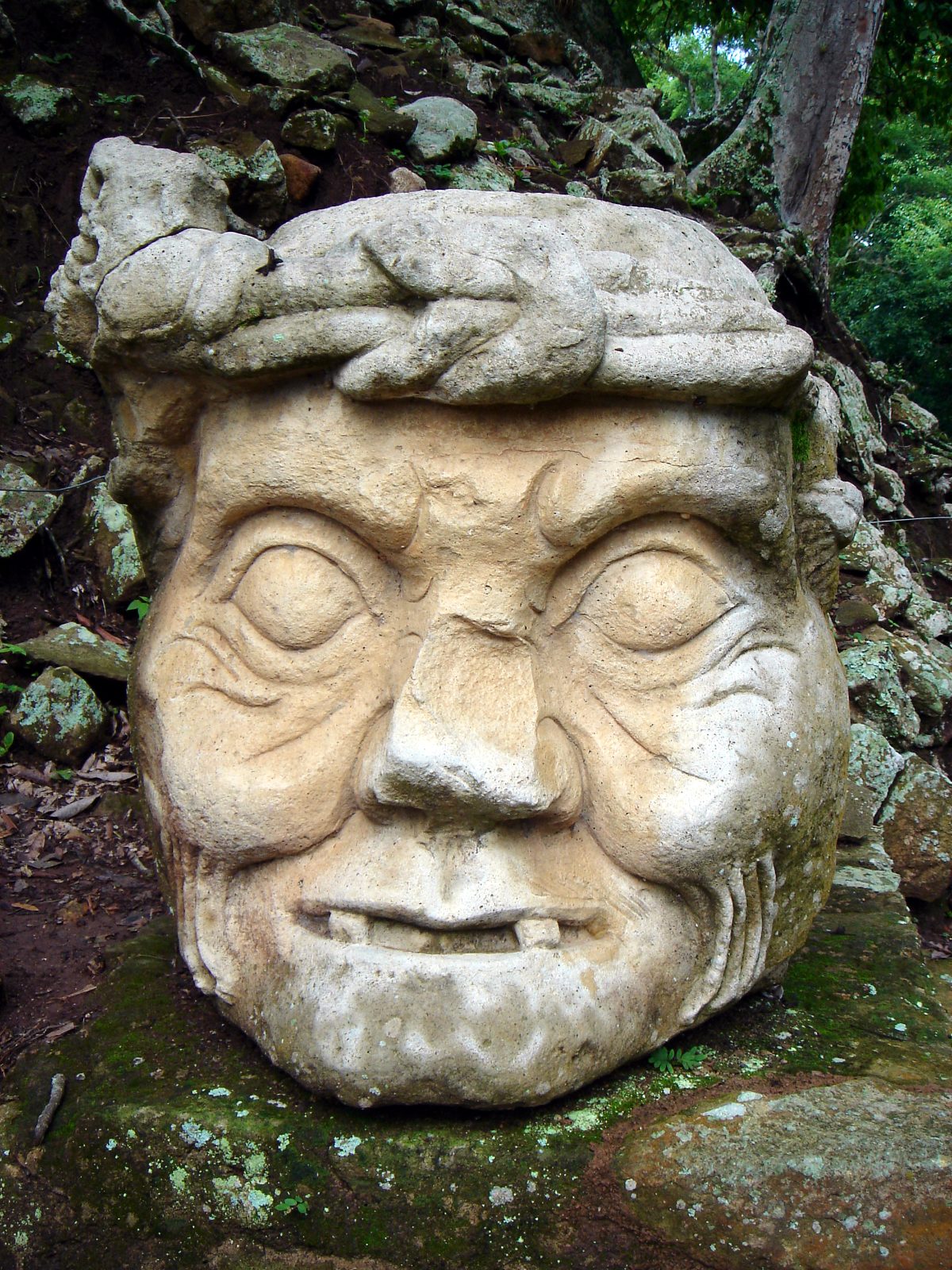
Scribal work was a specialized, likely hereditary profession tied closely to the royal court, and one residential compound excavated near the site center, known as the House of the Scribe, contained sculpted portraits and artifacts suggesting its occupants held privileged status as literate courtiers responsible for producing the very inscriptions that give modern researchers access to Copan’s history.
Painted ceramic vessels recovered from elite burials at Copan sometimes carry short hieroglyphic texts naming their owners or the scribes who painted them, offering rare glimpses of named individual artists in a period when most ancient art everywhere in the world remains anonymous, a detail that has allowed researchers to trace stylistic signatures across multiple surviving vessels attributed to the same hand.
Training for scribes and sculptors likely began in childhood within elite or specialist families, an apprenticeship model inferred from the consistency of certain carving techniques and glyph forms across decades of monuments, suggesting knowledge was passed down through direct instruction rather than independently reinvented by each new generation of court artists.
The site museum at modern Copan Ruinas displays an unusually large collection of carved monuments removed from weather exposure at the ruins themselves, alongside the full-scale Rosalila replica, giving visitors direct access to sculptural detail that has eroded significantly on outdoor monuments left in place since the Classic period.
The Collapse of Copan
The dynasty’s final recorded ruler, Ukit Took’, commissioned Altar L around 822 CE, a monument left conspicuously unfinished, its carving abruptly incomplete in a way that suggests the political authority needed to complete royal monuments had already collapsed by that point.
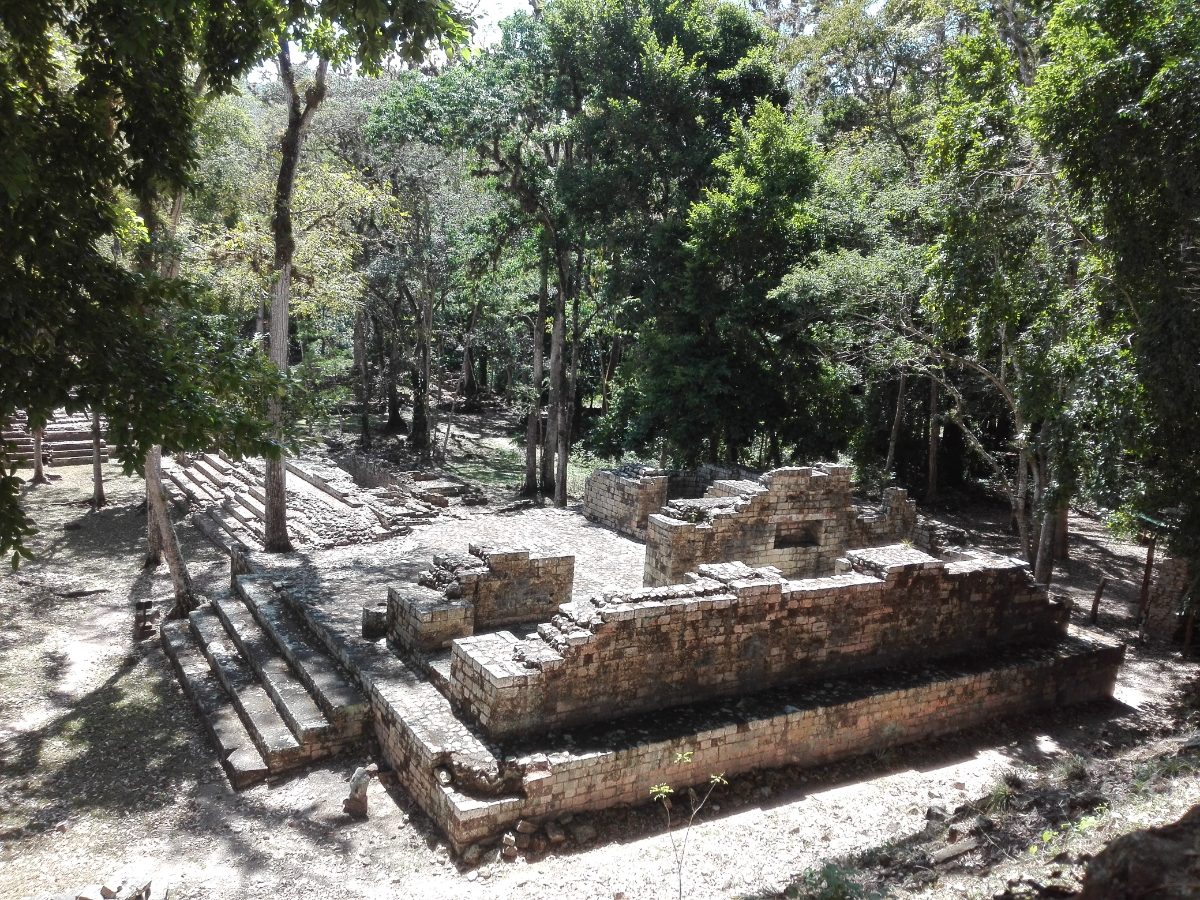
Skeletal and settlement evidence points to a familiar cluster of pressures: drought recorded in regional lake sediment cores, deforestation from centuries of intensive building and agriculture, and rising competition among noble lineages that may have fractured the centralized authority the dynasty had relied upon for four hundred years.
Unlike some Maya cities, Copan’s valley was never fully abandoned. Rural farming communities continued to live in the surrounding valley for generations after the royal court’s collapse, and the Ch’orti’ Maya people living in the region today maintain a continuous cultural presence in the same landscape their ancestors’ inscriptions once described in exacting, dated detail.
Regional surveys show that Copan’s collapse was not unique; across the southern Maya lowlands, dozens of major cities experienced a similar breakdown of centralized royal authority within roughly a century of one another, a pattern historians now call the Classic Maya collapse, likely driven by an overlapping combination of drought, warfare, and internal political strain rather than any single decisive cause.
Archaeological evidence from the valley’s rural areas shows population decline was gradual rather than sudden, with some residential zones remaining occupied for one or two centuries after the last dated royal monument, indicating that ordinary agricultural life persisted even as the elaborate court culture that produced Copan’s inscriptions and sculpture faded from the valley.
UNESCO inscribed Copan as a World Heritage Site in 1980, recognizing both its architectural and artistic achievements and its importance as a source of historical knowledge about the Classic Maya world, and the site today remains under active archaeological investigation, with new tunnels and excavations continuing to refine the dynastic and architectural history first pieced together over the past two centuries.
Nearby Places to Explore
Copan belongs to a broader Mesoamerican story of ancient cities and civilizations, and several other sites help place its dynasty and its art within that wider world.
- Maya Pyramids: The Secrets of El Castillo at Chichen Itza
- Stone Heads in the Jungle: How the Olmec Built Mesoamerica’s First Civilization at La Venta
- The Oldest Colossal Heads in the Americas Were Carved Here: The Story of San Lorenzo
A Valley That Still Remembers
Copan stands apart among Classic Maya cities for how directly it speaks to us, through a dynastic record carved in stone that names sixteen kings, dates their reigns, and records their wars and rituals in a script modern scholars have learned, at last, to read fluently.
Its sculptors’ deeply carved portraits, its astronomers’ calculations of Venus, and its scribes’ meticulous glyphs together preserve a civilization that valued precision, memory, and craftsmanship, a legacy still carried forward today by the Ch’orti’ Maya communities living in the same valley their ancestors once ruled.
You May Like
Mafra, the Palace a King Built From a Vow


7 thoughts on “Copan: The Maya City of Kings and Scribes”