Across the vast grasslands of the Great Plains, the Cheyenne built one of the most storied ways of life in Native North America, a world of the bison hunt, the mounted warrior, and the great communal ceremony. Yet the Cheyenne were not always a plains people. Their ancestors came from the eastern woodlands, and over generations they remade themselves completely, exchanging a settled, farming life for the mobile, horse-borne existence that would define them in memory and history.
This article traces the Cheyenne world from their eastern origins and their transformation on the plains through their language, homeland, society, beliefs, crafts, food, and celebrations, and on through a history of fierce resistance and hard survival into a living present. It is the story of a people whose capacity for reinvention and whose sheer resilience carried them through some of the harshest trials any Native nation endured.
Contents
- A People of the Plains
- The Name and Its Origins
- Language and Its Roots
- Homeland on the Grasslands
- The Old Way of Life
- Society, Council, and the Warrior Societies
- The Sacred World
- Traditions Handed Down
- Craft and Material Culture
- The Bison and the Food of the Plains
- Gathering and Celebration
- A History of Conflict and Survival
- The Cheyenne Today
A People of the Plains
The Cheyenne stand among the most storied peoples of the Great Plains, a nation whose name evokes the sweep of the open grasslands, the thunder of the bison herds, and the drama of the nineteenth-century frontier. Yet behind the familiar images lies a rich and complex society with its own institutions, beliefs, and history, one that transformed itself profoundly over the centuries and endured through some of the harshest trials any Native people faced.
Originally the Cheyenne were not a plains people at all. Their ancestors lived far to the east and northeast in a more settled, agricultural world of villages and farming. Over generations they migrated westward, and in the course of that long movement they remade themselves, abandoning the settled life for the mobile, horse-mounted, bison-hunting existence that would define them in the popular imagination.
This transformation was among the most dramatic in the history of North America. A farming people became a nation of nomadic hunters and warriors, adapting so completely to the plains that they came to seem inseparable from them. The story of the Cheyenne is thus in part a story of reinvention, of a people who embraced a new world and mastered it.
To understand them is to look past the frontier drama toward the depth of their culture, the sophistication of their social and spiritual life, and the extraordinary resilience that carried them from the eastern woodlands to the plains and through conquest into a living present.
Few peoples illustrate more vividly the capacity of a nation to remake itself in response to a changing world. The Cheyenne carried the memory of their eastern origins even as they became the very image of the mounted plains warrior, and this double heritage, of the settled woodland past and the mobile grassland present, gave their culture a distinctive depth.

The Name and Its Origins
The name Cheyenne, by which these people are known in English, was not their own word for themselves. It appears to have come through neighboring peoples and been passed along to European newcomers, and its precise original meaning has been debated, with various interpretations offered over the years. Like so many names of Native nations, it entered the wider world secondhand and stuck through centuries of use.
In their own language the Cheyenne called themselves by a term that is generally understood to mean something like the people, a self-designation of the kind common across Native North America. This name expressed the sense of a community bound together by language, kinship, and shared life, standing at the center of its own moral universe.
The Cheyenne themselves were in fact composed of related groups that came together over time, including a distinct people who merged with them and whose identity was maintained within the larger nation. This layered composition reflected the fluid way in which plains peoples could combine, absorb, and ally, forming larger bodies out of smaller ones as circumstances required.
Today the name carries both the weight of a hard history and a sense of pride, attached to the nations and communities that assert a continuous identity reaching back through the plains era and beyond. The Cheyenne use it alongside their own designation, claiming both as markers of who they are and have always been.

Language and Its Roots
The Cheyenne language belongs to the great Algonquian family, a group of related tongues spread across a vast expanse of North America from the eastern seaboard through the Great Lakes and out onto the plains. This linguistic membership is a clue to the Cheyenne past, tying them to the eastern regions from which their ancestors came and to a wide network of related peoples across the continent.
It is a language of considerable complexity, with an intricate system of verbs and a sound structure that gives it a distinctive character. Within its words are carried the stories, ceremonies, and knowledge of the people, and to speak it fluently was traditionally to inherit a whole way of understanding the world and one’s place within it.
As with other Native languages, the twentieth century brought severe pressure through boarding schools and the dominance of English, and the number of fluent speakers declined markedly over the generations. The transmission of the language from elders to children was interrupted, and by recent decades it had come to be counted among the endangered tongues in need of active support.
Cheyenne communities have responded with determined efforts to keep the language alive, developing teaching materials, classes, and programs aimed at raising new speakers. This work is understood as essential to the survival of the culture, for the language holds knowledge and ways of thinking that cannot be fully expressed in any other, and its preservation is treated as a matter of identity and continuity.

Homeland on the Grasslands
Once they had completed their migration onto the plains, the Cheyenne came to occupy a broad territory across the central and northern grasslands, a country of vast horizons, rolling prairie, and the great river valleys that cut through it. This was open land under an immense sky, its rhythms governed by the movement of the bison herds and the turning of the seasons, and the Cheyenne learned to move across it with the freedom that horses had made possible.
The homeland was not a fixed and bounded territory in the modern sense but a range across which the bands traveled, following the herds, seeking pasture and water, and gathering at appointed times for communal ceremonies and hunts. Knowledge of the land, its landmarks, its water sources, and its seasonal patterns was essential to survival, and it was held and transmitted through generations of experience.
The plains were a demanding environment, subject to fierce winters, scorching summers, and the ever-present uncertainty of the hunt, yet they were also a country of abundance for those who knew how to draw upon them. The bison in particular made the plains life possible, and the geography of the Cheyenne world was in large part a geography of where and when the great herds could be found.
Over time the pressures of expansion and conflict pushed the Cheyenne into new areas and split the nation into northern and southern divisions, separated by geography but bound by kinship and shared identity. This division would shape their later history, as the two branches faced somewhat different circumstances while remaining one people at heart.
The Old Way of Life
The classic Cheyenne way of life revolved around the bison hunt and the mobility that the horse made possible. Dwelling in the tipi, a conical tent of poles covered with bison hide that could be raised and struck with remarkable speed, the Cheyenne followed the herds across the plains, carrying their homes and possessions with them. The tipi was a marvel of design, warm in winter, ventilated in summer, and perfectly suited to a life on the move.
The horse, acquired in the course of their westward migration, revolutionized every aspect of existence. It multiplied the range and effectiveness of the hunt, transformed warfare, and became a central measure of wealth and status. A people who had once farmed in fixed villages became masters of mounted life, and their skill as horsemen was renowned across the plains.
Labor was divided between the sexes, with men responsible for hunting and defense and women managing the processing of hides and meat, the construction and care of the tipi, and the gathering of plant foods. The work of both was indispensable, and the survival of the band depended on the coordinated effort of the whole community through the demanding cycle of the plains year.
It was a life of freedom and hardship in equal measure, demanding constant skill, endurance, and cooperation. The bands moved, camped, hunted, and gathered according to a rhythm attuned to the herds and the seasons, and within this mobile existence the Cheyenne built a society of surprising order and sophistication.

Society, Council, and the Warrior Societies
Cheyenne society was notable for the sophistication of its political and social institutions, which gave a mobile people a remarkable degree of order and cohesion. At the center stood a council of respected chiefs, a body of leaders drawn from the divisions of the nation who met to deliberate on matters of common concern. These chiefs were chosen for their wisdom, generosity, and even temper, and they were expected to embody the ideals of peace and good judgment.
Alongside the council existed the military or warrior societies, organized bodies of men that played a central role in Cheyenne life. These societies regulated the communal hunt, kept order in the great gatherings, defended the people, and carried their own traditions, songs, and insignia. Membership conferred honor and responsibility, and the societies were a powerful force for cohesion and discipline within the nation.
The balance between the peace chiefs of the council and the warrior societies gave Cheyenne governance both stability and strength. The chiefs guided the nation with an emphasis on harmony and restraint, while the societies provided organization and force when needed, and the interplay between them shaped the conduct of Cheyenne affairs through periods of both peace and war.
Kinship and the band structure underlay this political order, binding individuals into families and families into larger groups. Generosity, courage, and self-control were prized virtues, and a leader who failed to display them lost standing. The result was a society that combined the freedom of plains life with a genuine and effective structure of authority.
What made this system especially notable was the deliberate separation of the roles of war and peace. The peace chiefs were expected to set aside personal grievance and even to step back from their positions if they took up arms, so that the counsel of the nation would always be guided by figures committed above all to harmony. This principled division of authority reflected a sophisticated political philosophy.

The Sacred World
The spiritual life of the Cheyenne was rich and central, organized around sacred objects, powerful ceremonies, and a profound sense of the presence of the holy in the world. Among the most treasured of their sacred possessions were bundles of great antiquity and power, entrusted to keepers and surrounded by strict observance, which were understood to be bound up with the very existence and well-being of the nation. To care for them properly was among the highest of duties.
The great communal ceremonies renewed the bond between the people and the sacred powers and reaffirmed the unity of the nation. Among these was a major annual ceremony of renewal, an occasion of fasting, prayer, and sacrifice that drew the scattered bands together and sought the restoration and blessing of the world. Its correct performance was regarded as essential to the flourishing of the people.
The eagle held a place of special reverence, its feathers carrying deep spiritual meaning and its image associated with power and the sacred. Visions and the seeking of spiritual power through solitary quest played an important role, and individuals might gain guidance, protection, and ability through their encounters with the unseen forces that animated the Cheyenne cosmos.
This spiritual framework gave meaning to every dimension of life, from the hunt and warfare to healing and the passage of the seasons. It was not a compartment separate from ordinary existence but the very ground on which that existence rested, a way of understanding the world as alive with power and of situating the people within a sacred order.

Traditions Handed Down
Cheyenne traditions were carried in ceremony, story, song, and the practices of daily life, transmitted from one generation to the next through participation and example rather than written record. Oral tradition preserved the origins of the people, the deeds of ancestors and heroes, the teachings that guided conduct, and the sacred narratives that explained the world and the place of the Cheyenne within it. To tell these stories was to teach and to bind the community together.
The warrior societies, the ceremonial keepers, and the elders each held and transmitted particular bodies of knowledge, ensuring that the traditions were preserved with care and passed on intact. Songs and dances gave collective expression to belief and identity, and the great gatherings were occasions for the renewal and transmission of this shared inheritance.
Everyday customs mattered as much as the grand ceremonies. The values of generosity, courage, respect for elders, and self-discipline were instilled from childhood, and the manners of hospitality, the obligations of kinship, and the proper ways of the hunt and the camp formed a cultural inheritance that shaped character and conduct throughout life.
The persistence of these traditions through the catastrophes of conquest and confinement is a testament to their depth and to the determination of those who kept them. Even when official policy sought to suppress them, families and communities found ways to preserve the essential core of what made them Cheyenne, adapting outward forms while holding fast to inner meaning.

Craft and Material Culture
The material culture of the Cheyenne reflected their mobile life and their deep relationship with the bison. Nearly every part of the animal was put to use, its hide tanned into the covers of tipis and into clothing, its bones and horns fashioned into tools and implements, its sinew turned into thread and cordage. This thorough use of the bison was both a practical necessity and an expression of respect for the animal on which life depended.
Cheyenne women were renowned for their skill in working hides and in the decorative arts. Before the arrival of trade goods, they adorned garments and objects with dyed porcupine quills, worked into intricate patterns through a demanding technique. Later, glass beads obtained through trade allowed for elaborate and colorful beadwork that became a celebrated hallmark of plains craft, adorning clothing, moccasins, cradles, and ceremonial items.
Painting was another important art, applied to hides to record events, mark honors, and express personal and communal meaning. Objects were made to be carried and used in a life of movement, light and durable, yet within these constraints the Cheyenne achieved a beauty and refinement that would later be admired far beyond the plains.
These craft traditions endure among Cheyenne artisans today, who continue to produce beadwork, quillwork, and other objects that connect them to their ancestors. The making of these items keeps alive skills and aesthetics developed over generations, joining the practical, the beautiful, and the sacred in a single living practice.

The Bison and the Food of the Plains
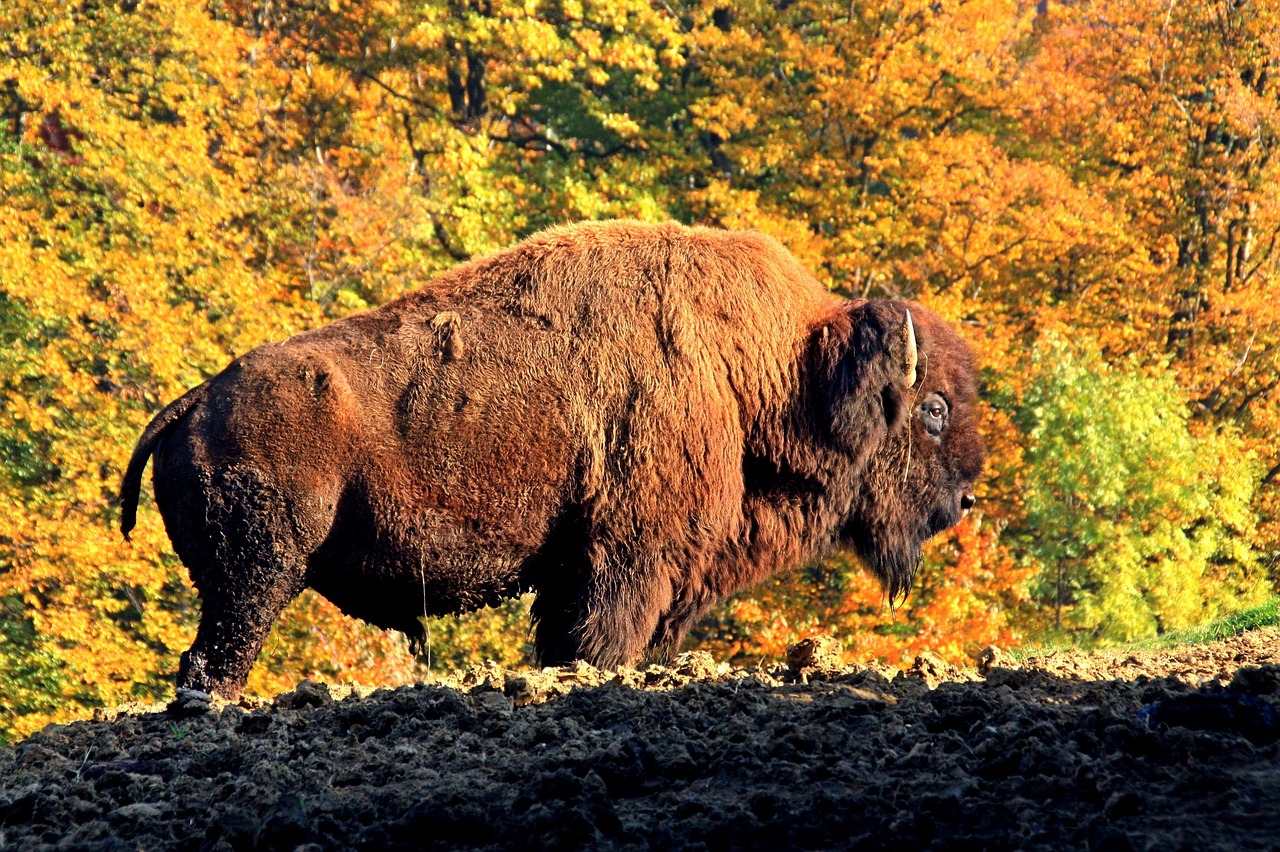
No animal was more central to Cheyenne life than the bison, which supplied the foundation of their diet and far more besides. The great communal hunts, organized and regulated by the warrior societies to ensure fairness and success, yielded the meat that sustained the people, eaten fresh in season and dried for the leaner months. The bison was at once food, shelter, clothing, tool, and sacred presence, and the whole of plains life turned upon it.
Dried meat was often pounded together with fat and berries to make a concentrated, durable food that could be stored and carried, providing nourishment through winter and on the move. This preparation was a staple of the plains diet, a compact source of energy that suited the demands of a mobile existence and could be kept for long periods.
The Cheyenne diet was rounded out by the plant foods that women gathered across the plains, including wild fruits, roots, and berries, as well as by other game taken in the hunt. Knowledge of which plants to gather and when, and of how to prepare and preserve the harvest, represented an accumulated wisdom essential to survival in a country of feast and scarcity.
The near destruction of the bison herds in the nineteenth century was therefore a catastrophe that struck at the very heart of Cheyenne existence. The loss of the animal on which their entire way of life depended was among the gravest of the blows they suffered, and it forced a wrenching transformation upon a people who had built their world around the great herds.
The organization of the communal hunt was itself a remarkable social achievement. To prevent any individual from frightening the herd and spoiling the chase for all, the warrior societies enforced strict discipline, ensuring that the hunt began together and that its benefits were shared. This regulation of a vital collective activity showed the same concern for the common good that ran through Cheyenne governance.
Gathering and Celebration
For a people who spent much of the year dispersed in small bands across the plains, the great gatherings were moments of profound importance, occasions when the scattered parts of the nation came together to renew their bonds, conduct their ceremonies, and celebrate their shared identity. These assemblies blended the sacred and the social, joining solemn ritual with feasting, dancing, and the pleasures of reunion.
The annual ceremony of renewal was the great occasion of coming together, drawing the bands into a single camp for days of observance, prayer, and communal life. Such gatherings reaffirmed the unity of the nation and the bond between the people and the sacred powers, and they were essential to the cohesion of a society whose members were otherwise spread across a wide country.
Dancing and song accompanied these occasions, with the warrior societies performing their distinctive dances and the community joining in celebration. Regalia rich with meaning was worn, and the movements and music enacted stories, honored achievements, and expressed the joy and pride of the gathered people. To dance and sing together was to affirm belonging in a vivid and public way.
In the modern era, powwows and other gatherings have carried these traditions forward, bringing Cheyenne people together with those of many nations in shared celebration. Dancers in elaborate regalia keep the old forms alive while participating in a broader resurgence of Native pride, and these events continue to strengthen community and affirm an identity that endures.

A History of Conflict and Survival
The nineteenth century brought the Cheyenne into the path of a relentless westward expansion that would test them to the utmost. As settlers, railroads, and armies pushed onto the plains, the Cheyenne found their homeland invaded, their bison herds destroyed, and their freedom threatened, and they responded with a determined resistance that made them central figures in the history of the era. Alongside allied nations, they fought to defend their land and their way of life.
This period was marked by episodes of terrible violence, including attacks on Cheyenne encampments that inflicted devastating losses on communities that included women, children, and the elderly. These tragedies seared themselves into the memory of the people and stand among the darkest chapters of the westward expansion, testaments to the brutality of the campaigns waged against the plains nations.
The Cheyenne also took part in some of the most famous confrontations of the plains wars, joining with allies in resistance that won victories even as the larger struggle turned against them. In the end, overwhelming force, the destruction of the bison, and relentless pressure compelled the surrender of the free bands and their confinement to reservations, some far from their northern homeland.
One of the most poignant episodes came when a group of northern Cheyenne, confined far to the south and desperate to return home, undertook a long and harrowing journey northward against enormous odds. Their determination to reach their own country, at terrible cost, became a lasting symbol of the Cheyenne refusal to surrender their identity and their homeland.

The Cheyenne Today
The Cheyenne endure today as two federally recognized nations, the Northern Cheyenne in the northern plains and the Cheyenne joined with the Arapaho to the south, each with its own government, lands, and institutions. These nations administer their own affairs, manage their resources, and work to build sustainable futures for their members while asserting their sovereignty as distinct peoples with a continuous history reaching back long before the states that surround them.
Cultural revitalization is a central concern of contemporary Cheyenne life. Efforts to teach the language, sustain the ceremonies, preserve the sacred traditions, and pass on the crafts and stories reflect a determination to carry the inheritance of the ancestors into a future shaped by modern realities. The sacred bundles and the great ceremonies remain living elements of the culture, tended with the same care as in generations past.
Challenges remain real, from the economic pressures common to many reservation communities to the ongoing work of protecting sacred sites, asserting treaty rights, and healing the wounds of a difficult history. The Cheyenne navigate these difficulties with the resourcefulness and resilience that carried their ancestors through far harsher trials, drawing on both tradition and modern tools to advocate for their people.
To speak of the Cheyenne today is to speak not of a vanished people but of living nations engaged in the ongoing work of self-determination. Their remarkable history, from the eastern woodlands to the plains and through the trials of conquest, has become the foundation of a confident present, and the identity forged across those centuries continues to shape a future the Cheyenne are determined to define for themselves.

Related Peoples of the Great Plains
The Cheyenne shared the grasslands with other great nations of the plains, allies and neighbors whose histories were closely bound up with their own. To read about their fellow peoples of the Great Plains, explore these related profiles:
You May Like
The Zaza, a Mountain People of Eastern Anatolia