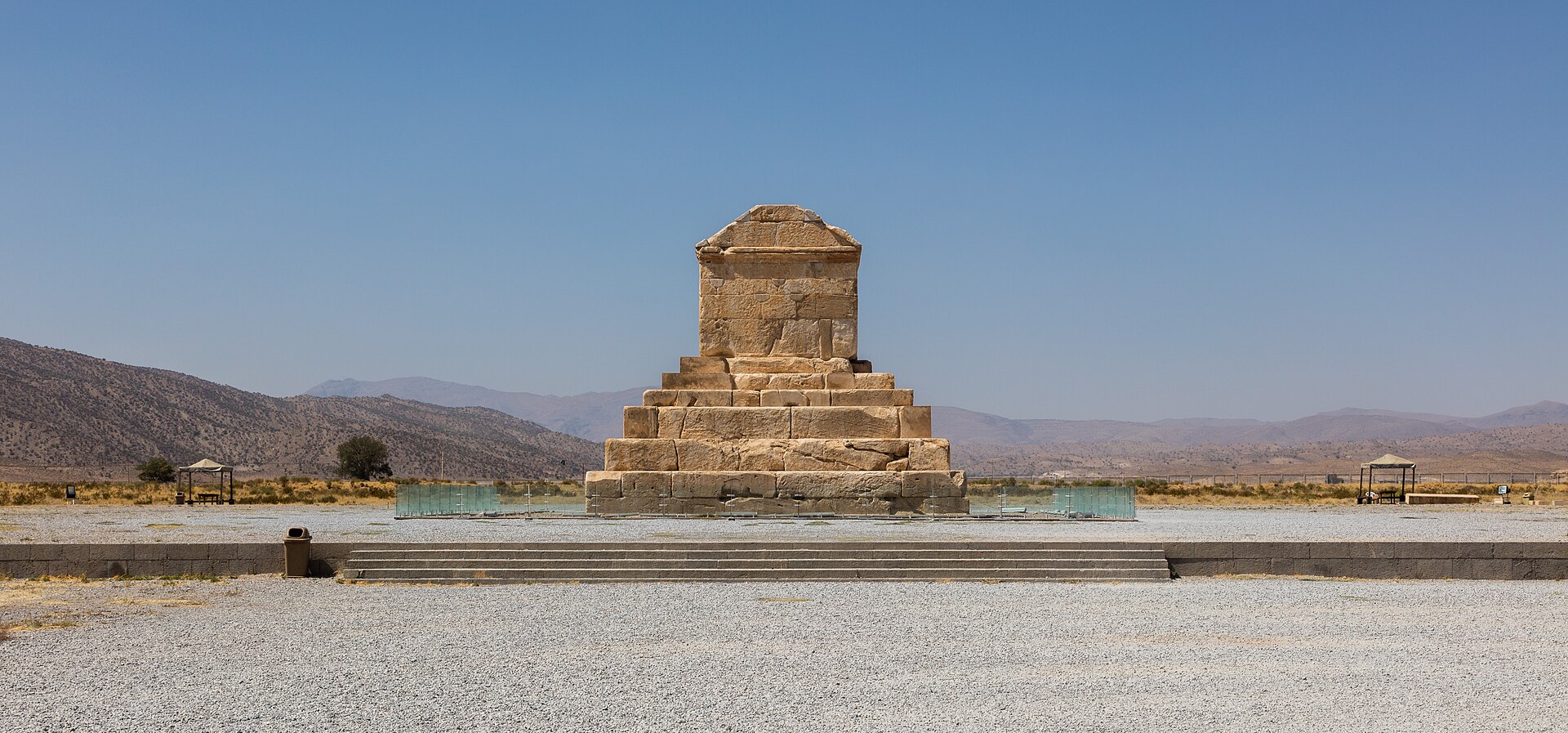
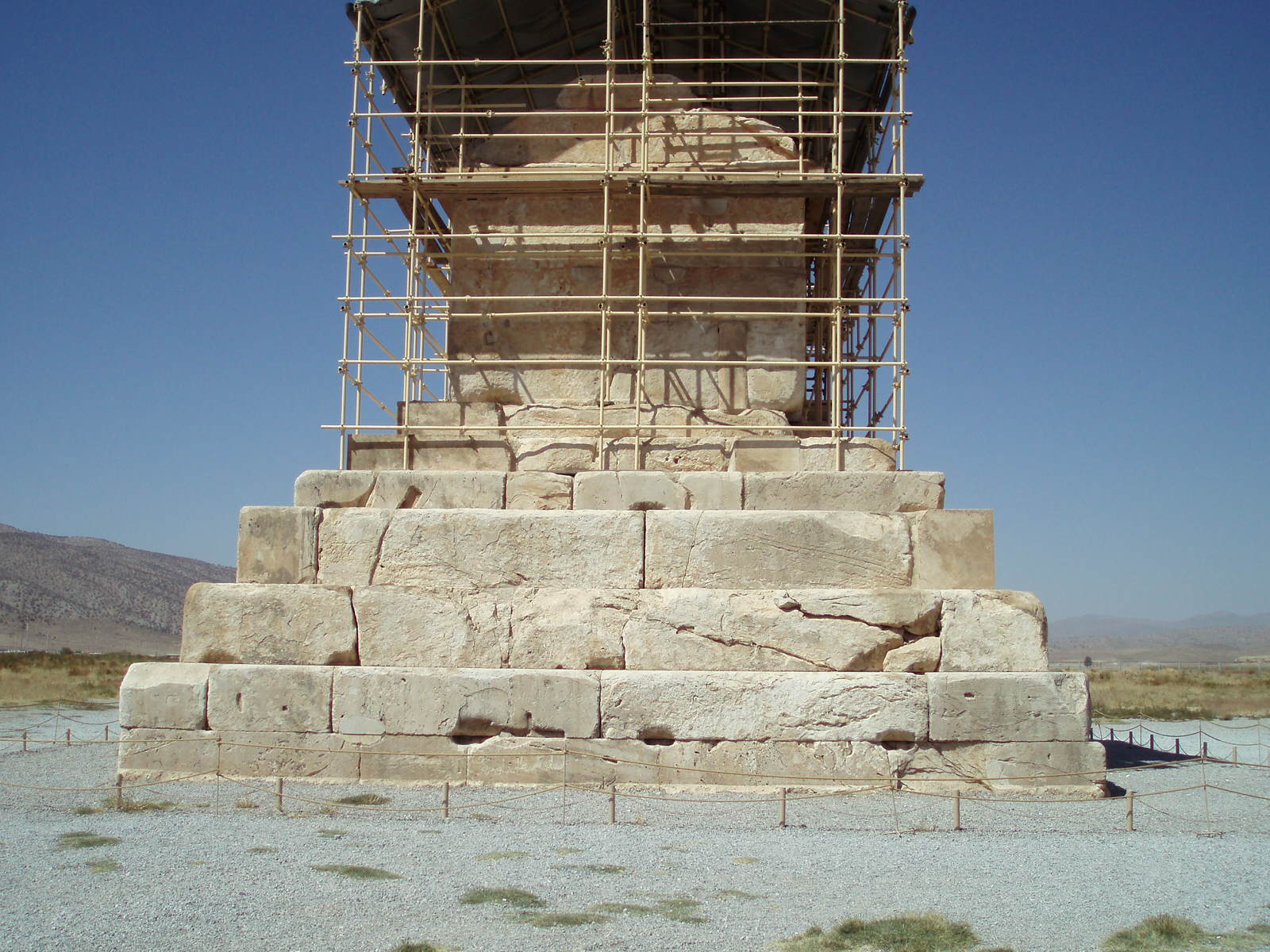
On a high plain in southern Iran stands a simple, dignified stone tomb, its stepped base rising to a small gabled chamber. This is the tomb of Cyrus the Great, founder of the Persian Empire, and it lies at the heart of Pasargadae, the first capital of that empire and one of the most important early sites of ancient Persia.
Older than the more famous Persepolis, Pasargadae was the creation of Cyrus himself, the conqueror who built the largest empire the world had yet seen and was remembered even by his enemies as a wise and tolerant ruler. Its ruins mark the birthplace of the Persian imperial idea.
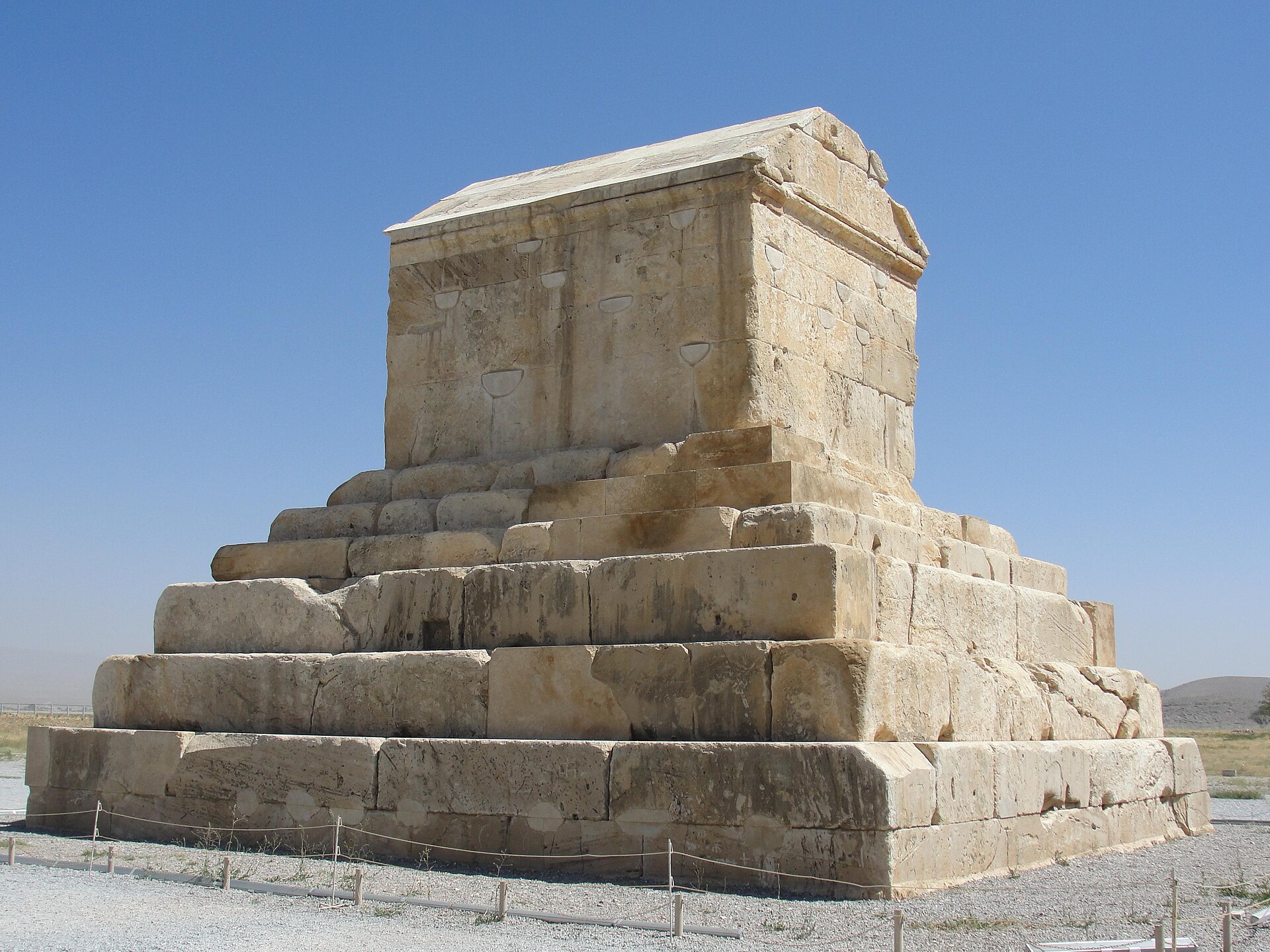
Table of Contents
- The First Capital of the Persian Empire
- Cyrus the Great
- The Tomb of Cyrus
- The Royal Palaces
- The First Persian Gardens
- The Winged Guardian
- The Citadel of Tall-e Takht
- Inscriptions and the Voice of Cyrus
- Cyrus’s Legacy of Tolerance
- Alexander’s Visit, Rediscovery, and UNESCO
- Getting There
- Nearby Places
- Closing Thoughts
The First Capital of the Persian Empire
Pasargadae was founded by Cyrus the Great in the sixth century BC as the capital of his new empire. It was built on the plain where, according to tradition, he had won a decisive victory that launched his rise to power.
Spread across the landscape rather than concentrated on a terrace like Persepolis, Pasargadae combined palaces, gardens and a citadel. It set the pattern for Persian royal architecture that later capitals would follow.
Cyrus the Great
Cyrus the Great is one of the towering figures of ancient history. Starting from a small kingdom, he conquered the Medes, the Lydians and the Babylonians to create an empire stretching across the Near East.
He was remembered not only as a conqueror but as a ruler who respected the customs and religions of the peoples he conquered. His reputation for justice and tolerance made him admired far beyond Persia.
The Tomb of Cyrus
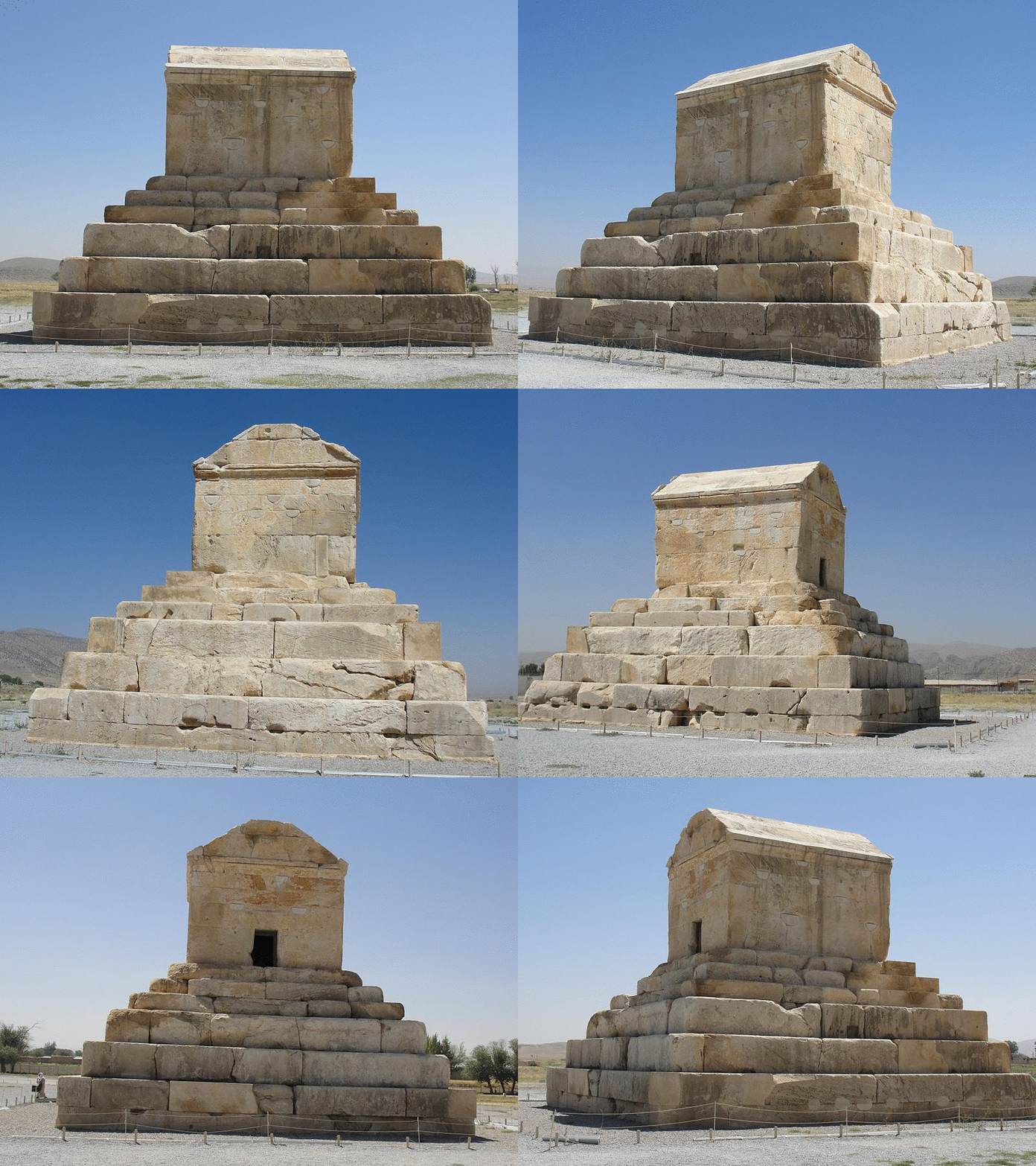
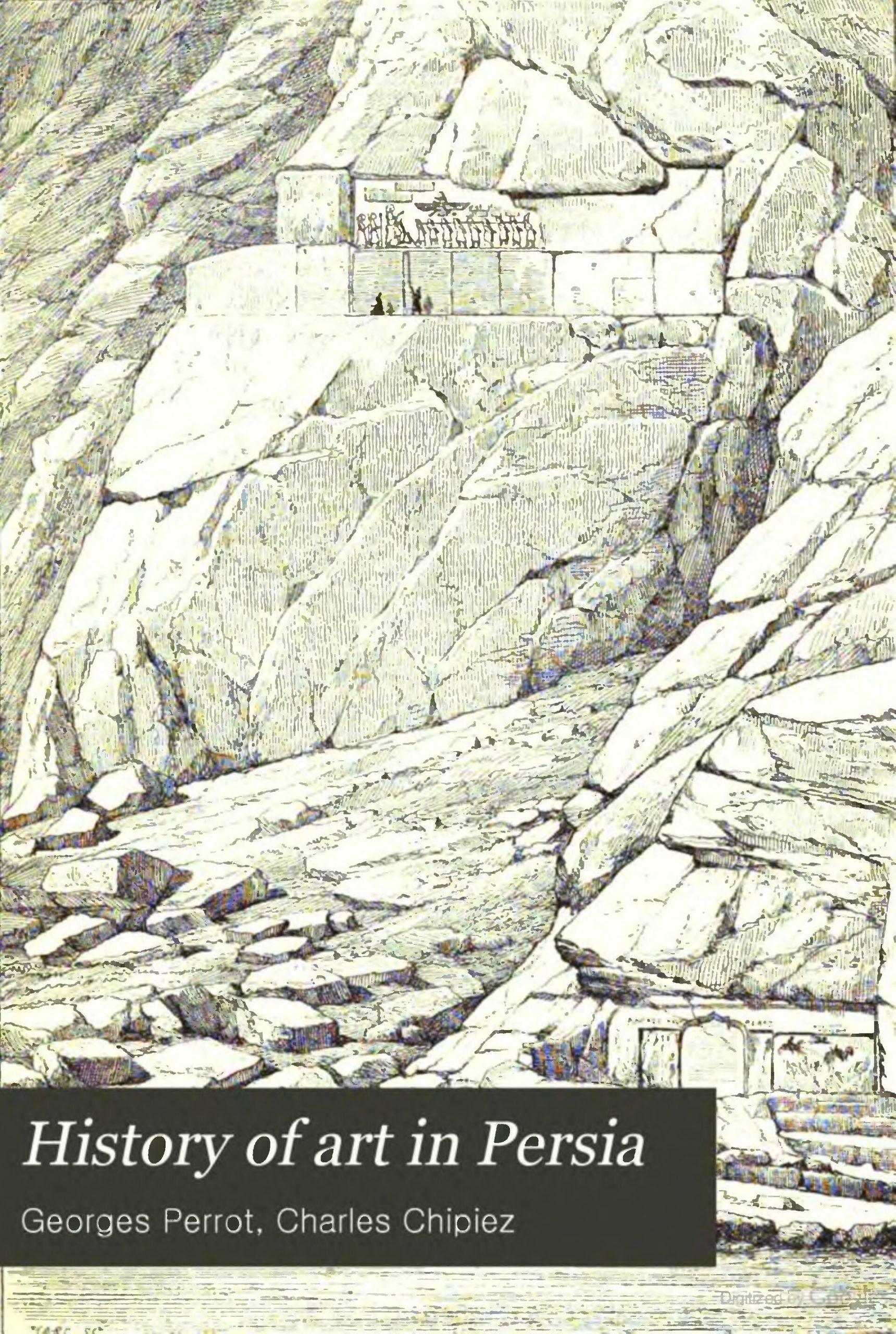
The most famous monument at Pasargadae is the tomb of Cyrus, a modest but beautifully proportioned structure of pale stone. A small chamber, once holding the king’s body, sits atop a stepped platform.
Its simple dignity has impressed visitors for over two thousand years. When Alexander the Great came here, he is said to have ordered the tomb restored and honoured, a mark of the respect Cyrus commanded even from his conquerors.
The Royal Palaces
Across the plain lie the remains of Cyrus’s palaces, including audience halls and residential buildings. Though much is ruined, surviving doorways, column bases and fragments of relief hint at their former splendour.
These palaces introduced architectural ideas, such as great columned halls, that would be developed on a grander scale at Persepolis. Pasargadae was where Persian imperial architecture was born.
The First Persian Gardens
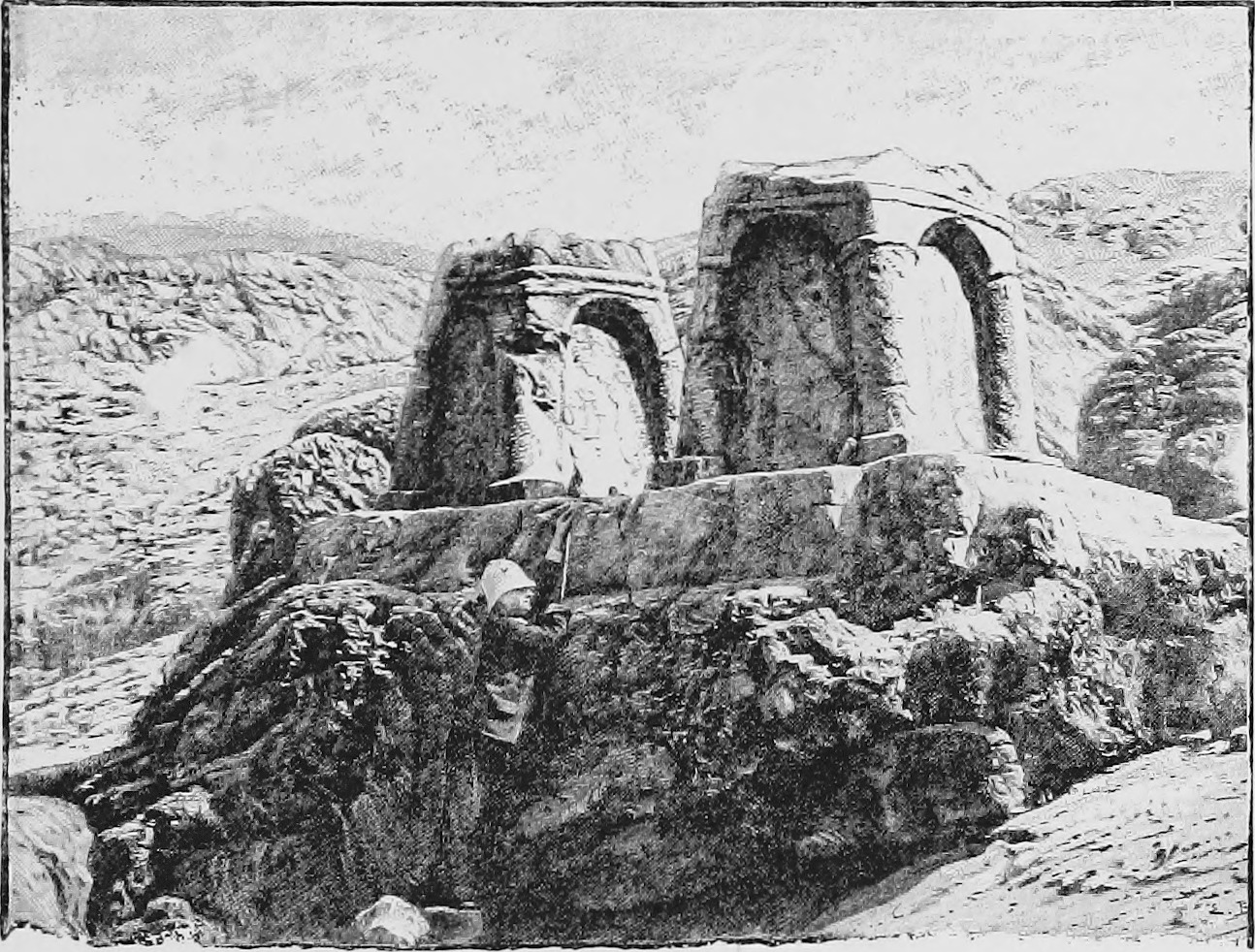
Pasargadae is famous as the site of one of the earliest known formal gardens. Cyrus laid out a royal garden with straight water channels dividing it into quarters, a design known as the fourfold garden.
This pattern, sometimes called a paradise garden, spread across the Persian world and beyond, influencing garden design for millennia. The very word paradise comes from the Persian term for such an enclosed garden.
The Winged Guardian
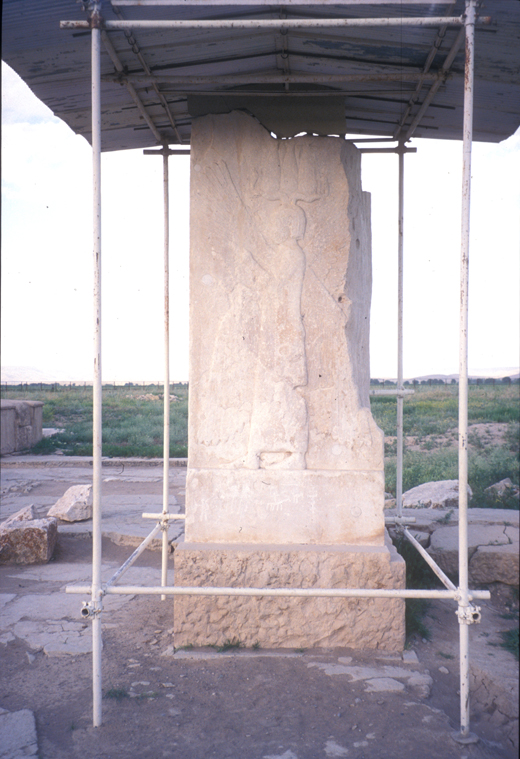
One of the best-known images from Pasargadae is a relief of a winged figure, once part of a palace doorway. Wearing an elaborate crown and four great wings, it may represent a guardian spirit or a divine protector of the king.
An inscription once above it read simply that Cyrus the king built this. The figure is a striking symbol of the blend of cultures and ideas that shaped early Persian art.
The Citadel of Tall-e Takht
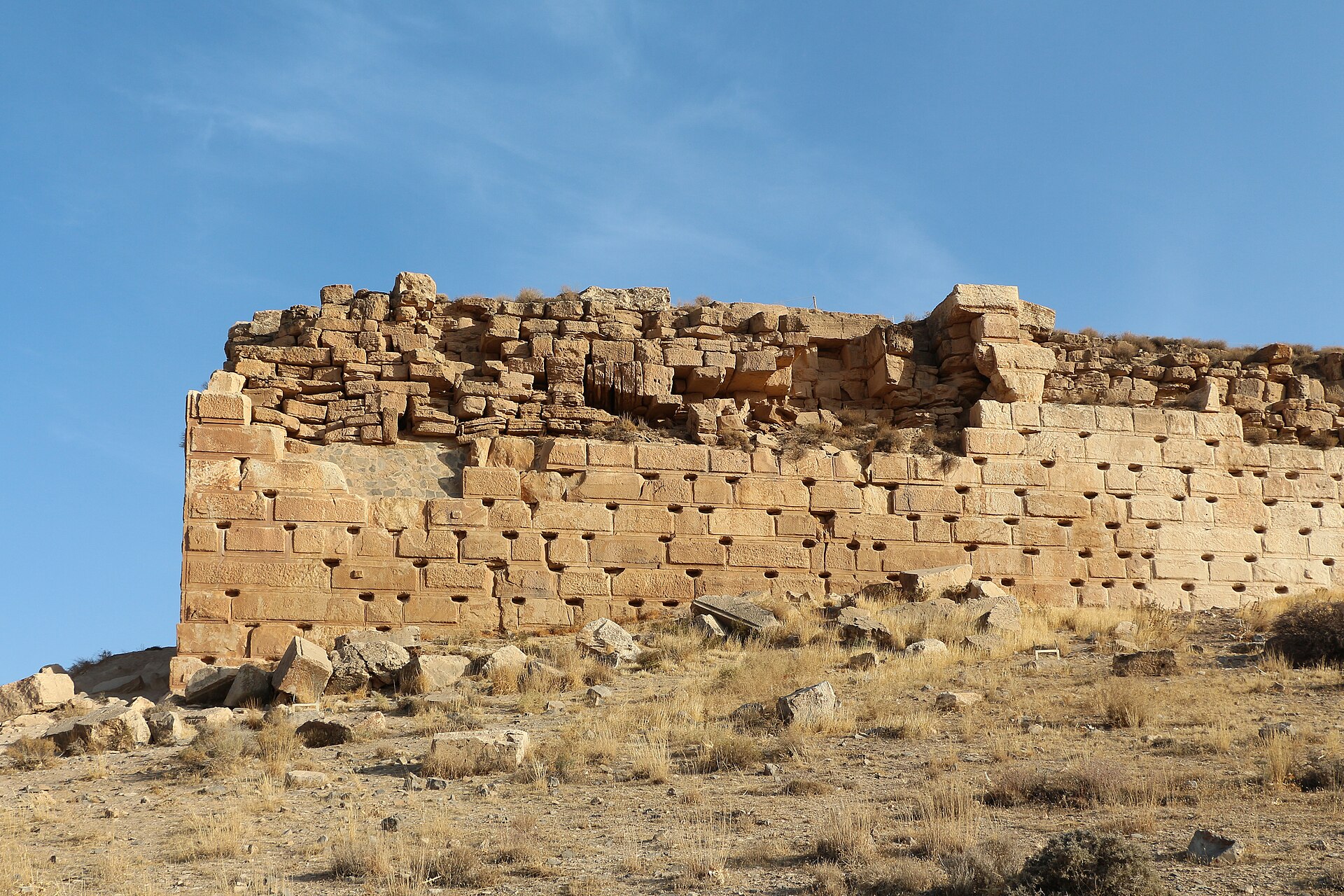
Overlooking the plain stands the Tall-e Takht, a great stone platform and citadel built with massive, finely cut blocks. It served as a fortified stronghold and possibly a treasury for the early empire.
Its impressive masonry shows the skill of Cyrus’s builders and the importance of Pasargadae as a secure royal centre. From here the surrounding plain and its monuments could be watched over.
Inscriptions and the Voice of Cyrus
Around Pasargadae, short inscriptions in cuneiform proclaim the presence of the king. Though brief, they are among the earliest royal Persian inscriptions and link the monuments directly to Cyrus and his successors.
These texts, together with the buildings, allow us to connect the ruins with the historical Cyrus, whose achievements are also recorded in the famous Cyrus Cylinder, sometimes called an early charter of tolerance.
Cyrus’s Legacy of Tolerance
Cyrus is remembered above all for his policy of respecting the peoples he ruled. The Bible records that he allowed the Jews exiled in Babylon to return home and rebuild their temple, and he is praised in scripture as a liberator.
This reputation for tolerance and just rule made Cyrus a model of good kingship in later ages. Pasargadae, as his capital and burial place, is the monument to this remarkable legacy.
Alexander’s Visit, Rediscovery, and UNESCO
When Alexander the Great conquered Persia, he visited the tomb of Cyrus and, finding it disturbed, ordered it repaired, honouring the memory of the great king. In later centuries the site was gradually abandoned.
Rediscovered and studied by archaeologists, Pasargadae was inscribed on the UNESCO World Heritage List in 2004. It remains a place of deep significance in Iran, honoured as the resting place of the founder of the nation.
Getting There
Pasargadae lies in Fars Province in southern Iran, roughly a hundred and thirty kilometres northeast of the city of Shiraz. Shiraz, with its international airport, is the usual base for a visit.
From Shiraz the site is reached by road, often combined with a trip to Persepolis and the royal tombs of Naqsh-e Rustam. Travellers should check current entry and travel requirements for Iran in advance.
Coordinates: 30.1944, 53.1672 — open Pasargadae in Google Maps.
Nearby Places
- Persepolis — the grander later capital of the Persian Empire, usually visited together with Pasargadae.
- Babylon — the great city Cyrus conquered, from which he freed the exiled Jews in his famous act of tolerance.
- Nineveh — the earlier Mesopotamian capital whose empire the Persians inherited and surpassed.
Closing Thoughts
Pasargadae is where the Persian Empire began: the capital and burial place of Cyrus the Great, whose simple, noble tomb still stands on the plain after two and a half thousand years.
Home to the first Persian gardens and honoured even by Alexander, it marks the birth of an imperial idea, and the memory of a conqueror remembered for his justice and tolerance. Few ruins carry so much meaning in so quiet a landscape.
You May Like
Mafra, the Palace a King Built From a Vow