In the deserts of southern Iraq rise the ruins of Ur, one of the oldest cities in the world and a great capital of the Sumerians, the people who invented writing and built the first cities of Mesopotamia. Its towering ziggurat, a stepped temple-mountain to the moon god, still dominates the flat landscape as it has for over four thousand years.
Ur is famous for the astonishing treasures found in its royal tombs, from golden headdresses to the beautiful Standard of Ur. It is also known to millions as the city that tradition names as the birthplace of the patriarch Abraham, making it a place of deep significance for much of humanity.
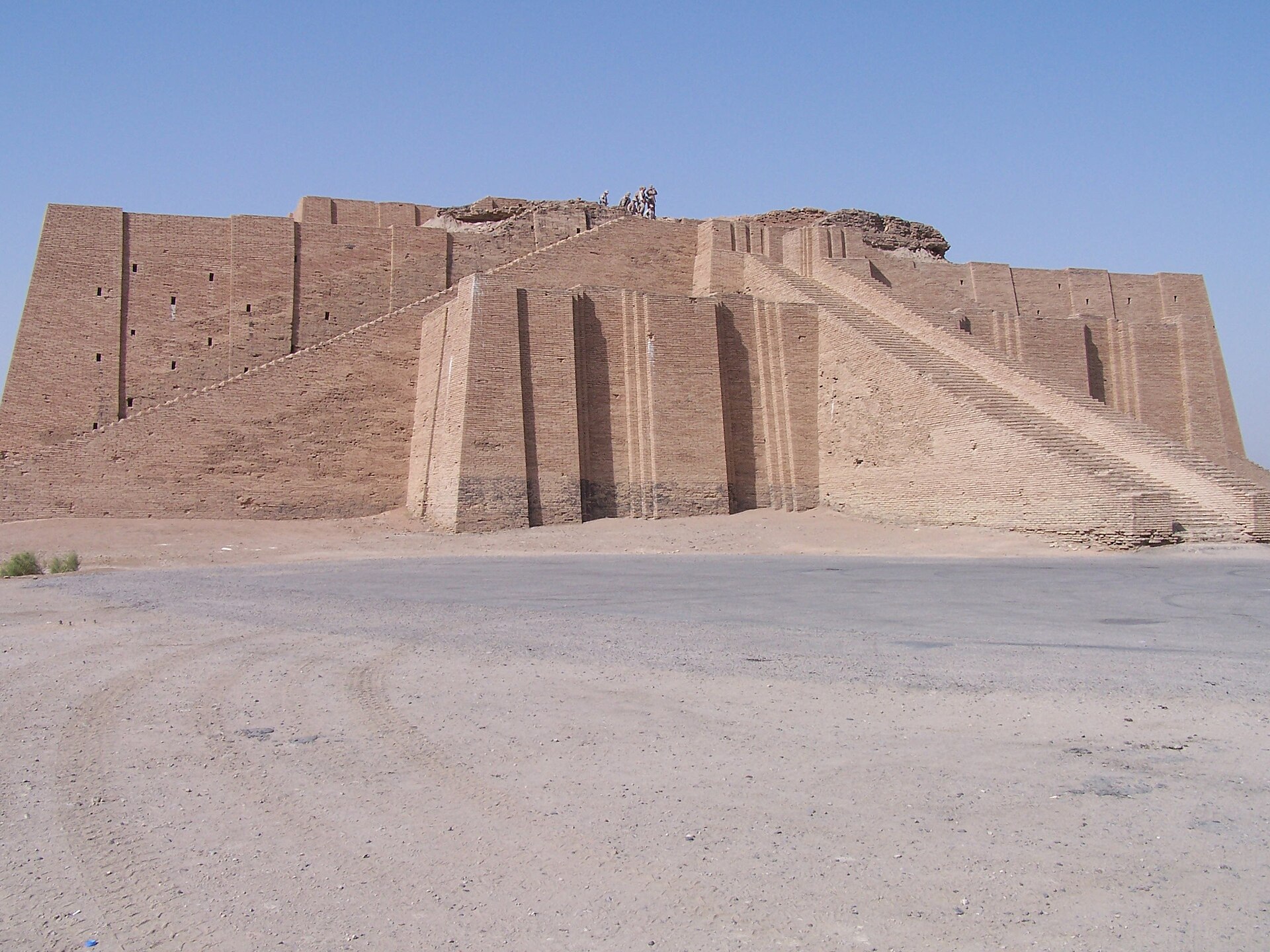
Table of Contents
- One of the World’s First Cities
- The Sumerians
- The Great Ziggurat of Ur
- The Moon God Nanna
- The Royal Tombs of Ur
- Treasures of the Death Pits
- The Standard of Ur
- The Ram in a Thicket
- Everyday Life and Abraham’s City
- Woolley, Rediscovery, and Heritage
- Getting There
- Nearby Places
- Closing Thoughts
One of the World’s First Cities
Ur was one of the great cities of ancient Sumer, the civilisation that arose in southern Mesopotamia and produced some of humanity’s first cities, writing and law. By around 2000 BC Ur was a powerful and wealthy capital.
Standing near the Euphrates and once close to the Persian Gulf, Ur thrived on trade and agriculture. It was home to tens of thousands of people and stood at the very dawn of urban civilisation.
The Sumerians
The Sumerians were among the first people to build cities, and they made extraordinary contributions to human history. They developed cuneiform writing, advanced mathematics and astronomy, monumental architecture and complex religion.
Ur was one of their leading cities, and for a time the seat of kings who ruled much of Mesopotamia. The achievements of the Sumerians laid foundations for all the civilisations that followed in the region.
The Great Ziggurat of Ur
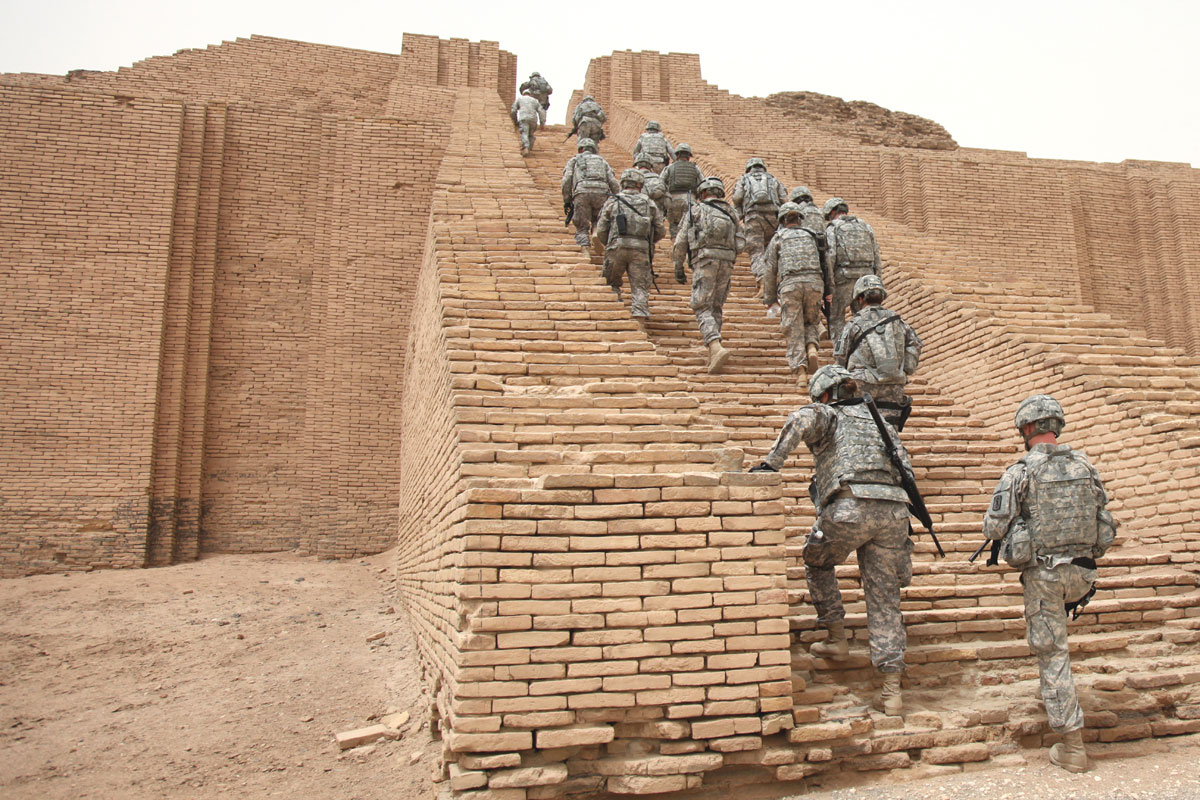
The most famous monument of Ur is its great ziggurat, a massive stepped platform of mud brick that once supported a temple at its summit. It was dedicated to Nanna, the moon god, the patron deity of the city.
Partly reconstructed in modern times, its lower stages and grand staircases survive, giving a powerful sense of its original height and mass. It is one of the best-preserved ziggurats in Mesopotamia.
The Moon God Nanna
Ur was the sacred city of Nanna, the moon god, whose worship was central to its life. The ziggurat and its temple formed the heart of a great religious complex where the god was honoured with offerings and ceremonies.
The high priestess of Nanna was often a royal princess, and the office was of great importance. Religion and kingship were closely bound together in the life of the city.
The Royal Tombs of Ur
In the 1920s, excavations at Ur uncovered a royal cemetery containing tombs of astonishing richness. Kings and queens had been buried with dazzling treasures, and, chillingly, with the bodies of servants and attendants who appear to have accompanied them in death.
These royal tombs, dating to around 2500 BC, revealed the wealth, artistry and beliefs of early Sumerian society. They are among the most important archaeological discoveries ever made.
Treasures of the Death Pits
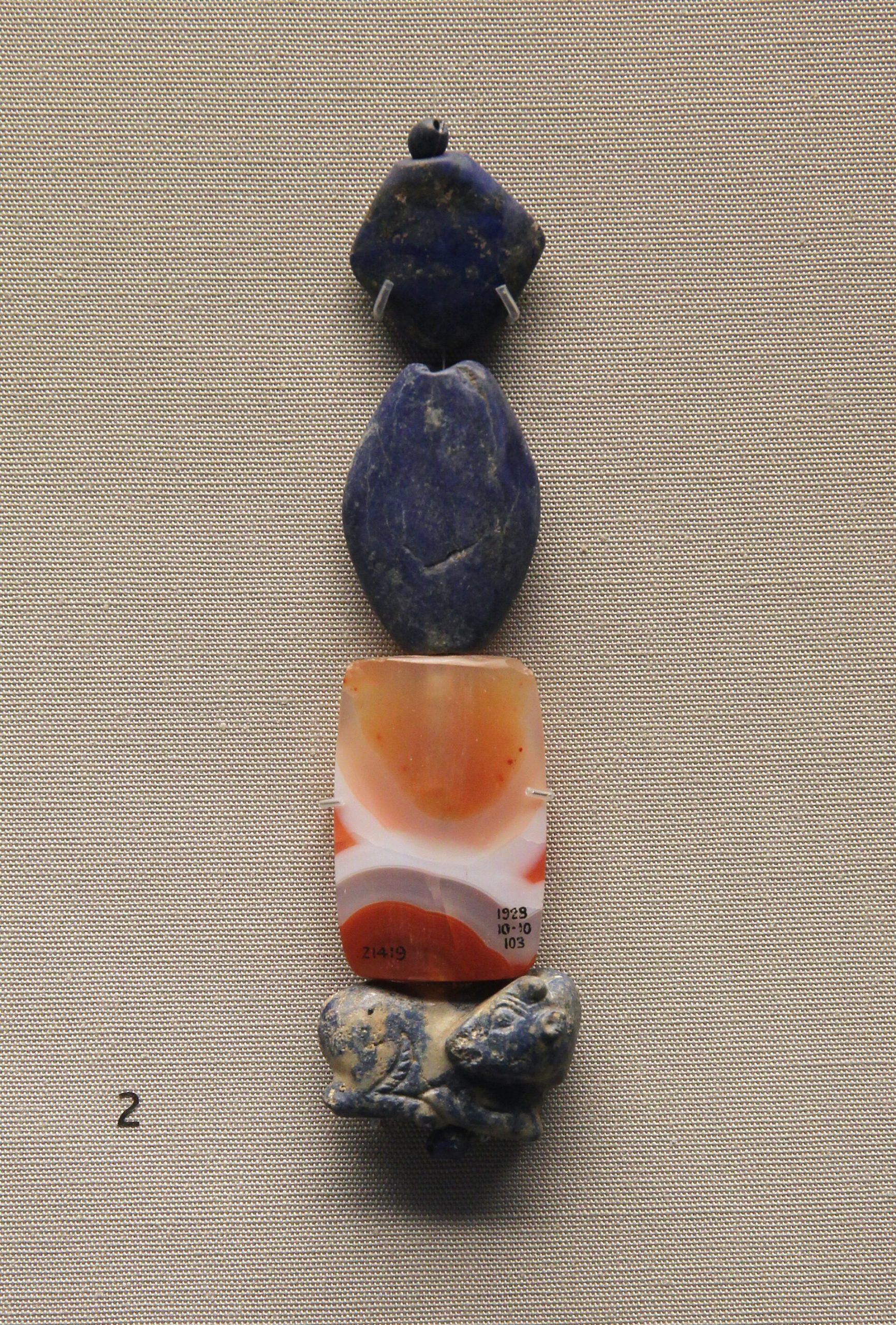
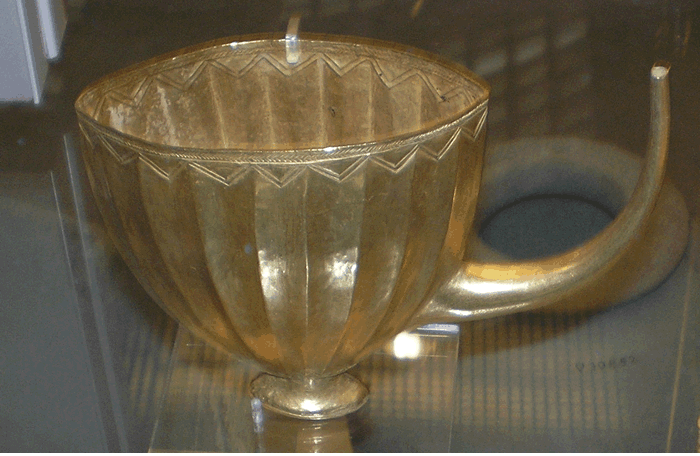
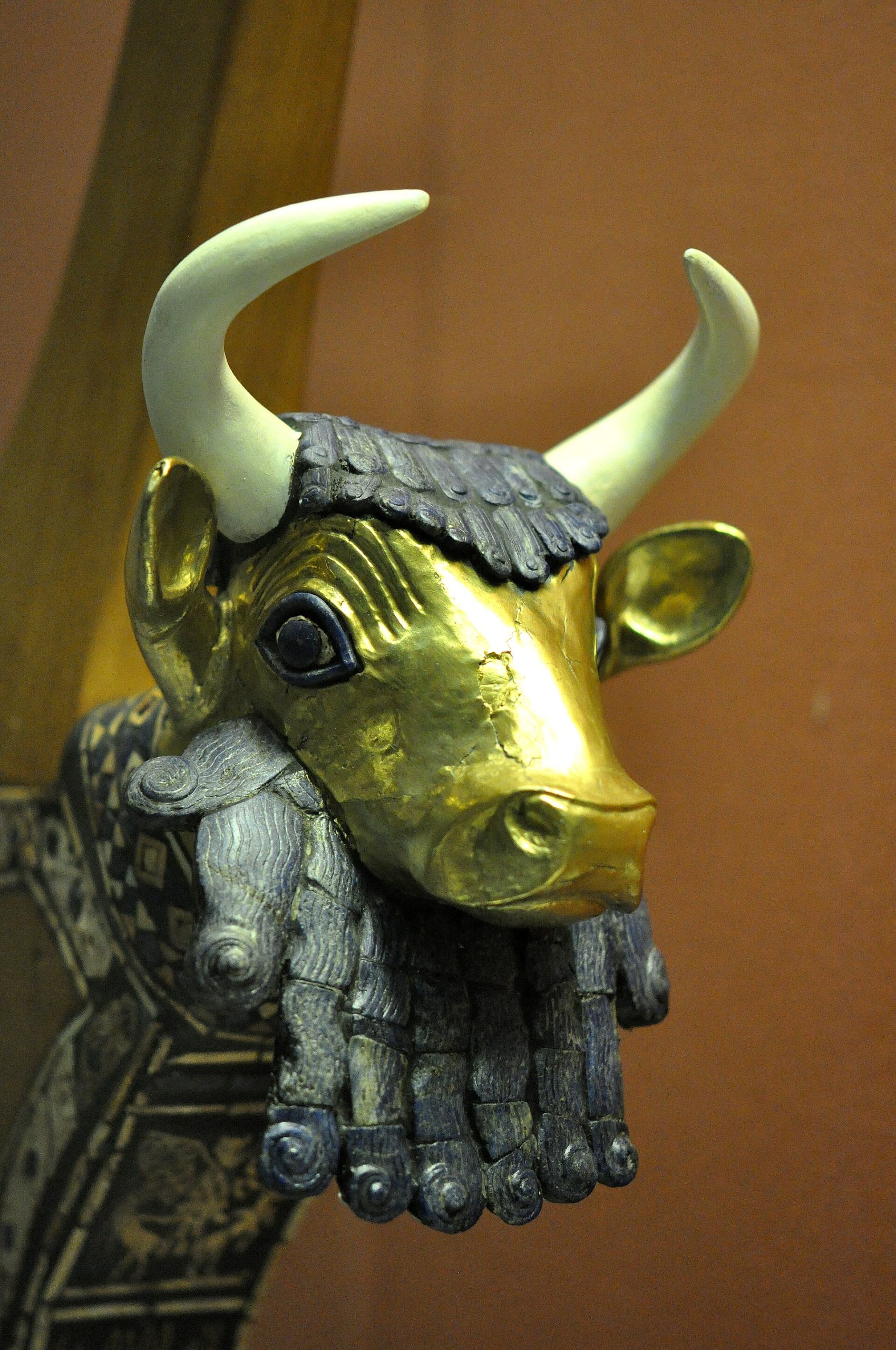
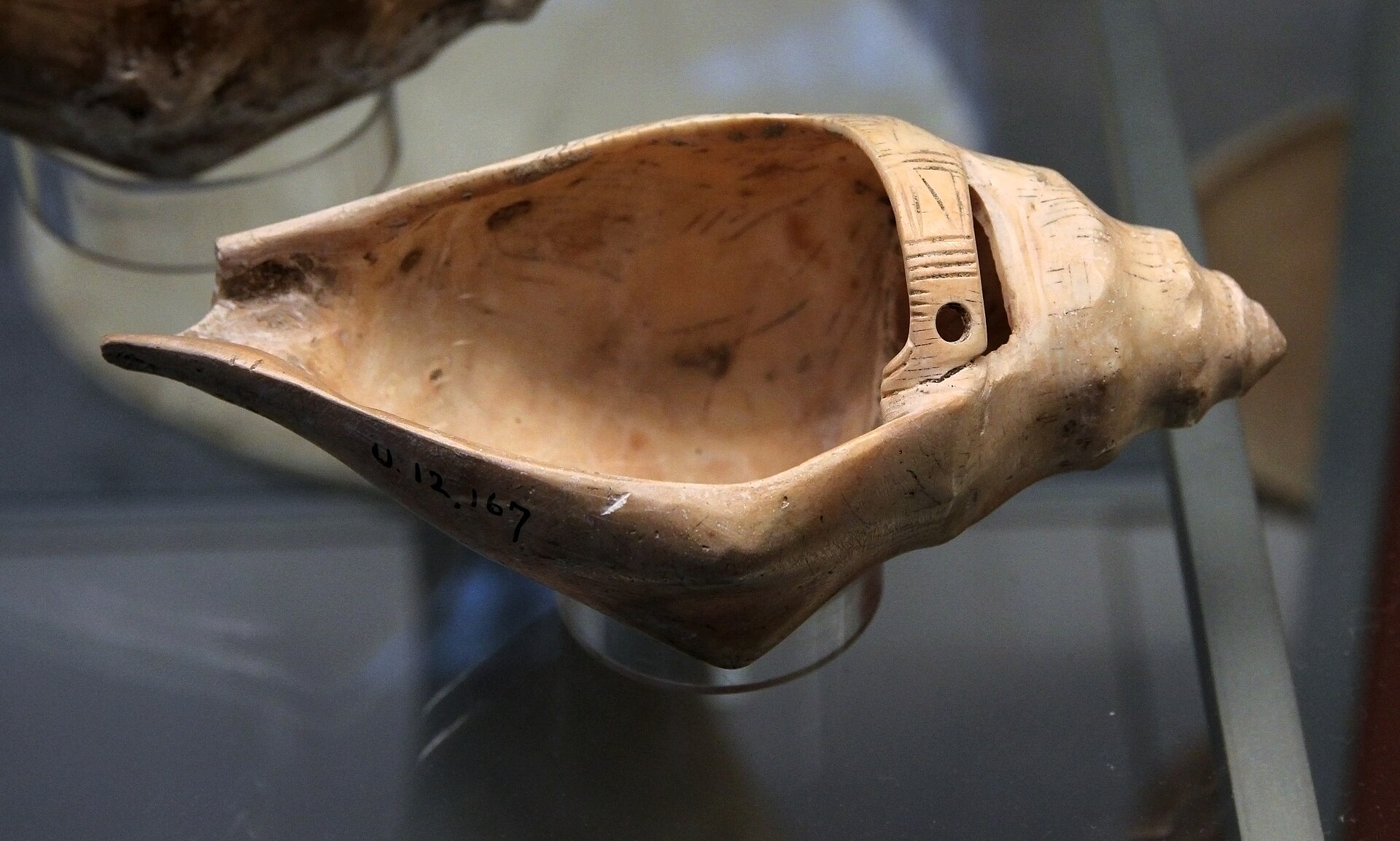
The tombs yielded a wealth of exquisite objects in gold, silver, lapis lazuli and shell. Among the finest is the elaborate golden headdress of Queen Puabi, and beautiful lyres decorated with the heads of bulls.
These treasures show the extraordinary skill of Sumerian craftsmen and the far-reaching trade that brought precious materials to Ur from distant lands. They are now among the prized possessions of great museums.
The Standard of Ur
One of the most famous objects from the tombs is the Standard of Ur, a small box inlaid with scenes made of shell and lapis lazuli. Its two main panels show war on one side and peace on the other.
The war panel depicts chariots and soldiers, while the peace panel shows a banquet and the bringing of goods. Together they offer a vivid picture of life, power and society in early Mesopotamia.
The Ram in a Thicket
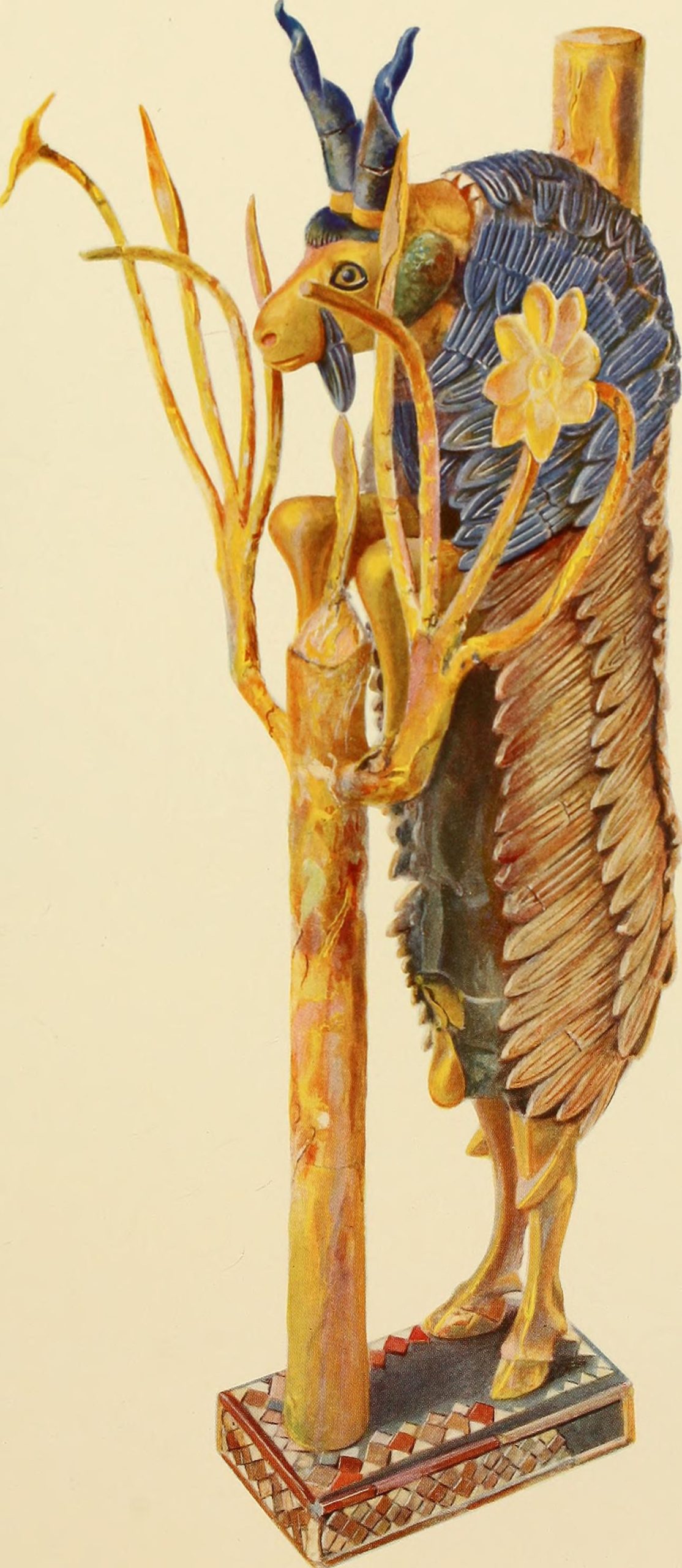
Another masterpiece from Ur is the so-called Ram in a Thicket, a statue of a goat standing against a flowering tree, made of gold, silver, lapis lazuli and shell. Two such figures were found in the royal tombs.
Their beauty and craftsmanship are breathtaking, and they show the wealth and artistic sophistication of Ur at its height. They remain among the most beloved treasures of ancient Mesopotamia.
Everyday Life and Abraham’s City
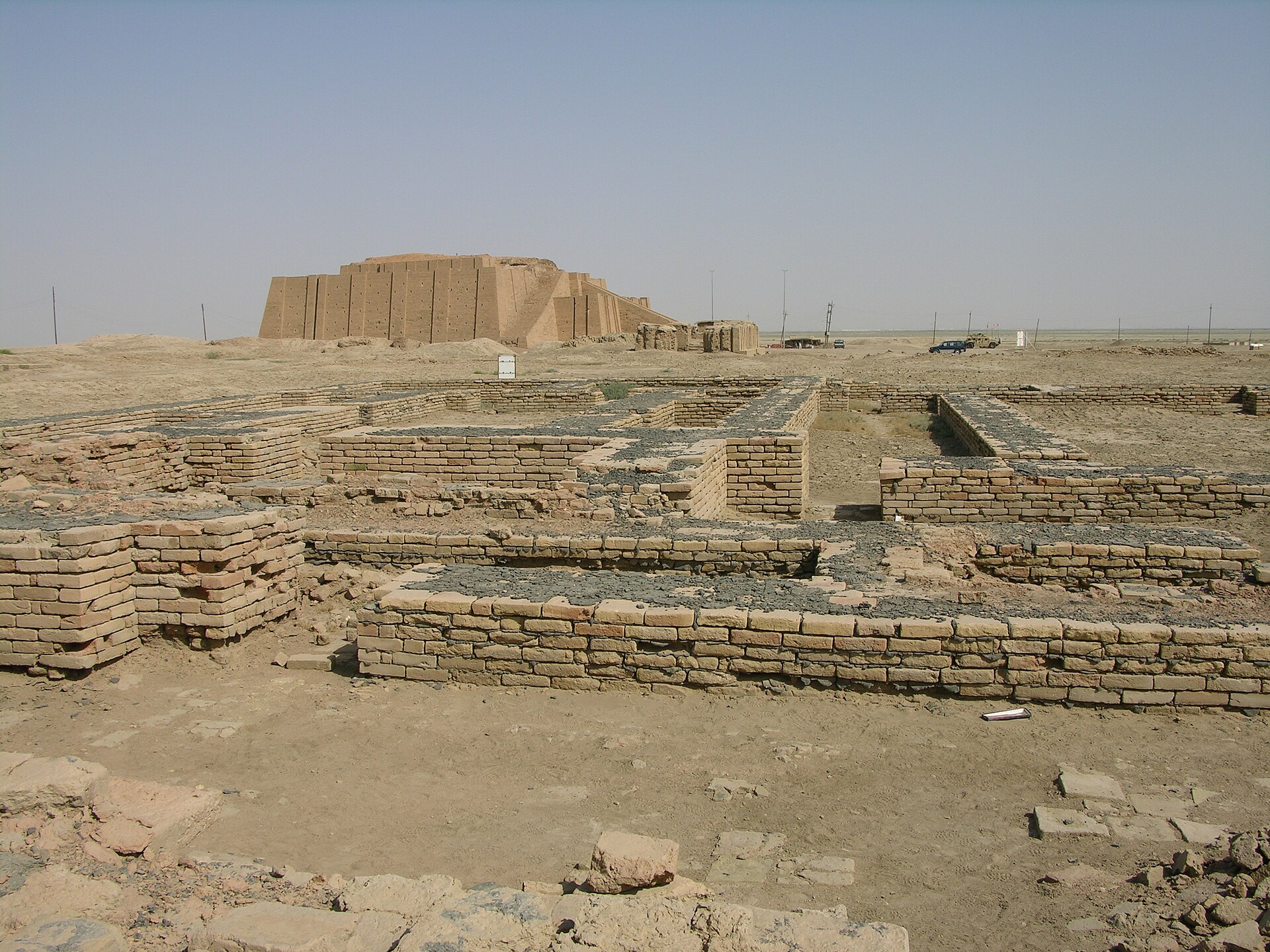
Beyond its monuments and treasures, Ur preserves the remains of ordinary houses, streets and workshops, giving a picture of daily life in a Sumerian city. Excavators uncovered whole neighbourhoods of mud-brick homes.
Ur is also known from the Bible as Ur of the Chaldees, traditionally the birthplace of the patriarch Abraham. This connection makes the city sacred to Jews, Christians and Muslims alike.
Woolley, Rediscovery, and Heritage
The great excavations of Ur were led by the British archaeologist Leonard Woolley in the 1920s and 1930s, whose discoveries in the royal tombs captured the world’s imagination.
After long neglect, and damage during recent conflicts in Iraq, Ur has been the focus of renewed care and interest, and it has received high-profile visits. It stands as one of the most important ancient sites of Mesopotamia, the cradle of civilisation.
Getting There
Ur lies in Dhi Qar Province in southern Iraq, near the modern city of Nasiriyah, not far from an airbase of the same name. Nasiriyah is the usual base for a visit.
The site is reached by road, and travel in Iraq depends heavily on the security and political situation. Visitors should check current conditions and requirements carefully before planning a trip.
Coordinates: 30.9626, 46.1030 — open Ur in Google Maps.
Nearby Places
- Babylon — the later great capital of Mesopotamia, heir to the civilisation the Sumerians of Ur began.
- Nineveh — the Assyrian capital of northern Mesopotamia, part of the same long river-valley civilisation.
- Mohenjo-daro — a contemporary early city of the Indus, with which Sumerian Ur traded across the ancient world.
Closing Thoughts
Ur stands at the very beginning of the urban human story: a great Sumerian city crowned by a ziggurat to the moon god, whose royal tombs poured forth some of the most beautiful treasures of the ancient world.
Cradle of writing, city of kings, and, by tradition, home of Abraham, Ur unites the deepest roots of civilisation and faith. Its towering temple still rises over the plains of Iraq, a monument to the dawn of history.
You May Like
Mafra, the Palace a King Built From a Vow


One thought on “Ur: The Sumerian City of the Great Ziggurat and the Golden Royal Tombs”