On the banks of the Indus River in southern Pakistan lie the ruins of one of the world’s first great cities. Built nearly five thousand years ago, Mohenjo-daro was a marvel of urban planning, with straight streets, brick houses, covered drains and a mysterious ceremonial bath, all raised long before the pyramids of Egypt were old.
Mohenjo-daro was a leading centre of the Indus Valley Civilisation, one of the earliest urban cultures on earth. Yet its writing remains undeciphered and its rulers unknown, leaving this sophisticated city one of the great enigmas of the ancient world.

Table of Contents
- A Metropolis of the Bronze Age
- The Indus Valley Civilisation
- A Marvel of Urban Planning
- The Great Bath
- The Citadel and the Stupa Mound
- Water, Wells, and Ancient Sanitation
- The Priest-King and the Dancing Girl
- Seals and the Undeciphered Script
- Decline and Abandonment
- Rediscovery and UNESCO
- Getting There
- Nearby Places
- Closing Thoughts
A Metropolis of the Bronze Age
Mohenjo-daro flourished around 2500 BC, at the same time as ancient Egypt and Mesopotamia. At its height it may have housed tens of thousands of people, making it one of the largest cities of its day anywhere in the world.
The name means mound of the dead in the local language. What survives is a vast expanse of baked-brick ruins, laid out with a regularity that still astonishes visitors and archaeologists alike.

The Indus Valley Civilisation
Mohenjo-daro was one of the twin capitals, along with Harappa, of the Indus Valley Civilisation, which spread across a huge area of modern Pakistan and northwest India. It was a society of cities, trade, craft and agriculture.
Remarkably, this civilisation shows little sign of kings, temples or armies of the kind seen elsewhere. Its wealth and order seem to have rested on trade and shared standards rather than on displays of royal or military power.
A Marvel of Urban Planning
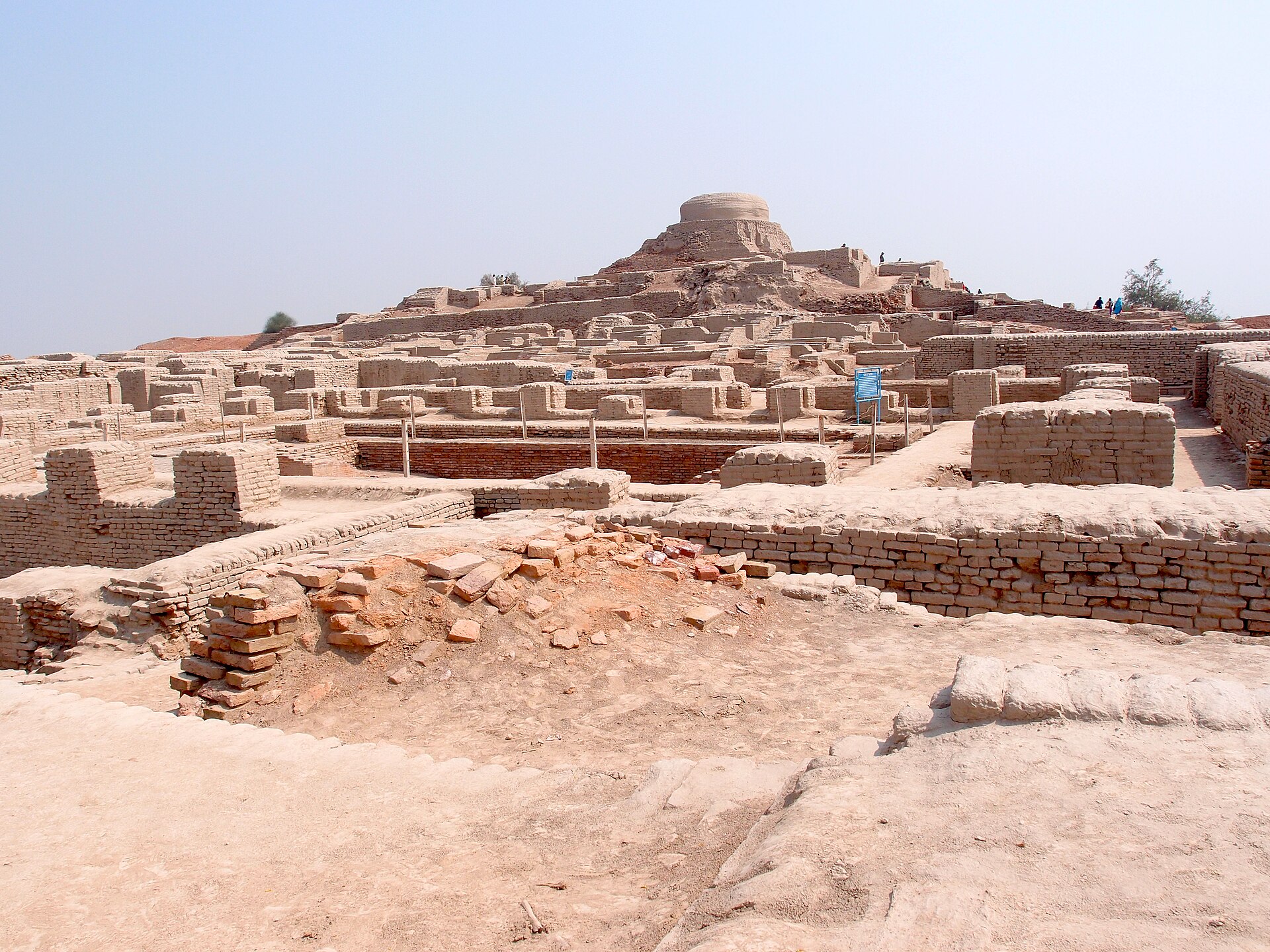
The most striking feature of Mohenjo-daro is its planning. The city was laid out on a grid of straight streets, dividing it into neat blocks, with a raised citadel on one side and the residential lower town on the other.
Houses were built of standardised baked bricks, many with courtyards, staircases to upper floors, and private wells and bathrooms. This level of planning and uniformity is unmatched in the ancient world of its time.
The Great Bath
At the heart of the citadel stands the Great Bath, a large watertight brick basin reached by steps, sealed with bitumen to hold water. It is the earliest known public water tank in the ancient world.
Its purpose was almost certainly ritual, perhaps for ceremonies of purification. The care taken in its construction suggests that water and cleanliness held deep religious meaning for the people of Mohenjo-daro.

The Citadel and the Stupa Mound
The citadel, a raised mound on the western side of the city, held its most important buildings, including the Great Bath and a large structure often called the granary. From here the life of the city may have been coordinated.
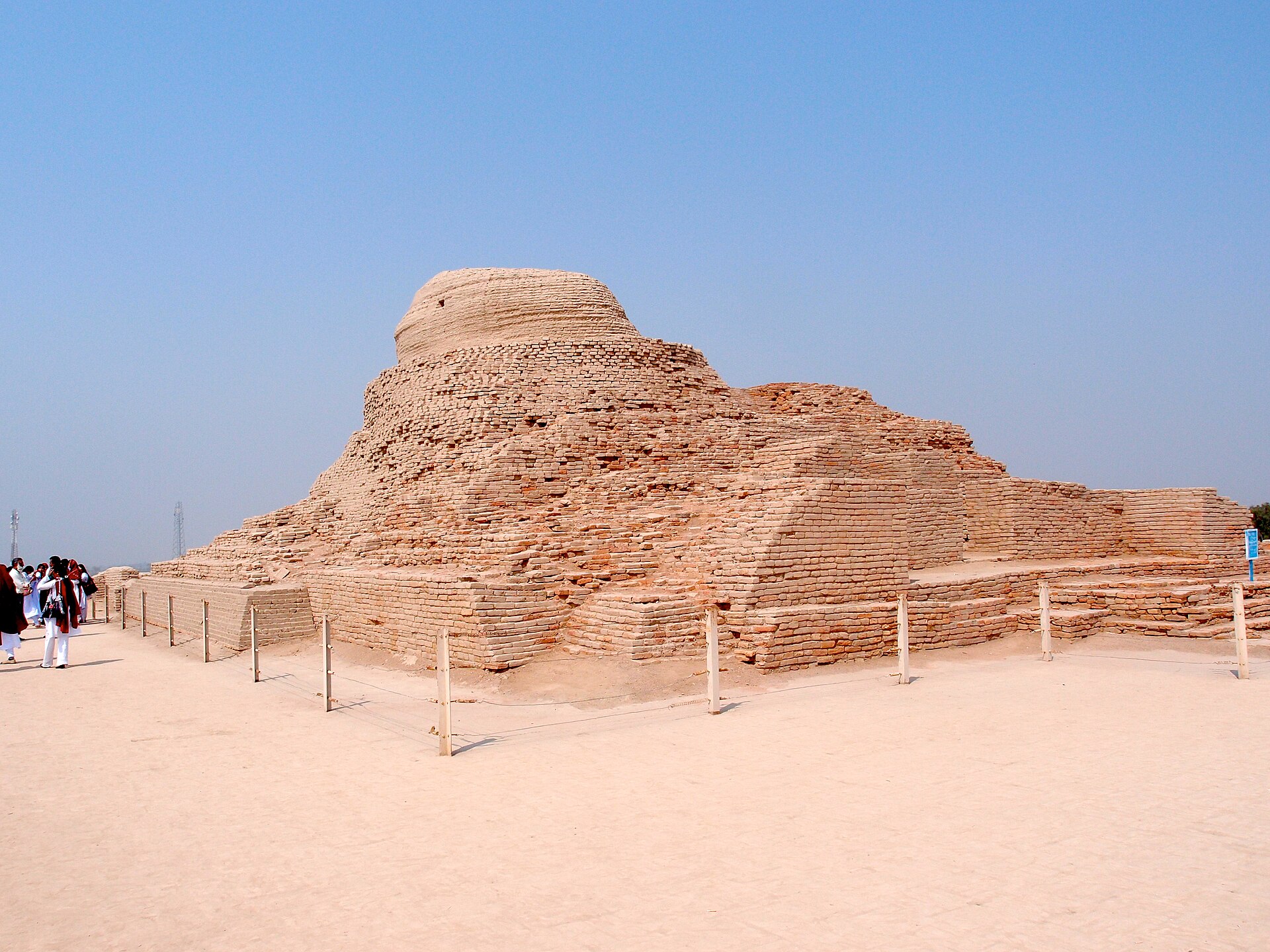
Crowning the mound today is a Buddhist stupa, built thousands of years after the city was abandoned. Its presence long hid the far more ancient ruins beneath from the eyes of explorers.
Water, Wells, and Ancient Sanitation
Mohenjo-daro had one of the most advanced water and sanitation systems of the ancient world. Many houses had their own wells, bathing areas and toilets, connected to a remarkable network of covered brick drains running beneath the streets.
This concern with clean water and waste disposal was thousands of years ahead of its time. Few other ancient cities came close to such standards of public and private hygiene.

The Priest-King and the Dancing Girl
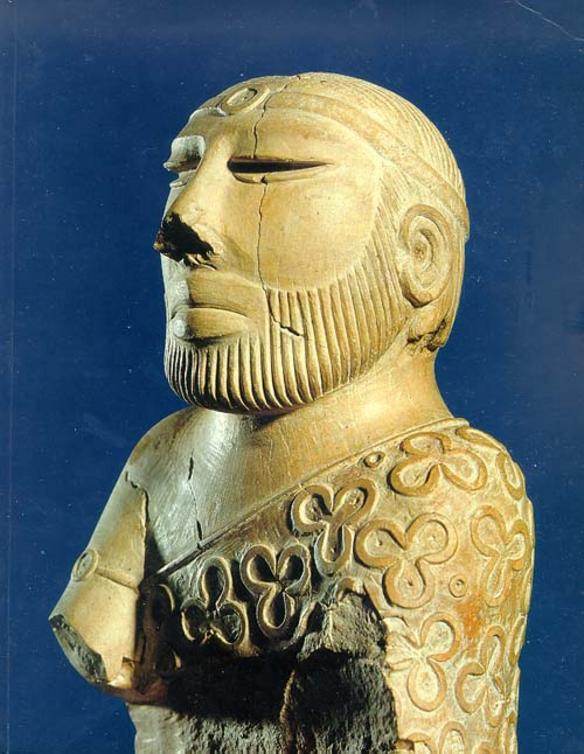
Among the most famous objects from Mohenjo-daro are two small figures. One is a carved stone bust of a bearded man, dubbed the Priest-King, though we have no idea if he was either a priest or a king.
The other is the Dancing Girl, a tiny bronze figure of a confident young woman, one of the earliest lost-wax bronze castings known. Together they are icons of Indus art, hinting at a sophisticated culture whose beliefs we can barely glimpse.

Seals and the Undeciphered Script
The people of Mohenjo-daro left behind thousands of small carved seals, often showing animals such as bulls and mythical beasts, along with short lines of a mysterious script. These seals were probably used in trade to mark goods.
Despite more than a century of effort, the Indus script has never been deciphered. Because we cannot read it, the names, language, beliefs and history of this great civilisation remain almost entirely unknown to us.

Decline and Abandonment
By around 1900 BC Mohenjo-daro and the other Indus cities went into decline and were gradually abandoned. The reasons are still debated, and probably involved a combination of factors.
Changes in the course and flooding of the rivers, shifts in climate and the disruption of trade may all have played a part. Whatever the cause, the great cities emptied, and the sophisticated urban world of the Indus faded away.
Rediscovery and UNESCO
Mohenjo-daro was rediscovered in the 1920s, when archaeologists realised that the ruins beneath the stupa belonged to a civilisation far older than any previously known in the region. The find rewrote the early history of South Asia.
The site was inscribed on the UNESCO World Heritage List in 1980. Today it faces serious threats from erosion, salt and the weather, and preserving its fragile bricks is an urgent challenge.
Getting There
Mohenjo-daro lies in the Larkana District of Sindh Province, in southern Pakistan, on the right bank of the Indus River. The nearest town is Larkana, and there is a small airport and a railway station close to the site.
Most visitors reach it by road from Larkana or from the larger cities of Sukkur and Karachi, combining the trip with a visit to the on-site museum, which displays many of the finds.
Coordinates: 27.3294, 68.1381 — open Mohenjo-daro in Google Maps.
Nearby Places
- Babylon — a contemporary great city of Mesopotamia, flourishing at the same dawn of urban civilisation.
- Sigiriya — a later South Asian marvel of planning, water engineering and monumental ambition.
- Nineveh — another great ancient city whose written records, unlike those of the Indus, we can actually read.
Closing Thoughts
Mohenjo-daro is a city that feels startlingly modern: gridded streets, brick houses with bathrooms, and covered drains, built five thousand years ago by a people we still cannot name.
Its silent, well-ordered ruins pose one of archaeology’s great riddles. Until the Indus script is read, the sophisticated civilisation that built this remarkable city will keep most of its secrets locked in the mound of the dead.
You May Like
Mafra, the Palace a King Built From a Vow