In the vast emptiness of the South Pacific, thousands of kilometres from any other inhabited land, lies one of the most extraordinary places on earth. Easter Island, known to its people as Rapa Nui, is famous for its moai, the giant stone figures that gaze inland across the treeless slopes, monuments to the ancestors of a remarkable Polynesian society.
How a small community on so remote an island carved, moved and raised hundreds of colossal statues has fascinated the world for centuries. Rapa Nui is at once a triumph of human ingenuity and a much-debated story of a society and its environment.

Table of Contents
- The Most Remote Inhabited Island
- The Polynesian Settlers of Rapa Nui
- The Moai: Giant Stone Ancestors
- Rano Raraku: The Quarry
- The Unfinished Statues on the Slopes
- Carving and Moving the Statues
- Ahu: The Ceremonial Platforms
- The Pukao and the Eyes
- Collapse, Toppling, and the Birdman Cult
- Rediscovery, Restoration, and UNESCO
- Nearby Places
- Closing Thoughts
The Most Remote Inhabited Island
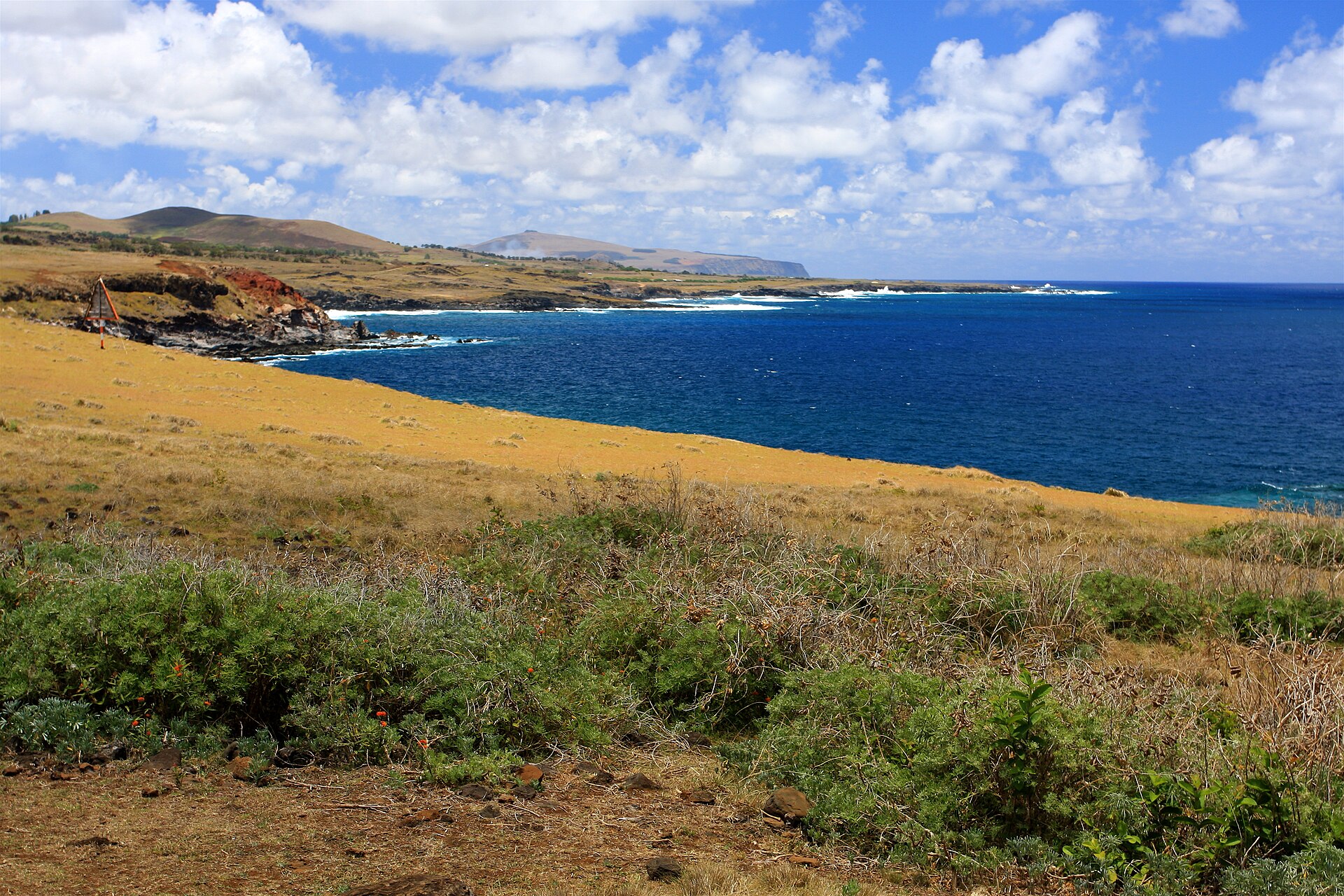
Easter Island is one of the most isolated inhabited places on the planet. Its nearest inhabited neighbour is thousands of kilometres away, and the South American coast is farther still. It is a small, triangular volcanic island of grassy slopes and rugged coasts.
That people not only reached this speck in the ocean but built a complex society there is astonishing. Everything about Rapa Nui’s story is shaped by its extreme remoteness and the limits of its small world.
The Polynesian Settlers of Rapa Nui
The island was settled by Polynesian voyagers, master navigators who crossed immense stretches of open ocean in outrigger canoes, probably arriving a little under a thousand years ago. Tradition places their landing at the beach of Anakena.
These settlers brought crops, animals and a rich culture with them. Cut off from the rest of Polynesia, they developed a unique society, with their own traditions, a distinctive script and, above all, the cult of the moai.

The Moai: Giant Stone Ancestors
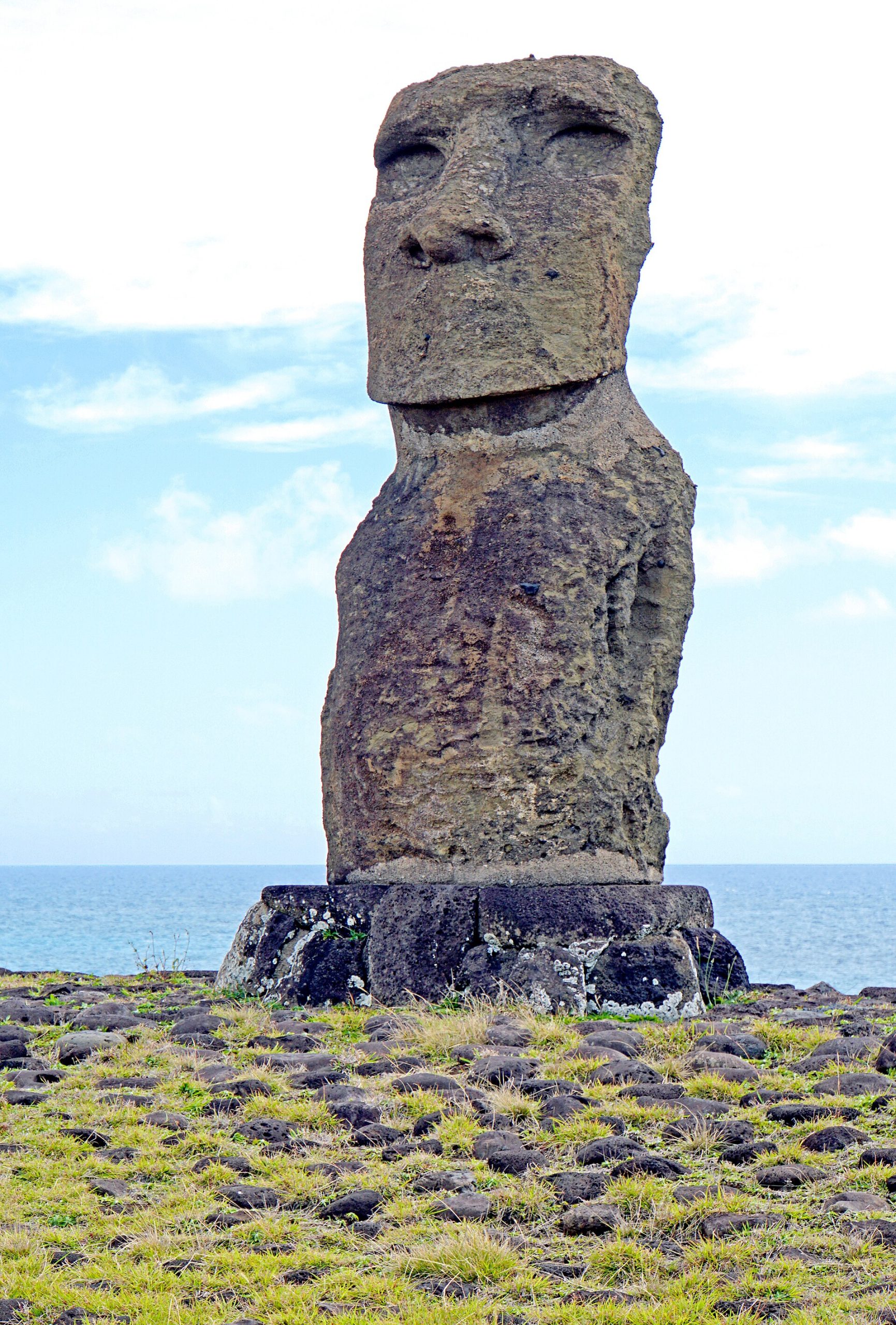
The moai are the heart of Rapa Nui’s fame: massive human figures carved from volcanic stone, most standing several metres tall, some far larger. Nearly a thousand of them were made across the island.
They are thought to represent deified ancestors, chiefs and important figures, set up to watch over and protect their communities. Their solemn faces, with heavy brows and long noses, have become one of the most recognisable images in the world.
Rano Raraku: The Quarry
Almost all the moai were carved from the soft volcanic rock of a single crater, Rano Raraku. Here the statues were cut directly from the rock face, shaped in place, and then detached to be moved to their platforms.
The quarry is a haunting place, dotted with unfinished figures at every stage of production, including one giant that would have dwarfed all the others. It is as if work stopped suddenly, freezing the moment in stone.

The Unfinished Statues on the Slopes
Around Rano Raraku, dozens of completed moai stand buried up to their shoulders in the hillside, the images most people picture when they think of Easter Island. Long thought to be abandoned, many are in fact whole figures whose lower bodies lie beneath the soil.
These statues, waiting on the slopes, may have been set up temporarily before transport, or left as part of the quarry’s own sacred landscape. They are among the most evocative sights on the island.

Carving and Moving the Statues
One of the great puzzles of Rapa Nui is how the islanders moved the massive moai, some weighing many tonnes, from the quarry to platforms sometimes kilometres away, without draft animals or metal tools.
Island tradition says the statues walked, and experiments have shown that upright moai can indeed be rocked forward from side to side with ropes, appearing to walk. Whatever the exact method, it was a triumph of organisation and ingenuity.
Ahu: The Ceremonial Platforms
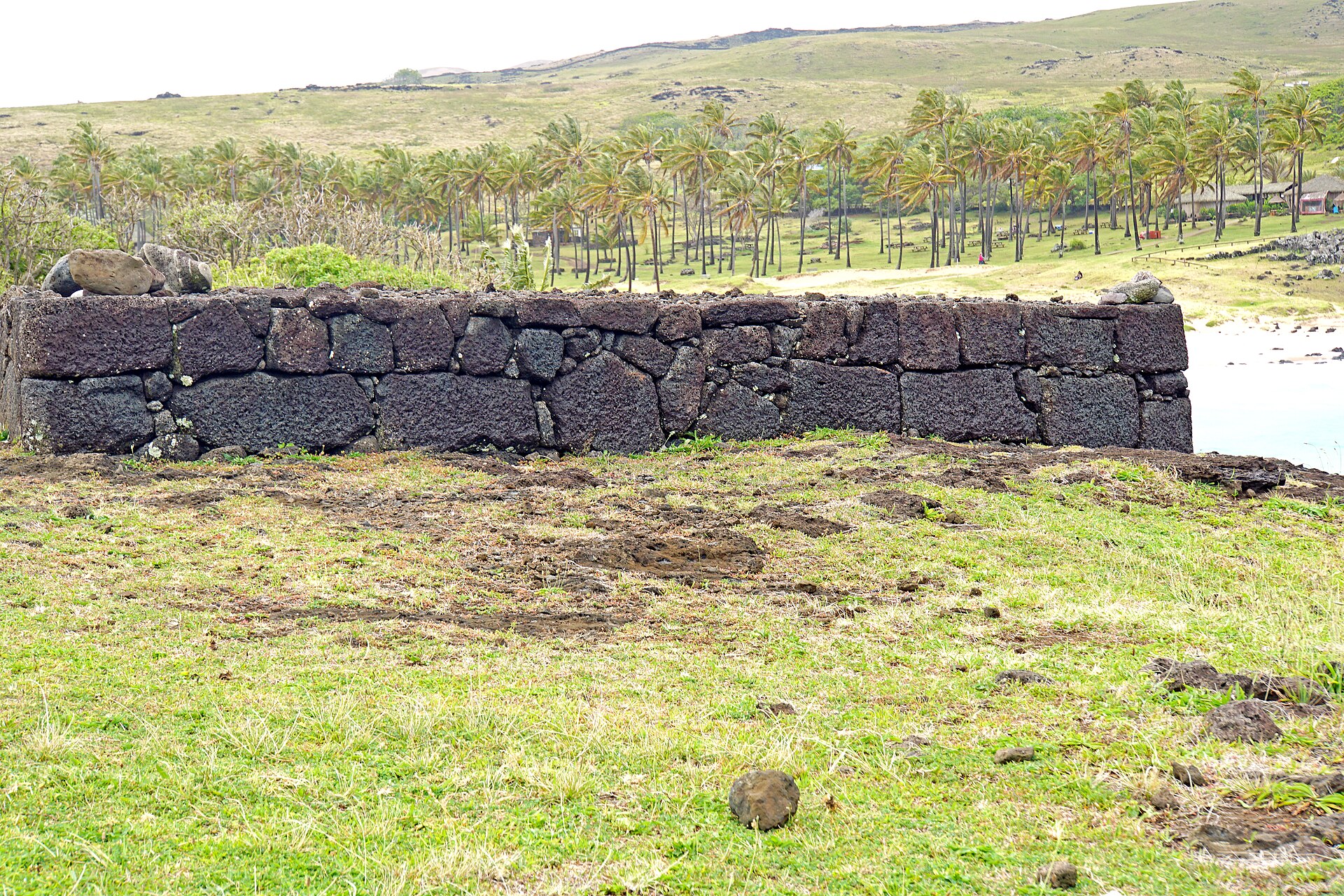
The moai were not scattered at random but raised on great stone platforms called ahu, built along the coast. Standing on their ahu, rows of moai faced inland, watching over the villages and land of their descendants.
The largest platform, Ahu Tongariki, carries fifteen restored statues in a line and is one of the most impressive sights in the Pacific. The ahu were sacred sites, linked to burial and to the honouring of ancestors.
The Pukao and the Eyes
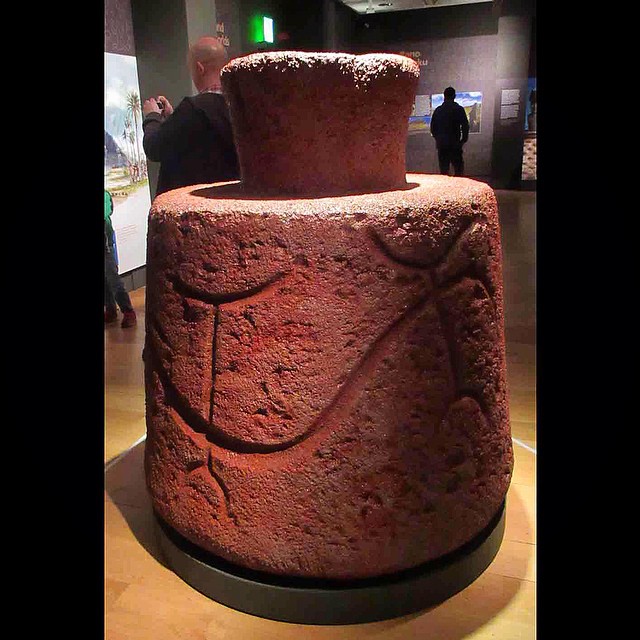
Many of the finest moai were crowned with a pukao, a large cylinder of red stone quarried from a different site, representing a topknot of hair or a headdress. Raising these heavy caps onto the statues added yet another feat to their construction.
When a moai was finally set up and dedicated, its eyes were fashioned from white coral and dark stone, bringing the ancestor to life. An eyeless statue was considered incomplete, its spiritual power not yet awakened.
Collapse, Toppling, and the Birdman Cult
At some point the great age of the moai came to an end. Traditional accounts and later scholarship point to a period of upheaval, in which resources grew scarce and the statues were toppled from their platforms, perhaps in conflict between rival groups.
The exact causes are much debated, and older stories of a simple self-inflicted ecological collapse have been questioned by recent research. In the later period a new religion arose, the birdman cult centred on the clifftop village of Orongo, with its yearly contest for a sacred egg.

Rediscovery, Restoration, and UNESCO
Europeans first arrived on Easter Sunday in 1722, giving the island its Western name. The following centuries brought contact, disease and, tragically, slave raids that devastated the Rapa Nui people, though the community survived.
In modern times many of the toppled moai have been restored to their platforms. The island, now part of Chile, was inscribed on the UNESCO World Heritage List in 1995, and its people continue to care for the monuments of their ancestors.
Nearby Places
- Sacsayhuaman — another site of the Pacific rim that raises the question of how ancient people moved colossal stones.
- Yaxchilan — a civilisation of the Americas, like Rapa Nui, that carved its beliefs and ancestors into stone.
- Great Zimbabwe — another remarkable achievement long underestimated by outsiders who doubted its true builders.
Closing Thoughts
Rapa Nui is a monument to what a small, isolated human community can achieve: hundreds of colossal stone ancestors, carved and raised on the loneliest island on earth in honour of the dead.
Its story, of extraordinary creativity and of hardship and endurance, still resonates far beyond the Pacific. Standing before the silent moai, gazing inland as they have for centuries, is to feel the reach of human ambition at the very edge of the world.
You May Like
Mafra, the Palace a King Built From a Vow


One thought on “Easter Island: The Loneliest Place on Earth and Its Walking Stone Ancestors”