On a hill overlooking the ancient Inca capital of Cusco stand some of the most astonishing walls ever built. At Sacsayhuaman, enormous blocks of stone, some weighing well over a hundred tonnes, are fitted together so precisely that not even a blade of grass can slip between them. How the Incas achieved this remains one of the great wonders of the Americas.
Part fortress, part temple, Sacsayhuaman was one of the most important sites of the Inca Empire. Its zigzag walls of colossal stones are a supreme expression of Inca engineering, and they still guard the heights above Cusco today.

Table of Contents
- The Great Fortress Above Cusco
- The Head of the Puma
- Cyclopean Walls in Zigzag
- Stones That Fit Without Mortar
- Moving and Fitting the Megaliths
- A Temple as Much as a Fortress
- The Rodadero and the Sacred Landscape
- The Battle of 1536
- A Quarry for Colonial Cusco
- Inti Raymi and Living Traditions
- Nearby Places
- Closing Thoughts
The Great Fortress Above Cusco
Sacsayhuaman rises on a steep hill just above Cusco, the sacred capital from which the Incas ruled an empire stretching down the length of the Andes. From its terraces there are commanding views over the city below.
Building the complex was a vast undertaking, said to have occupied tens of thousands of workers over many years. It was one of the crowning projects of the Inca state at the height of its power.

The Head of the Puma
The Incas laid out Cusco, according to tradition, in the shape of a puma, the sacred mountain cat. In this design, Sacsayhuaman formed the head of the animal, its zigzag walls representing the teeth.
Whether or not the plan was fully realised, the idea shows how deeply symbolism was woven into Inca architecture. Sacsayhuaman was not just a stronghold but part of a sacred cityscape.

Cyclopean Walls in Zigzag
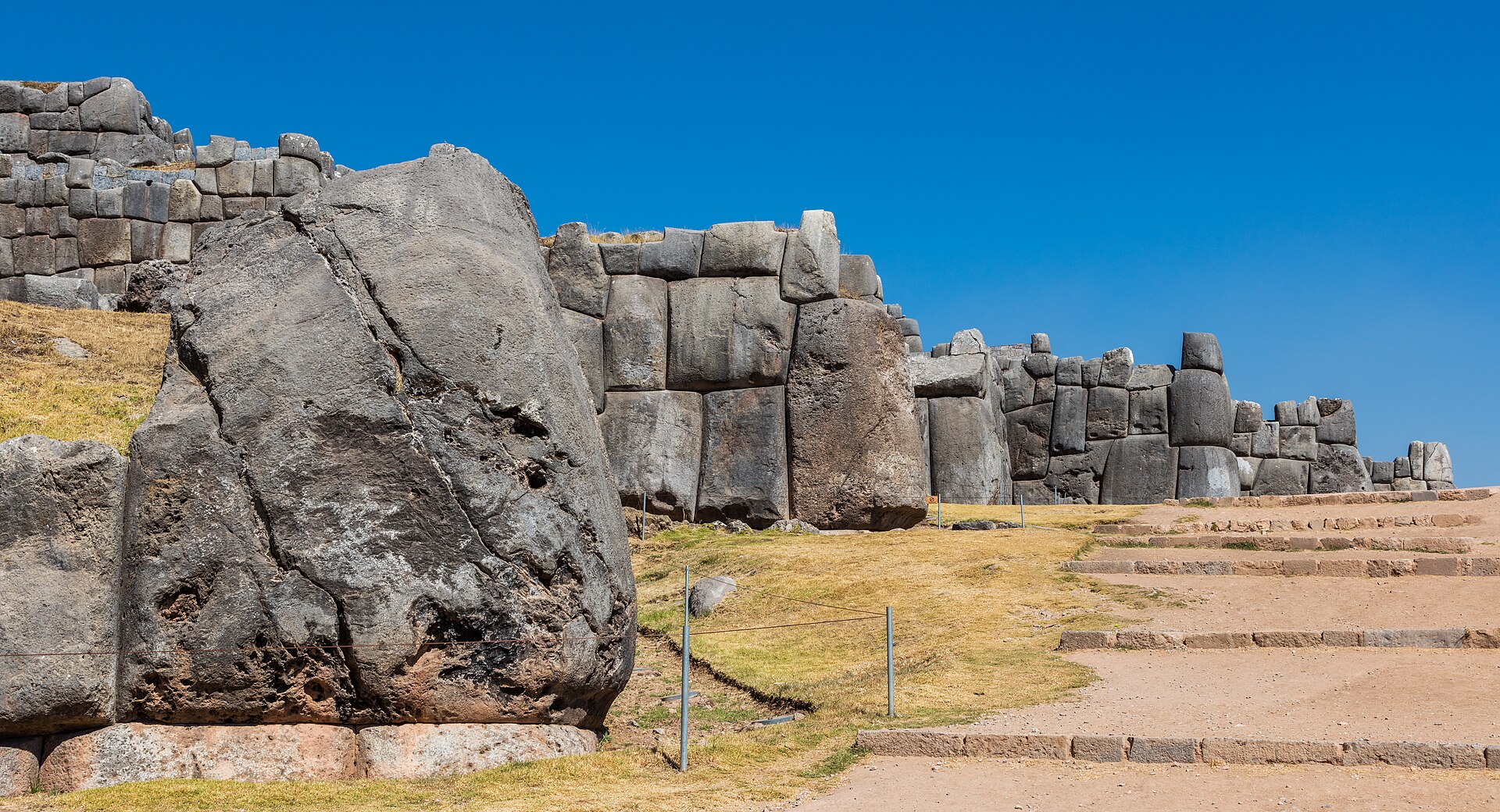
The most famous feature of Sacsayhuaman is its three great terraced walls, running in a bold zigzag along the hillside for hundreds of metres. The jagged shape gave defenders on the walls the chance to strike attackers from multiple sides.
The walls are built of truly gigantic stones, far larger than those used in most Inca construction. Their sheer scale, combined with the precision of their fitting, makes them among the most impressive ancient structures anywhere.
Stones That Fit Without Mortar
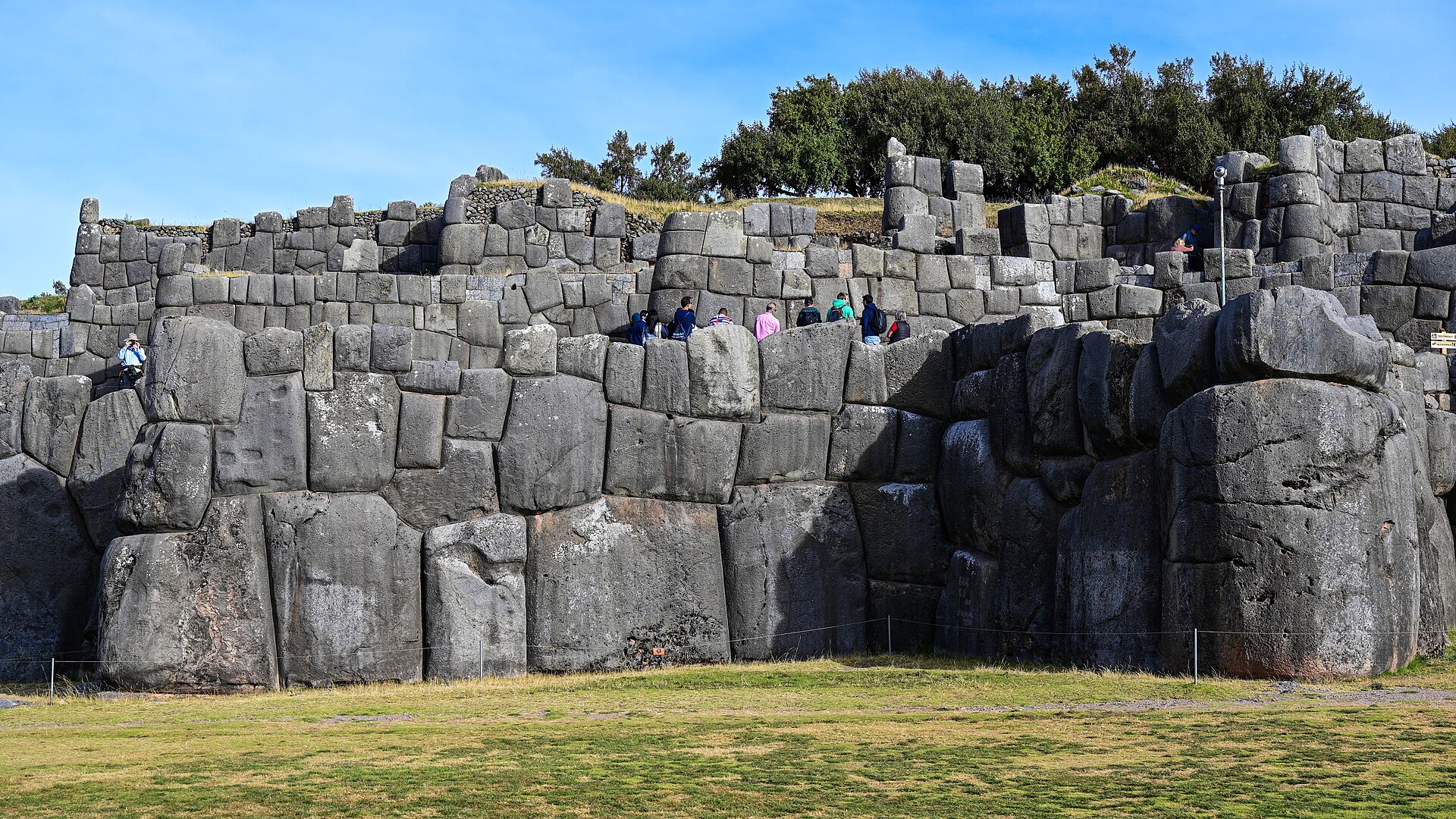
The Incas used no mortar. Instead they shaped each stone so exactly that it locked against its neighbours, with joints so tight that a sheet of paper cannot be inserted between them. The blocks have many angles and curves, each unique.
This technique, combined with the slight inward lean of the walls, also helped the structures survive the earthquakes that frequently strike the region. Many colonial buildings have collapsed while the Inca walls stand firm.
Moving and Fitting the Megaliths
How the Incas moved and shaped such enormous stones, without iron tools, the wheel or draft animals, is a question that still fascinates engineers. The largest blocks were quarried and dragged from sites some distance away.
Using ramps, levers, ropes and vast amounts of human labour, and patiently grinding the stones to fit by trial and error, the Inca masons achieved results that seem almost impossible. Their skill remains a subject of admiration and study.

A Temple as Much as a Fortress
Although often called a fortress, Sacsayhuaman was also a major religious and ceremonial centre. On the flat ground above the walls once stood great towers and buildings, used for rituals, storage and astronomical observation.
Much of this upper complex was later destroyed, but its foundations remain. Trapezoidal gateways and finely built structures show that this was a place of ceremony and power as well as defence.
The Rodadero and the Sacred Landscape
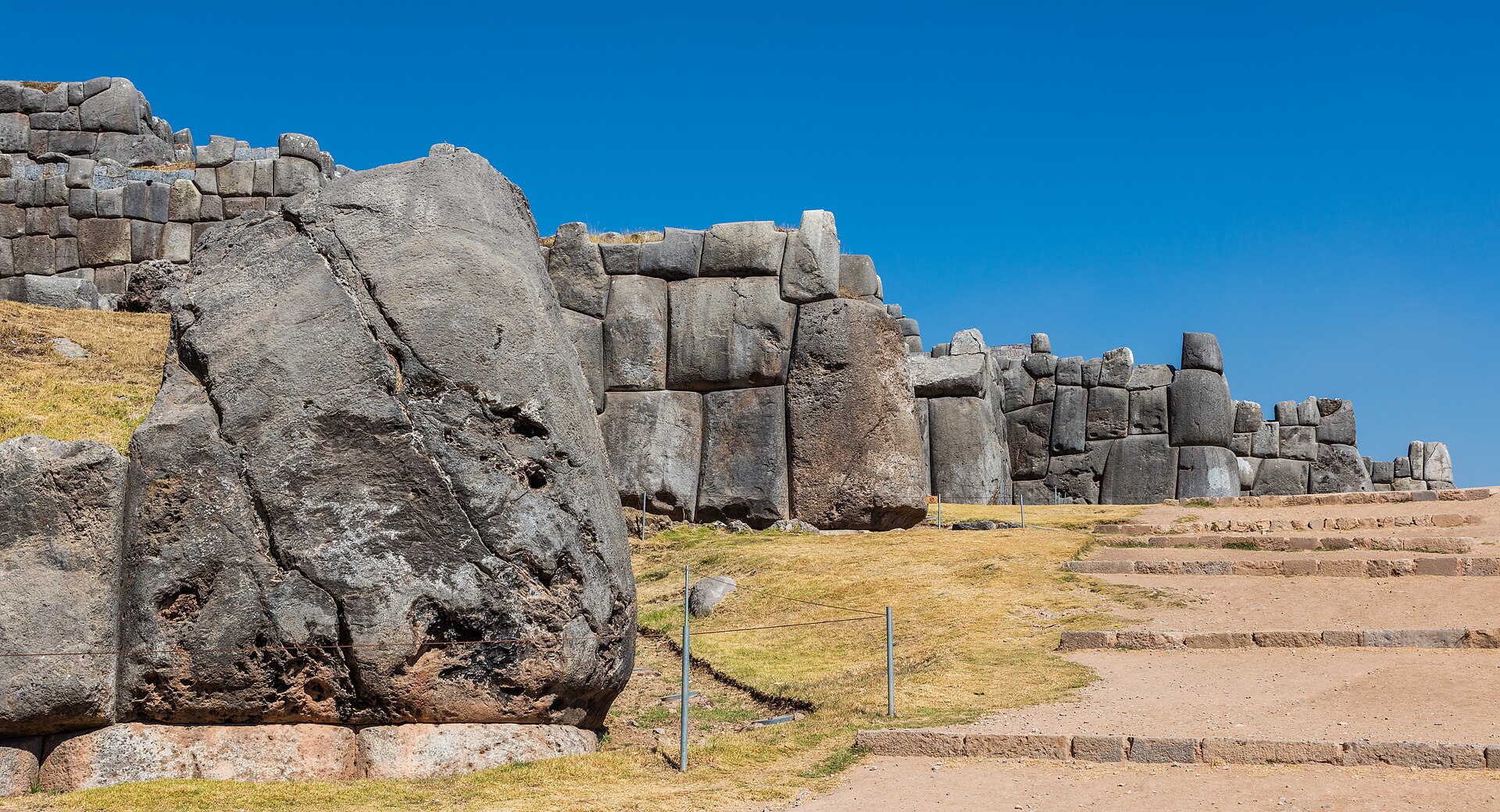
Facing the great walls, across an open plaza, is a natural outcrop of rock known as the Rodadero, carved with steps, channels and seats, including a formation sometimes called the throne of the Inca.
The whole area was part of a sacred landscape dotted with shrines, carved rocks and water channels. It served as a setting for grand public ceremonies attended by the ruler and the people of Cusco.

The Battle of 1536
Sacsayhuaman was the scene of one of the fiercest battles of the Spanish conquest. During the great Inca rebellion of 1536, Manco Inca’s forces seized the fortress and used it as a base to besiege the Spanish in Cusco.
In desperate fighting the Spanish stormed the walls and retook the site, a bloody turning point in the war. The struggle for Sacsayhuaman became one of the defining episodes of the fall of the Inca Empire.
A Quarry for Colonial Cusco
After the conquest, the Spanish saw the great complex above them partly as a threat and partly as a convenient source of building stone. They demolished the towers and upper structures and carted away many of the smaller worked blocks.
These stones were reused to build the churches and mansions of colonial Cusco. It was mainly because the largest megaliths were too huge to move that the spectacular lower walls survive at all.
Inti Raymi and Living Traditions
Each year Sacsayhuaman comes alive for Inti Raymi, the festival of the sun, a modern revival of an ancient Inca ceremony. Thousands gather on the great plaza before the walls to watch a grand re-enactment honouring the sun god.
The site, part of the historic area of Cusco inscribed on the UNESCO World Heritage List in 1983, remains a powerful symbol of Andean identity. Its stones still bind the living culture of the region to its Inca past.

Nearby Places
- Ollantaytambo — another great Inca site in the Sacred Valley, famous, like Sacsayhuaman, for its colossal fitted stones.
- Tulum — a walled city of the Americas that, like Sacsayhuaman, faced the upheaval of the Spanish conquest.
- Baalbek — a site across the world that poses the same enduring question of how ancient people moved megalithic stones.
Closing Thoughts
Sacsayhuaman is the Inca genius for stone at its most breathtaking: colossal blocks, each cut to fit its neighbour so perfectly that the walls have stood through centuries of earthquakes and conquest.
Fortress, temple and sacred symbol all at once, and still the setting for the great sun festival each year, Sacsayhuaman remains one of the wonders of the Americas, a monument that continues to challenge and amaze all who stand before its walls.
You May Like
Mafra, the Palace a King Built From a Vow


2 thoughts on “Sacsayhuaman: The Inca Fortress of Hundred-Tonne Stones That No Blade Can Pierce”